The seven cities named in Revelation 2–3 sit on a loop of about 660 km of western Turkish road, and almost nothing standing on that loop is a first-century church. What survives is a Roman marketplace under İzmir’s apartment blocks, a theater cut into a hillside at Bergama, a synagogue at Sardis big enough for a thousand people, the brick piers of a church in a town garden at Alaşehir, and one fourth-century cathedral at Laodicea that is the closest thing on the route to the building people imagine before they come.
That gap between expectation and stone is the first thing to settle, because it decides whether the trip is worth your time. I think it is, for travelers of any faith or none. The ruins are some of the best in Turkey, several of them cost €3 to enter, and the route runs through farm towns that tour buses cross at 90 km/h on the way to somewhere else.

Taken in the order that works on a bus timetable from İzmir, the seven run Smyrna, Pergamum, Thyatira, Sardis, Philadelphia, Laodicea, then Ephesus, which has its own guide and gets only a short section here. After the cities come the buses and trains that link them, a three-day and a five-day plan, the ticket sums, and the other biblical sites in Turkey worth a detour.

Contents
- What the seven churches were, and what is left of them
- The route at a glance
- Smyrna: the agora in İzmir
- Pergamum: Bergama
- Thyatira: Akhisar
- Sardis: Sart
- Philadelphia: Alaşehir
- Laodicea: near Denizli
- Ephesus: the first letter, in brief
- Getting between them by bus and train
- A three-day and a five-day plan
- Tickets, hours and the MuseumPass question
- The other biblical sites of Turkey
- Where to sleep, and when to go
What the seven churches were, and what is left of them
The letters are short. In the second and third chapters of Revelation, a writer who calls himself John, exiled on the island of Patmos, addresses seven Christian communities in the Roman province of Asia, each in a few verses of praise and warning. Smyrna is told to be “faithful unto death” for “a crown of life”; Pergamum lives “where Satan’s seat is”; Sardis has “a name that thou livest, and art dead”; Laodicea is “neither cold nor hot.”
Most scholars date the book to the reign of Domitian, around AD 95, following the second-century bishop Irenaeus; a minority argue for the late 60s. Either way, the “churches” were congregations meeting in houses, not buildings. Nothing in any of these cities can be shown to be a meeting place from John’s time, and a guide who points at a ruin and says otherwise is selling something.
Why these seven? The Scottish archaeologist William Ramsay, who walked the region for decades, argued in The Letters to the Seven Churches of Asia (1904) that they sit in order on a circular road: north from Ephesus to Smyrna and Pergamum, then southeast through Thyatira, Sardis and Philadelphia to Laodicea. A messenger carrying the letter would reach them in exactly the sequence Revelation lists. Colin Hemer’s The Letters to the Seven Churches of Asia in Their Local Setting (1986) took the argument further, matching each letter’s images to local facts: earthquakes, water supply, a hilltop that kept being captured by surprise.
So what do you actually see? Mostly Roman and early Byzantine cities, rebuilt again and again after earthquakes: theaters, colonnaded streets, bathhouses, temples, and a handful of later churches built once Christianity was legal. The best of them, Pergamum, Sardis and Laodicea, would be worth the trip if Revelation had never been written. Thyatira and Philadelphia are small fenced sites in the middle of working towns, and they take half an hour each.
The useful frame is this: you are visiting the cities the letters were sent to, and seeing what those cities looked like at their peak and afterward. Read the relevant letter on the bus before each stop. Several of them land harder once you have seen the place.
The route at a glance
The table below is the whole trip on one screen: the ancient name, the modern town, what you will actually see, and the 2026 foreign-adult ticket at the gate. Turkish state sites price tickets for foreigners in euros and take cards.
| Church | Modern town | What survives | Ticket (2026) | Time needed |
|---|---|---|---|---|
| Smyrna | İzmir (Konak) | Roman agora, basilica basement | €6 | 1–1.5 hours |
| Pergamum | Bergama | Acropolis and theater, Asklepieion, Red Basilica (closed for works) | €15 + €13 | Most of a day |
| Thyatira | Akhisar | Colonnaded street and basilica walls in the town center | €3 | 30–45 minutes |
| Sardis | Sart, near Salihli | Synagogue, bath-gymnasium, Temple of Artemis | €3 | 2.5–3 hours |
| Philadelphia | Alaşehir | Piers of the Basilica of St John | Free | 30 minutes |
| Laodicea | Near Denizli | Church, streets, theaters, temples | €12 | 2–3 hours |
| Ephesus | Selçuk | The ancient city; Basilica of St John in town | €40 + €6 | A full day |
Smyrna: the agora in İzmir
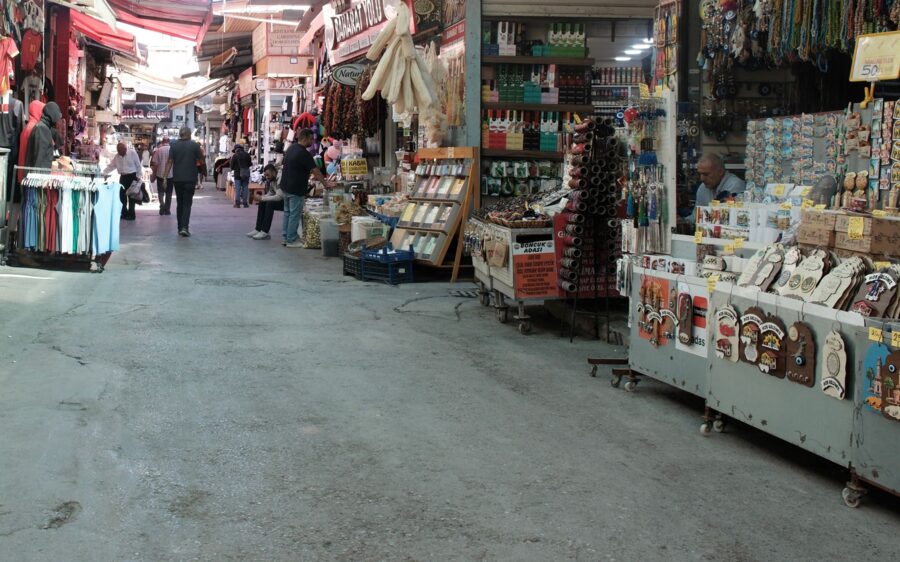
Smyrna never stopped being a city, which is exactly why so little of it shows. Modern İzmir sits on top of it, and the ancient center survives as a single excavated block in the Namazgah district, a 10-minute walk from Basmane station, on the edge of the Kemeraltı bazaar.
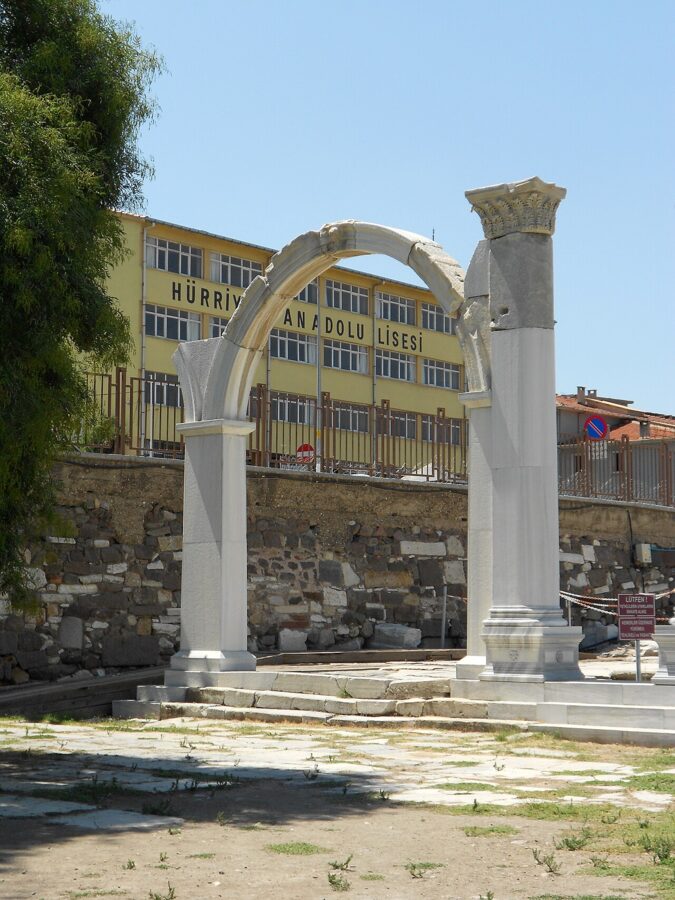
The Agora of Smyrna was the city’s civic and commercial square, laid out after Alexander the Great and rebuilt after an earthquake in AD 178 with money from Emperor Marcus Aurelius. Because it was used as a cemetery in Byzantine and Ottoman times, nobody built over it, and the excavations that began in 1932 under the İzmir Museum director Selahattin Kantar and the German archaeologist Rudolf Naumann found it in good shape. Excavation has since passed to a Dokuz Eylül University team.
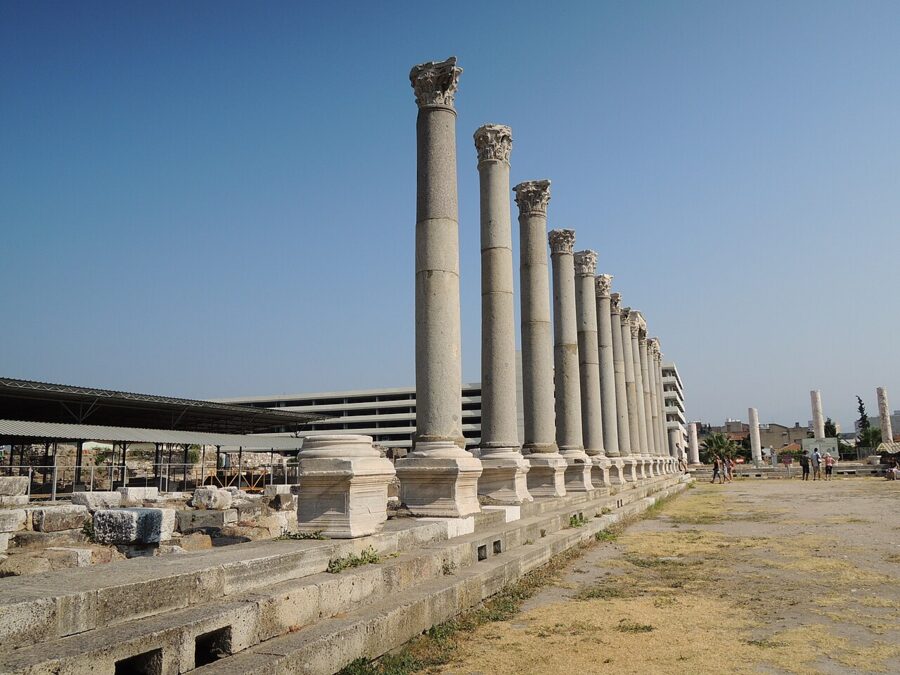
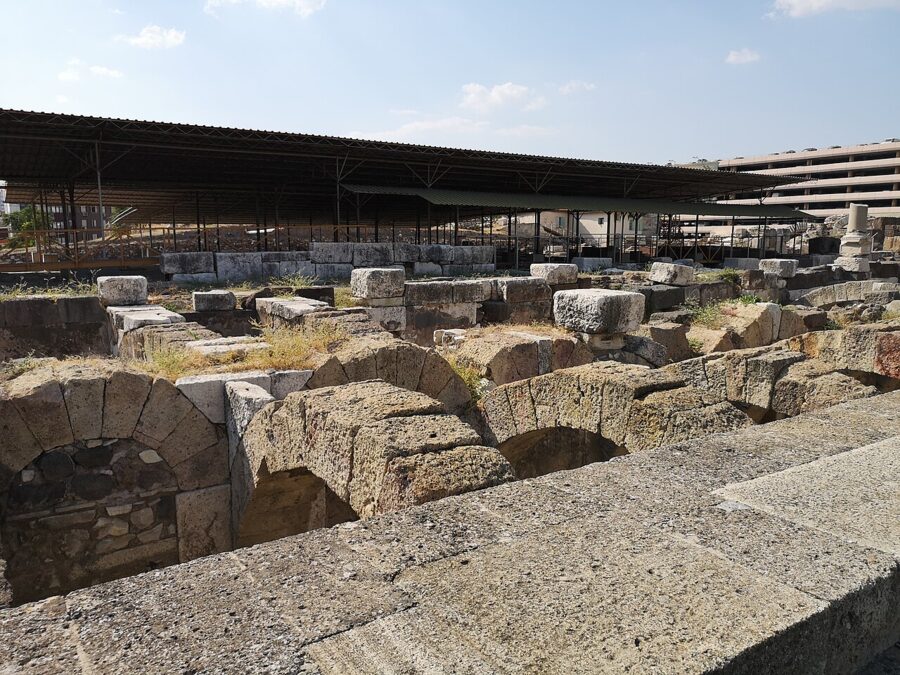
The part not to miss is under your feet. The north side of the agora was a basilica, a covered hall about 165 m long, and its basement vaults still stand, cool and dim, with Roman-era graffiti scratched into the plaster: ships, names and drawings. The İzmir provincial culture directorate describes the agora as the largest Roman agora known by its dimensions.

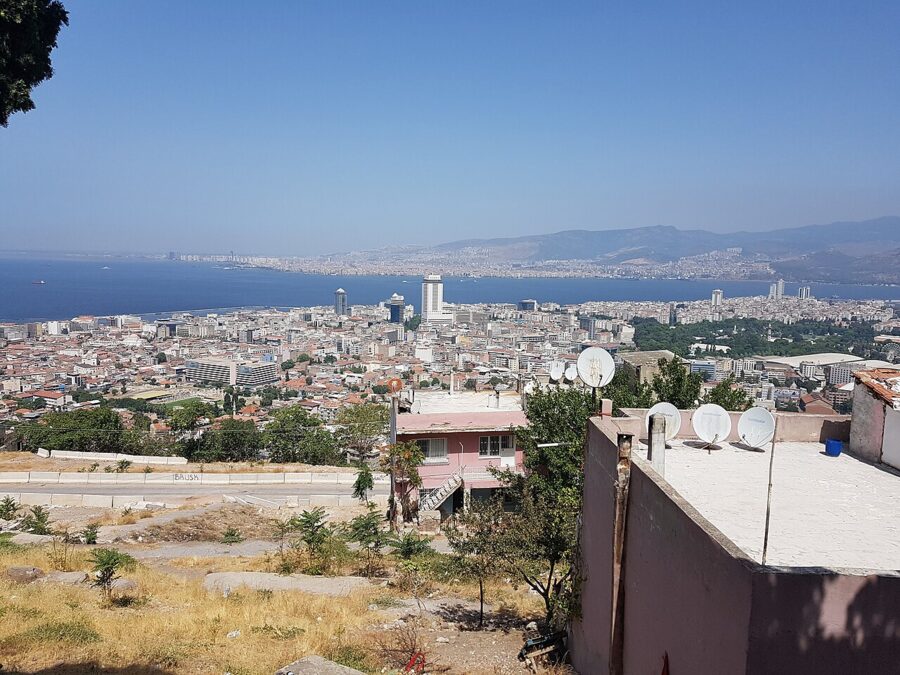
The letter to Smyrna is the gentlest of the seven: no rebuke, only a warning of coming persecution. The church’s most famous figure, the bishop Polycarp, was burned in the city’s stadium in the mid-second century; sources give dates between 155 and 167. In May 2026 the metropolitan municipality opened a Saint Polycarp Memorial Site on Kadifekale, the ancient Mount Pagos above the agora, with information panels on his life and on the seven churches.

Visiting the agora and Kadifekale
The agora is open daily, 08:30–19:00 from April and 08:30–17:30 from October, with the box office closing at 17:00 in winter, and costs €6. Allow an hour, more if the basement holds you. Kadifekale is a steep climb up from the agora, or a short taxi ride, and the view from the castle walls takes in the whole bay.

The Catholic Church of St Polycarp, in the Konak district, is İzmir’s oldest surviving church, but its door is often shut to casual callers and its hours change. Treat it as a bonus if you find it open, not a stop to plan around.
Pergamum: Bergama
Pergamum is the showpiece of the route and the one place to give a full day. It was the capital of the Attalid kings, who turned a fortress on a hill more than 300 m high into one of the great Hellenistic cities, and later a Roman provincial center with a temple to the emperor. The letter calls it the place “where Satan’s seat is,” and nobody agrees what that means: the Great Altar of Zeus, the imperial cult, or the sanctuary of the healing god Asklepios are all candidates.
Modern Bergama is a market town of about 100,000 at the foot of the hill. Its ancient sites come in three pieces, and they are spread out: the acropolis on top, the Asklepieion on the plain about 2 km southwest of the center, and the Red Basilica in the old town between them.
The acropolis and the cable car
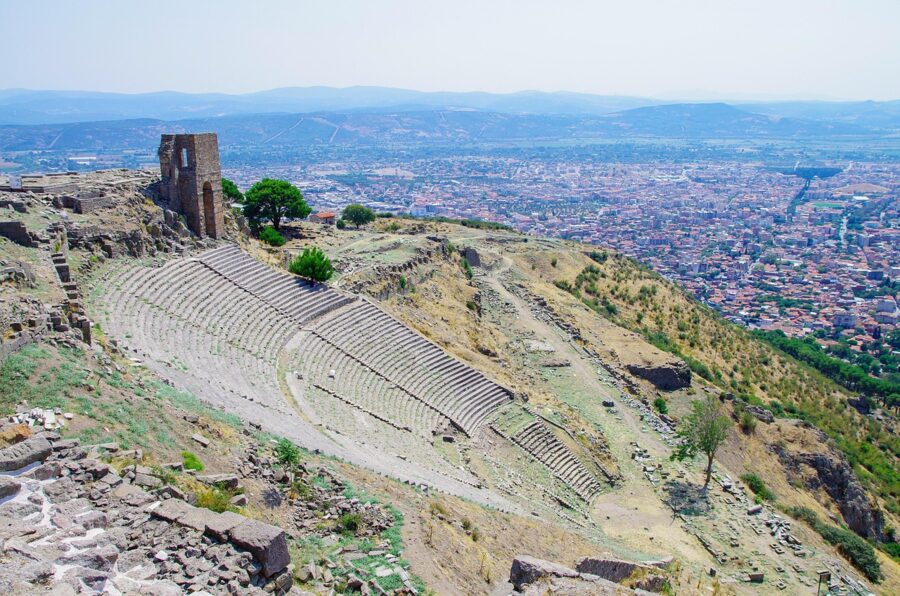
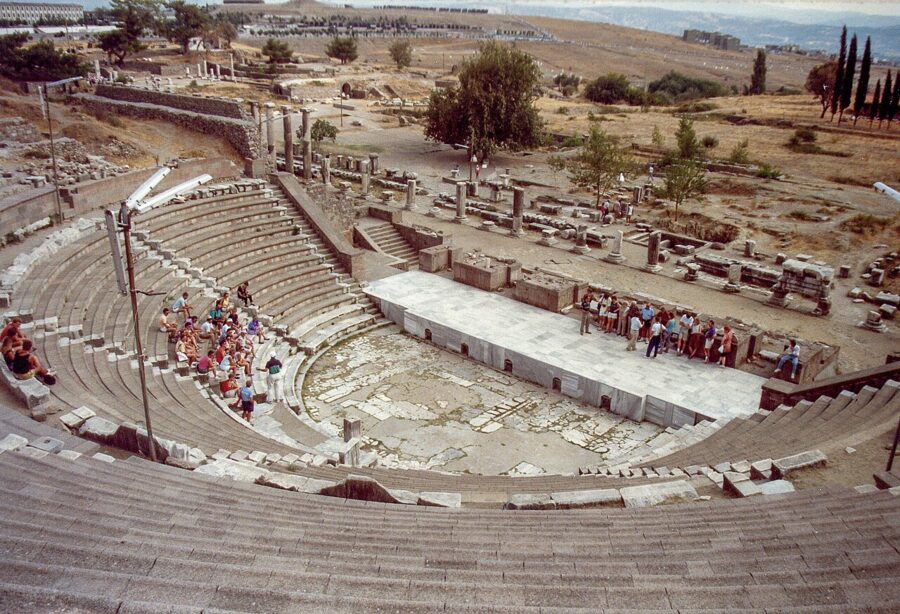
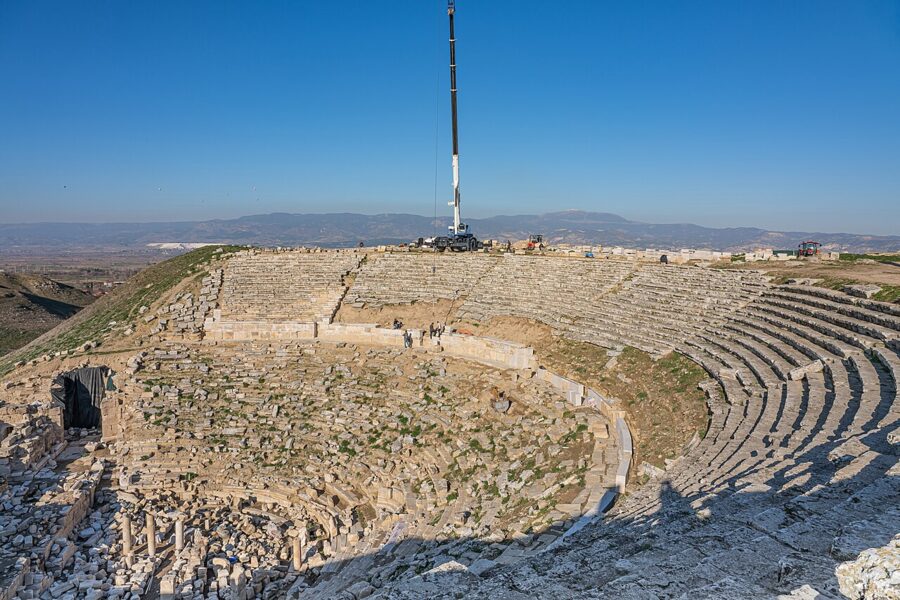
The acropolis holds the palaces, the arsenals, the library that by tradition gave its name to parchment, the foundations of the Great Altar, and the re-erected marble Temple of Trajan. Below it, the theater is carved into the slope so steeply that it reads from the top like a staircase into the town. It seated about 10,000.
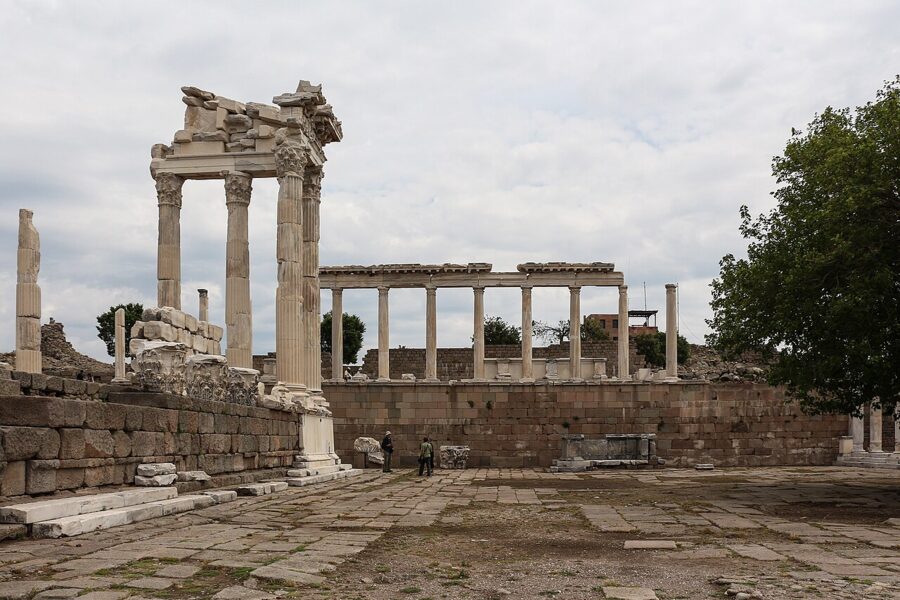

The altar itself is not here. German excavators under Carl Humann shipped its sculpted frieze to Berlin from 1878, and the Pergamonmuseum’s altar hall, closed for renovation since 2023, is due to reopen on 4 June 2027. On the hill you get the stepped foundation, which is still worth standing on, because the view explains why a king would build here.
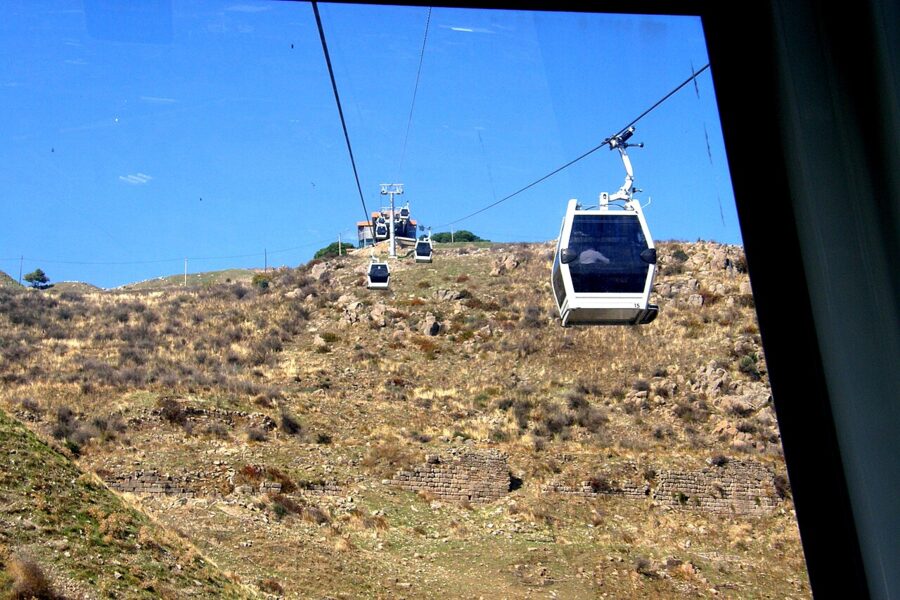
A cable car runs from the old town, about 600 m northeast of the Red Basilica, to an upper station near the acropolis entrance. It is paid separately at the bottom; neither the MuseumPass nor the Turkish MüzeKart covers it. The alternative is a road walk of about 5 km with no shade, which I would only do in winter. The acropolis is open 08:00–18:30 from April to October and 08:30–17:00 in winter, and costs €15.

The Asklepieion
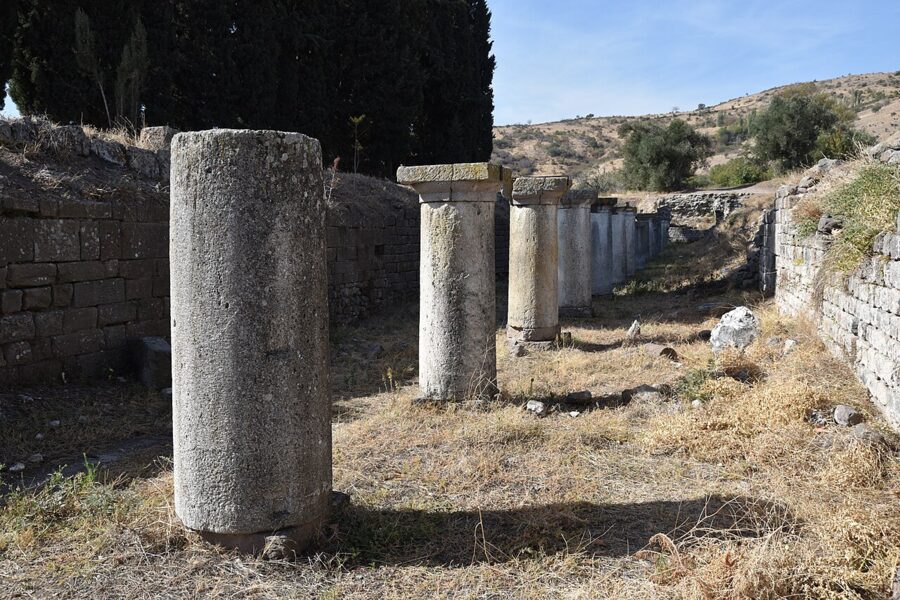
The Asklepieion was a healing sanctuary, run on a mix of sleep, bathing, diet and dream interpretation, and in the second century it was one of the most famous in the Roman world. Galen, the physician whose writings dominated medicine for more than a thousand years, was born in Pergamum and trained here. You walk in along a colonnaded sacred way, through a courtyard ringed by porticoes, past a small theater and the sacred spring, into a vaulted tunnel that led patients to the treatment building.


It is a 25-minute walk from the town center or a short taxi ride, and the site is open the same hours as the acropolis for €13. The Bergama Museum on the main street, €3, holds finds from both sites and is worth half an hour if it is too hot to be outside.
The Red Basilica (closed)
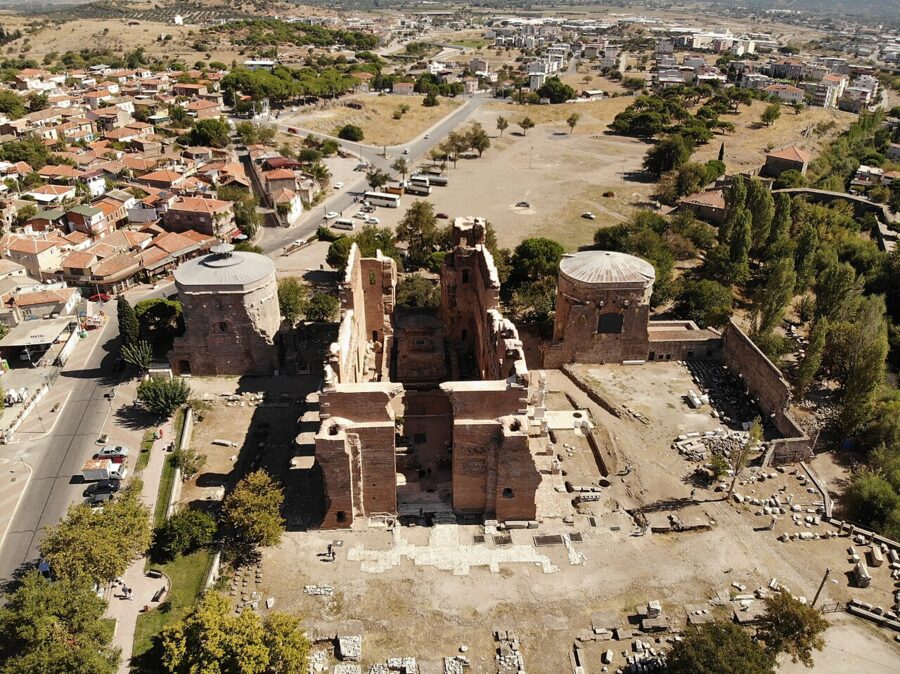
The Red Basilica, Kızıl Avlu in Turkish, is a huge brick temple built under Hadrian for the Egyptian gods Serapis, Isis and Harpocrates, and converted into a church in the fifth century. One of its round side towers is still a working mosque. The main site has been closed since 24 January 2025 for restoration and site works; the excavation director announced a 2026 reopening, but the ministry still listed it as closed in November 2026. You can see most of it from the street outside the fence.

Thyatira: Akhisar
Thyatira gets the longest letter of the seven and has the least to show for it. It was a trade town of guilds (wool, dye, bronze, leather), and Acts names a woman from here, Lydia, “a seller of purple,” as Paul’s first convert in Europe. The letter’s complaint is about a prophetess it calls Jezebel, which most readers take as a fight over whether guild members could share in the guild feasts.
What survives is one block in the center of modern Akhisar, called Tepe Mezarlığı (the hill cemetery). Excavations from 1968 to 1971 under the archaeologist Rüstem Duyuran uncovered an apsed building, either a basilica or a bishop’s palace, and a north-south colonnaded street of the second to fourth centuries. Digging resumed in 2024.
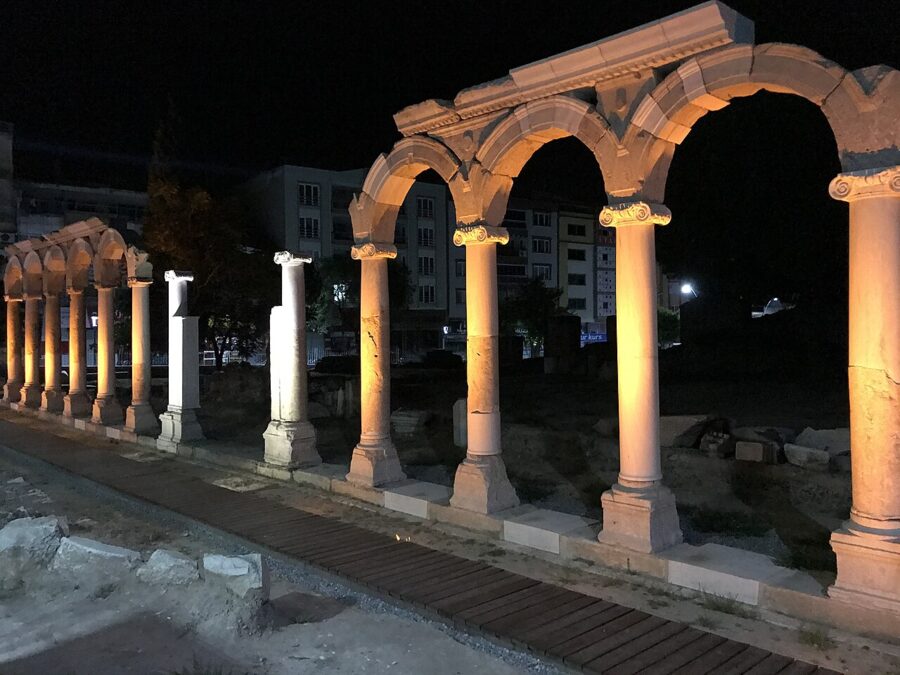
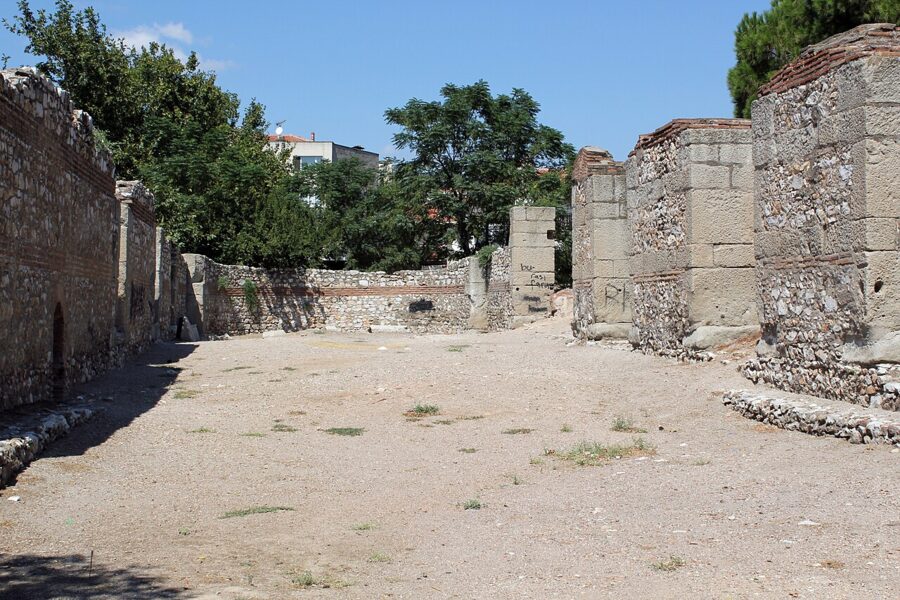

The site is open 08:00–19:00 in summer and 08:00–17:00 in winter, with the box office shutting at 16:30 then, and costs €3. Thirty minutes covers it. The Akhisar Museum, in a 1932 school building, also €3, has the town’s finds and a gold-and-silver tumulus treasure, and makes the stop feel less thin.
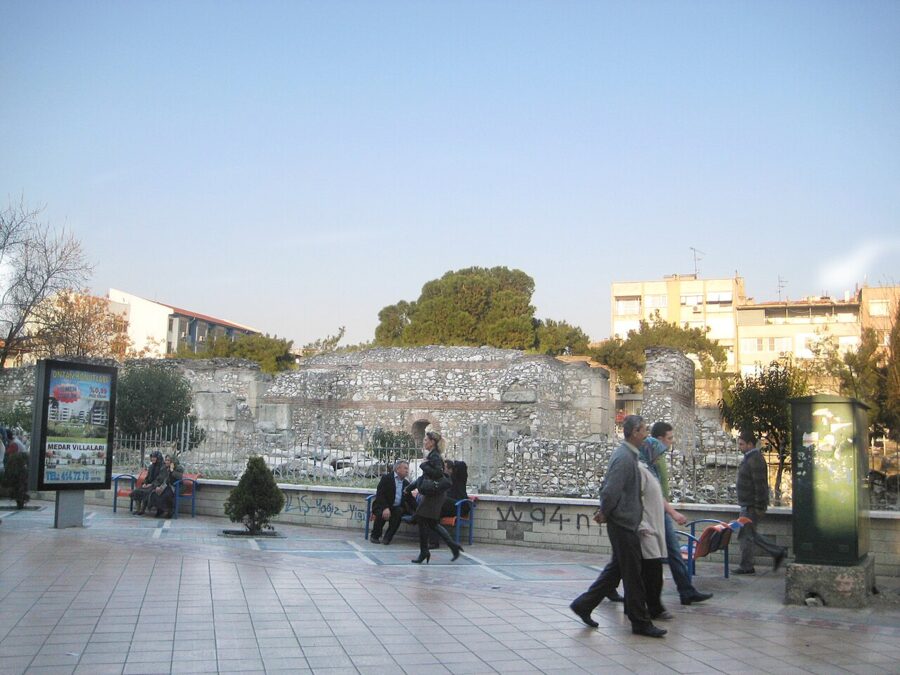

Akhisar is known across Turkey for its köfte, small grilled meatballs, and a plate of them is the right lunch between buses.
Sardis: Sart
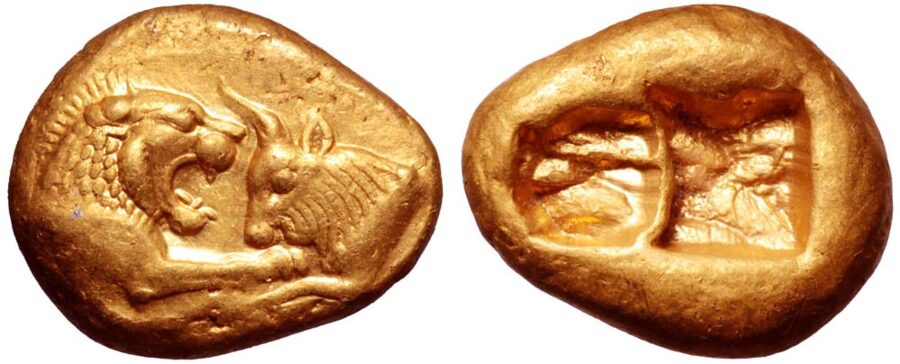
Sardis was the capital of Lydia and of King Croesus, the byword for wealth, and the Lydians are credited with the first coins of gold and silver. The city sat under a high, crumbling acropolis that looked impregnable and was taken by surprise twice: by Cyrus of Persia in 546 BC, when a soldier climbed an unguarded cliff, and by Antiochus III in the 210s BC. The letter to Sardis warns “I will come on thee as a thief,” and Hemer argues that every reader in the city would have heard the history in it.

The site today is the work of the Archaeological Exploration of Sardis, the Harvard and Cornell expedition digging here since 1958. It is two separate areas, both on one €3 ticket: the bath-gymnasium and synagogue beside the main road, and the Temple of Artemis about 1.5 km south up the Pactolus valley.
The synagogue and the gymnasium
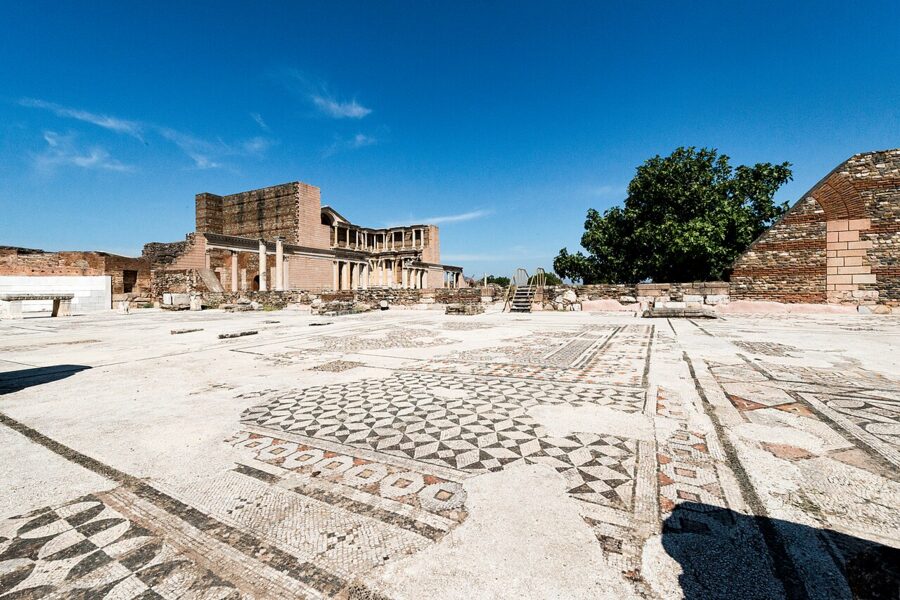
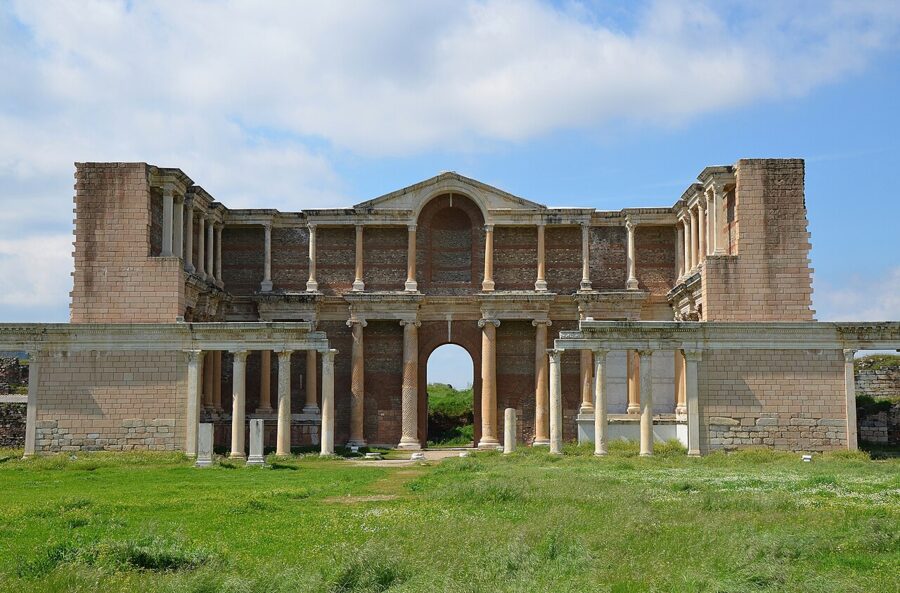
The synagogue is the surprise of the whole route. It was built into a corner of the Roman bath-gymnasium, and it is enormous: the main hall runs more than 50 m and could hold close to a thousand people, under a roof that stood about 14 m above the floor. Most of what you see, the mosaic floors with donors’ names, the platforms for two Torah shrines, the marble table flanked by lions, dates from the fourth and fifth centuries.
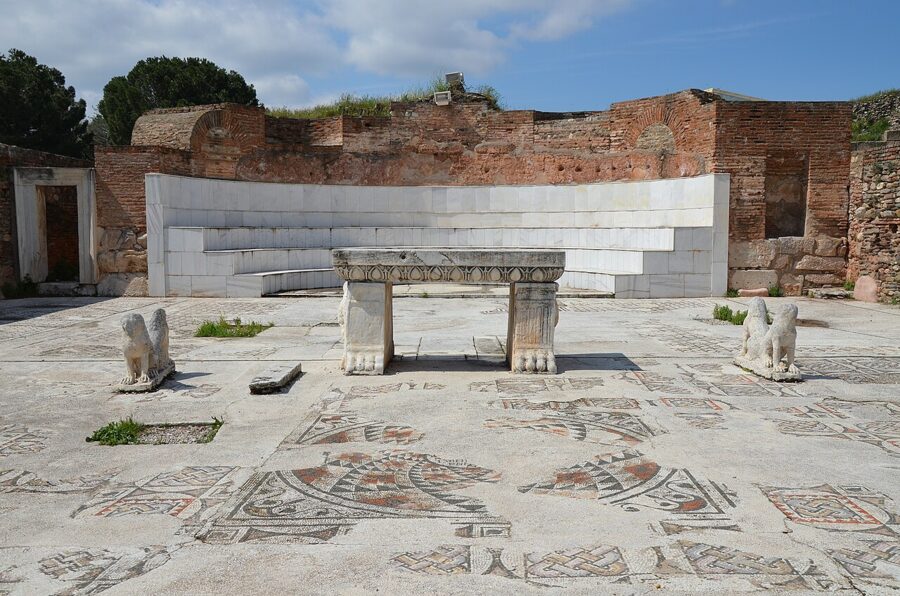

The building was found in 1962 and restored between 1965 and 1973. In 2021 and 2022 a light roof went up over the mosaics after weather began lifting their bedding, so expect shade now where older photos show open sky. It is a reminder that Revelation’s “synagogue of Satan” lines, in the letters to Smyrna and Philadelphia, were written in cities where Jewish communities were large, old and established.
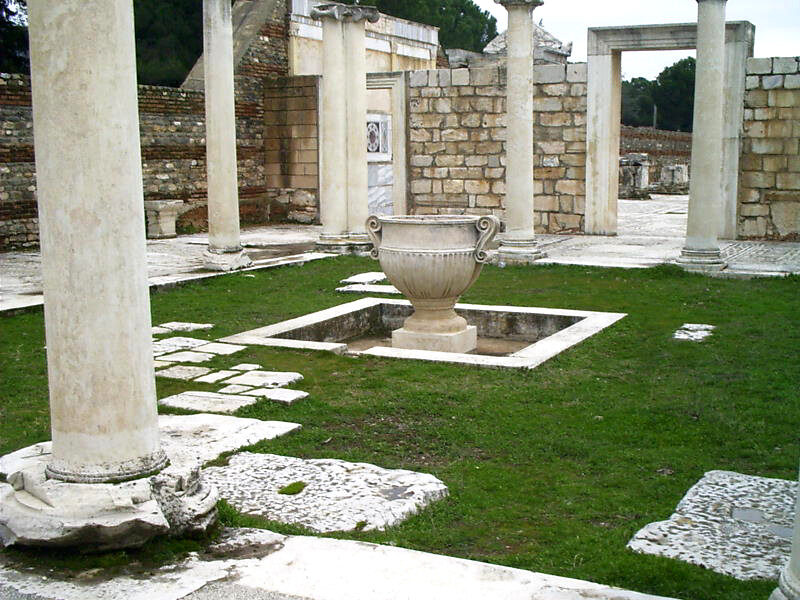
Next door, the bath-gymnasium’s Marble Court is a two-storey screen of columns and carved frames pieced back together from about 800 fragments between 1960 and 1971. Along the road side of the complex runs a row of Byzantine shops, where finds show Jewish and Christian traders working side by side.

The Temple of Artemis and Church M
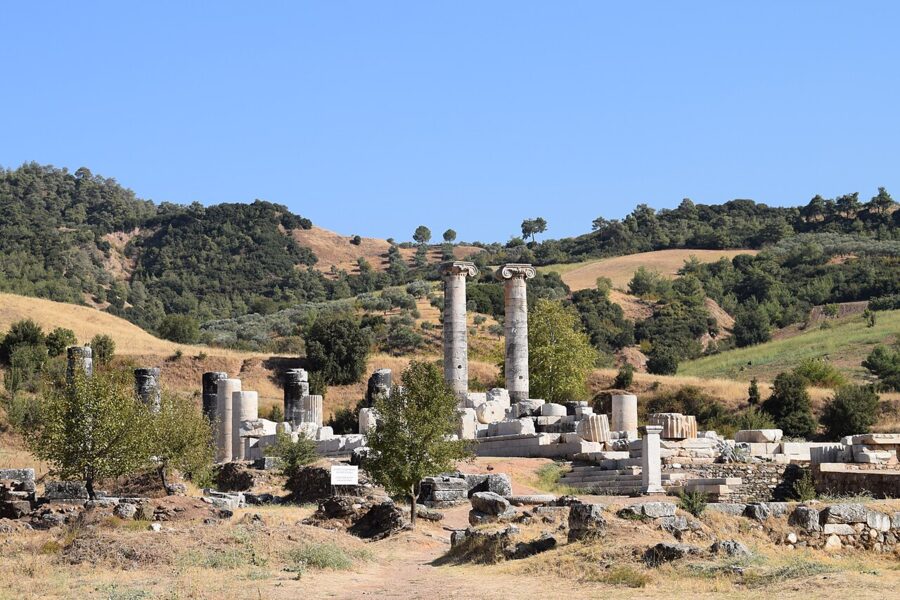
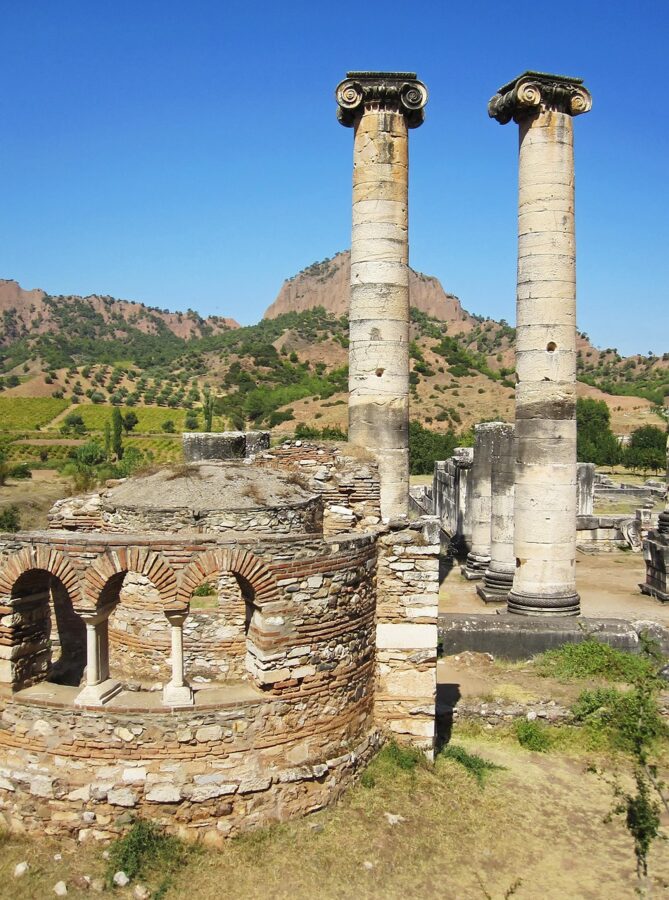
The Temple of Artemis is one of the largest Ionic temples ever begun, started in the third century BC and never finished. Two complete columns have stood since antiquity without restoration. At its east end sits Church M, a small brick church of the fifth century, built against a pagan temple that by then had lost its goddess, and it is the image most people take home from Sardis.

The site is open 08:00–19:00 in summer and 08:00–17:00 in winter, box office until 16:30. Sart halt on the İzmir to Alaşehir railway is about 500 m from the gymnasium, which makes this the easiest of the seven to reach by public transport.
Philadelphia: Alaşehir
Philadelphia was founded by the Pergamene king Attalus II Philadelphus and was shaken so often by earthquakes that the geographer Strabo described its walls as constantly cracked; the great quake of AD 17 flattened it along with Sardis. The letter promises the faithful “an open door” and a place as “a pillar in the temple.” It is the second of only two letters with no rebuke.
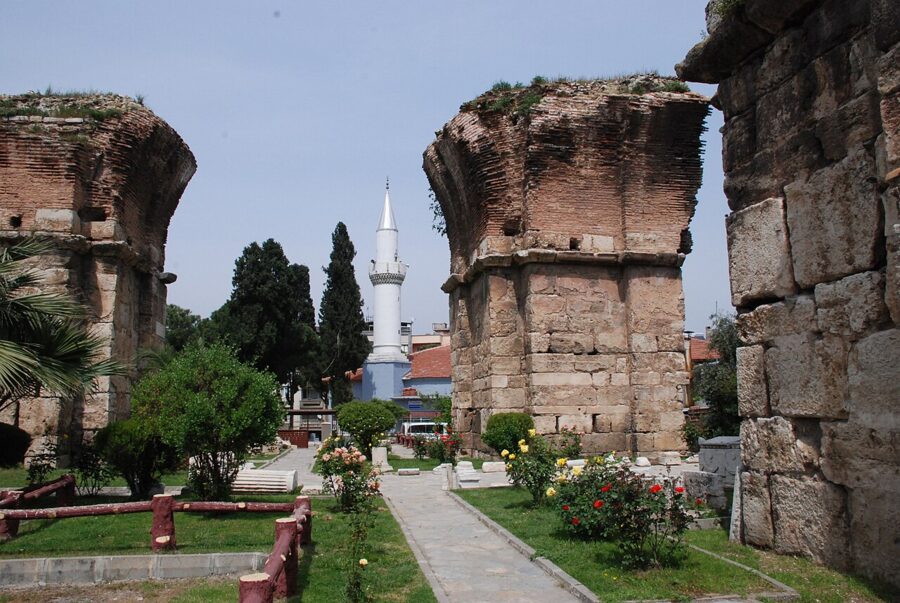
The city held out longer than any other on this route: it was the last Byzantine town in western Anatolia, surrendering to the Ottomans in 1390. Today it is Alaşehir, a grape and raisin town of the Gediz plain, and the single thing to see is the Basilica of St John, a sixth-century church of which three enormous brick and stone piers survive in a small garden on İsmet Paşa Caddesi.
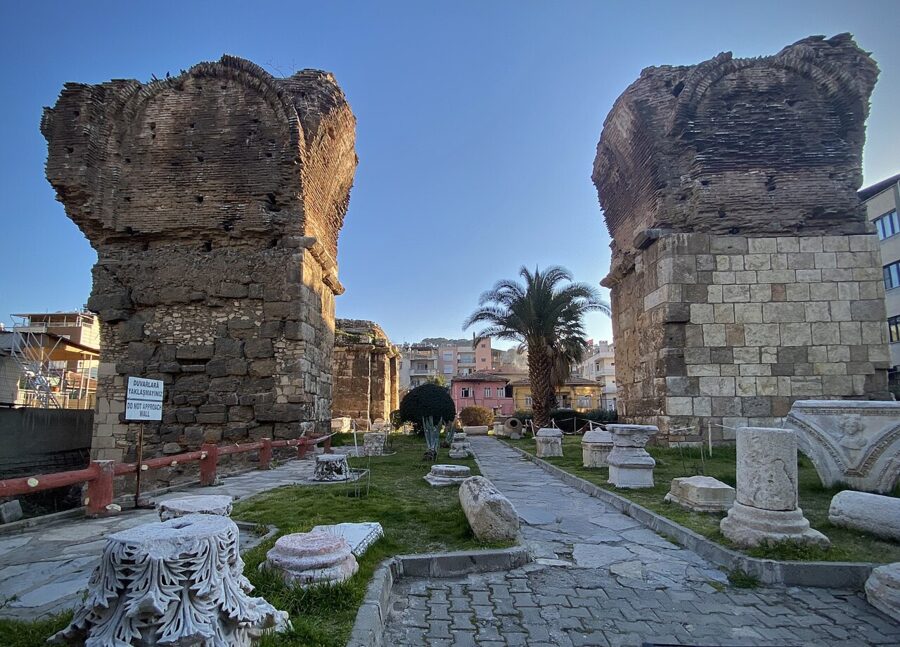

Entry is free and the garden is open 08:00–17:00. It takes half an hour, including a look at the column pieces, Byzantine capitals and gravestones laid out along the path. The excavations of the early 1980s on Toptepe, the hill behind town, found a theater, temple and stadium, but they were never continued and there is little to see.

Laodicea: near Denizli
Laodicea gets the most quoted letter of the seven: “I know thy works, that thou art neither cold nor hot.” Founded in the third century BC by the Seleucid king Antiochus II and named for his wife Laodice, it grew rich on wool, banking and trade. When an earthquake wrecked it in AD 60, the historian Tacitus records, the city rebuilt from its own resources without asking Rome for help, which is the background to the letter’s “I am rich, and increased with goods.”
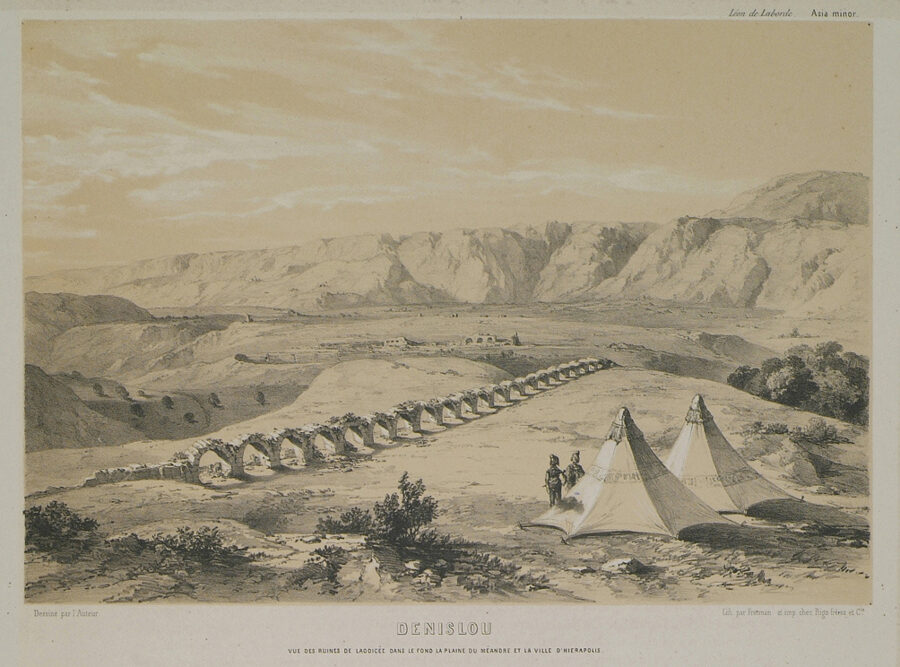
The lukewarm image has a local reading popular since the 1950s. Laodicea had no good spring of its own and piped water from the south through stone conduits so full of lime that they clogged; Hierapolis, 10 km north, had hot springs, and Colossae nearby had cold water. Tepid, mineral-heavy water was a thing a Laodicean would recognize at once.
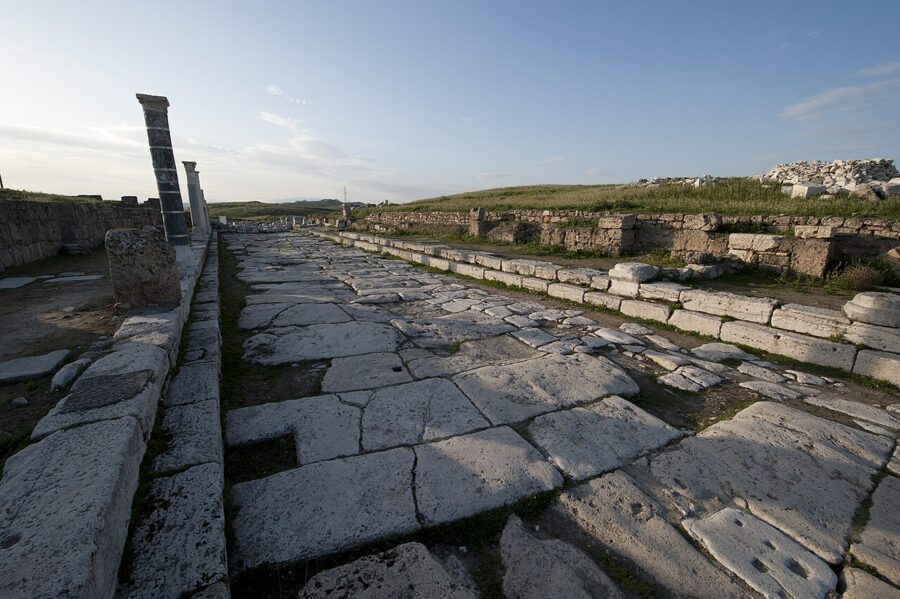

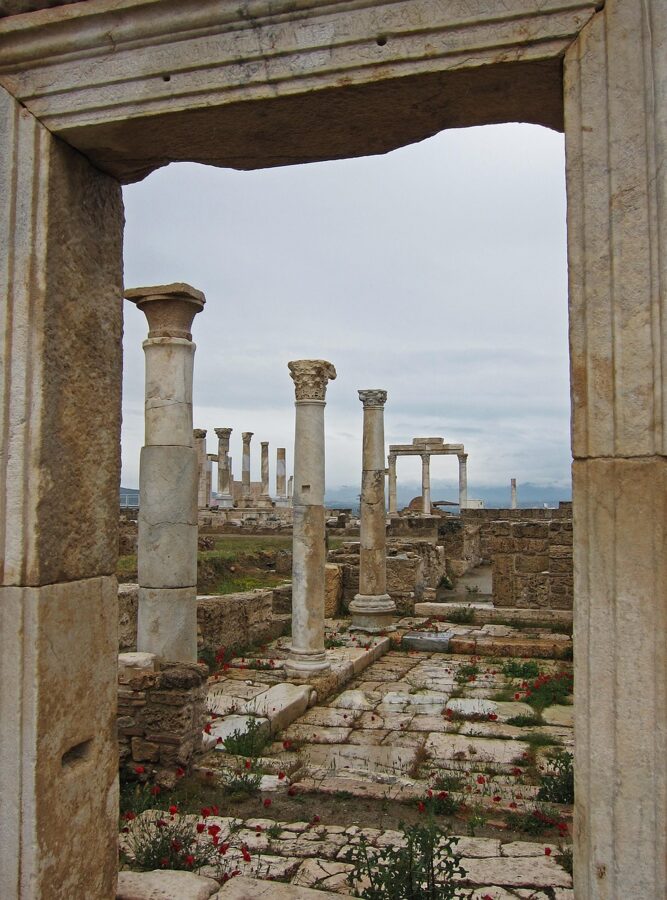
Since 2003 a Pamukkale University team led by Professor Celal Şimşek has turned Laodicea into one of the most rewarding sites in Turkey. You get two theaters, a stadium, temples, fountains, colonnaded streets and the Church of Laodicea. The city was finally abandoned after an earthquake in the early seventh century, and its people moved to what is now Denizli.
The Church of Laodicea
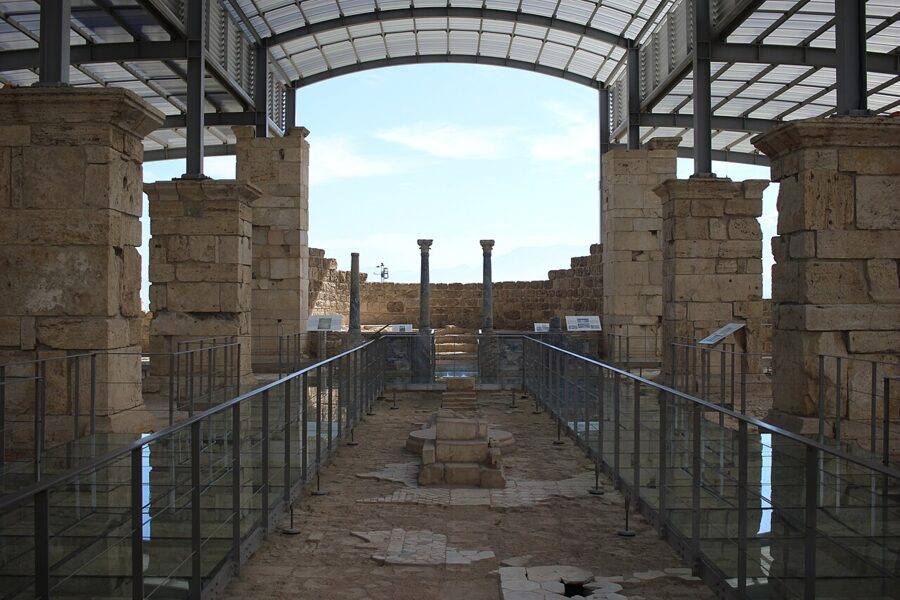
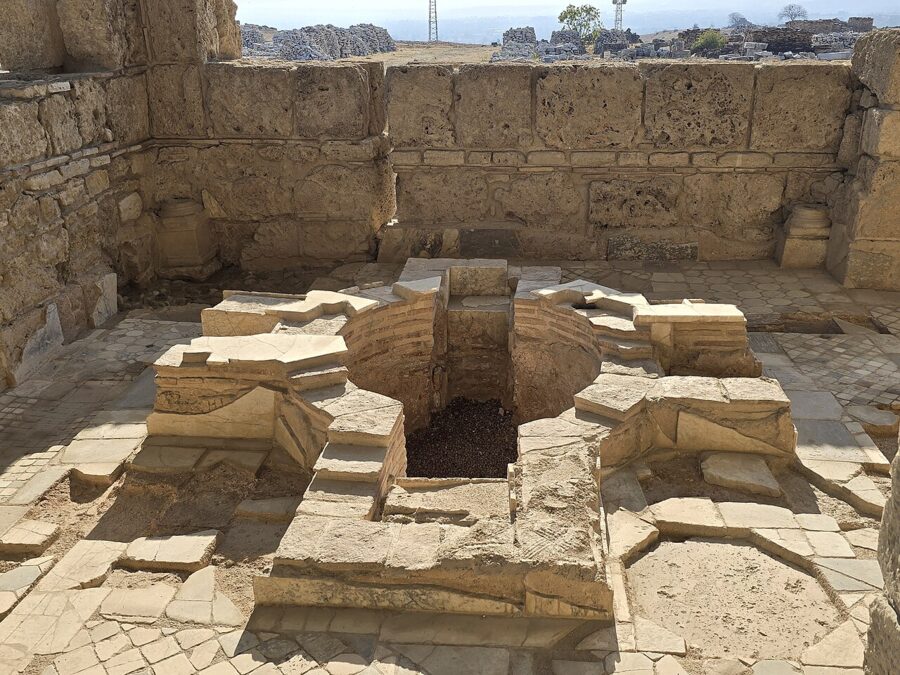
The church is the one building on this route that matches the picture in most people’s heads. Şimşek dates it to the reign of Constantine (306–337) and its destruction to an earthquake under the emperor Phocas (602–610). Found in 2010, it was restored between 2011 and 2015 and covered with a modern roof built with the Denizli metropolitan municipality, work that won a Europa Nostra award in 2016.
You walk through the nave on a raised walkway, past the stumps of the colonnades and the remains of the floor, to a cross-shaped marble baptismal pool in a side room, one of the oldest and best preserved found anywhere. A small latrine in the same complex reminds you that the place was a working building, not a monument.

Getting there and the hours
Laodicea is about 6 km north of central Denizli, just off the road to Pamukkale. Any Pamukkale-bound minibus from Denizli otogar will drop you at the Laodikeia junction if you ask, and from there it is roughly 1.5 km on foot to the gate; flag a minibus back to Denizli or on to Pamukkale from the same road. The site opens 08:00–21:00 from May to September and 08:00–17:00 from October to April, and costs €12.
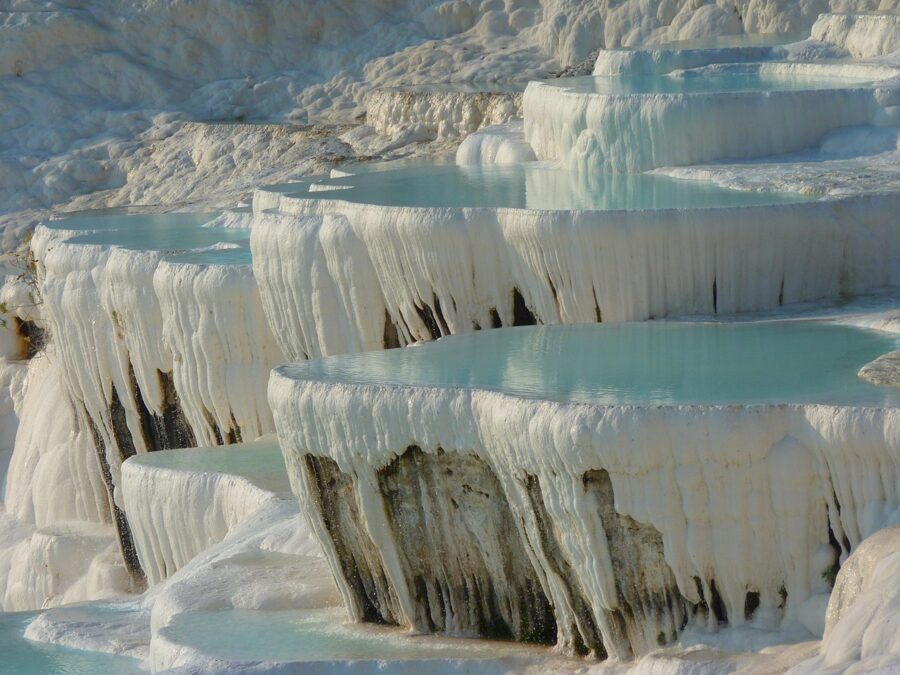
Hierapolis and the white travertines of Pamukkale are 12 km up the road and an obvious pairing. They are covered in the Turkey itinerary; the short version is that the ticket is €30, and the site opens at 06:30 at its south gate in summer, which is the time to go.
Ephesus: the first letter, in brief
Ephesus is first in Revelation’s list and first in most people’s plans, and it has its own guide: see the Ephesus guide for the ancient city, the tickets and the crowds. What matters for this route is how it fits.
The ancient city costs €40 in 2026 and is the single most expensive ticket on the loop. In Selçuk town, the Basilica of St John on Ayasuluk Hill, €6, was built by Justinian in the sixth century over the grave that tradition gives to John, the man named as Revelation’s author. It is the site on this route most directly tied to him, and it draws a fraction of the crowds at Ephesus.
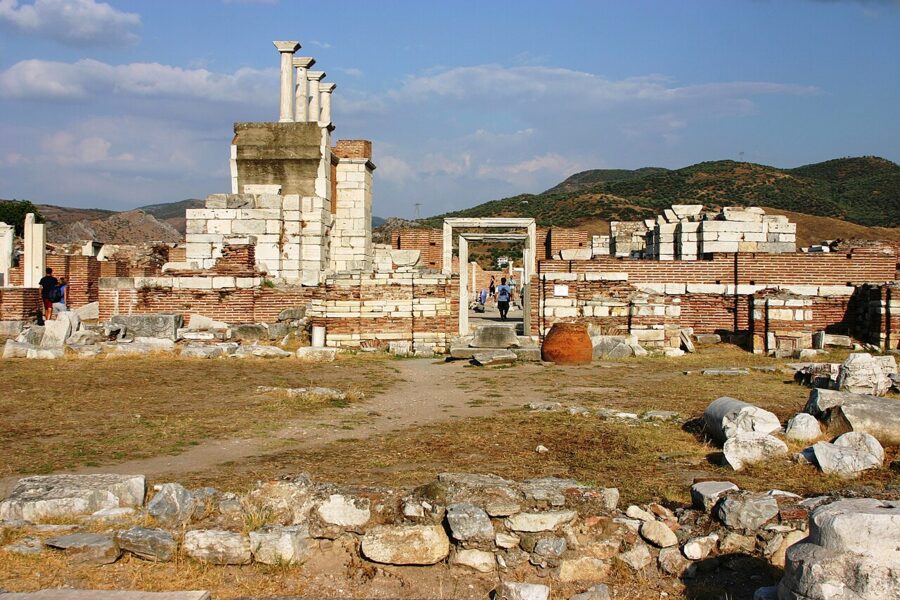

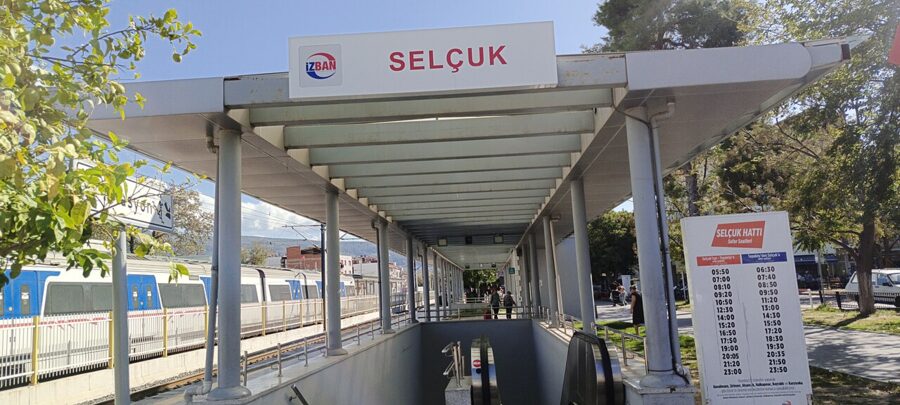
Selçuk is on both the İZBAN suburban network from İzmir, with a change at Tepeköy, and the İzmir to Denizli railway, so it can sit at either end of the loop.
Getting between them by bus and train
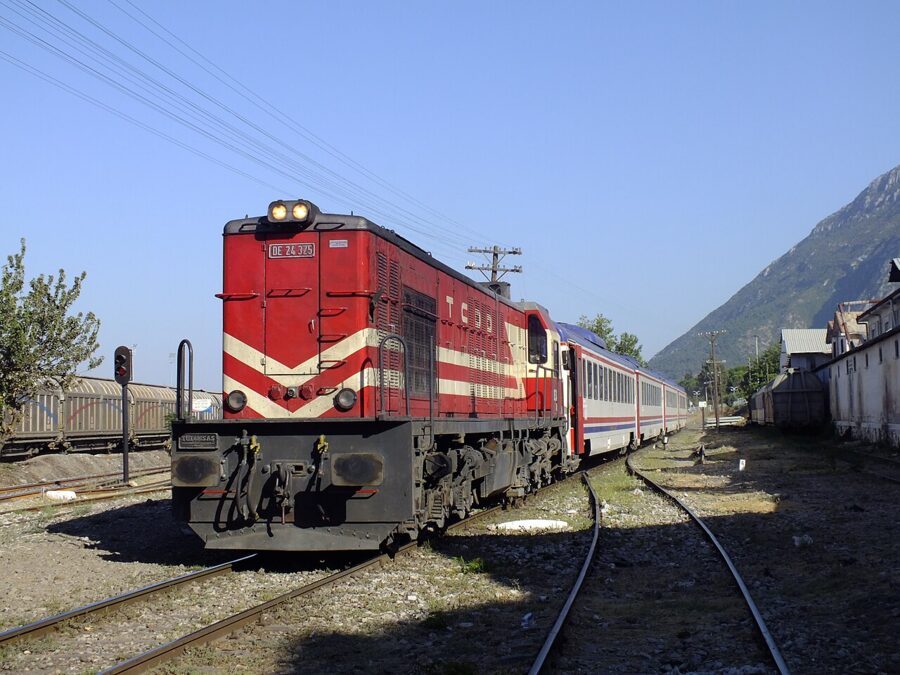
All seven are reachable by public transport, and six of them by train. The geography is simple once you see it: İzmir sits at the hub, with one rail line running northeast through Manisa to Akhisar, a second running east through Manisa to Sart and Alaşehir, and a third running south through Selçuk to Denizli. Bergama is the exception, served only by bus.
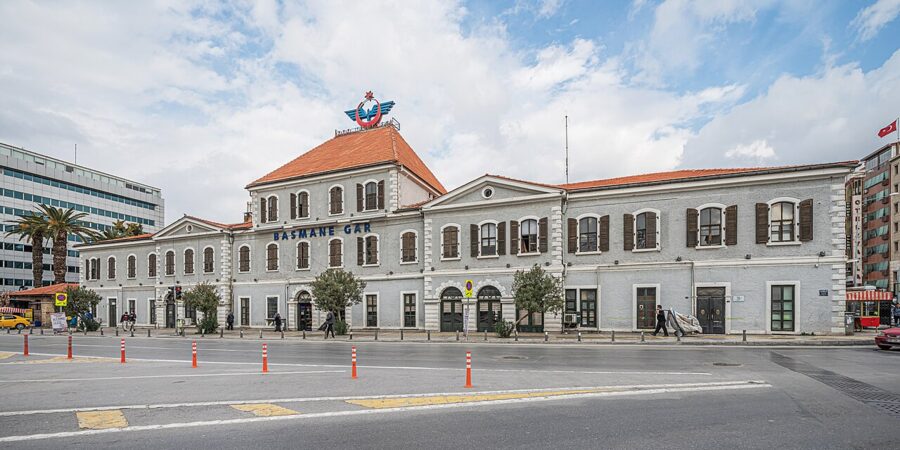

Regional trains from İzmir Basmane
TCDD regional trains are slow, cheap and comfortable enough, and their stations sit close to three of the sites. Timetables published in August 2026 show:
- Basmane to Akhisar: four trains a day (06:40, 08:40, 16:00 and 19:05), about 2 hours 40 minutes, from about 175 TL in 2026.
- Basmane to Sart and Salihli: five trains a day (07:33, 11:05, 13:02, 15:20 and 20:05), about 2 hours 40 minutes to Sart, from about 200 TL. Some continue to Alaşehir and Uşak.
- Basmane to Selçuk and Denizli: eight trains a day, from 07:02 to 23:10, about 1.5 hours to Selçuk and 5 hours to Denizli, from about 380 TL to Denizli.
These times shift with each timetable change, and the trains run late. Check the day’s times on the TCDD Taşımacılık site or at the station before you plan a connection around them.

Intercity buses
Buses fill the gaps. From İzmir otogar, out in the Pınarbaşı area and linked to the center by city buses, there are around 21 departures a day to Akhisar (about 1 hour 35 minutes, from about 400 TL in 2026) and buses through the day to Bergama (about 2 hours). Bergama’s otogar is on the highway roughly 7 km from the old town; minibuses and company shuttles run into the center.
Two cross-country links matter for a loop that does not go back through İzmir. Bergama to Akhisar has two direct buses a day, at 13:30 and 16:15 in late 2026, run by Alaşehir Sarıkız Turizm and Soma Seyahat, taking about 1.5 hours for about 400 TL. Alaşehir to Denizli has around 17 departures a day with companies including Alaşehir Sarıkız Turizm, Kamil Koç and Balıkesir Uludağ Turizm, about 1.5 hours, from about 350 TL.

Is a hire car worth it?
For one person, no: the trains and buses cover everything, and a few days of car hire plus fuel cost more than every bus and train fare on the loop put together. For two to four people with only three days, a car starts to make sense, because it lets you do Akhisar, Sart and Alaşehir in a single day without waiting on connections. The drives are short by Turkish standards: İzmir to Bergama about 112 km, Bergama to Akhisar 83 km, Akhisar to Sart 61 km, Sart to Alaşehir 49 km, Alaşehir to Laodicea 98 km, Laodicea to Selçuk 184 km.

If you do hire, pick up and drop off at İzmir airport, which is about 50 minutes from Selçuk, and avoid driving into central İzmir at all. None of the roads on this loop is difficult.
A three-day and a five-day plan
Three days is the minimum and needs a car. Five days works on buses and trains with slack for late connections. Both end in Selçuk, which leaves Ephesus and the House of the Virgin Mary for the next morning.
| Day | Three days, hire car | Five days, bus and train |
|---|---|---|
| 1 | İzmir agora at 08:30; drive to Bergama; acropolis by cable car, then the Asklepieion; drive to Akhisar for Thyatira before 16:30 in winter; sleep in Akhisar or Manisa | İzmir: agora, Kemeraltı, Kadifekale; sleep in İzmir |
| 2 | Sardis at 08:00; Alaşehir by noon; drive to Laodicea for the afternoon; sleep in Pamukkale village | Bus to Bergama; acropolis and Asklepieion; sleep in Bergama |
| 3 | Pamukkale at opening; drive to Selçuk (about 2 hours); Basilica of St John; Ephesus the next day | 13:30 bus to Akhisar, Thyatira and köfte; bus back to İzmir (about 1.5 hours); sleep in İzmir |
| 4 | 07:33 train to Sart; Sardis; onward to Alaşehir by a later eastbound train or by road from Salihli; St John before 17:00; evening bus to Denizli; sleep in Denizli or Pamukkale | |
| 5 | Laodicea in the morning; Pamukkale in the afternoon or the train to Selçuk; Ephesus the following day |
Day 4 of the slow plan is the tight one. If the Sart train runs late, drop Alaşehir to the next morning and take the Alaşehir to Denizli bus then; there are buses most of the day.
Tickets, hours and the MuseumPass question
Every paid site on the route is a state site run by the Ministry of Culture and Tourism, priced in euros for foreign adults and payable by card. Prices below are the 2026 figures at the gate; the ministry’s next price list takes effect on 1 April 2027. Summer hours apply roughly from April or May to the end of September or October, depending on the site.
| Site | Ticket | Summer hours | Winter hours | MuseumPass The Aegean |
|---|---|---|---|---|
| Agora of Smyrna | €6 | 08:30–19:00 | 08:30–17:30 | Yes |
| Pergamon Acropolis | €15 | 08:00–18:30 | 08:30–17:00 | Yes |
| Asklepieion, Bergama | €13 | 08:00–18:30 | 08:30–17:00 | Yes |
| Bergama Museum | €3 | 08:00–18:30 | 08:30–17:00 | Yes |
| Thyatira (Tepe Mezarlığı) | €3 | 08:00–19:00 | 08:00–17:00 | No (Manisa) |
| Sardis | €3 | 08:00–19:00 | 08:00–17:00 | No (Manisa) |
| Philadelphia, St John | Free | 08:00–17:00 | 08:00–17:00 | Not needed |
| Laodicea | €12 | 08:00–21:00 | 08:00–17:00 | Yes |
| Hierapolis and Pamukkale | €30 | 06:30–21:00 | 08:00–18:00 | Yes |
| Ephesus | €40 | 08:00–21:30 | 08:00–17:30 | Yes |
| Basilica of St John, Selçuk | €6 | 08:30–19:00 | 08:30–17:30 | Yes |
| Ephesus Museum | €10 | 08:30–20:00 | 08:30–17:30 | Yes |
At some sites the box office shuts before the gate: 30 minutes early at the agora and the Ephesus Museum, and at 16:30 in winter at Thyatira and Sardis. The sites are open every day of the week.
Does the MuseumPass pay?
MuseumPass The Aegean costs €95, runs for seven days from the first site you enter, and allows one entry per site in the İzmir, Aydın, Muğla and Denizli provinces. It does not cover Manisa province, which is where Thyatira, Sardis and Philadelphia are, and it is not valid for the Pamukkale Antique Pool or for evening “night museum” openings.
The sum is simple. Every pass-covered site in the table adds up to €135, so if your week includes Ephesus, Hierapolis and Pergamum, the pass saves you about €40. The covered church sites plus the Bergama Museum, Ephesus and the Basilica of St John come to exactly €95, so the pass is a wash there. Without Ephesus, the covered sites total under €50 and the pass is a waste.

MuseumPass Türkiye, €165 for 15 days, covers Manisa as well, and pays only if this route is one part of a longer trip that also takes in the paid museums of Istanbul or Cappadocia. The Turkish MüzeKart is sold to Turkish citizens and foreign residents, not to tourists.
The other biblical sites of Turkey
Much of the New Testament happens in what is now Turkey: Paul’s birthplace, most of his journeys, many of the places his letters were sent, and all seven of Revelation’s churches. A few of those places are worth folding into the same trip. These are the ones that are open and reachable without a tour.
The House of the Virgin Mary, near Selçuk
Meryem Ana Evi is a small stone chapel on Bülbül Dağı, 9 km from Selçuk, identified in 1891 by Lazarist priests following the visions of the German nun Anne Catherine Emmerich as the house where Mary spent her last years. Popes Paul VI, John Paul II and Benedict XVI have all prayed here, and it draws Muslim pilgrims too, who honor Mary as Meryem Ana. The Catholic Church has never formally ruled on whether Mary lived here.
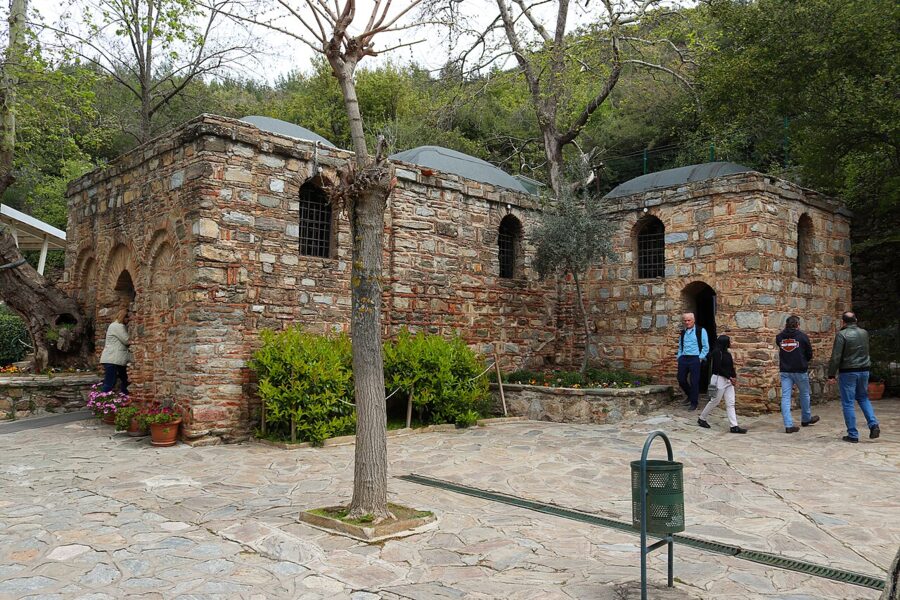

The shrine is open 08:30–17:00. The gate fee, in lira and charged by the national parks directorate that manages the forest, is card only, and the MüzeKart is not accepted there; entering the chapel and praying is free. There is no public bus. Take a taxi from Selçuk otogar or the Ephesus taxi rank, or walk up from the Ephesus upper gate, about an hour through forest.
Myra and St Nicholas
Demre, ancient Myra on the Lycian coast, is where Nicholas was bishop in the fourth century, and his church there is where the Santa Claus legend starts. It is a long way southeast of this route, and it is covered with the harbor at Andriake in the gulet cruise guide.

Tarsus, Paul’s hometown
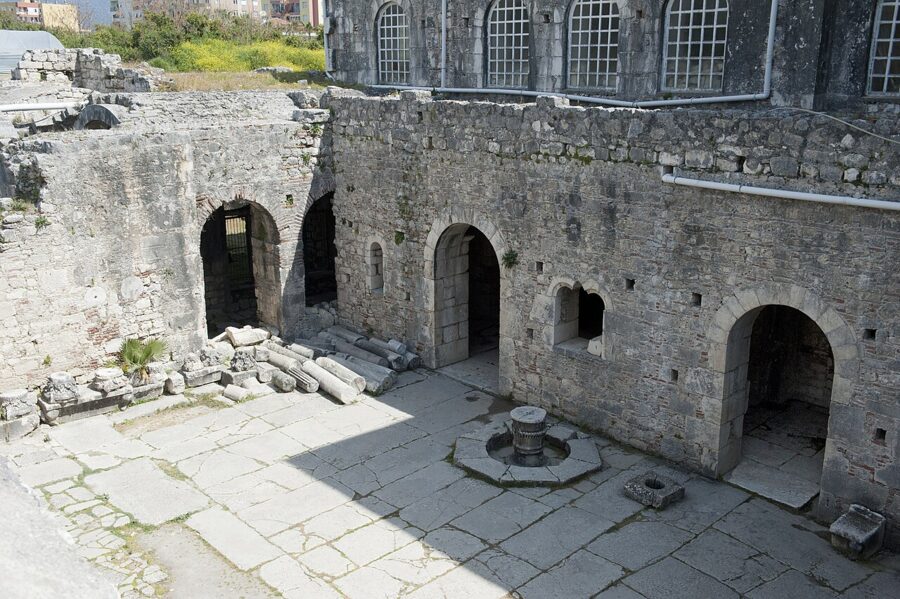
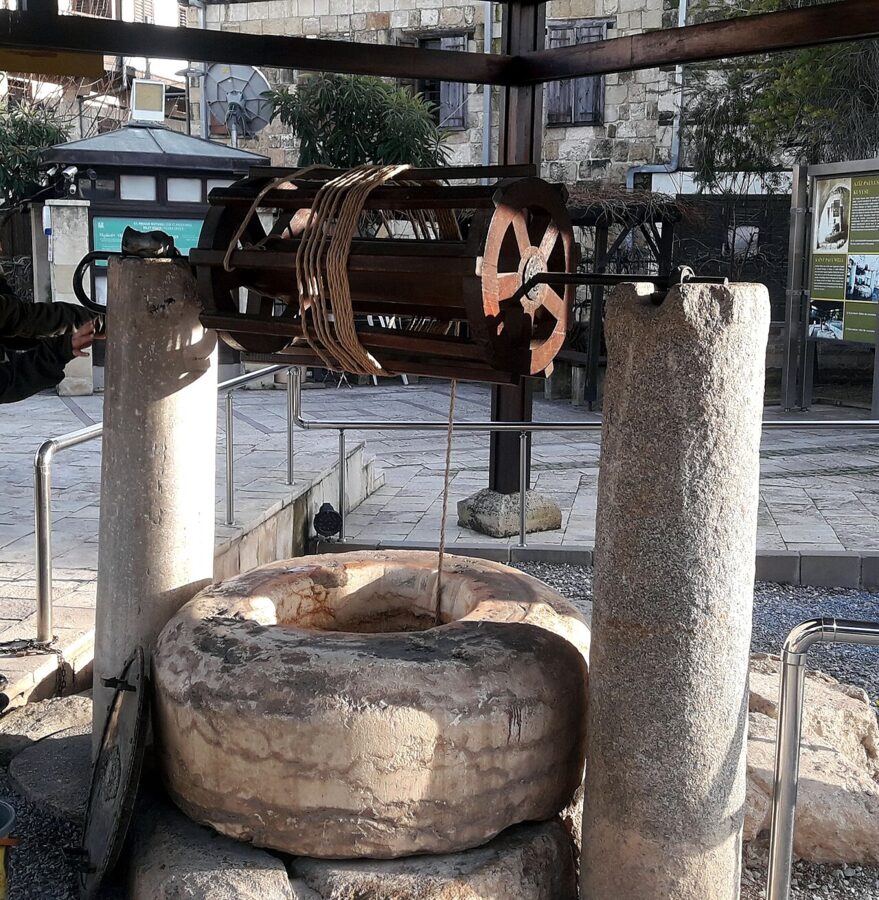
Tarsus, between Mersin and Adana on the southern coast, is where Paul was born, “a citizen of no mean city” as Acts has him say. St Paul’s Well, an old well in a courtyard of the old town, and the St Paul Memorial Museum, the town’s surviving Church of St Paul in the form it took after an 1862 rebuilding, each cost €3 and are open 08:15–19:00 in summer and 08:15–17:00 in winter. Tarsus is on the Mersin to Adana railway, an easy half day from either city.

Antakya, where the name “Christian” began
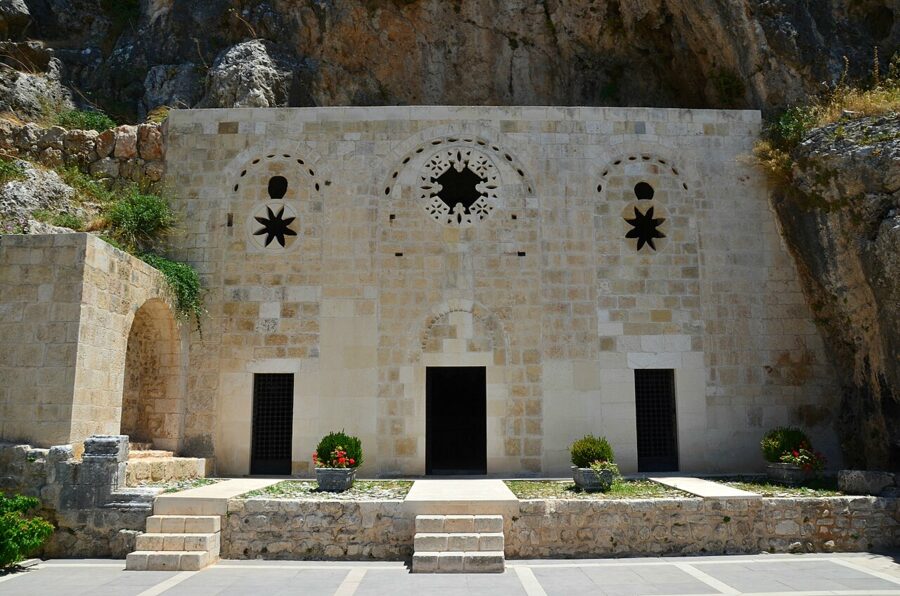
Acts says that “the disciples were called Christians first in Antioch.” The cave Church of St Peter (St Pierre) on Mount Staurin above Antakya, with a stone facade added in front of the cave in later centuries, is held to be where that early community met. The earthquakes of 6 February 2023 brought down the retaining wall and closed it; it reopened on 15 January 2024, the first tourist site in the city to do so, and now costs €8, open 08:30–17:00.

Be clear about what you are traveling into. Old Antakya was largely destroyed in 2023, and the Hatay Archaeology Museum, home to one of the world’s great mosaic collections, has been closed for repairs since the day of the earthquake and was still listed as closed in November 2026. Go for the church and for the city’s recovery, not for a full sightseeing day.
Cappadocia’s rock churches
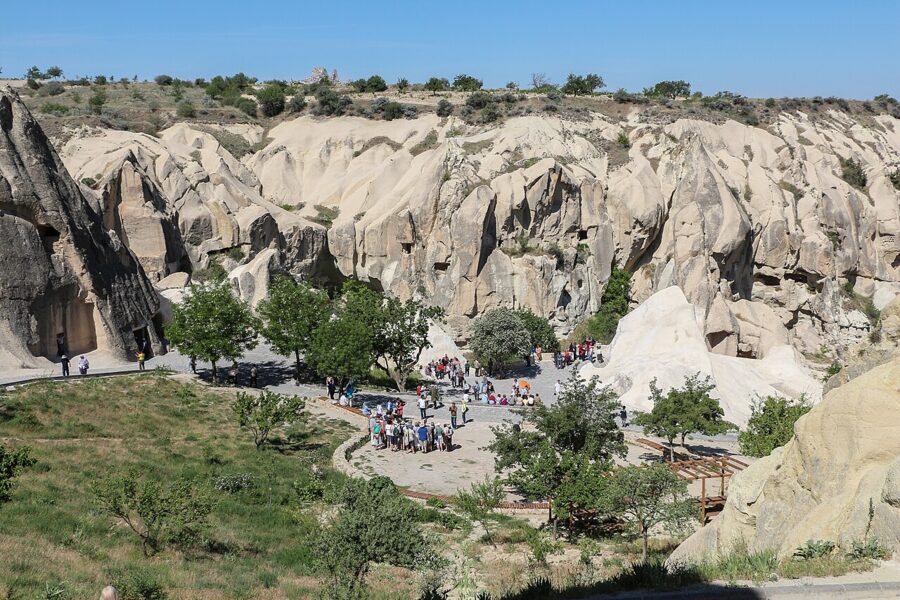
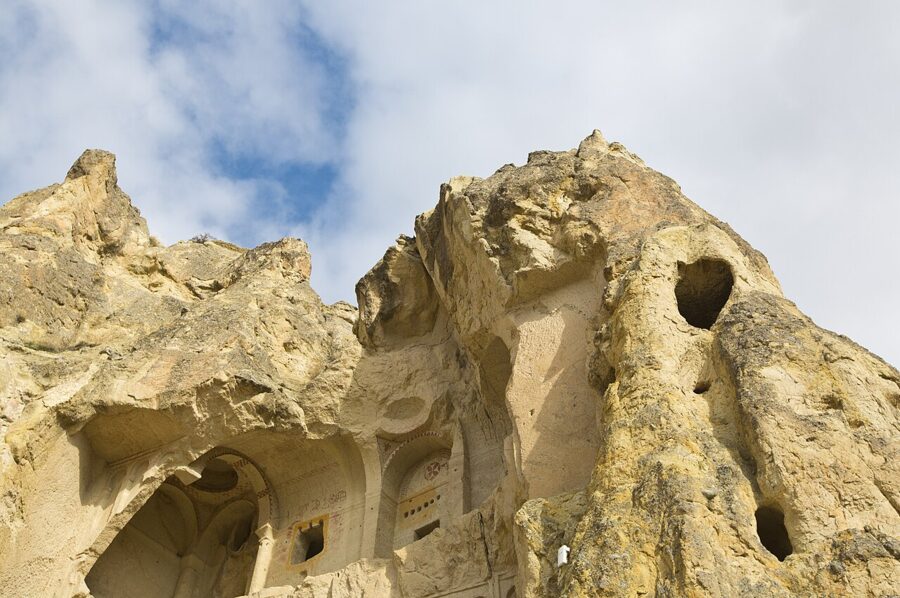
Central Anatolia’s cave churches are later than anything in the New Testament, mostly from the tenth to twelfth centuries, but they hold some of the best-preserved Byzantine church paintings in Turkey. The Göreme Open Air Museum, a cluster of monastic churches cut into the rock, costs €20 and opens 08:00–19:00 in summer and 08:00–17:00 in winter. MuseumPass Cappadocia, €65 for three days, covers it with the underground cities.


Patmos
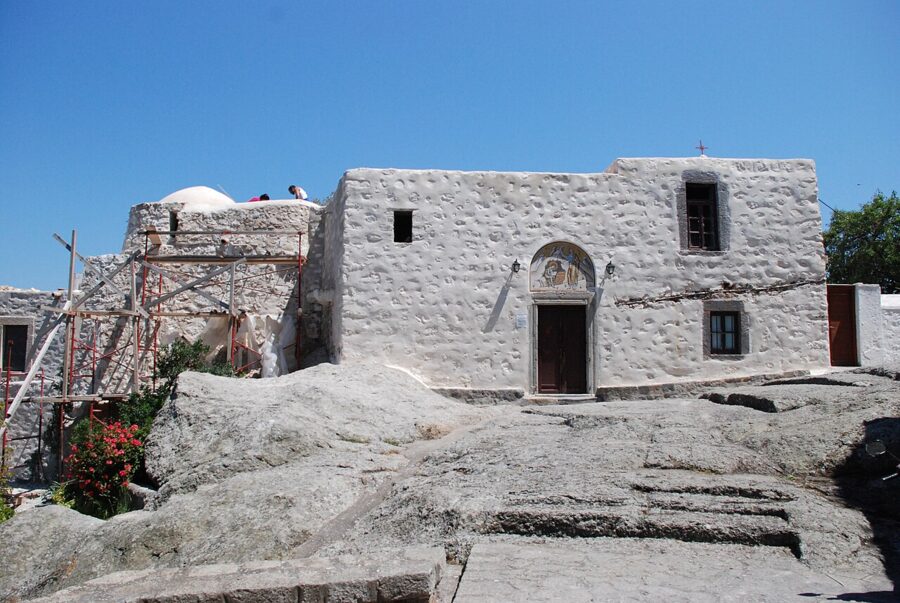
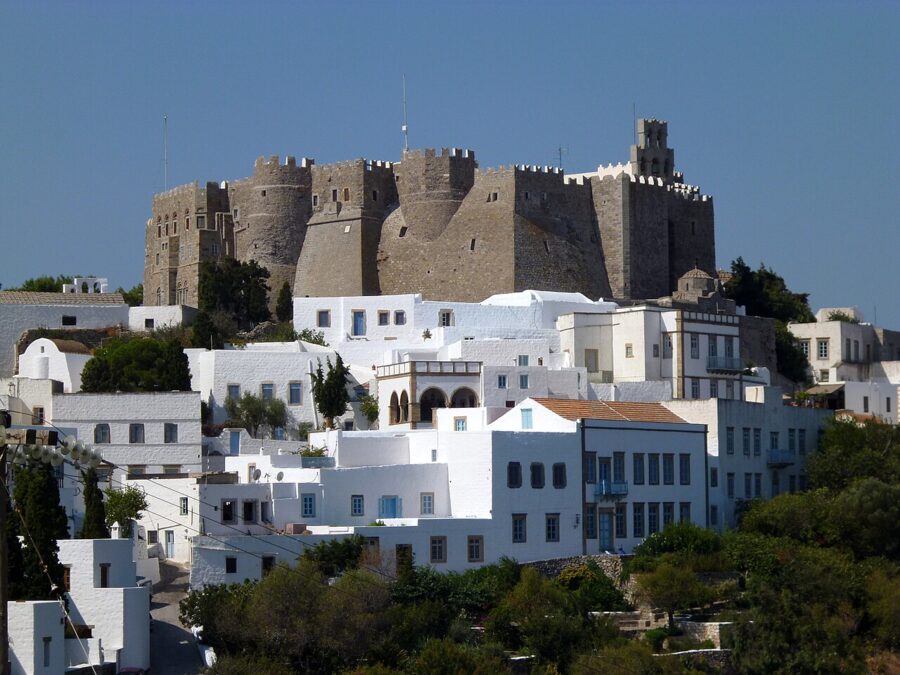
Patmos, where John says the vision came to him, is a Greek island in the Dodecanese, not part of Turkey, but it is close enough to the Turkish coast to tempt. The Cave of the Apocalypse and the Monastery of St John are on the hill above the port. It is on the Dodecanese ferry routes covered in the Greek island hopping guide.


Where to sleep, and when to go
Three bases cover the whole loop: İzmir for Smyrna, Bergama, Akhisar and Sart; Pamukkale village or Denizli for Laodicea and Philadelphia; and Selçuk for Ephesus and the House of the Virgin Mary. Sleep in Bergama for one night if you want the acropolis at opening time, which is worth it in summer.
- İzmir: the cheapest beds are the budget hotels in the streets around Basmane station and the edge of Kemeraltı, within walking distance of the agora and the trains. The area is busy and noisy, and fine for a night or two.
- Bergama: stay in the old town at the foot of the acropolis. Odyssey Guesthouse, in a restored Greek house on Abacıhan Sokak a block from the Red Basilica, has a roof terrace facing the acropolis; listings show it closed from November to March, so check before you go off-season.
- Pamukkale village: pensions line the streets below the travertines, a short minibus ride from Laodicea and from Denizli otogar.
- Selçuk: family pensions in the old town below Ayasuluk Hill, all walkable from the otogar and the train station; the Ephesus guide covers them.

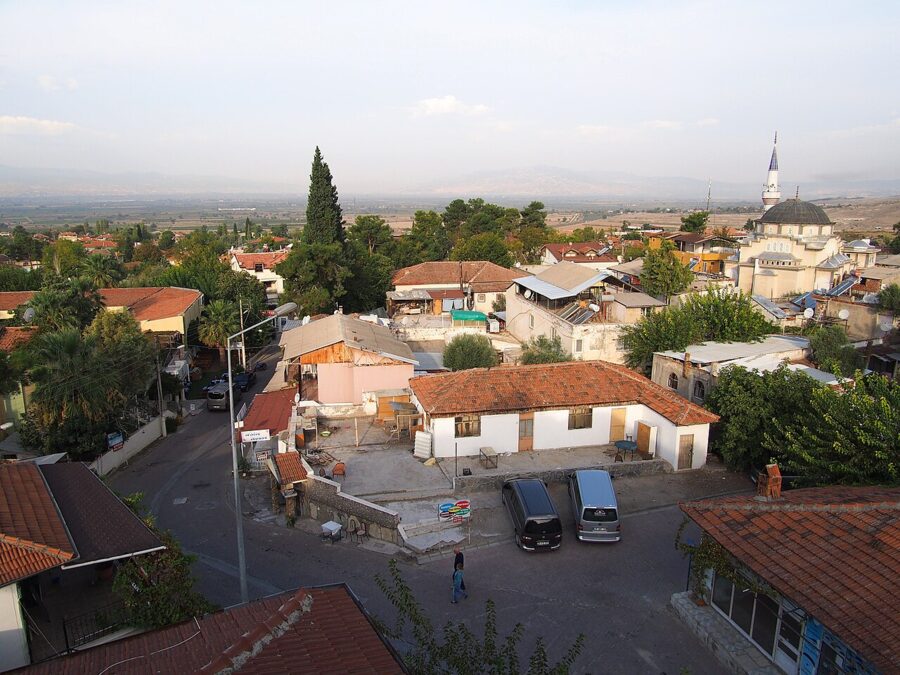

Most people reach İzmir by overnight bus or a cheap domestic flight from Istanbul, and the wider Turkey itinerary runs through Selçuk and Pamukkale anyway, which makes this loop a natural extension of it rather than a separate trip.
The best season
Go in April, May, late September or October. The inland valleys around Manisa and Denizli average highs in the mid-30s °C in July and August, and the big sites have almost no shade; in summer, start at opening time and stop by noon. Winter is quiet, but sites close at 17:00, some box offices sooner, and some of Bergama’s guesthouses shut.
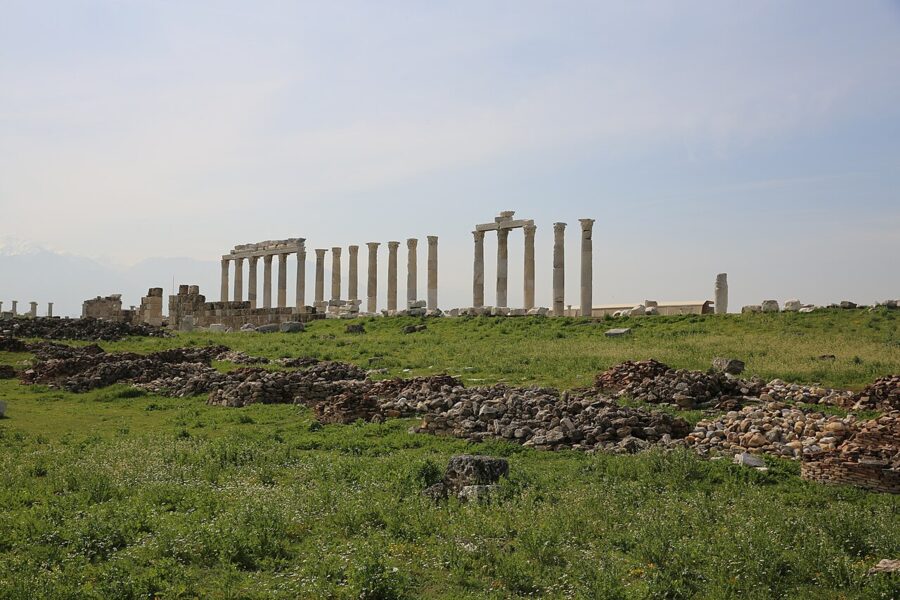

The last practical step is the first one: before you leave İzmir, put the day’s train times from Basmane in your phone, load enough lira for the Akhisar köfte and the Bergama cable car, and catch the 07:33 east. It reaches Sart halt at about 10:15, five minutes’ walk from the synagogue door.