A day on the lifts at Uludağ costs 2,100 TL in the 2026–27 season if you buy the pass online the night before, and 2,500 TL if you queue at the window in the morning. Add 500 TL for the cable car that hauls you up from the suburbs of Bursa, and you are skiing a mountain that Istanbul has used as its winter playground since the 1930s for less than a single lift ticket costs in the Alps.

That is the whole case for skiing in Turkey on a budget. The country has more than a dozen ski areas, from Uludağ above Bursa to Sarıkamış in the far north-east, and the lift passes are priced for Turkish families on Turkish wages. The hotels on the mountains are another matter: most sell full-board packages at Alpine prices, so the trick is to sleep in the city below and ride up.

Six mountains matter for a backpacker: Uludağ and Kartepe within reach of Istanbul, Erciyes above Kayseri an hour from Cappadocia, Palandöken and Sarıkamış in the high, cold east, and Kartalkaya south of Bolu. Each suits a different kind of trip, and only two of them are easy without a car.

Prices below are the 2026–27 figures where the resorts have published them. Where a resort had not by late November 2026, the 2025–26 figure is given and marked; expect the lira numbers to climb when the windows open.
Contents
Which mountain, for which trip
The short version, before the detail:
- A weekend from Istanbul, with a city attached: Uludağ. Ferry or bus to Bursa, cable car up, sleep in Bursa and eat İskender at night.
- One day out of Istanbul and back: Kartepe, but only after a proper snowfall and never on a Saturday.
- Skiing as part of a Cappadocia trip: Erciyes. The biggest lift system in Turkey, a pay-per-ride ticket that suits beginners, and Göreme 90 minutes from Kayseri by bus.
- The best snow, for a week of real skiing: Palandöken. Long, steep, high and cold, with a city at the bottom.
- The slow train and powder in the pines: Sarıkamış, a stop on the Doğu Ekspresi a day out of Ankara.
- Only if someone else is paying for the hotel: Kartalkaya. Good mountain, no cheap way to stay on it.
Turkey is not a place for a ski-in, ski-out bargain. It is a place where a lift pass costs what a nice dinner costs at home, where the snow in the east is drier than most of the Alps, and where the day ends with a city, a hammam or a bowl of soup rather than a resort bar.
When the snow comes, and when the crowds do
The Turkish season is shorter than the Alpine one and starts later. Uludağ publishes its 2026–27 season as 18 December to 31 March, though its information site also notes that runs open once there is 35–40 cm of snow and can stay open into mid-April in a good year. In 2025–26, Palandöken opened on 13 December, Sarıkamış on 17 December with a torchlit run and three days of free lifts, and Erciyes on 18 December.
Altitude decides almost everything. Kartepe tops out around 1,700 m, close to the warm Sea of Marmara, and its season depends on whether a cold spell lines up with a weekend. Erciyes runs from about 2,150 m to 3,400 m on a volcano, and Palandöken from 2,200 m to 3,176 m on the edge of the cold eastern plateau. On 16 March 2026 the Turkish State Meteorological Service measured 275 cm of snow at Palandöken, 240 cm at Kartalkaya, 187 cm at Sarıkamış, 179 cm at Erciyes and 146 cm at Uludağ, which is a fair picture of the pecking order in most winters.
The Meteorological Service publishes live snow depths for the ski centers on its snow depth page (filter by “Kayak Merkezleri”). It is the one place to look before you buy a bus ticket, because the resorts’ own pages tend to stay cheerful whatever the snow is doing.
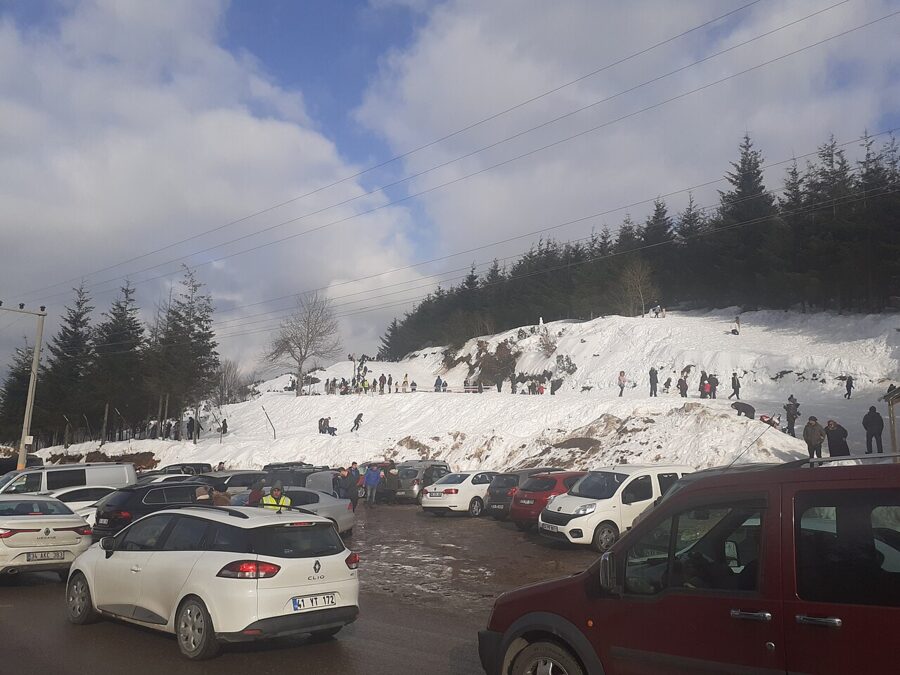

Then there are the crowds. Turkish ski weekends are family affairs: sledding, snowball fights, tea on the terrace, a lot of first-timers on rental skis and a long queue at the beginner lifts. Weekdays are quiet almost everywhere. The busiest stretches are New Year, when the mountain hotels sell their most expensive packages, and the school semester break, which in 2026–27 runs from 25 January to 5 February, so schools are out from Saturday 23 January to Sunday 7 February 2027.
Uludağ also hosts its Winterfest from 17 to 24 January 2027, the week before the semester break. If you can only go once, go in the first half of January after the New Year rush or in early March, when the eastern resorts still have deep snow and the families have gone home.
Uludağ, above Bursa
Uludağ, the ancient Mysian Olympus, rises to 2,543 m directly behind Bursa, the first Ottoman capital. A hotel and a paved road went up in 1933, and in 1963 Bursa opened the first passenger cable car in Turkey to carry people from the edge of the city to the plateau. The line was rebuilt and extended to the hotel zone in 2014, and it is still the cheapest and most scenic way up.
The skiing is gentle, the hotels are big and dated in places, and on a weekend the whole of Bursa seems to be on the mountain. But you can do it all on public transport from Istanbul, sleep in a real city, and spend a rest day among the finest early Ottoman buildings anywhere.
Istanbul to Bursa: ferry or bus
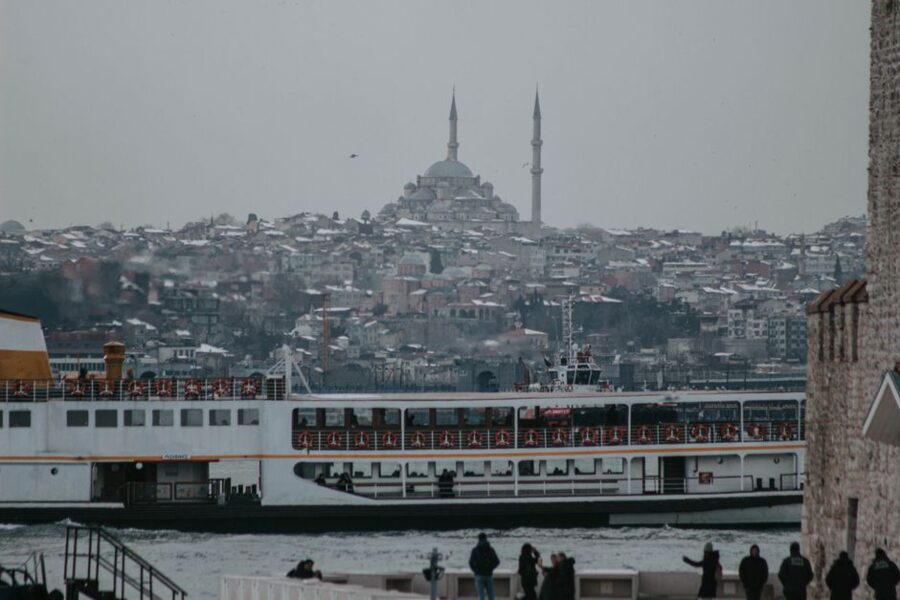
The sea route is the pleasant one. BUDO, Bursa’s municipal sea bus company, runs between Kabataş in Istanbul and Mudanya on the Bursa coast; from 2 September 2026 the full one-way fare is 720 TL and the crossing takes about 90 minutes. İDO runs fast ferries from Yenikapı to Güzelyalı near Mudanya, from about 765 TL one way in 2026. From Mudanya and Güzelyalı it is roughly another 45 minutes into Bursa by city bus, so allow 2.5 hours door to door.
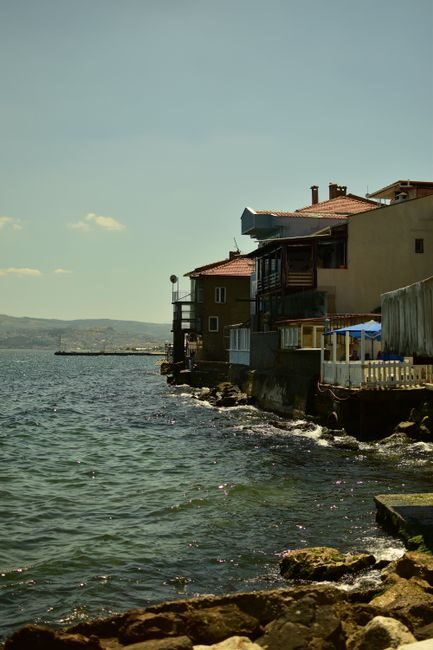
The bus is cheaper and leaves every few minutes. Coaches from Istanbul’s main otogars run to Bursa Terminal through the day, about 2.5–3 hours depending on traffic over the Osmangazi Bridge, with fares on the booking sites from around 450 TL in 2026 (Metro and Pamukkale are among the companies on the route). The catch is that Bursa Terminal is well north of the city center, so add a city bus or taxi at the other end. For getting across Istanbul to the piers or the otogar, the Istanbul travel guide covers the trams, the Marmaray and the Istanbulkart.
Which to choose? Take the sea bus out on a Friday afternoon for the view and the Mudanya waterfront, and keep the coach in mind for Sunday night, when boats back to Istanbul are busiest. In bad weather both BUDO and İDO cancel sailings, so do not book a non-refundable flight on the strength of a Sunday evening boat.
The Teleferik from Teferrüç
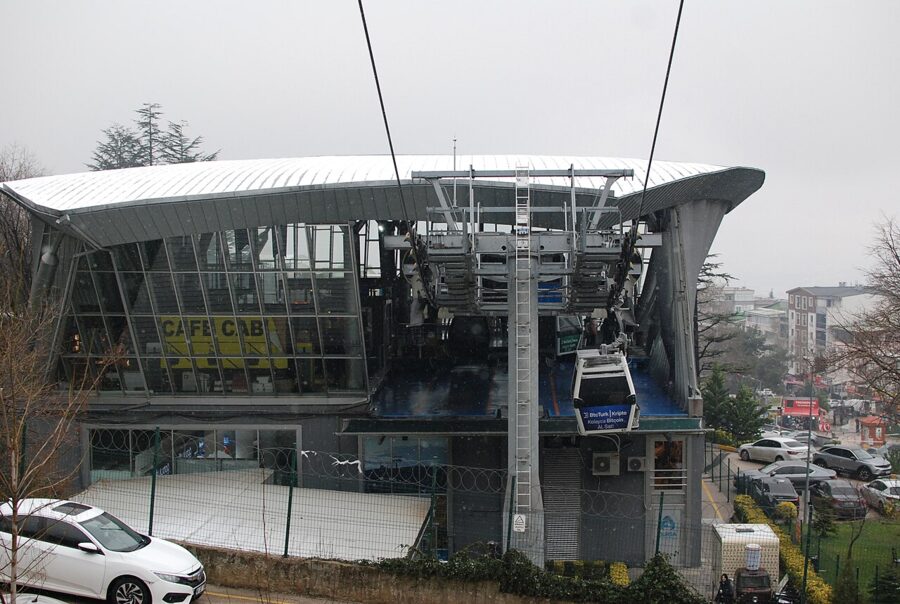

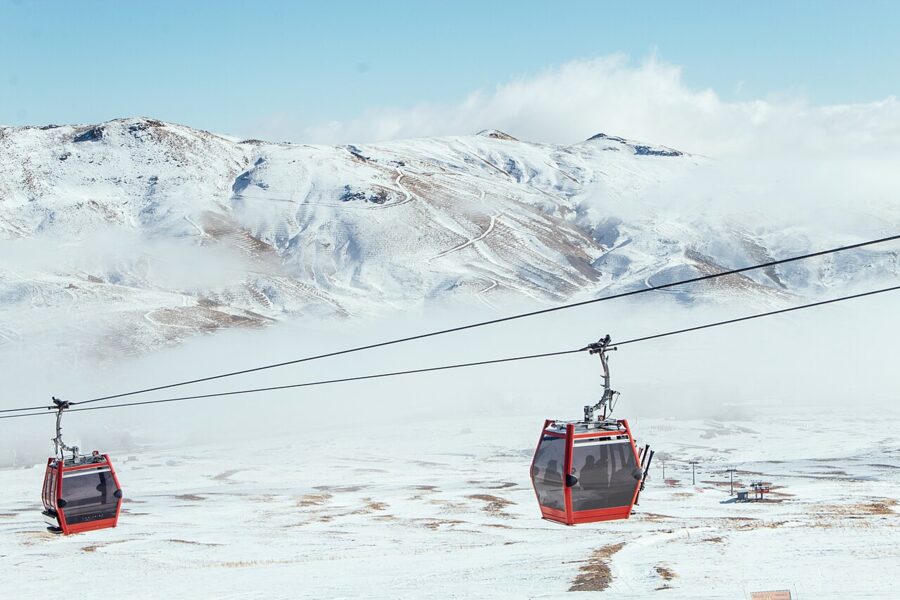
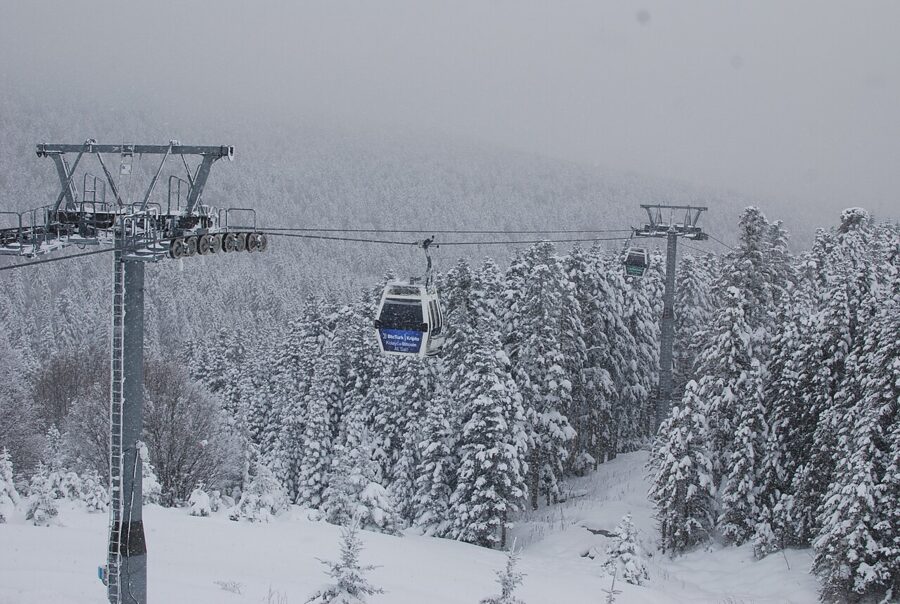
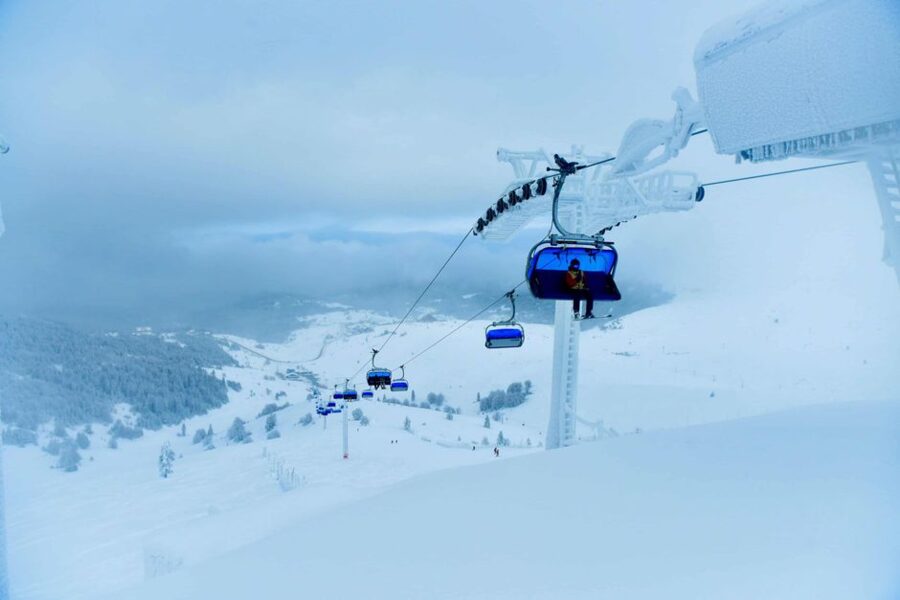
The Bursa Teleferik is an 8.8 km gondola that climbs 1,403 m in two sections, from Teferrüç on the edge of the city through Kadıyayla to Sarıalan, then on to Kurbağakaya at the top of the hotel zone. The ride to Sarıalan takes about 22 minutes and the whole trip about 32, with cabins leaving every few seconds. Published hours in autumn 2026 were 10:00–18:00 daily, but they change with the season and the weather.
The official tariff is 500 TL return, or 250 TL for students with a Turkish e-Devlet student certificate, so most foreign students pay full. The mountain’s information page says the posted fares apply to Turkish citizens but publishes no other fare; ask at the window. The standard Uludağ lift pass does not include the Teleferik; only the 29,500 TL season pass bundles the two.
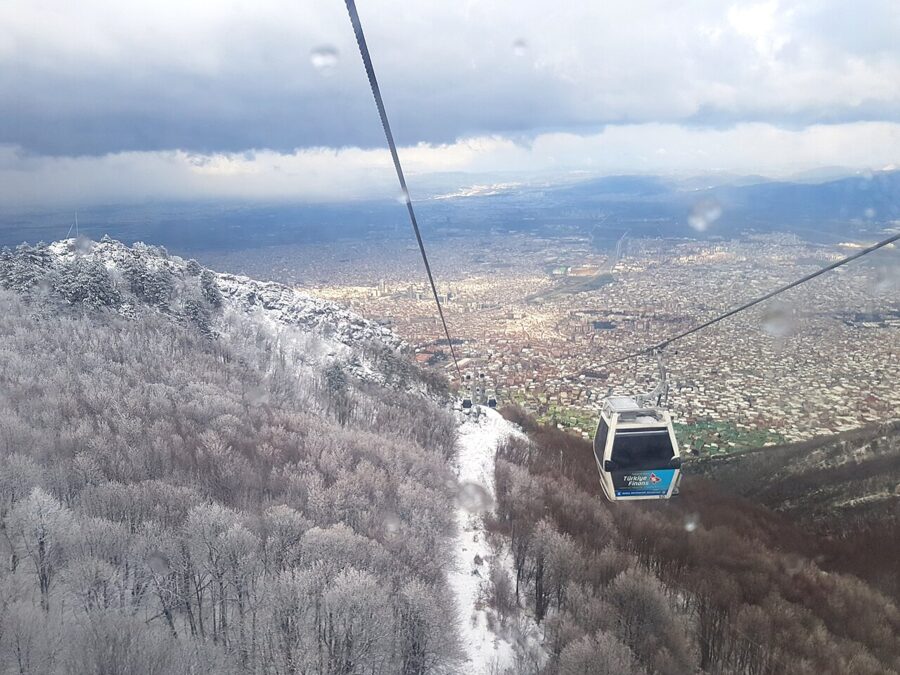

Getting to Teferrüç is straightforward. A July 2026 Bursa guide lists city bus 94 from the Terminal, S/1 and S/2 from Heykel in the center, and F/3 from Mudanya, all stopping for the Teleferik, plus dolmuşes that leave from Heykel. On the BursaRay metro, get off at 152 Evler and take a minibus up the hill. A taxi from the center takes 15–20 minutes.
Wind is the Teleferik’s weakness. Strong gusts stop it, sometimes for a whole day, and the official site puts the current status in a banner at the top of the page. Check it before you leave the hotel. The fallback is the road: a taxi from Bursa to the hotel zone is about 34 km, and Bursa’s taxi tariff for 1 December to 31 March put the trip at 2,070 TL in March 2026, which is a lot less painful split four ways.

The hotel zone and its lifts
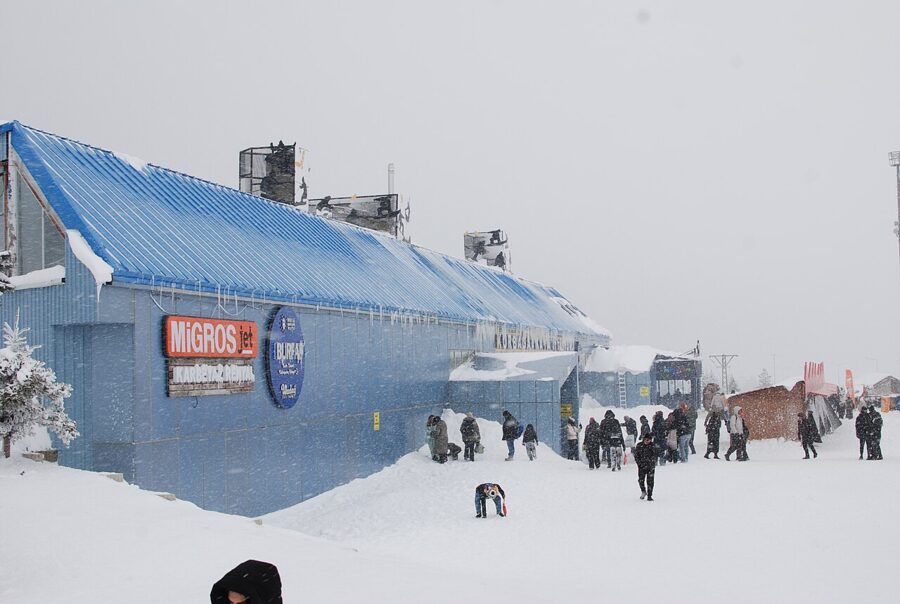

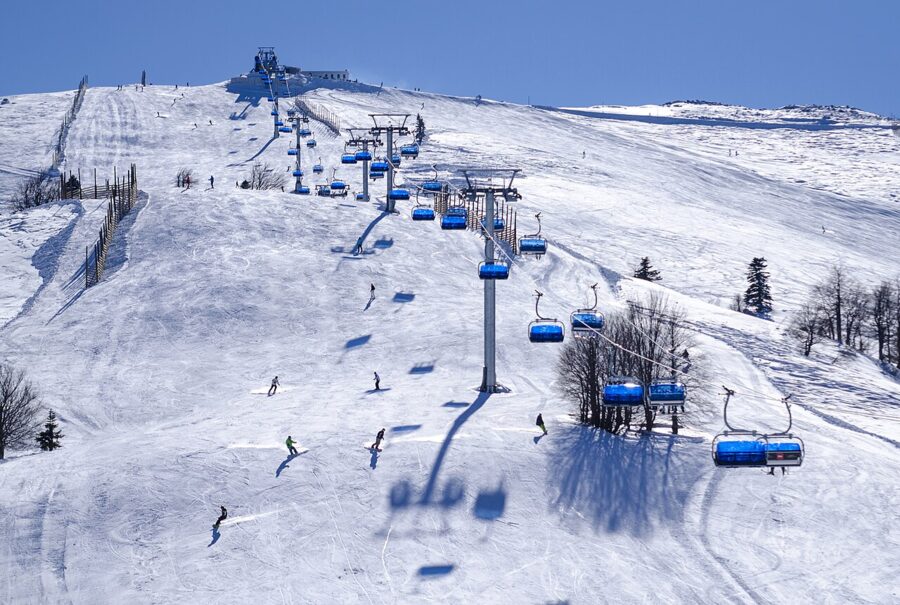
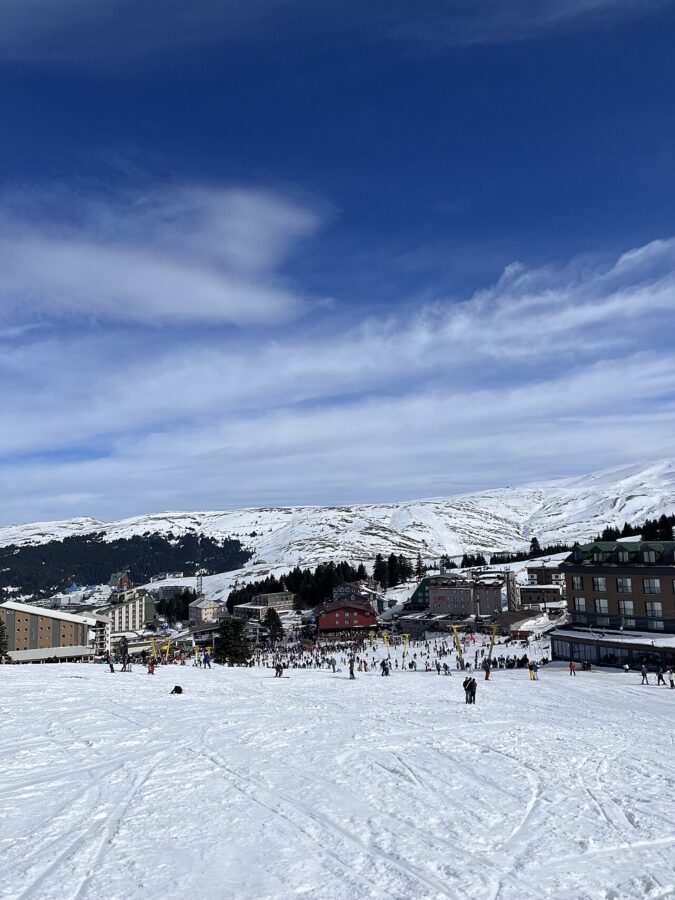
The skiing at Uludağ is concentrated in and above the hotel zone, a string of large hotels along the road at around 1,870 m. The resort’s information site lists 24 lifts and 43 runs in two areas. The first area, closest to the Teleferik and the older hotels, has short drag lifts and old two-seat chairs such as the Fahri and Karkay chairlifts, plus the Tutyeli quad. The second area, further along the road, has the Kuşaklıkaya quad chair and the Maden quad, at about 1.9 km the longest chairlift on the mountain.
Most runs are blue and red, wide and treeless, and short by Alpine standards. A competent skier will have seen everything in a day; a beginner will find more gentle slopes here than anywhere else in Turkey. Off the lifts, ski tourers climb on to the summit ridge in good conditions, but that is backcountry terrain outside the marked runs, and no place for a first visit.
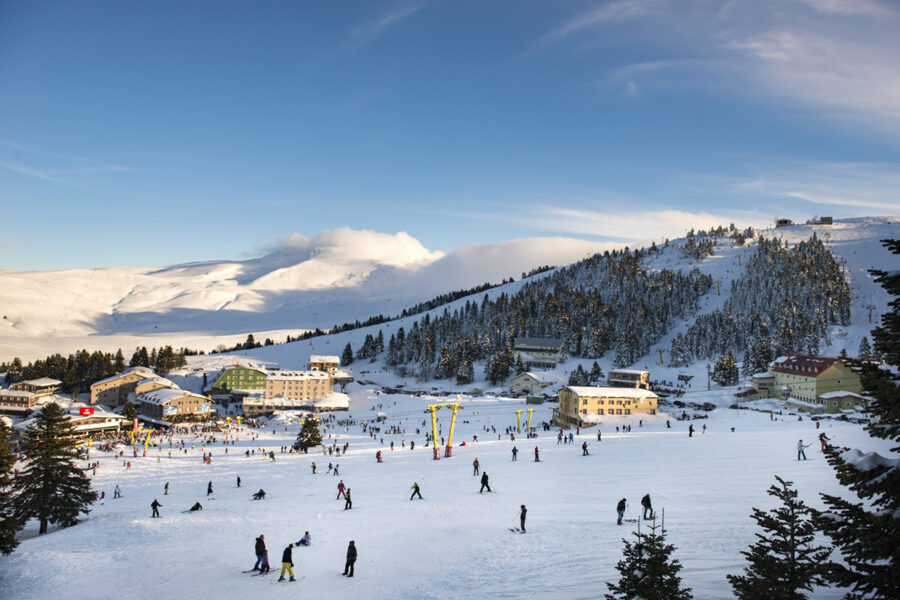

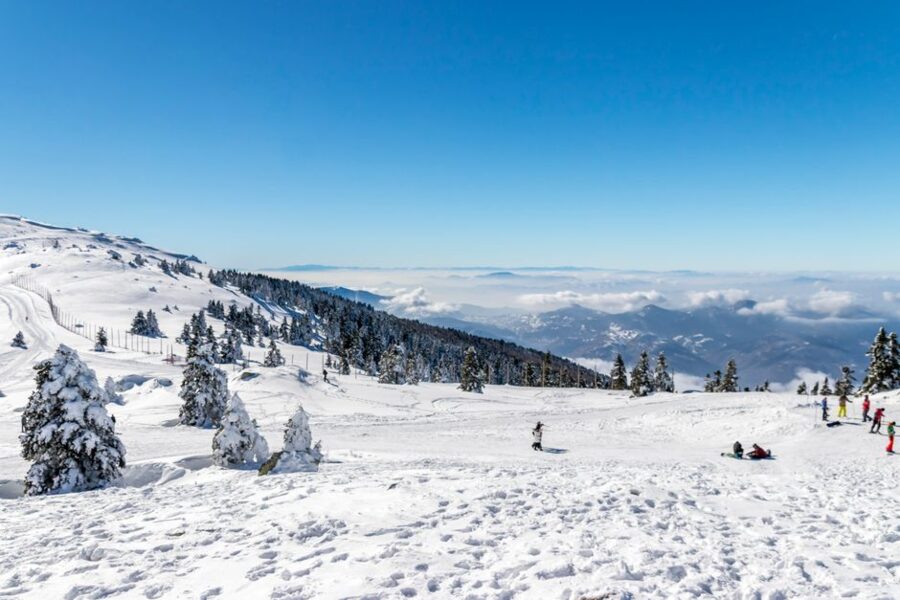
The hotels themselves are not for this budget. They sell full-board stays, often with a lift pass, and in December 2024 Turkish press reported prices of 8,000–10,000 TL per person per night, with New Year packages at 20,000 TL. Prices have only gone one way since. If you want to wake up on the mountain, look for a midweek deal in March; otherwise, sleep in Bursa.

Lift passes and rental for 2026–27
Uludağ is the one Turkish resort to have published its full 2026–27 tariff early. All tickets cover every lift and run, but not the Teleferik and not night skiing, which is sold separately.
| Ticket (2026–27) | Window | Online |
|---|---|---|
| 1 day | 2,500 TL | 2,100 TL |
| 2 days | 4,750 TL | 4,150 TL |
| 3 days | 6,750 TL | 6,050 TL |
| 4-day flex (any 4 days within 30) | 8,250 TL | 7,250 TL |
| 5-day flex | 9,500 TL | 8,500 TL |
| 3 hours | 2,000 TL | window only |
| 10 points (shareable, 30 days) | 3,000 TL | window only |
Buy online at uludagshop.com and you save 400 TL on a single day. The first online purchase is redeemed for a physical card at a ticket machine with the QR code from the email, and the card carries a one-off fee; after that you can reload it by number. A window ticket starts the day you buy it and ends at 18:00 on the last day.
The points tickets are the quiet bargain for a pair. Each lift ride deducts points, and two people can scan the same 10-point card one after the other, so a couple who want a few runs each after a late start can share 3,000 TL rather than pay for two day passes. The 5-point card is 1,750 TL.
Rental is where costs creep. A September 2026 market survey put a day’s beginner ski set at 800–1,100 TL, a better set at 1,200–1,600 TL, a snowboard with boots at 900–1,300 TL, and a helmet or goggles at 200–350 TL each; ski jacket and trousers add 600–900 TL. Most hotels run a rental room, and there is one beside the Karkay chairlift. Bring your own gloves, hat and goggles, and you have already saved the price of a lunch.
Lessons are expensive: a private hour cost about 3,000 TL in December 2024. One lesson to learn to stop and turn, then a day on the gentle slopes of the first area, is the cheapest route to actually skiing.
Sleeping in Bursa and riding up
Bursa has no hostels on the big hostel booking site, so the cheap option is a plain city hotel or a guesthouse near Heykel and the old market district, where you can walk to the mosques and the hans in the evening and catch a bus or dolmuş to Teferrüç in the morning. Book a room with breakfast and aim to be at the Teleferik when it opens at 10:00.
A realistic Uludağ day from a Bursa base, at 2026–27 prices, looks like this: about 500 TL for the Teleferik, 2,100 TL for an online day pass, roughly 1,000 TL for a basic ski set, plus city buses, tea and a sandwich. Call it 4,000 TL before lunch, and well under that with your own gear or a shared points card. Food on the mountain is the budget breaker: in December 2024 half a sucuk sandwich cost 250–300 TL at the slope cafés, so carry something from Bursa.
Plan to ride down by 17:00. The last cabins fill with everyone else who had the same idea, and if the wind picks up in the afternoon you want to be on the right side of a closure.
Kartepe: the day trip from Istanbul
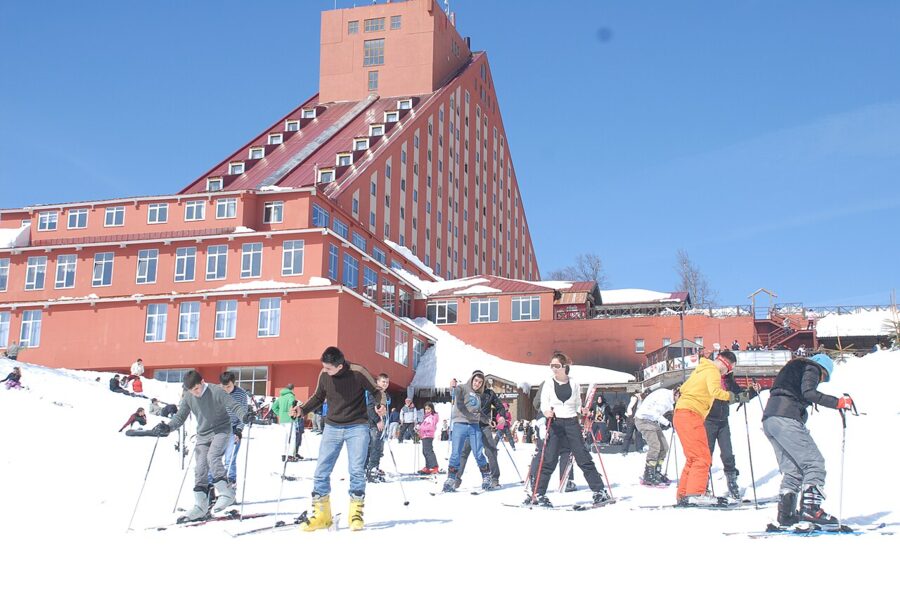

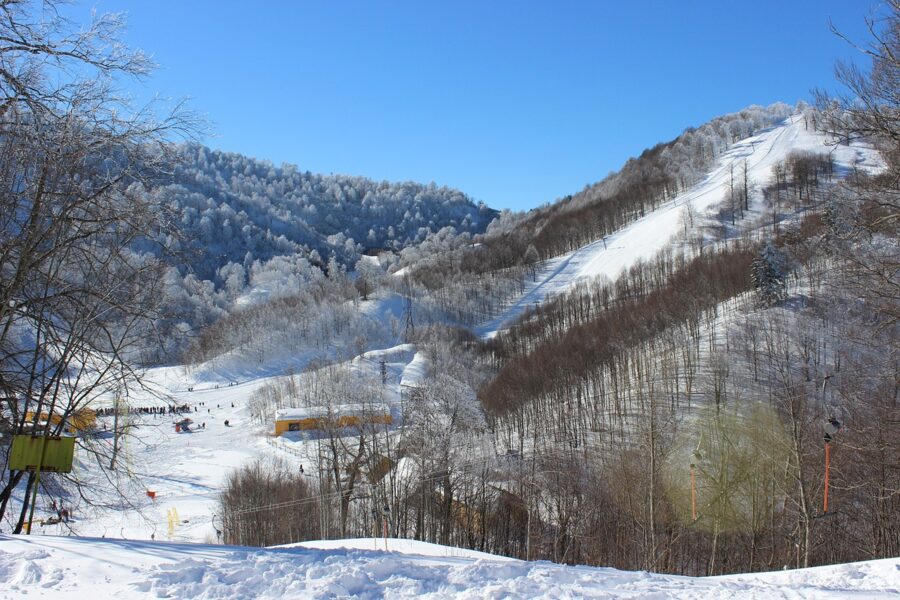
Kartepe is the closest ski area to Istanbul, on the wooded Samanlı Mountains above İzmit and Lake Sapanca, about 135 km from the city. It is small: around 21 km of runs between roughly 1,300 m and 1,700 m, served by five lifts. When it has snow it makes a fine day out, mostly blue and red runs cut through forest, with a few steeper pitches near the top.
In the 2025–26 season a full-day unlimited ticket cost 1,400 TL, a half day 1,000 TL, and single rides 350–500 TL, plus a 200 TL card deposit refunded in cash when you hand the card back. Rental was quoted at around 750 TL for a standard set. The 2026–27 prices were not out by late November.
Getting there without a car takes some planning. Trains and buses run all day from Istanbul to İzmit (the high-speed trains on the Ankara line stop there; the Turkey itinerary covers the YHT and the winter routes), and coaches take about 1.5–2 hours to İzmit’s otogar. From İzmit, minibuses and transfers go up to the ski area in season, but their times are hard to pin down, so for a day trip a taxi from the otogar, about half an hour in good conditions, is the reliable link.
Do not confuse the ski area with the Kartepe Teleferik. That is a 4,695 m gondola, opened by Kocaeli’s municipality, from Derbent up to the Kuzuyayla nature park; in 2025 a return cost 250 TL, or 500 TL for foreign visitors. It is a good ride with a view over the Gulf of İzmit, but it ends at a park, not at the ski lifts.
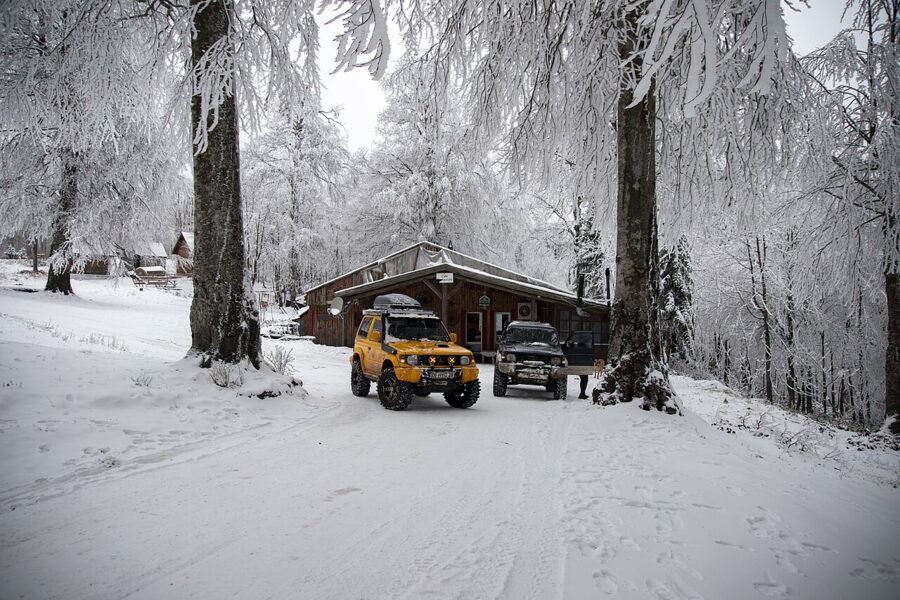

Is Kartepe worth it? On a weekday after a heavy snowfall, yes: nowhere else can you ski and be back in Istanbul for dinner. On a weekend, almost never; the road up is narrow, the car parks fill by mid-morning, and on bad days hundreds of cars have been stranded on it.
Weekend coach day trips run from Istanbul for people who would rather not drive. If you take one, check whether the lift pass and rental are included and what time the coach leaves the mountain.
Erciyes, above Kayseri
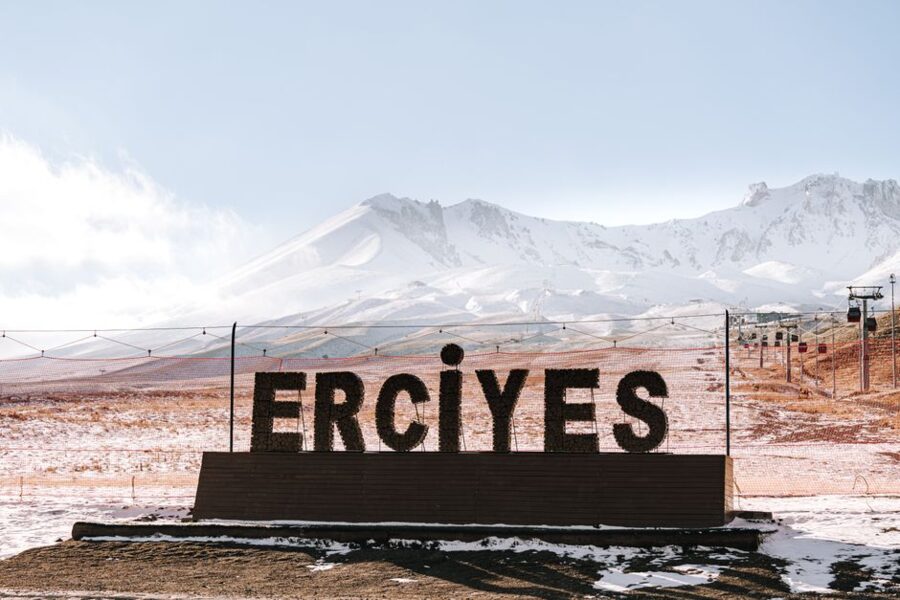
Erciyes is the Turkish ski area that looks most like a modern European one. Kayseri’s metropolitan municipality, through its company Kayseri Erciyes A.Ş., has spent more than a decade turning an old ski hill on an extinct volcano into a network of gondolas and fast chairs: the resort now advertises 112 km of runs, 41 marked runs, around 19 lifts and 154 snow cannons. The pistes run from about 2,150 m to 3,400 m, high enough that the snow holds well into spring.
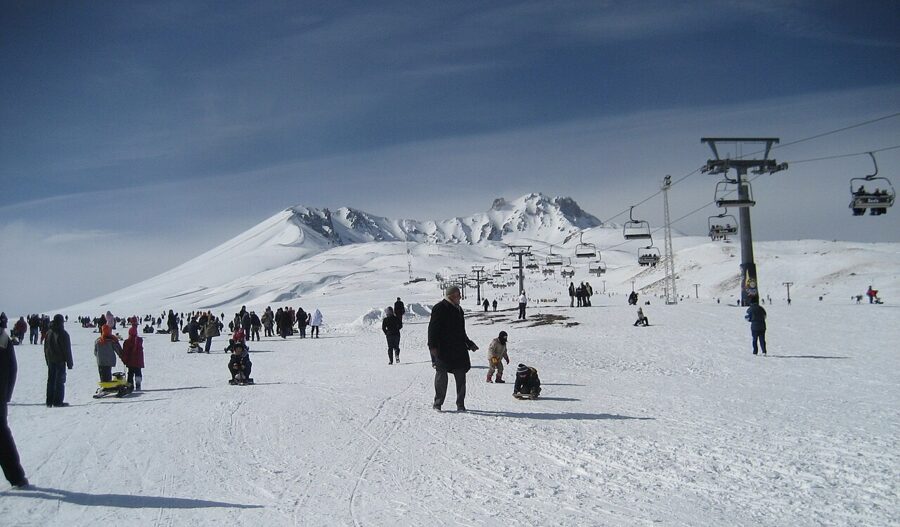
The ski area wraps around the mountain with four entrances, called gates: Tekir, with most of the rental shops; Hisarcık and Hacılar on the Kayseri side; and Develi on the south. Most of the mountain links on skis in decent snow. The terrain is mostly long, open blues and reds above the tree line, good for intermediates and wide enough that even busy weekends feel less crowded than Uludağ.
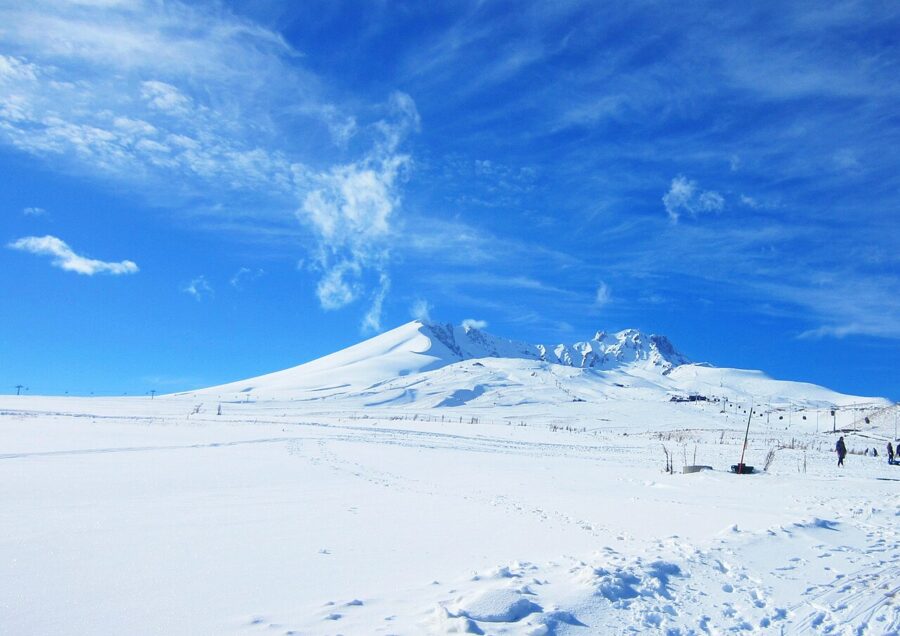

Erciyes opened its 2025–26 season on 18 December 2025 and the municipality reported about 1.25 million visitors by 22 January 2026. Most of them come at weekends from Kayseri itself. Midweek, outside the semester break, you can have whole runs to yourself.
Ride cards, not day passes
Erciyes does not sell a traditional day pass. You buy a card loaded with rides (çıkış), and each lift ride uses one. The 2025–26 prices for anyone 13 or over were:
| Rides (2025–26) | Age 13+ | Age 0–12 |
|---|---|---|
| 1 | 120 TL | 100 TL |
| 7 | 800 TL | 600 TL |
| 14 | 1,500 TL | 1,000 TL |
| 30 | 3,000 TL | 2,500 TL |
| 50 | 4,000 TL | 3,500 TL |
| 100 | 7,500 TL | 6,000 TL |
For a beginner this is the best deal in Turkish skiing. In 2025–26 the T-bar at the Hisarcık gate was free, and the moving carpets at Hacılar and Hisarcık cost 100 TL for five rides, so a first day can cost almost nothing beyond rental. For a confident skier on long gondola and chair rides, 14 rides is a solid day, which puts Erciyes at about 1,500 TL a day last season, cheaper than Uludağ. The 2026–27 card prices had not been published by late November 2026.

Rental shops cluster at the gates: about a dozen at Tekir, three at Hisarcık, two each at Hacılar and Develi. The resort does not publish their prices, so walk along and compare; it takes ten minutes at Tekir and the spread is real.
Getting up from Kayseri
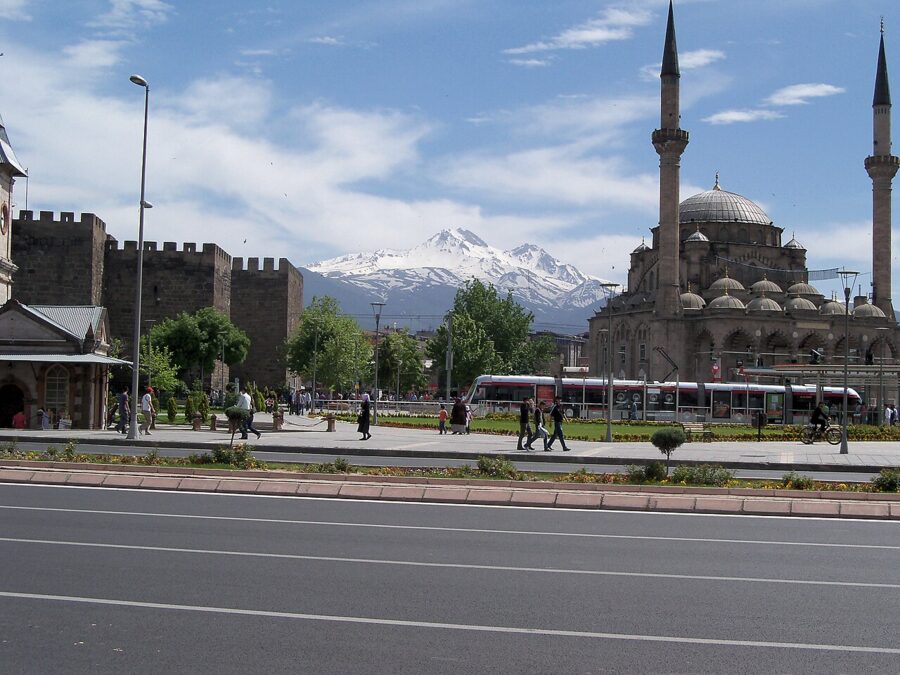

Kayseri is about 20 minutes from the ski area by car and its airport about 25. The resort says there are around 15 flights a day from Istanbul, roughly an hour in the air, and the overnight Doğu Ekspresi from Ankara stops at Kayseri too.
Without a car, use the municipal Tourism Center bus from Kale Önü in front of the castle. In the ski season it runs on Saturdays and Sundays, and daily during the semester break, with departures at 08:30, 09:30, 10:00, 10:30, 11:00 and 11:30, and returns from the ski area at 15:00, 15:30, 16:00, 16:30 and 17:30. Ring buses link the four gates on the same days.
From Develi, minibuses leave the Yoğunburç mini terminal every 15 minutes; to come back down by minibus you need to reserve a seat by calling the municipal line 153. The buses take a Kayseri Paso card or a contactless bank card, and weather can change or cancel them.
On weekdays outside the semester break there is no tourism bus, so it is a taxi or a shared ride from Kayseri, which makes a Kayseri weekend the easy plan.
Erciyes with Cappadocia
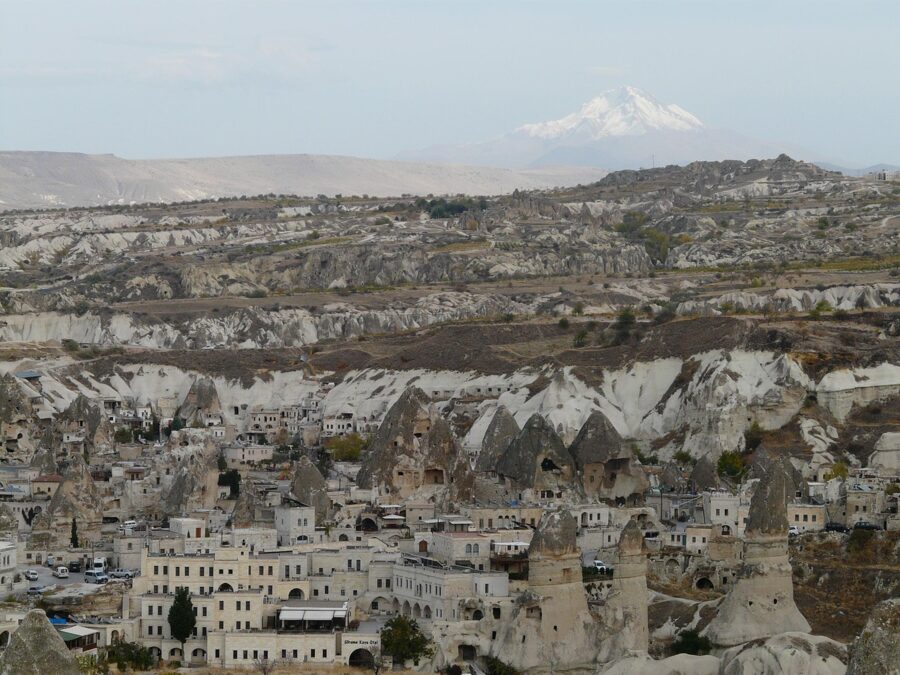
This is the pairing that makes Erciyes worth a detour. Göreme, the backpacker base for Cappadocia, is about 80 km from Kayseri, roughly 90 minutes by bus, and fares on the booking sites started at about 300 TL in autumn 2026, with Metro and Flixbus among the companies on the route. The resort itself puts Cappadocia about an hour away by car. Cappadocia in winter is a different place from the summer crowds: snow on the rock cones, cheap cave rooms and cold mornings for the balloons.
Göreme has a dozen hostels and pensions with dorm beds listed from roughly €5–15 a night on the hostel booking sites, priced in euros as much of Cappadocia now is. Kayseri has no hostels listed at all, only city hotels. The efficient plan is to ski at the weekend from a Kayseri hotel while the Kale Önü buses run, then move to Göreme for the weekdays; doing ski days from Göreme means a 07:00 bus and a long day.

Palandöken, at Erzurum
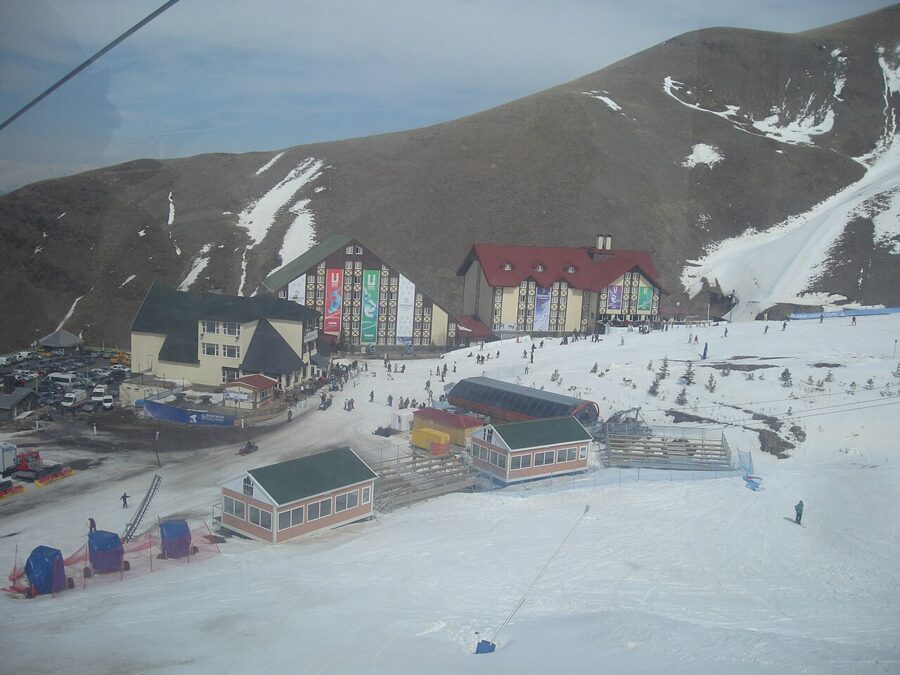

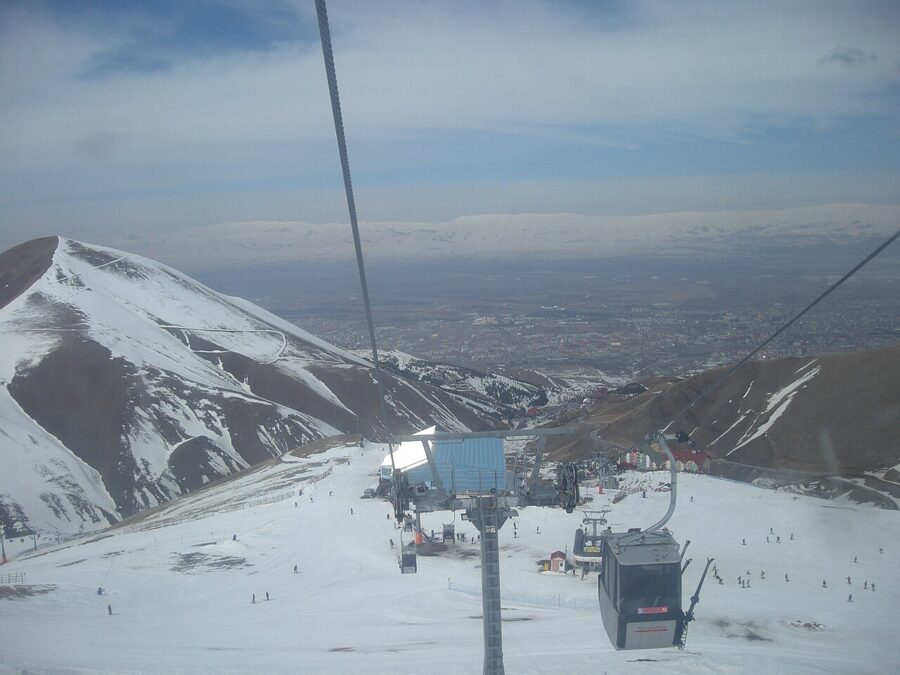
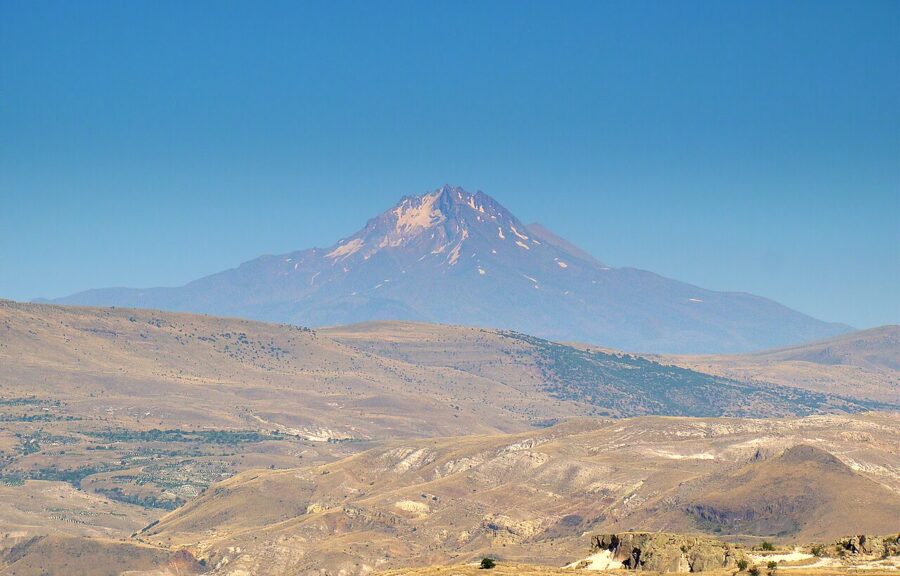
Palandöken is the serious skier’s mountain. The lifts start at about 2,200 m, a few kilometers south of Erzurum, and climb to Büyük Ejder at 3,176 m, giving close to 1,000 m of vertical on long, steep, wide-open runs. The resort was rebuilt for the 2011 Winter Universiade, held here from 27 January to 6 February 2011, and since September 2016 it has been run by Erzurum’s metropolitan municipality, which now markets the upper mountain as Ejder 3200.
The snow here is the main event. Erzurum sits on a high plateau and is one of the coldest cities in Turkey, so the snow falls dry and stays that way; on 16 March 2026 the Meteorological Service measured 275 cm, the deepest of any ski center in the country. Palandöken opened its 2025–26 season on 13 December 2025, among the earliest in Turkey, and usually stays open well into spring.
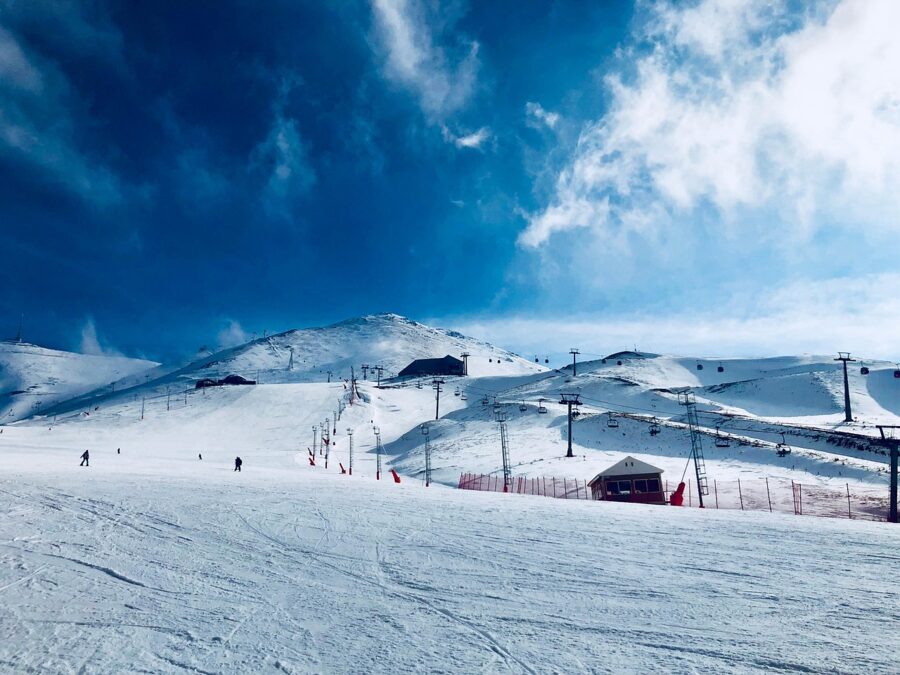
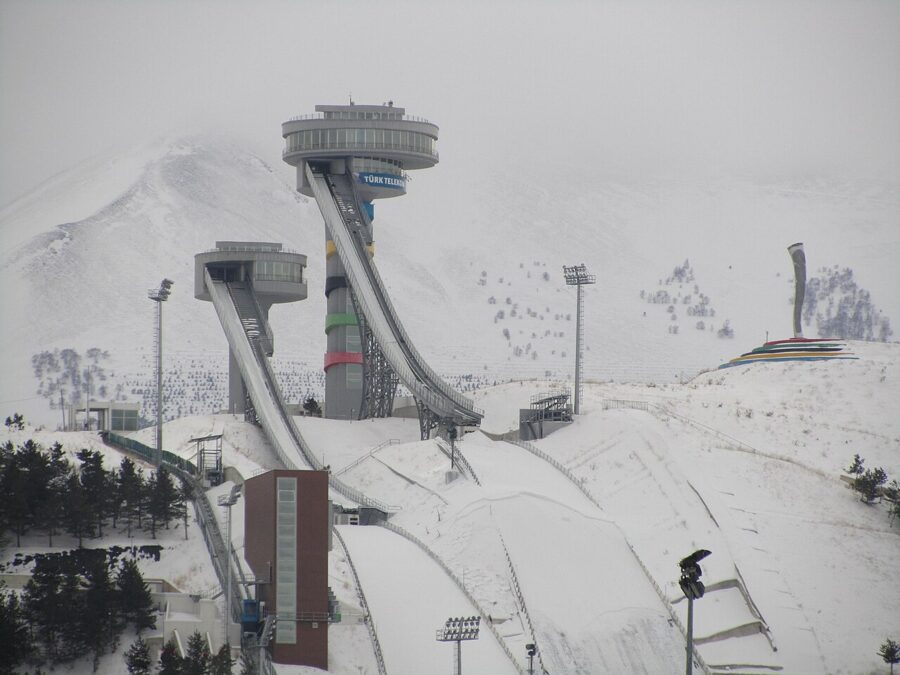

Lift prices are low. Published 2025–26 lists gave 1,000 TL for a day ticket (09:00–16:30), 300 TL for night skiing (16:00–20:00), 150 TL for a single ride and 150 TL for the card; other lists for the same season put the day ticket at 1,300 TL, so budget for the higher figure and check the board at the window. The 2026–27 tariff had not been published by late November 2026.
Erzurum is reached by plane (the airport is about 20 km from the slopes) or by the Doğu Ekspresi from Ankara, which stops in Erzurum the evening after it leaves. Long-distance buses come from everywhere in Turkey. In the city, a taxi to the bottom lifts is a short, cheap ride, and city hotels cost a fraction of the mountain ones.
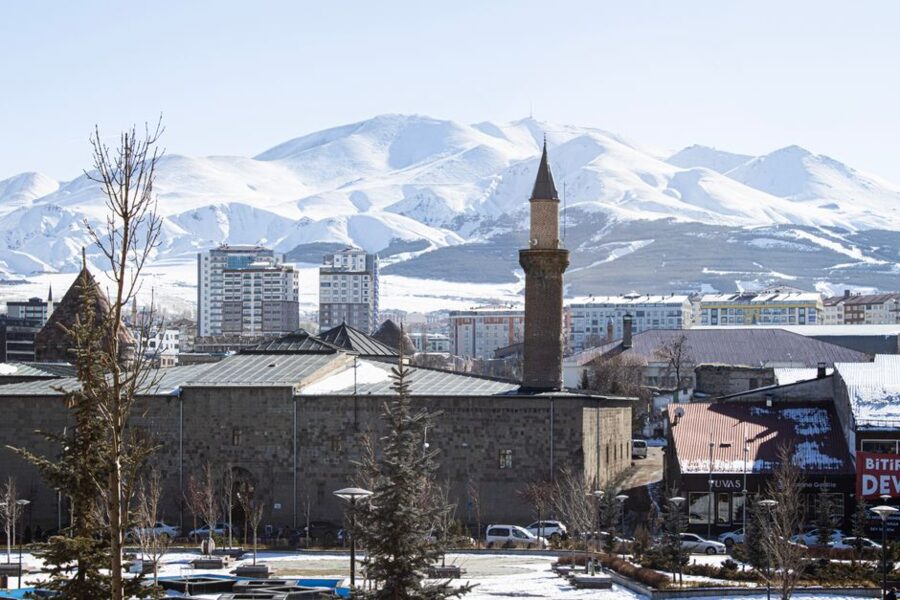
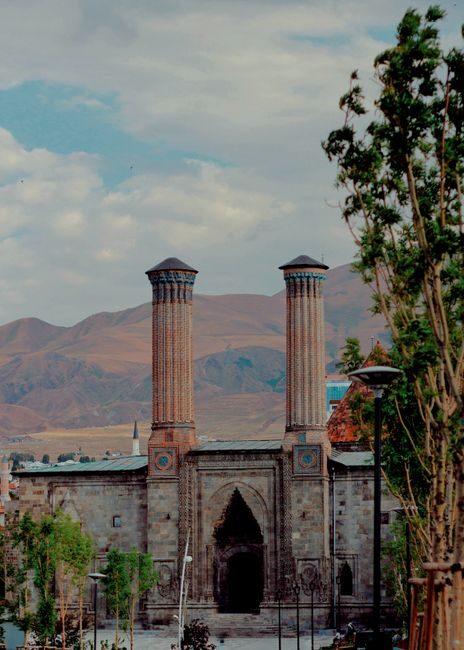
Give yourself one afternoon off in Erzurum. The twin-minaret Çifte Minareli Medrese, a Seljuk college, and the Ilkhanid Yakutiye Medrese of 1310 stand a few minutes apart in the center.
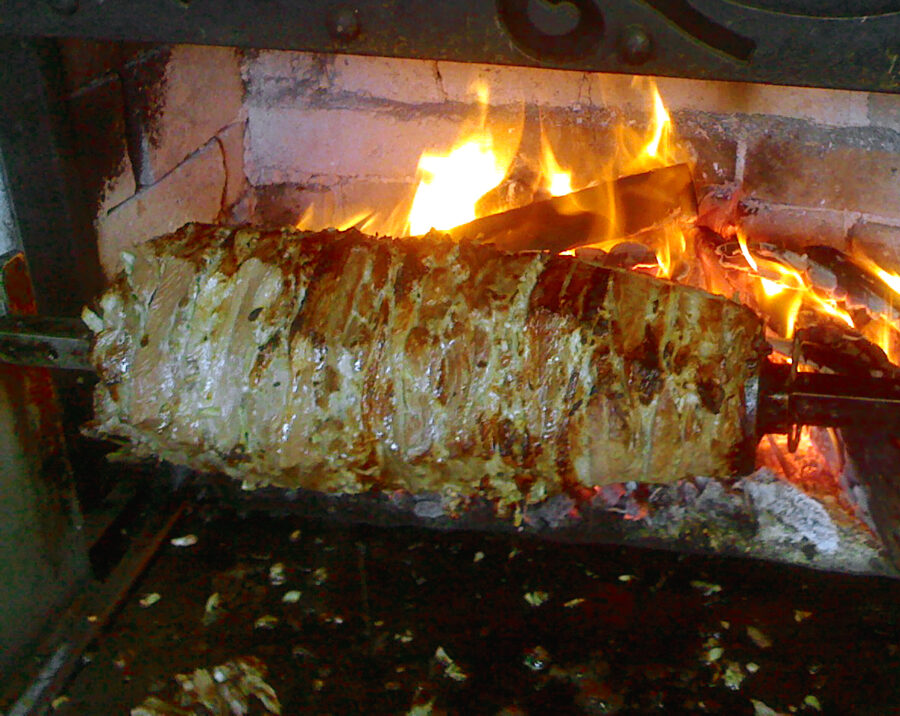
Then eat the city’s own dish, cağ kebabı: lamb stacked on a horizontal spit, roasted by a wood fire and served on skewers with flatbread. Dress for the walk there, because January nights on the plateau are bitterly cold.

Sarıkamış, by train
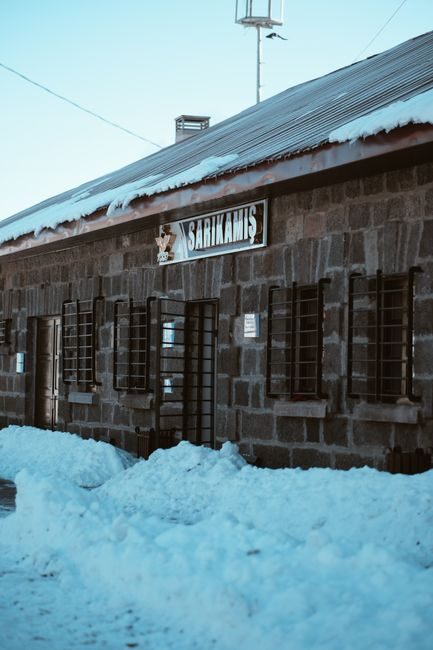
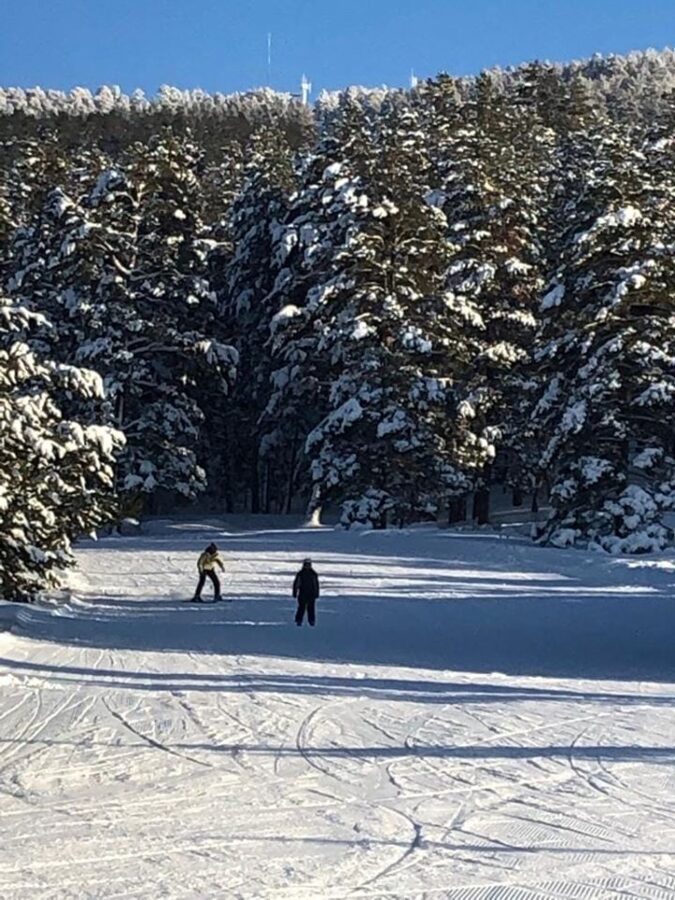
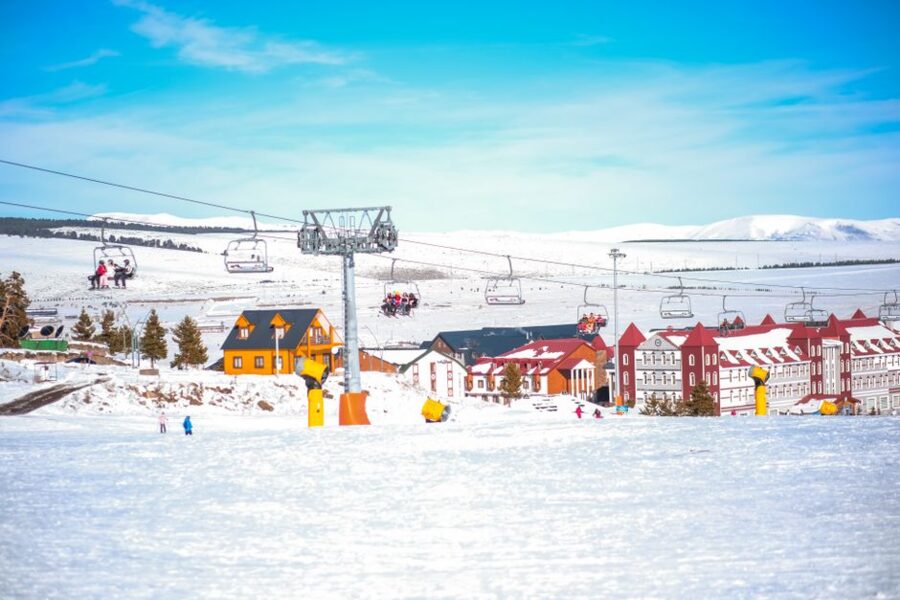
Sarıkamış is the romantic choice. It is a small town in Kars province, about 55 km from Kars, surrounded by forests of Scots pine (sarıçam), and its ski area at Cıbıltepe is known in Turkey for “kristal kar”, crystal snow: cold, light powder that lies on the runs between the trees. The mountain rises to 2,634 m, and the runs through the pines are the most attractive tree skiing in the country.

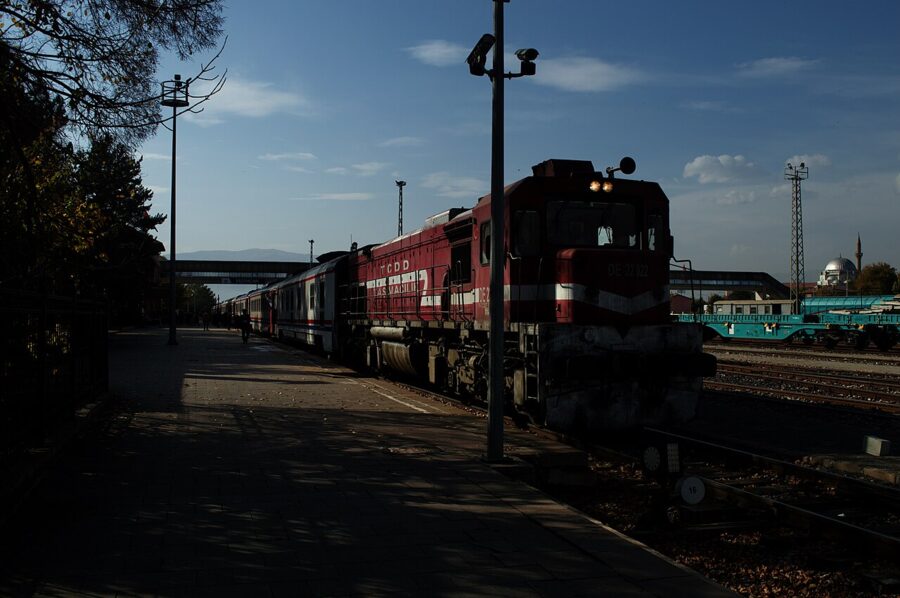
The way to get there is the train. The ordinary Doğu Ekspresi leaves Ankara daily at 18:00 and takes about 26 hours to Kars, stopping at Kayseri, Erzurum and Sarıkamış; a seat (pulman) on the full run cost 920 TL in 2026, with couchettes at 1,585 TL per berth. The separate Turistik Doğu Ekspresi, with its long stops and sleeper compartments, runs from 21 December 2026 to 10 March 2027, at 15,000–20,000 TL for a two-person compartment; it sells out fast and is not a budget option.

Sarıkamış opened its 2025–26 season on 17 December 2025 with a torchlit descent and three days of free lifts. Its 2026–27 ticket prices had not been published by late November 2026, so take cash and ask at the window. The nearest airport is Kars Harakani, about 54 km away.
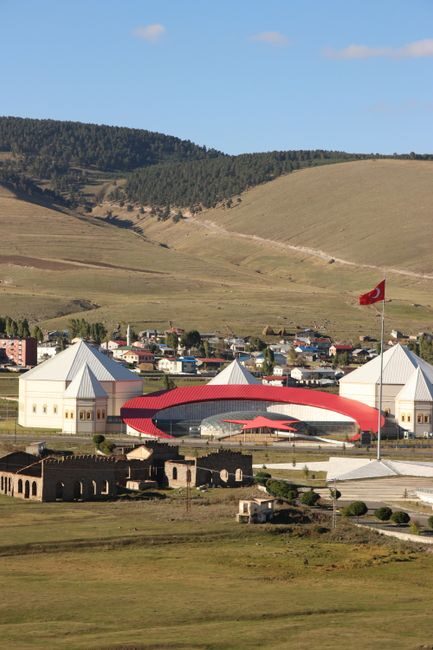
The town has a heavy history. In the winter of 1914–15 the Ottoman Third Army under Enver Pasha attacked the Russian positions here through the mountains in deep snow, and tens of thousands of soldiers died, a large share of them from cold; sources disagree widely on the numbers. The martyrs’ memorial outside town is a quiet place to stand at the end of a ski day.
Kartalkaya, and the fire
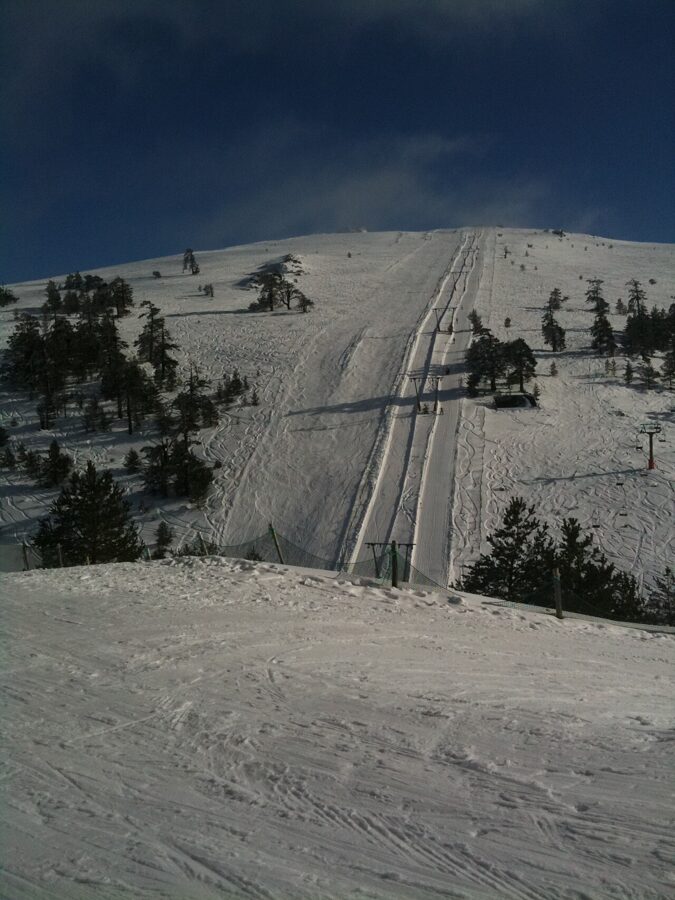

Kartalkaya lies in the Köroğlu Mountains about 38 km south-east of Bolu, roughly halfway between Istanbul and Ankara. It gets heavy snow (240 cm in mid-March 2026) and has pleasant runs through pine forest. But it is not a town; it is a handful of hotels at the end of a mountain road, and the lifts are split between two hotel-run systems, Kartal and Dorukkaya, whose tickets do not work on each other’s lifts.
Day tickets for 2025–26 were reported at about 1,750 TL on the Kartal side and 2,000 TL on the Dorukkaya side, with rental at around 850 TL a day from shops near Bolu, less than at the hotel counters. There is no public bus up. From Bolu’s otogar, about 42 km away, you need a taxi, a hotel shuttle or a friend with winter tyres; the road is kept open through the season, and the gendarmerie may stop cars to check tyres and chains on snowy days.
On 21 January 2025, during the school semester break, a fire at the Grand Kartal hotel killed 78 people and injured well over a hundred. On 31 October 2025 a court in Bolu sentenced eleven people, including the hotel’s owner, to aggravated life imprisonment. If you do stay on any Turkish mountain, take two minutes on arrival to walk the route from your room to the fire exit and check that the exit door opens. For a budget trip, the sensible plan is a hotel in Bolu and a shared taxi up on a weekday.
What it costs, resort by resort
Lift prices are the latest published; expect the 2025–26 ones to rise. Rental is a basic ski set for a day, and the bed is the cheap option nearby, not the hotel on the slope.
| Resort | Lift ticket | Rental (day) | Cheapest bed nearby | Getting there |
|---|---|---|---|---|
| Uludağ | 2,100 TL online / 2,500 TL window (2026–27), plus 500 TL Teleferik return | 800–1,100 TL (2026 estimate) | City hotel in Bursa; no hostels listed | Sea bus or coach to Bursa, Teleferik up |
| Kartepe | 1,400 TL day / 1,000 TL half day (2025–26) | about 750 TL | Day trip from Istanbul; hotels in İzmit | Train or coach to İzmit, taxi up |
| Erciyes | 14 rides 1,500 TL; 7 rides 800 TL (2025–26) | Ask at the gate shops | City hotel in Kayseri; Göreme dorms from about €5–15 | Fly or bus to Kayseri, weekend bus from Kale Önü |
| Palandöken | About 1,000–1,300 TL day; 300 TL night (2025–26) | Ask at the base | City hotel in Erzurum | Fly or Doğu Ekspresi to Erzurum, taxi up |
| Sarıkamış | Not yet published for 2026–27 | Ask at the base | Guesthouses in town, hotels in Kars | Doğu Ekspresi to Sarıkamış station |
| Kartalkaya | About 1,750–2,000 TL day, two separate systems (2025–26) | about 850 TL in Bolu | Hotel in Bolu | Coach to Bolu, taxi 42 km up |
A few habits save more than any discount code:
- Ski midweek. Lift prices rarely drop on weekdays, but queues and taxi fares do, and the hotel deals appear.
- Avoid 23 January to 7 February 2027 unless you like queues; that is the school semester break, and New Year is worse.
- Buy Uludağ passes online at uludagshop.com the day before: 400 TL saved on a single day, more on multi-day.
- Bring gloves, goggles, a hat and a buff from home. Renting clothing and accessories can double the rental bill, and the cheap stuff sold at the base is poor.
- Share ride cards and points cards. Uludağ’s points tickets are explicitly shareable; ask before you share an Erciyes card.
- Book the Doğu Ekspresi as soon as you know your dates. The ordinary train is cheap but popular in winter, and the touristic version sells out within days of release.
When the snow fails
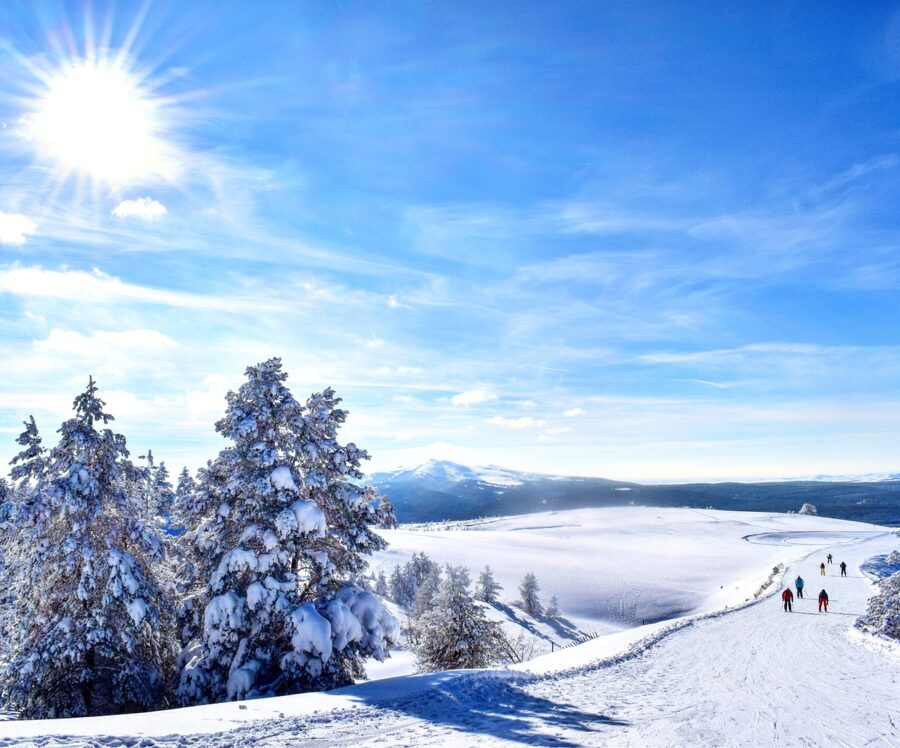
Snow in western Turkey is not guaranteed. Kartepe, low and close to the sea, is the first to lose it, and Uludağ can go thin in a warm spell. Erciyes has snowmaking on most of its runs, which saved the start of the snowless 2013–14 season, and Palandöken and Kartalkaya both make snow when the natural cover lags.
When the lifts stop, the Bursa Teleferik still runs all year for the view and a forest walk at Sarıalan, and Kartepe’s Teleferik to Kuzuyayla keeps going too. The hotel-zone cafés and rental rooms, though, live on the ski season. Kayseri, Erzurum and Kars carry on as normal, and the eastern trains run regardless.
If the snow fails entirely, turn the week into a winter city trip. Bursa and Cappadocia are both at their quietest and cheapest, and the Aegean coast is mild enough in January for the big ancient sites; Ephesus in winter has none of the summer queues.
A day off in Bursa
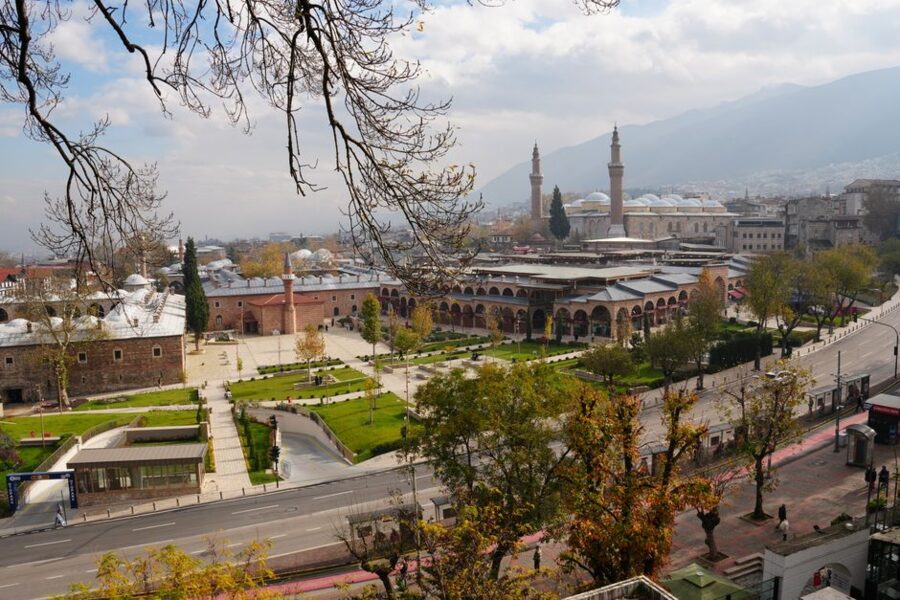
Uludağ’s great advantage over every other Turkish ski area is the rest day. Bursa was the first capital of the Ottoman state, and the walk from Ulu Cami through the old silk market takes in its finest buildings in under a kilometer.
Ulu Cami, the Great Mosque, was built for Sultan Bayezid I after his victory at Nicopolis in 1396; the usual dates are 1396–1399, though the inscription gives a completion year equivalent to 1400, and sources differ. The popular story is that Bayezid vowed twenty mosques for the victory and was talked into building one mosque with twenty domes instead. Inside, the domes sit on twelve massive piers, and in the middle, under a dome once left open to the sky, is a marble ablution fountain, the şadırvan, splashing indoors.
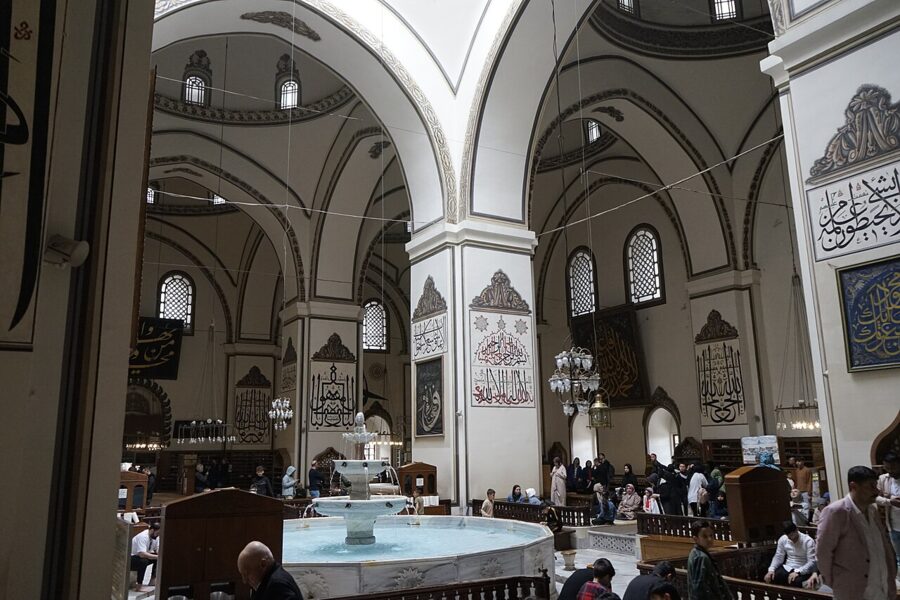

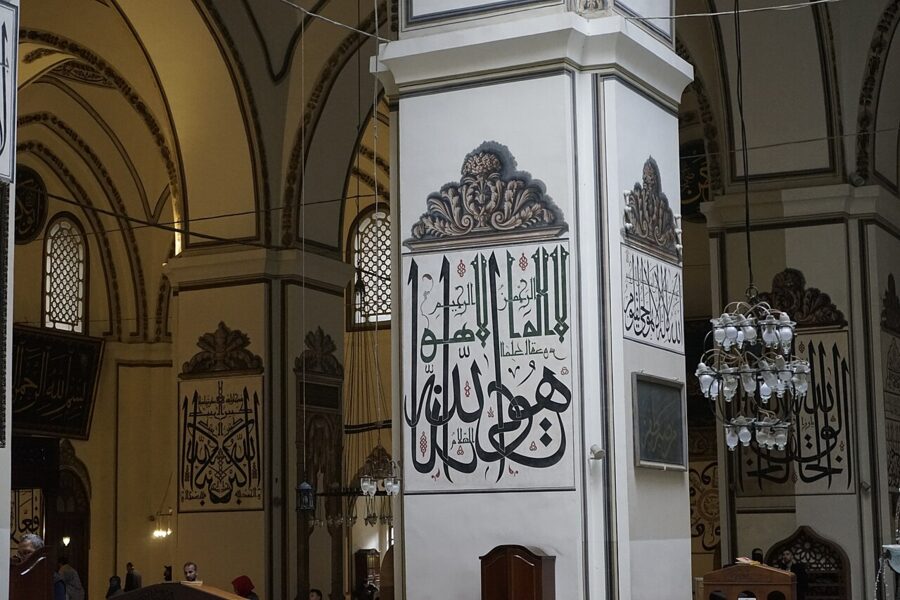
The piers and walls carry some of the most famous calligraphy in Turkey, huge panels painted over the centuries by different masters. Like all working mosques, Ulu Cami closes to sightseers during the five daily prayers and for longer at Friday noon prayer, so plan your visit for mid-morning or mid-afternoon. Take your shoes off at the door; cover your shoulders and knees, and women should cover their hair.

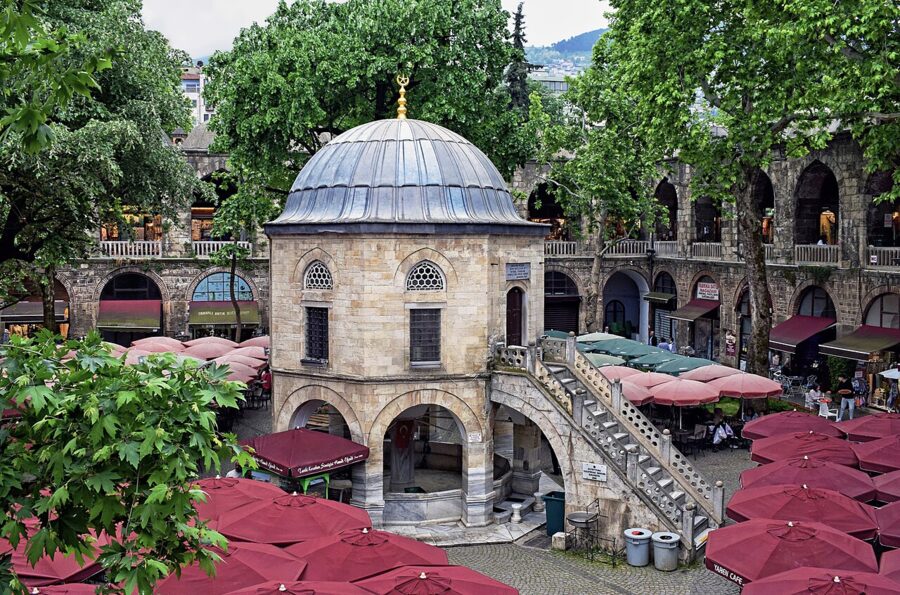
From the mosque’s east side, the lanes of the Hanlar district lead to Koza Han, the silk cocoon inn. It was built in 1490–91 for Sultan Bayezid II, and its rents went to pay for his mosque complex in Istanbul. For centuries Bursa’s raw silk and cocoon trade passed through this courtyard. Today the two floors of arcades are silk and scarf shops, and the courtyard is a tea garden around a small octagonal prayer room raised on arches over a fountain.

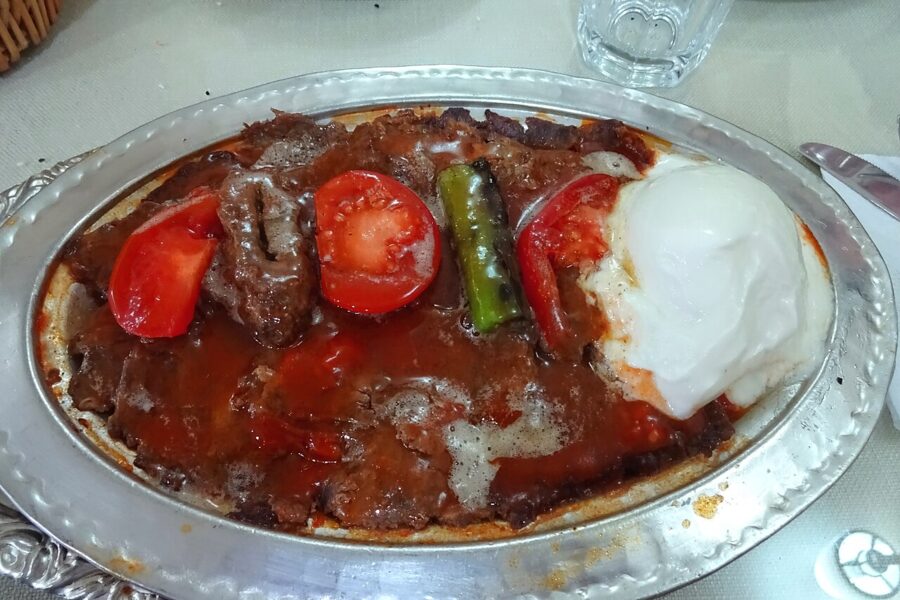
Then eat. İskender kebap was invented in Bursa, credited to İskender Efendi, who is said to have started roasting lamb on a vertical spit in the city in 1867. It is thin slices of döner laid over cubes of pide, covered with tomato sauce, served with yogurt and grilled pepper, and then drowned at the table in sizzling melted butter. Several restaurants in central Bursa claim the original recipe; any busy one near Heykel will do it well, and you will not need dinner.

Back up the mountain the next morning, the routine is the one you started with: pass bought online the night before, a dolmuş from Heykel to Teferrüç, the first cabin at 10:00, and an eye on the wind. If the banner on the Teleferik site says the line is closed, swap the day around: Koza Han for breakfast, the lifts tomorrow.