€495. That was the June 2026 price of a double-cabin berth on a four-day gulet from Fethiye to Olympos, plus a €30 port fee and whatever you drank. For three nights you sleep at anchor in coves no road reaches, swim before breakfast, drift over a Lycian town that slid into the sea, and finish with a short bus ride to a valley of ruins and treehouse camps.
That boat is the one gulet trip on the Turkish coast that a backpacker budget can stretch to. The rest of the coast has gulets too: day boats out of Fethiye and Kaş, week-long loops from Marmaris and Bodrum, and crossings to Rhodes. They cost more, and some are worth it. Below is what each route actually involves, what you pay in 2026, and how to pick a boat that turns out to be the one in the photos.



Contents
- What a gulet is, and where the “Blue Voyage” came from
- The Fethiye to Olympos boat, stop by stop
- A day aboard
- What it costs in 2026, and what the price leaves out
- Cabin cruise, private charter or day boat
- The other routes
- When to go: the season and the shoulder months
- Choosing a boat without getting burned
- What to pack
- Ending in Olympos
What a gulet is, and where the “Blue Voyage” came from
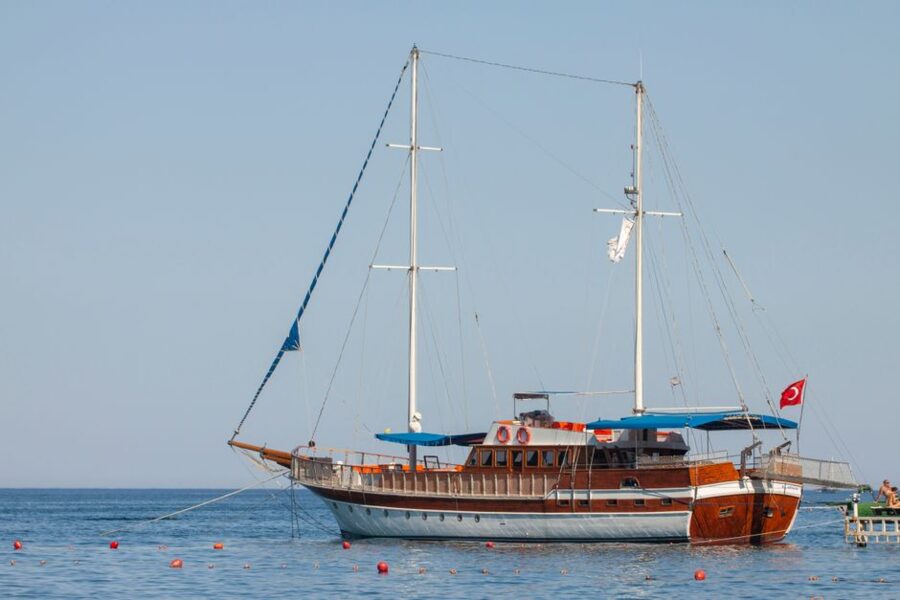
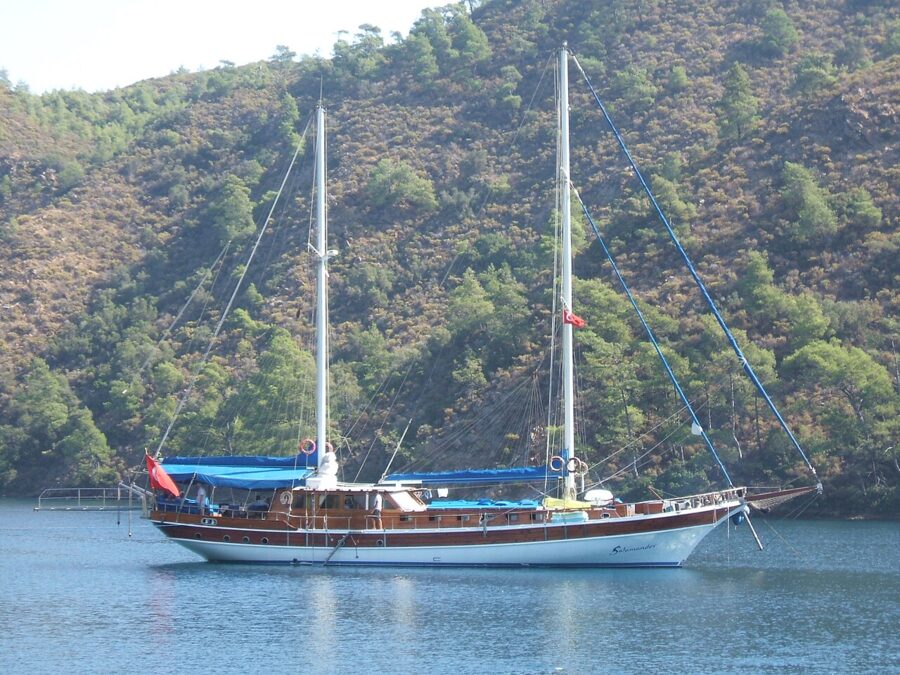
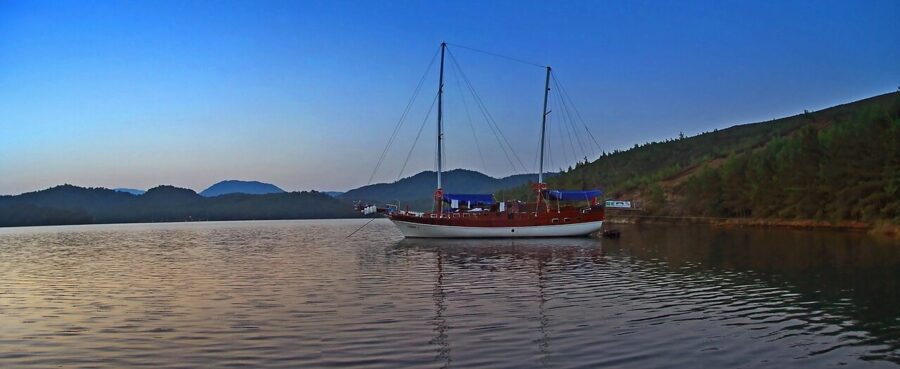
A gulet is a broad wooden boat with two masts (sometimes three), a long aft deck under an awning, a flat sunbathing deck forward, and cabins below. They run from about 14 to 35 meters. The word comes from the Italian goletta, a schooner, and nobody agrees on much more than that about the type’s origins.
One thing to unlearn before you book: a gulet is not really a sailing holiday. Almost all of them run on diesel, many are not rigged to sail properly, and the sails go up for the photograph more often than for the passage. You are buying a floating guesthouse that moves between swimming spots, which is a fine thing to buy.

The boatyards of Bodrum and Bozburun
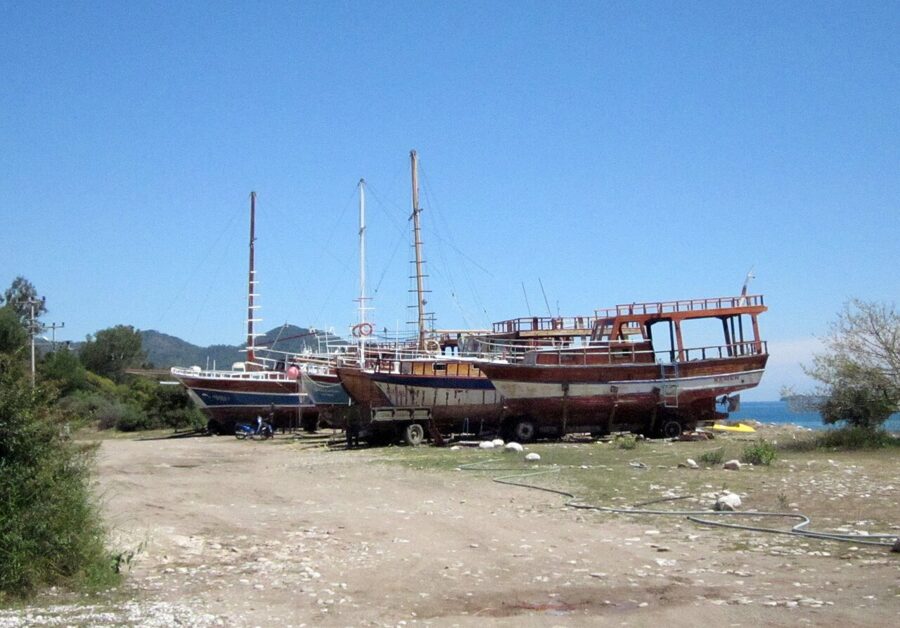
Bodrum built boats long before anyone came for a holiday. Wooden craft for fishing, sponge diving and island trade came off its slipways until the mid-1930s, and the yards went quiet after that. The tourist gulet as you see it now started in the early 1970s, when builders adapted the old working hull to carry paying passengers and a galley.
Two hull shapes dominate. The Bodrum gulet has a curved bow and a round stern, which crews call the karpuz kıç, the watermelon stern. The aynakıç has a flat transom stern, which buys a wider aft deck and bigger cabins. An older double-ended Aegean type, the tırhandil, survives in small numbers.
The other name to know is Bozburun, a village on the rocky peninsula south-west of Marmaris. Turkish reference works credit it with building more than half of the gulets in Marmaris marina, a local claim I can’t check but won’t argue with. If you end up in Bozburun, the yards on the edge of the village are where to look for hulls under construction.

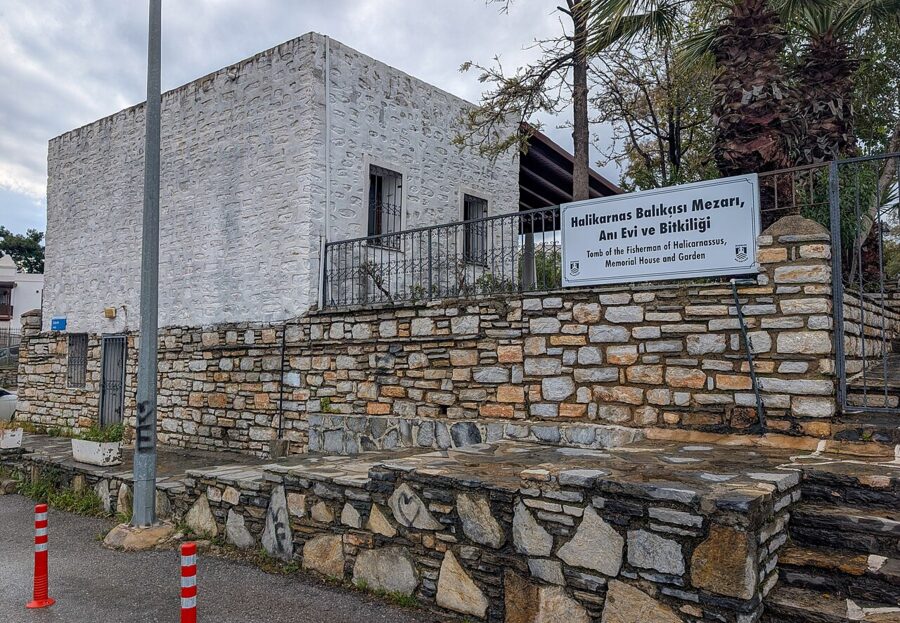
The Fisherman of Halicarnassus
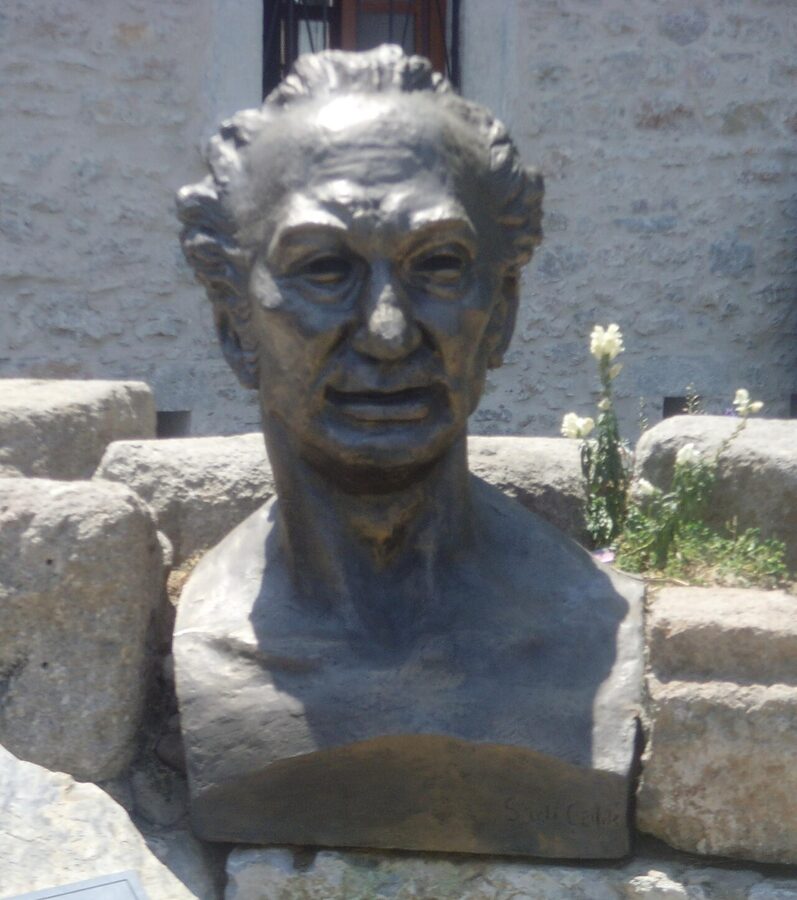
The idea of sailing this coast for pleasure has a founder, and he arrived as a convict. Cevat Şakir Kabaağaçlı, born in Crete in 1890, wrote a short story in 1925 about four army deserters. The Independence Tribunal in Istanbul convicted him of encouraging mutiny, and instead of the death sentence its president wanted, he was exiled to Bodrum for three years.
He fell for the place. He served half his sentence there, came back later and stayed for about 25 years, fishing, writing sea stories about sponge divers and sailors, and signing them Halikarnas Balıkçısı, the Fisherman of Halicarnassus, after Bodrum’s ancient name. In the 1950s he and a circle of Istanbul writers and scholars began taking boats along the Carian and Lycian coast simply to look at it.
The name came from that circle. The classicist Azra Erhat wrote the trips up in a book called Mavi Yolculuk, the Blue Voyage, which grew through several longer editions. She put it neatly: Cevat Şakir founded the blue voyage, and the translator Sabahattin Eyüboğlu gave it its name. Until the 1980s it stayed a pastime for people with their own boats; then charter prices fell and the rest of the country, and everyone else, joined in.

The Fethiye to Olympos boat, stop by stop
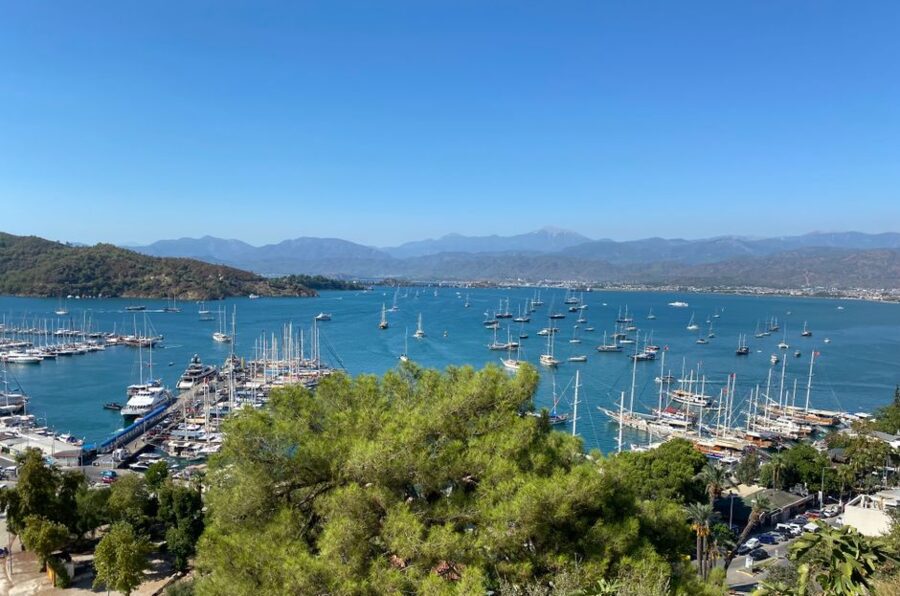
The budget route is a cabin cruise: you buy a berth, not the boat. Departures leave Fethiye on Saturdays through the season, sail east along the Lycian coast for three nights, and finish on Tuesday at Andriake, the old harbor of Myra outside Demre. A shuttle bus then runs passengers to Olympos, which is why everyone still calls it the Olympos boat even though no gulet lands there.
It also runs the other way, Olympos to Fethiye, with the bus first. The direction matters less than the day: if you are building a longer trip along the coast, pick the direction that drops you where your next bus leaves. My vote goes to the eastbound boat, because ending in Olympos with a treehouse bed and a night walk to the Chimaera flames is a better finish than ending at Fethiye harbor.
Itineraries differ by operator and by the weather, and the captain has the last word on where you anchor. The stops below are the ones the 2026 itineraries share, in the order most boats take them.
Day 1: Fethiye harbor and the first cove
Boarding is around midday or early afternoon at Fethiye harbor; one operator’s 2026 schedule has you at its office at 14:00 for a 14:30 departure. You find your cabin, leave your bag on the bunk, and are swimming in a cove within a couple of hours. Afternoon tea comes round, then dinner on the aft deck as the light goes.
If you are coming from Istanbul, the overnight bus to Fethiye otogar gets you in with a day to spare, or you can fly to Dalaman, about 55 km away. Arrive the day before. A missed boat on a Saturday departure means a week’s wait for the next one.
Ölüdeniz and Butterfly Valley
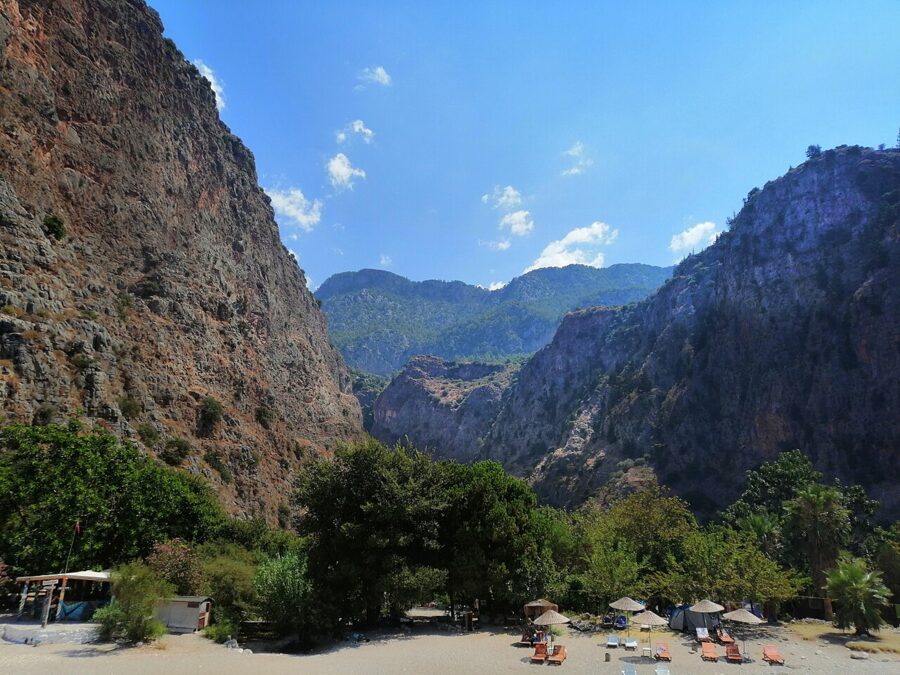
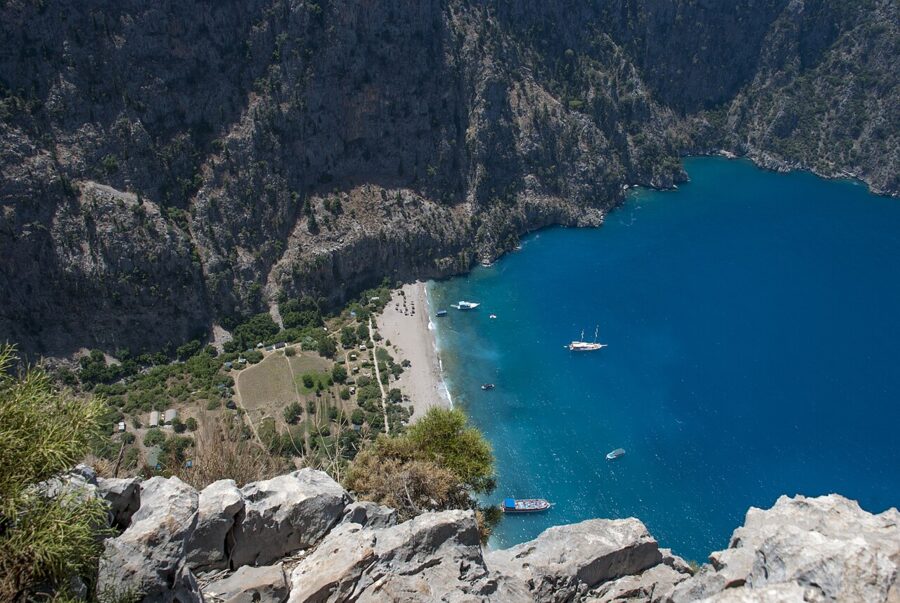
Day two usually starts at Butterfly Valley, Kelebekler Vadisi. It is a cleft in the coast with cliffs up to 350 m high, a pebble beach at the mouth and a stream running about 4 km back to a waterfall that drops some 50 m. More than 80 species of butterfly live here; the valley is named mostly for the Jersey tiger, a day-flying moth that shows up in numbers in high summer.
It has been a first-degree protected natural site since 1995, and all building there is banned, which is why there is no resort. The flat walk inland to the falls takes about half an hour. The path up the cliff to Faralya uses fixed ropes over rock steps, and it is best done with someone who knows it.

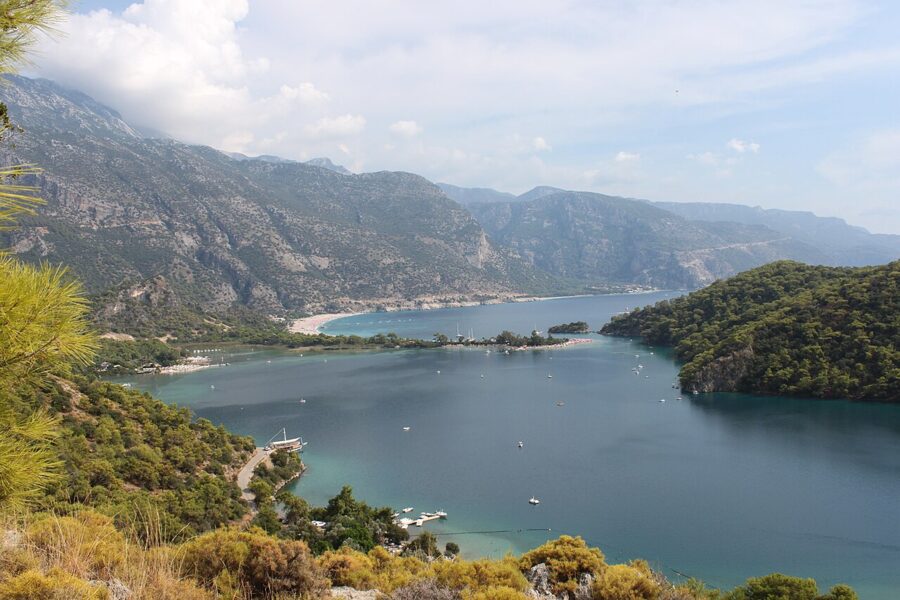
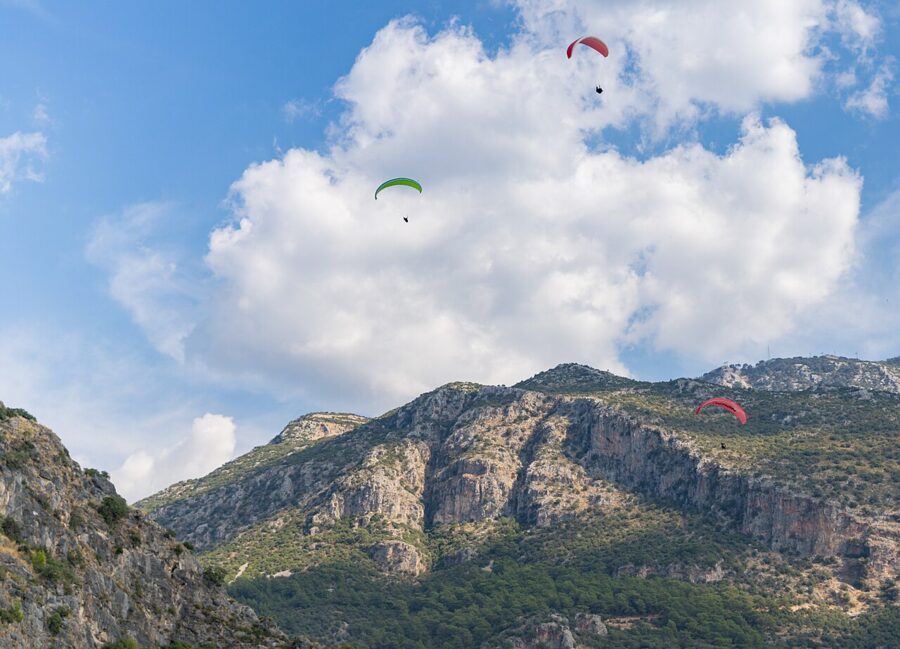
Ölüdeniz is next door, and the boat usually anchors off the Blue Lagoon for a swim. This is the most photographed water in Turkey and, in July and August, one of the busiest; the lagoon itself is a shallow, enclosed basin behind a sand spit. Above it rises Babadağ, nearly 2,000 m, and the colored dots drifting down off it are paragliders.
Some boats sell the paragliding flight as an add-on. One 2026 price list has it at €190 per person, and they collect you from the boat or the beach. It is the single most expensive extra on the trip; decide before you board whether it is in your budget, because the sales pitch on deck is good.


Gemiler, St. Nicholas Island
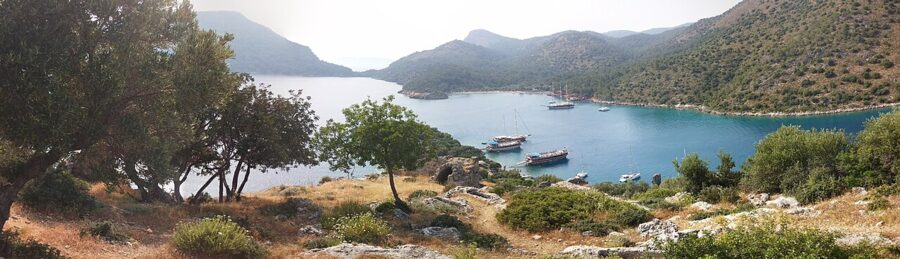
Most boats spend a night anchored at Gemiler Island, which the crews call St. Nicholas Island; its old name was Aya Nikola. The island is covered in the ruins of churches, cisterns and tombs from the 5th to the 7th centuries, when it was a Christian settlement on the sea route along this coast, abandoned after the Arab raids of the 7th century. The large church still has fragments of fresco.
Climb it at sunset. The path is short but loose underfoot, so wear something better than flip-flops, and the view from the top runs over the bay to the beach at Gemiler and the hills toward Kayaköy, the abandoned Greek village about 6 km inland.
Kaş, and a long day east
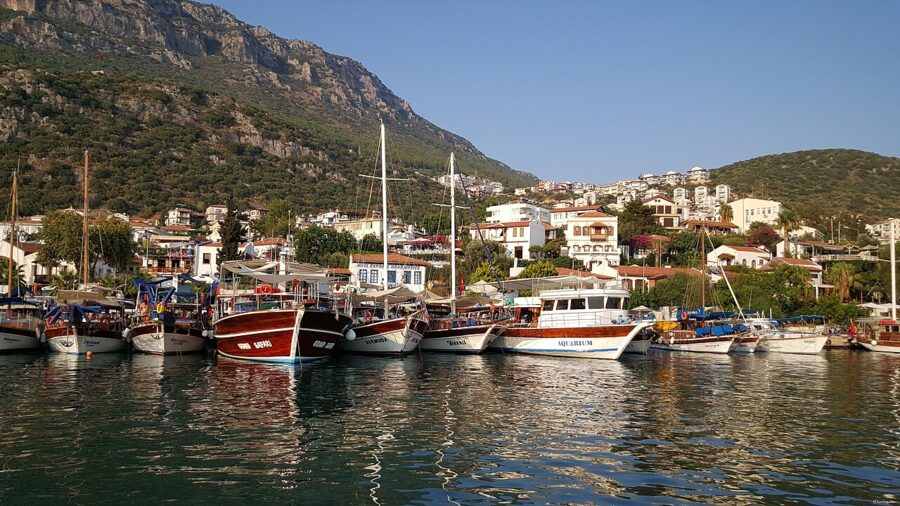
The third day covers the most water. The boat runs east past the long beach at Patara (you won’t stop) and puts in at Kaş for an hour or two ashore. Kaş is a small harbor town with an ancient theater on its western edge, and a lot of dive shops.
Diving is the other add-on worth pricing in advance: one operator listed a Kaş dive at €90 for 2026. If you only want to swim, the stop is a chance to use an ATM, buy sunscreen at shore prices and post the photos the boat’s patchy signal has been holding back.

Kekova and the sunken city
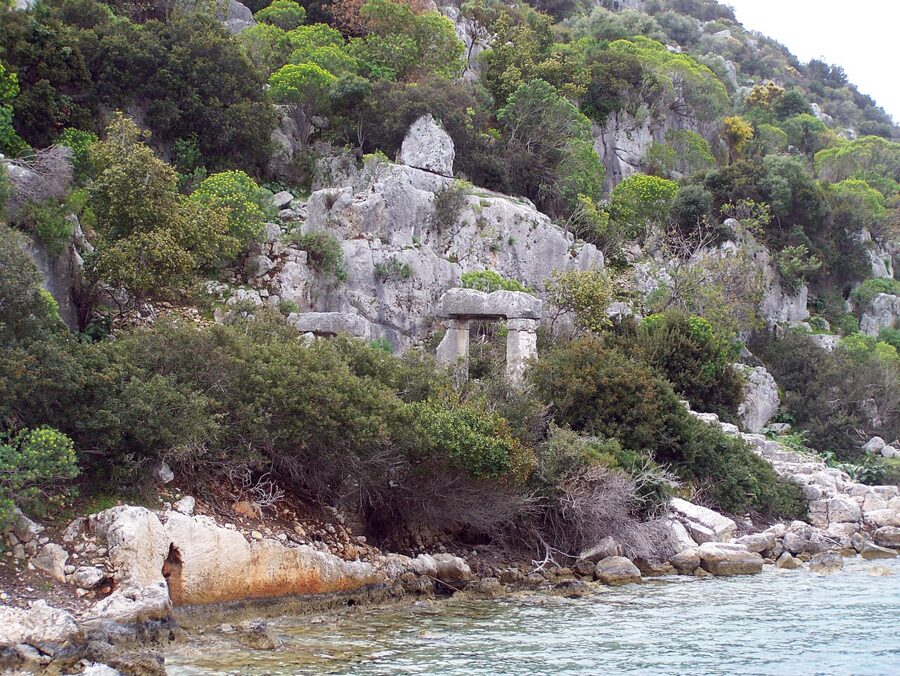
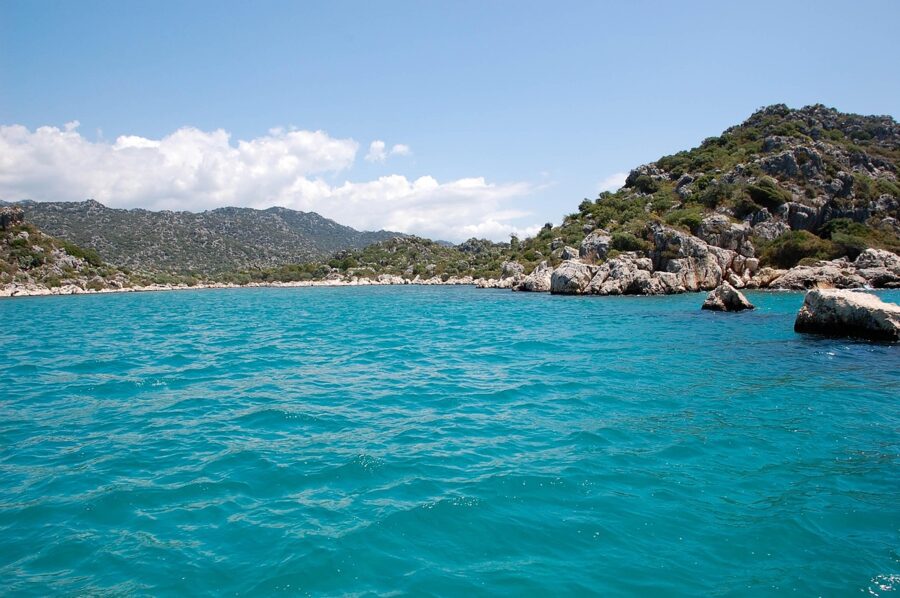
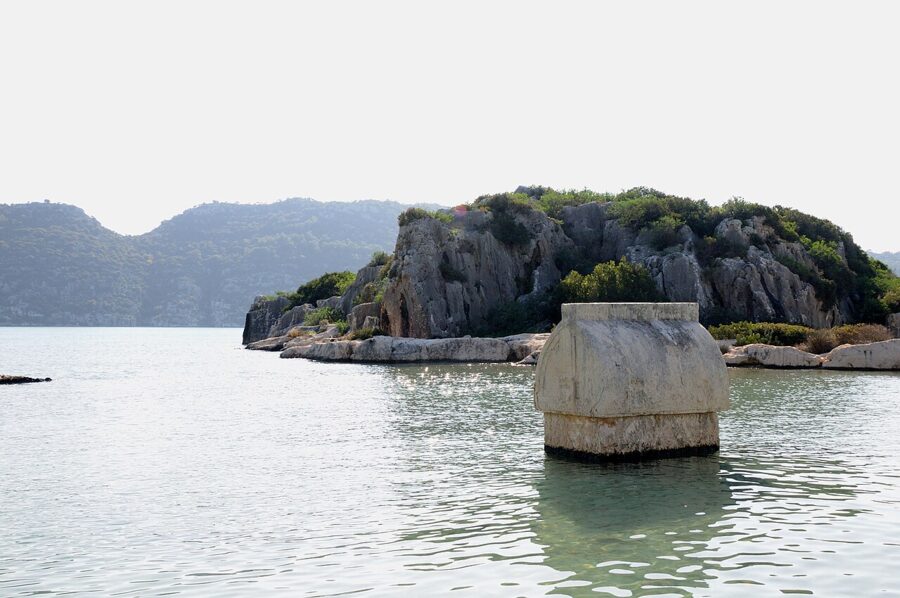
East of Kaş the coast breaks up into islands, inlets and a sheltered sound behind Kekova, a long, bare island of about 4.5 square kilometers with nobody living on it. Along its northern shore, the walls, stairs and house foundations of an ancient town run straight down into the water. Sources date the earthquake that dropped it to the 2nd century AD; the town was rebuilt in the Byzantine period and abandoned after the Arab raids.
Your boat slows to a crawl along this shore so you can look down through the water at the foundations and steps. That is all you get, and it is the law, not the captain’s laziness. Swimming and diving over the sunken city are prohibited, and the whole Kekova area has been protected since 1990.

Simena and Kaleköy
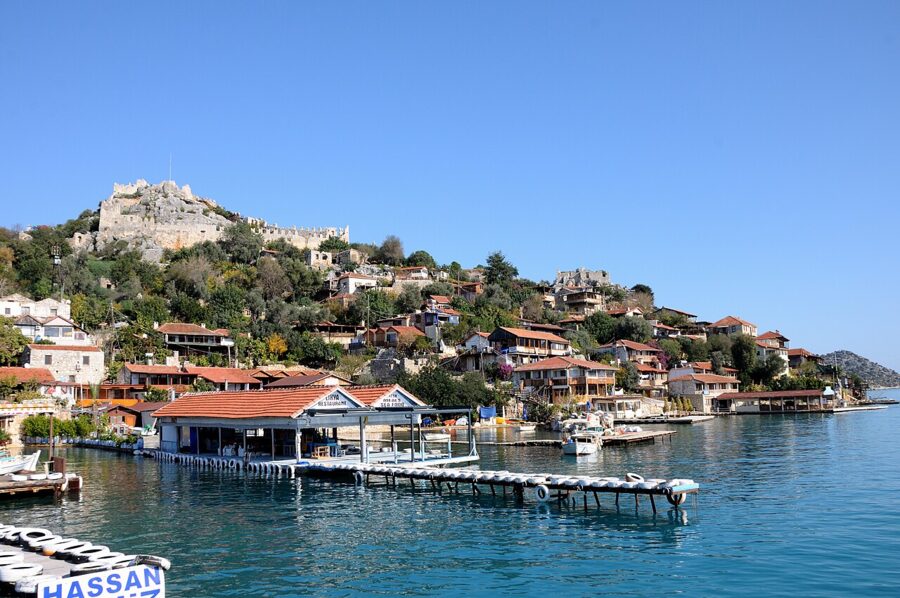
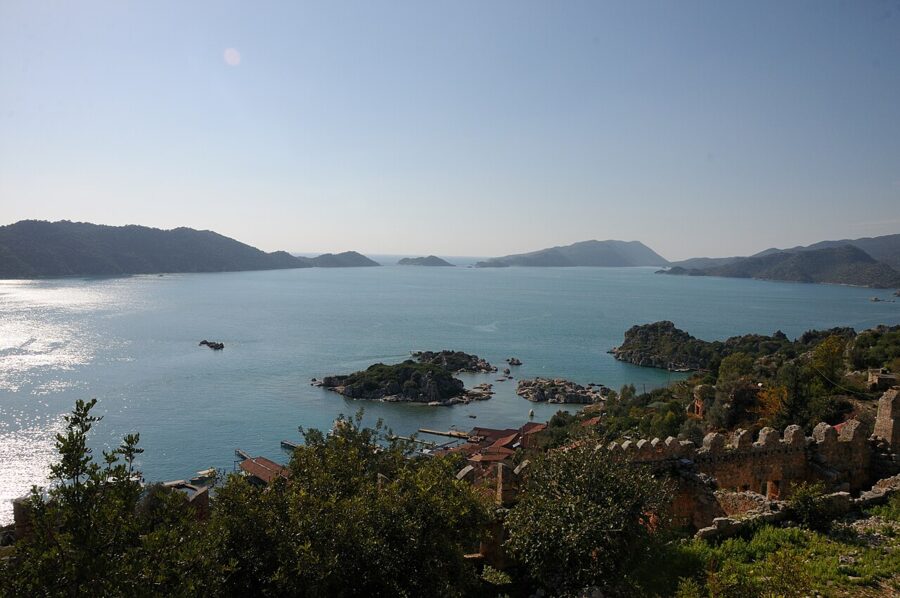
Kaleköy is the village across the sound from Kekova, built on and around ancient Simena, and it has no road. Everything comes in by boat. The boats tie up at its jetties for an hour or two, and you climb the lanes past stone houses and Lycian tombs to the medieval castle on top.
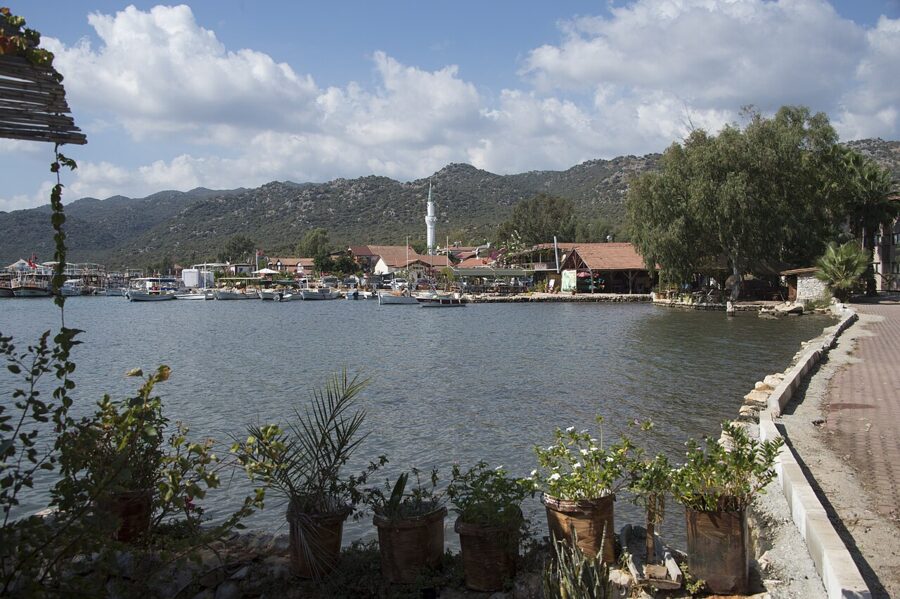
Inside the castle walls is a tiny theater cut straight into the rock, one of the smallest you will see anywhere. The view from the walls is the one on every Kekova postcard: the village roofs, the tombs in the water, the islets and the long back of Kekova beyond. Üçağız, the next village, is about 1 km away by water and is where the day boats that come by road start from.


Gökkaya Bay and the last morning
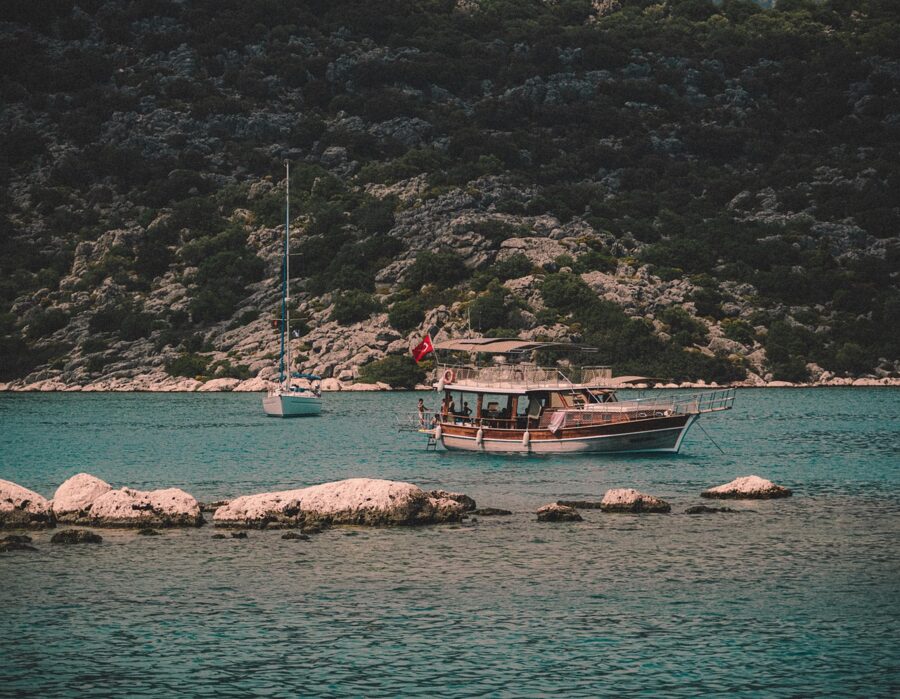
The last night is usually spent in Gökkaya Bay, east of Kekova, where a bar ashore turns the final evening into a party for the boats anchored around it. It is optional, and on a boat of 18 to 35 year olds, it rarely feels optional. The tender runs back and forth until late.
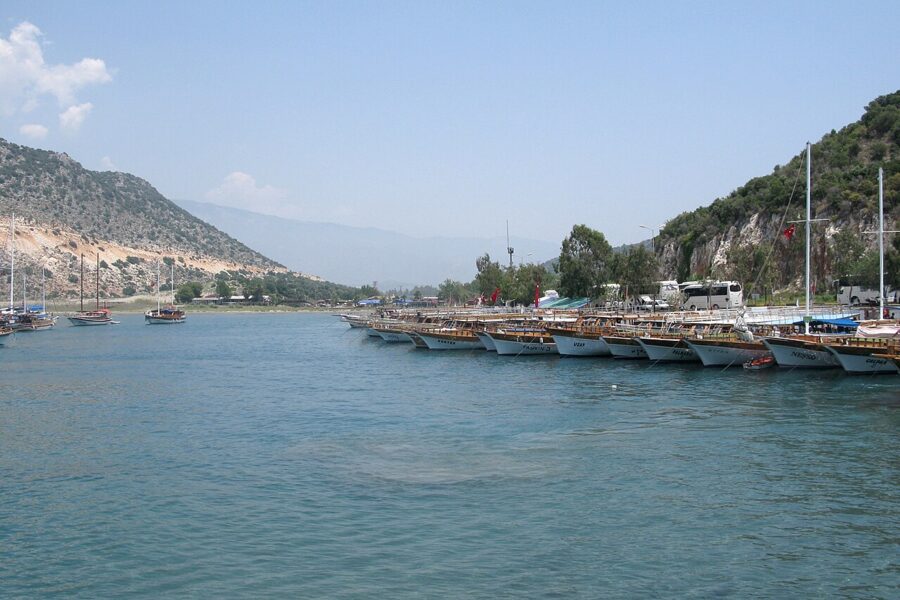
Day four is a swim at a cove or a sea cave, an early lunch, and the run into Andriake. The 2026 itineraries put you on the quay between 13:00 and 14:00, and the shuttle to Olympos leaves soon after. The bar tab is settled before you step off, so have the cash ready.

Demre, if you can spare the afternoon
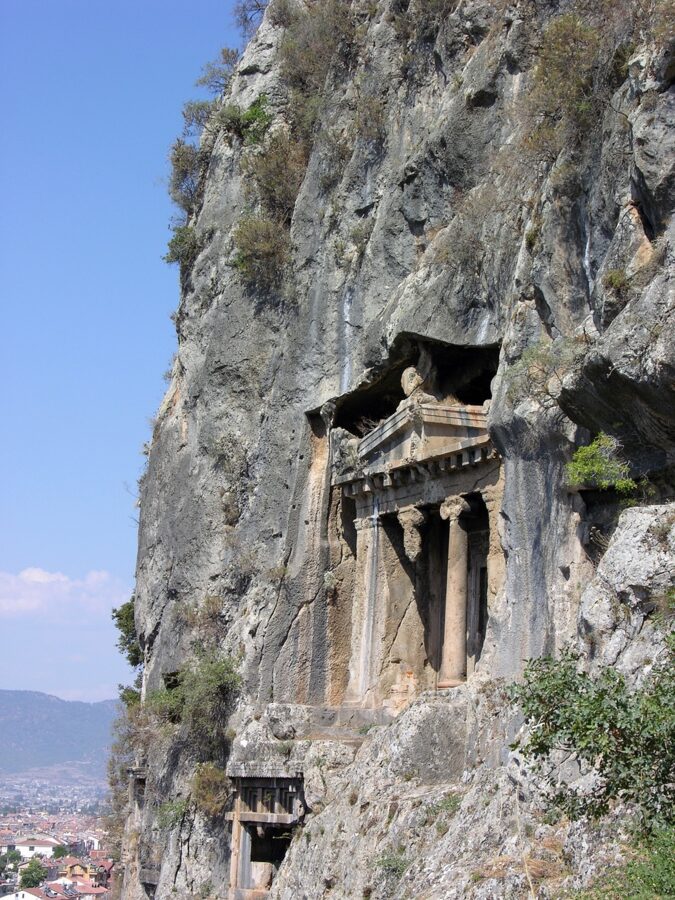
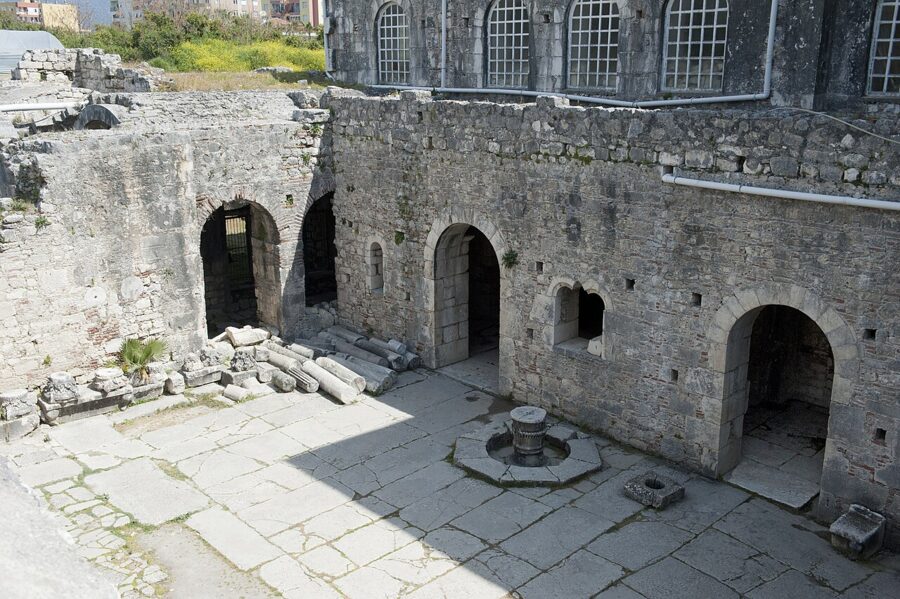
Demre is the modern town on the site of Myra, where St. Nicholas, born down the coast at Patara, was bishop. The shuttle to Olympos doesn’t wait for sightseeing, so if you want Myra, plan a night in Demre and take a local bus to Olympos the next day. Both sites are worth it.
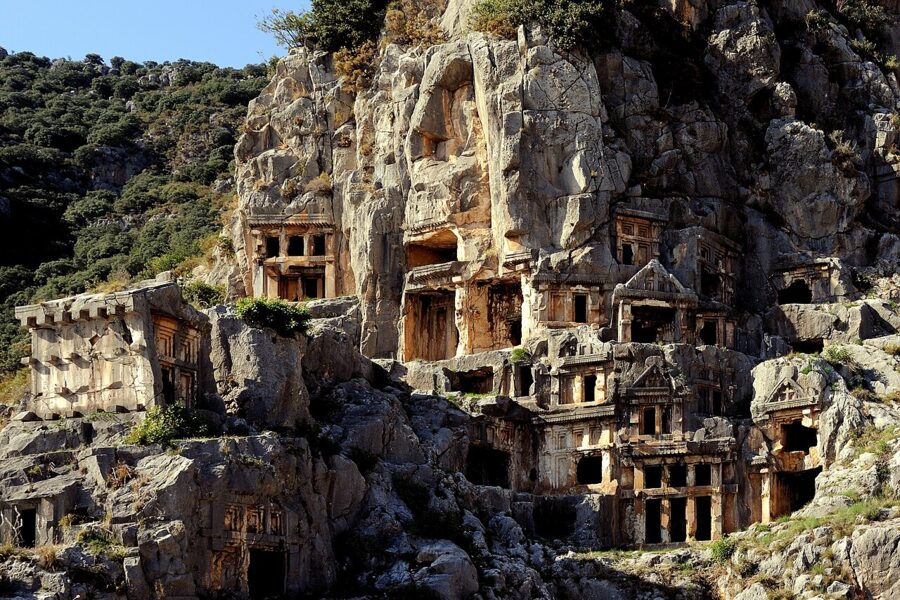
Myra’s cliff is cut with Lycian tombs carved like temple fronts, stacked above a Roman theater. The Ministry of Culture lists it at €13, open daily 08:00–17:00 with the box office closing at 16:30. The Church of St. Nicholas in town, now a museum, is €17 and listed as open 08:30–19:00 with last entry at 18:30; it holds the sarcophagus long said to be his, though most of his bones were carried off to Bari by Italian sailors in 1087.


A day aboard
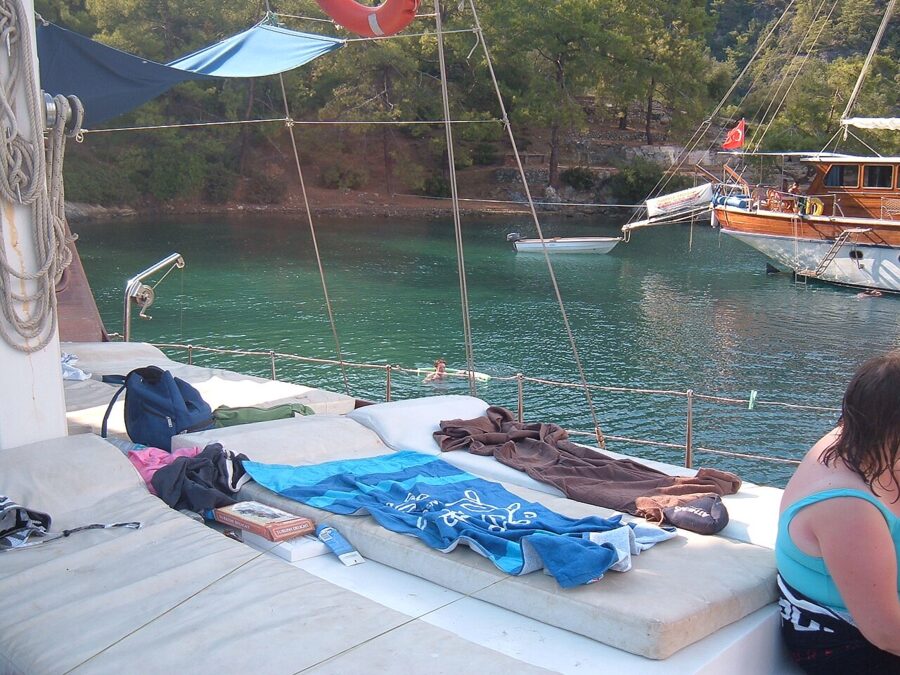
The rhythm is the same every day, and you’ll be in it by the second morning. Breakfast at anchor, a swim, a few hours under way while you read or doze on the forward mattresses, lunch in a cove, another swim, a stop ashore, afternoon tea, then dinner on the aft deck once the boat has settled for the night. The boat moves for a few hours a day at most.
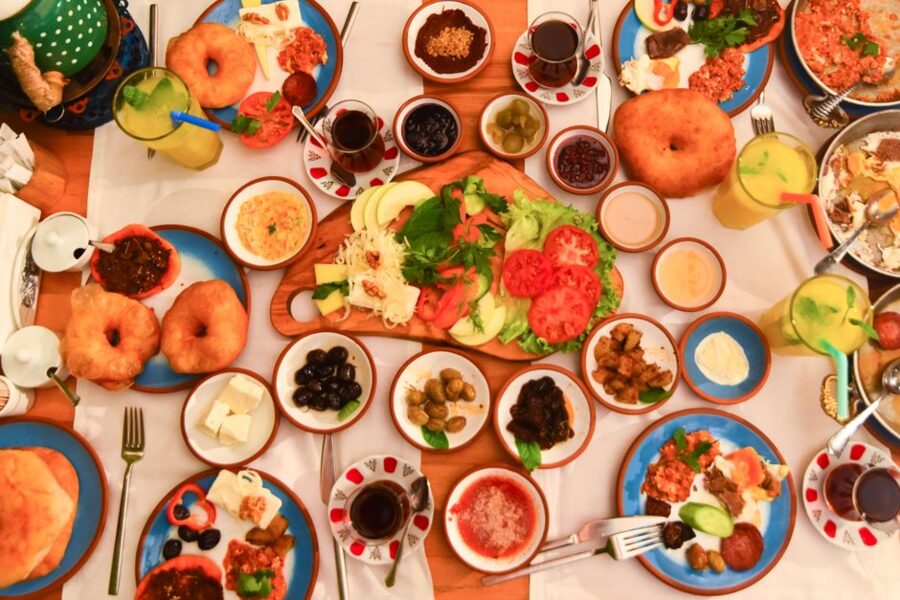
Breakfast is the Turkish spread: white cheese, olives, tomatoes, cucumbers, bread, honey, jam, eggs. Lunch and dinner are a main dish with salads, rice or bulgur and fruit, cooked in a galley the size of a wardrobe. On the cabin cruises, vegetarian and pescatarian menus are normally free; one operator charged €40 for the whole trip for vegan, gluten-free or lactose-free cooking in 2026, so ask before you book.
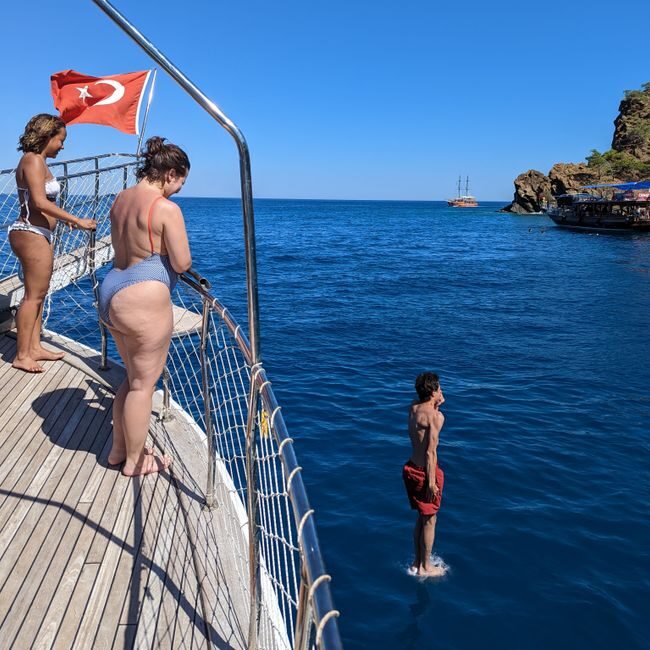
Swimming is the main activity, and the boats carry snorkels, masks and usually a kayak or paddleboard. You climb back up a ladder at the stern. Watch the tender’s propeller, and don’t swim off the boat while it is maneuvering or after dark unless the crew says so.
Nights are where the budget boats show their limits. The air conditioning is central and runs for up to six hours a day, typically two at midday and four after dinner, at the captain’s discretion, and port rules ban it while you are moored in harbor. The generator is loud. In July and August plenty of people sleep on deck, which is cooler and quieter, and dewier than you expect by 05:00.
What it costs in 2026, and what the price leaves out
Cabin-cruise prices are quoted in euros, per person, sharing a double or twin cabin. They move with the season, and the published price is rarely the price anyone pays: one operator showed a 35% discount on every date all year, which tells you what the “full” price is for. Compare the final number, with port fees, for your actual week.
| What | 2026 price | Notes |
|---|---|---|
| Fethiye to Olympos, 3 nights, double cabin, June | €495 per person | One operator’s published rate, plus €30 port fee |
| Same route, July to late September | €575 per person | Plus €30 port fee |
| Same route, single cabin | €842–978 | Solo without sharing; most solo travelers share a twin instead |
| Same route, another operator | from €530 per person | “From” price, port charges extra |
| 7-night cabin cruise (Fethiye–Kekova, Fethiye–Bodrum and similar) | €650–900 in May; €850–1,250 in June and September; €1,050–1,450+ in July and August | Per person, full board |
| Private gulet, standard, per week | €8,000–12,000 | For the whole boat and crew; luxury boats €14,000–25,000 |
| Fethiye 12 Islands day boat | about €40–60 | 7–9 hours with lunch, as listed for 2026 |
The cabin price covers your berth, bed linen and a bath towel, three meals a day plus afternoon tea, the crew, fuel, and the use of the snorkels and toys. It does not cover much else, and the extras add up fast on a backpacker budget.
- Drinks. The budget boats ban bringing your own alcohol, and at least one bans bringing any food or drink at all, water included. You run a tab at the boat’s bar and settle it in cash at the end.
- Water between meals. Some boats include unlimited drinking water; at least one charges for bottled water outside meal times. Ask.
- Site tickets. Entry to ruins and museums is extra: €13 at Myra, €17 at the St. Nicholas church, €10 at Olympos.
- Wi-Fi. Free on some boats, €10 per person on others, and weak at anchor either way.
- Tips. Operators suggest around 10% of the cruise price for the crew, collected on the last day.
- Add-ons. Diving at Kaş (€90 on one 2026 list), paragliding at Ölüdeniz (€190), special diets (€40).
- Beach towel. Usually not provided. Bring your own.
Realistic budget for the four days, sharing a cabin in July: about €575 plus €30 port fee, €50–60 in tips, €30 in site tickets if you go ashore everywhere, and whatever the bar takes off you. Add a night in Fethiye before and in Olympos after.
Cabin cruise, private charter or day boat
There are three ways onto a gulet, and for a backpacker only two make sense unless you are traveling in a group of ten.
| Format | Who it suits | 2026 cost | The catch |
|---|---|---|---|
| Cabin cruise (Fethiye–Olympos, 3 nights) | Solo travelers, couples, anyone on a budget | €495–575 per person plus €30 port fee | Fixed route, fixed mealtimes, 16–20 strangers, a tab you settle in cash |
| Cabin cruise, 7 nights | People who want a full week on the water | €650–1,450 per person by month | Costs more than the rest of a Turkey trip combined |
| Private charter | Groups of 8–16 | €8,000–12,000 per week for the boat | Only cheap per head with a full boat |
| Day boat | Anyone with a day in Fethiye or Kaş | about €40–60 with lunch | Crowded decks, loud music on some, back to a hostel bed at night |
Day boats: the 12 Islands and Kekova
If four days is too much money, a day boat gives you the water without the cabin. Out of Fethiye, the 12 Islands trips leave the harbor around 10:00 and spend 7 to 9 hours hopping between the islands and coves of Fethiye Bay, with several swim stops and lunch on board. Listings for 2026 run about €40 to €60 a head, and the agencies along the harbor sell the same trips priced in lira.
Out of Kaş, the Kekova day trips do the sunken city and Kaleköy in about four and a half hours, with swim stops in the bays and a fish or chicken lunch; the longer versions take most of the day. Some agencies in Kaş sell sea-kayak trips over the same water, which is the slowest and best way to see it. I couldn’t find a 2026 lira price for the boats that I would stand behind, so walk the Kaş harbor the evening before and compare three.

The private charter math
A private gulet is priced per boat, not per person. One Fethiye operator’s 2026 rates start around €1,395 a night for a 21-meter boat for eight guests, and its small gulets run €9,000–10,500 a week. Split eight ways, that is more than a cabin cruise; split sixteen ways on a larger boat, the gap closes. Below about ten people, you are paying for empty cabins.
What you get for the money is control. You choose the route, the stops and how long you stay, and you can keep the music off. If you are traveling with a group of friends and your dates are flexible, ask for a late-September quote on a standard boat before you rule it out.
The other routes
Gulet routes run from Ayvalık in the north Aegean to Antalya, but the boats cluster in four bases: Fethiye and Göcek, Marmaris, Bodrum, and Kaş or Kemer further east. The week-long cabin cruises and private charters out of each have their own character.
Kekova from Kaş or Kemer
The Kekova coast is the eastern half of the Olympos route, and you can do it without the Fethiye leg. A private charter can start from Kaş or Kemer and spend its week around Kekova and the islands, and the day boats out of Kaş and Üçağız cover the sunken city in an afternoon. If your Turkey route already has a night in Kaş, a day boat is a fraction of the price of the cruise and sees the same water.
Marmaris, Bozburun and Datça
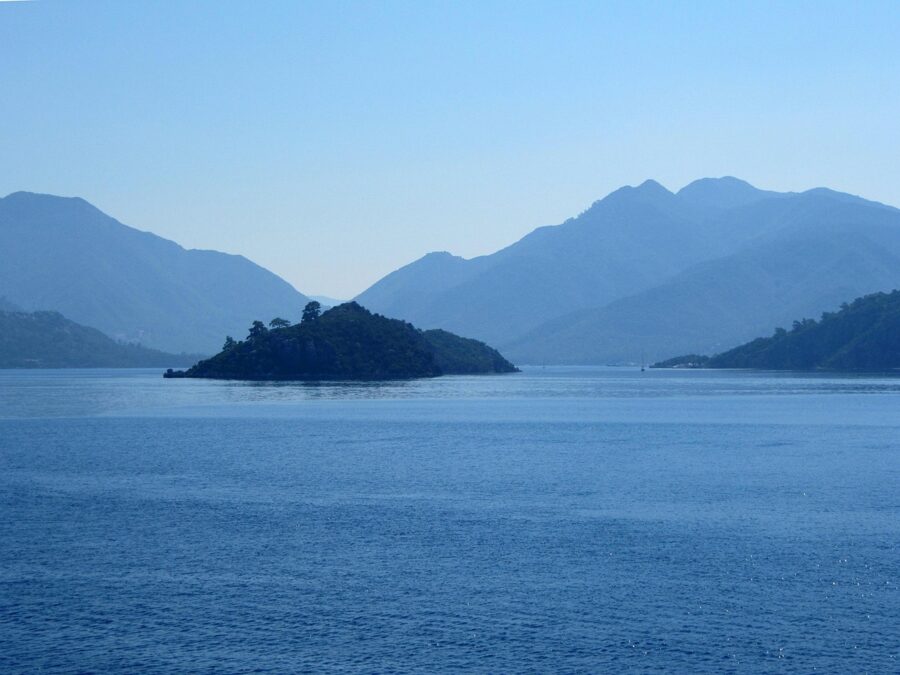
Marmaris is a big, brash resort town in a deep, mountain-ringed bay, and its gulets head west and south. The loops take in the Bozburun peninsula, the fjord-like inlets around Selimiye, and the long, narrow Datça peninsula, which points west toward the Greek islands of Kos and Symi. These are the longer weeks, often with more open water between anchorages.
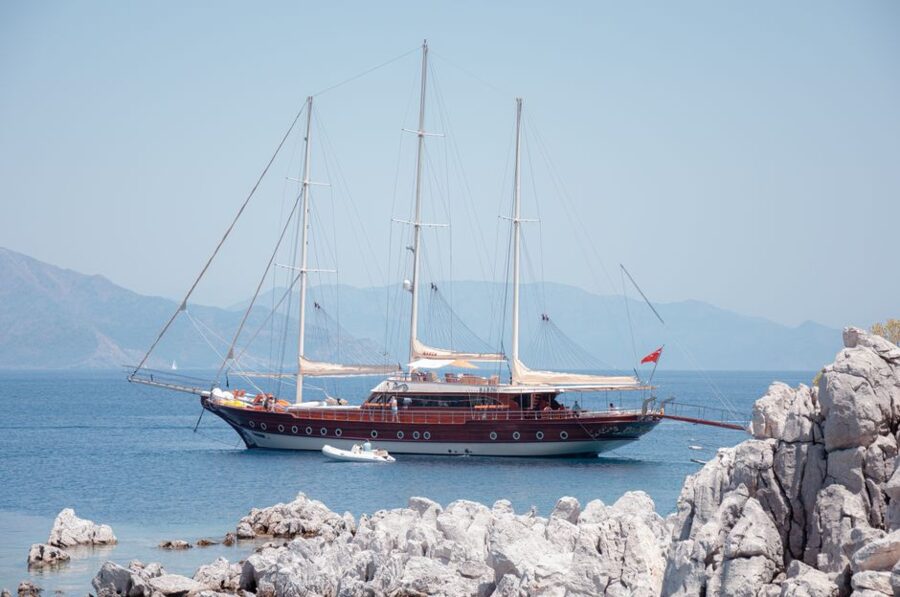
At the tip of the Datça peninsula sits Knidos, an ancient city laid out on a grid with two harbors, one for warships and one for merchant ships, separated by a strip of land. Boats anchor in one of the ancient harbors, and you can walk up through the terraces to the theaters and temples. The Ministry lists it at €5, open daily 08:30–18:00.

Bodrum and the Gulf of Gökova
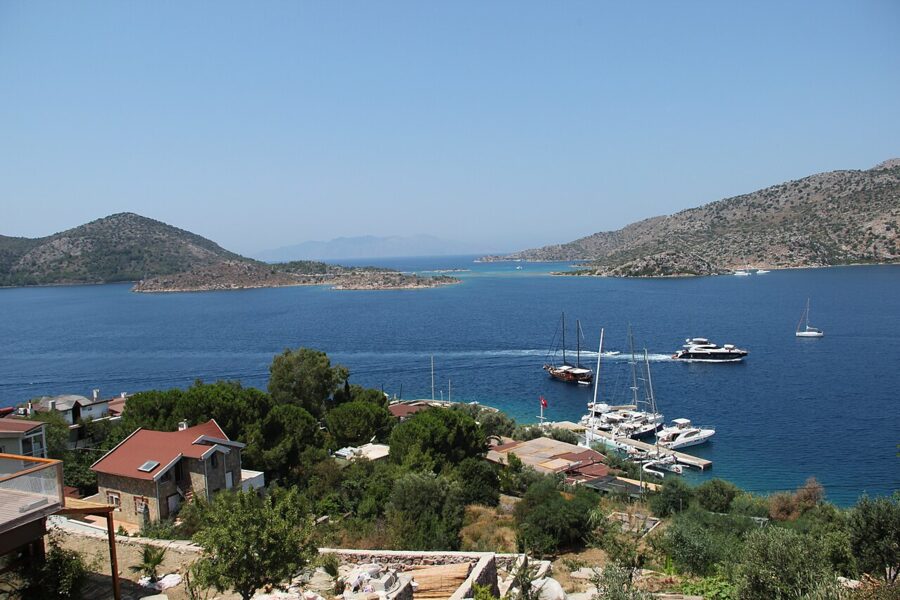
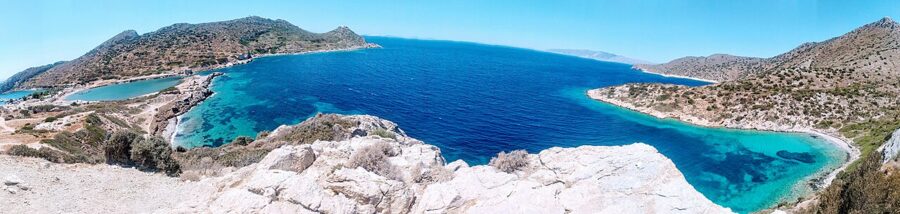
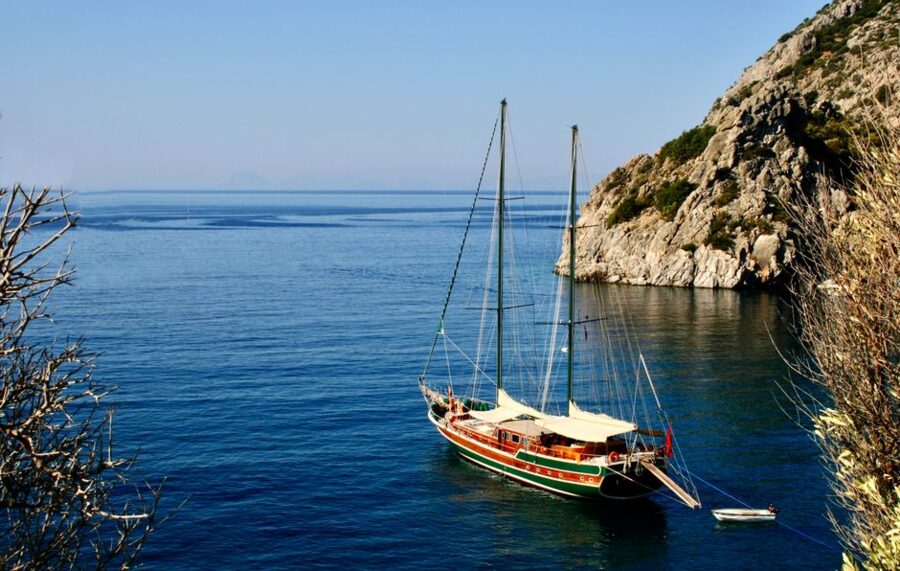
Bodrum is where the Blue Voyage began, and the classic week from Bodrum runs east into the Gulf of Gökova: a long, narrow gulf with pine-covered hills, few roads along its southern shore, and a string of sheltered coves. English Harbor, on the southern shore, is a favorite overnight stop.
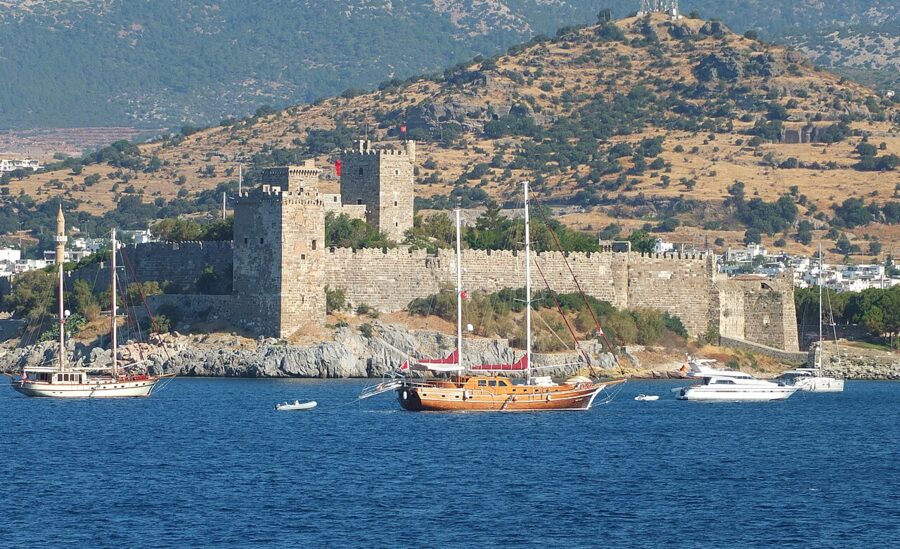


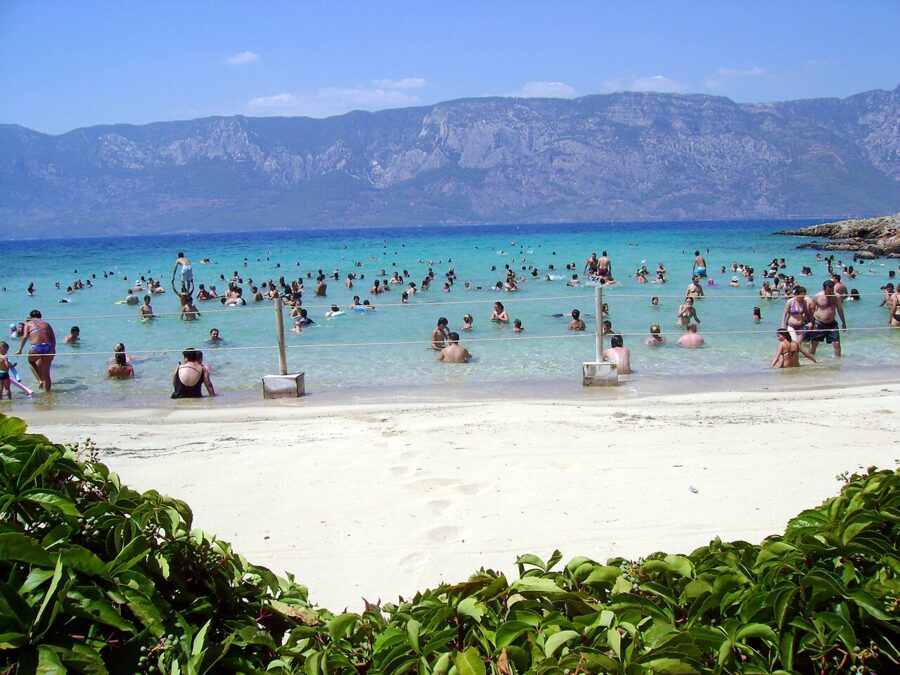
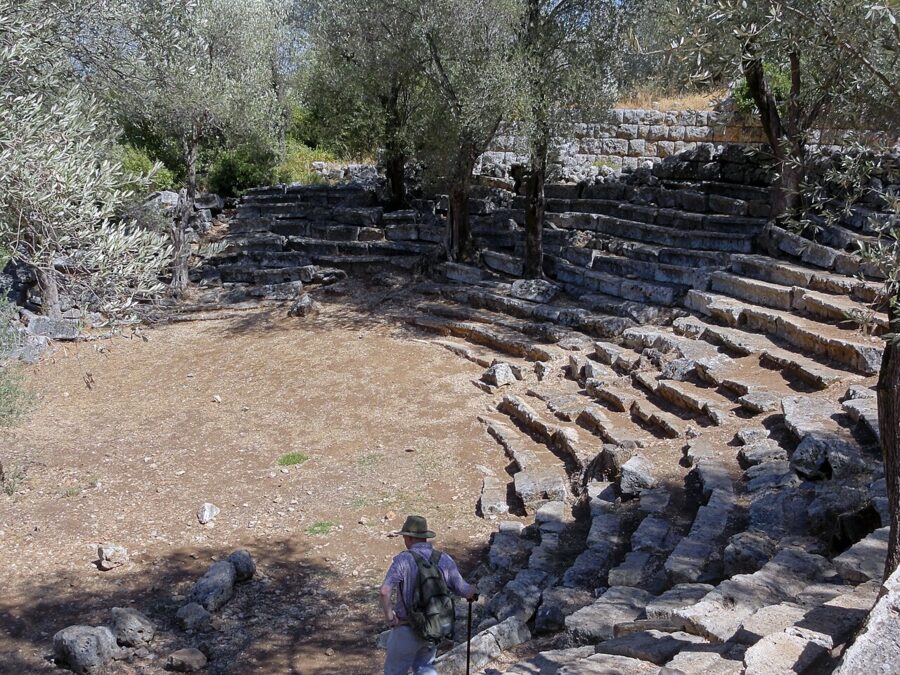
The best-known stop at the eastern end is Sedir Island, ancient Kedreai, with walls, a theater and a church in the trees and a beach of pale, round grains known as Cleopatra Beach. The sand is formed from small limestone grains, and taking any away is forbidden. The Ministry lists the island at €13, open daily 09:00–17:30, and it gets very busy at midday.


Crossing to Rhodes and the Greek islands
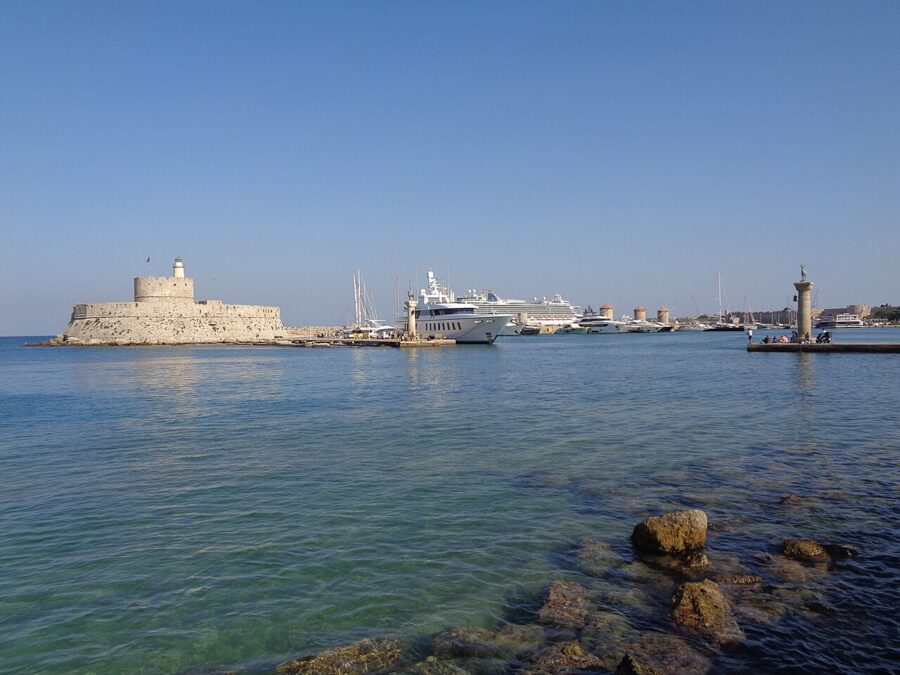
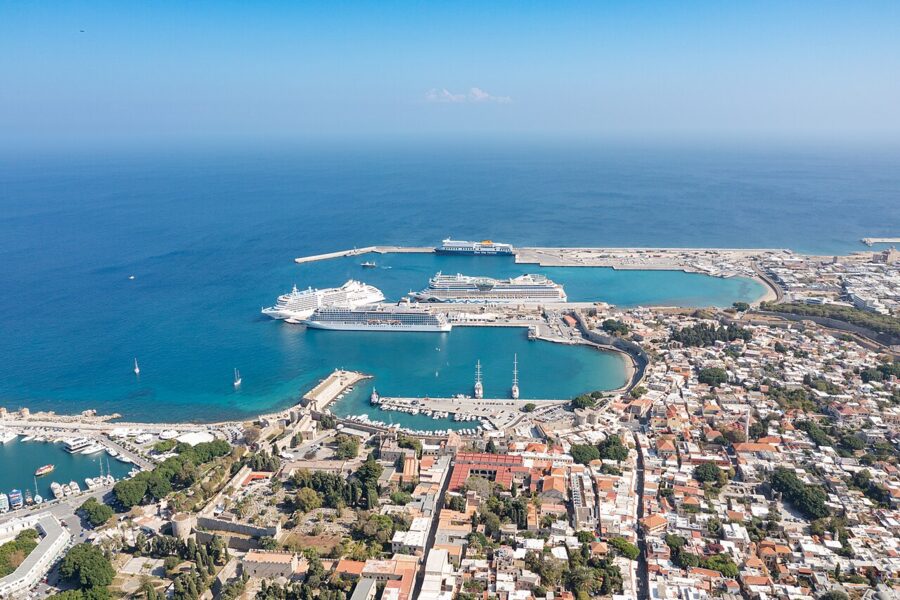
Rhodes is an hour by ferry from Marmaris, and Kos lies just off Bodrum. Some gulet weeks cross over, and plenty of people simply take the ferry. Either way you leave Turkey and enter Greece and the Schengen area, with passport control at both ends.
The ferry is the cheap and simple option. Yeşil Marmaris Lines runs Marmaris to Rhodes in about 60 minutes, and it still had sailings at 09:00 and 13:30 on its booking system in late November 2026; the same company also sails from Fethiye. Bodrum Express Lines runs Bodrum to Kos year-round. Arrive at the port well before departure for exit control.

A few things to check before you cross:
- Your Turkish entry. If you entered Turkey on a single-entry e-visa, leaving for Rhodes uses it up. Check your own entry terms before you go.
- Schengen rules. Days in Greece count toward the Schengen 90-in-180 limit. Under the EU’s Entry/Exit System, non-EU travelers have their fingerprints and photo taken on first entry, so allow time at the Rhodes border.
- Turkish citizens need a Schengen visa; the ferry operators run a visa-on-arrival application for the islands, which has to be started days before travel.
- A gulet week that crosses clears out of Turkey and into Greece at official ports, which adds port fees and paperwork to the price. Ask exactly which fees are included.

When to go: the season and the shoulder months
The gulet season runs from late April to late October. One operator’s 2026 Fethiye–Olympos boats ran from 18 April to 23 October; another ran only from mid-June to late September. Outside those months most boats are hauled out or in for repairs, and the coast belongs to the fishing boats.
| Months | Water | Price | Verdict |
|---|---|---|---|
| Late April to May | Cool, around 17–20°C | Lowest | Quiet coves, cold first jump; good for hiking ashore |
| June | Warming | Middle | My pick: long days, warm sea, before the peak |
| July and August | Warmest | Highest | Hot cabins, busy anchorages, the party boats are fullest |
| September to October | Still warm, around 23–26°C | Middle to low | Warm sea, cooler nights, the best value of the year |
Turkish holidays shift the picture. Domestic demand for mavi tur peaks around Kurban Bayramı, which falls at the end of May in 2026, and boats fill with Turkish families and groups. Book early if your dates overlap it.
Choosing a boat without getting burned
Most of the trouble on this coast comes from one gap: the boat in the photos and the boat at the quay are not the same. Agencies sell berths on boats they don’t own, and on a cheap cruise the operator can switch you to a smaller or older hull at short notice. A few checks before you pay make that much less likely.
The license, and the boat’s own papers
Any business selling tours in Turkey has to be a licensed travel agency registered with TÜRSAB, the travel agents’ association. A legitimate agency shows its trade name and its Ministry business license number (işletme belge numarası) on its website. Many also carry TÜRSAB’s Digital Verification System badge, which displays that license number.
Check it yourself. The TÜRSAB website has a member search (acenta arama) and a list of agencies whose licenses were cancelled. Then ask the operator for the name of the specific boat, its length, the number of cabins and the passenger capacity, and whether it carries passenger insurance. A good operator answers all of that by return.
Cabins and toilets
Gulet cabins are small, typically just big enough for the bed and a bag at its foot, with a tiny en-suite bathroom. On some boats the bathroom is a wet room where the shower sprays over the toilet. Twin beds are often not guaranteed; if you are sharing with a stranger, confirm it in writing.
Marine toilets clog easily. Many take nothing but what you ate, with a bin beside them for paper. Follow the crew’s rule on day one, and the whole boat will thank you by day three.
Food, alcohol and the bar tab
On the budget boats, the bar is the business model. The standard rule is no outside alcohol, which operators attribute to their licensing, and drinks bought on board go on a tab. One operator’s 2026 terms say bar payments and land excursions are cash only, with no cards on board, so bring euros or lira to cover it.
Group age and who you’ll be sailing with
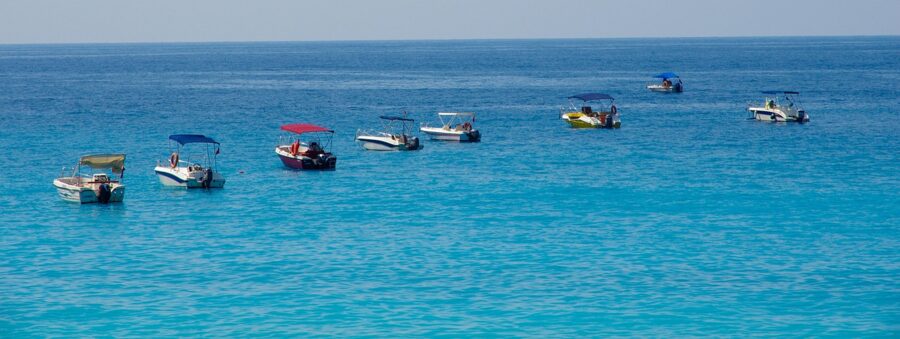
The Fethiye–Olympos boats are sold by age band. One operator runs 18–35 departures, 35-plus “relaxation” departures, family editions and mixed-age weeks; another bars children under ten from its cabin cruises. The 18–35 boats are a floating hostel with a party on the last night. If you want quiet, book the 35-plus boat; if you want company, the young boat is the better bet.
Deposits and cancellation
Expect a 50% deposit when you book and the balance a month or more before departure. One 2026 policy keeps a quarter of the deposit if you cancel more than 60 days out, half of it at 45–59 days, all of it at 30–45 days, and the full fare inside 30 days. Bad weather that changes the route is not grounds for a refund on most terms, so read the weather clause.
Red flags
- No agency name or license number anywhere on the website, or a TÜRSAB badge that doesn’t link to TÜRSAB.
- A price well under the €450–500 range for a three-night cabin cruise in season.
- Payment by bank transfer to a personal account, or cash in hand on the quay to someone you met in a bar.
- No boat name before you pay, or “a similar boat” in the terms.
- No written list of what’s included, especially port fees, water and the shuttle at the end.
What to pack
Storage on a gulet is a shelf and the space under your bed, so pack as if for a hostel dorm and not a hotel room.
- A soft bag rather than a hard suitcase; it squashes into the cabin.
- Cash in lira and euros for the bar tab, tips, site tickets and add-ons. Get it in Fethiye or Kaş.
- A beach towel, since most budget boats provide only a bath towel.
- Reef or water shoes for rocky landings, and trainers for the climbs at Gemiler and Simena.
- Sun protection: high-factor sunscreen, a hat with a strap, sunglasses on a cord. The sun off the water burns faster than you think.
- A power bank; sockets are few and power can be cut when the generator is off.
- Earplugs and an eye mask for the generator, the deck parties and the early light.
- A headlamp for the deck at night and the walk to the Chimaera at the end.
- A dry bag for your phone on the tender.
On seasickness: the Lycian coast between Fethiye and Kekova is mostly sheltered and the boat spends little time in open water. The summer north wind, the meltem, blows harder in the Aegean around Bodrum and Datça. If you’re prone to it, take tablets before the longer passages and sit in the middle of the boat, low and in the air, rather than in the cabin.
Ending in Olympos
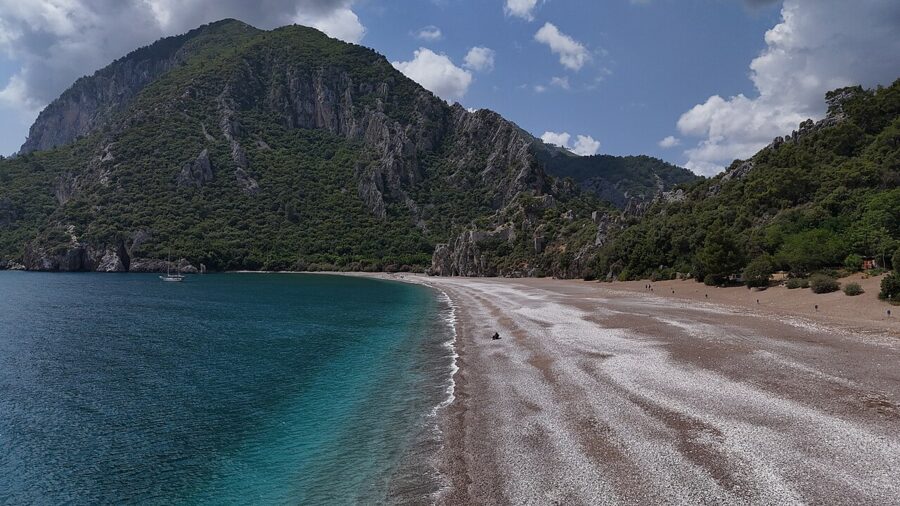
The shuttle from Andriake drops you in the Olympos valley, a narrow, wooded gully that runs down to the sea between steep hills inside the Beydağları Coastal National Park. Its single lane is lined with camps offering treehouses, wooden bungalows and dorms, and the usual deal here puts breakfast and dinner in the price of the bed. Book the first night before you board the boat.

The ruins and the beach
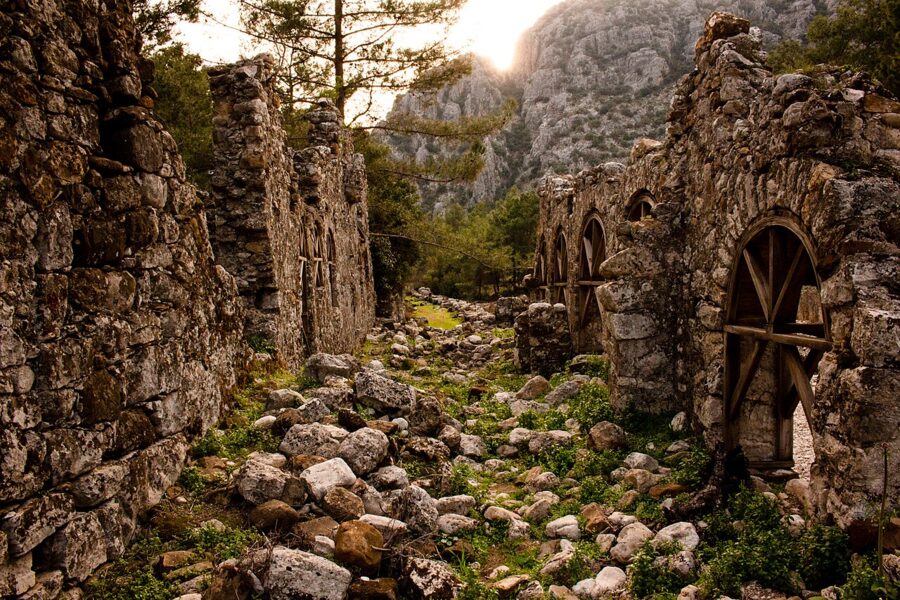
Olympos was founded in the 3rd century BC and was important enough to hold three votes in the Lycian League. In the 1st century BC it became a pirate base under a captain called Zeniketes, until the Roman general Servilius Isauricus took the city in 78 BC. Its ruins are scattered on both banks of the stream that runs down the valley, half buried in oleander and bay trees.
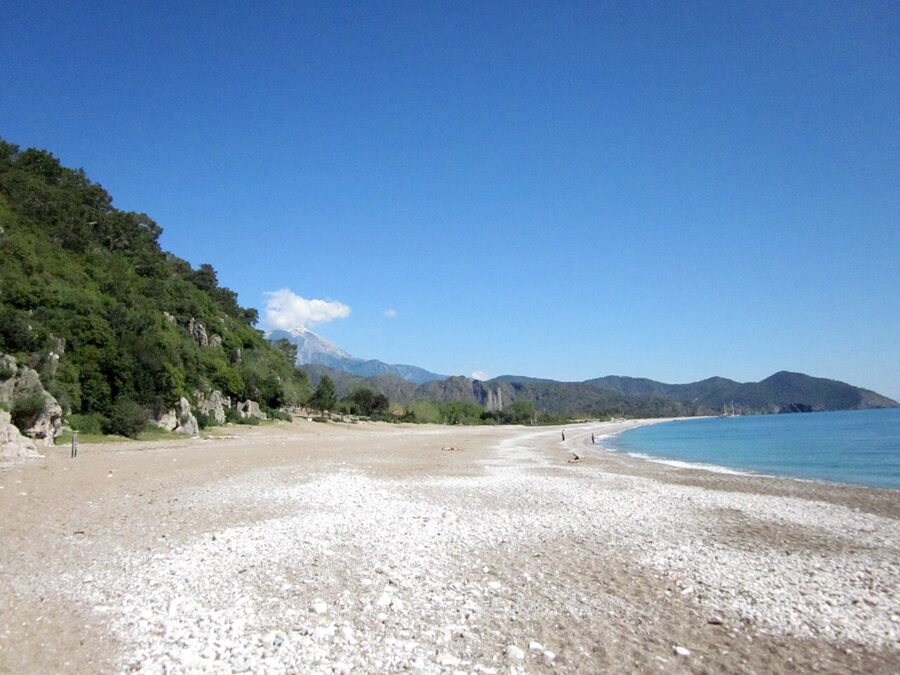
The archaeological site costs €10 and the Ministry lists it open daily 08:00–19:00, with the box office closing at 18:30. You walk through it to reach the beach, so the ticket is also your beach pass. A long pebble beach runs north from here to Çıralı.


The Chimaera flames at Yanartaş
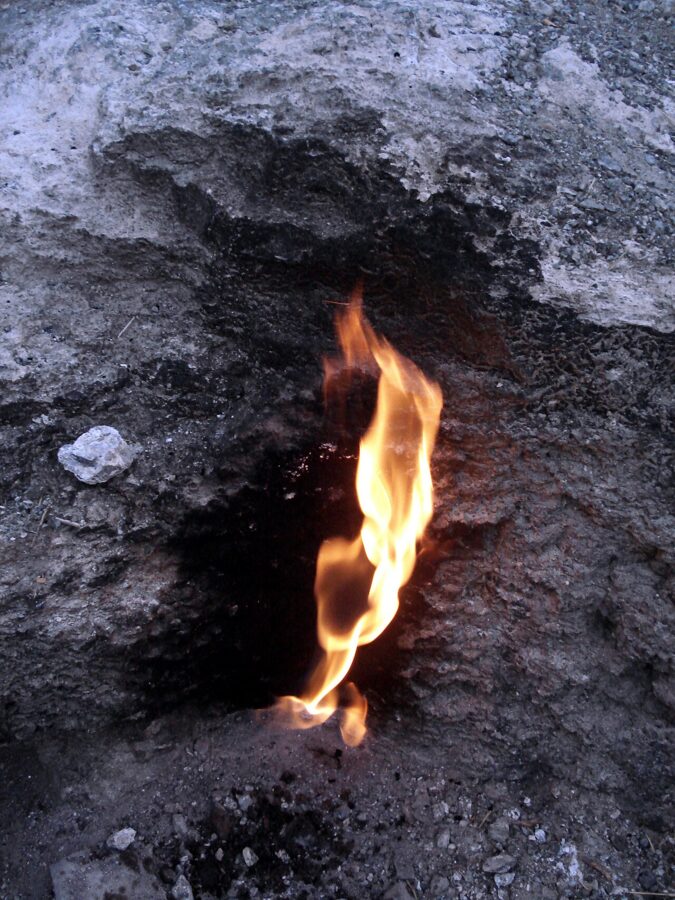
On a hillside above Çıralı, a few kilometers from the ruins, small flames burn out of cracks in the bare rock, and they have done so for as long as anyone has written about this coast. The fuel is natural gas, mostly methane, leaking from deep below. The flames were bigger in antiquity; now there are dozens of small ones, faint by day and bright after dark.
The Greeks put the monster Chimaera here, the fire-breathing beast that the hero Bellerophon killed from the back of Pegasus, and the story goes back to Homer’s Iliad. In Roman times the site was a sanctuary of Hephaistos, the smith god, and a Byzantine church was later built over his temple. Some remains of both are still by the flames.
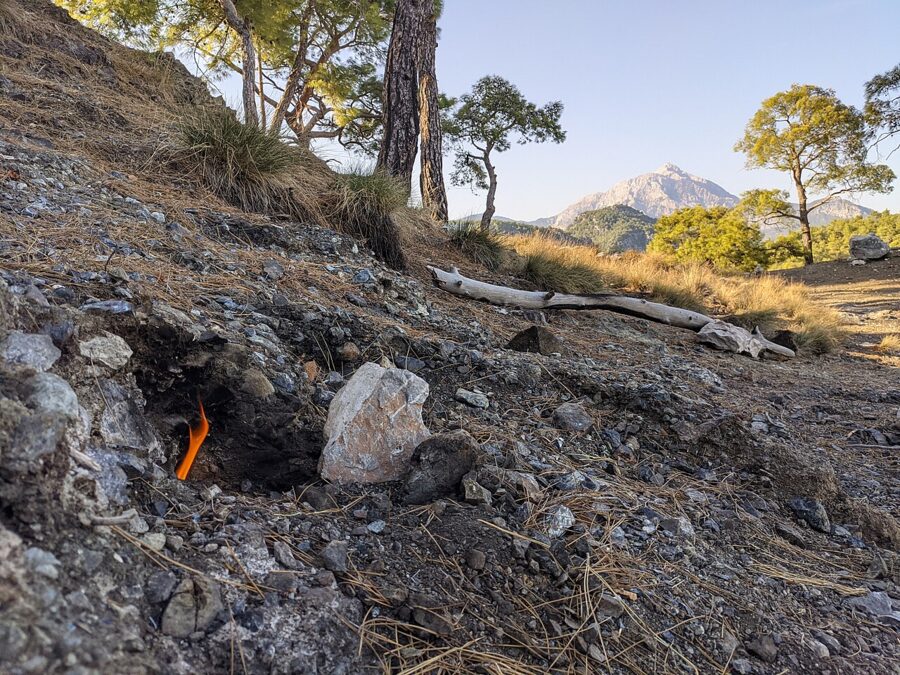

You need a ride to the foot of the path above Çıralı, a few kilometers north of the camps; ask at your camp about the evening run. From there it is a steady half-hour climb on a stepped trail to the flames, so bring a headlamp and water, and stay on the path in the dark.

Getting out of Olympos
Olympos sits about 80 km from central Antalya. Leaving, take a dolmuş up the valley to the junction with the main coast road, about 15 minutes, and flag down a bus on the Kumluca–Antalya road from there. Timetables change between summer and winter, so ask at your camp the night before.
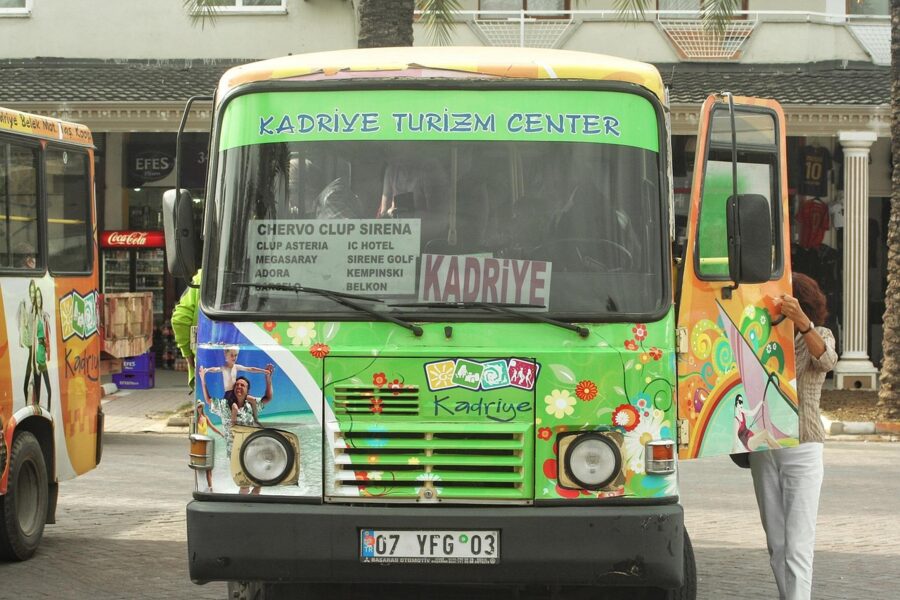
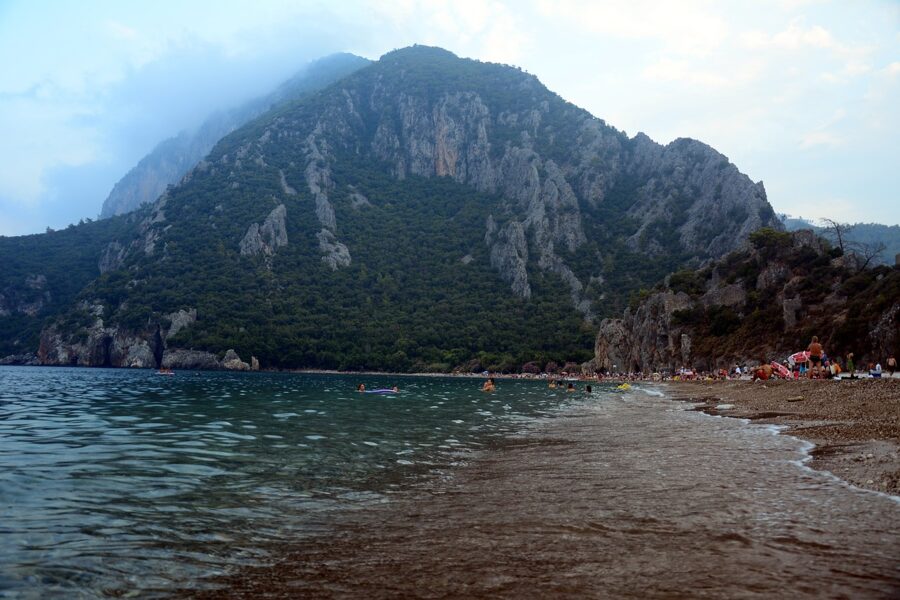
From Antalya the night buses and the airport connect onward to the rest of the country, and a Turkey itinerary that runs along the coast picks up from there. If you’re doing the boat as part of that loop, plan it in this order: Fethiye, the boat, two nights in Olympos, then the bus to Antalya. Book the cabin before you book anything else, and ask for the boat’s name.