A US, British, Canadian, Australian, Irish or Chinese passport now gets you into Turkey with a stamp and nothing else: no form, no fee, up to 90 days in any 180. That list keeps growing: China joined on 2 January 2026, while the fee table the foreign ministry still links to, from 2014, lists Australia and Canada as e-visa countries.
The short answer: most Western passports and every EU passport except Cyprus enter visa-free for tourism. India, Pakistan, the Philippines, Mexico, Vietnam, South Africa and a long list of others need an e-visa from evisa.gov.tr or a sticker visa from a Turkish consulate. Everything in the table comes from the Turkish Ministry of Foreign Affairs list as it reads in November 2026; check your own row there the week you book.

| Passport (ordinary) | What you need | Stay allowed | Cost and validity |
|---|---|---|---|
| United States | No visa | 90 days in any 180 | Free |
| United Kingdom (British citizen) | No visa (tourism) | 90 days in any 180 | Free; other British passport types need a visa |
| Canada | No visa | 90 days in any 180 | Free |
| Australia | No visa (tourism and transit) | 90 days in any 180 | Free |
| New Zealand | No visa | Up to 90 days | Free |
| Ireland | No visa | 90 days in any 180 | Free |
| EU states except Cyprus | No visa | Up to 90 days | Free; 12 EU states can use a national ID card |
| Republic of Cyprus | e-Visa or consulate visa | As issued | Border visas ended 2 January 2026 |
| China | No visa (since 2 January 2026) | 90 days in any 180 | Free |
| Japan, South Korea, Singapore, Malaysia, Israel, Brazil, Argentina, Chile | No visa | Up to 90 days | Free |
| Russia | No visa | Up to 60 days | Free |
| Indonesia | No visa | 30 days per entry, 90 in any 180 | Free |
| Thailand | No visa | Up to 30 days | Free |
| Mexico | e-Visa, or consulate visa | 30 days (e-visa) | Single entry; consulates issue 90-day multiple-entry visas |
| Vietnam | e-Visa | Up to 30 days | Single entry |
| South Africa | e-Visa through dtvgroup.com.tr, or consulate visa | 30 days (e-visa) | Multiple entry; consulates issue 90-day multiple-entry visas |
| India, Pakistan, Bangladesh, Philippines, Nepal, Taiwan | Conditional e-visa, otherwise consulate visa | One month | Single entry; needs a valid Schengen, US, UK or Irish visa or residence permit |
| Egypt | e-Visa; conditional between ages 15 and 45 | 30 days (conditional route) | Single entry; conditional route also limits the airline |
| Jamaica, Barbados, Bahamas, Antigua and Barbuda | e-Visa | Three months | Multiple entry |
“Up to 90 days” on the ministry’s list does not lift the overall cap: Turkish law limits every visa and every visa exemption to 90 days in any 180. The e-visa fee depends on your passport and appears on evisa.gov.tr before you pay; the ministry’s visa page links only to a fee table dated 10 November 2014, which is no guide to 2026 prices.
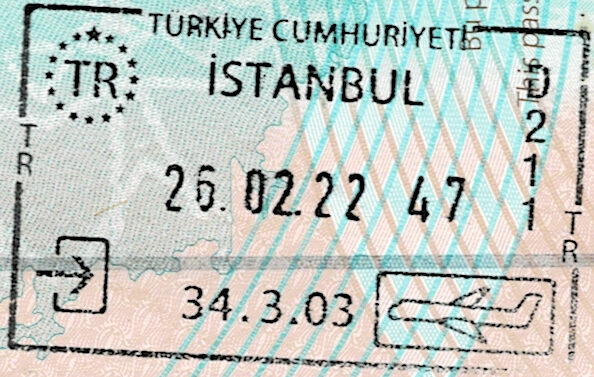

The ID-card list is short. The ministry names Germany, Belgium, France, the Netherlands, Spain, Italy, Luxembourg, Malta, Portugal and Greece from the EU, plus Georgia, Switzerland, Liechtenstein and Northern Cyprus; Bulgaria and Romania have their own ID-card clauses. A Swede, a Pole or a Dane still needs the passport.

Contents
How the e-visa works
The e-visa system went live on 17 April 2013 and replaced the sticker visas once sold at airport desks. It covers tourism and business trips only. Study, work and anything else still goes through a consulate.
There is one official site, evisa.gov.tr. You pick your nationality and passport type, enter your passport and travel dates, and the site shows the fee and any conditions before you pay. The ministry puts the whole thing at about three minutes, and it accepts the major cards plus several local payment systems.
Which e-visa you get
The visa depends on the passport, not on your plans. Caribbean passports such as Jamaica and Barbados get three-month multiple-entry e-visas. Mexico and Vietnam get 30-day single-entry ones. South Africans apply through dtvgroup.com.tr, an outfit owned by a foundation attached to the foreign ministry, and receive a 30-day multiple-entry e-visa.
Single versus multiple entry matters more than the day count. A single-entry visa ends the moment you leave Turkey, whether you planned to come back that evening or not.
The conditional e-visa
Indian, Pakistani, Bangladeshi, Filipino, Sri Lankan, Nepalese and Taiwanese passport holders, among others, can get an e-visa (one month, single entry, for most of them) if they already hold a valid visa or residence permit from a Schengen country, the US, the UK or Ireland. The Turkish consulate in Los Angeles spells out the rest: a return ticket, a hotel reservation, at least US$50 for each day of the stay, a tourism or business purpose, and arrival by air. The conditional e-visa is not valid at land border crossings.
The supporting visa only has to be valid on the day you enter Turkey; a used Schengen visa still counts. It can sit in an old passport as long as you carry that passport too. Another country’s e-visa does not count, and in the US only a sticker visa or a green card does. The Turkish embassy in New Delhi warns that evisa.gov.tr does not check your supporting document; the airline and the border officer do, and an airline will refuse to board you if it falls short.
Egyptians aged 15 to 45 face one more condition: the ministry limits the conditional e-visa to flights on Turkish Airlines, AJet, Pegasus, EgyptAir or Air Cairo. Under 15 or over 45, Egyptians apply without conditions.

Applying, paying, printing
Apply from home, not from Turkey: an e-visa cannot be issued to someone already in the country. After payment you download the e-visa as a file. I’d keep it on the phone and a printed copy in the passport, because check-in staff ask for it before the border officer does, and batteries die on long flights.
If you applied through another site and are not sure what you bought, the status page at evisa.gov.tr/en/status/ shows whether a real e-visa exists under your passport number. Turkish embassies cannot fix e-visa problems; the site has its own contact form.
The 90-in-180 rule, and how to count it
The Law on Foreigners and International Protection (No. 6458) says the stay granted by a visa or a visa exemption “cannot exceed ninety days within a period of one hundred and eighty days”. It is a rolling window, not a calendar half-year. On any given day, look back 180 days and add up every day you spent in Turkey; the total must stay at 90 or under.
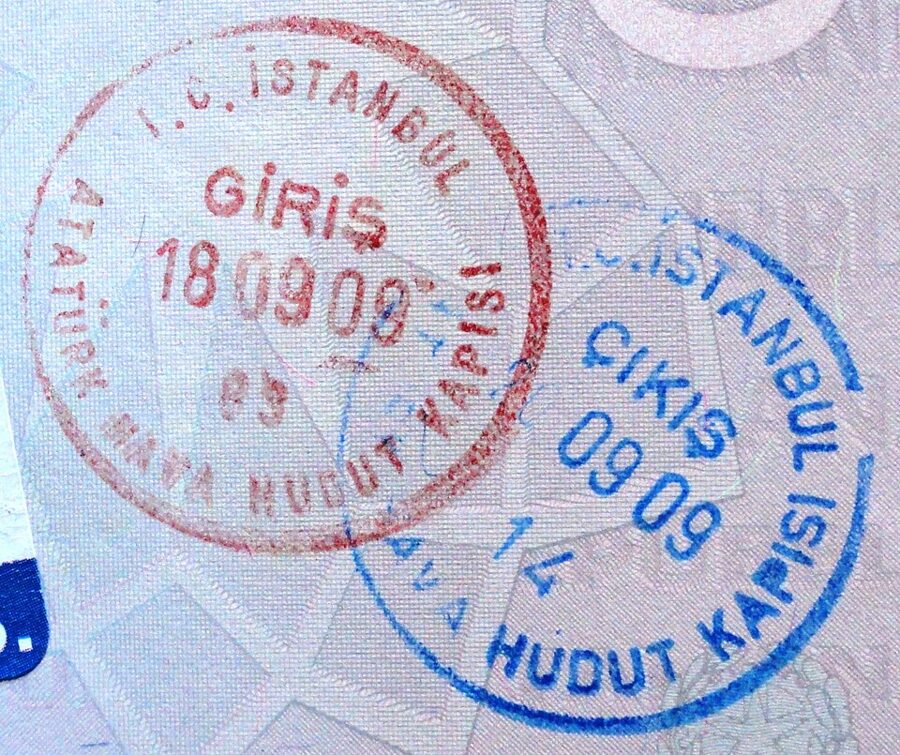

Count arrival and departure days as days in Turkey; part of a day is a day on the safe side. A worked example: you arrive 1 March and leave 29 May, which is 90 days. You can come back once enough of those days have slipped out of the 180-day window, so a fresh full 90 starts around late August, not after a weekend in Greece.
Two traps catch long-stayers. First, a second passport does not double the allowance: the ministry says plainly that you cannot spend 90 days on each of two passports in the same 180. Second, a consular visa valid for a year still only lets you stay 90 days in any 180, and the Migration Management FAQ answers exactly that question.
Russians get 60 days per visit, Indonesians and Thais 30, all inside the same 90-in-180 ceiling. Even the three-week loop in the Turkey itinerary uses less than a quarter of a visa-free 90.
Day trips to the Greek islands
The ferries from Bodrum, Kuşadası, Çeşme, Ayvalık and Marmaris make Kos, Samos, Chios, Lesvos and Rhodes tempting day trips. What that hop does to your Turkish status depends on the paper you entered with.
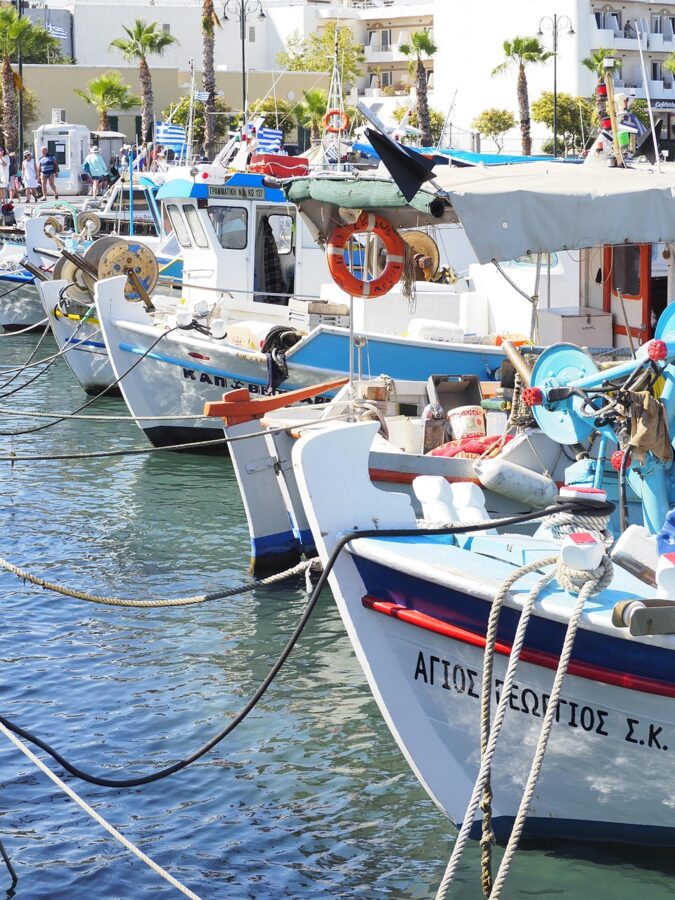
- Visa-free passports: you leave and come back on the same exemption. Your days in Greece do not count toward Turkey’s 90, but the clock does not reset either; the 180-day look-back carries on.
- Single-entry e-visa (including the conditional one): leaving Turkey uses it up. To come back you need a new e-visa, and the conditional one lists arrival through an airport as a condition, so the evening ferry back does not qualify.
- Multiple-entry e-visa (South Africa, the Caribbean list): the trip is fine within the visa’s validity and day count.
Greece is in the Schengen area and now records non-EU travelers in the EU Entry/Exit System on the way in, so expect a slower first crossing. The Greece to Turkey guide has the routes, fares and port fees for every crossing.
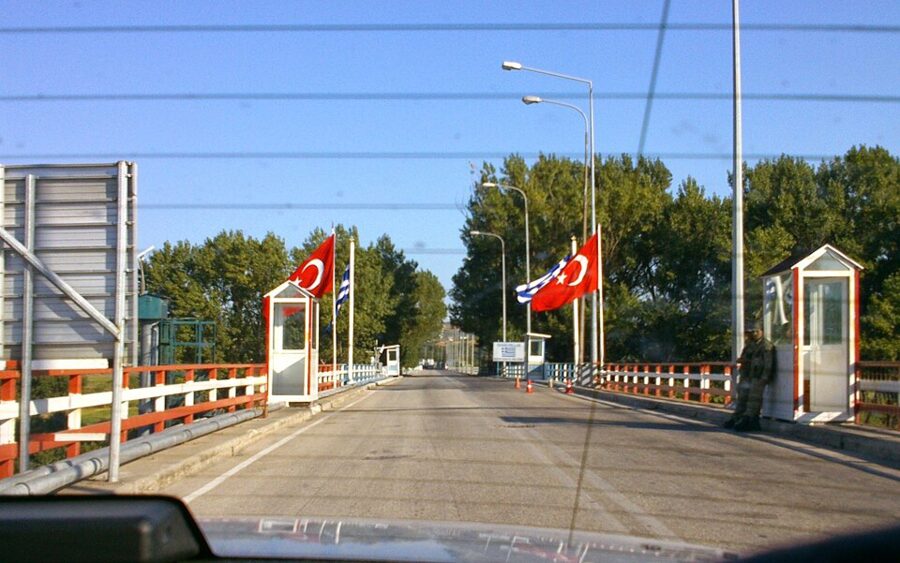

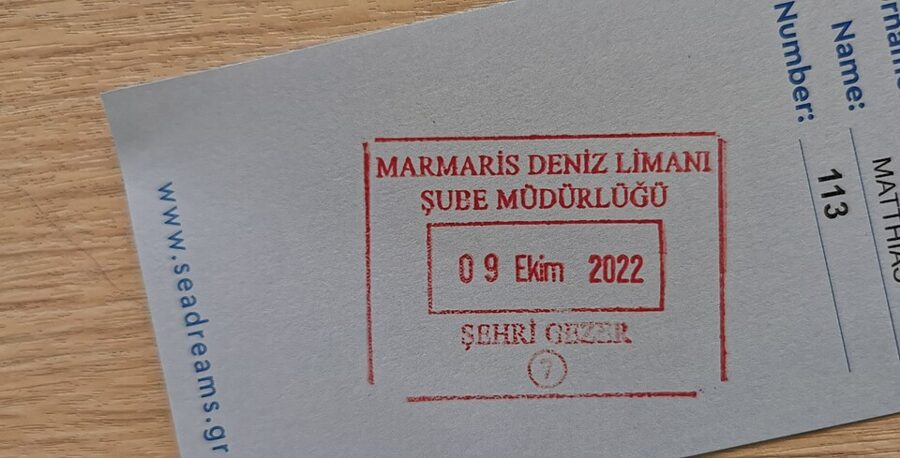
Arriving by sea, make sure your passport actually gets stamped. Australia’s government advice tells its travelers to check for entry and exit stamps at sea ports, and a missing stamp is a hard thing to explain on the way out.
_Mattes_2022-10-09.jpg)
Cruise passengers who would otherwise need a visa can be given a “harbor city entry permit” by the local governor: up to 72 hours, sightseeing near the port only, handed back on the way out.

What to have at the border
Passport validity. The law refuses entry if your passport expires less than 60 days after the end of the stay you are entitled to. With 90 visa-free days, that means 150 days of validity on the day you land; on a 30-day e-visa, 90 days. The ministry still advises six months, and that is what I would carry, because airlines apply their own rules at check-in.
A few European passports get leeway: German passports that expired within the last year, and Belgian, French, Spanish, Luxembourg and Portuguese ones (plus Swiss) that expired within five years, are accepted.
Blank pages. The British government asks for at least one blank page and the US embassy for enough space for entry and exit stamps. A sticker visa needs a full blank visa page.
Health insurance. For anyone who needs a visa, it is a legal condition: the law says no visa goes to someone without medical insurance valid for the stay, and the consulate in Boston asks for at least €30,000 of cover. The condition is written into visa issuance, not visa-free entry, but the Turkey travel tips explain why you want a policy anyway.


Funds and onward travel. Visa-free arrivals face no published funds requirement, but the ministry is clear that no visa or exemption is an absolute right of entry. Conditional e-visa holders must show the return ticket, the hotel booking and the US$50 a day; a bank card plus some cash in Turkish lira covers the last part. Sticker visa applicants send six months of bank statements with the application.
Children and dual nationals. A visa applicant under 18 needs written approval from both parents, or proof of sole custody. If you hold two foreign passports, enter and leave on the same one, and remember that the 90-in-180 count follows you, not the document. The UK government also notes that a dual British-Turkish child leaving Turkey may need the Turkish parent’s permission.
Overstays: fines, bans and how to leave legally
Overstay by fewer than 10 days and you are allowed to leave once you pay the fine at the border; no removal order is issued. Beyond 10 days the law provides for a removal decision, but Turkey’s Migration Management directorate (Göç İdaresi) runs a more forgiving rule for people who come to the border on their own before they are caught.
The fine itself has no published flat rate. The directorate says it varies with nationality, age and the length of the overstay, and you learn the figure at the border gate as you leave. Unpaid fines block re-entry even after a ban has expired.


| Overstay | You go to the border yourself and pay | Fine unpaid, or removed by the authorities |
|---|---|---|
| Under 3 months | No ban | 3-month ban |
| 3–6 months | 1-month ban | 6-month ban |
| 6 months–1 year | 3-month ban | 1-year ban |
| 1–2 years | 1-year ban | 2-year ban |
| 2–3 years | 2-year ban | 5-year ban |
| Over 3 years | 5-year ban | 5-year ban |
The bans come from the directorate’s published statement on overstays; the law caps an ordinary entry ban at five years. If you have overstayed, the cheapest exit is the one you choose: go to the airport or border gate yourself, pay, and leave. Caught under three months and handed a removal decision, you still avoid a ban by leaving within the time given and paying.
If a removal decision is issued, you are normally given 15 to 30 days to leave and seven days to appeal to an administrative court.
Anyone with a ban who needs to return applies at a Turkish consulate for an “annotated” visa, which the Interior Ministry has to approve. The directorate’s foreigners’ helpline is the YİMER 157 line.
Staying longer than 90 days
There is no extension stamp for a visa-free stay and no e-visa issued from inside Turkey. The only way to stay past your 90 days legally is a short-term residence permit, applied for online through the e-İkamet section of goc.gov.tr before your legal stay runs out; the directorate also considers online applications made within 10 days after it ends.

Tourism is one of the purposes the law lists for a short-term permit, which can run up to two years at a time. You need health insurance, a passport valid 60 days beyond the permit you ask for, and the card and permit fees paid before your appointment; e-İkamet calculates the amount. The directorate has up to 90 days to decide, and your application document lets you leave and return within 15 days at a time while you wait.
Two rules bite later. A residence permit is canceled if you spend more than 120 days outside Turkey in a year. And if you are let back in after using up your 90 days on condition that you apply for residence within 10 days, failing to apply earns an entry ban.
Visas on arrival, consulate visas and the fake e-visa sites
Visa on arrival is gone for almost everyone. The law allows border visas only in exceptional cases and for at most 15 days; a few Caribbean passports, Antigua and Barbuda among them, still appear on the ministry list with an arrival option, and Greek Cypriot passport holders lost theirs on 2 January 2026. Nobody holding a visa-free passport pays anything at an airport desk.
If e-visa is not open to you, the route is a sticker visa: a pre-application at visa.gov.tr, then an appointment at the consulate where you are a citizen or legally resident. The ministry advises applying at least a month ahead, decisions can take up to 90 days, and the fee is not refunded if you are refused. The consulate in Boston quotes US$60 single-entry and US$180 multiple-entry for most passports in 2026, payable in cash.


For most travelers the bigger risk is a fake e-visa site. They sit high in search results under names with “Turkey”, “evisa” and often “official” in them, sometimes on free website builders, and they buy the same e-visa from evisa.gov.tr and pass it on. The Turkish embassy in New Delhi says they charge more than twice the official fee. One widely seen copycat page describes every e-visa as a 90-day stay; most allow 30 days or a month.
The official addresses to bookmark:
- Visa Information for Foreigners, the ministry’s country-by-country list
- evisa.gov.tr for e-visas, and its status page to check one you already have
- visa.gov.tr for consulate (sticker) visa appointments
- goc.gov.tr for residence permits, overstays and entry bans, plus YİMER on 157
South Africans are the one exception to the “evisa.gov.tr or nothing” rule: the ministry itself sends them to dtvgroup.com.tr. Everyone else should type evisa.gov.tr into the address bar rather than trust a search result.
So: find your row on the ministry list, and if it says visa-free, buy nothing and check that your passport has 150 days and a blank page. If it says e-visa, apply on evisa.gov.tr a few days before the flight, print it, and write day 90 into your phone calendar the morning the entry stamp goes in.