The Acropolis ticket costs €30 in 2026, and it comes with a clock. You choose an entry slot when you buy it, and the gate lets you in only inside that slot. Get that one booking right and the rest of Athens is cheap to see, cheap to eat in and easy to walk.

Three days is the right length for a first visit on a budget. Give one day to the Acropolis, its south slope and the museum below it. Give the second to the lower city, where the Ancient Agora, the Roman Agora, Hadrian’s Library and the Kerameikos all sit within a 15-minute walk of Monastiraki. Keep the third for the National Archaeological Museum, a couple of neighborhoods and a hill at sunset.
Sleep in Psyrri, a few streets from Monastiraki metro, or in Makrygianni just below the Acropolis Museum. Both put the main sights on foot, and both have the city’s best-known hostels. Between 1 November and 31 March, the first and third Sundays of each month are free at every state site in Athens, the Acropolis included, so plan around them if your dates allow.

Contents
- The Acropolis in 2026: the ticket, the slot and the heat
- The Acropolis Museum: worth the second ticket
- The other ancient sites, and the end of the combined ticket
- Museums beyond the Acropolis
- Neighborhoods: where to walk, eat and sleep
- Getting around: metro, tram, buses and the 90-minute ticket
- Eating cheaply: souvlaki, the market and the taverna bill
- Sleeping cheaply: where the hostels are
- Three days, and what they cost
- Day trips: Sounion and Delphi
The Acropolis in 2026: the ticket, the slot and the heat
The full ticket is €30 and the reduced one €15, the same price all year. It covers the rock itself and its slopes: the south slope with the Theater of Dionysus, and the north slope path. Buy it from the Ministry of Culture’s own e-ticket service at tickets.hh.gr or at the ticket office by the gate. Resellers sell the same ticket for more, sometimes much more, and add nothing you need.
The time slot
When you buy online, you pick an entry time, and the Ministry’s terms are blunt: admission takes place only within the slot you chose. You can change the slot up to twice at no charge, as long as you do it at least 120 minutes before the original time. The slot is for getting in, not for leaving, and nobody times you on the rock.
In summer, book as soon as your dates are fixed; morning slots go first. In winter you can usually walk up and buy on the day, but the online ticket saves the queue at the window. On the free Sundays the rules flip: tickets are issued only at the ticket offices, so the line at the window comes back.
Hours, and when to go
Winter hours run from 1 November to 31 March: 08:00–17:00 every day, and you should be at the gate by 16:30 for the last entry. From 1 April to 31 August the site opens 08:00–20:00. September and October close earlier in four steps: 19:30 in early September, 19:00 later that month, 18:30 in early October and 18:00 from mid-October.
The site closes on 1 January, 25 March, 1 May, Easter Sunday and 25–26 December. On Good Friday it opens 12:00–17:00, and on Holy Saturday 08:30–15:30. Easter moves every year, so check the Orthodox date, which often differs from the Western one.
The first slot at 08:00 and the last two hours of the day are the ones to aim for. The marble throws heat back at you, there is almost no shade, and the cruise-ship groups arrive mid-morning. Heat is not a small thing here: in July 2025 the Ministry closed Hadrian’s Library from 12:00 to 17:00 for three days because of high temperatures. Wear shoes with grip, carry water and a hat, and eat before you go in, because eating on the site is banned.
Which gate to use
There are two ways in. The west gate is the main one, near the Areopagus, where most groups gather. The south-east gate on Dionysiou Areopagitou at Thrasyllou Street is a few minutes from Akropoli station on metro line 2, and it is usually calmer.
From the south-east gate you climb the south slope first, past the Theater of Dionysus and the Odeon, and reach the Propylaea from below. It adds some walking and saves most of the crush. The restrooms inside the site were closed for renovation in 2026, so use the ones beside the main entrance before you start. A lift on the north side carries visitors with reduced mobility up to the plateau, though it stops in strong wind.
What you are looking at on top
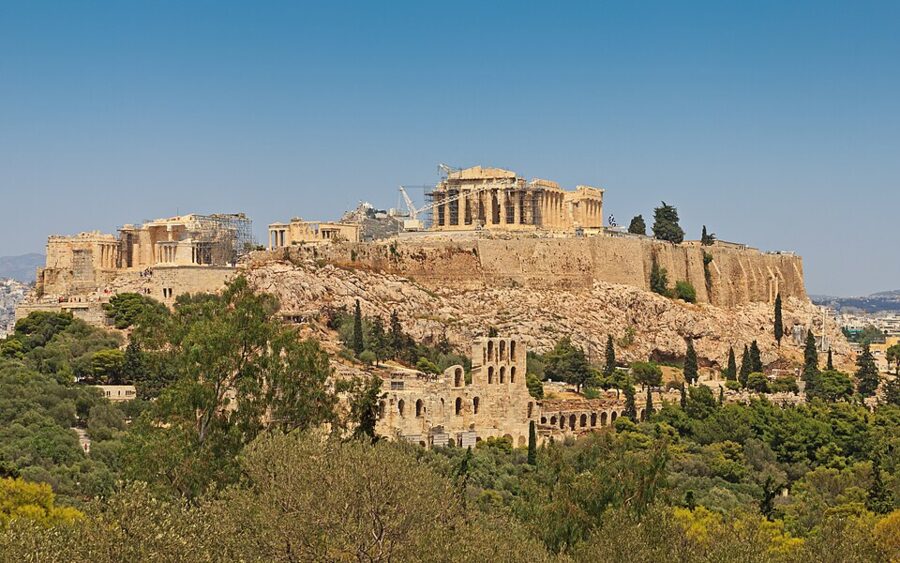
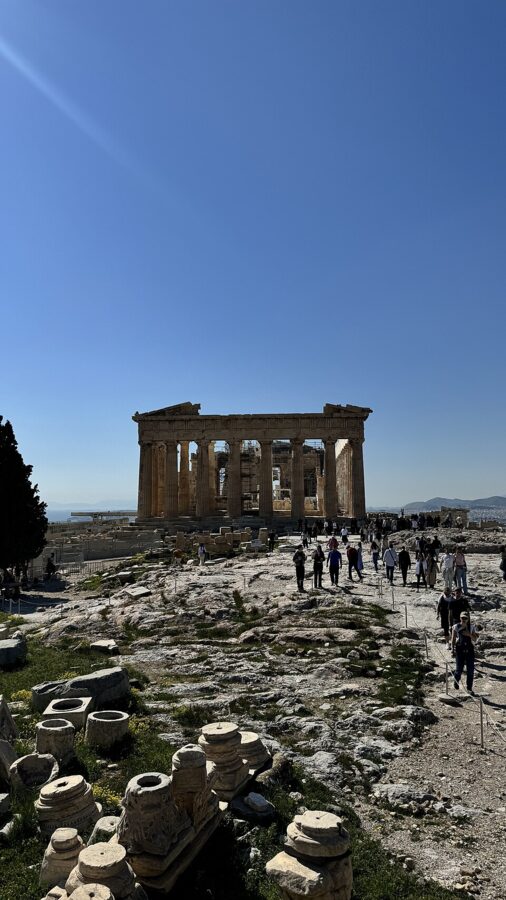
You enter through the Propylaea, the marble gateway that was the only way onto the rock in antiquity, because the hill is sheer on every other side. The Parthenon fills the view ahead. It took 15 years to build and housed a gold-and-ivory statue of Athena that has long since vanished. Expect scaffolding or a crane somewhere: the restoration has run for decades and moves from one corner to the next.
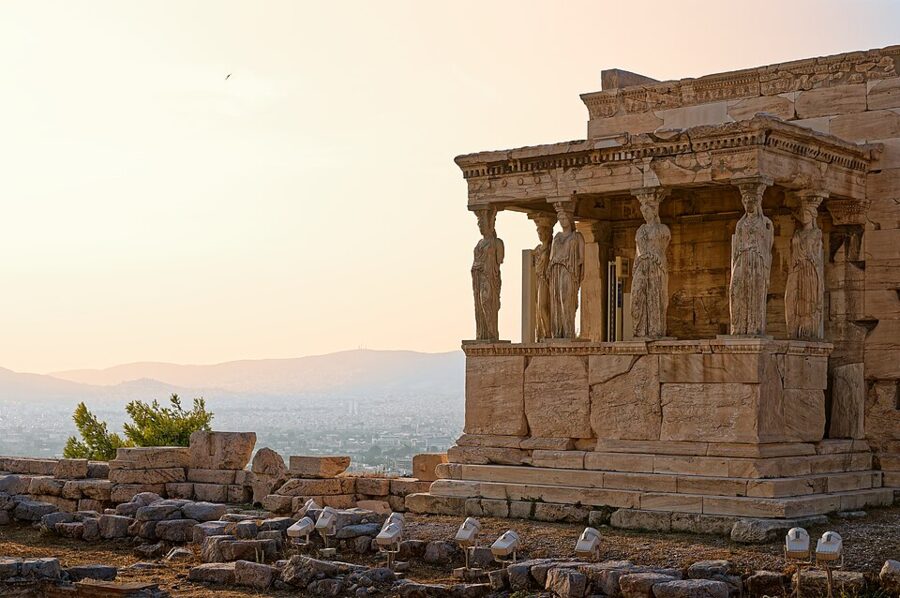

The Erechtheion, on the north side, is the odd-shaped temple with the porch of maidens. The small Temple of Athena Nike sits on the bastion to your right as you climb to the gateway. Walk to the east end of the plateau for the view over Plaka toward Lycabettus Hill, then back along the north edge, where the parapet looks down on Anafiotika.
The south slope and the north slope
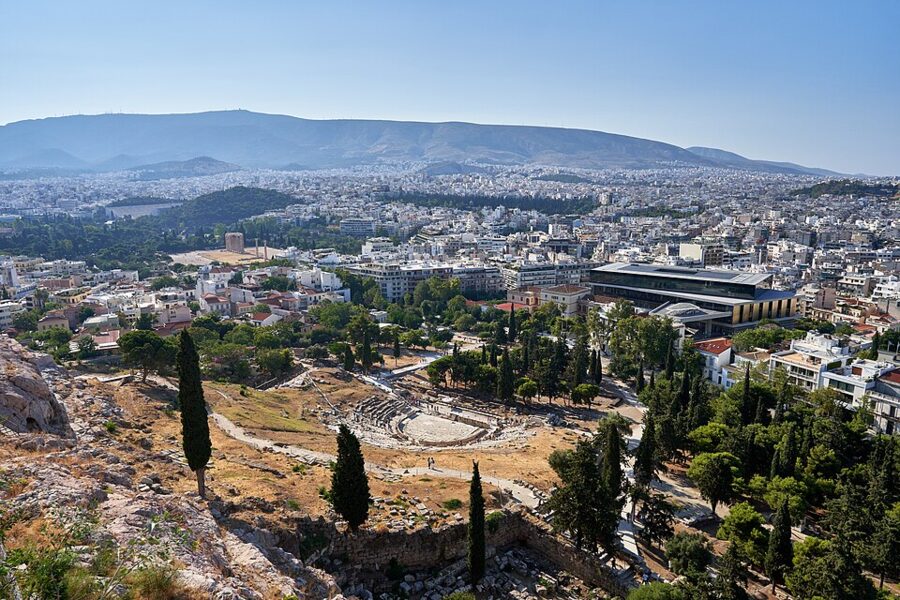
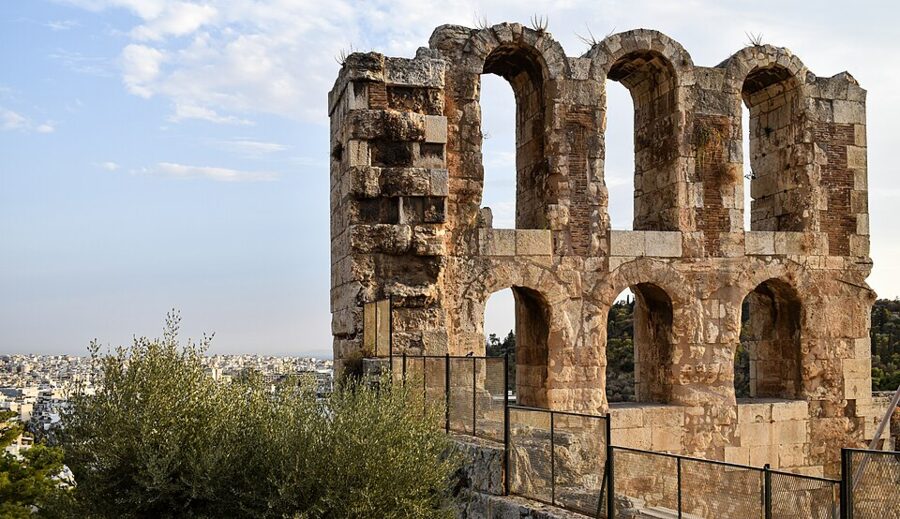
The south slope is included in the ticket, and plenty of people miss it by entering and leaving at the west gate. The Theater of Dionysus is where Athens staged its drama festivals; the stone seats you see are later rebuildings of the theater Sophocles and Aristophanes knew. Further west, the Odeon of Herodes Atticus was built by a rich Roman-era Athenian in the 160s AD and still hosts summer concerts. Outside performances you see it only from above.

The north slope path, the old Peripatos, runs round under the cliff toward Anafiotika. Since 1 November 2025 it has kept shorter hours than the rest of the site, 08:30–15:30, so do it early if you want it.
The Acropolis Museum: worth the second ticket
The museum is a separate building with a separate ticket, opposite Akropoli metro station at the foot of the south slope. The Ministry’s 2026 listing gives the full ticket as €15. It is not part of the state’s free-Sunday scheme; its own free days are 6 March, 25 March, 18 May and 28 October.
Winter hours, from 1 November to 31 March, are 09:00–17:00 Monday to Thursday, 09:00–22:00 on Friday and 09:00–20:00 at weekends. From April to October it opens 09:00–17:00 on Monday, 09:00–22:00 on Friday and 09:00–20:00 on the other days. The museum’s own e-ticket shop sells timed full-price tickets; reduced and free tickets are issued only at the desk on the ground floor, after your documents are checked.
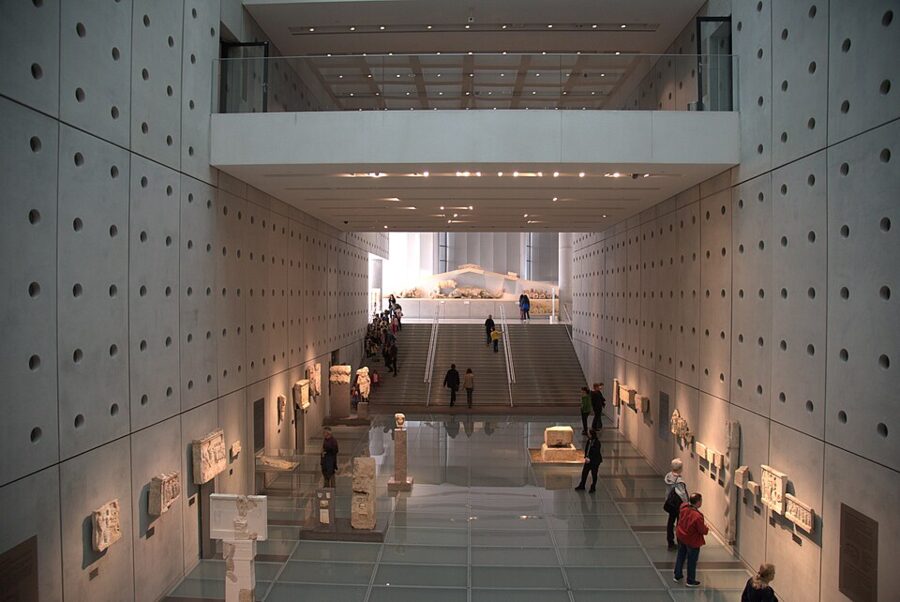

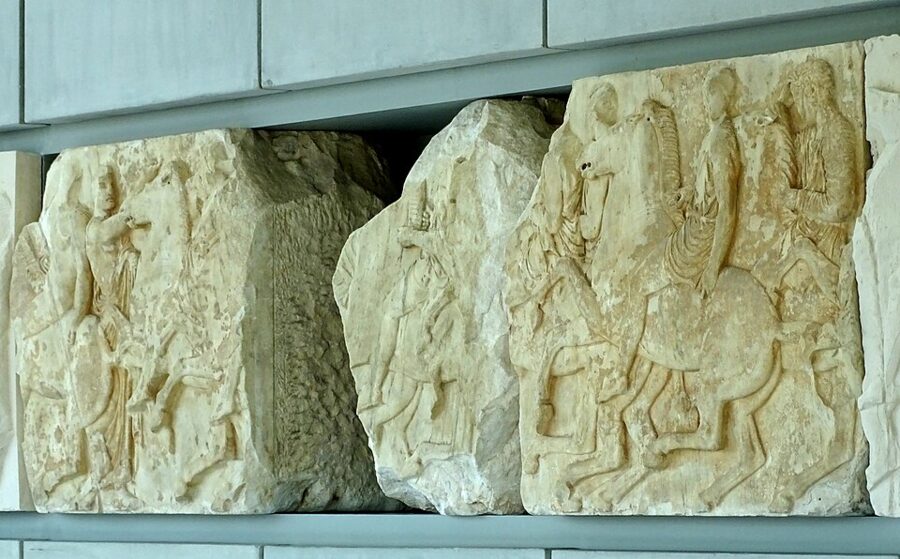
Start at the top floor and work down. The Parthenon Gallery is laid out at the same orientation as the temple, which you can see through the glass walls, and the frieze runs round it at eye level. The pieces still in London are shown as plain plaster casts, which makes the argument better than any sign.

Below that, the Archaic gallery holds the painted maidens (korai) that stood on the rock before the Persians burned it in 480 BC, and the five Caryatids from the Erechtheion stand on a balcony. Two hours is enough. If you are on a tight budget and must choose between this and the National Archaeological Museum, I’d take this one on the same day as the Acropolis, because it makes the ruins you have just walked through make sense.
The other ancient sites, and the end of the combined ticket
The old five-day combined ticket that covered the Acropolis and six other sites was withdrawn in April 2025, and nothing replaced it in 2026. Every site now has its own ticket. The “combo” passes still sold online are resellers’ bundles, not a Ministry product. Seeing all six sites below at full price comes to €100, so pick.
| Site | Full / reduced | Winter (1 Nov–31 Mar) | Summer (1 Apr–31 Aug) | Nearest metro |
|---|---|---|---|---|
| Acropolis and slopes | €30 / €15 | 08:00–17:00 | 08:00–20:00 | Akropoli (line 2) |
| Ancient Agora and Stoa of Attalos museum | €20 / €10 | 08:00–17:00 | 08:00–20:00 | Thissio (line 1), Monastiraki |
| Roman Agora | €10 / €5 | 08:00–15:00 | 08:00–20:00 | Monastiraki (lines 1, 3) |
| Hadrian’s Library | €10 / €5 | 08:00–15:00 | 08:00–20:00 | Monastiraki (lines 1, 3) |
| Kerameikos, site and museum | €10 / €5 | 08:00–15:00 | 08:00–20:00 | Thissio (line 1), Kerameikos (line 3) |
| Temple of Olympian Zeus | €20 / €10 | 08:00–15:00 | 08:00–20:00 | Akropoli (line 2) |
| Panathenaic Stadium (not a Ministry site) | €12 / €6 | 08:00–17:00 (Nov–Feb) | 08:00–19:00 (Mar–Oct) | Akropoli or Syntagma, then walk |
Hours shown are the ones listed on the Ministry’s ticketing site for 2026; the last entry is 20 minutes before closing. Its older information pages give slightly different winter hours for a few sites, such as 16:30 for the Agora, so if you are cutting it fine, arrive an hour before the stated close. September and October hours step down in the same way as at the Acropolis.
The Ancient Agora
If you pay for one site after the Acropolis, make it this one. The €20 ticket covers the site and the museum in the Stoa of Attalos, the long two-story colonnade that American archaeologists rebuilt in the 1950s on its ancient foundations. The Temple of Hephaestus on the low hill at the west side is the best-preserved Greek temple in the city, roof and all.
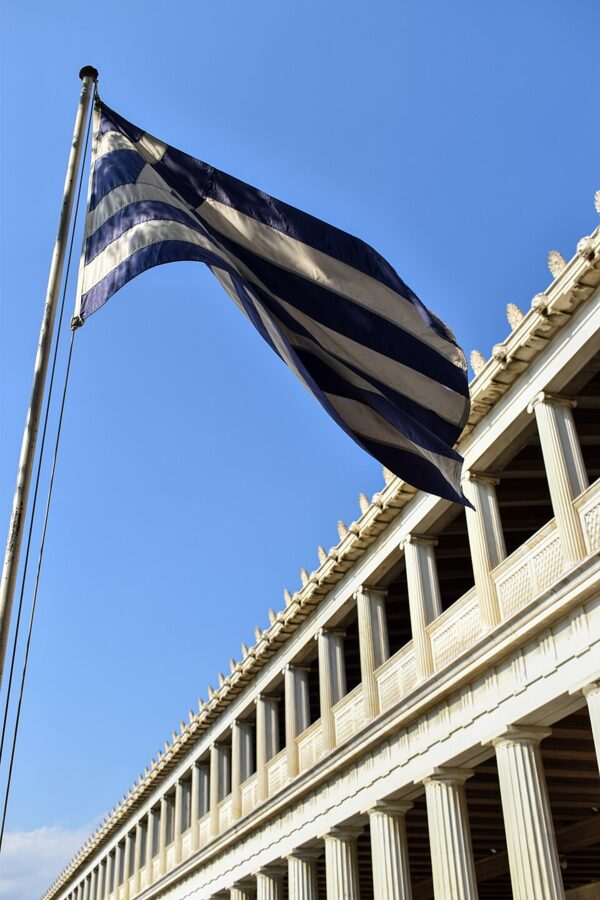
Two practical changes matter in 2026. The main entrance on Adrianou Street has been shut for redevelopment since July 2025, and visitors go in and out through the gate on Thiseio Square instead. On Tuesdays the museum opens at 10:00, later than the site. The rock of the Areopagus above the Agora is free and open at all hours, and its story, including Paul’s speech there, is told in the guide to the footsteps of St Paul.
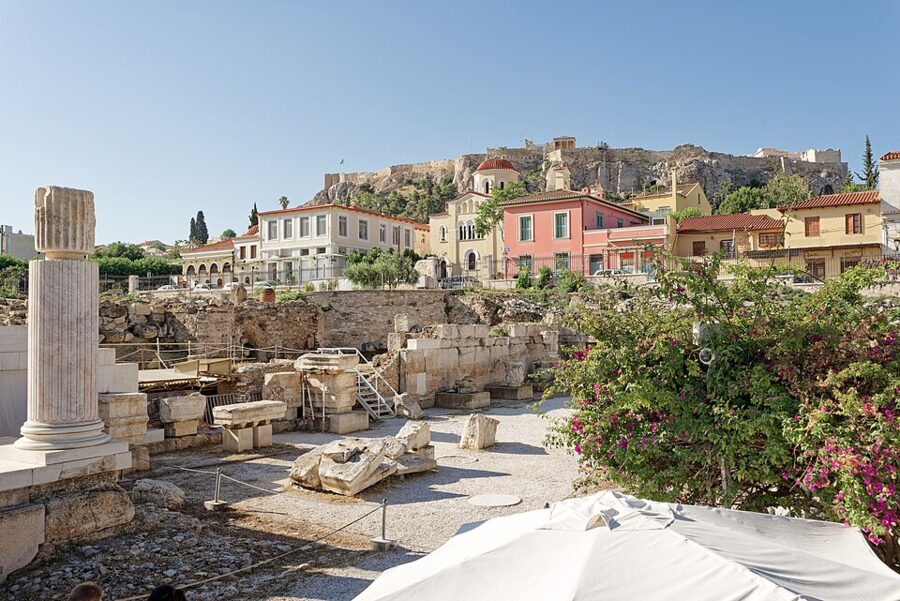
The Roman Agora and Hadrian’s Library
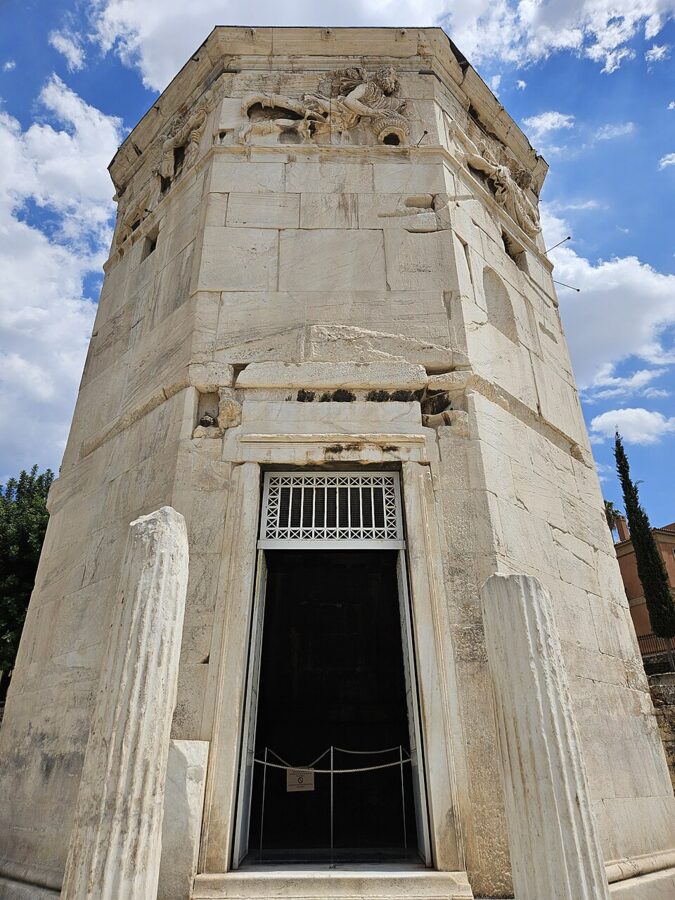
These two sit side by side behind Monastiraki Square, at €10 each. The Roman Agora was the marketplace the city moved to under Rome. Its prize is the Tower of the Winds, an eight-sided marble tower from the 1st century BC that worked as a water clock, with sundials on its faces and a carved wind god on each side.

Since November 2025 the Fethiye Mosque inside the Roman Agora has opened on Wednesdays and Sundays, 08:00–15:00. Hadrian’s Library was a courtyard complex with a garden and a pool, built by the emperor around AD 132. Most of what survives is visible over the fence from Areos Street, and I’d only pay to go in on a free day.

The Kerameikos
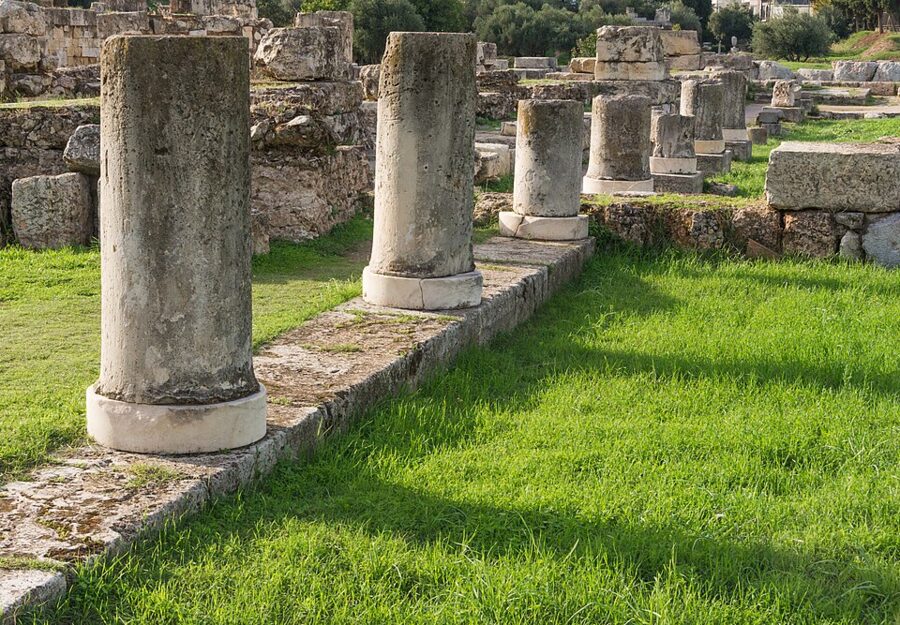
This was the potters’ quarter and the city’s main cemetery, outside the walls where the Sacred Way left for Eleusis. It is the quietest of the paid sites, with grave monuments, the stumps of the Dipylon Gate and a small museum included in the €10 ticket. Come late in the morning when the groups are at the Acropolis and you may have it nearly to yourself.
The Temple of Olympian Zeus and the Arch of Hadrian
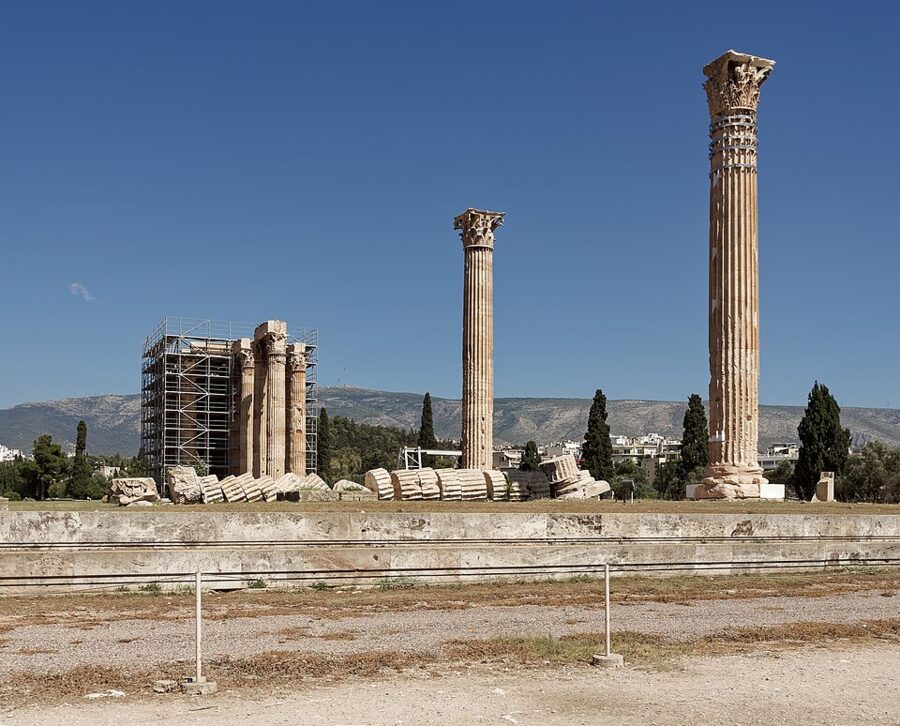
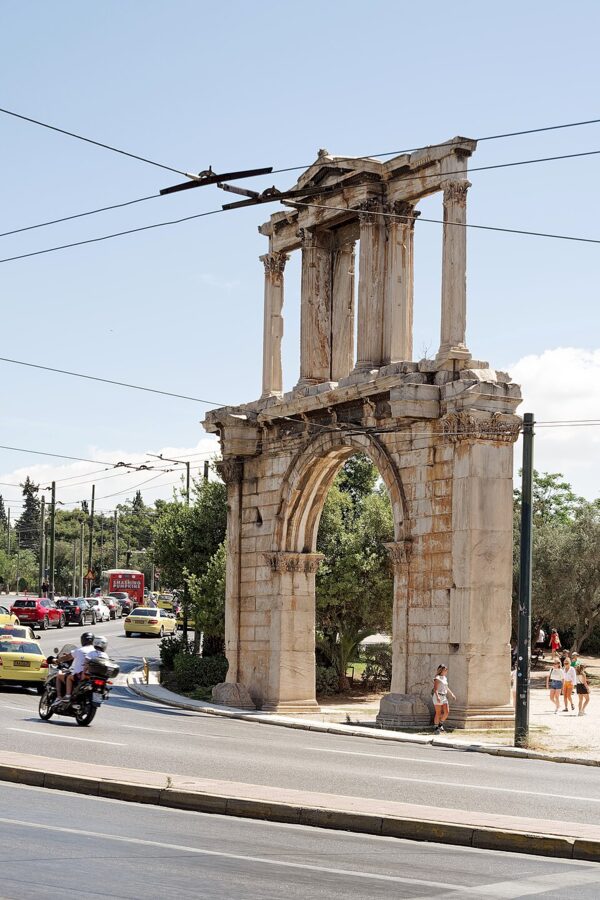
Fifteen huge columns are left of a temple that took more than six centuries to finish; Hadrian completed it in the 2nd century AD. The ticket is €20, and frankly most of it can be seen through the fence on Vasilissis Olgas Avenue. In 2026 scaffolding stood on the south-east corner for conservation work, and the Ministry warned that the area round Hadrian’s Arch would be closed during the redevelopment of Vasilissis Olgas Avenue.


The Panathenaic Stadium
The all-marble stadium was rebuilt on the ancient one for the first modern Olympics in 1896, and the Athens Marathon still finishes here every November. It is run by the Hellenic Olympic Committee, not the Ministry, so its ticket is separate: €12, or €6 for students, since October 2025, with a 30-minute audio guide included. It opens 08:00–19:00 from March to October and 08:00–17:00 from November to February.
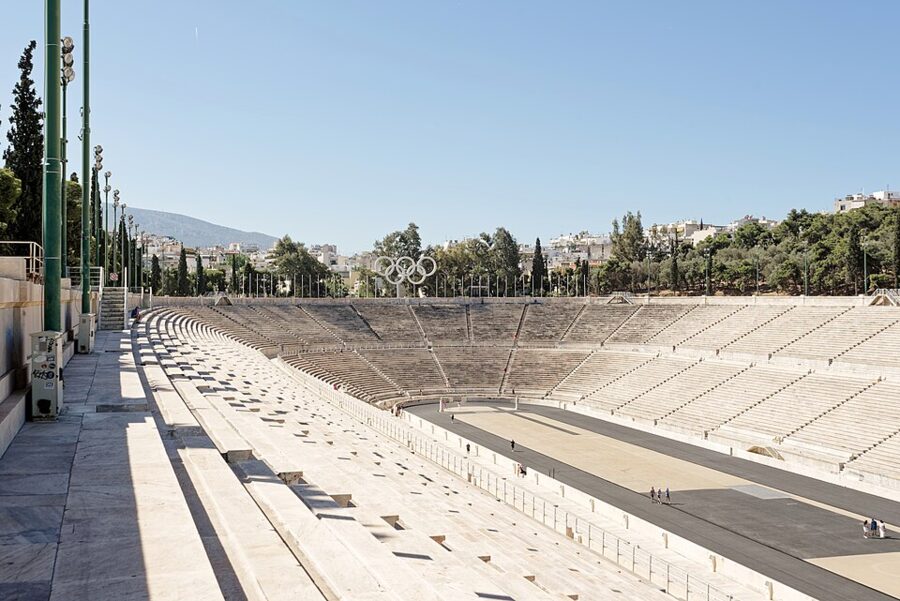

You can see most of it from the gate on Vasileos Konstantinou Avenue without paying. Pay if you want to walk the track and sit in the marble seats, which is the only reason I’d spend the €12.
Free days and cheaper tickets
Every state archaeological site and museum in Athens is free on these days in 2026:
- 6 March (Melina Mercouri memorial day)
- 18 April (International Monuments Day)
- 18 May (International Museum Day)
- the last weekend of September (European Heritage Days)
- 28 October (national holiday)
- the first and third Sunday of each month from 1 November to 31 March
Expect crowds and a queue at the ticket window, because free tickets are only issued there. The Acropolis Museum and the Panathenaic Stadium are not covered. Students and young travelers can qualify for reduced or free entry depending on their card and where it was issued; buy the right category online if you like, but you must show the original ID at the gate or you will be turned away.
Museums beyond the Acropolis
The National Archaeological Museum on Patission Street is the biggest collection of ancient Greek art anywhere. The Ministry lists the full ticket at €12 from November to March and €20 in summer. Winter hours are 08:30–15:30, except Tuesday, when it opens 13:00–20:00; from May to October it stays open until 20:00 every day.
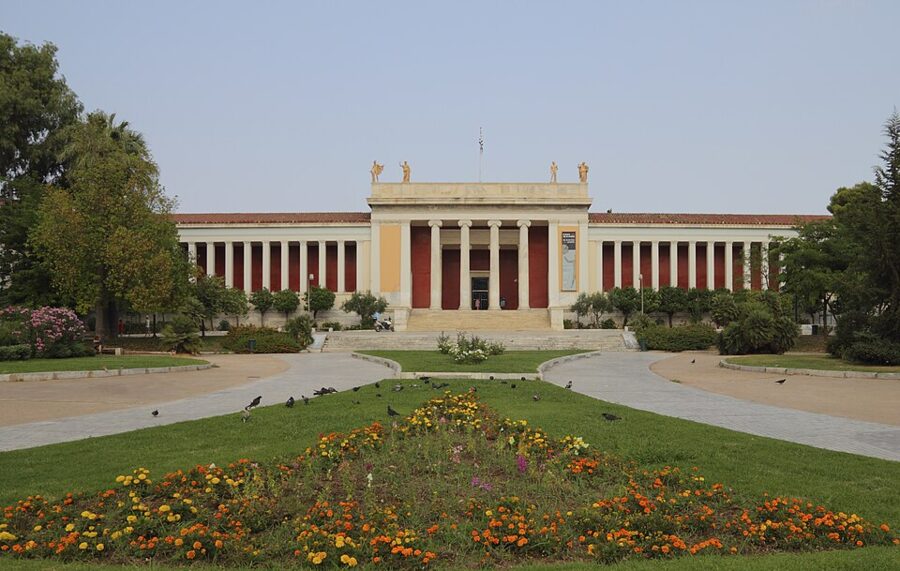

Go for the gold mask from Mycenae, the bronze god from the sea off Cape Artemision (Zeus or Poseidon; scholars still argue), and the corroded gears of the Antikythera mechanism, an ancient astronomical calculator. Allow three hours and eat beforehand. The streets round Omonia and the museum are rough at night, though fine in daylight.
Along Vasilissis Sofias Avenue, three more museums sit within ten minutes of each other. The Museum of Cycladic Art charges €12 and is closed on Tuesdays; it opens 10:00–17:00 on Monday, Wednesday, Friday and Saturday, 10:00–20:00 on Thursday and 11:00–17:00 on Sunday. Since May 2025 the entrance has been through the Stathatos Mansion at the corner of Irodotou Street, and under-18s get in free.

The Benaki Museum main building, a mansion across from the National Garden, covers Greece from prehistory to the 20th century in one long walk: icons, embroidery, costume, a reconstructed Ottoman-era reception room. It is privately run and keeps its own days and prices, so check its site before you go.
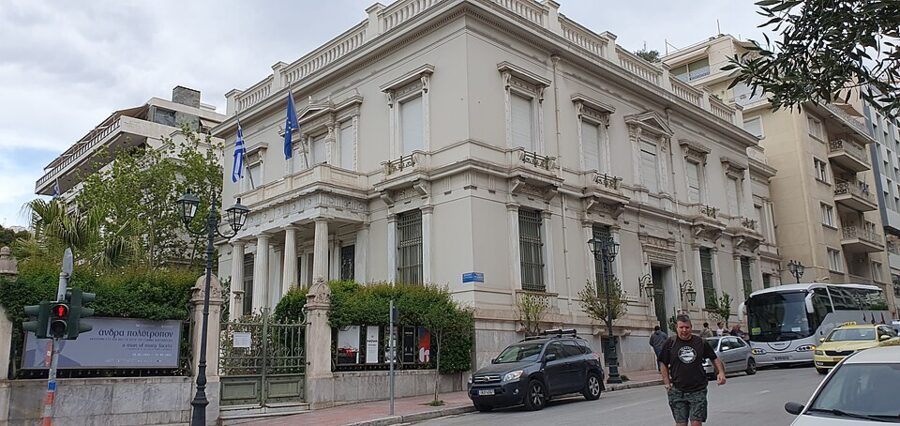

The Byzantine and Christian Museum, at 22 Vasilissis Sofias, is a state museum: €8, closed on Tuesdays, open 08:30–15:30 the rest of the week, and free on the state free days. It is five minutes from Evangelismos station on line 3, and the garden cafe is pleasant even if you skip the icons.
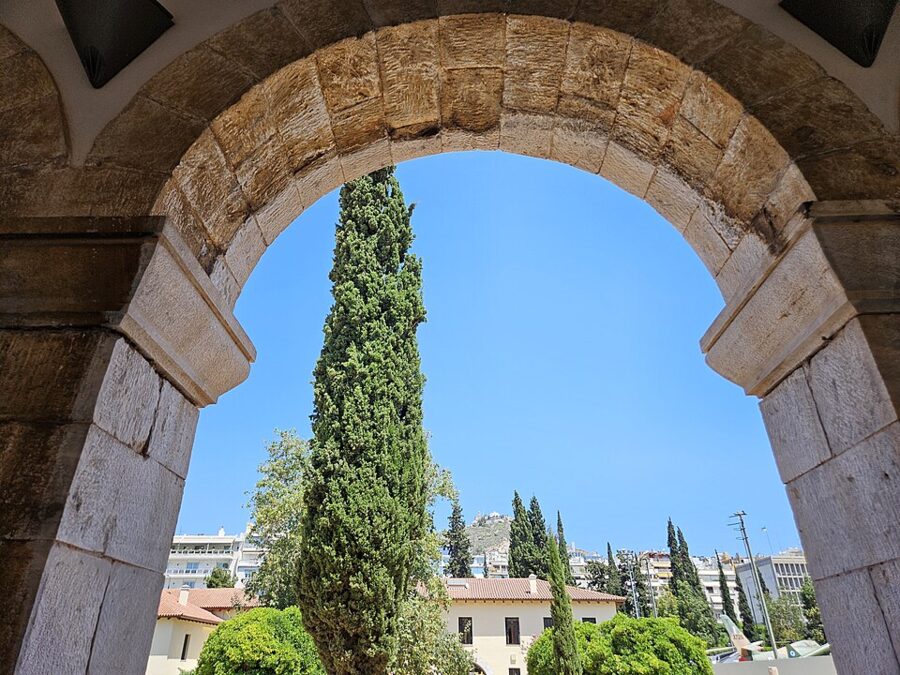

The free museums are mostly outdoors or underground. The hills west of the Acropolis, Philopappou, the Pnyx and the Hill of the Nymphs, are an open archaeological site with no ticket and no closing time. Syntagma and Akropoli metro stations display finds from their own excavations, and the Areopagus costs nothing.
Neighborhoods: where to walk, eat and sleep
Plaka and Anafiotika
Plaka is the old town under the north and east sides of the Acropolis: stepped lanes, neoclassical houses and some of the most expensive bad food in Athens. The touts on Adrianou and Kydathineon are a sign to keep walking. Come for the streets early in the morning or in the evening, and eat one neighborhood over.
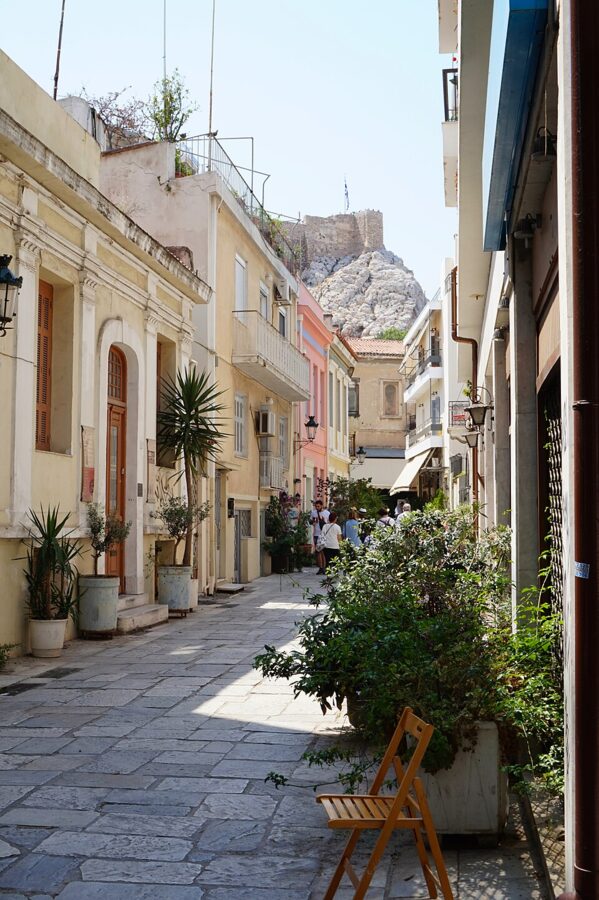

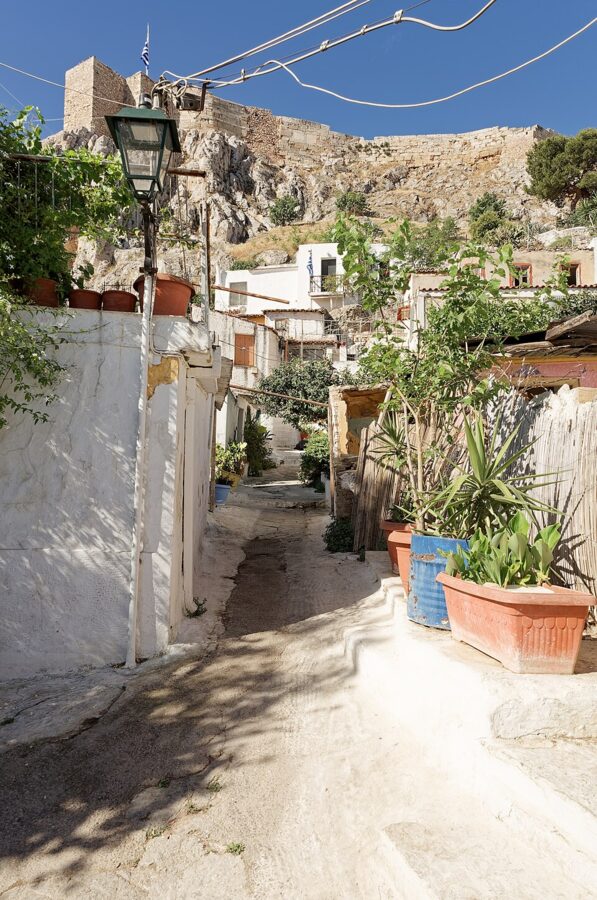
Anafiotika is a tiny cluster of whitewashed houses on the slope above Plaka, built in the 19th century by builders from the island of Anafi who came to work on the new capital and put up homes for themselves in their island style. People live there, so keep your voice down and stay off the doorsteps. The lanes are narrow and dead-end often; that is part of it.

Monastiraki and the flea market
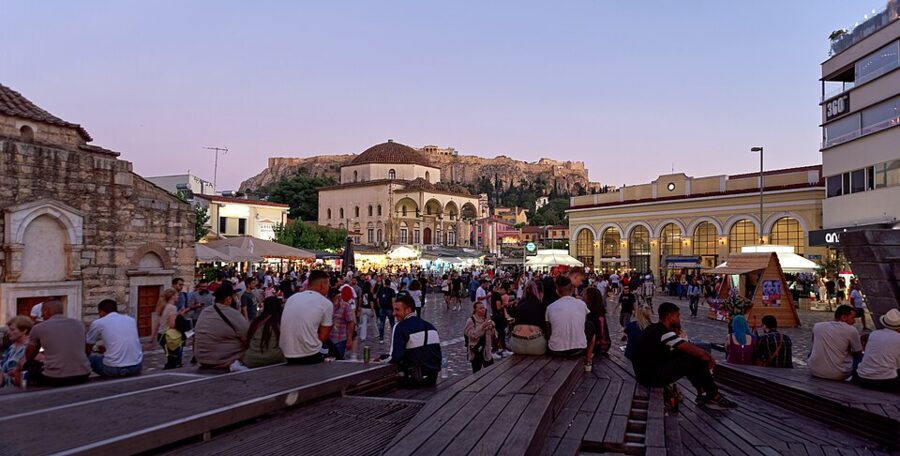
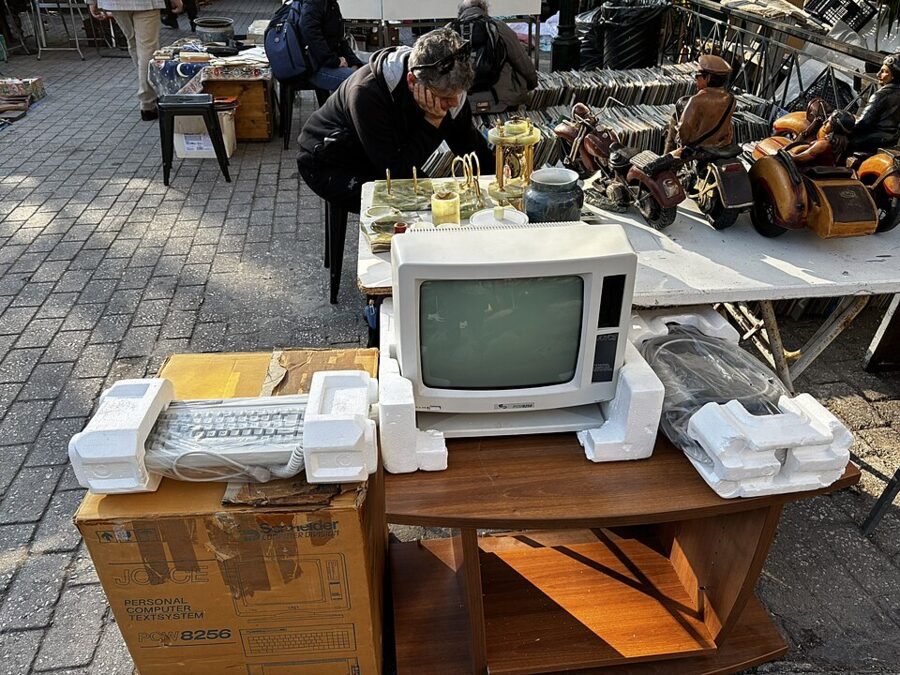
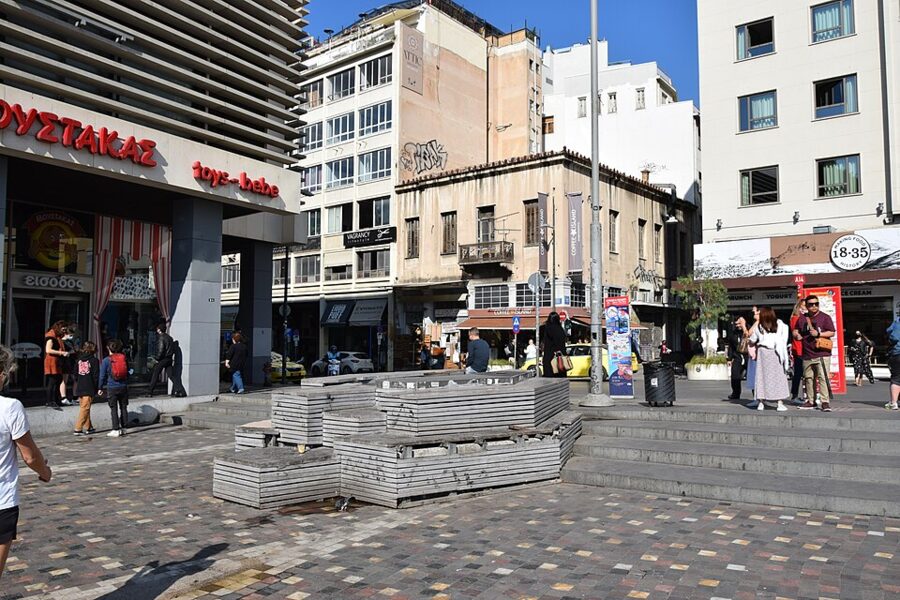
Monastiraki is the hinge of the old center: the square, the metro station, the 18th-century Tsisdarakis Mosque and the fence of Hadrian’s Library. The flea market spreads through Ifestou Street and the lanes west of the square, selling everything from army surplus to old cameras, with the junk dealers busiest around Avissinias Square on Sunday mornings.

Pickpockets work this square and the trains under it. Keep your phone in a front pocket and your bag where you can see it.
Psyrri
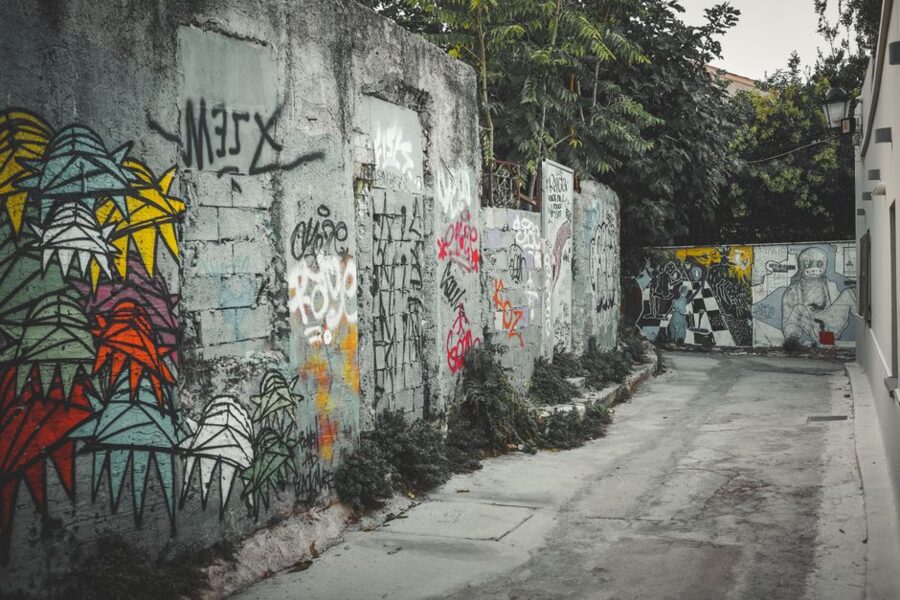
Psyrri, just north of Monastiraki, was a quarter of workshops and warehouses that turned into a nightlife district. By day it is a tangle of small streets with street art, cheap bakeries and hardware shops; by night the bars and mezedopoleia (small-plate taverns) fill up, and the hostels here are full of people who came for exactly that. It is noisy on weekend nights, so ask for a room away from the street.

Koukaki and Makrygianni
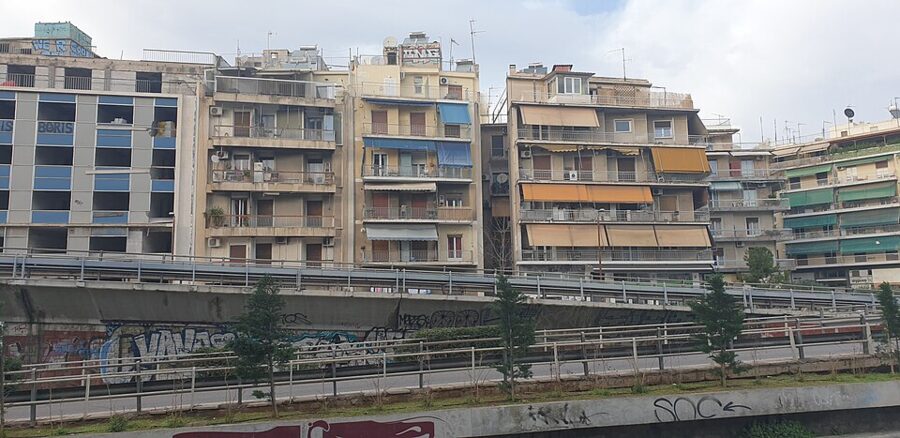
South of the Acropolis, Makrygianni runs into Koukaki, a residential grid of apartment blocks, bakeries and corner cafes. It is the calmest base in the center: the Acropolis Museum and the south-east gate are at the top of the street, and Akropoli and Syngrou-Fix stations on line 2 are close. The pedestrian cafe strip on Drakou Street is where the neighborhood sits in the evening.

Exarchia
Exarchia, north of the center between the Polytechnic and Strefi Hill, has been the city’s student and anarchist quarter for decades. The 1973 student uprising against the military junta began at the Polytechnic on its edge, and the neighborhood still marches every 17 November. Today it is bookshops, record stores, cheap tavernas and walls covered in posters.
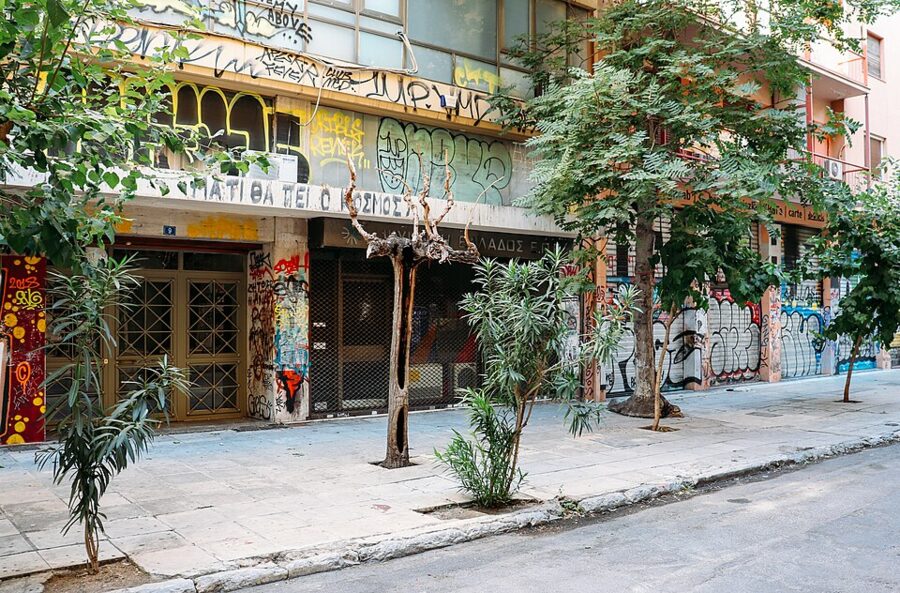

Daytime visits are relaxed. Around 17 November and 6 December, the anniversary of a 2008 police shooting of a teenager here, protests can turn into clashes with riot police; stay away from the square on those evenings.
Pangrati
Pangrati starts behind the Panathenaic Stadium and climbs east, with Varnava Square and Plateia Proskopon at its heart. It has no sights, which is why it is worth an evening: family tavernas, neighborhood bars and prices set for locals. It is a 20-minute walk from Syntagma, through the National Garden and past the stadium.
Sunset on a hill
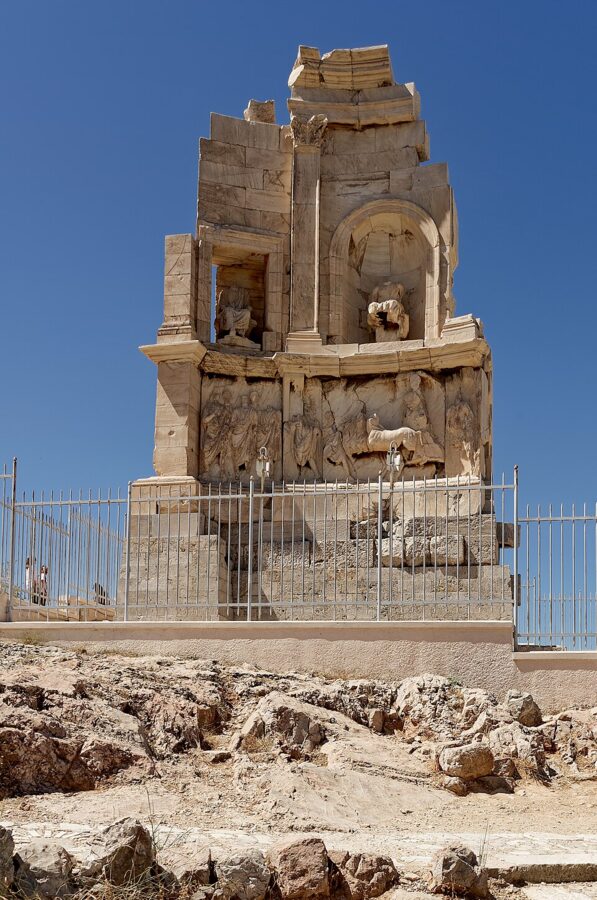
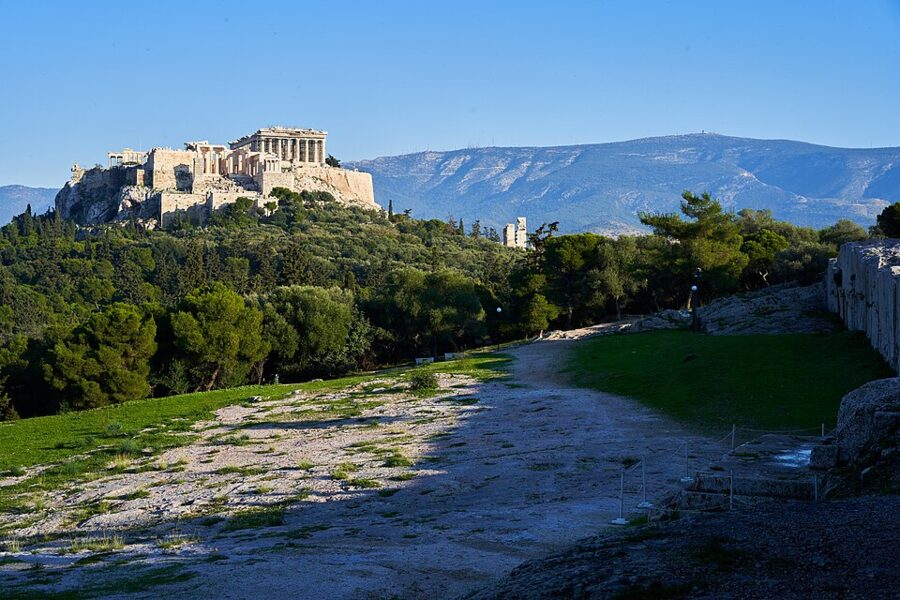
Two hills give the classic views. Philopappou Hill, opposite the Acropolis, is free, unfenced and a 15-minute walk up a stone path from Dionysiou Areopagitou. The monument on top is the tomb of a prince of Commagene who settled in Athens in the 2nd century AD, and the view of the Parthenon at sunset is the one on half the postcards in Plaka.


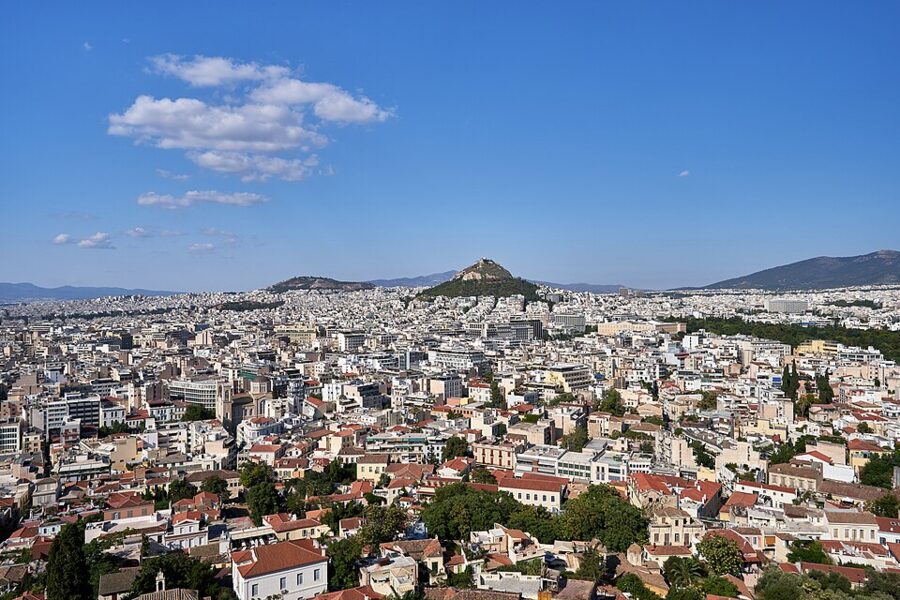
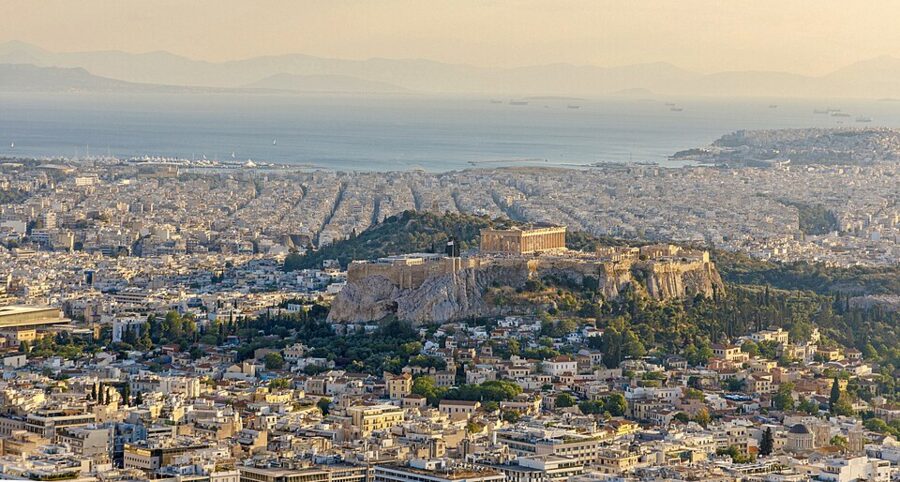
Lycabettus Hill, at 277 m the highest point in central Athens, looks back at the Acropolis from the north-east. The walk up from Kolonaki takes 30 to 40 minutes on paths and steps, and the chapel of St George sits on the summit. Bring a layer for the summit after dark.

Getting around: metro, tram, buses and the 90-minute ticket
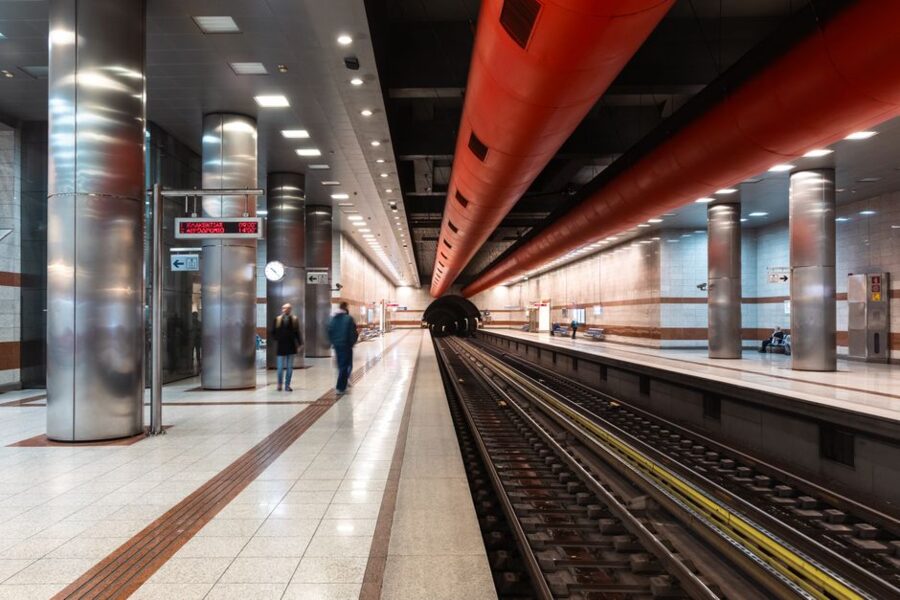
The center is walkable, and most days you need the metro only to get in from the airport, out to Piraeus and to the National Archaeological Museum. One ticket system covers the metro, tram, buses, trolleybuses and the suburban railway inside the city.
| Ticket | Price | What it covers |
|---|---|---|
| 90-minute single | €1.20 | All metro lines (not the airport stretch), tram, buses, trolleybuses, for 90 minutes from first validation |
| 24-hour | €4.10 | The same network for 24 hours; not the airport |
| 5-day | €8.20 | The same network for 5 × 24 hours; not the airport |
| 3-day tourist ticket | €20 | The whole network for 3 × 24 hours, plus one trip to and one from the airport by metro or express bus |
| Metro airport ticket | €9 one way, €16 return | Metro to or from the airport, then 90 minutes on the city network; the return half is valid 30 days |
| Airport express bus | €5.50 | One trip on an X line to or from the airport |
The easiest ticket in 2026 is the bank card in your pocket. Visa and Mastercard cards, and phones with Apple Pay or Google Pay, work directly on the blue validators under the Tap2Ride scheme; Maestro does not. Each tap charges the 90-minute fare, and the day stops at €4.10, the price of a 24-hour ticket. Use the same card or phone for every tap, or the cap cannot be calculated and you pay twice.
If you would rather have a ticket, the paper Athena Ticket and the plastic Athena Card are sold at machines and windows in every metro station. Reload rather than buying a new one each time.
From the airport
Two options, both cheap. Metro line 3 runs from the airport station into the center via Syntagma and Monastiraki, for €9. The airport trains run less often than the city service, so check the board when you land.
The X95 express bus runs 24 hours a day to Syntagma Square for €5.50, and OASA puts the trip at about 60 minutes, more in traffic. It is the only choice after the last train. The other X lines go to Piraeus (X96, about 90 minutes), the Kifissos and Liossion intercity bus stations (X93, about 65 minutes) and Elliniko (X97, about 45 minutes).
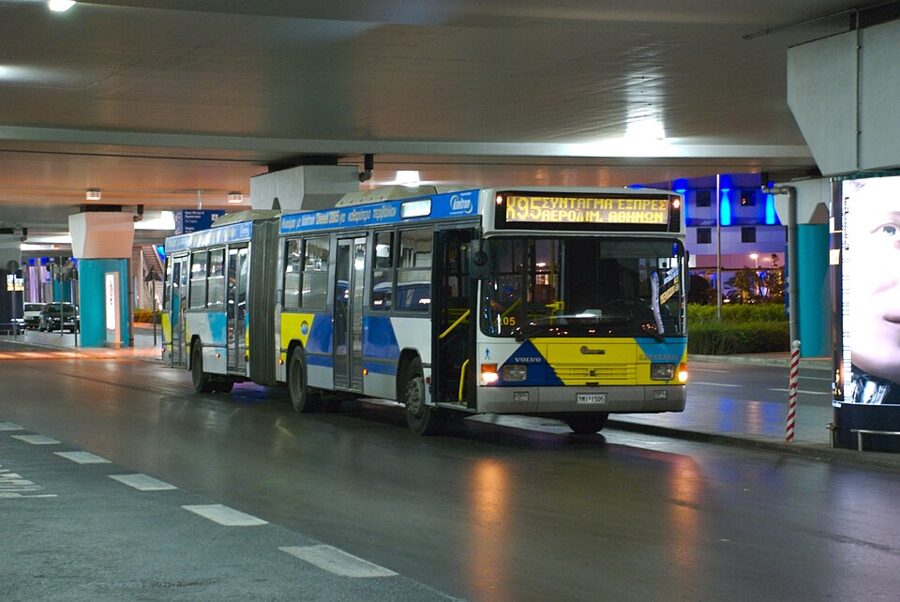

The express buses only let passengers on at the city end and off at the airport end, and the other way round on the return. If you are in Athens for three days and arrive and leave by air, the €20 tourist ticket covers both airport trips and all your city travel, and beats paying for the airport twice on its own.
To Piraeus and the ferries
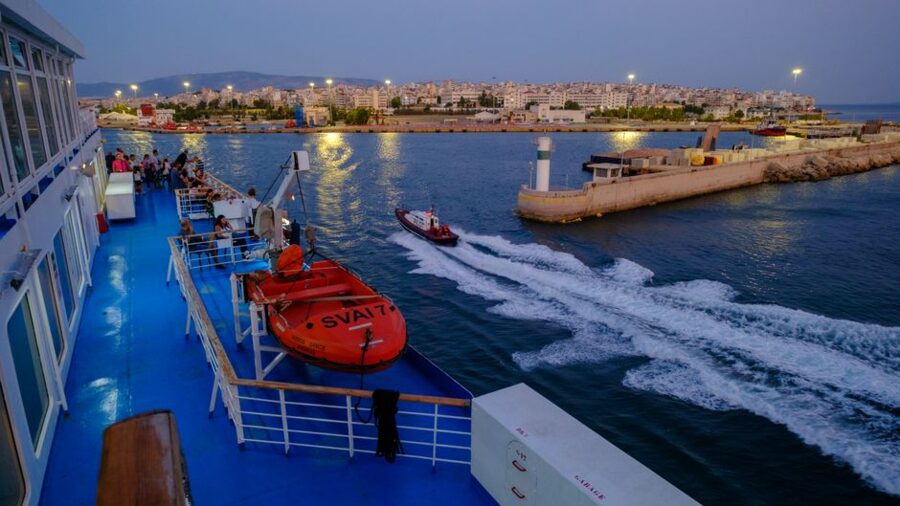
Metro line 1, the old green electric railway, ends at Piraeus station opposite the ferry quays, about 20 minutes from Monastiraki on a standard €1.20 ticket. Line 3 now runs through to Piraeus as well. In summer, the X80 bus links Piraeus, the Acropolis and Syntagma, and accepts only the 24-hour or tourist ticket.
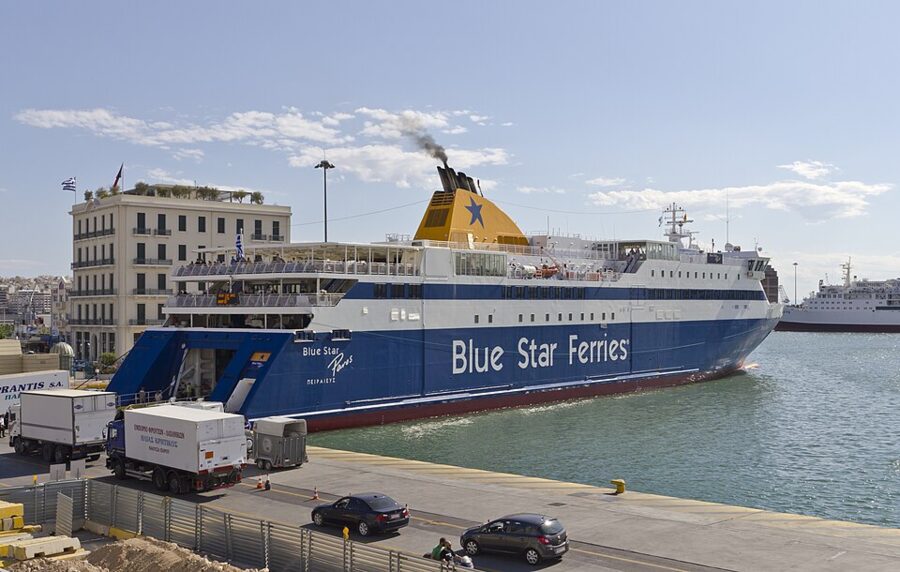

The port is huge and the gate numbers matter; the walk from the metro to the furthest quays takes half an hour. Routes, gates, operators and fares are all in the guide to Greek island hopping, and the first big boats leave between 06:45 and 07:30, so a bed near a line 1 station is worth a lot on the last night.
Line 1 and pickpockets
Line 1 between Omonia, Monastiraki and Piraeus is the line where pickpockets work hardest, usually in small teams at the doors as a crowded train stops. It is not a reason to avoid it. Wear your backpack on your front in a full carriage, keep phones out of back pockets, and step back from the door if someone suddenly crowds you as it opens.
Athens also has a set of buses that run around the clock, which helps after a late night in Psyrri. If you plan to ride more than this, the guide to public transport in Europe compares Athens’s fares and card caps with other cities on the backpacker route.
Eating cheaply: souvlaki, the market and the taverna bill
Souvlaki and gyros
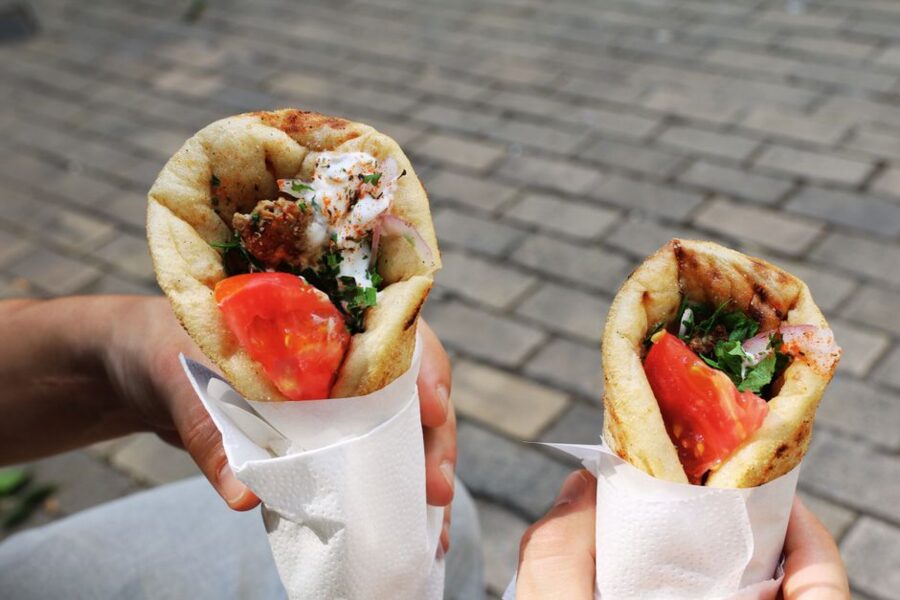
The pita wrap is the budget traveler’s staple and a perfectly good lunch. Ask for a souvlaki “tylichto” (wrapped) and you get either kalamaki, small skewered cubes of pork or chicken, or gyros, meat shaved off a vertical spit, rolled in a grilled pita with tomato, onion, tzatziki and a few fries. An October 2026 survey of shops across Attica found kalamaki and bifteki wraps from €3.30, gyros from €3.60 to €4.80, and bifteki up to €5.50 at the dearest shops.
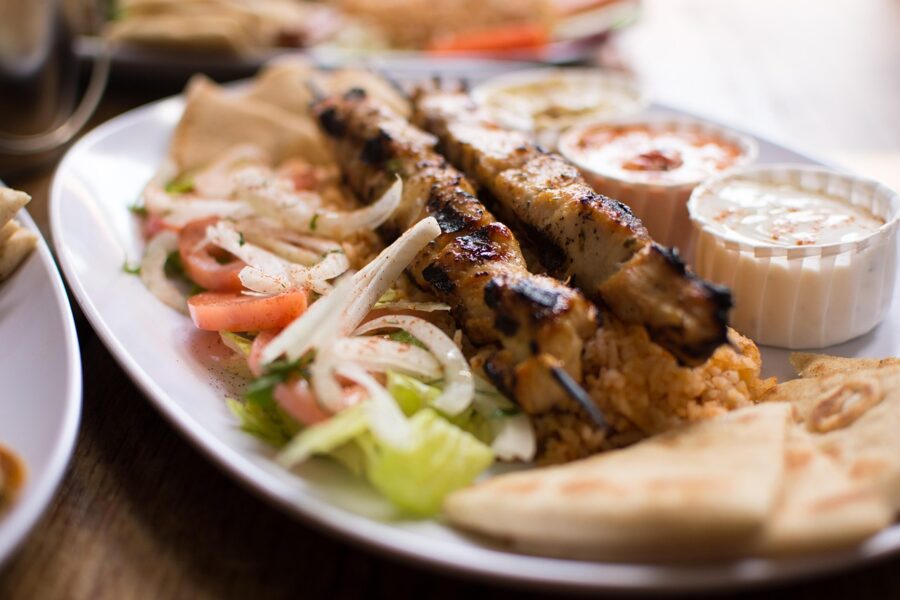
Two wraps make a dinner. The grill houses at the Monastiraki end of Mitropoleos Street are the famous ones and the busiest; prices fall the further you walk from the square. Order at the counter, eat standing or take it to a bench, and you have eaten for under €10.
The Varvakios market
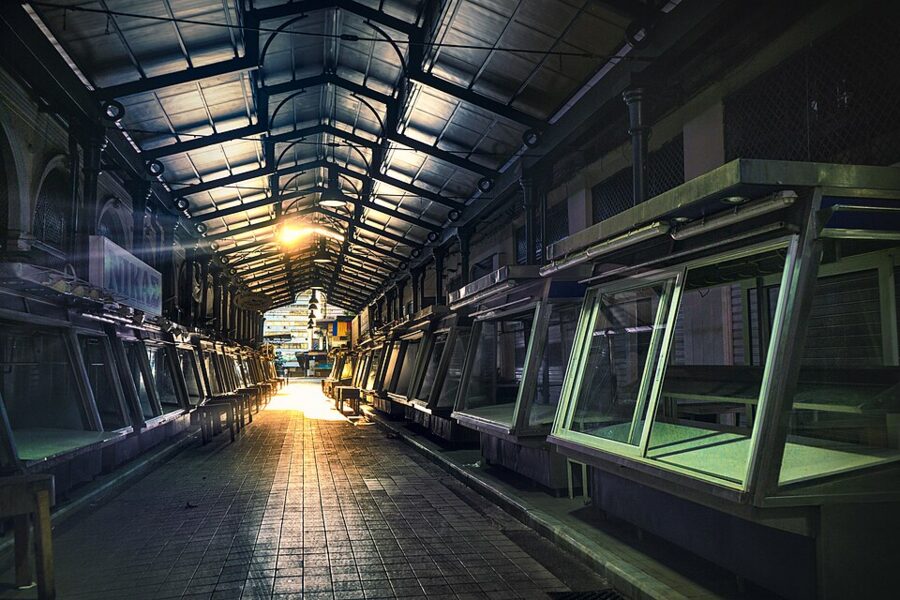
The Central Municipal Market on Athinas Street, the Varvakios, has been the city’s meat and fish market since the 19th century, with the fruit and vegetable stalls across the road. Go in the morning, Monday to Saturday; it is closed on Sunday and winds down by mid-afternoon. It is the cheapest place in the center for fruit, olives, cheese and nuts for a picnic on Philopappou Hill.

Tavernas, water and tipping
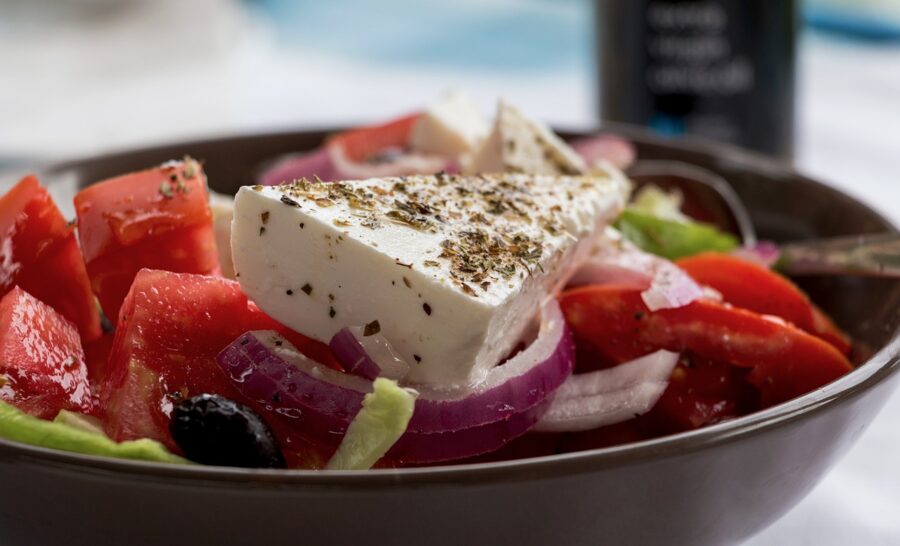
A taverna meal costs far more than a souvlaki, and the way to keep it down is to eat like Greeks do. Share several small plates rather than ordering a main each, ask for the house wine by the carafe, and skip the bottled water: tap water in Athens is safe to drink. Bread usually appears on the bill as a small charge whether you asked for it or not.
Tipping is not compulsory and nobody expects it at a souvlaki counter. At a sit-down taverna, round the bill up or leave a few euros for good service. Card payments are accepted almost everywhere, but small grills and kiosks still like cash.
Sleeping cheaply: where the hostels are
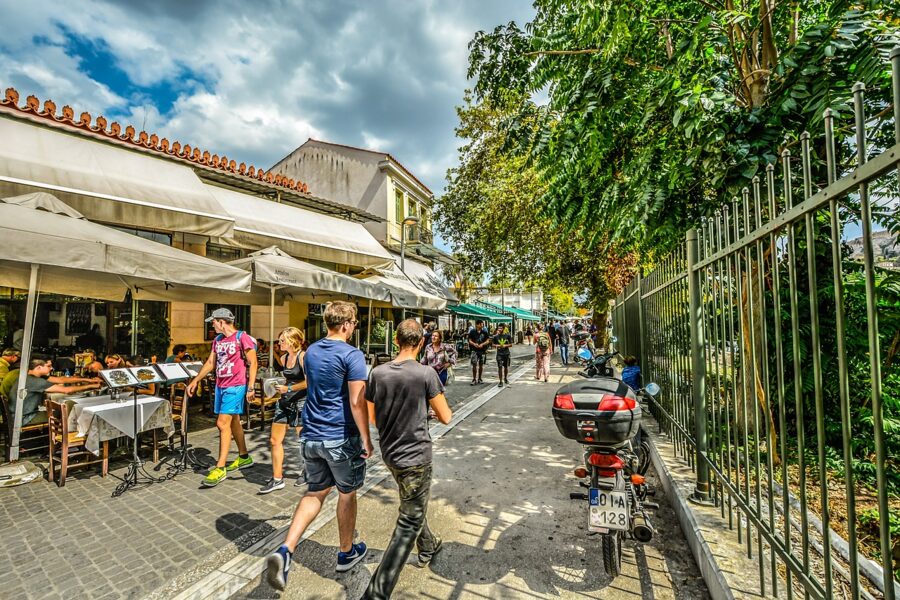
Athens has two hostel clusters, and both are good. Psyrri and the streets round Monastiraki suit people who want bars at the door and a short walk to line 1 for the ferries. Makrygianni and Koukaki, below the Acropolis Museum, are quieter and closer to the south-east gate. Both are a single metro ride from the airport.
- City Circus, 16 Sarri Street, Psyrri. Four-, six- and eight-bed dorms, including a women-only dorm, private rooms, a roof terrace and its own restaurant. Guests must be 18 or over. Dorm beds were advertised at €20–27 for late-November and December 2026 dates.
- Bedbox Hostel, 300 m from Monastiraki Square and Ermou Street. Small dorms in the center of the cheap-bed district.
- Athens Backpackers, 12 Makri Street, Makrygianni. Dorms, free breakfast and a roof bar facing the Acropolis, a short walk from Akropoli station.
- Athens Studios, 3A Veikou Street, Makrygianni. A few streets away, with dorm beds, studios and apartments, and a light breakfast in the bar from 08:00 to 10:00.
All four take bookings on their own sites. Prices in Athens follow the ferries: they climb from May, peak in July and August when everyone passes through on the way to the islands, and fall back in November. My pick for a first solo trip is City Circus, for the same reasons given in the round-up of the best hostels in Europe for solo travelers.

Avoid the cheapest rooms around Omonia and Metaxourgeio unless you have checked the street. The blocks west of Athinas Street are rougher after dark than anything in Psyrri or Koukaki, and the savings are a few euros a night.
Three days, and what they cost
This plan uses winter prices for a trip in late 2026, with two Sundays free if you time it right.
| Day | Plan | Tickets |
|---|---|---|
| 1 | 08:00 Acropolis slot through the south-east gate; south slope; lunch in Koukaki; Acropolis Museum in the afternoon; Philopappou Hill for sunset | €30 + €15 |
| 2 | Ancient Agora from the Thiseio gate; Roman Agora; lunch at the market; Kerameikos; Psyrri in the evening | €20 + €10 + €10 |
| 3 | National Archaeological Museum at opening; Exarchia; walk via the stadium gate to Pangrati; Lycabettus at sunset | €12 (winter) |
The tickets come to €97. The 3-day tourist ticket at €20 covers the airport both ways and every ride in between, and three nights in a dorm at the late-2026 winter rates above cost €60–81.
That is about €177–198 before food. Souvlaki lunches at €3.60–4.80 a wrap keep the food bill small until you sit down at a taverna. Land a free Sunday on day 1 or day 2 and you save €30–40.
Spend it differently if you like. Swap the Kerameikos for Hadrian’s Library and the price does not change; drop the Acropolis Museum and the trip loses the thing that makes the ruins make sense.
Day trips: Sounion and Delphi
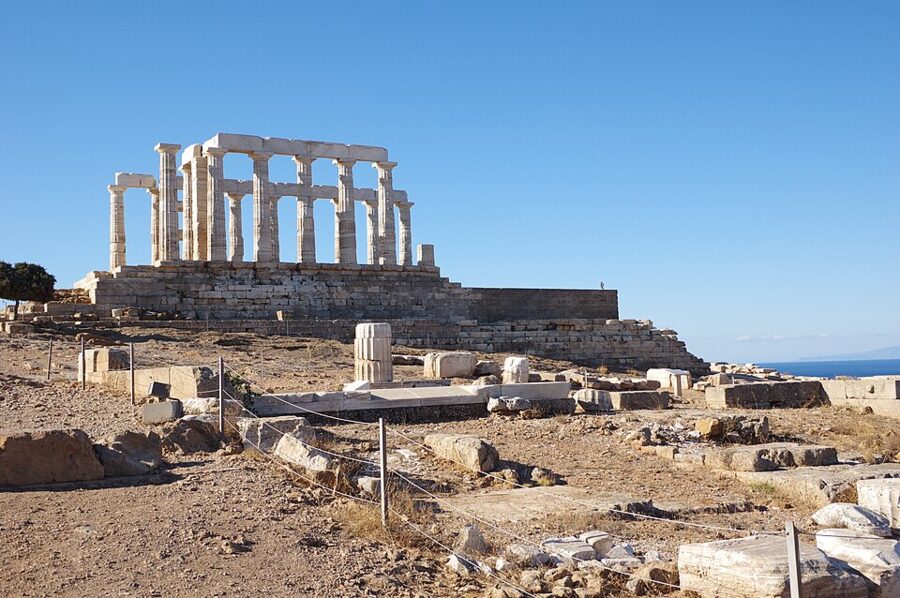
Sounion: the Temple of Poseidon on its cape, €20, open from 09:30 until sunset all year, about two hours each way by KTEL intercity bus from Aigyptou Square at Pedion tou Areos.

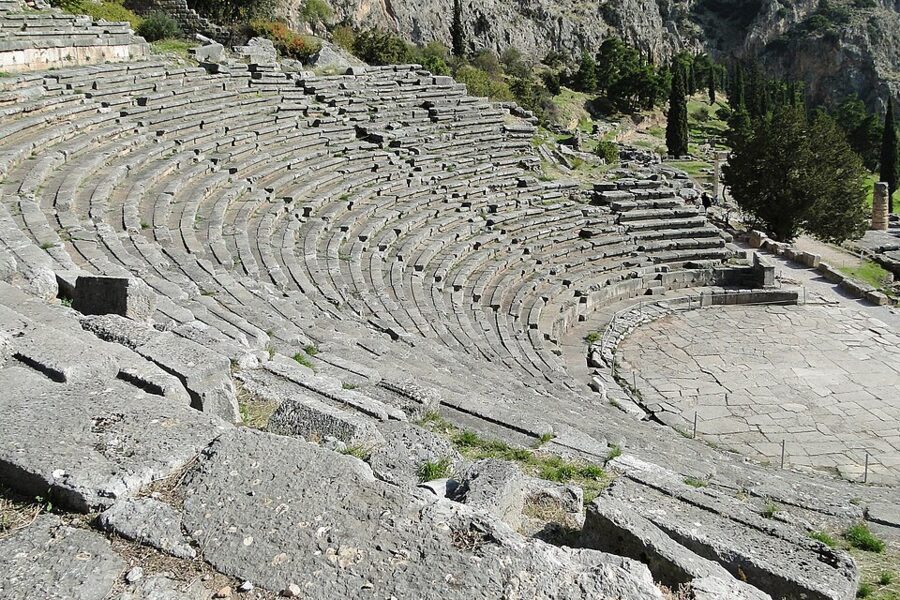
Delphi: the sanctuary of Apollo and its museum, €20 together, open 08:30–15:30 in winter and 08:00–20:00 in high summer, about three hours each way by the Phocis KTEL bus from Athens; it is free on the same days as the Athens sites.

When Athens is done, most backpackers go one of two ways: south to the islands on a morning boat from Piraeus, or east toward Istanbul by bus or a ferry hop from the islands, which the guide to getting from Greece to Turkey lays out. Either way, sleep the last night within reach of line 1, and book the boat the way you booked the Acropolis: early, and for a fixed time.