In the third week of November 2026, the cheapest seat on a Pegasus flight from Istanbul to Antalya cost 1,458 TL. The cheapest night bus on the same route cost 1,350 TL and took a little over twelve hours. For 108 TL more you get eleven hours of your life back, and that small sum is the most useful piece of arithmetic in Turkish travel.
It does not always come out in favor of the plane. A bus from Istanbul to Ankara can cost 600 TL, and a night bus that saves you a bed is still the backpacker’s best friend on the long legs. But the old rule that the bus always wins is out of date: the high-speed train from Istanbul to Konya costs 1,442 TL and takes under five hours, while the bus costs 1,800–2,000 TL and takes ten.

Contents
How the network fits together
Turkey is roughly 1,600 km from the Greek border to the Iranian one, and most travelers spend their time in the western half: Istanbul, the Aegean coast, the Mediterranean and Cappadocia. The classic loop around those places is about 55 hours of road in total. How you cover those distances decides how many days you actually spend anywhere.
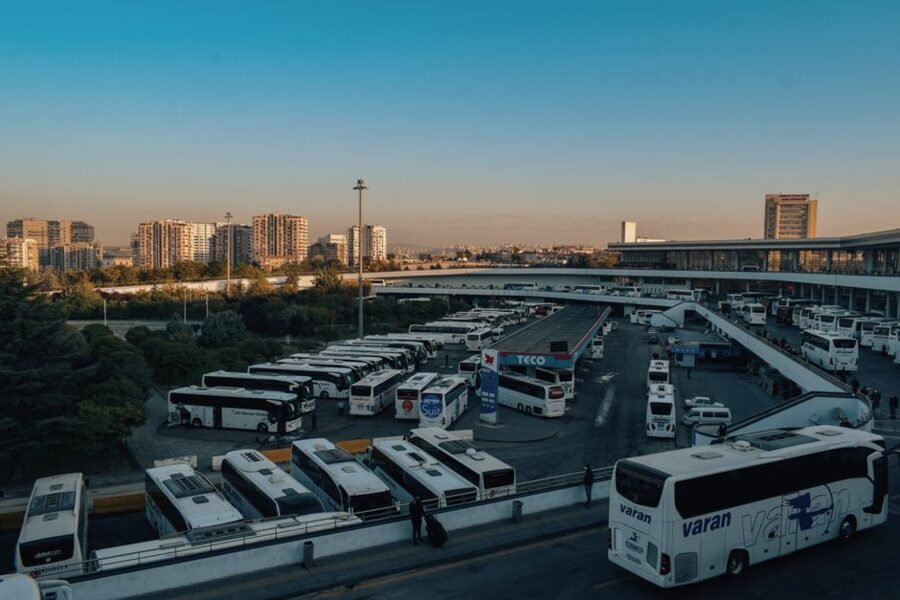
Buses are the backbone. Between Istanbul and Ankara alone there were 737 departures a day in November 2026, run by dozens of companies from half a dozen Istanbul terminals. Almost every town has an otogar (bus station), almost every otogar has a bus to almost everywhere, and the coaches are modern, cheap and staffed.
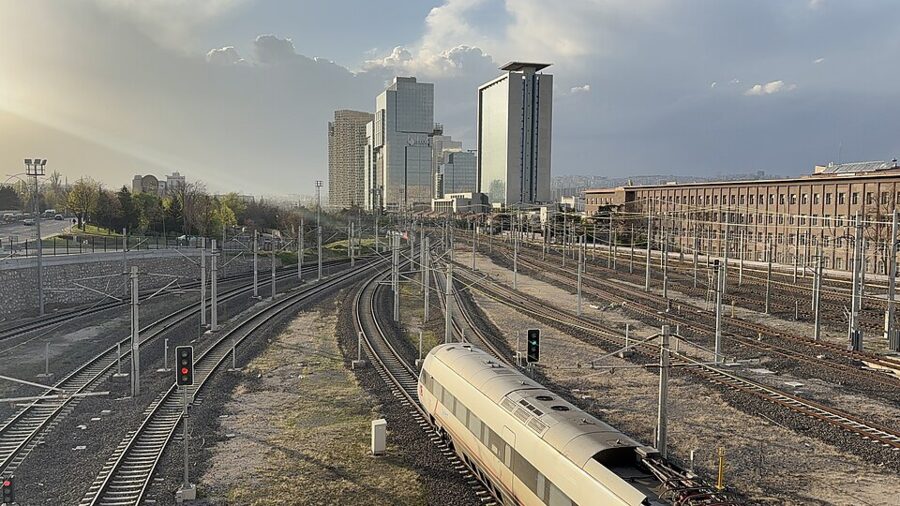
Trains matter on a narrow band of the map. The YHT high-speed network links Istanbul, Eskişehir, Ankara, Konya, Karaman and Sivas, and a transport ministry statement in March 2026 put its reach at eleven provinces in all. Where the YHT goes, it is the best way to travel in the country. Where it does not go, which includes the whole Aegean and Mediterranean coast, the railway is either slow or absent.
Flights win on distance. Once a bus ride goes past nine or ten hours, a domestic flight at low-season fares often costs about the same, and Turkey’s airports are well connected to their cities by bus, tram or metro. My rule: under six hours, take the bus or the YHT; over ten, fly, unless a night bus saves you the price of a bed and you sleep well sitting up.
Intercity buses
The companies
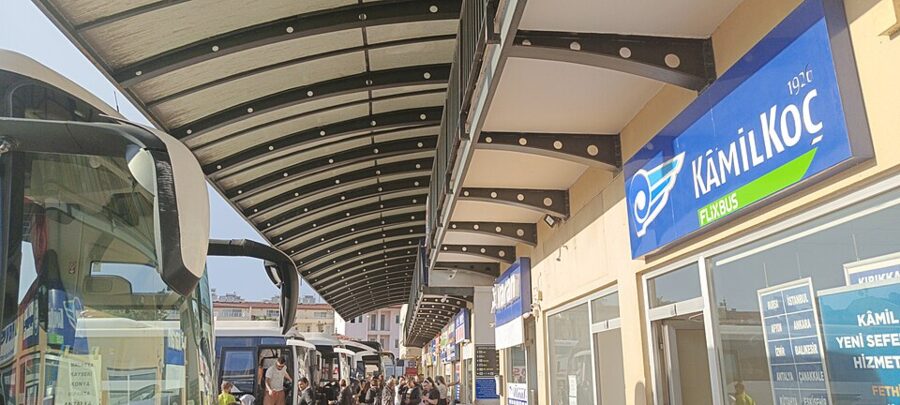
Three names turn up on almost every route a backpacker will ride. Metro Turizm runs the most departures between Istanbul and Ankara, Istanbul and Konya, and Ankara and Nevşehir (the town for Cappadocia). Kamil Koç runs the most between Istanbul and Antalya. Pamukkale Turizm dominates the Aegean: it runs the most buses between Istanbul and İzmir and between İzmir and Antalya.
Behind them are dozens of regional firms, and they are often the cheapest seat on the board. The 600 TL fare between Istanbul and Ankara in November 2026 was on Lüks Mersin Turizm, against 700–1,000 TL on most other departures; on İzmir to Antalya the cheapest seat (900 TL) was on Alaşehir Sarıkız Turizm, against about 1,050 TL on the big names. Varan is the premium end of the market, with more legroom and a price to match.
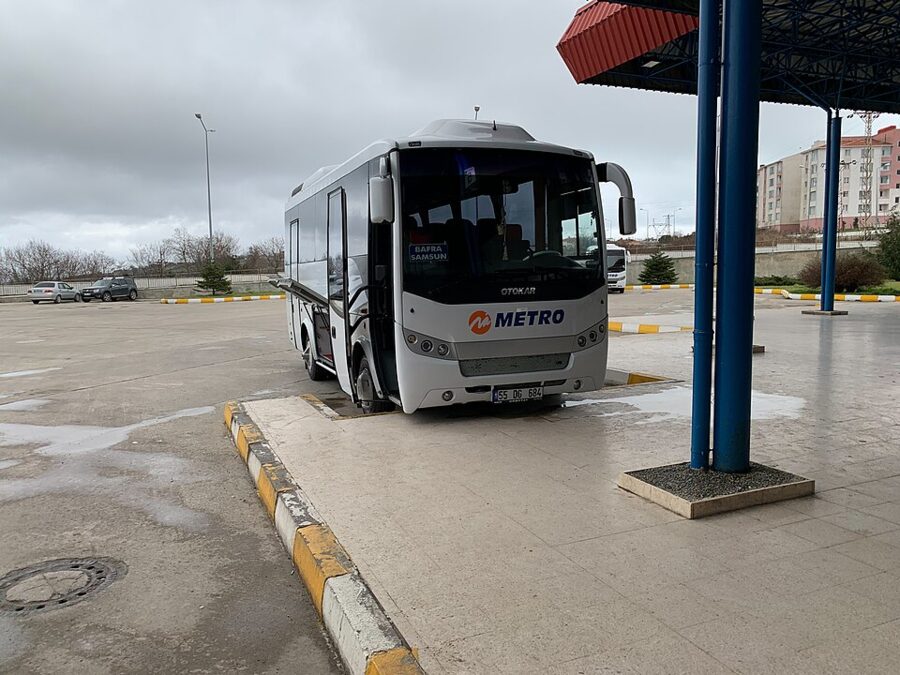

Look at the seat plan before you pay. The comfortable layout is 2+1: one seat on one side of the aisle, two on the other, so a solo traveler can have a single seat with a window and nobody’s elbow. On a 10-hour overnight leg it is worth a hundred lira or so over a 2+2 coach. Avoid the seats over the wheels and the row behind the middle door, which have the least legroom.
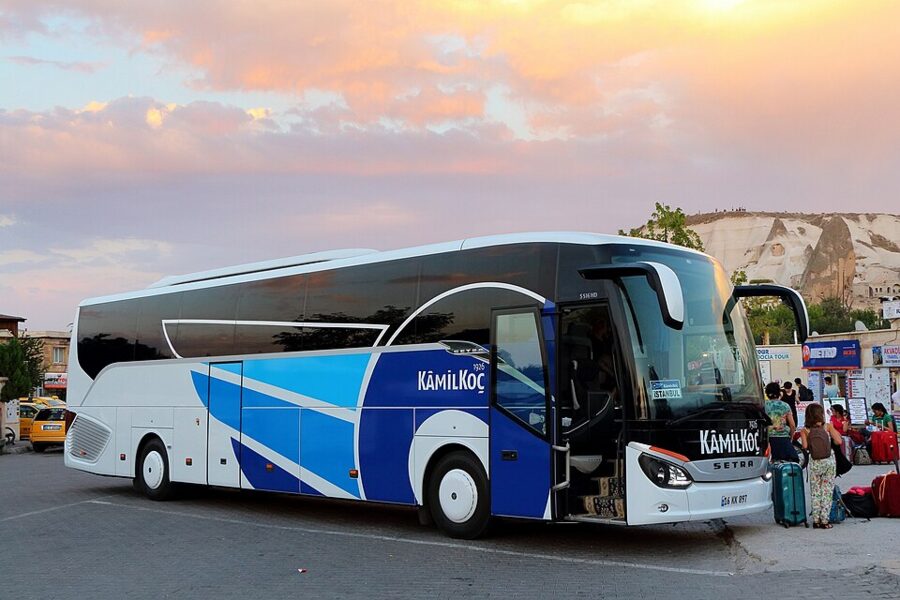

Booking and paying
You can buy at the company counter in the otogar, at a company office in town, on the companies’ own websites and apps, or on a ticket aggregator such as obilet, which lists most firms on one screen. Fares are generally the same everywhere. The sensible split is to use an aggregator to see who runs what and when, then book on the company’s own site or at its counter, because changes and refunds are simpler when you deal with the company directly.
Every ticket carries the passenger’s name, and for anyone who is not a Turkish citizen it must carry your nationality and passport number. That is the law (the Road Transport Regulation), so have the passport handy when you book. You also give your gender. By long custom, the companies do not seat a woman next to a man she is not traveling with, and the online seat map shows which taken seats are held by men and which by women.
A rule change in May 2026 made bus tickets a lot less risky to buy early. Companies must now give a full refund if you cancel at least 12 hours before departure, and they must let you turn a ticket into an open ticket (açık bilet), to be used on a later date, right up until the bus leaves. Counters take cash and cards. If a foreign card is refused online, go to the counter.
Book a day or two ahead in normal weeks, mainly to get the seat you want. Book well ahead around the two big religious holidays (Ramazan Bayramı and Kurban Bayramı), when half the country travels home and the cheapest seats go first.
Otogars and the free servis
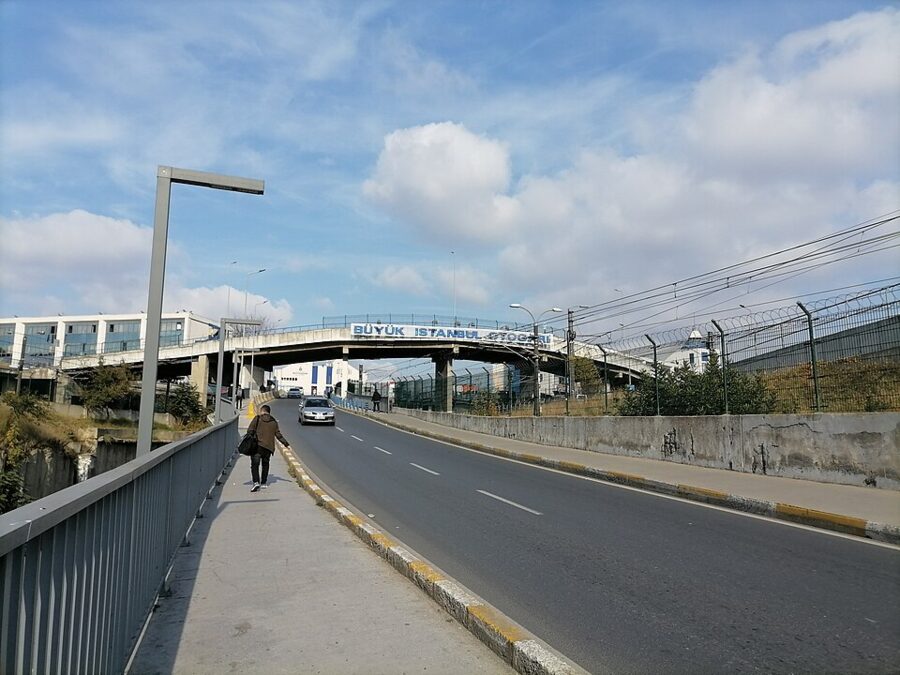

Big-city otogars work like airports. Each company has a counter (yazıhane) on the upper level, and your ticket shows a platform number (peron) where the coach loads. Arrive 20–30 minutes early, find the peron, and show the ticket to the steward when your bag goes into the hold.
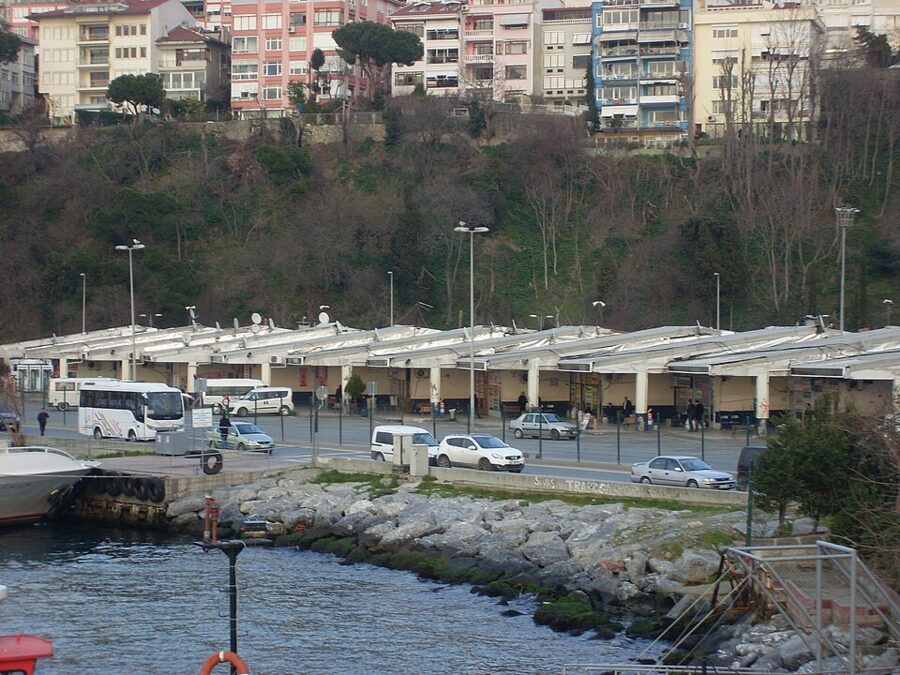
Istanbul is the one to get right, because it has several terminals and the cheapest bus may not leave from the one you expect. On the European side there are Esenler, the main one, and Alibeyköy. On the Asian side there are Harem, by the water near Üsküdar, and the Dudullu terminals in Ataşehir. Many buses call at more than one, so pick the stop nearest your bed: Esenler is on the M1 metro, and Harem sits on the water just south of Üsküdar.

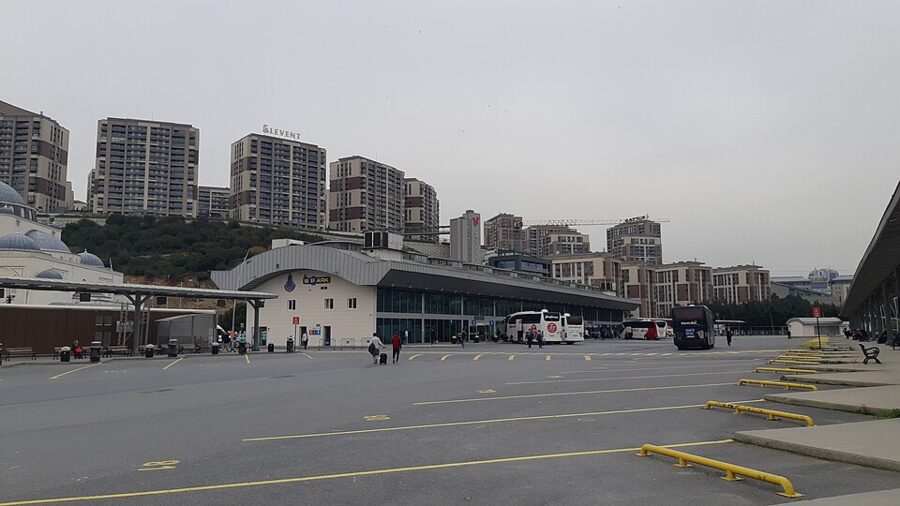

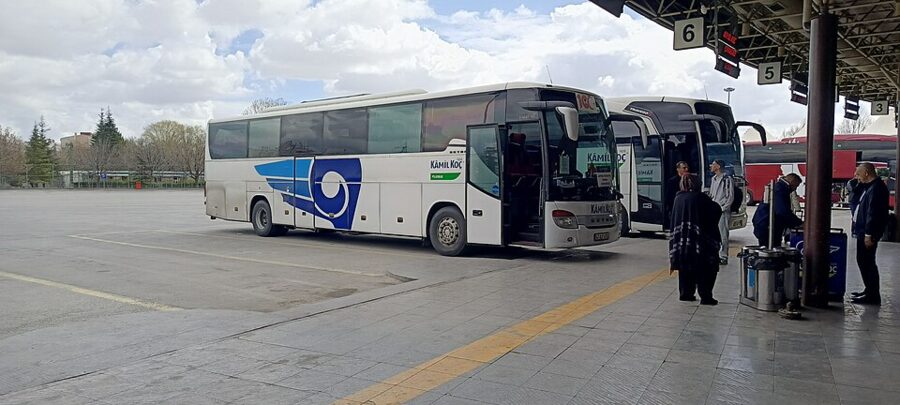

Outside the big cities, the otogar is usually on a ring road several kilometers from the center. This is where the servis comes in: a free minibus that many companies run between their office in town and the terminal, timed to the departures. Not every company runs one and not in every town, so ask at the counter when you buy, and ask where it leaves from. If there is no servis, a city bus or a dolmuş usually does the same run for a few dozen lira.

Night buses, luggage and rest stops
Most long routes are timed to run overnight. A typical Istanbul to İzmir bus leaves Harem at 22:30 and reaches İzmir’s otogar at 06:15; a cheap Istanbul to Ankara bus leaves Dudullu at 01:14 and arrives at 07:29. On a 10–12 hour leg like Göreme to Istanbul, the ticket replaces a night in a dorm, which is the whole economics of the night bus.
The crew is a driver and a steward (muavin) who loads the bags, checks tickets and brings round tea, coffee, water and a packaged snack. Most long-distance coaches have a screen in the seat back. Alcohol and smoking are not allowed on board, and the air conditioning runs cold all night, so keep a layer out of your big bag.

Big bags go in the hold and get a numbered tag; keep your half of it. Valuables, the passport and anything you need overnight stay with you. Coaches stop at a roadside rest area (mola yeri or dinlenme tesisi) every two to three hours, for 15–30 minutes. Toilets there usually charge a small fee, so keep coins or small notes, and note the bus’s plate number before you walk off, because twenty white coaches look alike at 03:00.
Trains: the YHT and the slow lines
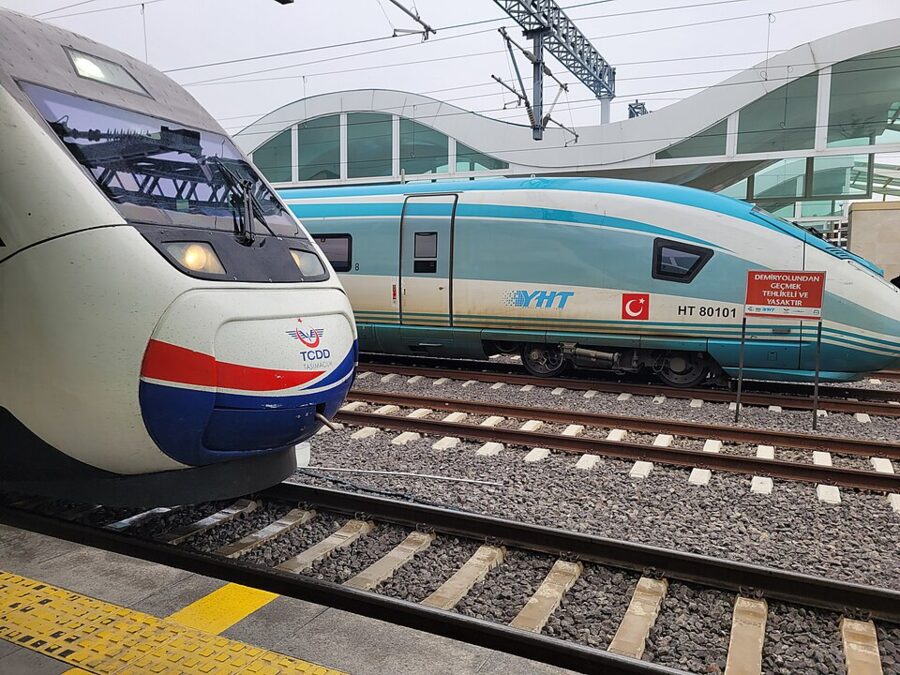
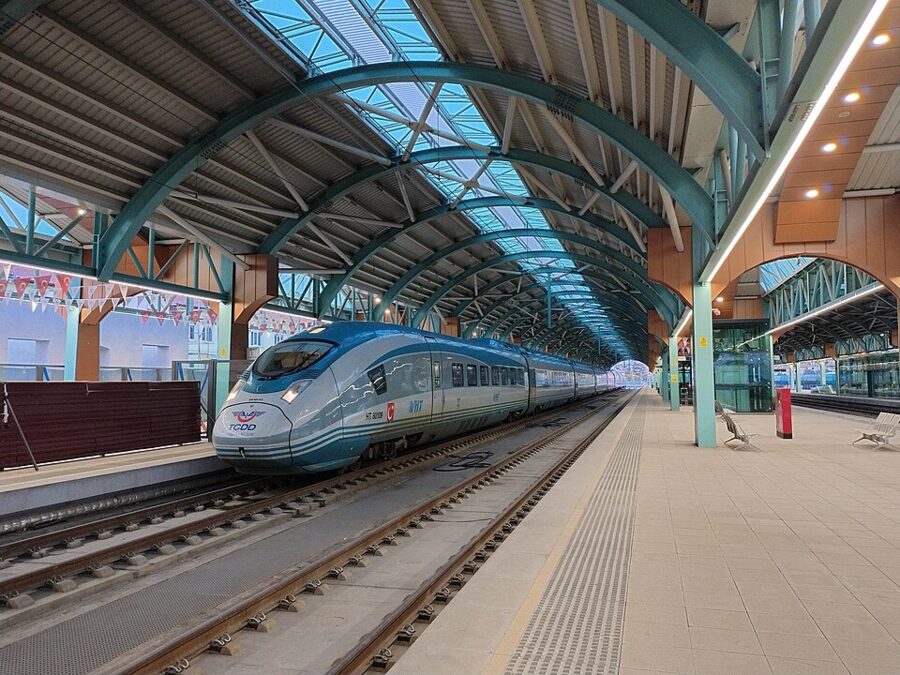
Turkey’s railways belong to two different eras. The YHT (Yüksek Hızlı Tren, high-speed train) network is new, fast, clean and cheap for what it is. The conventional lines are mostly slow, single-track and scenic, and a few of them are worth riding for their own sake. Both are run by TCDD Taşımacılık, the state rail operator, which sells every ticket.
The YHT lines and stations
There are three corridors, all running through Ankara. The busiest goes west to Eskişehir and Istanbul, about four hours and a quarter end to end.
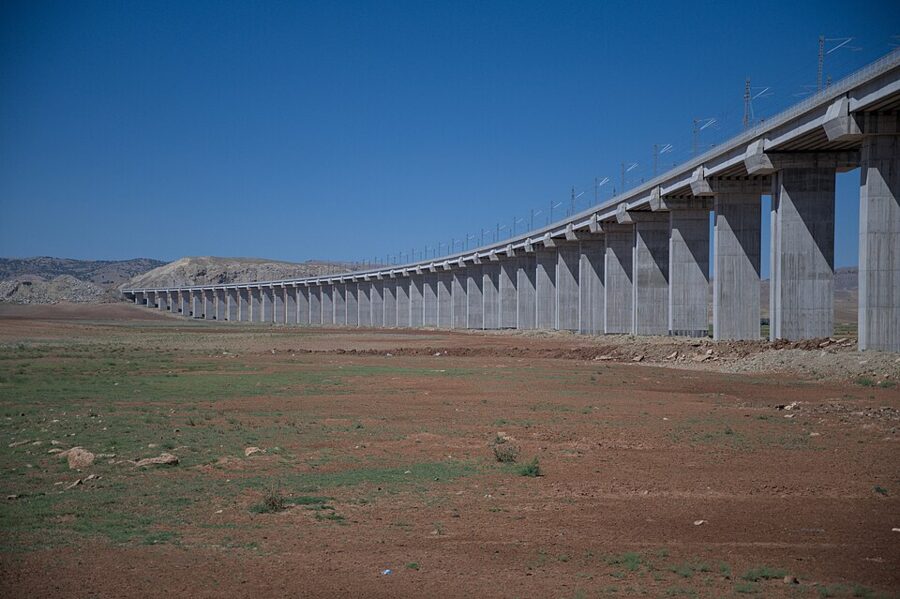
The second runs south to Konya, about 1 hour 45 minutes from Ankara, and on to Karaman. The newest, opened in April 2023, runs east to Sivas in about two and a half hours. There are also direct trains between Istanbul and Konya, about 4 hours 40 minutes, which change direction at Eskişehir without you changing trains.
| YHT route | Economy, one way (from 17 Aug 2026) | Time |
|---|---|---|
| Istanbul – Ankara | 990 TL | about 4 h 15 |
| Istanbul – Eskişehir | 639 TL | about 3 h |
| Istanbul – Konya | 1,442 TL | about 4 h 40 |
| Ankara – Eskişehir | 511 TL | about 1 h 20 |
| Ankara – Konya | 458 TL | about 1 h 45 |
| Ankara – Sivas | 1,001 TL | about 2 h 35 |
Those fares came in on 17 August 2026, a 6.45% rise on top of the one in January, and fares have gone up several times a year lately, so expect the next round in early 2027. A return costs exactly double the single. Business class costs more and adds a wider seat and a snack box; economy is perfectly comfortable.
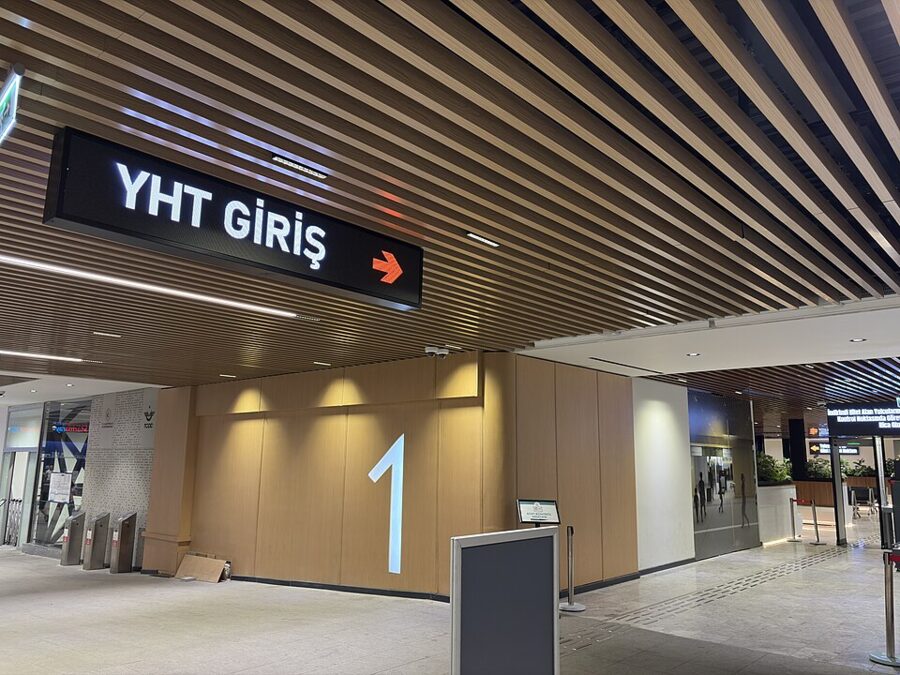

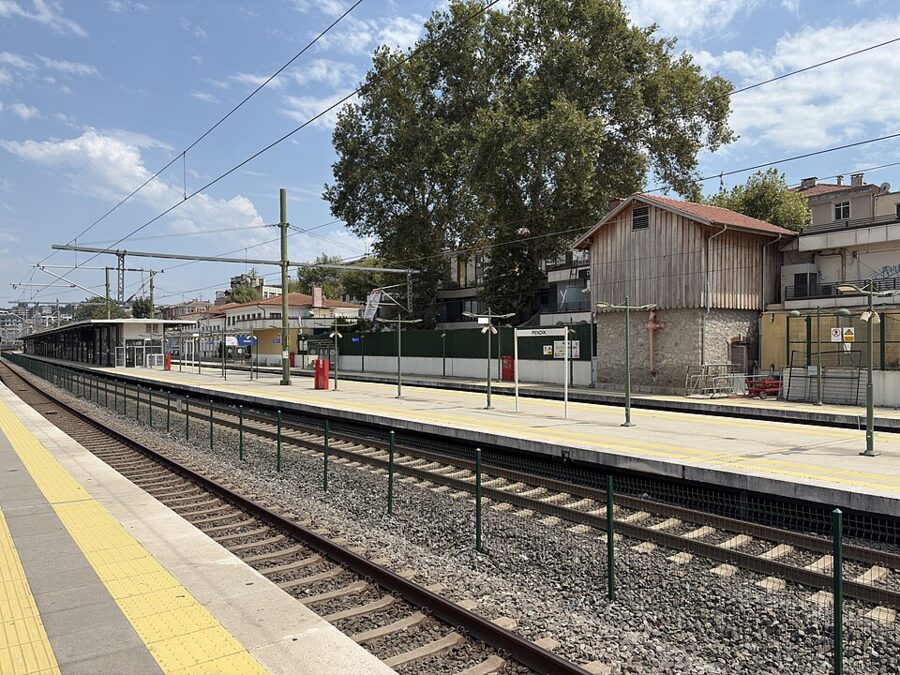
In Istanbul, most YHTs start and end at Söğütlüçeşme in Kadıköy, and call at Bostancı and Pendik on the way out of the city. A few run on through the Marmaray tunnel under the Bosphorus to Bakırköy and Halkalı on the European side, which helps if you are staying west of the old city, but they do not stop at Sirkeci or anywhere in the old city. Check which station your ticket names.

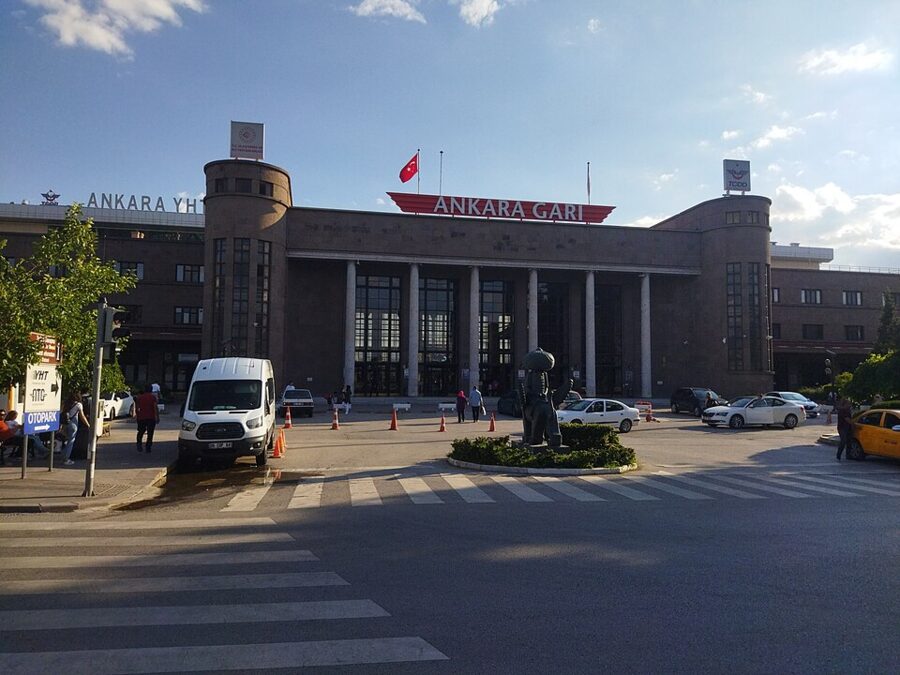
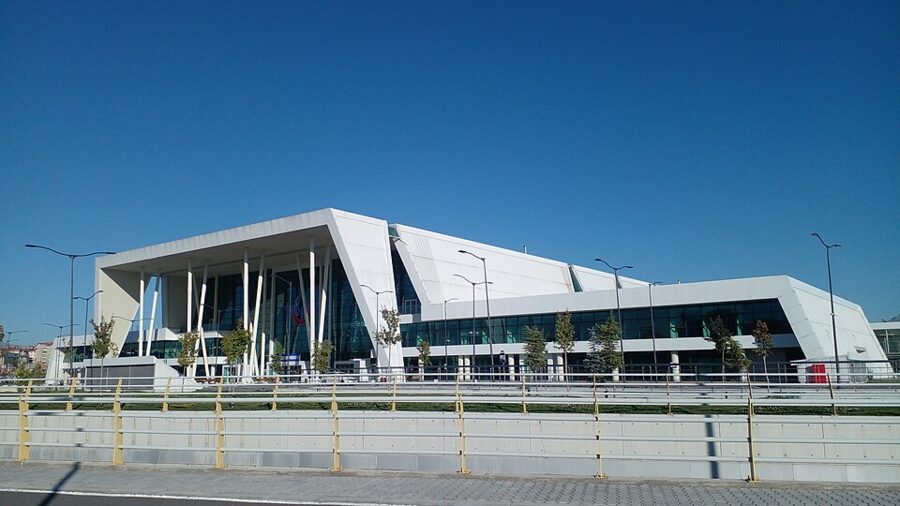
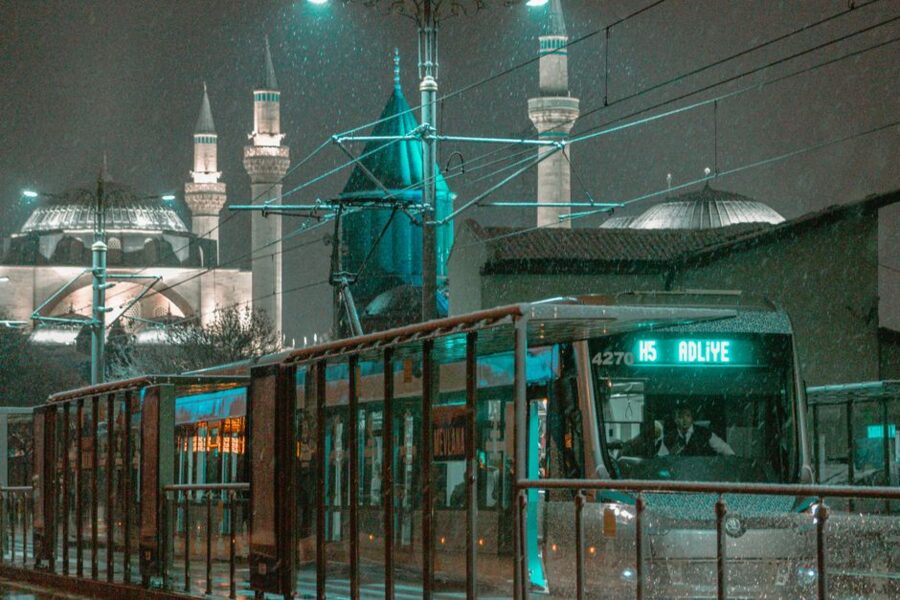
Ankara’s YHT station is next to the old Ankara Gar, with its own stop on the metro to Kızılay. Eskişehir’s station is close to the center and on the city’s tram network. Konya has two stations: the historic Konya Garı in Meram and the newer Selçuklu YHT station north of the center, and high-speed trains use both, so read your ticket. Sivas station is a short ride from the Seljuk monuments in the middle of town.




Booking rules
Book on TCDD Taşımacılık’s own site, ebilet.tcddtasimacilik.gov.tr, which has an English version, or on its app. You need your passport number, and the ticket is a PDF or a code on your phone. Seats are assigned, and on Friday and Sunday afternoons and before holidays the cheap economy seats on the Istanbul–Ankara trains sell out days ahead, so book as soon as you know your date.
Arrive 20–30 minutes before departure. At the big stations there is a security scan at the entrance and a ticket check at the gate to the platform, and the train will not wait. Luggage is limited to one large bag (65 × 50 × 35 cm) or two cabin-size ones per person, which is plenty for a backpack.

Regional and tourist trains
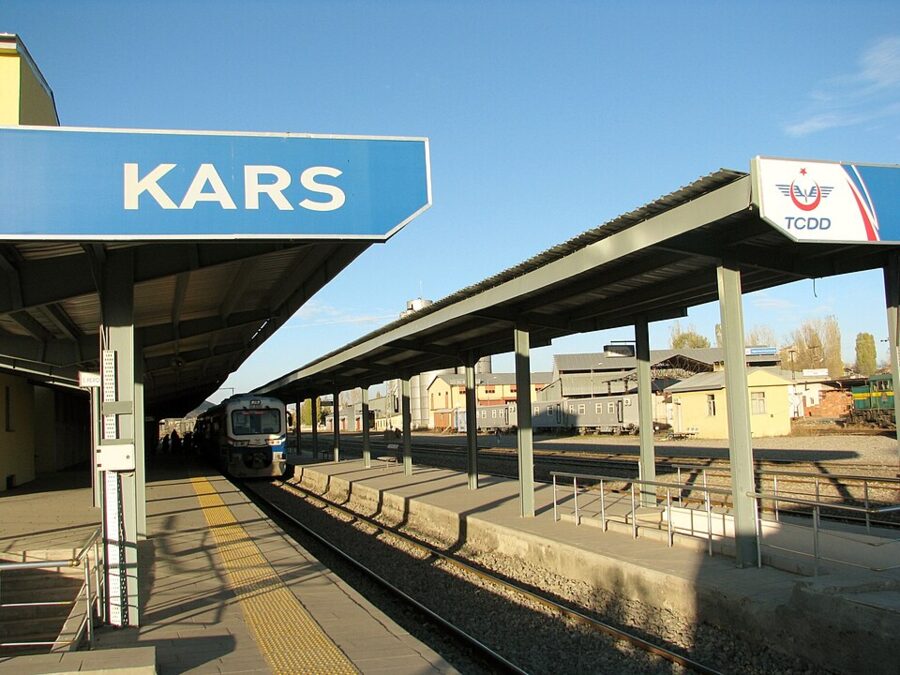
The best-known slow train is the Doğu Ekspresi, the Eastern Express, from Ankara to Kars. The ordinary daily train leaves Ankara at 18:00 and takes about 26 hours, with seats, couchettes and a dining car, and it is also the slow, scenic way to the slopes at Erzurum and Sarıkamış for skiing in Turkey. The separate Turistik Doğu Ekspresi runs from 21 December 2026 to 10 March 2027 with long sightseeing stops, at 16,500–20,000 TL for a two-person sleeper compartment from Ankara. It sells out within days of going on sale and is not a budget option.
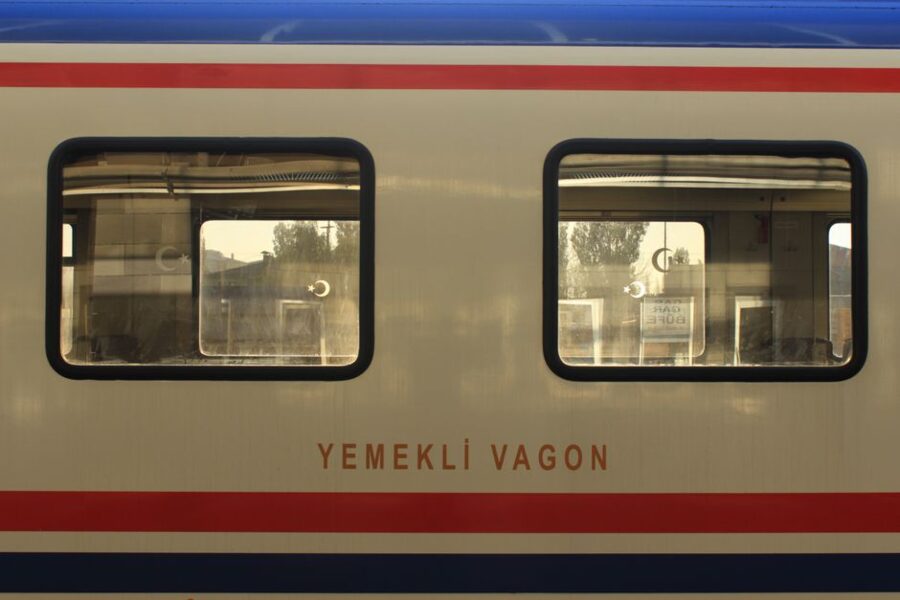
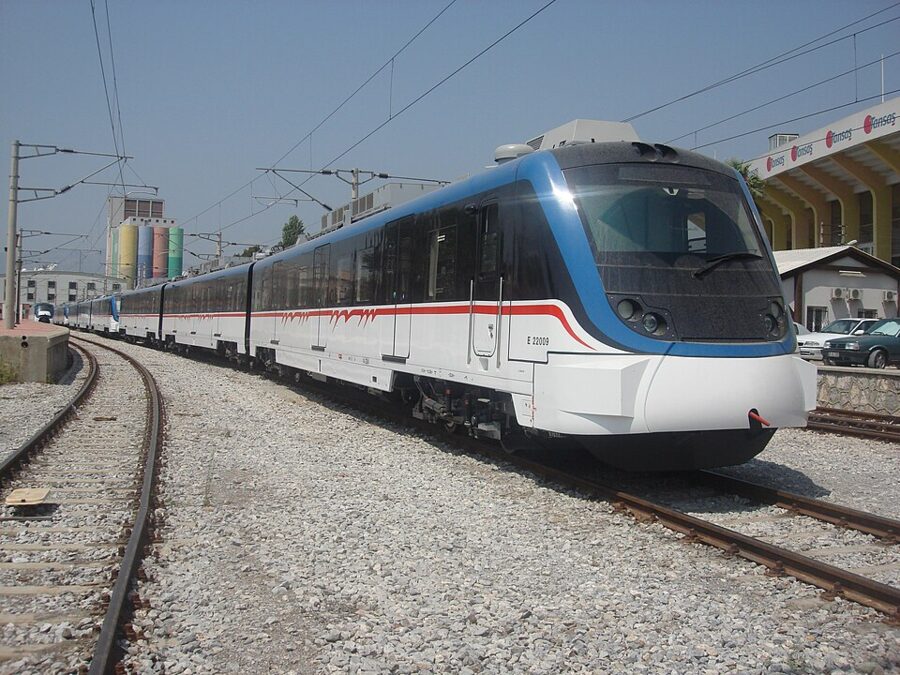
In the west, the useful slow trains feed the Aegean. İZBAN, İzmir’s suburban railway, runs from Aliağa through the city and the airport to Selçuk, the town for Ephesus. The overnight İzmir Mavi Tren links Ankara and İzmir, and the Pamukkale Ekspresi runs from Eskişehir to Denizli, the town below Pamukkale, so you can do Istanbul to Pamukkale by YHT and a connecting train if you like rail more than road. Both are slower than the bus.
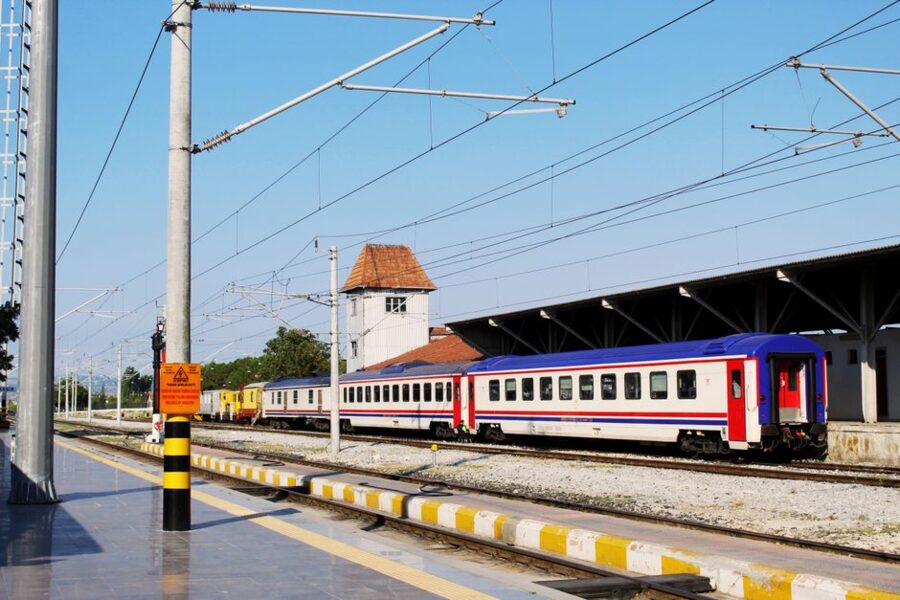

One line to watch: Bursa is being connected to the high-speed network, and test runs between Osmaneli and Bursa started on 4 November 2026. No date for passenger trains had been announced by late November, so for now Bursa is a bus or a ferry from Istanbul.

Domestic flights
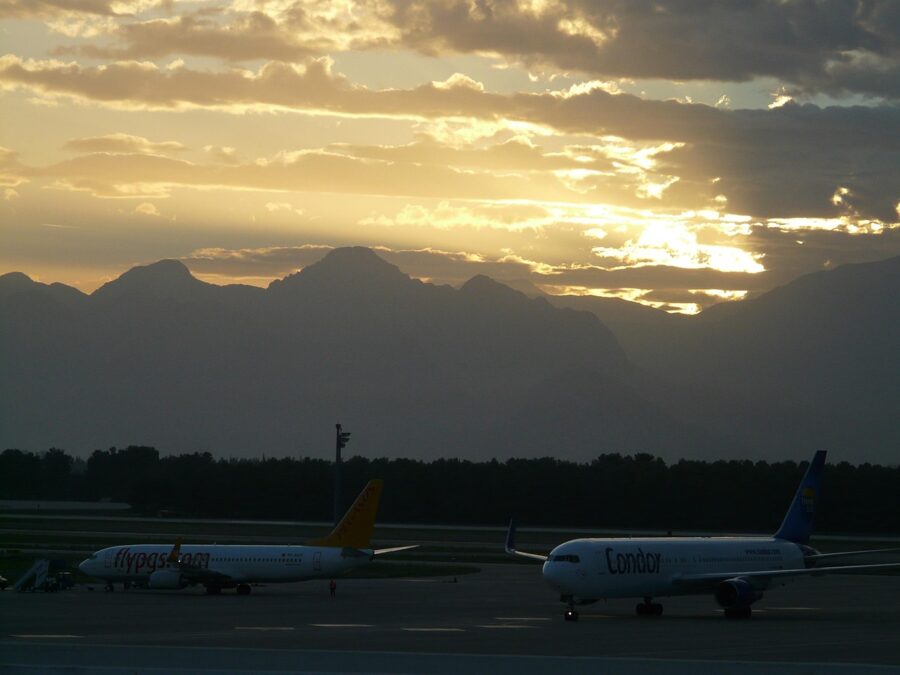
Four airlines carry most domestic passengers. Turkish Airlines flies everywhere and runs the most flights on the busy routes, and AJet, its low-cost arm, was called AnadoluJet until the end of 2023. Pegasus, based at Istanbul’s Sabiha Gökçen, is usually the cheapest. SunExpress flies mainly out of Antalya and İzmir.
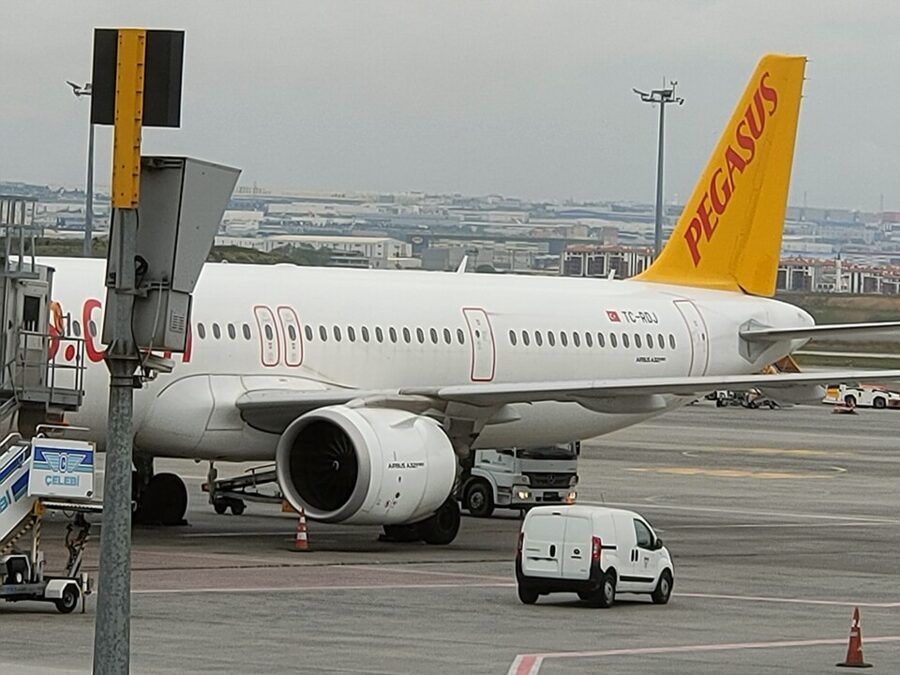

In low season the fares are flat and low. In the week of 21 November 2026, Pegasus’s cheapest one-way fare from Sabiha Gökçen was about 1,458 TL to Ankara, İzmir, Antalya and Kayseri alike, while Turkish Airlines’ direct flights on the same routes started at about 2,200 TL or more. In summer and around the bayram holidays prices climb steeply. The government caps economy fares on domestic routes, and the ceiling was raised to 6,990 TL in April 2026, which tells you how high a last-minute holiday seat can go.
The fare is only part of the price. Pegasus’s cheapest package (Light) includes a small bag under the seat and nothing else; the next one up (Süper Eko) adds an 8 kg cabin bag and 15 kg in the hold.
Extra hold baggage bought online cost 260 TL per kilogram on Pegasus’s domestic tariff in 2026, and buying it at the airport is worse. AJet sells similar tiers. With a full backpack, compare the bundled fare, not the headline one.
For Istanbul, the first question is which airport. Istanbul Airport (IST) is the big one north of the city, reached on the M11 metro, and Sabiha Gökçen (SAW) is on the Asian side, on the M4; Atatürk Airport closed to passenger flights in 2019.
Getting from the airport
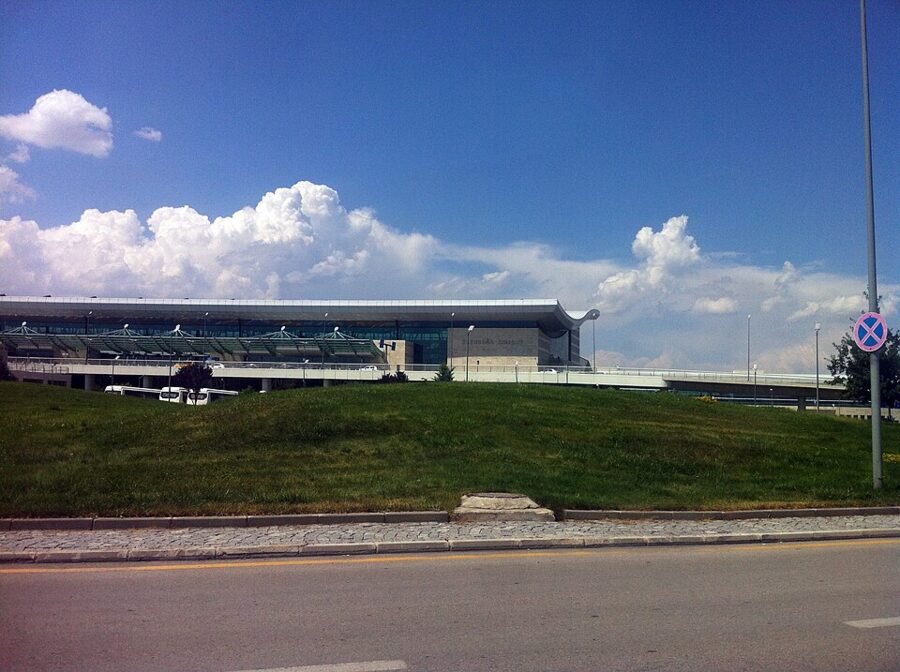
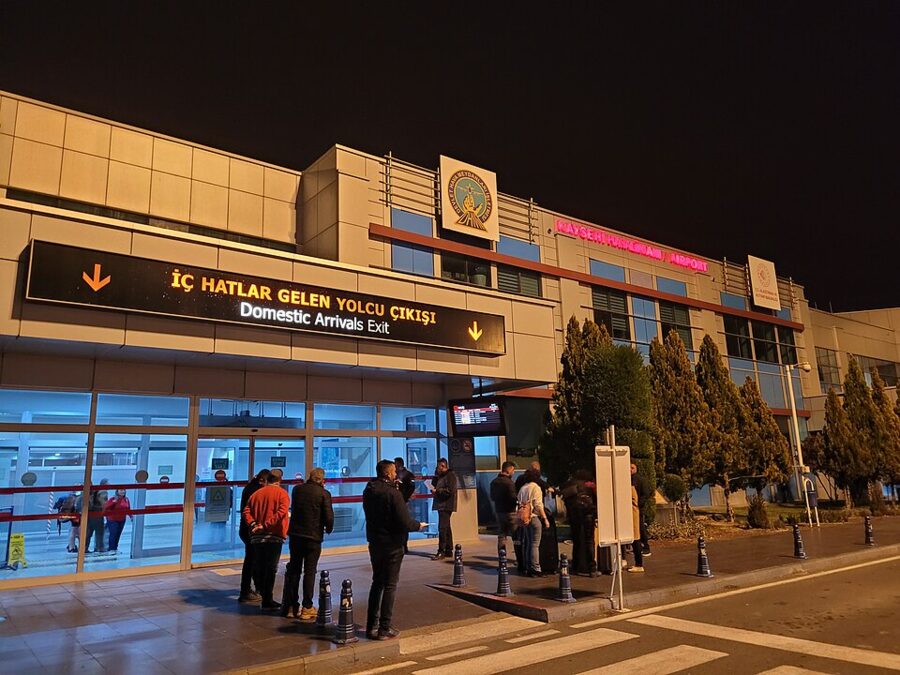
Every big Turkish airport has a coach link to its city, usually Havaş (the national airport-bus company) or a municipal service, and several now have rail. The security queues at Sabiha Gökçen can be long, so give yourself a full hour before a domestic flight.
- Ankara Esenboğa: the municipal EGO bus 442 runs to Kızılay and on to AŞTİ, the bus station, in about 50–70 minutes, and cost about 130–150 TL in autumn 2026. Havaş runs coaches on the same corridor.
- İzmir Adnan Menderes: the İZBAN suburban train stops at the airport and runs north into İzmir and south to Selçuk for Ephesus, so you can go from the plane to the ruins without a bus. Havaş coaches run to Alsancak and are paid with the İzmirim Kart.
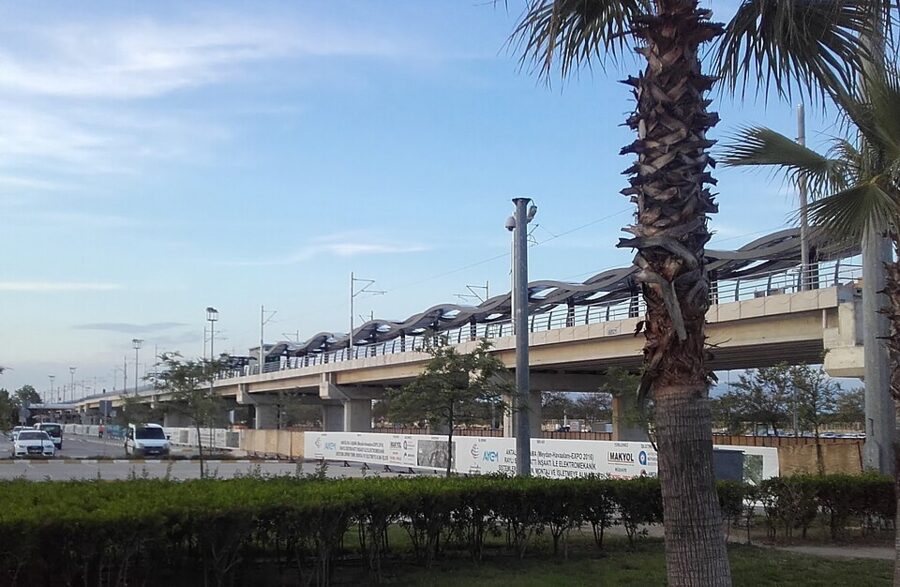
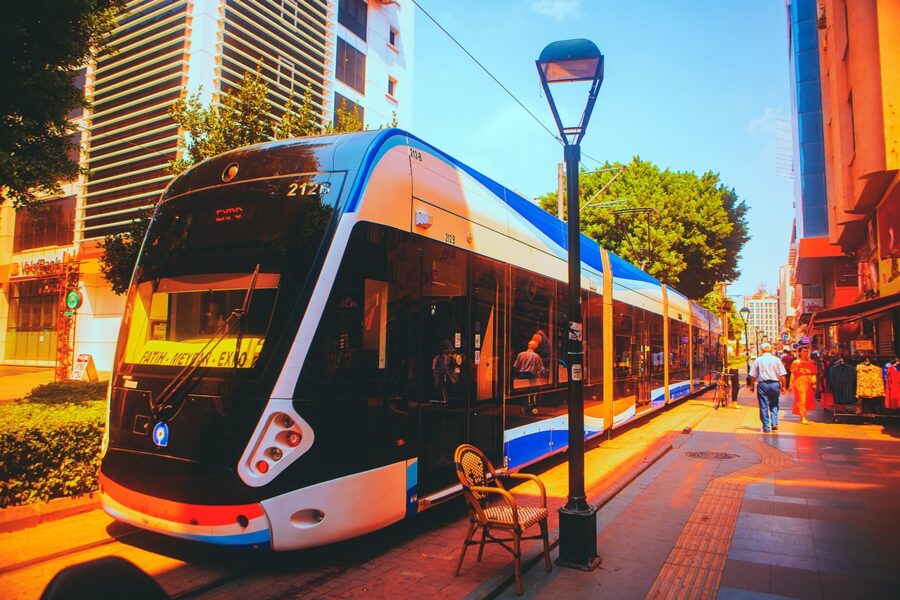
- Antalya: the AntRay tram stops at the domestic terminal and runs to the city center and the otogar; in 2026 a ride cost 42 TL with an Antalyakart or 50 TL tapping a bank card, and cash was not accepted. The international terminal is about 2 km, a 20-minute walk, from the tram stop.
- Kayseri and Nevşehir (Cappadocia): there is no direct public bus from either airport to Göreme. Shared shuttles meet the flights and are booked through your guesthouse or a local agency; confirm the price when you book.



Dolmuş, minibuses and city cards
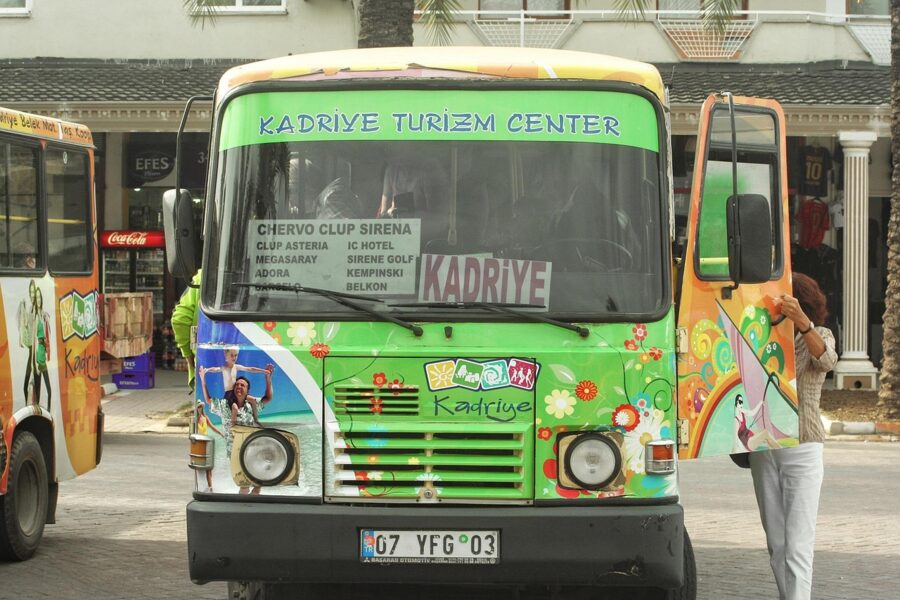
The dolmuş is a shared minibus on a fixed route. The name means “stuffed”, and in the old days it left when it was full; now most run to a loose timetable from a stop or a corner of the otogar. The route is painted on the side or written on a board in the windshield. Flag one down anywhere along the road, and say “inecek var” (“someone’s getting off”) to the driver when you want to stop.
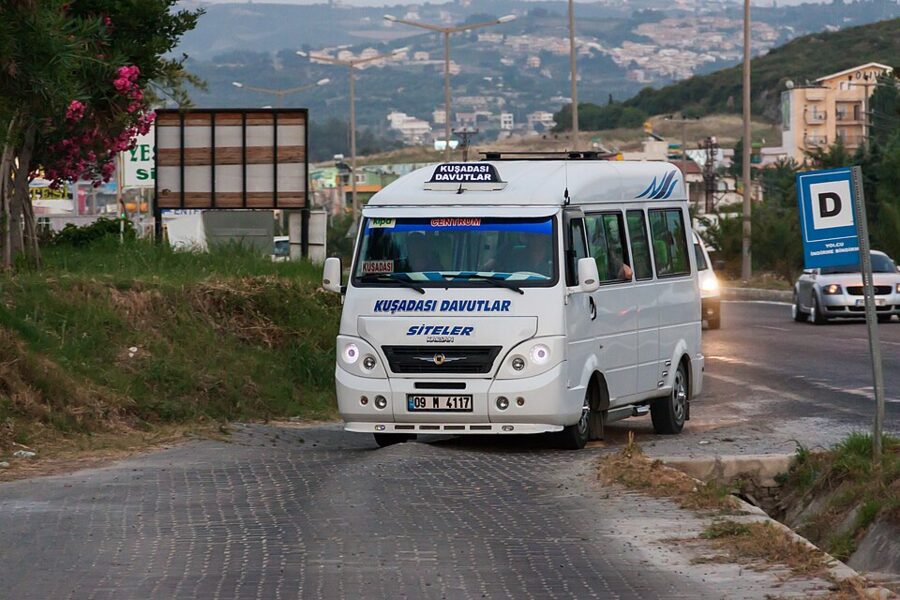

On the travelers’ route the dolmuş does the last stretch the coaches cannot: Fethiye to Ölüdeniz, Selçuk to Şirince, Çanakkale to Troy, Göreme to the underground cities, Denizli otogar up to Pamukkale. Fares are low and paid in cash, usually to the driver as you board, so keep small notes. In cities, many routes now take the local transit card instead, and some (Antalya among them) have replaced the old minibuses with midibuses that everyone still calls a dolmuş.
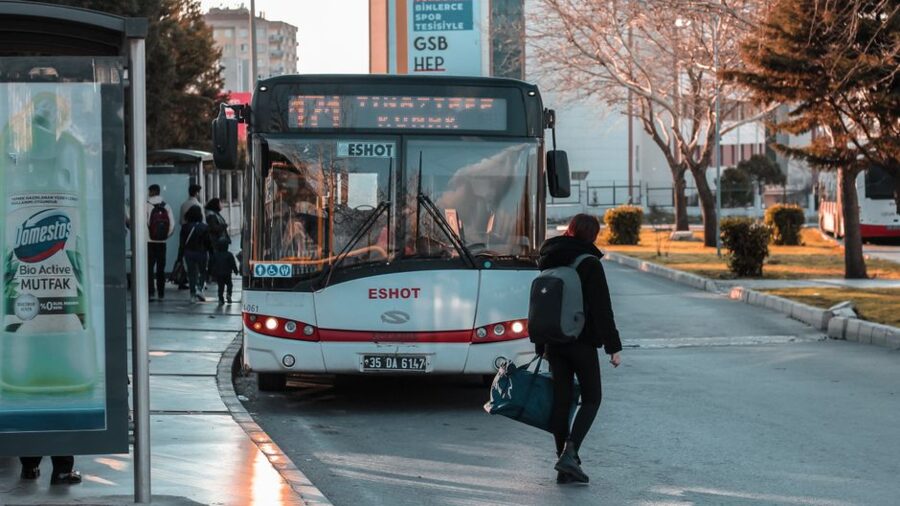
Inside the big cities, buses, trams and metros run on contactless cards. Istanbul has its own Istanbulkart. The three you are most likely to need elsewhere:
| City | Card | Full fare in 2026 | Worth knowing |
|---|---|---|---|
| İzmir | İzmirim Kart | 35 TL on bus, metro, tram and city ferry (since 1 April 2026) | Transfers within 90 minutes are free outside İZBAN; İZBAN trains are priced by distance; also pays for the Havaş airport coach |
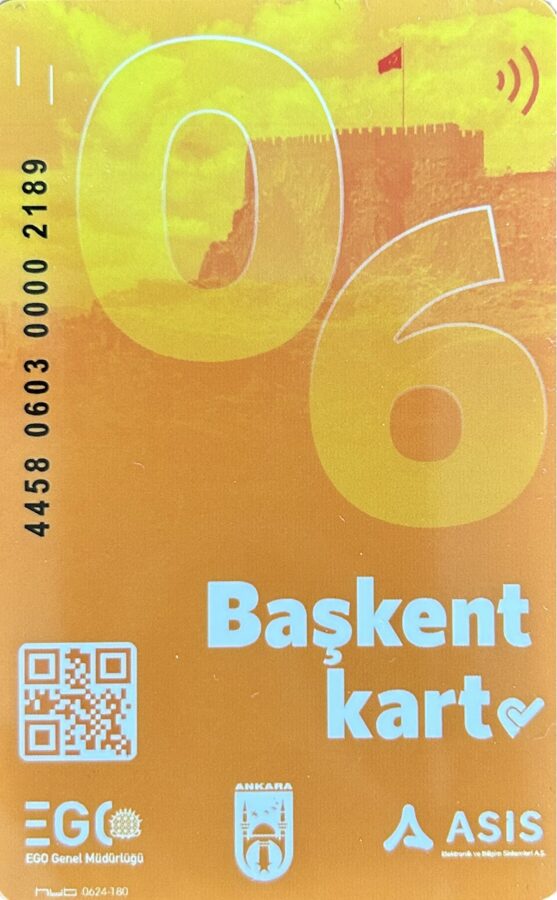
| Ankara | Ankarakart | 40 TL (since 23 August 2026) | Covers EGO buses, the metro lines and the Ankaray; the full-fare card needs no documents |
| Antalya | Antalyakart | 42 TL | A contactless bank card also works on the tram, at 50 TL a ride; no cash on the tram |
Buy and top up the cards at the machines in metro and tram stations, or at kiosks with the card’s logo.
Car hire and driving
A car is the one form of transport in Turkey that gets cheaper the more of you there are. For a solo traveler it rarely pays; for three or four people splitting it in Cappadocia, along the Lycian coast or in the east, it can beat buses and tours both on price and on what you see.
Licenses and paperwork
Foreign visitors may drive on their own national license for up to six months from the date they entered Turkey. If your license is not in the Latin alphabet, carry an International Driving Permit with it. Rental companies generally want you to be at least 21 and to have held a license for a year, and they take a deposit on a credit card in the driver’s name.
Keep the passport, license and rental papers in the car. Walk round the car with the agent before you leave and photograph every scratch, the tires and the windshield, because damage to glass and tires is often excluded from the basic cover.
Tolls and the HGS sticker
Tolls on Turkey’s motorways and big bridges are collected electronically through HGS, a sticker tag on the windshield that is read as you pass under the gantry. Rental cars come with one; the company pays the tolls and charges them to your card afterward, so ask how it bills before you sign.
If a car with no valid HGS passes a gantry, the owner has 15 days to pay the toll with no penalty; after that a fine is added, which can reach four times the toll. That matters to you mainly in a rental, because the company will pass the fine on.
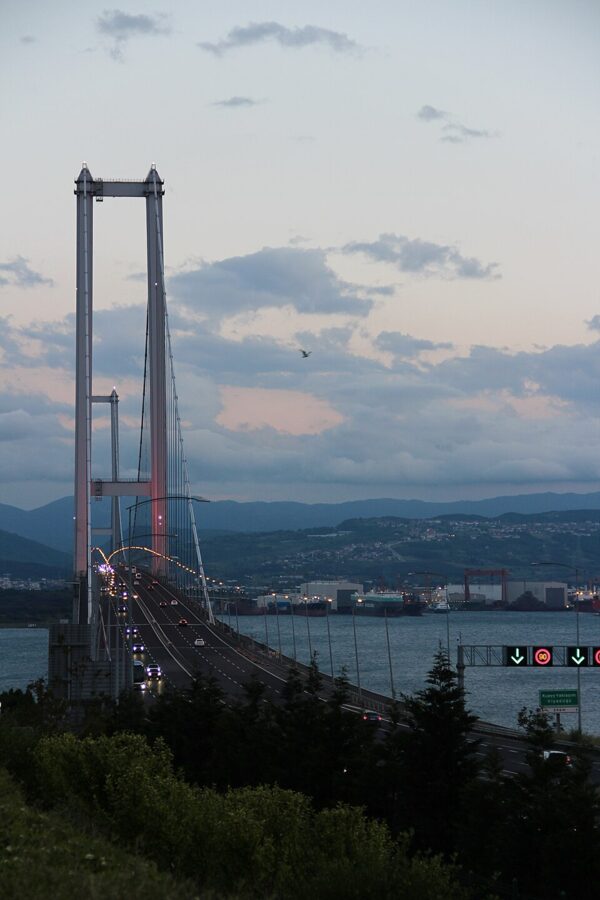
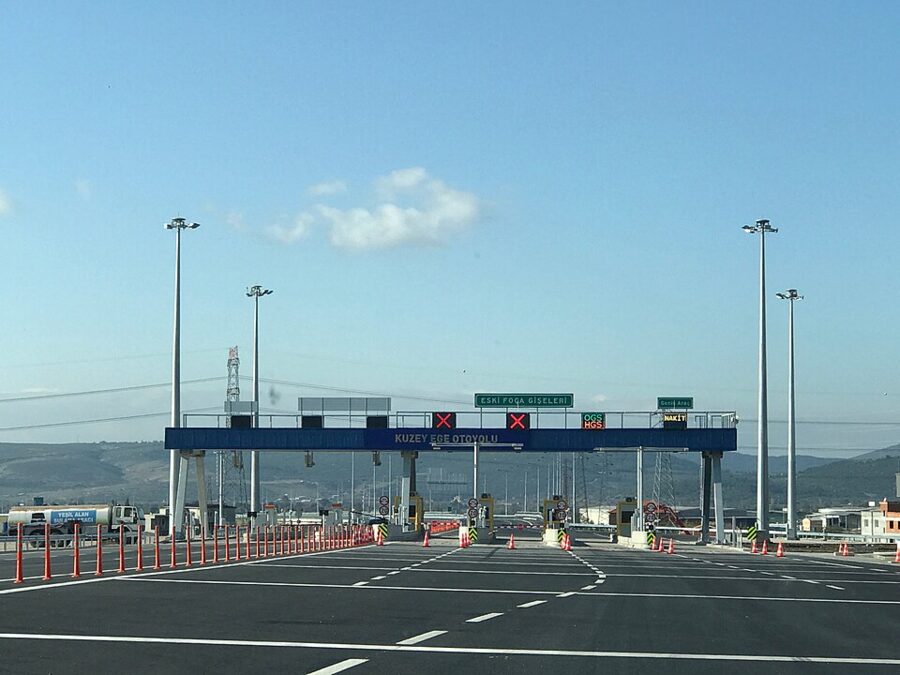

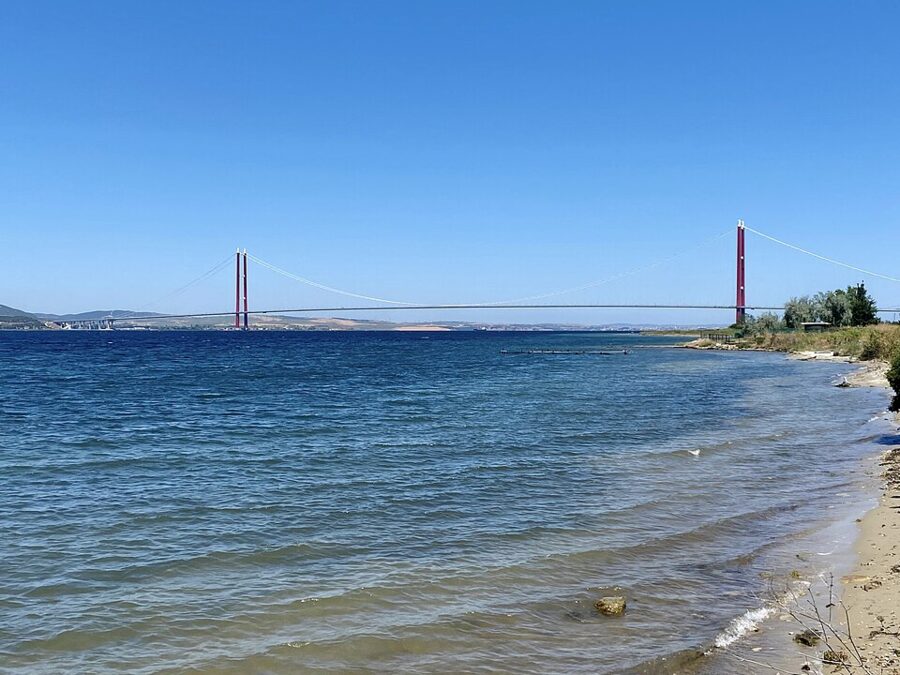
Tolls rose twice in 2026, in January and again on 1 July. From July, a car paid 1,170 TL to cross either the Osmangazi Bridge or the 1915 Çanakkale Bridge over the Dardanelles, and 2,525 TL for the full Istanbul–İzmir motorway including Osmangazi. The motorway saves hours, but on a budget the old roads and the ferries are free or far cheaper.

Fuel prices in 2026
Fuel is expensive in Turkey, and diesel costs more than gasoline. On 19 November 2026 a liter of gasoline (benzin) cost 71.30 TL in Istanbul (European side), 72.30 TL in Ankara and 72.50 TL in İzmir; diesel (motorin) cost 95.30 TL, 96.40 TL and 96.70 TL. LPG (otogaz) was about 50.70 TL. Prices change every few days with the oil market and the exchange rate, and the pumps show them on a big board by the road.
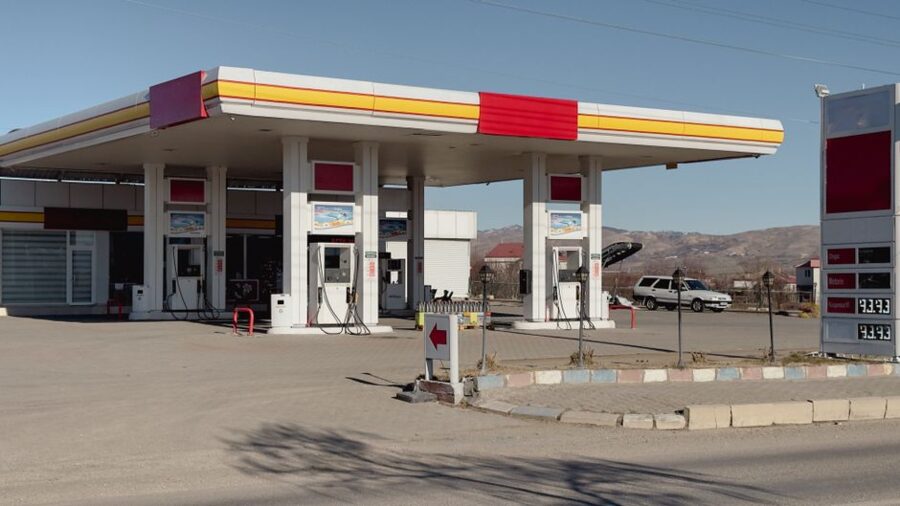
For a rough budget, a small gasoline car doing 6 liters per 100 km costs about 430 TL in fuel per 100 km at those prices. Göreme to Antalya is about 540 km, so call it 2,300 TL in fuel before the rental itself, against two bus tickets at roughly 1,700–2,500 TL. Most stations take cards and many are staffed, with an attendant who fills the tank for you.
Police checks and road rules
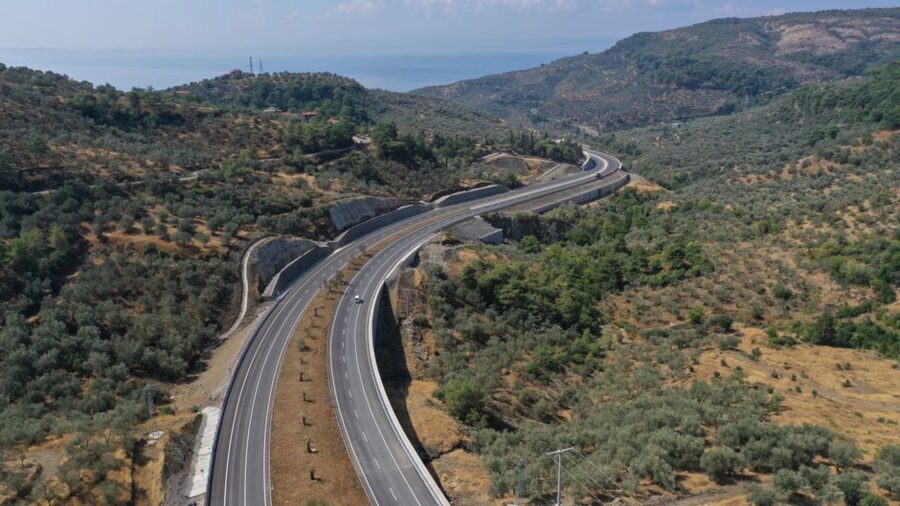
Drive on the right. The limits for cars are 50 km/h in towns, 90 km/h on ordinary two-way roads and 110 km/h on divided highways, with 120–140 km/h on motorways as signed. Speed cameras are common and fines are heavy; there is a discount for paying within 15 days.
Police and gendarmerie checkpoints on the approach to towns are routine. You slow down, they look, and they usually wave tourists through; if you are stopped, show the license, passport and rental papers and stay polite. Night driving on rural roads is the real hazard: tractors without lights, animals on the road and oncoming high beams. Plan to arrive before dark.
When a car is worth it
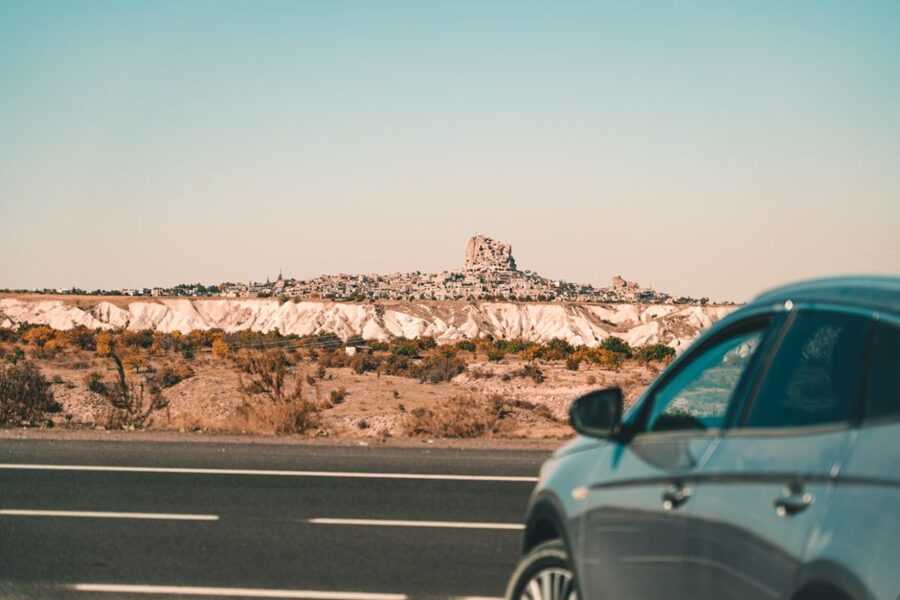
Hire a car for a few days in a region, not for the whole trip. Cappadocia, the coast between Fethiye and Antalya with its side roads down to the beaches and ruins, and anywhere east of Ankara are where a car changes the trip. Istanbul is where it ruins it: the traffic is heavy, parking is scarce and the public transport is excellent. Between regions, a bus or a flight is cheaper than the one-way drop-off fee most rental companies charge.
Ferries
Across the Sea of Marmara: İDO and BUDO
Two companies run the fast boats between Istanbul and the south shore of the Marmara. İDO (Istanbul Sea Buses) sails to Bursa’s port of Mudanya, to Yalova and to Bursa’s Güzelyalı pier; BUDO, owned by Bursa’s municipality, sails to Mudanya. For a trip to Bursa, or up to the ski slopes of Uludağ above it, the boat is far more pleasant than the bus round the gulf.
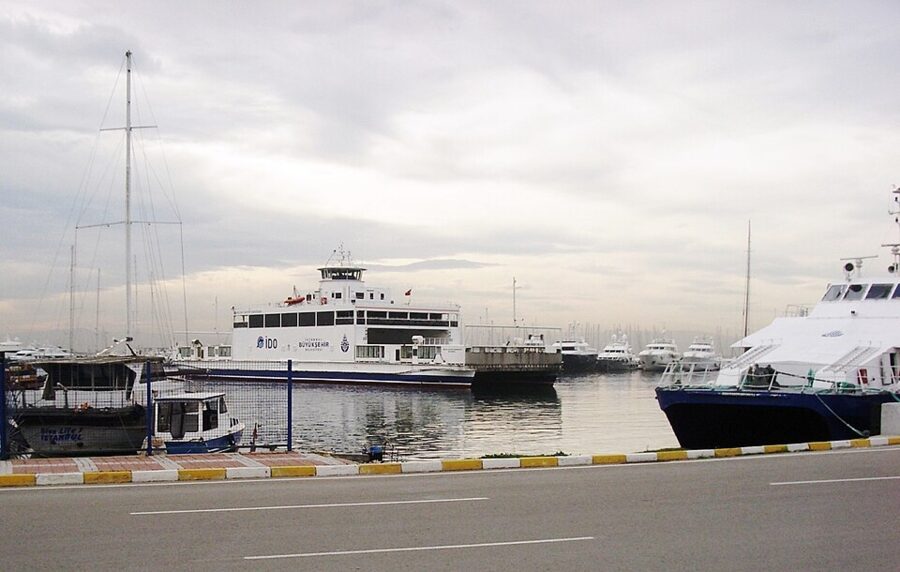

Both companies sail from Kabataş, the pier below Dolmabahçe Palace at the end of the T1 tram line. BUDO moved its Istanbul sailings there from Eminönü on 1 January 2026, and the Eminönü pier is closed, so older timetables will send you to the wrong place. İDO also sails from Kadıköy and from Yenikapı. The crossing to Mudanya takes about 1 hour 50 minutes.
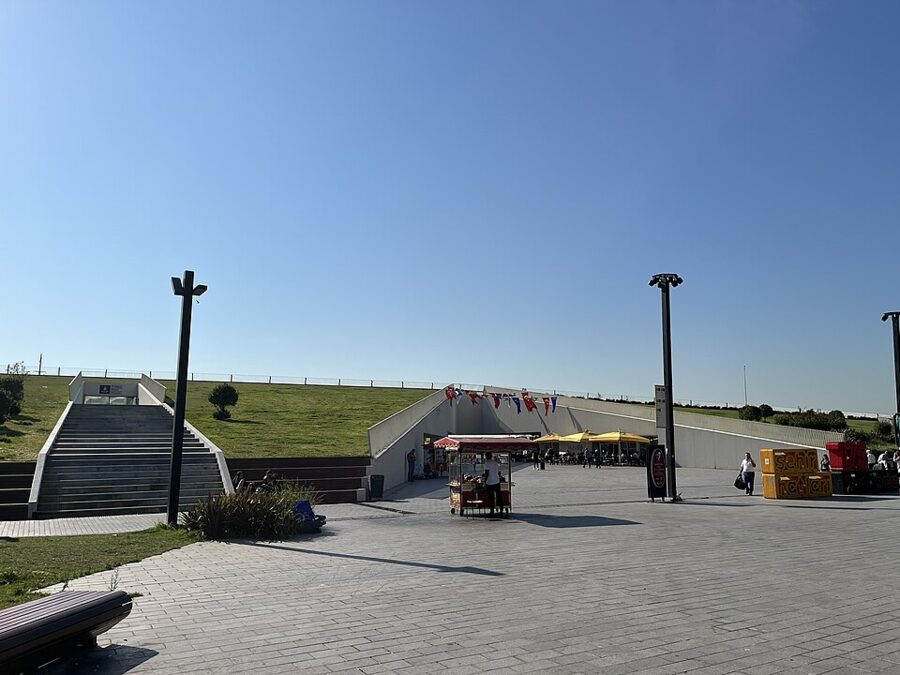

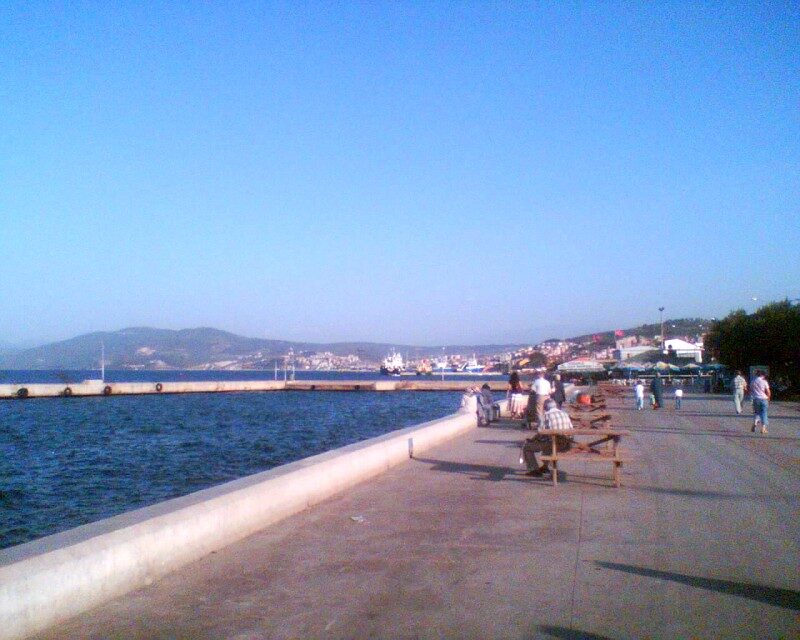
On 21 November 2026, a single from Kabataş to Mudanya cost 720 TL on BUDO and 770 TL on İDO. BUDO’s student fare (ages 6 to 27, with a student card) was 500 TL. Sailings are fewer in winter, so buy ahead on the companies’ websites or apps; BUDO boards on a QR code on your phone. From Mudanya, city buses run on into Bursa.
The Dardanelles crossing
The state-owned GESTAŞ runs the car ferries across the Dardanelles. The main one, Çanakkale to Eceabat, sails every hour from 07:00 to 23:00 and every two hours through the night, takes about 25 minutes, and on the August 2026 tariff cost 40 TL for a foot passenger and 725 TL for a car with up to seven people. A same-day return with a car cost 1,090 TL.
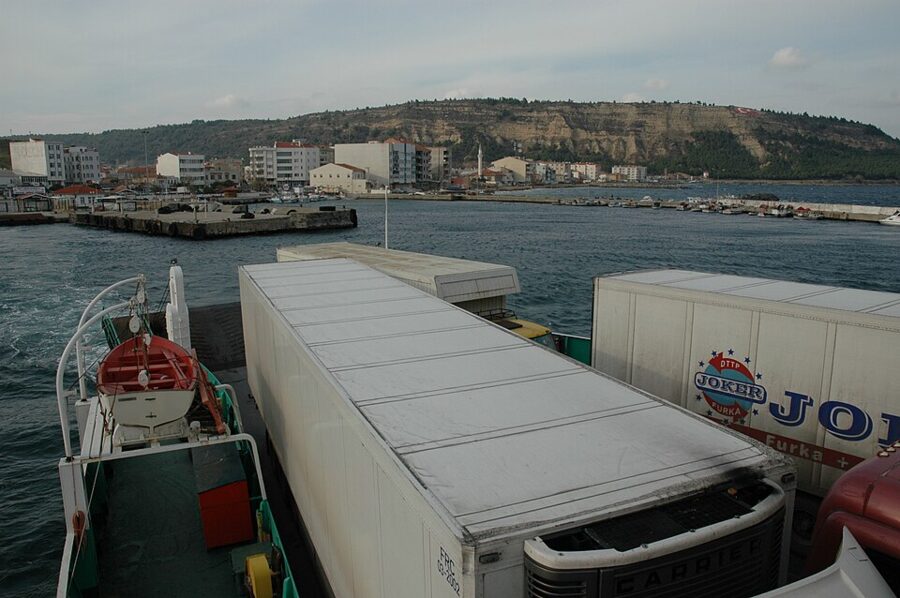

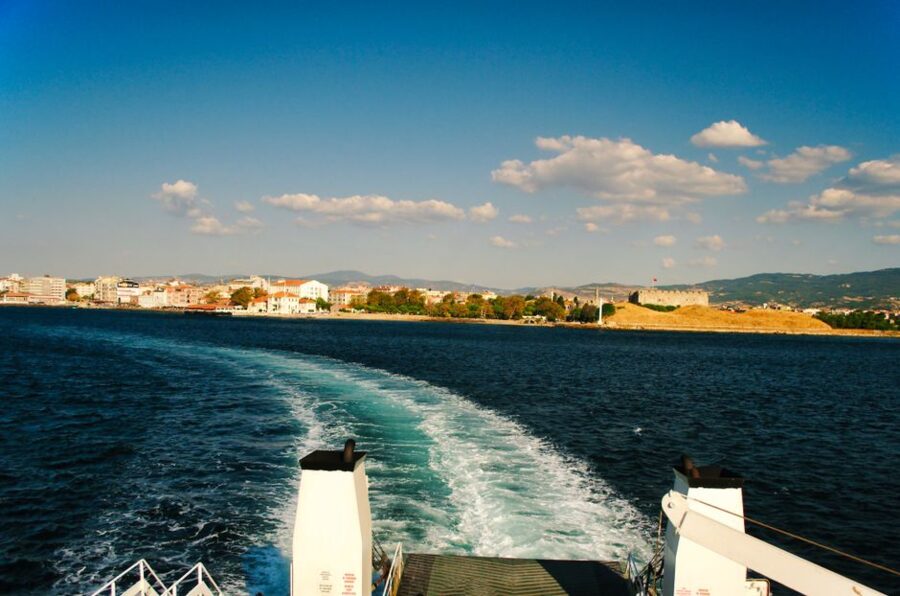
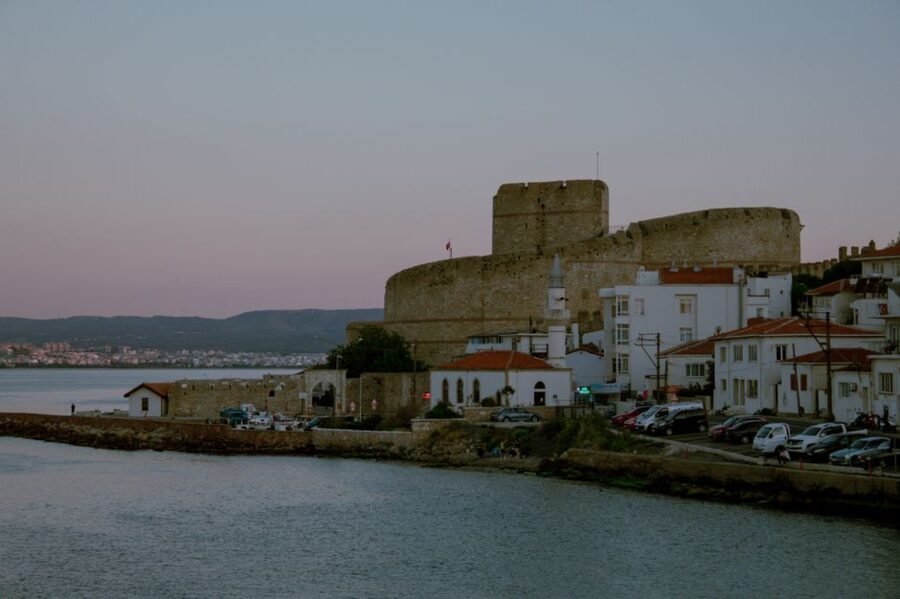
A smaller ferry runs from Çanakkale to Kilitbahir, under the Ottoman fortress on the European shore, also at 40 TL for a foot passenger. Further north, Lapseki to Gelibolu is the crossing the trucks use by day. Coaches between Istanbul and Çanakkale cross by bridge or ferry as part of the trip. In strong wind the smaller lines run without a timetable or stop, and GESTAŞ posts the day’s changes on its site.
The Aegean and the Greek islands
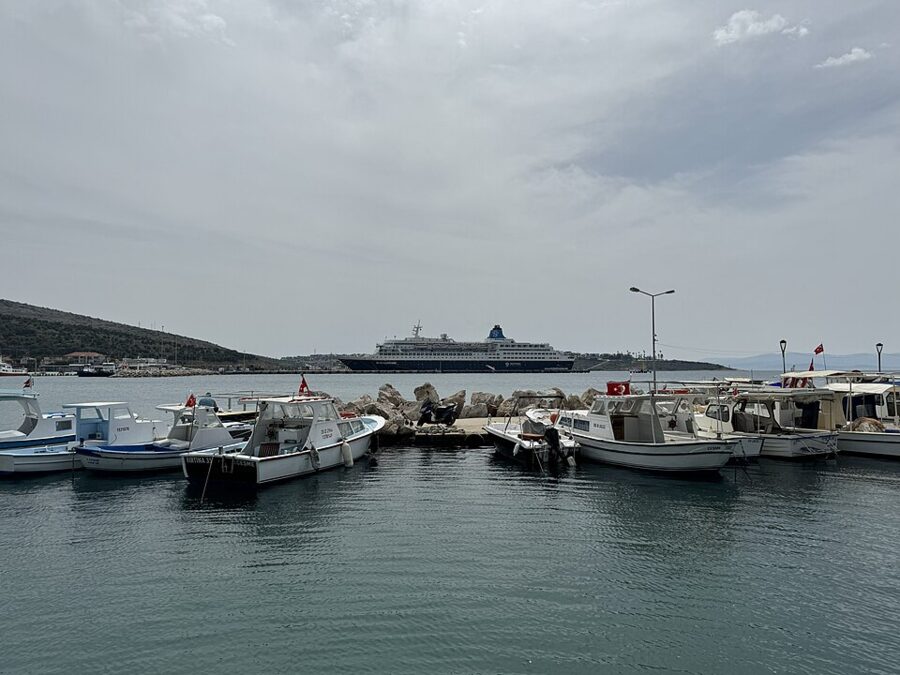
South of the Dardanelles, the sea routes cross to Greece. Small ferries run, mostly in season, from Turkish ports such as Ayvalık, Çeşme, Kuşadası, Bodrum and Marmaris to the Greek islands opposite, and from there the Greek ferries take over for Greek island hopping on to Athens and the Cyclades. Along the Turkish coast itself, the slow way between Fethiye, Kaş and Bodrum is a gulet cruise. And in Istanbul, the cheapest Bosphorus cruise is a commuter ferry tapped on the Istanbulkart.

Which to take, leg by leg
Here are the common legs side by side. Bus and flight fares are the lowest on sale in the week of 21 November 2026, which is low season; YHT fares are the August 2026 tariff. A dash means there is no sensible option of that kind on that leg.
| Leg | Bus | Train | Plane | My pick |
|---|---|---|---|---|
| Istanbul – Ankara | 600–1,260 TL, about 6 h 30 | YHT 990 TL, about 4 h 15 | from 1,458 TL, 1 h (SAW) | YHT |
| Istanbul – Konya | 1,800–2,009 TL, about 10 h 20 | YHT 1,442 TL, about 4 h 40 | – | YHT, cheaper and faster |
| Istanbul – Eskişehir | – | YHT 639 TL, about 3 h | – | YHT |
| Istanbul – İzmir | 1,299–1,750 TL, about 7 h | – | from 1,457 TL, 1 h 05 | Night bus, or fly if you are short of days |
| Istanbul – Antalya | 1,350–1,850 TL, about 12 h | – | from 1,458 TL, 1 h 10 | Fly |
| Istanbul – Cappadocia | 1,887–2,000 TL to Göreme, 10–12 h | – | from 1,460 TL to Kayseri, 1 h 15, plus the shuttle | Night bus one way, fly the other |
| Ankara – Cappadocia | 750–1,000 TL to Nevşehir, about 3 h 15 | – | – | Bus |
| Ankara – Konya | – | YHT 458 TL, about 1 h 45 | – | YHT |
| Ankara – Sivas | – | YHT 1,001 TL, about 2 h 35 | – | YHT |
| İzmir – Antalya | 900–1,200 TL, about 7 h | – | – | Bus |
| Istanbul – Bursa | frequent, round the gulf | not yet | – | Ferry, 720–770 TL, about 1 h 50 |
The pattern is simple once you see it. Wherever the YHT runs, take it. On the coast and in Cappadocia, take the bus, overnight when the leg is long enough to replace a bed. Fly the long diagonals, Istanbul to Antalya or to the east, and when you compare, add the airport transfers at both ends and the bag fee before you decide the plane is cheaper.
Then book the first leg. If it is a YHT on a Friday or a Sunday, book it tonight on TCDD Taşımacılık’s site, because those are the trains that sell out. If it is a bus, the counter at the otogar will sell you a seat on the next one, and since May 2026 you can get your money back up to 12 hours before it leaves.