At 10:35 every morning a city ferry pulls away from Eminönü and heads for the Black Sea. Six hours later it is back at the same pier, having run the whole length of the Bosphorus twice and parked for two and a half hours at a fishing village under a ruined castle. A foreign passport pays 640 TL for that return ticket in 2026, and the same company’s commuter boats cover most of the same water for the price of a city fare.
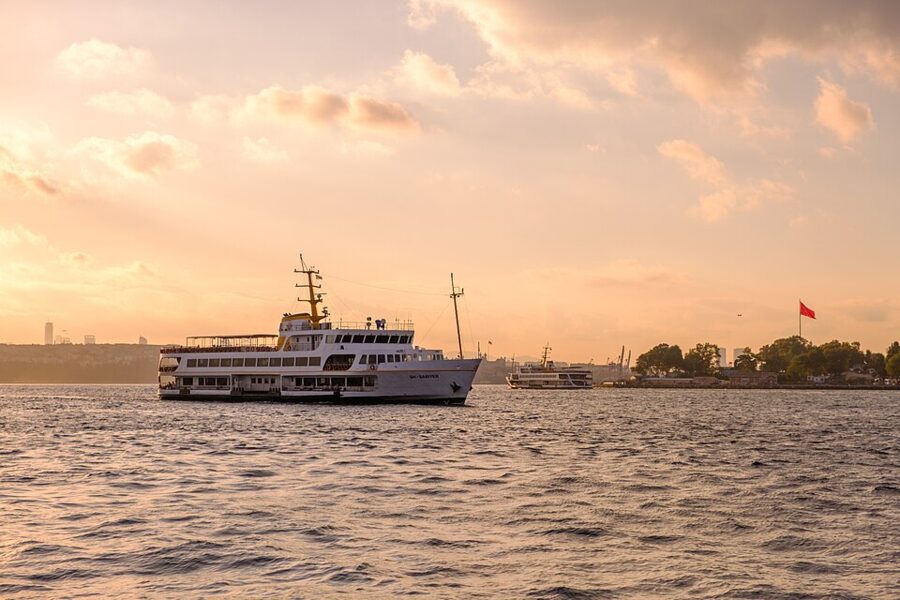

Everything else on the water sits somewhere between those two prices. There are 90-minute loops from private ferry companies for about 300 TL, touts in captain’s uniforms selling “cruises” for €20 a head, sunset yachts, dinner boats with belly dancers, and private charters priced per boat. Most of them show you the same stretch of shoreline between Eminönü and the second bridge.
Each has its place and its price. My short answer: take the long tour once if you have a free day, and use the commuter ferries for everything else.

Contents
- The strait in two minutes
- Every way onto the water, compared
- The Şehir Hatları long Bosphorus tour
- The short Bosphorus tour
- The commuter-ferry way: same water, city fares
- Private cruises from Eminönü and Kabataş
- Dinner cruises with a Turkish night show
- What you see from the deck, south to north
- Stops worth getting off for
- The Golden Horn as a side trip
- When to go, and what to bring
The strait in two minutes
The Bosphorus is a strait about 30 km long, joining the Black Sea to the Sea of Marmara and splitting Istanbul between Europe and Asia. It is 698 m wide at its narrowest, between the two Ottoman fortresses of Rumeli Hisarı and Anadolu Hisarı, and about 110 m deep at its deepest, off Bebek and Kandilli (some measurements put the deepest point a little lower). Tankers and bulk carriers bound to and from the Black Sea ports thread through it all day, under the free-passage rules of the 1936 Montreux Convention.
The water moves in two directions at once. The Black Sea sits roughly 40 cm higher than the Marmara and much less salty, so a surface current pours south toward the city, usually at 3–4 knots and faster when a northerly wind pushes behind it. Underneath, from about 15–20 m down, the heavier, saltier Marmara water creeps north in the other direction. You feel the surface current on any ferry heading upstream: the boats hug the shore where the flow is weaker, which is why the European villages seem to pass close enough to read the restaurant menus.
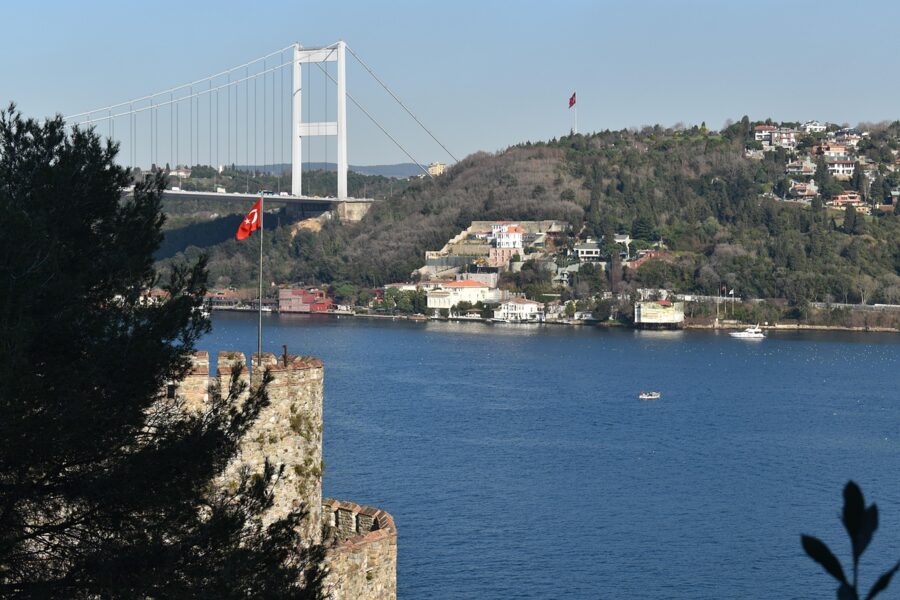
Three suspension bridges now cross it: the Bosphorus Bridge (officially the 15 Temmuz Şehitler Köprüsü) from 1973 at Ortaköy, the Fatih Sultan Mehmet Bridge from 1988 at the narrows, and the Yavuz Sultan Selim Bridge from 2016 near the Black Sea mouth. A road tunnel and the Marmaray rail tunnel run underneath. None of them is as pleasant as the boat.
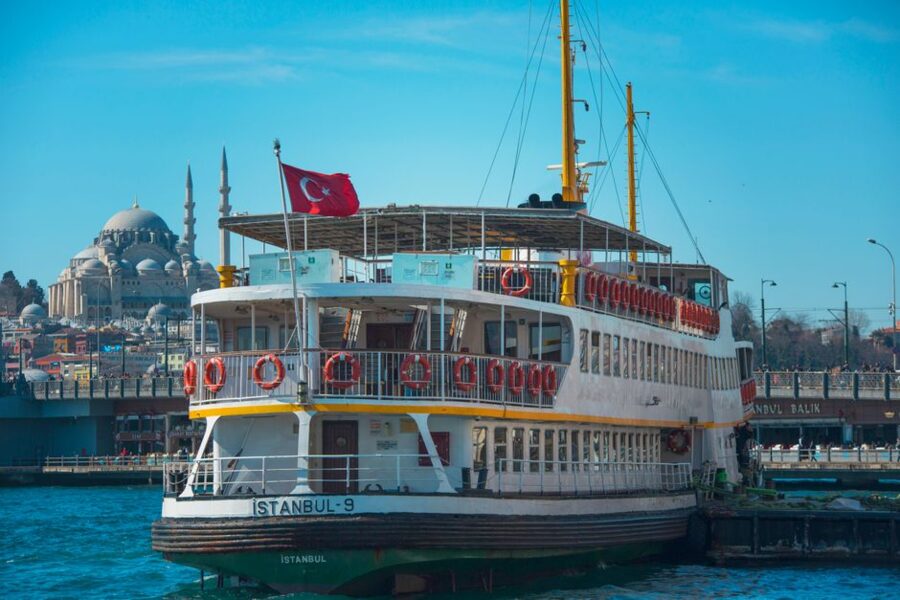
The cheapest way to see it is the one locals use to get to work. Every crossing and every shoreline line is run by Şehir Hatları, the city ferry company owned by the Istanbul municipality (İBB), and paid for with the same Istanbulkart you use on the tram. The official tours cost more and are sold separately, but they are still the city company’s boats at a fixed public price.
Every way onto the water, compared
Prices below are autumn 2026 figures. Lira prices move at least twice a year in Istanbul, so treat them as a guide to the gaps between options rather than a promise.
| Option | From | When | Length | Price (2026) |
|---|---|---|---|---|
| Commuter crossing (Eminönü–Üsküdar, Karaköy–Kadıköy and others) | Eminönü, Karaköy, Beşiktaş | All day, every 15–30 min on the main lines | 15–25 min | 58.52–65.21 TL on the Istanbulkart |
| Bosphorus commuter line, Eminönü to Sarıyer and Rumeli Kavağı | Eminönü | About 12 sailings a day, first 09:35 | About 1 h 40 to Sarıyer | Distance-based Istanbulkart fare |
| Şehir Hatları long Bosphorus tour | Eminönü | Daily 10:35 (winter timetable) | 6 h 05 including 2 h 35 ashore | 640 TL return (foreign visitors) |
| Şehir Hatları short Bosphorus tour | Eminönü | Daily 14:40 | About 2 h | 340 TL (foreign visitors) |
| Turyol Bosphorus loop | Eminönü | About hourly | About 1 h 30 | About 300 TL |
| Dentur Avrasya Bosphorus loop | Kabataş, Beşiktaş, Üsküdar | About hourly | About 1 h 15 | 250–300 TL |
| Shared sunset yacht | Kabataş and other piers | About an hour before sunset | 2–2.5 h | About €50 |
| Dinner cruise with Turkish night show | Kabataş, Karaköy | Evenings | About 3 h | About €40 with soft drinks, €60 with local alcohol |
| Private boat charter | Any pier you agree | Your choice | Usually 2 h and up | Priced per boat, from roughly €200 for a small one |
Read across the table and the decision makes itself. If you want the whole strait, the long tour or a self-built commuter day are the only options that reach the Black Sea. If you want an hour on the water, any commuter crossing does it for under 70 TL. Everything in between is paying for convenience, a drink, a show or privacy, which is fine as long as you know that is what you are buying.
The Şehir Hatları long Bosphorus tour
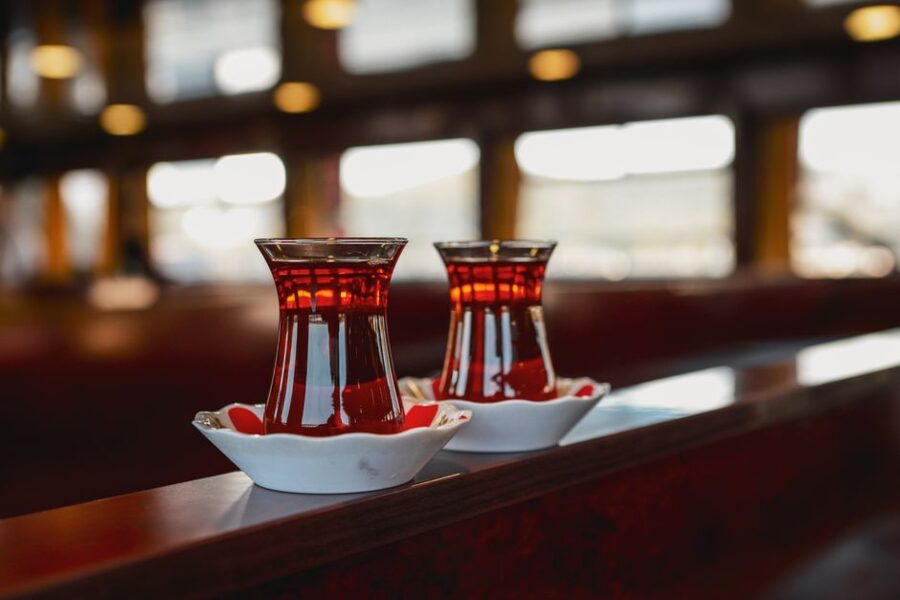
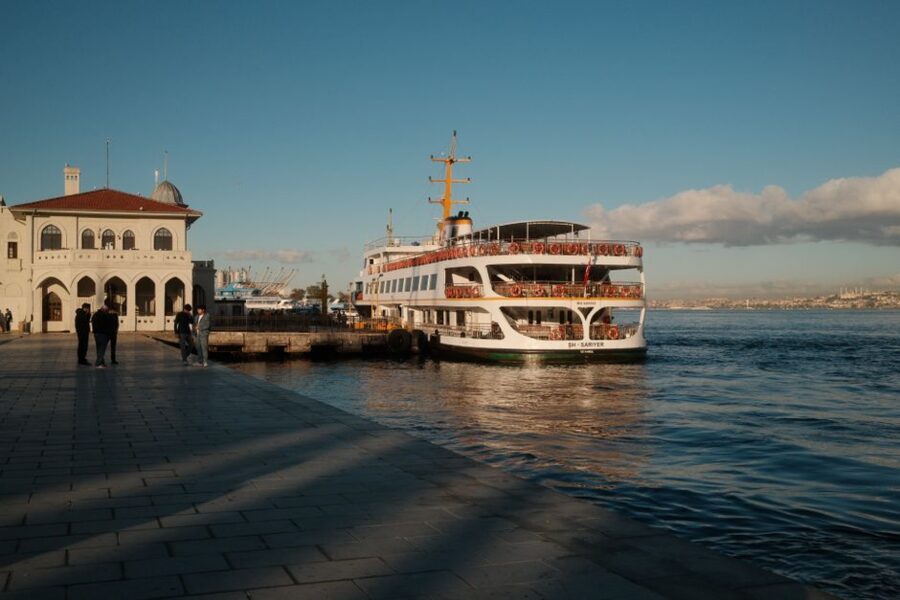
The Uzun Boğaz Turu is the one I would take if you only do one boat trip in Istanbul and have a day to give it. It is a full-size city ferry, not a tour boat, so there is no commentary, no upselling and no music, just a tea seller and the shoreline. It calls at both shores on the way up, which also makes it a cheap way to reach Kanlıca, Sarıyer or Anadolu Kavağı.
The timetable
The winter timetable runs from 7 September 2026 to 27 June 2027, with one departure a day in each direction. The tour stops for 2 hours 35 minutes at Anadolu Kavağı before turning back.
| Pier | Northbound | Southbound |
|---|---|---|
| Eminönü | 10:35 | 16:40 (arrive) |
| Beşiktaş | 10:50 | 16:25 |
| Üsküdar | 11:05 | 16:10 |
| Kanlıca | 11:35 | 15:40 |
| Sarıyer | 12:05 | 15:20 |
| Rumeli Kavağı | 12:15 | 15:10 |
| Anadolu Kavağı | 12:25 (arrive) | 15:00 |
The summer timetable runs from late June to early September and can add sailings, so check the board at Eminönü or the operator’s timetable before you plan around a specific boat. Bad weather cancels sailings in winter: a strong lodos (the southwesterly) or poyraz (the northeasterly) stops boats across the city, and the company announces cancellations on the day.
Tickets and fares
Şehir Hatları publishes two prices for each tour, one for Turkish citizens and one for everybody else, and the foreign price is exactly double. On the tariff in force in autumn 2026:
- Long tour, return: 640 TL for foreign visitors, 320 TL for Turkish citizens.
- Long tour, one way: 195 TL, listed at the local rate only.
- Short tour: 340 TL foreign, 170 TL local.
- Children under 12 travel at 160 TL return on the long tour and 85 TL on the short tour; under-sixes ride free.
- The summer-only moonlight tour (Mehtap Turu) is 730 TL for foreign visitors.
Tour tickets are sold at the ticket office (gişe) on the pier, not online, and the Istanbulkart does not pay for them. Bring lira in cash and treat a working card reader as a bonus. Buy in the morning for that day; in winter the boat is rarely full, but in July and August the open deck fills well before 10:35.

Where to sit
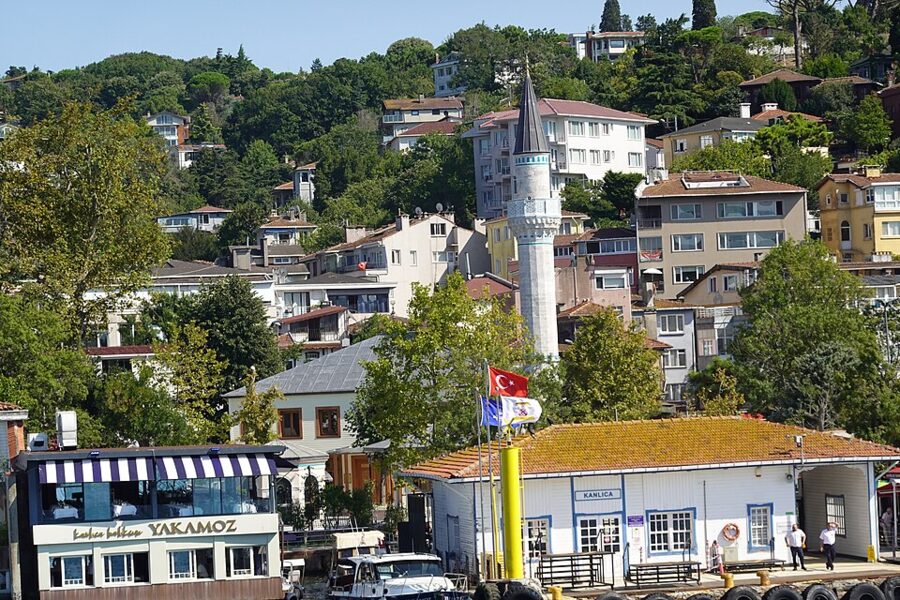
Sit on the left going north and move to the right coming back. Heading up from Eminönü, the European shore is on your left (the port side), and that is the shore with most of the buildings: Dolmabahçe, Çırağan, Ortaköy, Arnavutköy, Bebek and Rumeli Hisarı. On the way back the same shore is on your right, and most of the boat forgets to move.
The Asian side is greener and quieter, with Beylerbeyi Palace, the Kuleli military school, Kandilli and Anadolu Hisarı, and the boat zigzags to its piers anyway. Outside seats at the stern are the best on the boat, and the first to go. In winter, sit inside on the left by a window and go out on deck only for the narrows.
Anadolu Kavağı and Yoros Castle
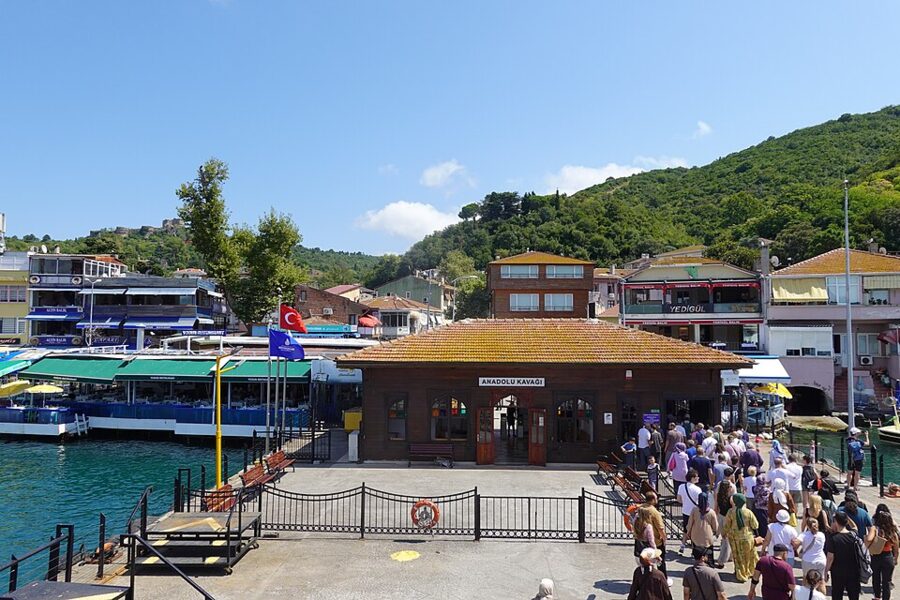
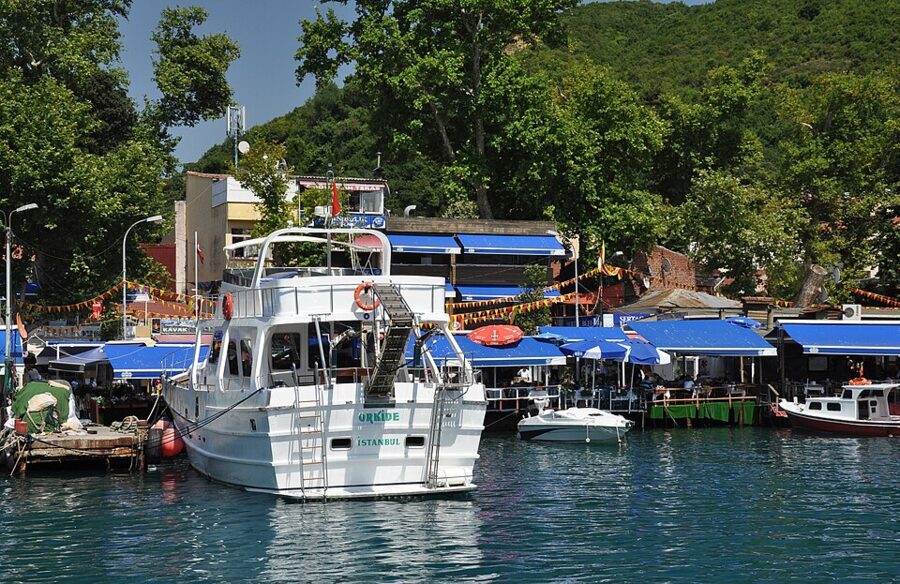
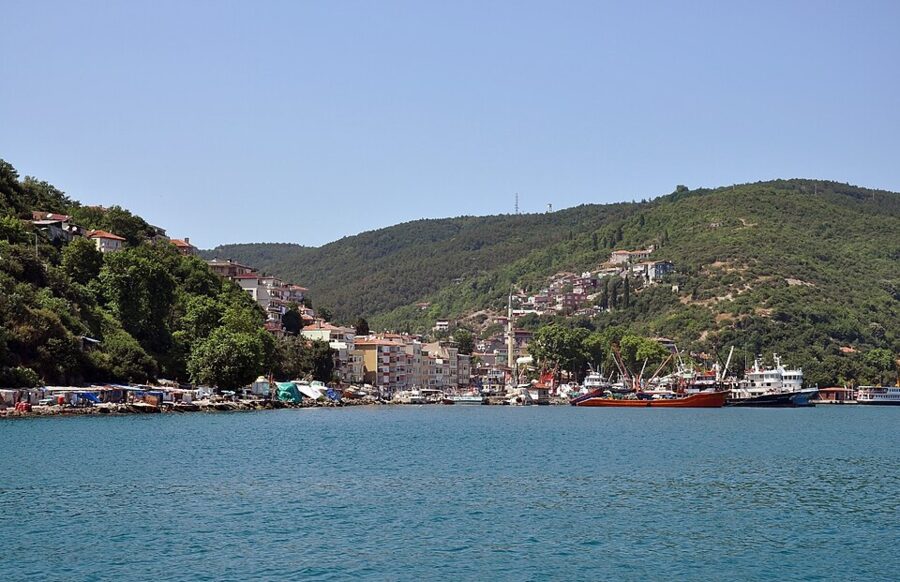
Anadolu Kavağı is the last village on the Asian shore before the Black Sea, a short row of fish restaurants around a pier with a ruined castle on the hill behind it. The whole boat gets off at 12:25, and the restaurant staff are waiting on the quay. You have until 15:00.

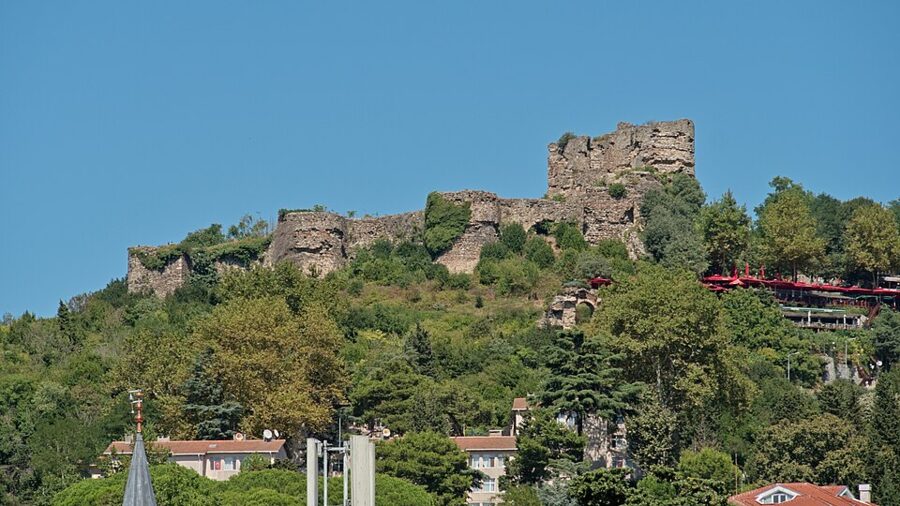
Climb first. Yoros Castle (Yoros Kalesi) sits on the hill above the village, a steep walk of about a quarter of an hour up signposted lanes, longer in summer heat. The Byzantines built it in the 13th century to guard the Black Sea entrance, the Genoese held it in the 14th, and the Ottomans took it before the conquest of Constantinople; Evliya Çelebi described it in the 17th century as a strong castle in chestnut woods. Today it is a shell of walls and towers with no ticket office, and parts of the surrounding hill are a military zone, so stay on the marked paths.

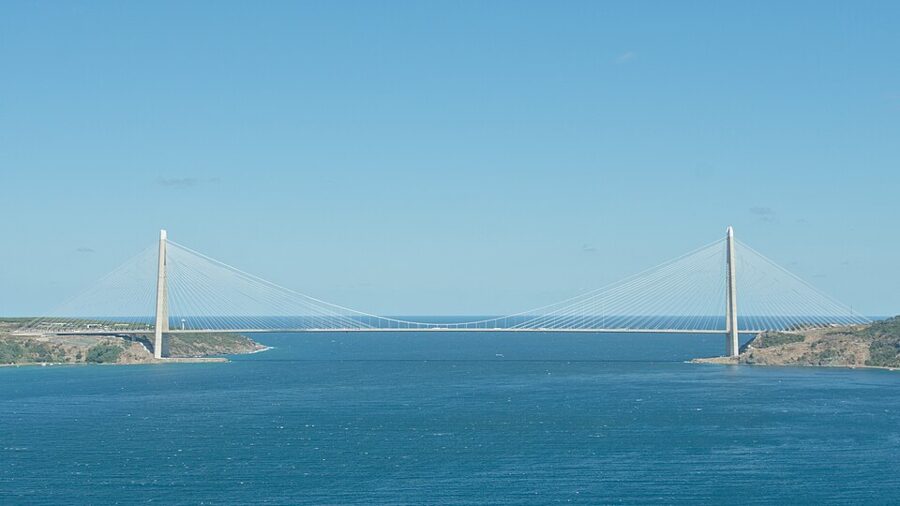
The reason to make the climb is the view north, where the strait opens into the Black Sea under the Yavuz Sultan Selim Bridge. You see the shipping lanes and the whole curve of the upper Bosphorus back toward the city. It is the only point on the long tour where the trip feels like it has arrived somewhere.

Then eat. The restaurants know exactly how long the boat stays and price accordingly, so read the menu outside before you sit down, ask the price of fish by weight before it goes on the grill, and confirm whether the meze that arrive unasked are on the bill. A snack from one of the counters on the quay costs a fraction of a sit-down lunch and leaves time for a tea by the water.

If 2 hours 35 minutes ashore sounds long, it is. You do not have to ride the tour back: a small ferry links Anadolu Kavağı with Rumeli Kavağı and Sarıyer on the European shore from early morning until late evening, roughly every one to two hours, and from Sarıyer the commuter boats and buses run back to the city. That turns the afternoon into a choice rather than a wait.
The short Bosphorus tour
The Kısa Boğaz Turu leaves Eminönü at 14:40 every day, picks up at Üsküdar at 14:55 and Ortaköy at 15:10 without waiting there, then runs up past Bebek and Rumeli Hisarı and turns back near the Fatih Sultan Mehmet Bridge. The round trip takes about two hours. At 340 TL for foreign visitors it is now slightly dearer than the private loops, but it is the biggest boat, the longest run of the three, and it covers the stretch of shore that holds most of the famous buildings.
It suits a first afternoon in the city, and the timing is good: in late autumn and winter the 14:40 boat comes back in low, warm light on the European shore. Buy the ticket at the Eminönü gişe in the morning, and come back for 14:20. If the 14:40 does not fit your day, the private loops below leave roughly every hour.

The commuter-ferry way: same water, city fares
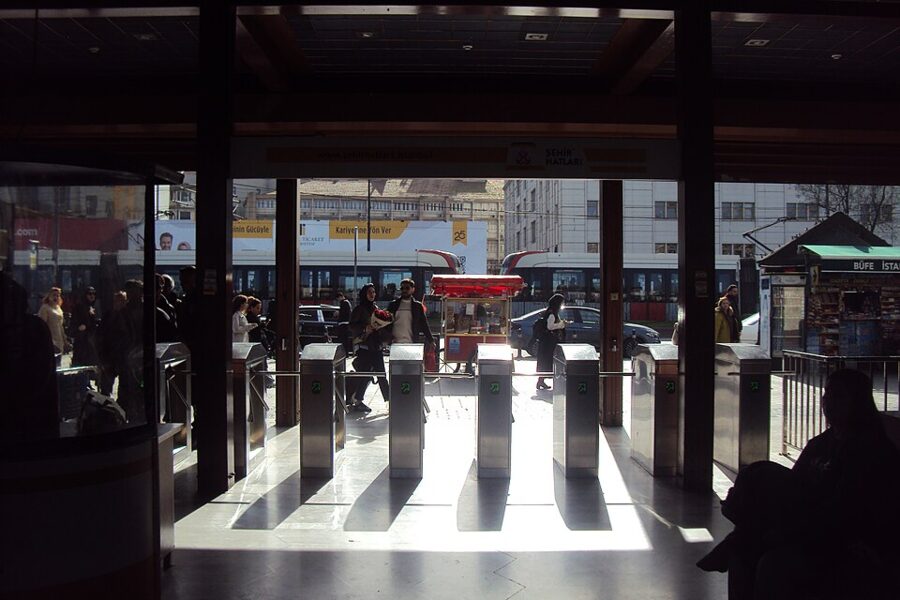
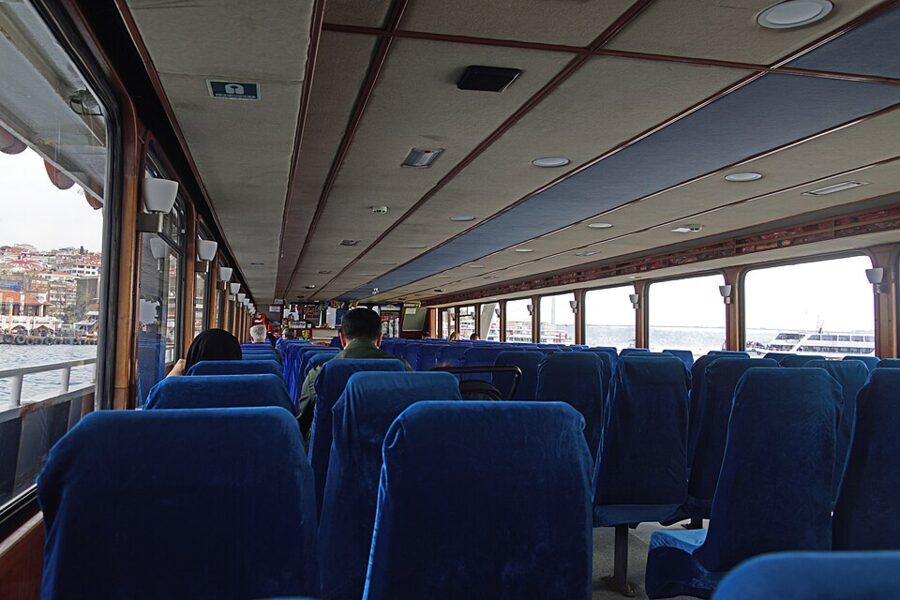
Every boat on this list except the tours and the private operators is a regular Şehir Hatları line paid with the Istanbulkart. You tap through the turnstile at the pier, sit where you like, and get off where you like. A day of chained crossings and shoreline lines costs less than the short tour and lets you stop for lunch where the tour boats do not.
The crossings
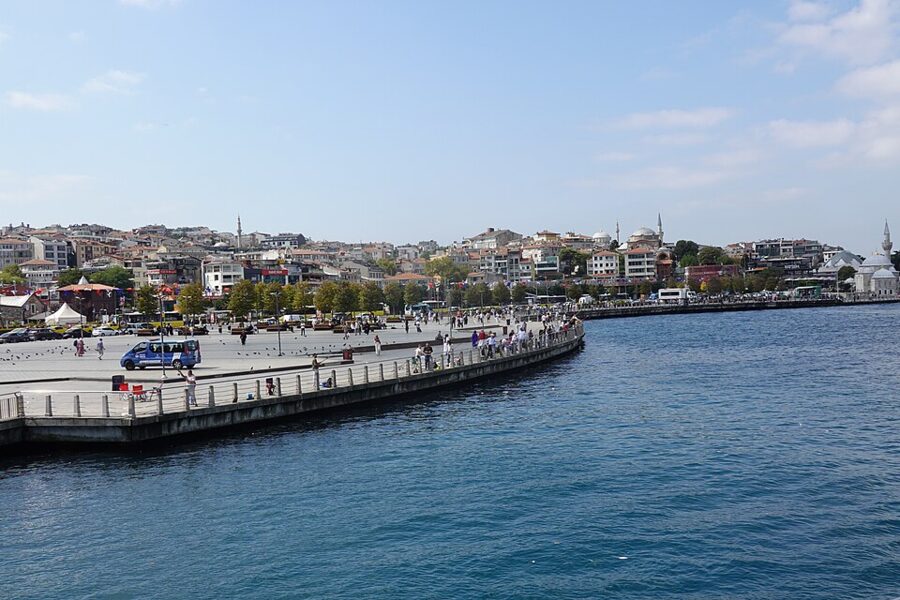
The short hops between Europe and Asia run all day on the main lines. Eminönü to Üsküdar takes about 15 minutes, Eminönü or Karaköy to Kadıköy about 20, and Beşiktaş to Kadıköy or Üsküdar a little longer. On the July 2026 tariff an Istanbulkart full fare is 58.52 TL from Üsküdar to Eminönü and 65.21 TL on the Kadıköy crossings, which is more than the flat 46.20 TL bus and rail fare: ferry fares are set line by line.
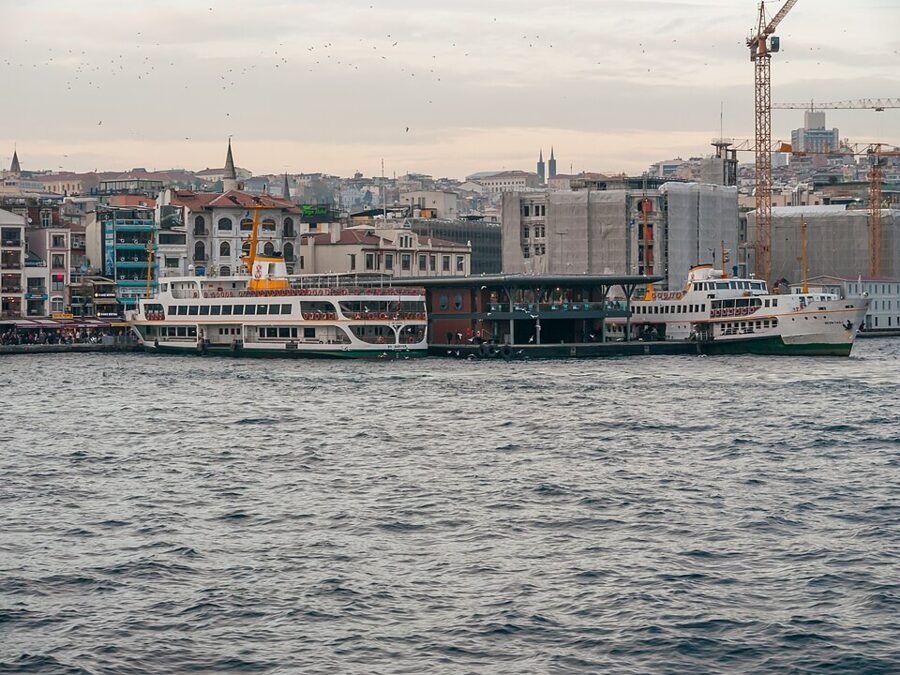

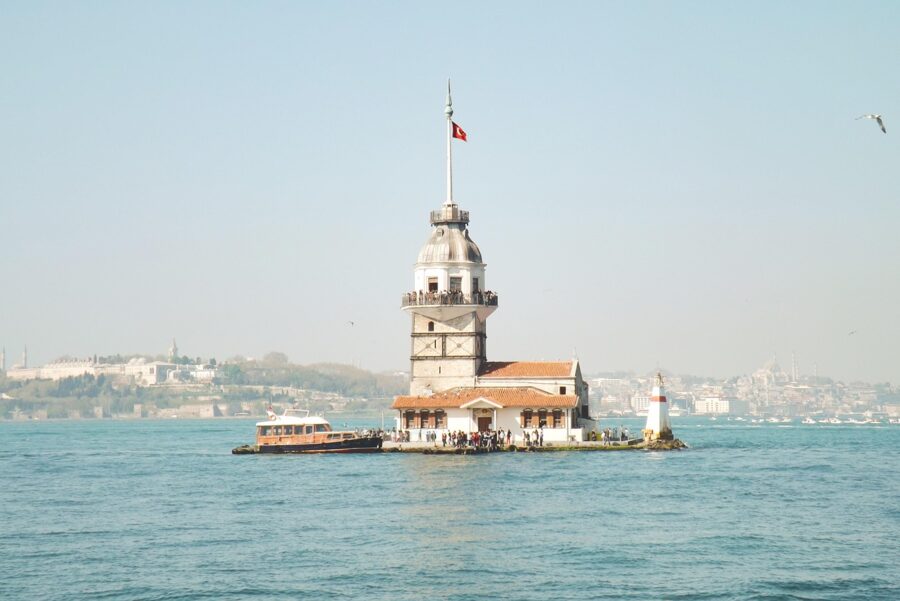
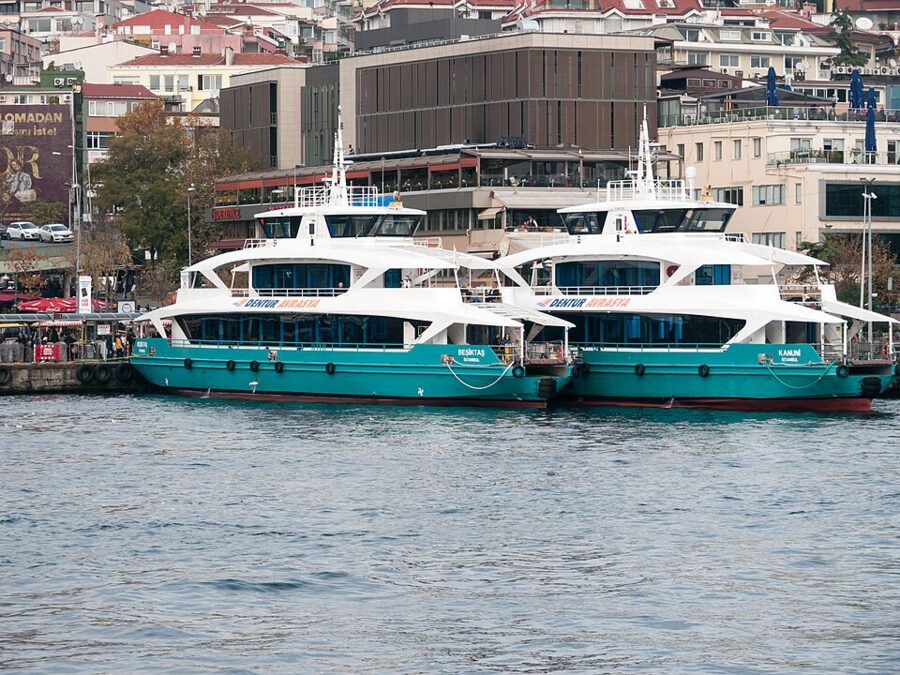
Two private companies run parallel commuter boats on some routes: Dentur Avrasya between Üsküdar and Beşiktaş, Üsküdar and Kabataş, and Beşiktaş and Kadıköy, and Turyol on crossings from Eminönü and Karaköy. Their commuter boats take the Istanbulkart too. For a cheap Bosphorus ride, take a Beşiktaş–Üsküdar or Beşiktaş–Kadıköy boat, which crosses right in front of Dolmabahçe and gives you the Maiden’s Tower and the first bridge in one view.

The Bosphorus line to Sarıyer and Rumeli Kavağı
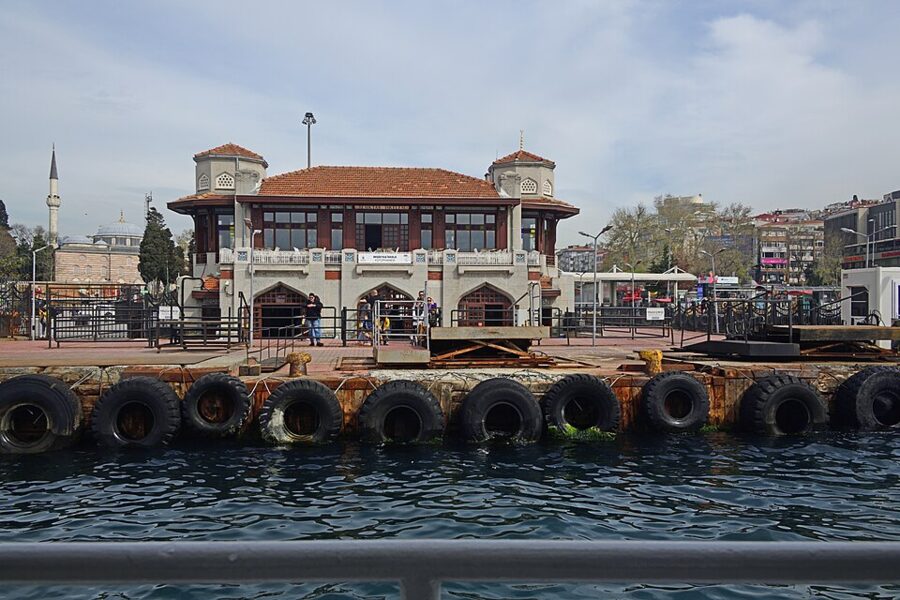
This is the boat the tours do not mention. The Eminönü–Rumeli Kavağı line runs every day up the European shore, calling at Beşiktaş, Ortaköy, Arnavutköy, Bebek, Emirgan, İstinye, Büyükdere and Sarıyer, with some sailings continuing to Rumeli Kavağı. Not every sailing stops at every pier, so read the timetable board for the one you want.

- Northbound from Eminönü, winter 2026–27: 09:35, 10:15, 11:10, 12:15, 13:35, 14:10, 15:10, 16:10, 17:25, 18:05, 18:55 and 20:20. The 09:35 reaches Sarıyer at 11:15.
- Southbound from Sarıyer: 07:30, 08:30, 09:30, 10:30, 11:45, 12:25, 13:25, 14:25, 15:45, 16:20, 17:20 and 18:40, arriving at Eminönü about 1 hour 30 later. The last boat reaches Eminönü at 20:10.
- A smaller line runs Eminönü–Beşiktaş–Ortaköy every day, leaving Eminönü at 10:45, 11:55, 13:10, 15:40, 16:35, 19:25 and 20:30 (plus 16:55 at weekends) and taking 25 minutes.

The Bosphorus line is priced by distance. The turnstile takes the full fare when you tap on, and the machines at the exits of the piers refund the difference if you get off early, so tap your card on the refund machine (iade) as you leave. The full fare is still a fraction of the long tour.
Building your own long tour
Put the pieces together and you can cover the whole strait on city fares. It takes a little more attention to the clock than the tour, and repays it with more stops.
- Take the 09:35 Bosphorus line from Eminönü and sit on the left. Get off at Sarıyer at 11:15, or stay on to Rumeli Kavağı.
- Cross to Anadolu Kavağı on the small Sarıyer–Rumeli Kavağı–Anadolu Kavağı ferry, which runs through the day; check the next departure on the board at the pier as you arrive.
- Climb to Yoros Castle, eat by the water, and go back on whichever boat suits you: the cross-strait ferry to Sarıyer for the Bosphorus line south, or the Anadolu Kavağı–Üsküdar line down the Asian shore through Beykoz, Kanlıca, Anadolu Hisarı and Beylerbeyi, which runs only a few times a day.
- If the timing goes wrong, city buses run along both shores: the 22 between Kabataş and İstinye on the European side, and the 15 between Üsküdar and Beykoz on the Asian side.

The catch is that winter timetables on the upper Bosphorus are thin, and the cross-strait and Asian-shore boats can be canceled in rough weather. If you have one shot at the Black Sea end and do not want to think about it, the long tour is the simpler day. If you have two free days, do the tour once and spend the second on the commuter boats, getting off wherever the first trip made you want to.
Private cruises from Eminönü and Kabataş
Walk along the Eminönü waterfront or past Kabataş pier and someone will offer you a Bosphorus cruise within a minute. Some of those boats are licensed companies with fixed prices, and some are not. Knowing which is which saves you money and an hour of your afternoon.
Turyol and Dentur: the 90-minute loops
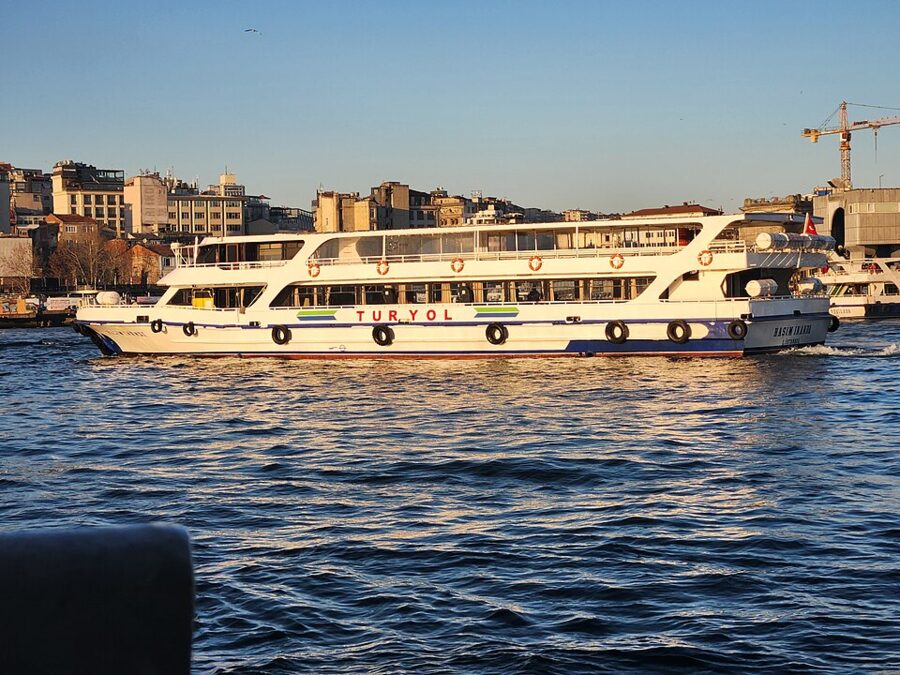
Turyol and Dentur Avrasya are licensed private ferry companies that run their own Bosphorus loops alongside their commuter lines, and both were selling tours from fixed ticket booths in autumn 2026. Turyol leaves Eminönü roughly every hour for a loop of about 90 minutes at about 300 TL. Dentur leaves from Kabataş, Beşiktaş and Üsküdar for a loop of about 1 hour 15 up to the Fatih Sultan Mehmet Bridge, at 250 TL from Beşiktaş or Üsküdar and 300 TL from Kabataş.

These loops cover the same lower-Bosphorus sights as the official short tour in a little less time, on smaller boats, with more departures. They are the right answer if you missed the 14:40 or want the water at a particular hour. Buy at the operator’s own booth, where the name is painted above the window, and you will pay the posted price.

The touts, and what to agree before you board
The people who walk up to you are a different business. At Eminönü, on the approaches to Galata Bridge and around Sultanahmet, sellers dressed as ship’s captains sell “Bosphorus cruises” for about €20 a head, several times the licensed loops, on boats that may run a much shorter route than promised. Some carry leaflets with maps that put the Black Sea a short ride from the city. The polite answer is “hayır, teşekkürler” (no, thank you), and keep walking.
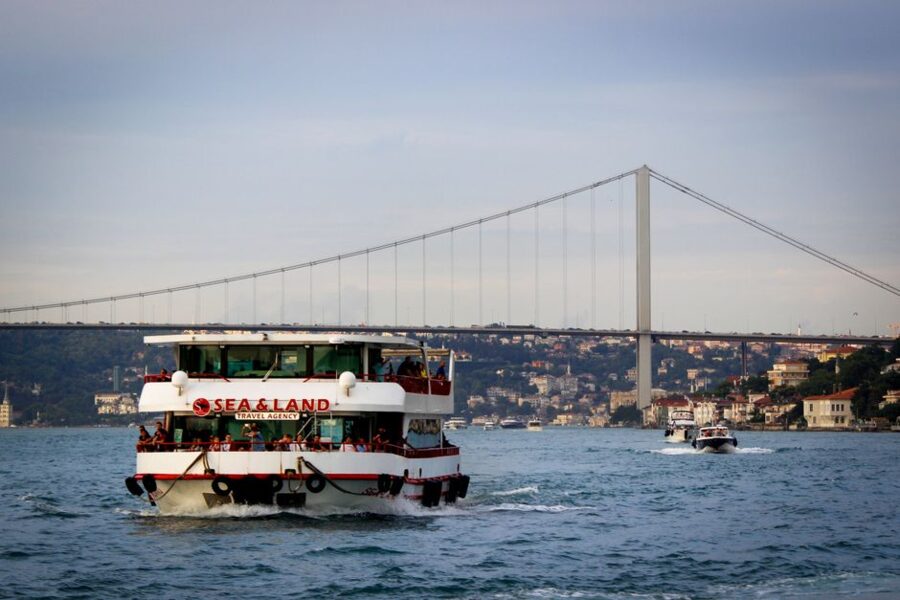
If you do book anything outside the city and licensed lines, settle these before money changes hands:
- The price, per person or per boat, and in which currency. Ask for the lira price if it is quoted in euros.
- The length and the turning point: the first bridge, the second bridge or further.
- Whether it returns to the same pier, and what happens if weather cuts the trip short.
- What is included: tea, drinks, food, a guide or none of them.
- The company’s name and its TÜRSAB license number (the Turkish travel trade body), which a legitimate operator gives without fuss.
Sunset boats and private yachts
Shared sunset cruises on small yachts leave about an hour before sunset and run 2–2.5 hours, with a drink or snacks, for around €50 a head on 2026 listings. A private charter is priced per boat rather than per person, so for four or more people it can come close to the cost of shared tickets; small boats start at roughly €200 for a couple of hours and rise steeply with size and catering. The real advantage of a small boat is that it can run close inshore, under the yalı (wooden waterfront mansions) and palace walls that a ferry passes mid-channel.
Get the quote in writing, with fuel, crew and drinks spelled out, and check that the boat in the photographs is the boat at the pier. For two backpackers, this is a splurge, not a necessity. For a group of six splitting the bill, it is worth a look.
Dinner cruises with a Turkish night show
The evening cruise is its own product: about three hours on a restaurant boat from Kabataş or Karaköy, a set dinner, and a floor show while the boat runs slowly up past the lit-up palaces to the first bridge and back. Turyol advertises a nightly Turkish night on its own floating restaurant from Karaköy, and many agencies sell seats on similar boats. Agency listings in 2026 price the standard package at about €40 with soft drinks and a hotel transfer, and about €60 with local alcohol.
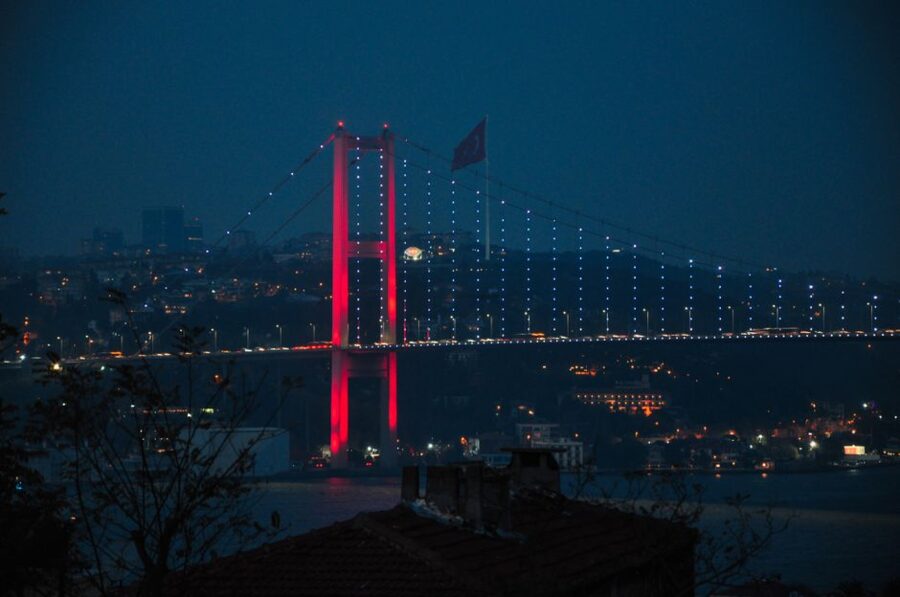
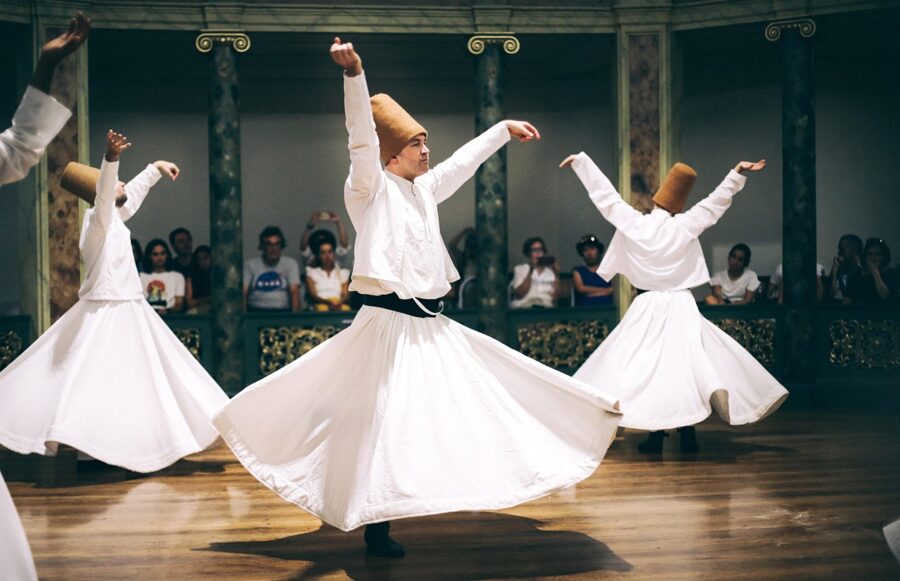
The show follows the same program on most boats: Turkish folk dances from several regions, a belly dancer who pulls guests onto the floor, a solo whirling dervish, sometimes a mock henna night, and a DJ to finish. The dervish on a dinner boat is a performance. The sema itself is a Mevlevi religious ceremony, and if that interests you, watch one held as a ceremony rather than between courses.
The traps are in the small print:
- “Alcohol included” usually means local drinks only (rakı, house wine, local beer). Imported spirits are charged extra, at boat prices.
- Tips for crew and performers are not included and are asked for.
- The hotel transfer is a minibus collecting from many hotels; it can mean an hour in traffic before the boat leaves.
- Seating decides your night. Better tables are sold as a VIP upgrade or go to whoever booked first; ask where the price puts you.
- Vegetarian menus usually need asking for when you book, not on board.
Is it worth it? If you want a party with a view, yes. If you want the Bosphorus at night, a 65 TL ferry across to Kadıköy after dark shows you the bridge lights, and a meyhane in Arnavutköy or Bebek feeds you better for less.
What you see from the deck, south to north
Most boats follow the same shoreline, so here it is in order, European shore first, as you meet it heading north from Eminönü. Distances are short: the first bridge is about 20 minutes out, the second about an hour.
Dolmabahçe and Çırağan
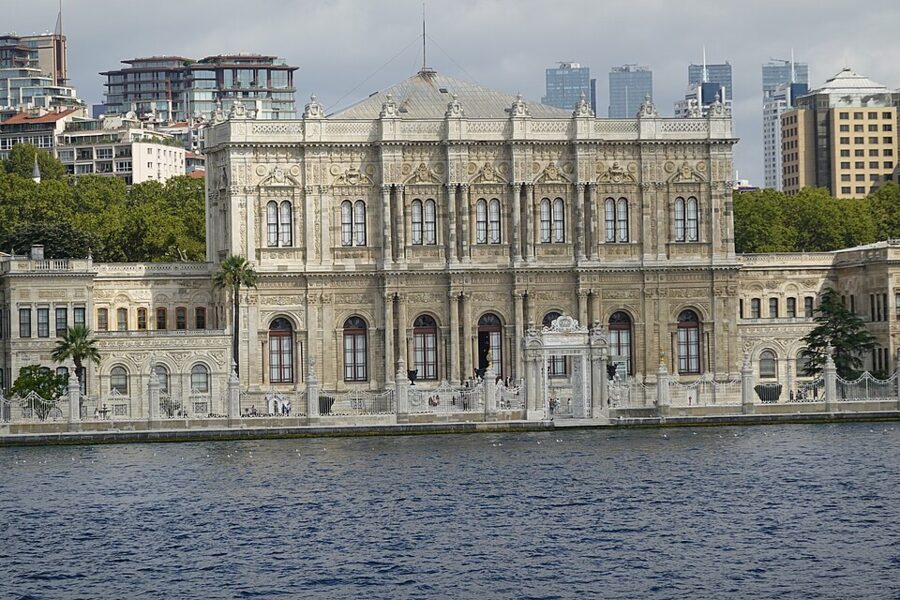
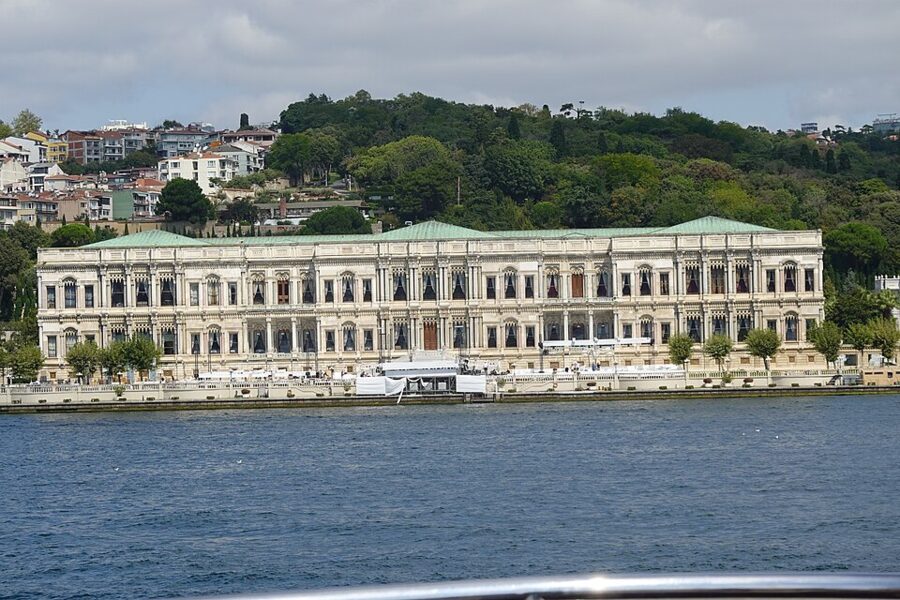
The long white front of Dolmabahçe Palace is the first great building on the European shore, about 10 minutes out of Eminönü. The sultans moved here from Topkapı in the 1850s, and from the water you see the long marble facade the way it was meant to be seen, as a stage set for arriving dignitaries. The palace is a visit in its own right, with its own tickets and queues.

Past Beşiktaş pier comes Çırağan Palace, built for Sultan Abdülaziz in the 1860s, gutted by fire in 1910 and restored as a luxury hotel in the 1980s. Between the two, behind the Beşiktaş waterfront, the Naval Museum holds the sultans’ rowing barges.

Ortaköy and the first bridge
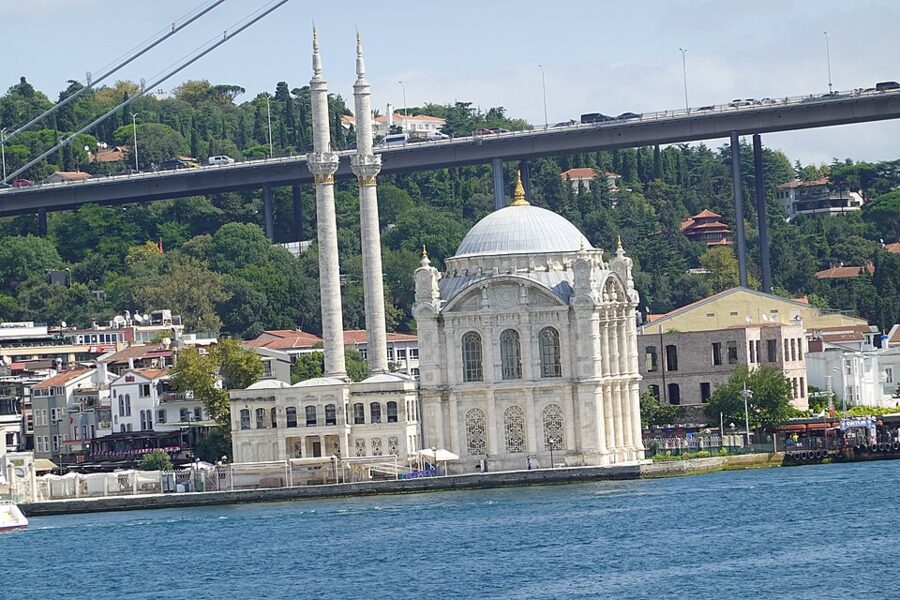
Ortaköy Mosque, officially the Büyük Mecidiye Camii, sits on a little square at the water’s edge right under the Bosphorus Bridge. Sultan Abdülmecid had it built in the mid-1850s by the Balyan family, the Armenian dynasty of court architects who also built Dolmabahçe, and its tall windows make it one of the brightest mosque interiors in the city. It is a working mosque: it closes to visitors during the five daily prayers and for longer at Friday noon, and women need a headscarf.

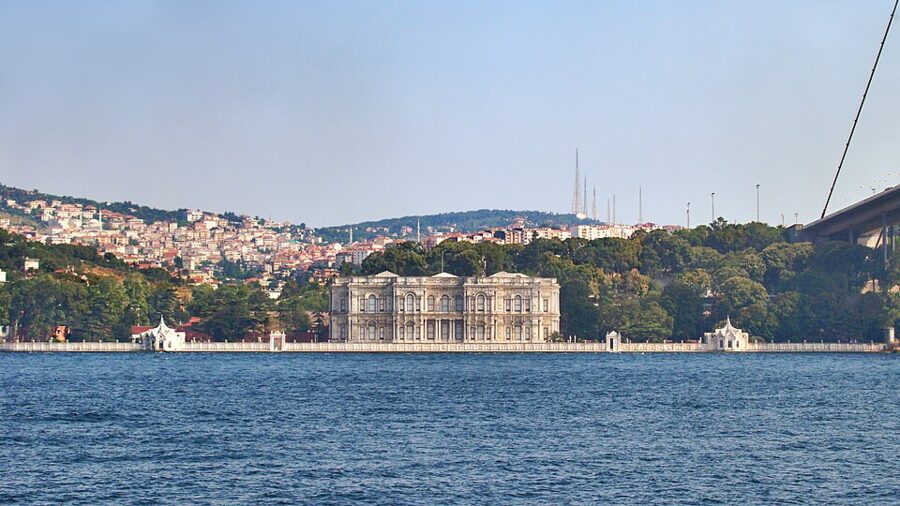
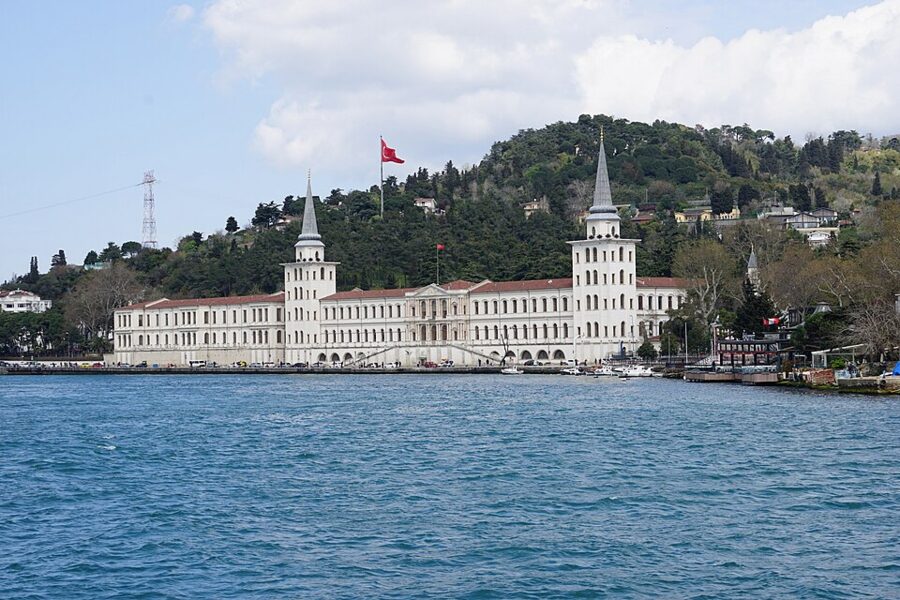
Look across under the bridge to the Asian shore and you have Beylerbeyi Palace, the white summer palace Sultan Abdülaziz built between 1863 and 1865 to receive foreign royalty, including Empress Eugénie of France in 1869. It is open to visitors from 09:00 with the ticket office closing at 17:00, closed on Mondays, at 800 TL for foreign visitors in 2026. A little further north on the same shore, the twin towers of the Kuleli Military High School at Çengelköy are hard to miss.


Arnavutköy, Bebek and Kandilli
North of the bridge the European shore turns residential and old. Arnavutköy is a row of 19th-century wooden houses painted in faded colors, with fish restaurants and meyhane along the waterfront road. At its northern end is Akıntıburnu, “current point”, where northbound boats push against the surface current at its strongest and you can feel the ferry slow.
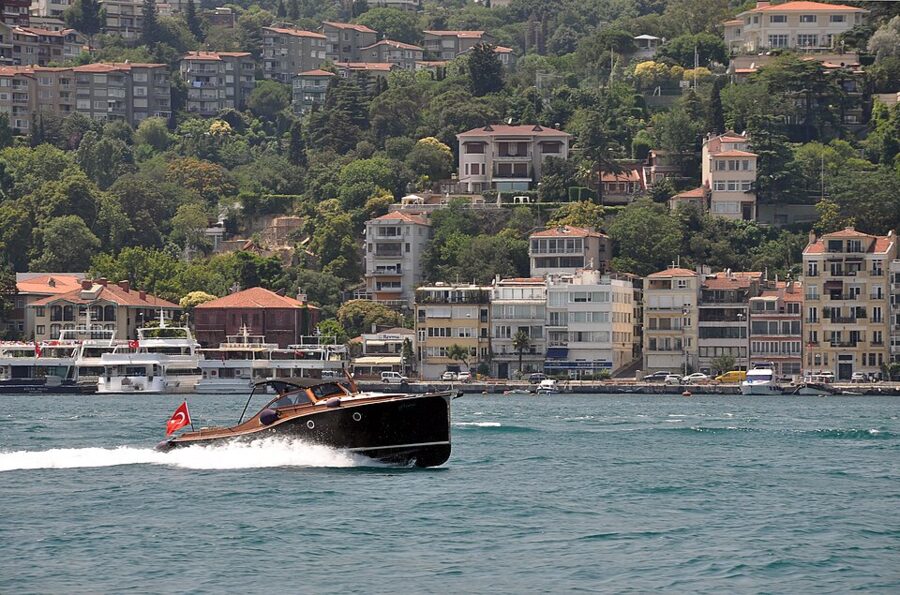

Bebek is the money end of the shore, a curved bay of cafes, a waterfront park and expensive apartments. Opposite, on the Asian side, Kandilli climbs its hill above a line of yalı; the Kandilli Observatory at the top, founded in 1868, is the institute that reports Turkey’s earthquakes. The water between Bebek and Kandilli is the deepest in the strait.
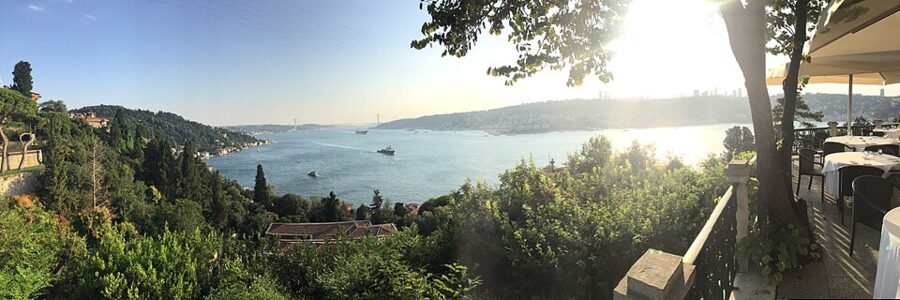

The two fortresses at the narrows
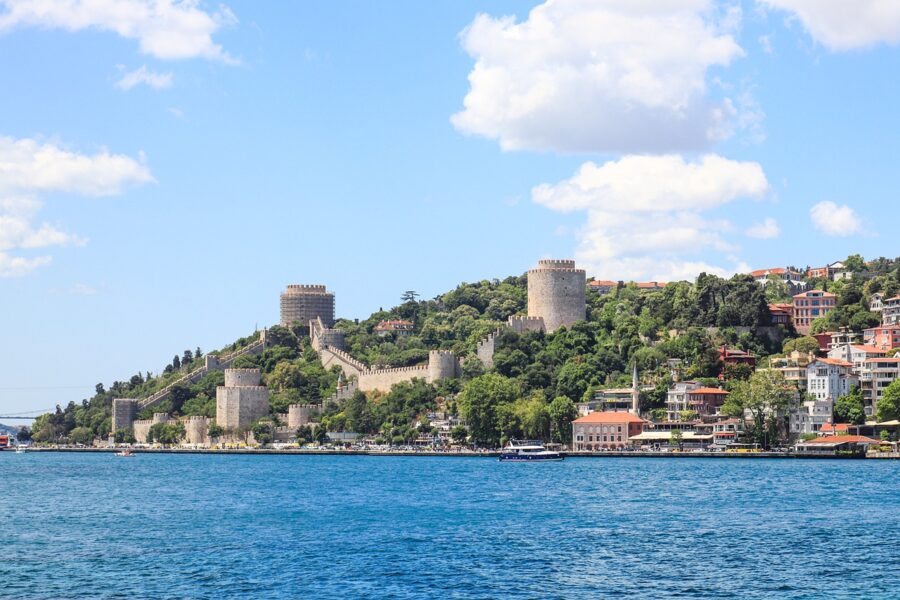
Rumeli Hisarı is the reason to be on the left-hand rail. Mehmed II built it in about four months, from March to August 1452, at the narrowest point of the strait, so that his guns could close the Bosphorus to ships supplying Constantinople; the city fell the next spring. Three of his viziers, Halil, Zağanos and Saruca Paşa, each took charge of one great tower, and the walls run up the hillside between them like a scaled-down city wall.
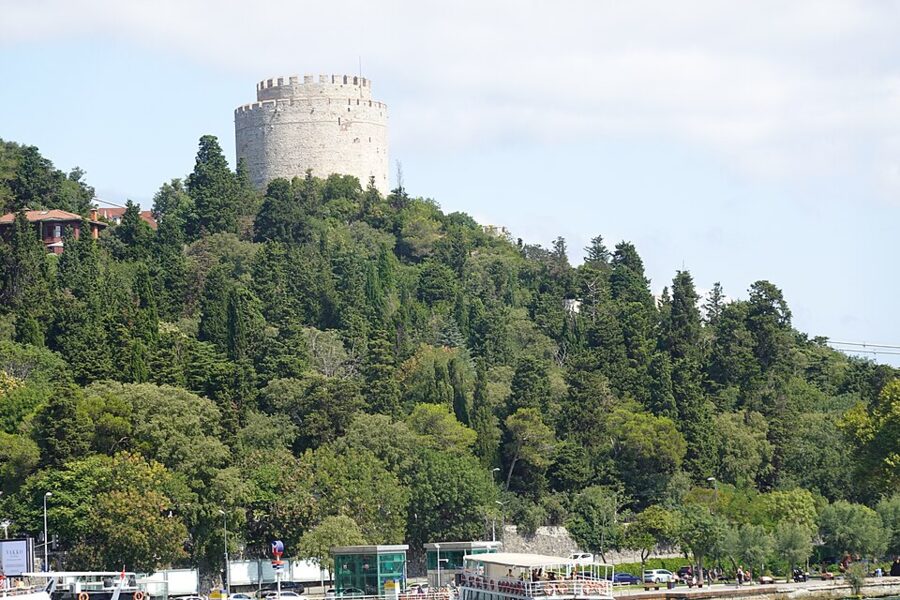

Directly across, on the Asian shore, is the smaller and older Anadolu Hisarı, built by Sultan Bayezid I in the 1390s during an earlier siege. Between them the strait is 698 m wide, and the Fatih Sultan Mehmet Bridge, named for the conqueror, crosses just north of the pair.
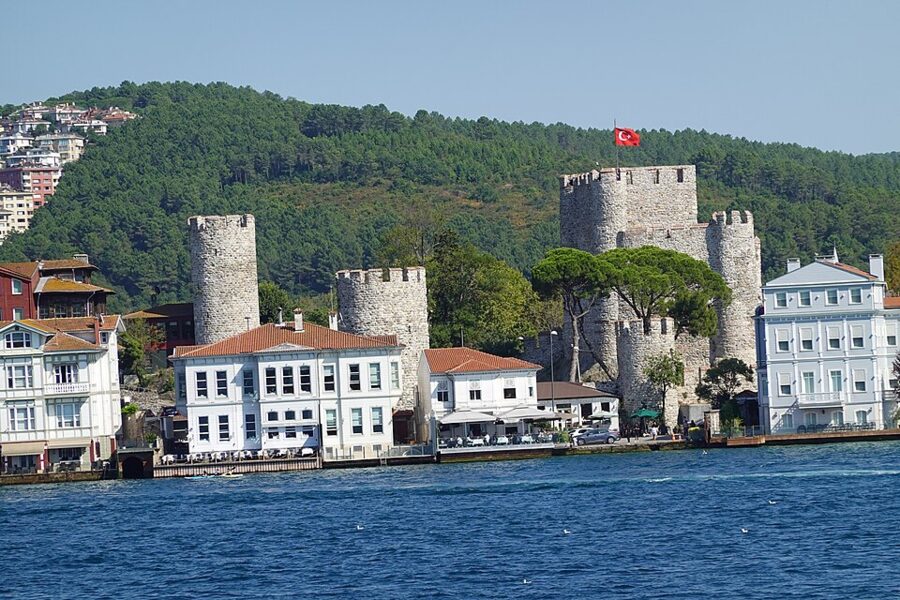

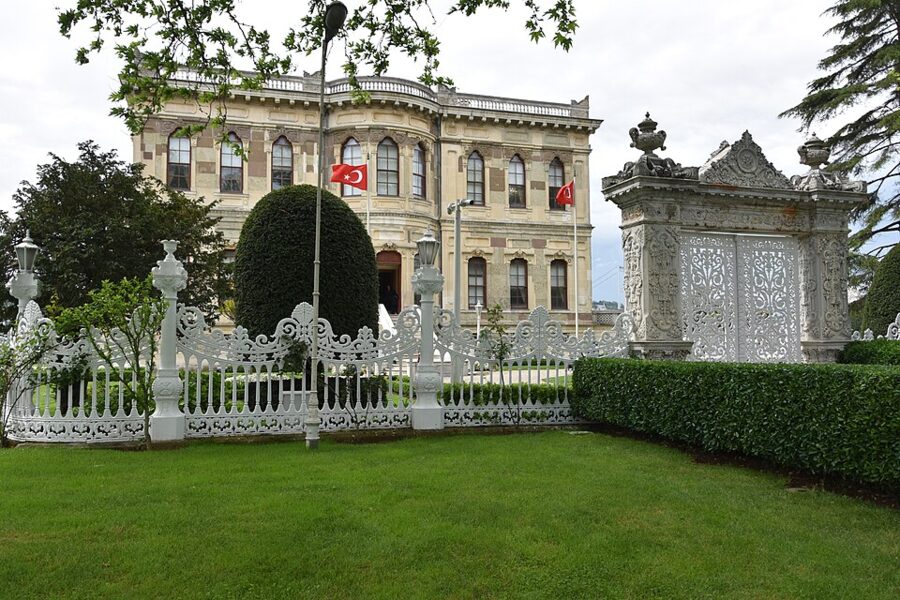
Just south of Anadolu Hisarı, the white Küçüksu Kasrı stands on its lawn at the water’s edge. Sultan Abdülmecid built this small, ornate pavilion in 1856–1857 as a stopping place on excursions up the strait. It is open from 09:00 with the ticket office closing at 17:00, closed on Mondays, at 300 TL for foreign visitors.

The yalı
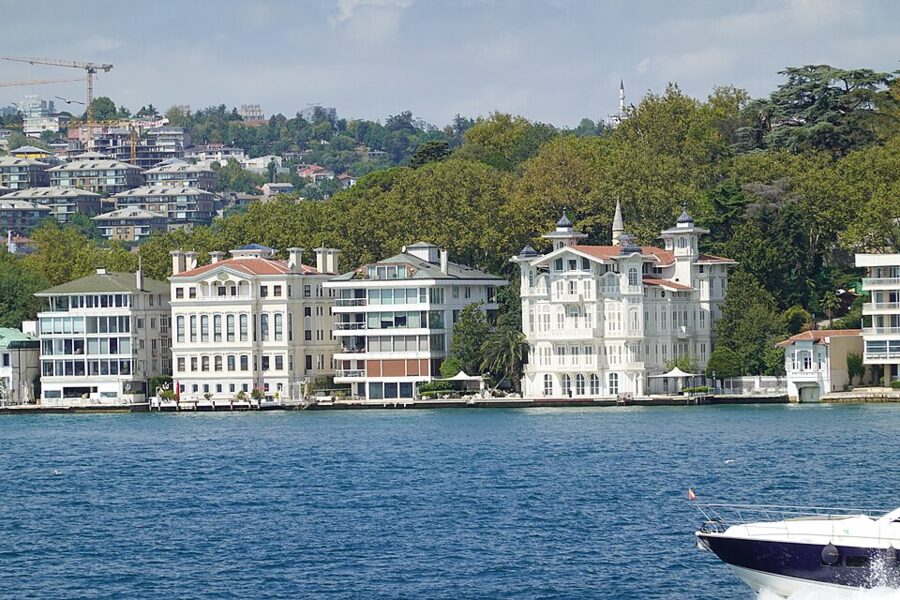
Both shores are lined with yalı, most thickly north of the narrows: the wooden summer houses of Ottoman pashas, ambassadors and merchant families, built with their feet in the water and a boathouse under the floor. The oldest survivor is the Amcazade Hüseyin Paşa Yalısı at Anadolu Hisarı, dating from 1699. Many are now worth fortunes and still privately owned, so the boat is the only way most people ever see them.
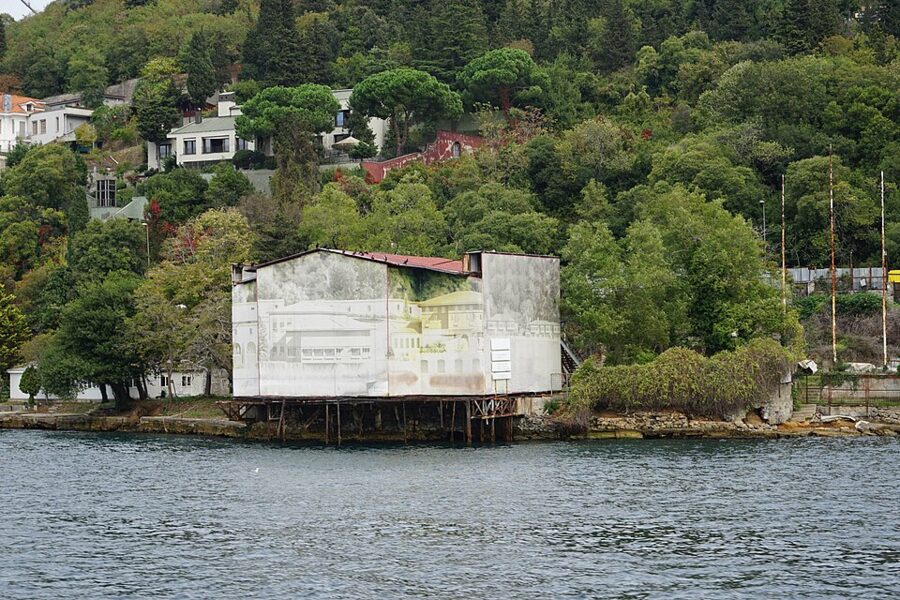

North of the second bridge the shore becomes a string of former fishing villages: Emirgan with its park, İstinye in its deep cove, Yeniköy, Tarabya, Büyükdere and finally Sarıyer, where the long tour and the Bosphorus line both call. The Asian shore answers with Kanlıca, Paşabahçe and Beykoz. Beyond Rumeli Kavağı and Anadolu Kavağı the hills close in and the strait runs out to the Black Sea.

Stops worth getting off for
The boat is half of it. These are the piers where it pays to step off, with how to get there and how to get back.
Ortaköy
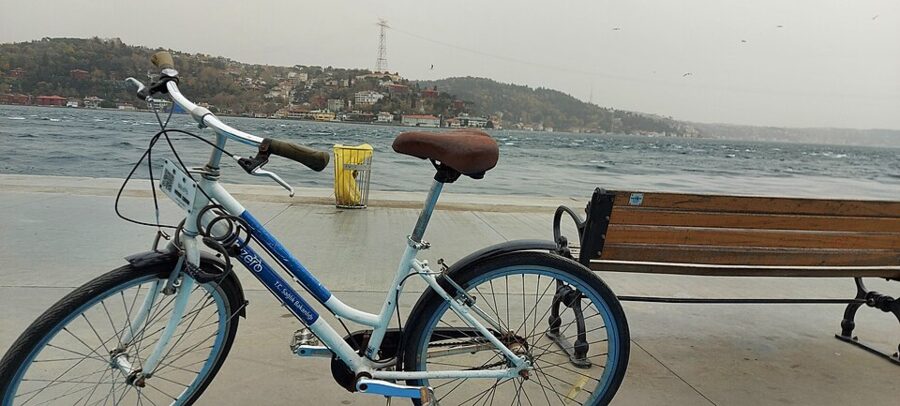
Ortaköy is the easiest stop: the Eminönü–Beşiktaş–Ortaköy boat gets you there in 25 minutes, and the Bosphorus line calls on some sailings. Walk the square by the mosque, eat a kumpir (a baked potato loaded with fillings) from the row of stalls by the water, and look at the bridge from underneath. Boats back to Eminönü leave Ortaköy at 11:15, 12:30, 14:45, 16:10, 17:05, 19:55 and 21:15, or walk 25 minutes south along the shore to Beşiktaş for more departures.
Bebek and Arnavutköy
Both are on the Bosphorus line, 40–50 minutes from Eminönü, and they are 20 minutes apart on foot along the shore path. Arnavutköy has the old houses and the cheaper meyhane; Bebek has the bay, the park and the coffee at Bebek prices. Southbound boats leave Bebek at 08:20, 09:20, 10:20, 11:20, 12:35, 13:15, 14:15, 15:15, 16:35, 17:10 and 19:30 and reach Eminönü in about 40 minutes.

Rumeli Hisarı
None of the lines on the 2026–27 winter timetable calls at the fortress itself, so get off at Bebek and walk about 2 km north along the shore, 25 minutes, or take the 22 bus along the coast road. The fortress is run as a museum by the Ministry of Culture: €6 for foreign visitors, closed on Mondays, open 09:00–17:00 in winter (ticket office until 16:00) and until 19:30 in summer. The walls and towers are closed for restoration and safety work, so you walk the grounds inside the walls rather than the ramparts; check before you go that the site is open.
Kanlıca
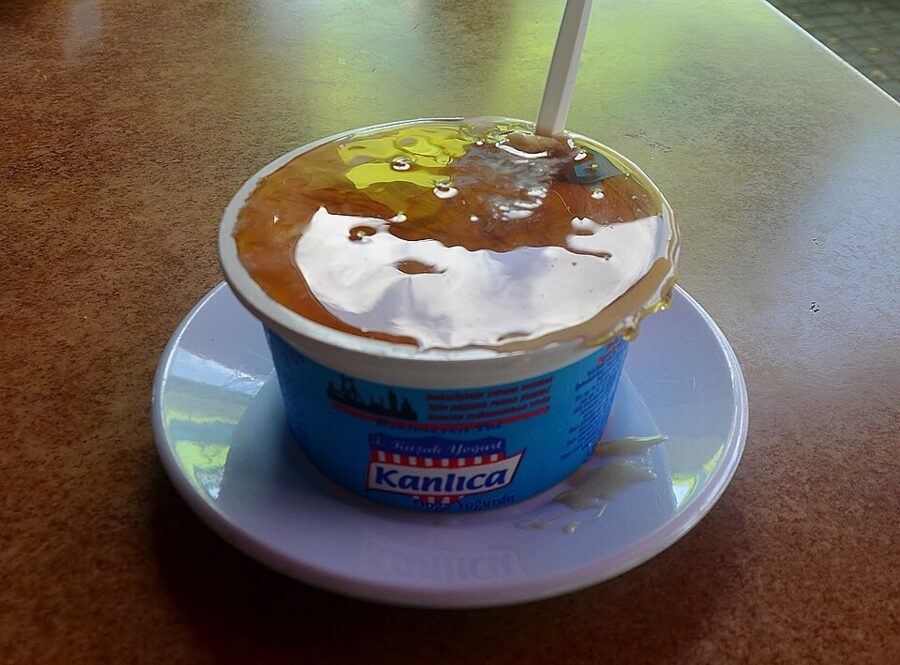
Kanlıca, on the Asian shore, is famous for one thing: a thick, slightly sour set yogurt sold at the cafes by the pier, eaten with a heavy dusting of powdered sugar or with honey. The long tour calls at 11:35 northbound and 15:40 southbound, so the cheapest way to try it is to hop off on the way back and pick up the Anadolu Kavağı–Üsküdar line or the 15 bus to Üsküdar afterward. On Sundays a little ferry runs Bebek–Anadolu Hisarı–Kanlıca–Emirgan, leaving Bebek at 10:30, 12:00, 13:30, 14:55, 16:25, 18:05 and 19:30, which makes a Sunday crossing from Bebek easy.

Sarıyer and Rumeli Kavağı
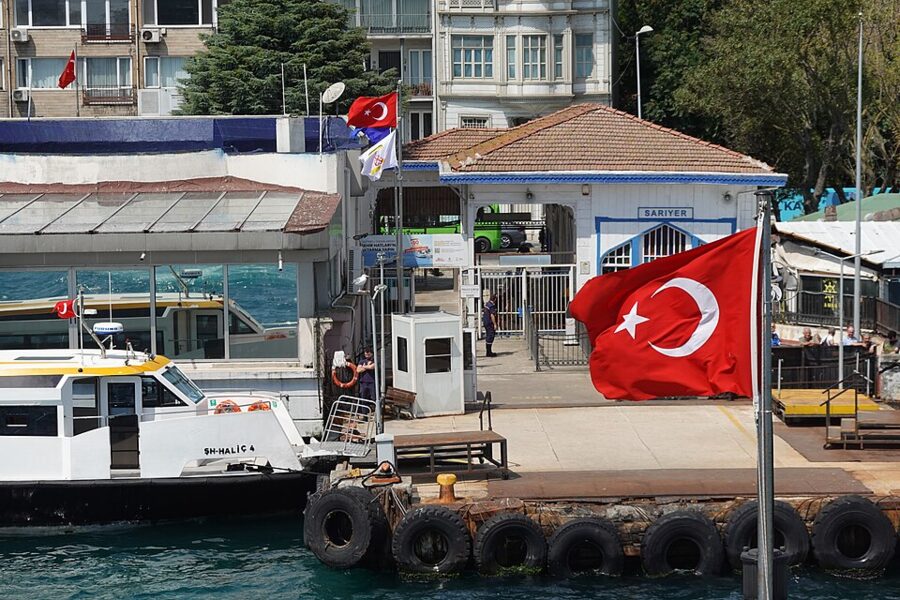
Sarıyer is the end of the city proper on the European shore, a working town around the main pier of the upper Bosphorus. The Bosphorus line gets you there in 1 hour 40, the long tour at 12:05, and the last boat south leaves at 18:40. Rumeli Kavağı, one stop further, is a quiet fishing village with a handful of restaurants and the cross-strait ferry to Anadolu Kavağı.

Anadolu Kavağı
The end of the line: the castle climb, the Black Sea view and the fish lunch. Arrive on the long tour at 12:25 or by the cross-strait ferry from Sarıyer, and leave on the tour at 15:00, the cross-strait ferry back to Sarıyer, or the Asian-shore line to Üsküdar.
The Golden Horn as a side trip
The Bosphorus has a quieter sister. The Golden Horn runs inland from Eminönü, and the Haliç ferry line works up it from Üsküdar and Karaköy past Fener and Balat to Eyüpsultan, calling at piers the tour boats never use; it pairs well with an afternoon at the Süleymaniye and the Chora.
When to go, and what to bring
Spring and autumn are the best months on the deck: April to early June and mid-September to November, when the air is clear and the boats are not packed. In July and August the light is flat at midday and the long tour’s open deck fills fast. In winter the boats run, the decks are empty, and the light on the European shore in the late afternoon is the best of the year, but bring a hat and gloves, because the wind on the water is colder than on land.
- An Istanbulkart with 300–400 TL on it for a day of commuter boats.
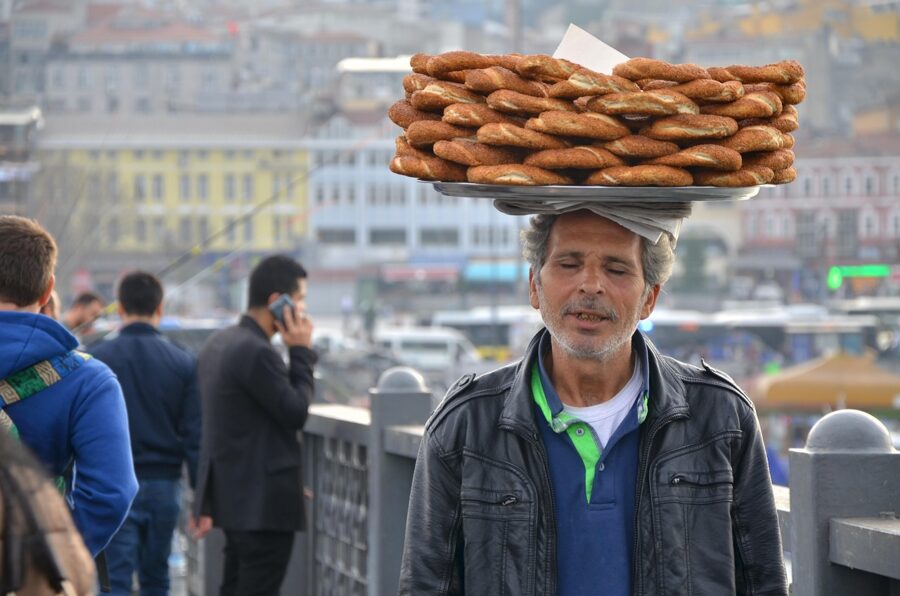
- Cash in lira for tour tickets, tea, simit and the Kanlıca yogurt.
- A layer for the deck, whatever the season, and a headscarf if you plan to go inside Ortaköy Mosque.
- A photo of the timetable board at your boarding pier, for the boats back.
The Bosphorus is a natural first or last day in a Turkey itinerary, and the night bus to Cappadocia leaves the same evening if you want it to; for that leg and the rest of the country, getting around Turkey is mostly a matter of long-distance buses. For the strait itself, keep it simple: buy the 640 TL ticket at the Eminönü gişe the morning you go, take a simit and a tea on board, and be on the left-hand rail before the boat casts off at 10:35.