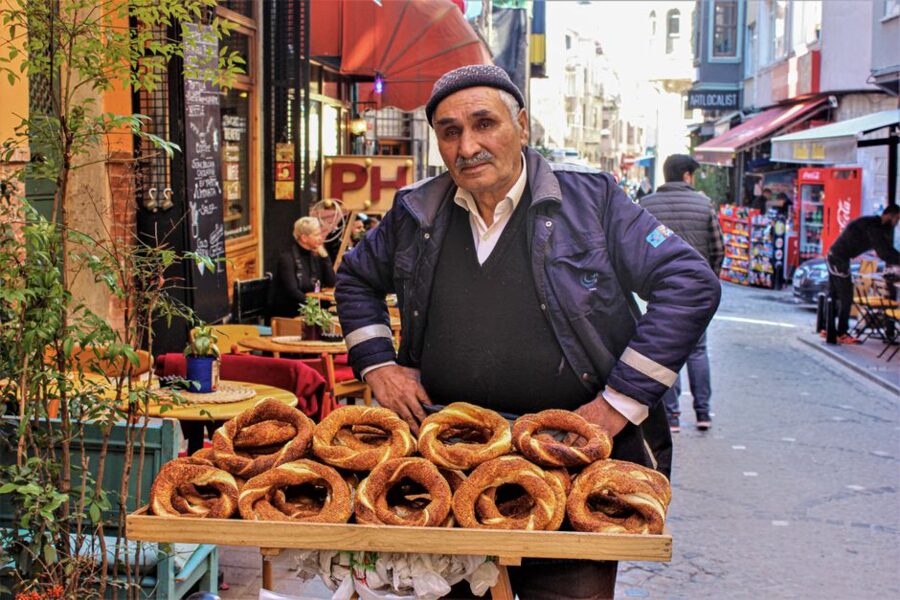
The cheapest breakfast in Istanbul went up by five lira at the end of September 2026. A simit, the sesame ring sold from glass-sided carts on every ferry pier, now costs 30 TL, up from 25 TL, and it is still the best-value thing you will eat all day.
That is the shape of eating cheaply here. The street food is good, it is everywhere, and its prices are printed on a card taped to the cart. What moves is the lira: a fish sandwich that cost 30 TL in 2022 is several times that now, so treat every lira price as a dated range, not a promise.
Here are the ten things worth eating on the street, what they cost in late 2026, and where each one is at its best.
| Food | What it is | Price, late 2026 | Best at |
|---|---|---|---|
| Simit | Sesame bread ring | 30 TL | Any pier, early |
| Balık ekmek | Grilled mackerel in bread | about 225–300 TL | The boats at Eminönü |
| Döner dürüm | Shaved spit-roast meat in a wrap | chicken about 180–250 TL; meat about 350–550 TL | Anywhere busy at lunch |
| Lahmacun | Thin flatbread with spiced mince | about 130–200 TL | Kadıköy market streets |
| Pide | Boat-shaped baked bread with toppings | about 300–550 TL | Hocapaşa, Sirkeci |
| Börek | Layered pastry with cheese, spinach or mince | about 150–190 TL a portion | Neighborhood börekçi, morning |
| Midye dolma | Mussels stuffed with spiced rice | about 10–30 TL each | Beşiktaş, Kadıköy, Eminönü |
| Kumpir | Baked potato mashed with butter and cheese, loaded | about 400–600 TL | Ortaköy |
| Çiğ köfte dürüm | Spiced bulgur wrap, meatless | about 100 TL | Any chain counter |
| Kestane | Roasted chestnuts, autumn and winter | about 1,600 TL a kilo; sold by the scoop | Carts on squares and piers |
Wash it down with ayran, the salted yogurt drink, at 40–60 TL, or a glass of tea from a seller with a tray.
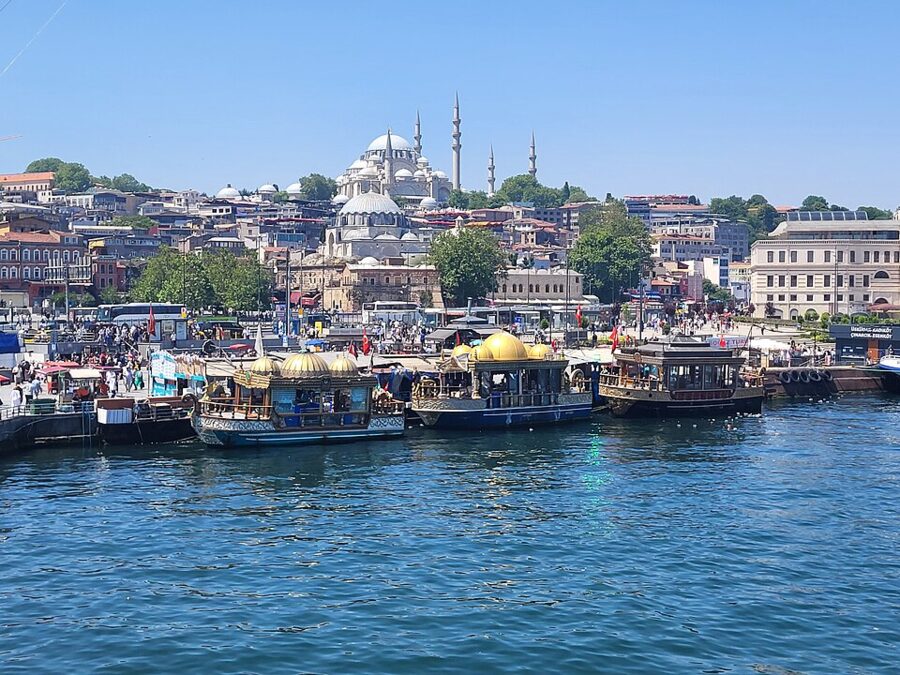
Three areas cover nearly all of it. Eminönü and Karaköy, on either side of the Galata Bridge, have the fish boats, the pide ovens of Sirkeci and the old sweet shops. Kadıköy, a 20-minute ferry ride across the water, has the market streets, the cheapest lahmacun and the most locals. Fatih, uphill from the Golden Horn, has the Wednesday market and the boza shop at Vefa.


For the city’s sights, neighborhoods and transport, the Istanbul travel guide has the full picture.
Contents
- Simit and açma: the 30 TL breakfast
- Balık ekmek at Eminönü and Karaköy
- Döner and dürüm
- Lahmacun and pide
- Börek
- Midye dolma
- Kumpir at Ortaköy
- Çiğ köfte, now without meat
- Kokoreç: a short note
- Chestnuts, corn, salep and boza
- Tea, ayran and the other drinks
- The cheapest sit-down meals
- Sweets: baklava, lokum, künefe and dondurma
- The markets
- A self-guided eating walk
- Paid food tours: what they cost and when they are worth it
- Eating safely and well
Simit and açma: the 30 TL breakfast
A simit is a ring of dough dipped in grape molasses and then in sesame before it goes into the oven, which is why the crust is dark, sweet and crisp while the inside stays soft. Most of the city eats one standing up, on the way to work or on a ferry, with a glass of tea. Sellers work from glass-sided carts on the piers and street corners.
It is also one of the oldest street foods anywhere. Ottoman records put simit in Istanbul by 1525, the court register of Üsküdar fixed its weight and price in 1593, and the traveler Evliya Çelebi counted 70 simit businesses in the city in the 1630s. The price has been a political matter ever since: the jump from 15 TL to 20 TL in February 2025 made national news, and so did the rise to 30 TL in September 2026.
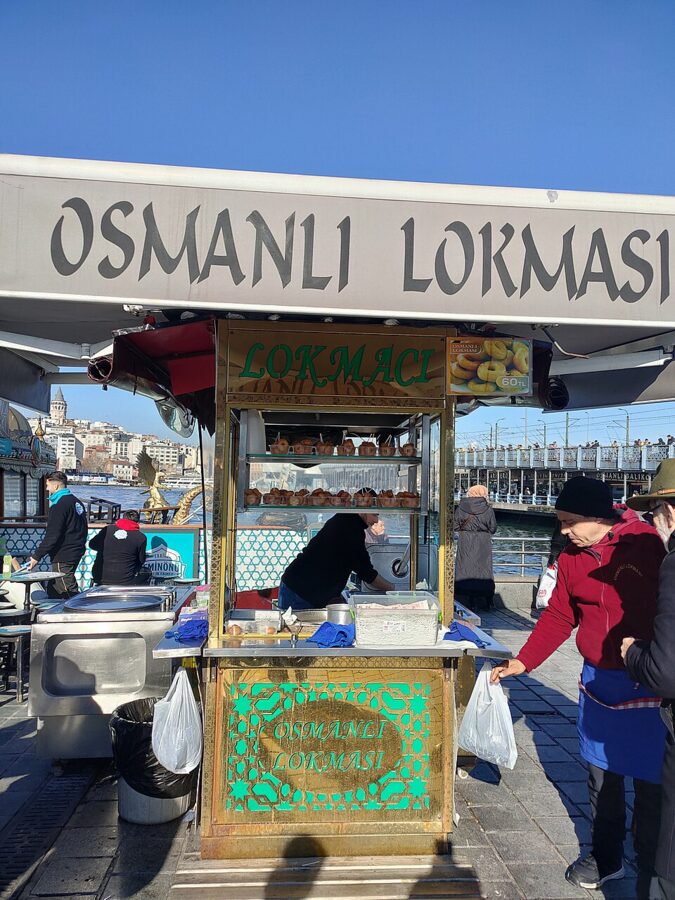

The rest of the bakery window is worth knowing. Açma is the soft, buttery cousin of simit, poğaça is a soft bun often filled with cheese or olives, and a sweet chocolate-filled simit sold around Eminönü cost about 75 TL in October 2026. None of them beats a plain simit eaten warm, so squeeze before you pay: a fresh one gives.
For a cheap sit-down version, any small café will put a simit on a plate with white cheese, a few olives and tea. That is breakfast for most of Istanbul on a weekday, and it costs a fraction of the full spread breakfast (serpme kahvaltı) the cafés advertise to visitors.
Balık ekmek at Eminönü and Karaköy
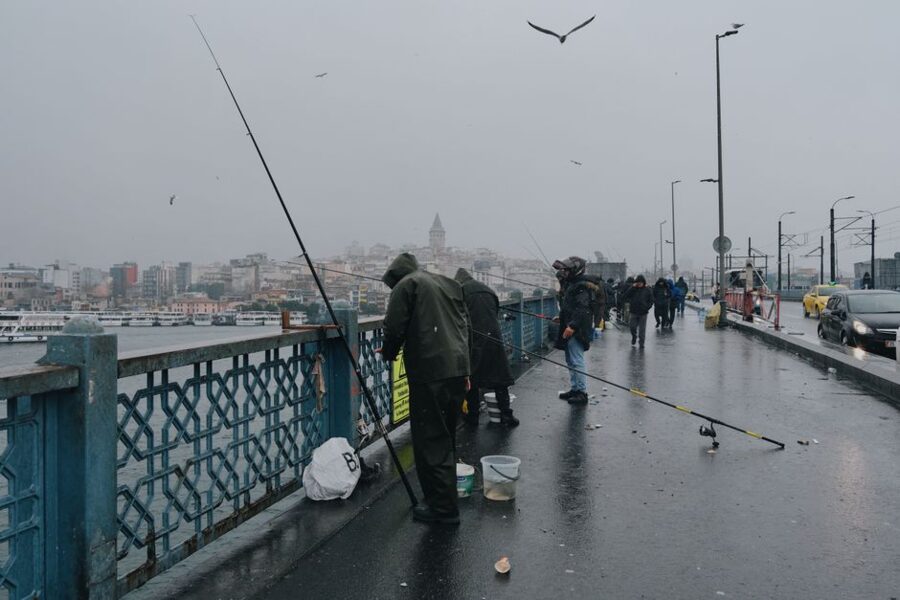
The fish sandwich is the one Istanbul is known for, and the place to eat it is the row of painted boats tied up at Eminönü. A cook grills mackerel fillets on the deck while the boat rocks, stuffs one into half a loaf with onion and lettuce, and hands it across to the quay, where you sit on a low stool, squeeze lemon on it and add salt from the shaker on the table.
The usual explanation for the boats is a municipal one. When the city cleared hawkers from the bridge and the square in the middle of the last century, the police’s authority stopped at the quay, so the fish sellers moved onto the water and kept selling. In 2019 the Istanbul municipality told the last boats to leave when their leases expired; a court suspended the order that November, and the grills are still lit in 2026.
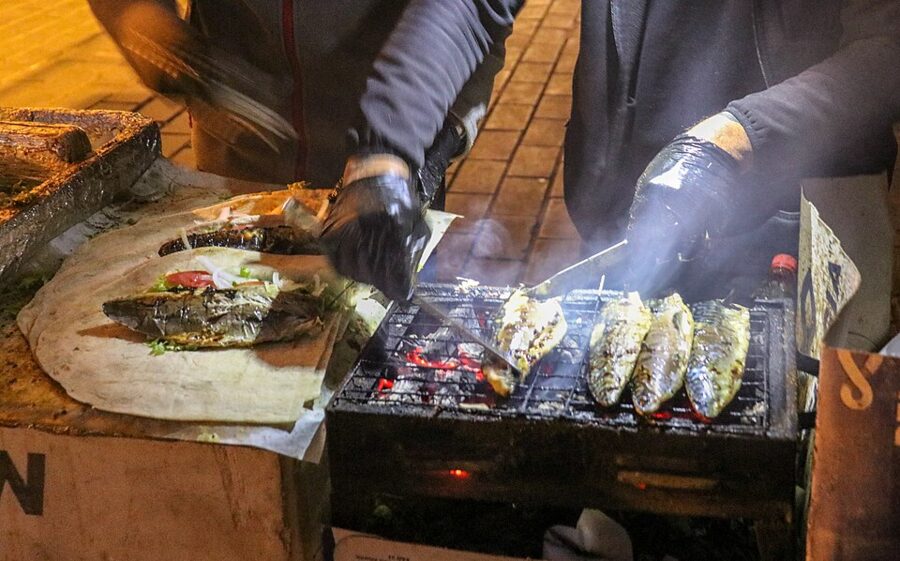

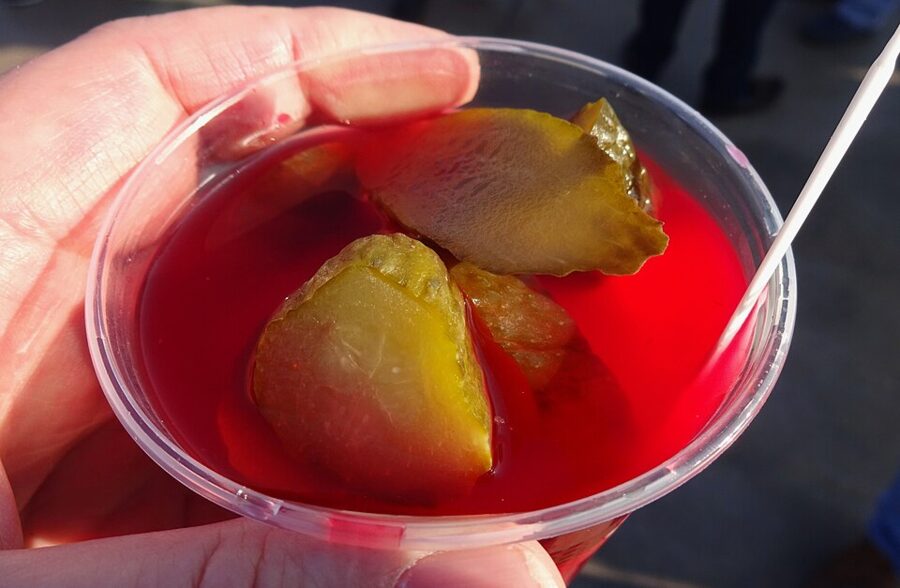
In late 2026 a sandwich at the boats ran to about 225 TL, and a cup of pickles in their brine from the stalls alongside to about 60 TL. The wrap version, balık dürüm, is sold from grills on both sides of the Golden Horn; a well-known Eminönü stall charged 290 TL for one in November 2026. Expect 225–300 TL for either, depending on which you order and how close to the water you eat it.
Two things are worth knowing before you queue. The mackerel is rarely caught in the Bosphorus now and is usually brought in from elsewhere, so this is a snack for the setting as much as the fish. And the bread soaks through fast: eat it at the stools rather than carrying it off.

Karaköy, at the other end of the bridge, has its own fish grills around the ferry pier, where the cooks do mostly dürüm. It is a short walk across the lower deck of the Galata Bridge, which is lined with fish restaurants that cost far more than the street grills above and below them. The cruise and commuter boats up the Bosphorus leave from the Eminönü pier a few meters from the fish boats, and the Bosphorus cruise guide compares them.
Döner and dürüm
Döner is meat stacked on a vertical spit, roasted as it turns and shaved off in thin strips. You order it three ways: ekmek arası, in a split half loaf; dürüm, rolled tight in a thin lavaş wrap and toasted on the grill; or porsiyon, on a plate, often over rice (pilav üstü). Chicken (tavuk) is the budget choice and meat (et), usually veal or beef, the treat.
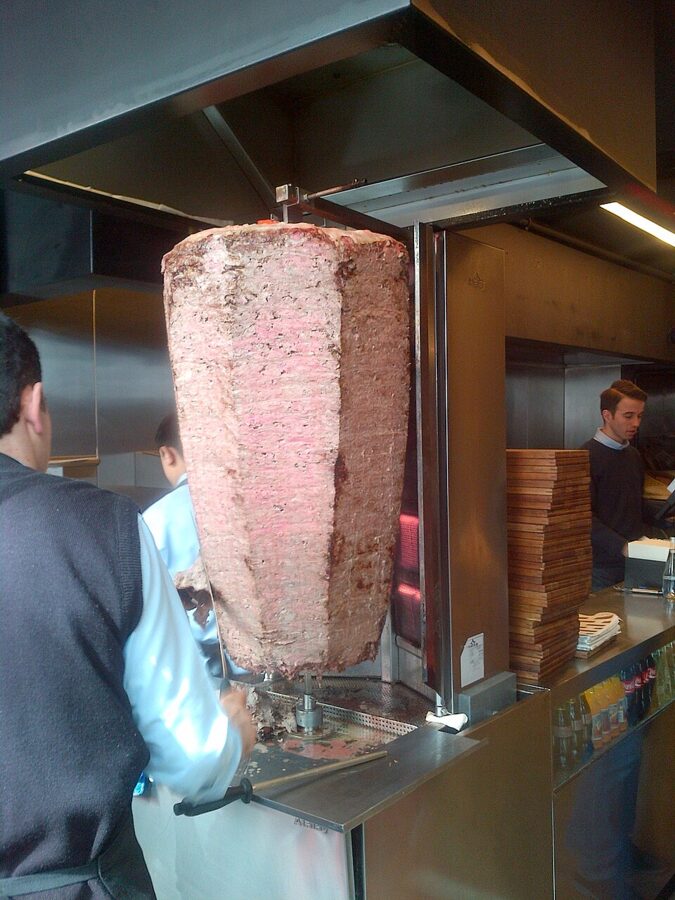

The price gap between the two has grown wide. In 2026 a chicken dürüm typically cost 180–250 TL, while a meat dürüm sat around 350–550 TL, and a 100–120 g plate of meat döner at a lokanta started near 500 TL. Istanbul newspapers ran stories through the year about meat döner becoming a luxury, so if you see a meat dürüm far below that range, it is either very small or not all meat.
Ordering is simple. Say tavuk or et, dürüm or yarım ekmek (half bread), and add az soslu (less sauce) or acılı (spicy) if you want them; pickled peppers and a pinch of sumac onion usually come without asking. Ayran is the drink everyone orders with it.
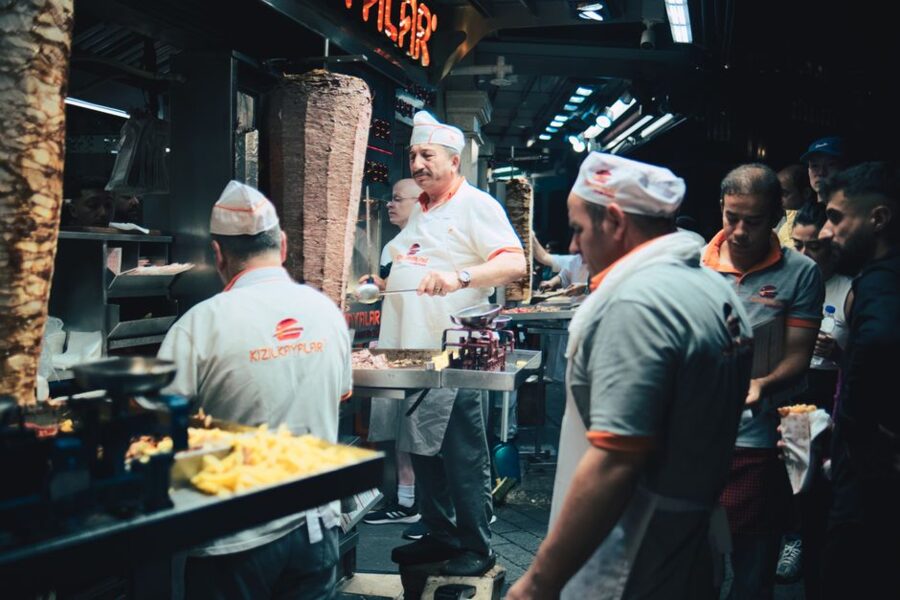
Two variations are worth seeking out. Dürümzade in Beyoğlu, a small grill counter known for its dürüm, wraps döner and charcoal kebabs into thin lavaş. And cağ kebabı, the Erzurum style in which marinated lamb roasts on a horizontal spit and is served on skewers, has a following at Şehzade Cağ Kebap in Sirkeci, at 620 TL for 100 g (two skewers) on its late-2026 menu: more than a street snack, less than a restaurant meal. İskender, döner on bread under tomato sauce and browned butter, comes from Bursa and is best eaten there.
Lahmacun and pide
Lahmacun is a thin round of dough spread with minced meat, onion, tomato and pepper and baked fast in a very hot oven. You squeeze lemon over it, scatter parsley and onion down the middle, roll it up and eat it with your hands. It is the cheapest hot lunch on most streets: the median price across Istanbul in 2026 was about 175 TL, with the cheaper neighborhood places at 130–150 TL.
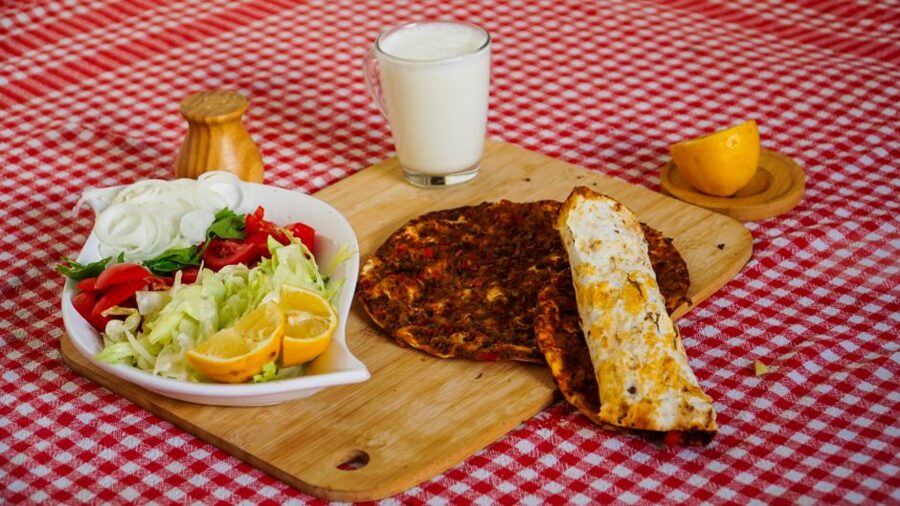
The Kadıköy market streets are the place to eat it. Halil Lahmacun on Güneşlibahçe Sokak has baked crisp, thin lahmacun there since 1980 and closes on Mondays. A few doors down, Çiya Sofrası serves lahmacun alongside dishes from southeastern Turkey that you rarely find elsewhere in the city; it costs more than a lahmacun counter and is worth one sit-down meal.
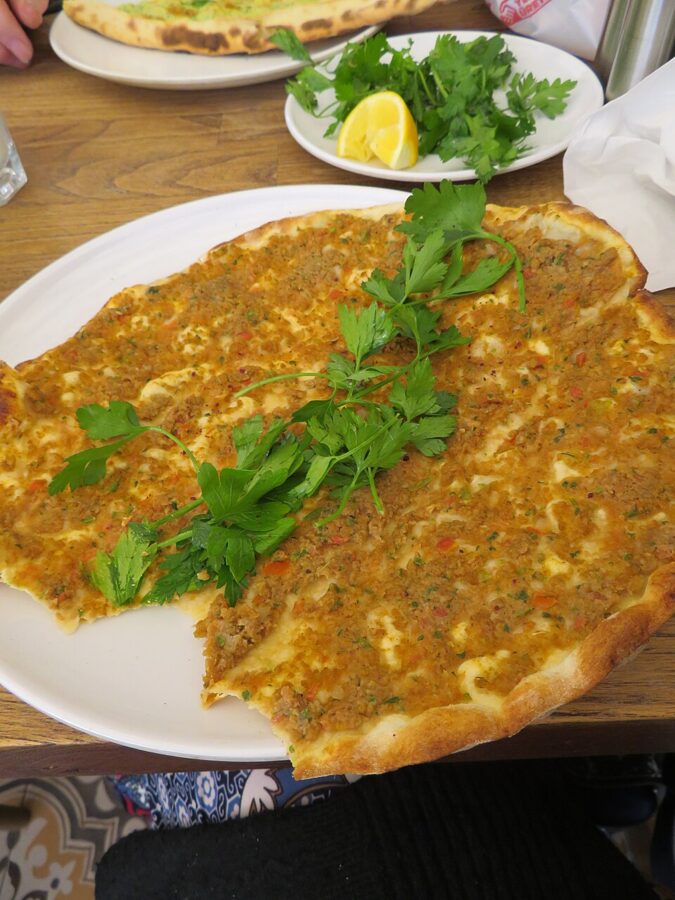

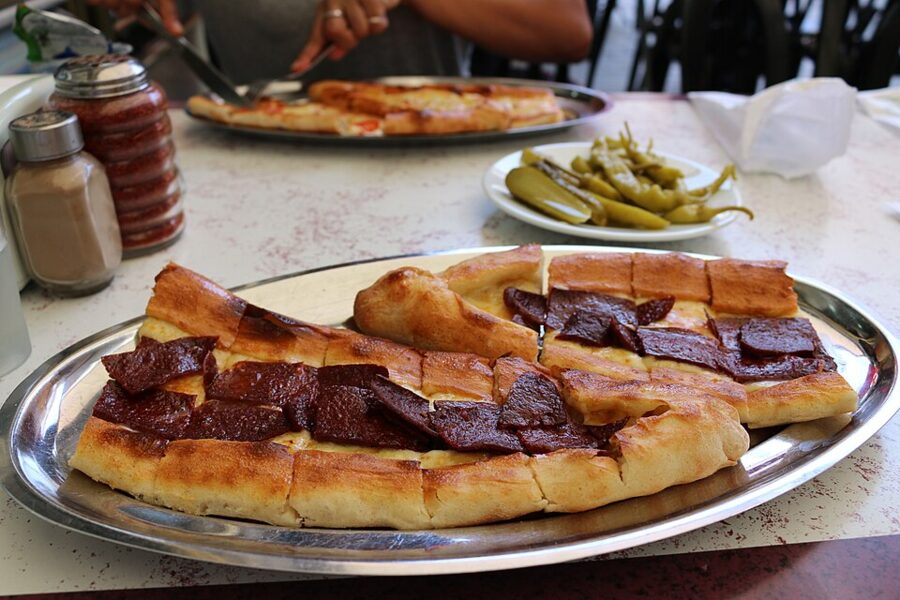
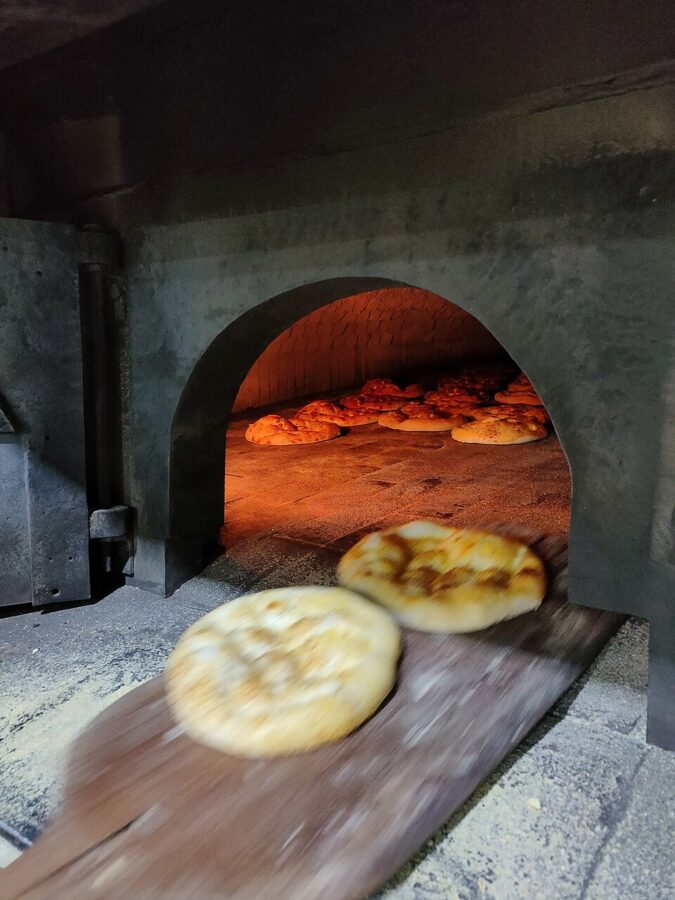
Pide is lahmacun’s bigger, boat-shaped relation, with the edges folded up around the filling: cheese (peynirli), chopped meat (kıymalı), cubed meat (kuşbaşılı), or sucuk and pastırma together (karışık). A pide salonu bakes them to order in a wood or stone oven and brings them out cut into strips on a board. One is a full meal for one, or a decent share for two with a salad.
The best-known pide counter for anyone staying in the old city is Tarihi Hocapaşa Pidecisi, on Hocapaşa Sokak beside Sirkeci station, which has baked pide in a wood-fired oven since 1964 and opens at noon. In January 2026 its menu listed a round cheese pide at 300 TL, a mixed pastırma, sucuk and kavurma pide at 550 TL and ayran at 60 TL, with no cover or service charge. The lane around it is lined with other small lokantas and kebab shops feeding the wholesale trade, which makes it the most useful lunch street near Sultanahmet.

Börek
Börek is layered pastry, and it is a morning food. Su böreği is the grand one: sheets of dough boiled briefly, layered with white cheese and butter, and baked into a soft, rich slab. Kol böreği is rolled into long coils and cut by the piece, and sigara böreği is the thin fried roll filled with cheese that comes as a side almost everywhere.
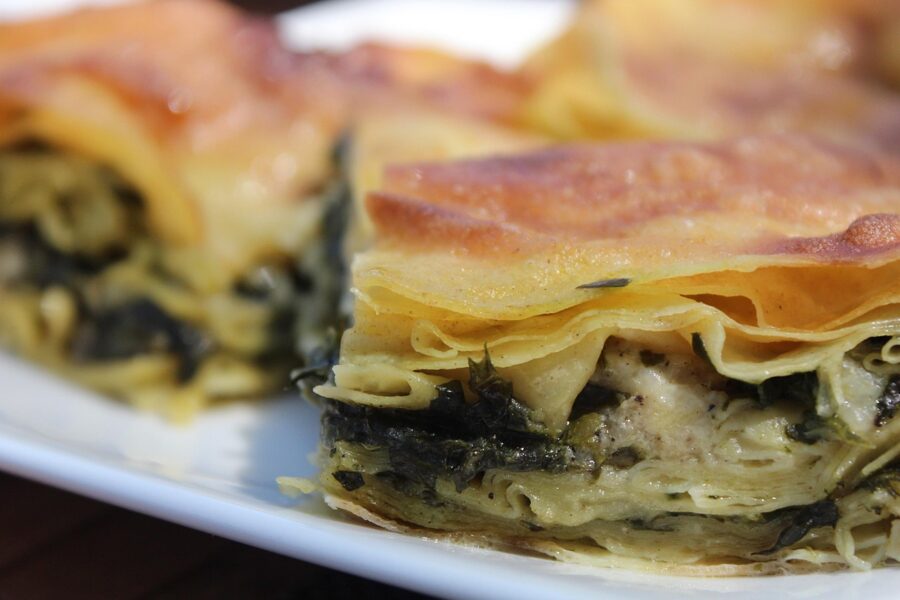
A börekçi (börek shop) sells by weight or by the portion, and in 2026 a portion ran to about 150–190 TL, with the kilo price between 520 and 650 TL depending on the filling. Ask for peynirli (cheese), ıspanaklı (spinach), kıymalı (mince) or patatesli (potato). Börekçis open early and sell most of their trays before noon, so this is a breakfast stop, ideally with tea.
Midye dolma
Midye dolma are mussels opened, stuffed with rice cooked with onion, currants and sweet spices, then steamed shut again. They are older than they look as street food: a recipe for them appears in the first printed Ottoman cookbook, Melceü’t-Tabbâhîn, in the 1840s. The sellers stand behind wide trays piled with hundreds of them.
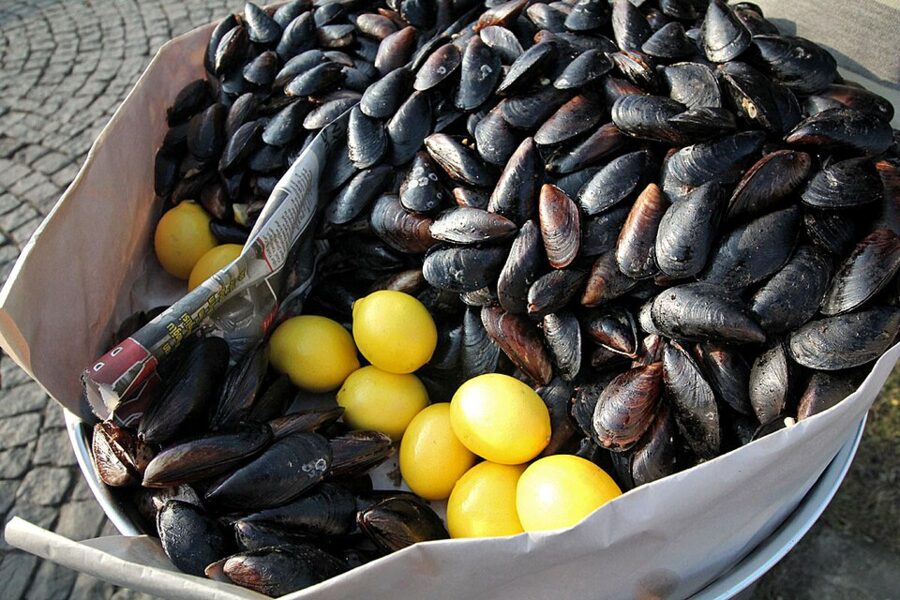

You pay by the piece. In 2026 the price ran from about 10 TL each for small mussels at Kadıköy shops to about 30 TL for large ones at central stands, and it is worth asking before the first one, because the seller keeps opening until you stop him. Count as you go; the seller counts the shells. Midye tava, mussels fried in batter, comes in bread or on a plate with tarator, a garlicky walnut and bread sauce, and is a meal in itself.
Midye are at their busiest after dark, when they become a late-night snack. In daylight they are sold from shopfronts in Beşiktaş, Kadıköy and around Eminönü. The rule that matters: eat them from a busy tray, never from one that has sat in the sun.
Kumpir at Ortaköy
Kumpir is a large baked potato split open while hot, its inside mashed in the skin with butter and grated kaşar cheese, then loaded with toppings from a counter of a dozen or more: Russian salad, sliced sausage, sweet corn, olives, pickles, peas, chili paste and ketchup. The name came into wide use in the 1990s, and the seafront at Ortaköy is where it became a city habit.
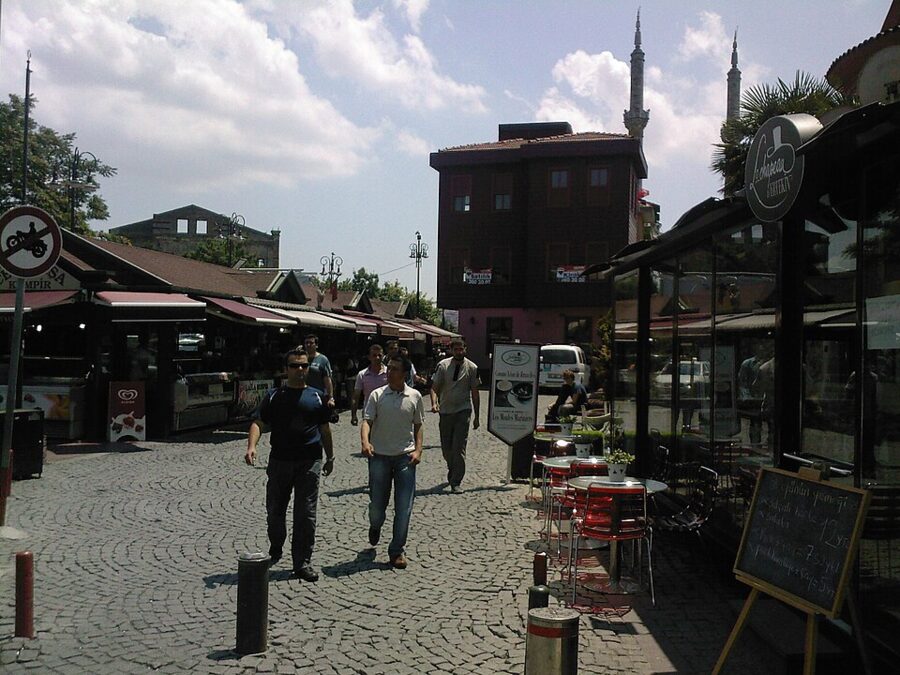

The stalls stand in a row in the lanes beside the Ortaköy square, a few steps from the water, and their potatoes are enormous. Expect about 400–600 TL in 2026, depending on the number of toppings; one is easily enough for two people who have eaten anything else that day. Waffles loaded with chocolate and fruit are the stalls’ other trade.
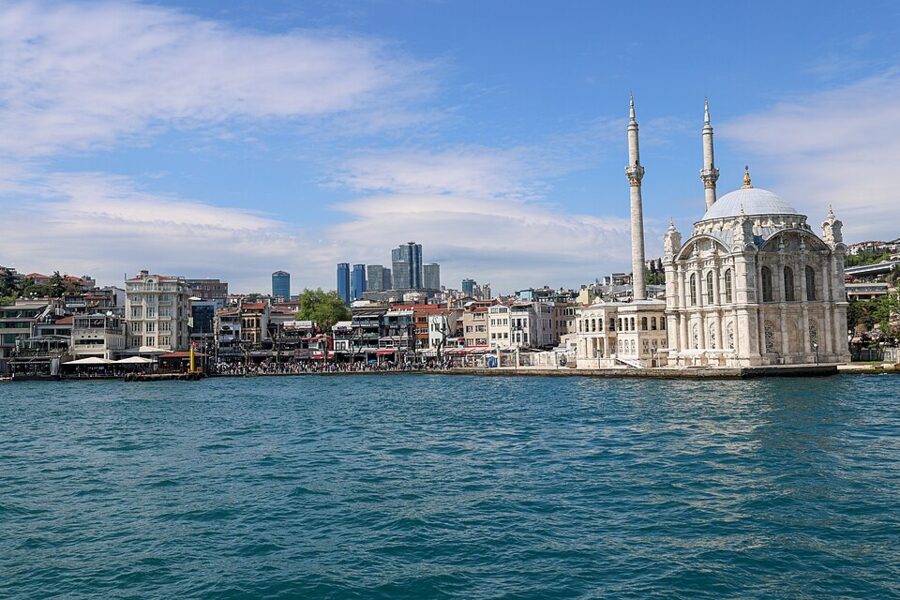

Ortaköy is about 25 minutes on foot along the shore from Beşiktaş, and the Bosphorus boats pass right in front of it. Go at sunset, take your kumpir to the sea wall, and you have the best-value view on this side of the city.
Çiğ köfte, now without meat
Çiğ köfte means “raw meatball”, but what you buy in Istanbul has no meat in it. The dish comes from Şanlıurfa and Adıyaman, the province of Mount Nemrut, where it was traditionally kneaded from fine bulgur, raw minced meat, isot pepper and spices. Selling the version with raw meat is banned in Turkey on Health Ministry rules, so shops sell the meatless kind, which is also how Adıyaman has long made it.
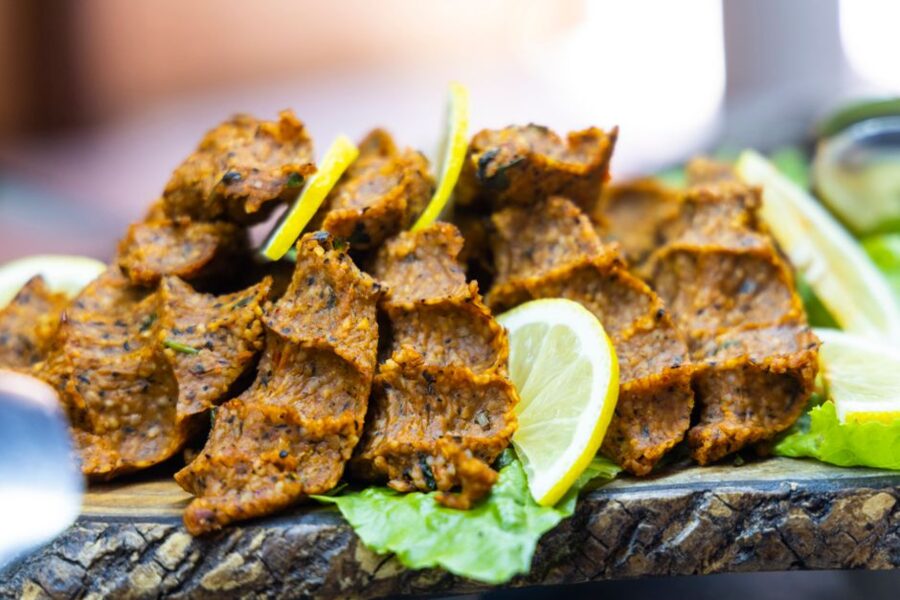
Chains of çiğ köfte shops are on every high street, and the standard order is a dürüm: a thin wrap with lettuce, parsley, pickled pepper and a drizzle of pomegranate molasses. In October 2026 one cost 100 TL at a counter between Eminönü and Karaköy. Ask for acılı (hot) or acısız (mild); it is vegan, filling and one of the cheapest full meals in the city.
Kokoreç: a short note
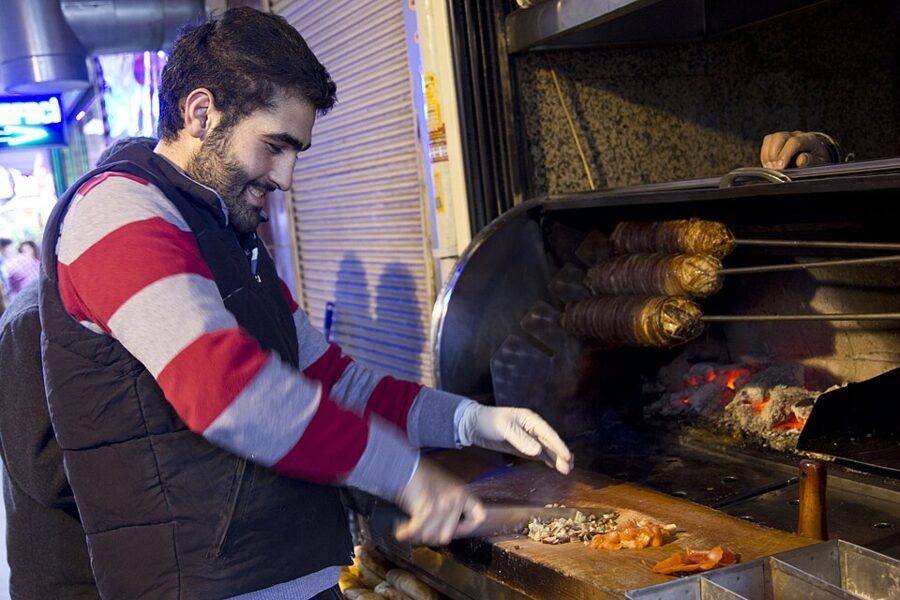
Kokoreç is lamb intestine wound around a horizontal spit over charcoal, then chopped on a steel board with tomato, pepper, oregano and chili and stuffed into bread. It is mostly a late-night food, and the Istanbul nightlife guide covers where and how to order it, along with midye after dark. It is sold by day too, and a half bread (yarım ekmek) was around 450 TL in 2026.

Chestnuts, corn, salep and boza
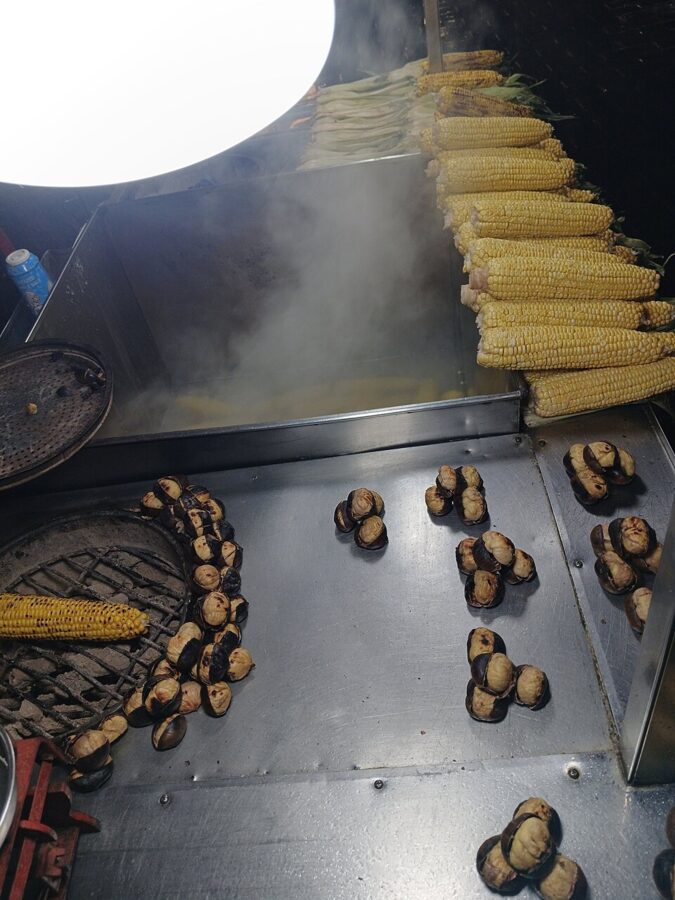
From October the chestnut carts come out. Kestane kebap, chestnuts scored and roasted on a charcoal tray, are sold by weight from carts on squares and ferry piers across the city, and in November 2026 central carts were asking about 1,600 TL a kilo. Nobody buys a kilo: a scoop into a paper cone is the usual order, so ask the price of that before he fills it. The same carts sell corn on the cob, boiled (haşlama) or grilled over the coals (közde), with salt; it is on sale most of the year.
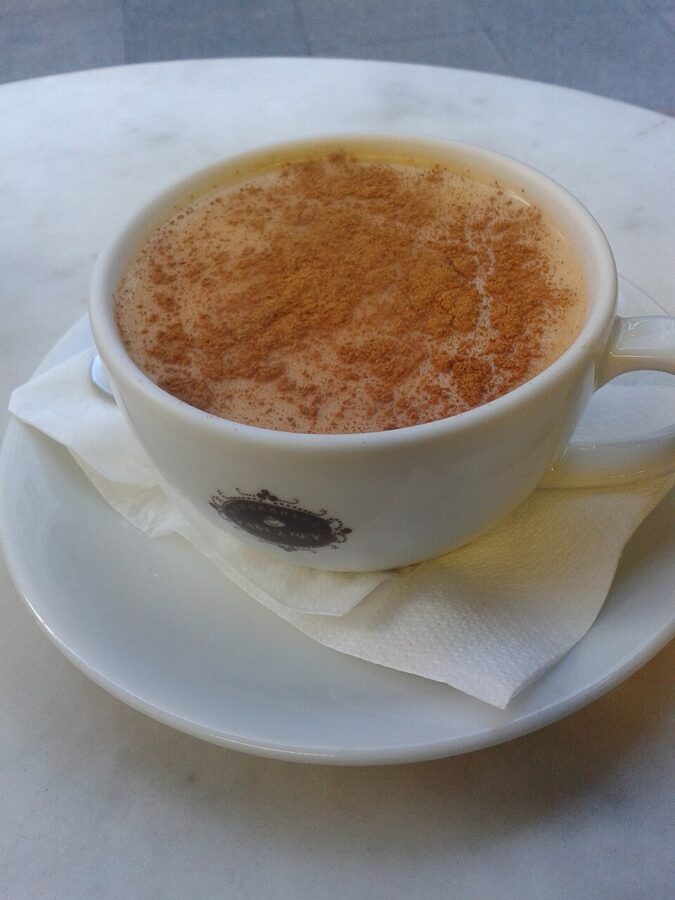

Winter also brings boza, a thick, slightly sour drink of fermented millet, sweet and tangy, served cool with cinnamon and roasted chickpeas (leblebi) on top. Evliya Çelebi counted more than 300 boza shops in 17th-century Istanbul; the one that survives as an institution is Vefa Bozacısı, opened in 1876 in the Vefa neighborhood below the Süleymaniye Mosque. A glass cost 100 TL in October 2026, and boza season traditionally runs from mid-September to mid-May.
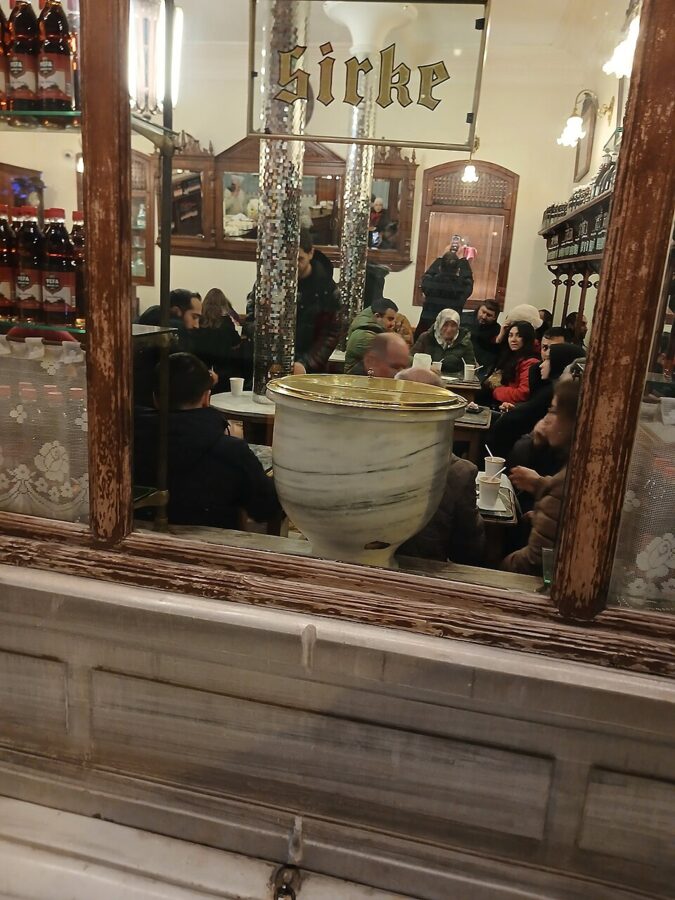

Vefa is a short walk from the mosque complex covered in the Süleymaniye, Chora and Golden Horn guide, which makes boza a natural end to a morning there. Remember that Süleymaniye closes to visitors during prayer times and for longer at Friday noon.
Tea, ayran and the other drinks
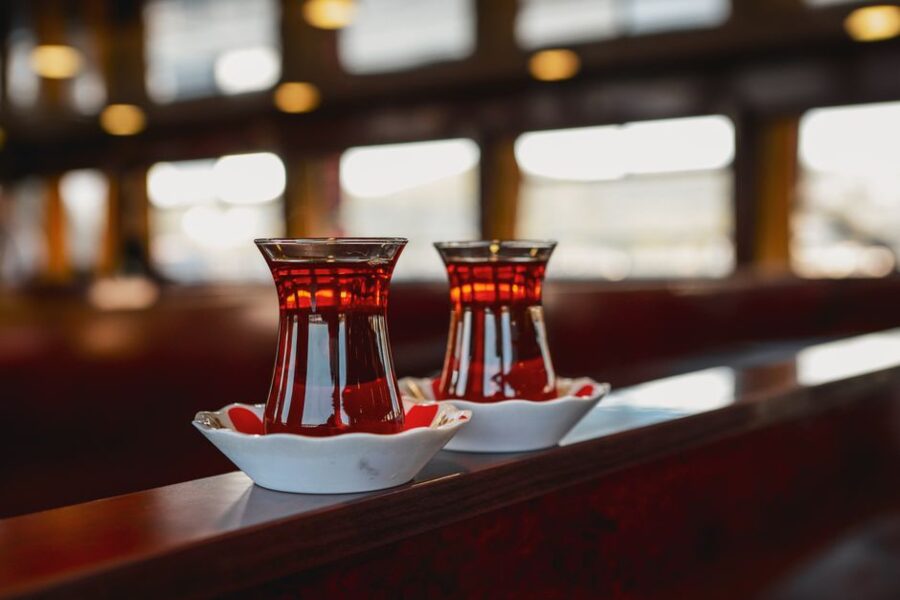
Tea comes black, strong and in a tulip-shaped glass, with two sugar cubes on the saucer. The cheapest glass in the city is the one from a çay ocağı, the tiny tea kitchens that supply offices and shops, or from the sellers who walk the waterfront with trays. A café terrace on a tourist street charges several times as much for the same glass. Since January 2024 restaurants and cafés have had to post their price list at the entrance; if there is none, walk on.
Ayran, cold salted yogurt thinned with water, is what everyone drinks with döner, lahmacun and pide, and it was 40–60 TL a bottle or glass in 2026. With kebabs you will also see şalgam, a sour, salty juice of fermented purple carrot: order acılı (spiced) or acısız (plain), and do not expect to like it the first time. For water, buy bottled: tap water in Istanbul is treated, but most locals do not drink it from the tap, and the Turkey travel tips guide explains why and how to buy water cheaply.
The cheapest sit-down meals
When you want a chair and a plate rather than a wrap, Istanbul has three cheap answers: the tradesmen’s canteen, the city-run canteen and the pide salonu. All three are faster and cheaper than any café, and none needs a word of Turkish beyond pointing.
Esnaf lokantası: point, pay, eat
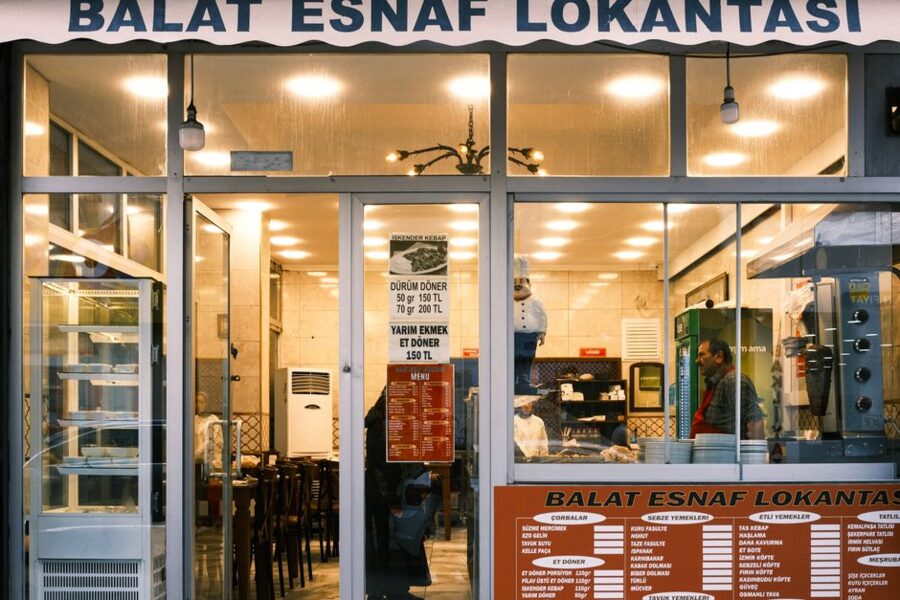
The esnaf lokantası (tradesmen’s restaurant) cooks once in the morning for the people who work nearby. Stews, beans, stuffed vegetables, rice and soup sit in steam trays behind a glass counter, and cold vegetables cooked in olive oil wait in a fridge beside them. You point at what you want, a cook plates it, and you pay at the till on the way out.
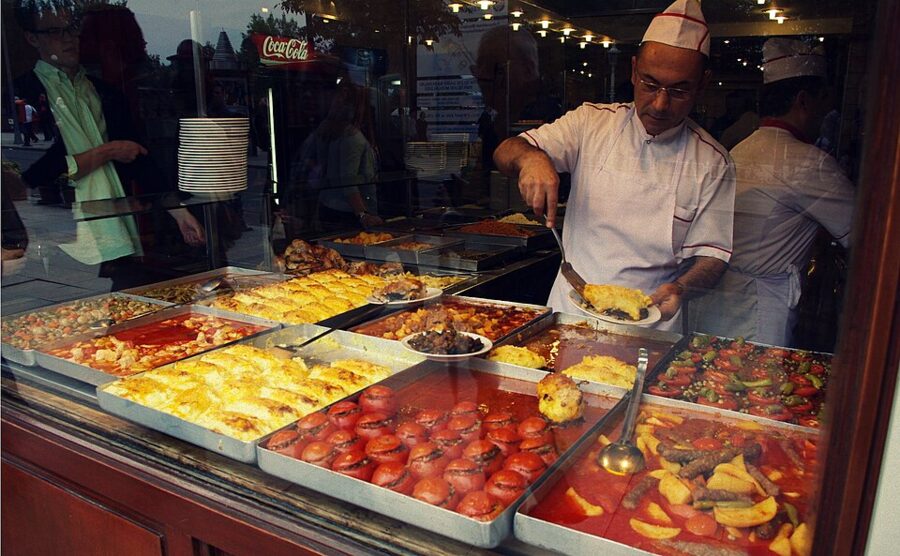

In 2026 a bowl of lentil soup (mercimek çorbası) cost about 85–145 TL at these places, and a meat dish such as köfte or stew about 250–400 TL, so soup, a main and rice come to roughly 400–650 TL. Ask for yarım porsiyon (half a portion) of anything and try two dishes for the price of one; it is normal. Bread is free, and water from the jug on the table usually is too.
Dishes to point at: kuru fasulye (white beans in tomato), nohut (chickpeas), karnıyarık (eggplant stuffed with mince), türlü (vegetable stew), tas kebabı (braised meat) and any of the zeytinyağlı, the olive-oil vegetables served cold. The lanes behind Sirkeci station, the Kadıköy market streets and the back streets of Karaköy and Beşiktaş all have them; in Sultanahmet, walk two streets away from the tram line before you sit down.
Kent Lokantası: four dishes for 90 TL
The cheapest hot meal in Istanbul is run by the city. The municipality’s Kent Lokantaları (city canteens) serve a fixed set of four dishes, typically soup, a main, rice or bulgur and yogurt or fruit, with bread and water, for 90 TL paid by Istanbulkart or 100 TL by bank card on the 2026 tariff. They open Monday to Saturday and take no cash.
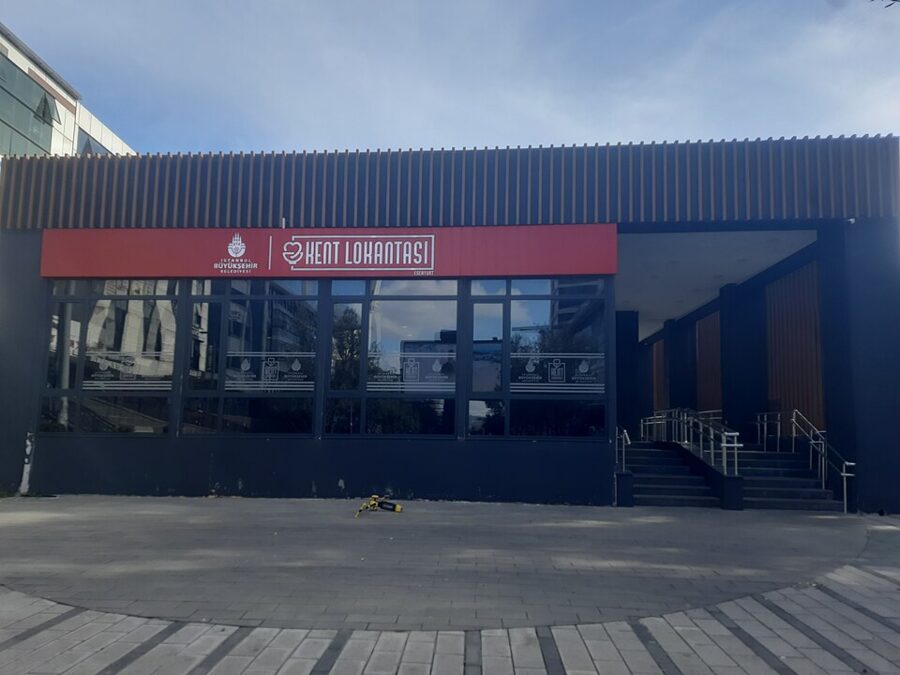
There are 19 of them, 12 on the European side and 7 on the Asian side; the first opened at Çapa in Fatih in 2022. The daily menu is published every morning, and a typical one in November 2026 was soup, stuffed peppers, su böreği and yogurt. They exist for students, pensioners and low earners, so go outside the 12:00–13:00 rush and you will not be taking anyone’s seat.
Pide salonu and işkembe
The pide salonu works like a restaurant but costs like a canteen: order one pide per person and an ayran, and the bill arrives within half an hour. Hocapaşa Pidecisi in Sirkeci is the classic, and most neighborhoods have one with a wood oven in the window.
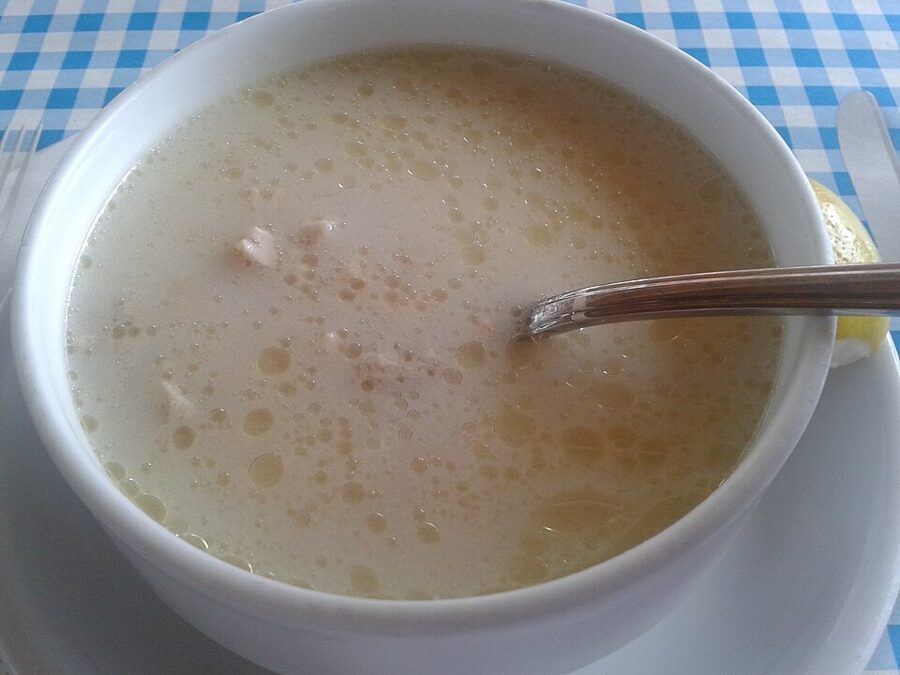
İşkembe çorbası, tripe soup with garlic vinegar and chili, is the other working meal, eaten early in the morning or very late at night, and famously after a night of rakı. The specialist shops (işkembeci) often stay open around the clock; a bowl was about 480 TL at one well-known Istanbul işkembeci in mid-2026. It is an acquired taste, and the garlic vinegar is what makes it.

Sweets: baklava, lokum, künefe and dondurma
Istanbul’s old sweet shops are among the few places where the famous name is also the best value, because they sell by weight at counters and do not charge for the view. Eat at the counter, with a glass of water or tea, and buy a box to carry only on the last day.
Baklava at Karaköy
Baklava is thin pastry layered with butter and nuts and soaked in syrup: pistachio (fıstıklı) is the prized version and walnut (cevizli) the cheaper, softer one. Karaköy Güllüoğlu, run by the Güllü family in Karaköy, is the city’s best-known baklava counter and insists it has no other branches. In May 2026 a box of kuru (dry) baklava there worked out at just under 2,900 TL a kilo.
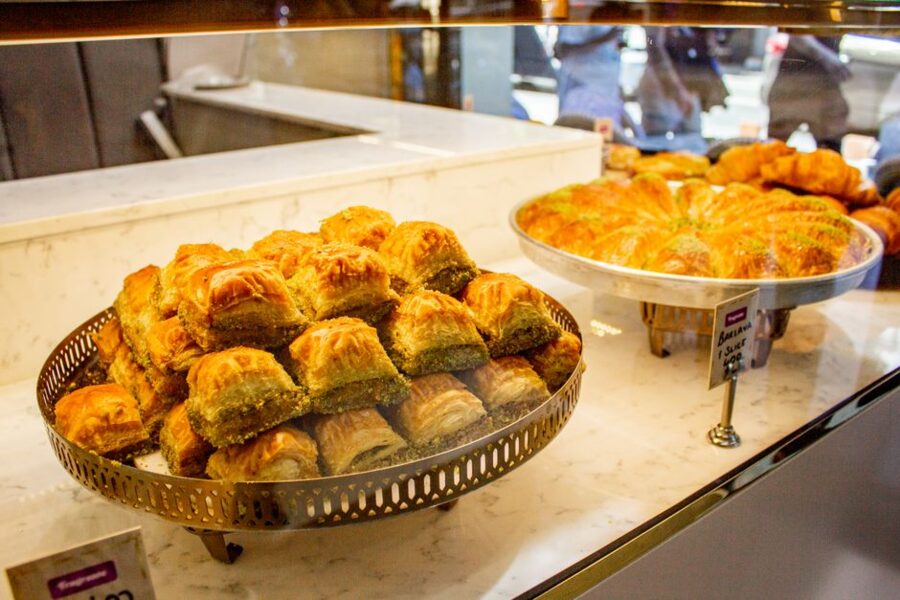
A portion at the counter is the cheap way in, and the water is free. Many baklava counters will add a slab of kaymak, clotted cream, if you ask.
Lokum at Bahçekapı and Eminönü
Lokum, Turkish delight, is starch and sugar boiled slowly with rosewater, mastic, lemon or nuts. The shop that made it famous is Hacı Bekir, founded in 1777 in Bahçekapı, a few minutes from the Spice Bazaar. That first shop is still trading, registered by the heritage authorities as a historic confectioner’s, and the family has run it for five generations.
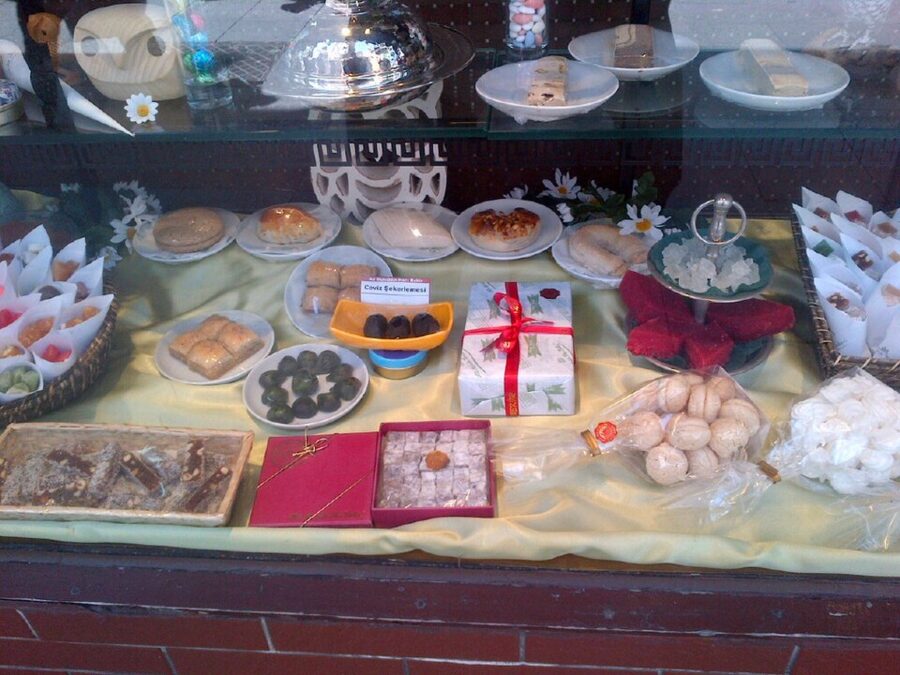

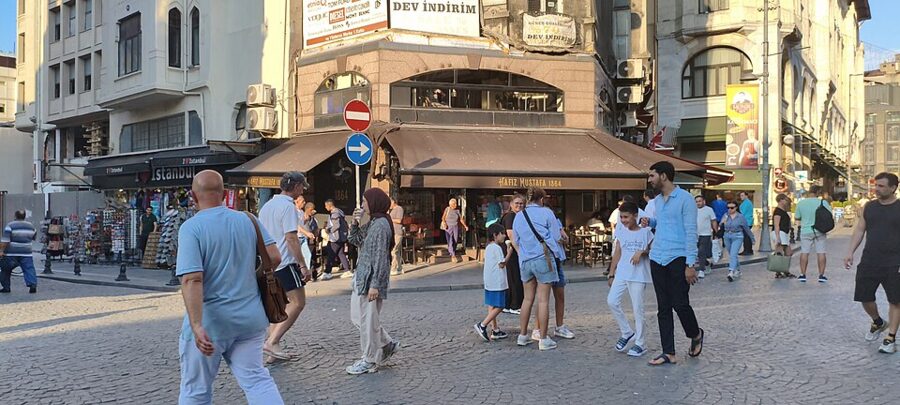
A few steps away, Hafız Mustafa, founded in 1864, sells baklava, lokum and milk puddings from several branches around Eminönü and Sirkeci, and is where many visitors start. Buy lokum by weight at either shop rather than from loose trays at tourist stands, where you cannot tell how long it has sat out.

Künefe, dondurma and lokma
Künefe comes from Hatay in the far south: shredded kadayıf pastry baked around unsalted stretchy cheese, soaked in syrup and served hot with crushed pistachio. It is made to order, so expect ten minutes, and the 2026 median price across Istanbul was about 260 TL a portion. Eat it immediately; cold künefe is a different, worse dish.
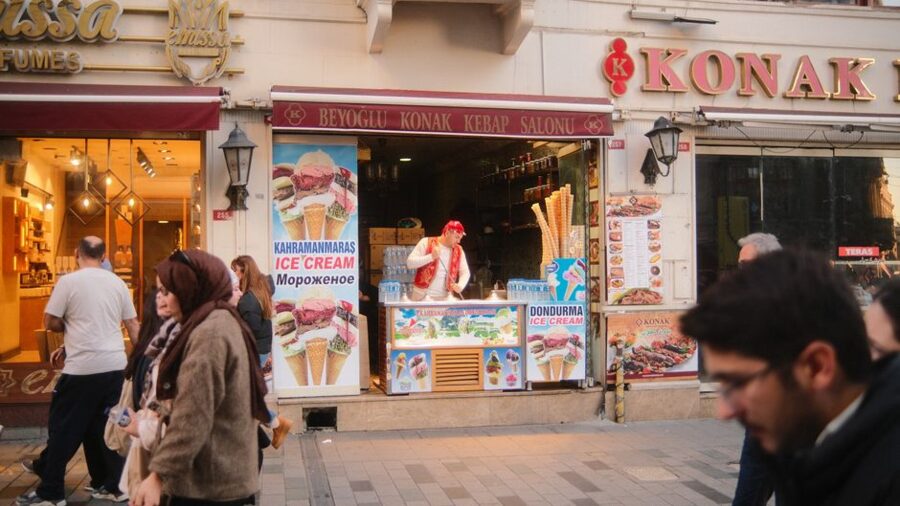
Dondurma, Maraş-style ice cream, is thickened with salep and mastic, which makes it chewy and stretchy enough for vendors to tease customers by flipping it on a long paddle. The show is free; the scoop is the price you agree first. For something fried, look for the lokma carts on Eminönü square.
The markets
Markets are where the street food comes from, and they are also the best places to eat cheaply. Three are worth the trip, and one, the Spice Bazaar, is worth a short look on the way through.
Kadıköy’s market streets
The historic market (Tarihi Kadıköy Çarşısı) fills the lanes that climb from the Kadıköy ferry pier toward Moda. Güneşlibahçe Sokak, the pedestrian spine, is about 185 m long and packed with fishmongers, pickle shops, cheese and olive counters, delis, coffee roasters and the cheapest snack counters on the Asian side.
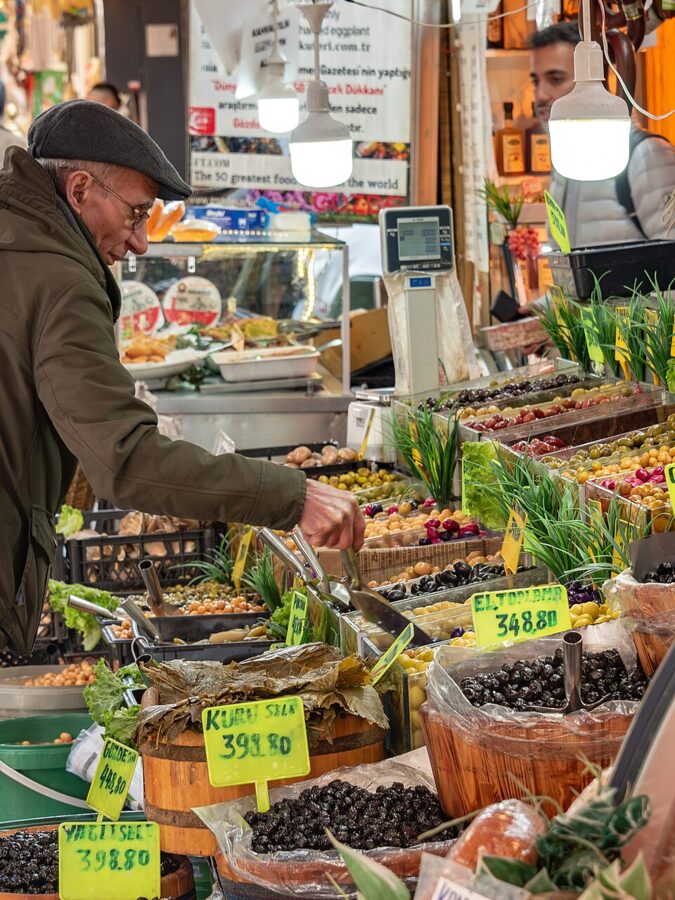

It is a market for locals first, which keeps the prices down. Eat a lahmacun at Halil, a few midye from a counter, a portion of börek, and buy olives and white cheese by the 100 g for a picnic on the Moda shore. On Tuesdays, Kadıköy’s big open-air street market (Salı Pazarı) sets up in Hasanpaşa, east of the center, with produce, olives and pickles at the lowest prices on this side of the water.

The Wednesday market at Fatih
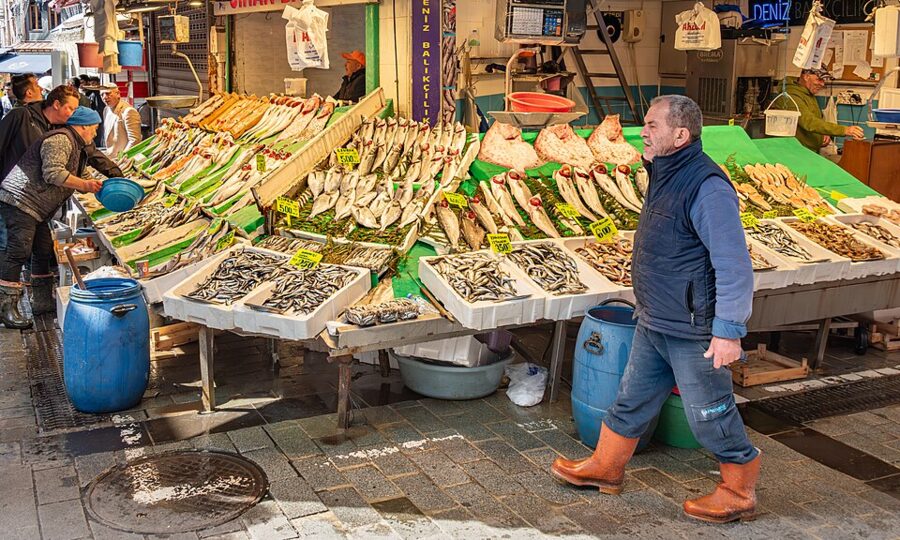
Çarşamba Pazarı, the Wednesday market, takes over the streets around the Fatih Mosque every week and is one of the biggest street markets in the city. It sells everything from carrots and cheese to clothes, pans and bed linen, and it is where much of the old city does its weekly shopping, so the prices are low and the crowds dense.
Go in the morning, keep your bag in front and carry small notes. Fruit by the bag is the snack, and a simit cart is never far away. The Fatih Mosque at its center closes to visitors during prayers, so plan any visit around them, and Vefa’s boza shop is about 15 minutes’ walk downhill.
The Spice Bazaar, briefly
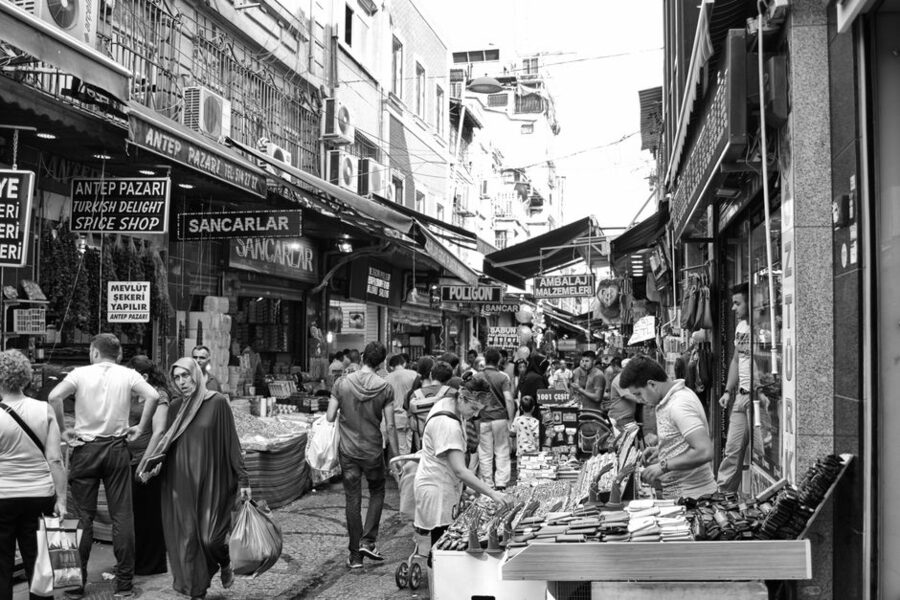
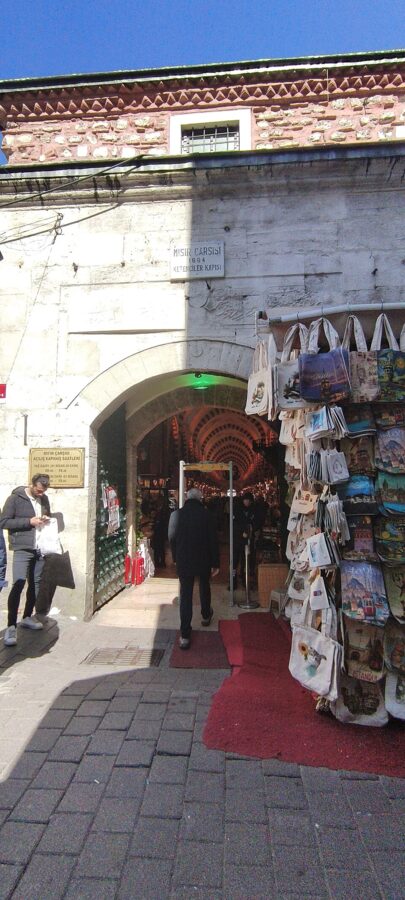
The Spice Bazaar (Mısır Çarşısı) at Eminönü was completed in 1664 for Turhan Sultan as part of the New Mosque complex, and it is open daily, Sundays included. It is worth walking through for the building and the smell, but it tends to price for visitors: buy spices, tea and lokum in the shops on the streets around it, or at the Kadıköy market, where locals shop. For the bigger bazaar up the hill, see the Grand Bazaar guide.

A self-guided eating walk
You do not need a guide to eat well in Istanbul; you need a route, small notes and an empty stomach. This one takes an afternoon on the European side and an evening on the Asian side, and the prices are those of late 2026.
Eminönü and Karaköy (about 3 hours)
- Eminönü pier, 11:00. A simit from a cart (30 TL) and tea from a tray seller, sitting on the sea wall facing the Galata Tower.
- Spice Bazaar and Bahçekapı. Walk through the bazaar, out of the Ketenciler Gate, and around to Hacı Bekir for 100 g of lokum, or to Hafız Mustafa for a portion of baklava.
- Hocapaşa lane, Sirkeci, 12:30. A cheese pide (about 300 TL) and an ayran, or a stew at one of the lokantas next door.
- The balık ekmek boats, 14:00. A fish sandwich (about 225 TL) on a stool, with a cup of turşu suyu (about 60 TL).
- Galata Bridge to Karaköy, 14:45. Walk across, about 10 minutes, and finish with a portion of pistachio baklava at Karaköy Güllüoğlu.
Total: about 700 TL for the savory stops, plus whatever you spend on baklava and lokum, which are sold by weight. If you stop at Karaköy and want more, a balık dürüm from the grills by the pier or a çiğ köfte wrap (100 TL) will see you through to the ferry.
Kadıköy (about 2 hours, evening)
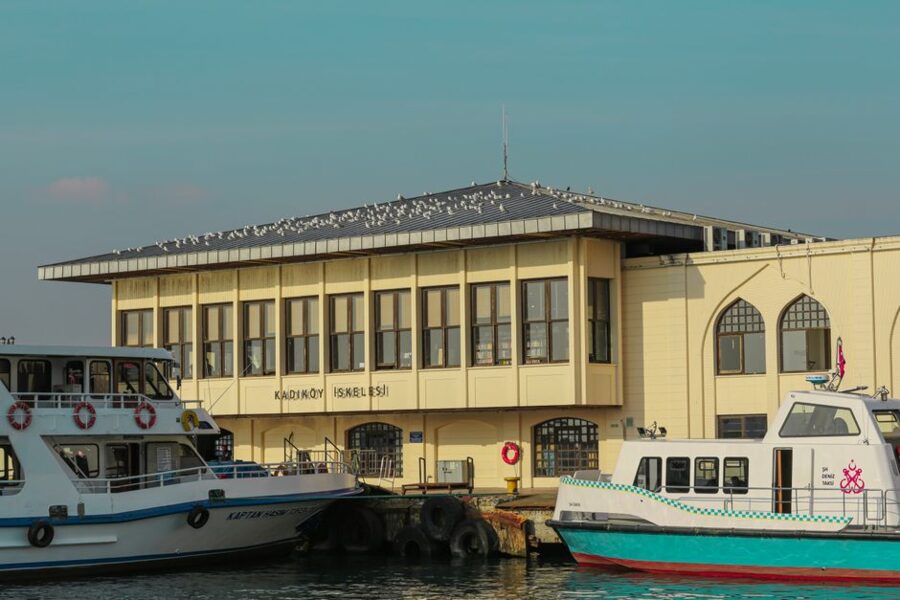
- Ferry from Eminönü or Karaköy. About 20 minutes on one tap of the Istanbulkart; sit outside on the upper deck.
- Kadıköy market, 17:30. A handful of midye from a counter (about 10–30 TL each), then a lahmacun at Halil (closed Mondays).
- Güneşlibahçe Sokak. Pickles, a slice of pastırma or a portion of börek, or a sit-down plate at Çiya if you want one proper meal.
- Moda, at sunset. Walk 15 minutes down to the shore with chestnuts or corn from a cart, or a salep in winter.
Total: about 600–900 TL without Çiya, more with it. Check the time of the last ferry back on the board at the pier before you settle on the sea wall.
Paid food tours: what they cost and when they are worth it
Istanbul has dozens of food tours, from three-hour walks in the old city to all-day crossings of both continents. Small-group walks cost roughly €70–150 a head in 2026, and private ones for two often start near the top of that range per person. That is a week of street food for the price of an afternoon.
For most backpackers I would skip them: street food in Istanbul is sold with the price on the cart, and pointing works everywhere. A tour earns its money in three cases: on your first day, if you want someone to explain what you are looking at before you are on your own; if you have a serious allergy or dietary rule and want someone to ask in Turkish; or for the long Asian-side walks into neighborhoods with no English signage.
If you book one, check what the price includes (the number of tastings, drinks, ferry fares), the group size (eight or fewer is a walk, not a procession), whether the guide is licensed, and the cancellation terms. A tour that ends in a shop is a sales visit.
Eating safely and well
Street food in Istanbul is, on the whole, safer than its reputation: most of it is cooked hot, in front of you, and sold fast. The risks are specific and easy to avoid.
Busy stalls, and the mussels
Pick the stall with the queue. Turnover is the best hygiene there is: a döner spit that is being cut constantly, a tray of simit that empties every hour, a grill with a line. Avoid anything that has sat warm rather than hot, and go easy on raw salad for the first couple of days if your stomach is new to the trip.
Mussels are the one food to be strict about. Buy midye dolma from a full tray that is clearly selling, never from a half-empty one at the end of a hot afternoon, and stop if one smells of anything but lemon and the sea.
Ramadan
Ramadan in 2027 begins on Monday 8 February, with the Ramazan Bayramı holiday from Tuesday 9 March. Most street food and restaurants stay open by day in Istanbul, but some lokantas close in the afternoon or switch to set iftar menus at sunset. In the hour before iftar, the bakeries sell Ramazan pidesi, a soft round bread made only that month, and the queues are part of the city’s evening; the Turkey public holidays guide has the dates and what closes.

Eat discreetly in daylight in conservative areas such as Fatih and Çarşamba, and do not take a picnic into a mosque courtyard.
Vegetarian and vegan options
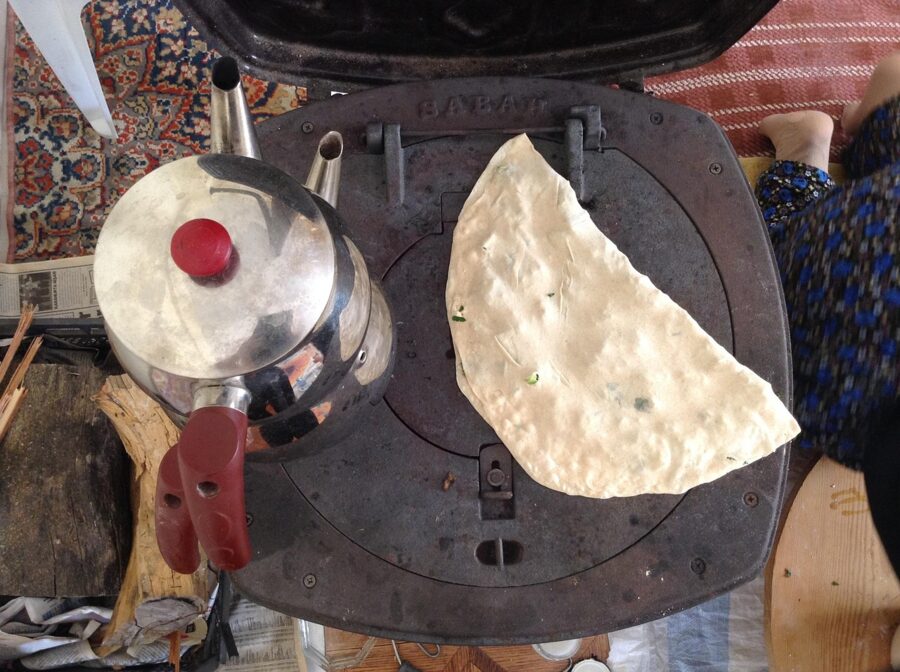
Vegetarians eat well on the street. Simit, açma and poğaça, cheese and spinach börek, cheese pide, kumpir (ask for no sausage), corn, chestnuts and gözleme are all meat-free, and çiğ köfte is vegan. At an esnaf lokantası the zeytinyağlı, the cold vegetables in olive oil, are vegan by definition.
The words to know: etsiz (without meat), et suyu var mı? (is there meat stock in it?) and tereyağı (butter), since many soups and rice dishes are made with stock or butter. Lentil soup in particular is sometimes made with meat stock, so ask.
Back at Eminönü, the simit carts are restocked for the evening rush and the fish boats are still grilling. Buy one last simit for the ferry, and load the Istanbulkart before you reach the turnstile.