A euro bought 55.30 lira at the Central Bank’s rate on 20 November 2026, and a dollar bought 50.40. A year earlier the euro fetched 48.75. That looks like good news if you earn in euros, until you set it beside prices: Turkey’s statistics office put inflation at 29.77% for the twelve months to October 2026, more than twice the euro’s gain. Your money buys about an eighth less in Turkey than it did a year ago, and the way you pay can cost you another tenth on top.
The short version, for anyone reading this in an arrivals hall:
- The rate: €1 = 55.30 TL, $1 = 50.40 TL, £1 = 65.94 TL (Central Bank of the Republic of Turkey, buying rates, 20 November 2026). Check the bank’s daily rate before you change anything, because it moves every week.
- Cash or card: card, almost everywhere in cities, and contactless is normal. Cash for the dolmuş, village minibuses, simit carts, tea gardens, small lokantas and tips.
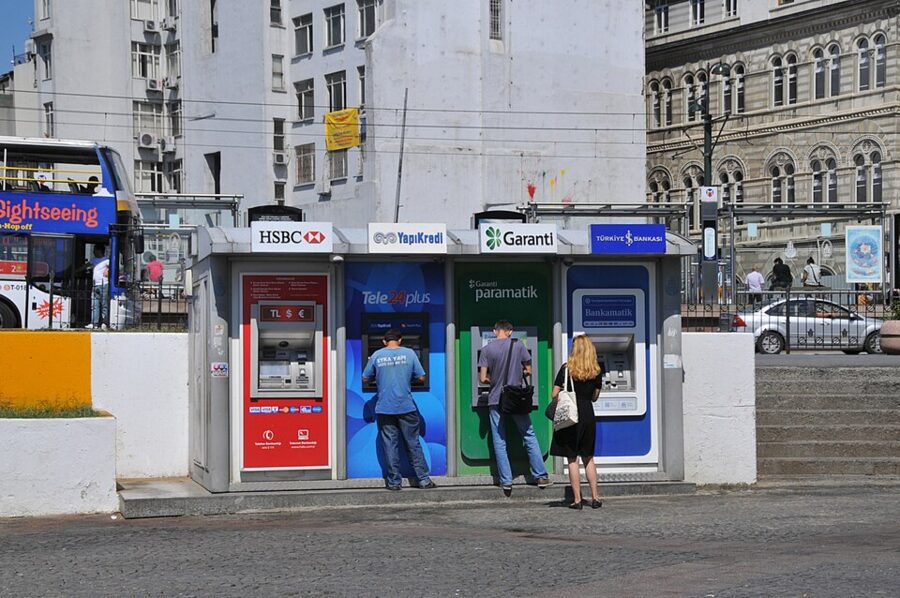
- Rule one: take lira from a bank’s own ATM, ideally one built into a branch, and take a large sum each time, because the fees come per withdrawal.
- Rule two: whenever a cash machine or card terminal offers to charge you in euros, pounds or dollars, refuse and pay in lira.
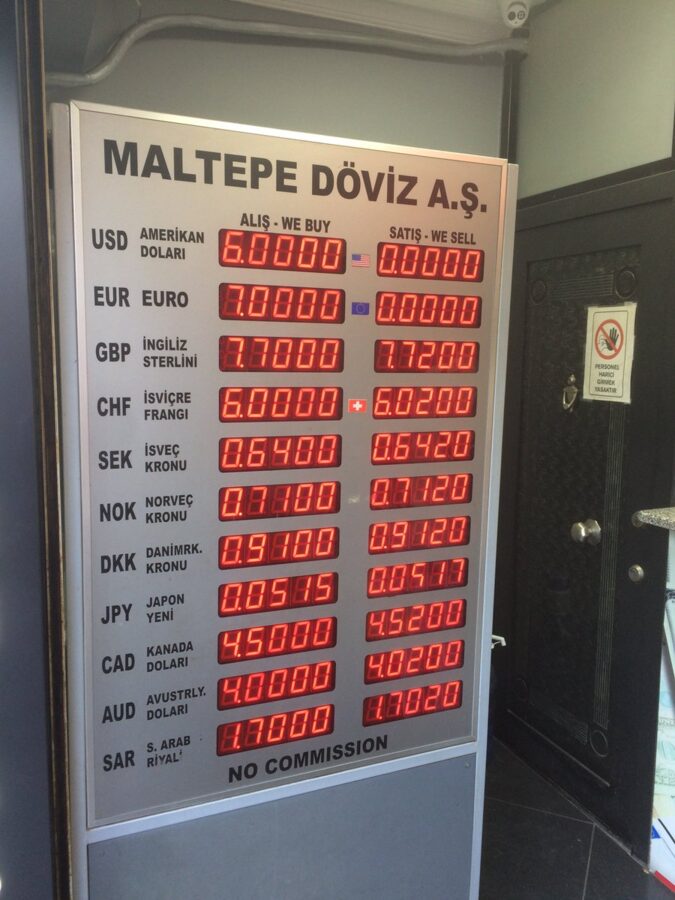
- Rule three: change cash at a döviz bürosu (exchange office) in town, never at a hotel desk, and compare its buying rate with the Central Bank’s before you hand over notes.
- A day’s budget: about 1,700–2,300 TL (€31–42) in Istanbul for a dorm bed, transit, street food and a lokanta lunch, before any paid sights.


Contents
The lira in your hand
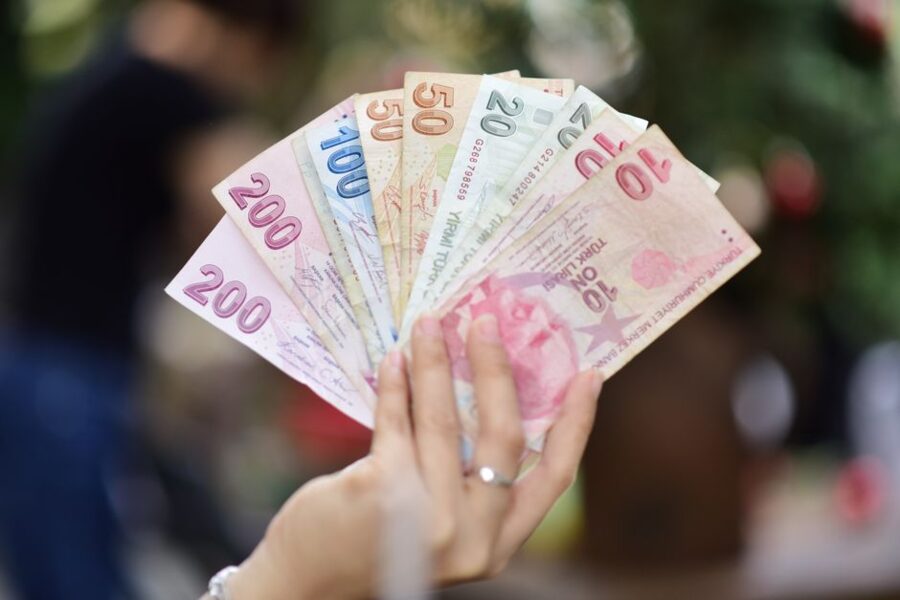
Turkey’s currency is the Turkish lira, written TL on price tags, TRY on bank statements and ₺ on receipts. One lira is 100 kuruş. The notes in circulation are 5, 10, 20, 50, 100 and 200 lira, all from the series the Central Bank began issuing on 1 January 2009, with Atatürk on the front and a scientist, writer or artist on the back. The 200 carries the 13th-century poet Yunus Emre; the 50 carries Fatma Aliye, whom the Central Bank calls the country’s first woman philosopher.
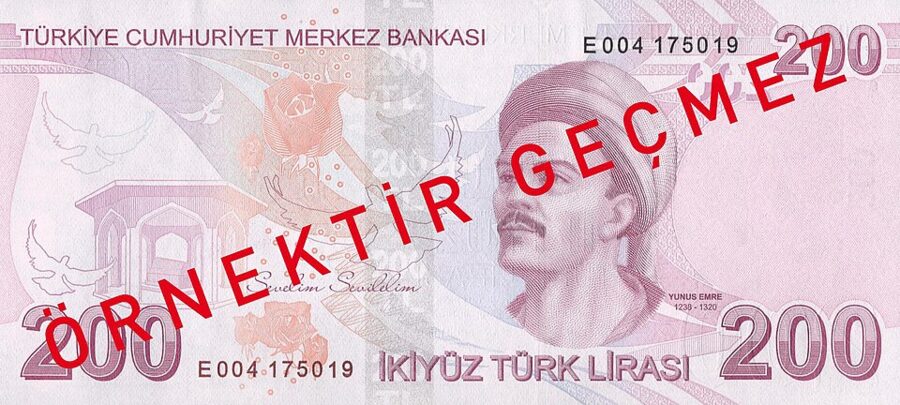
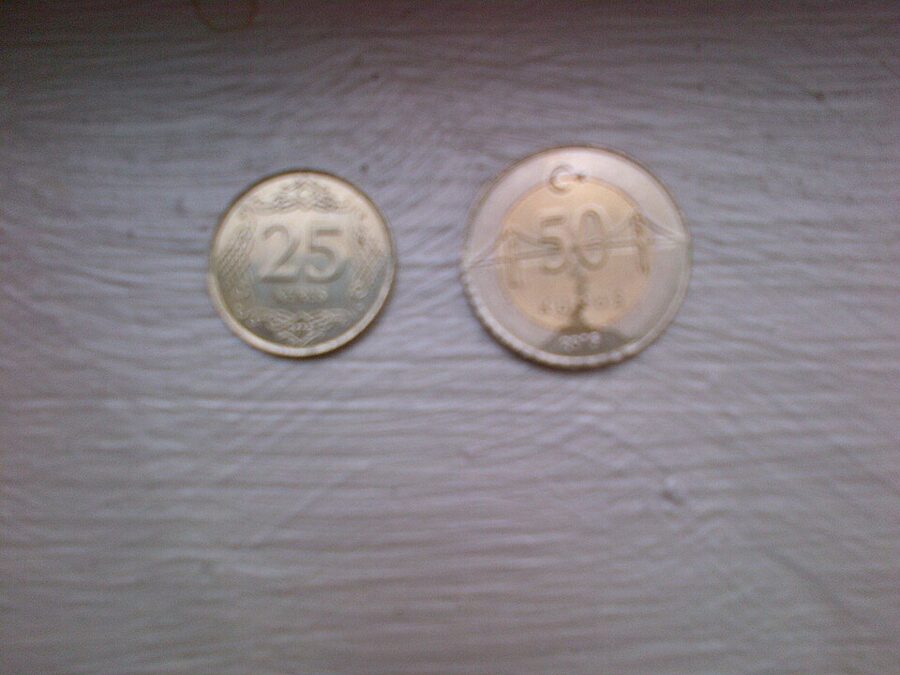
Talk of 500 and 1,000 lira notes comes round every year. As of late 2026 the Central Bank has made no such announcement, and the 200 remains the largest note. Coins come in 1, 5, 10, 25 and 50 kuruş and 1 lira, minted since 2009 by the state mint. The 1-lira coin and the 50 and 25 kuruş do most of the work, and card readers and transit fares take care of the odd kuruş.

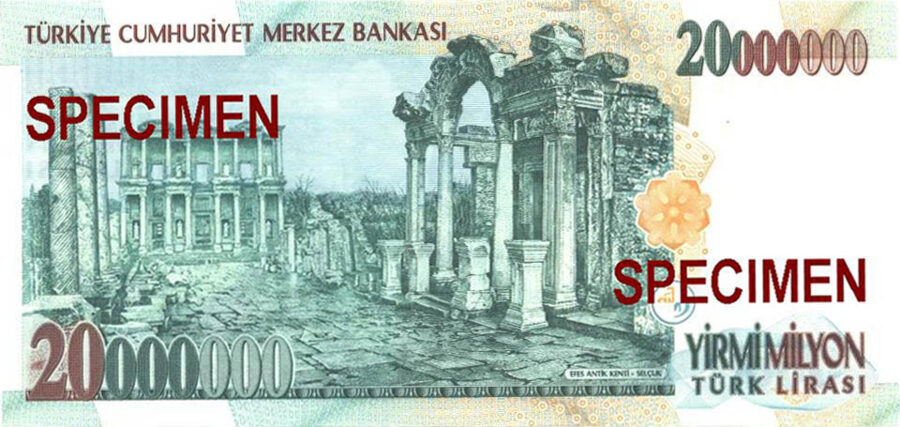
The history fits in a line. On 1 January 2005 Turkey struck six zeros off the old lira, so one million old lira became one new lira (YTL), and the “new” was dropped in 2009. Anyone who backpacked here in the 1990s remembers paying for a bus ticket in millions.
Inflation: how fast the prices move
TÜİK, the state statistics office, measured consumer prices 29.77% higher in October 2026 than a year earlier, with 2.58% added in October alone. That is slower than the 44.38% of December 2024, but still fast enough to notice within a trip. Between January and October 2026 prices rose about 27.5%, and unevenly: 4.84% in January, 4.18% in April, under 1% in June.
You feel it most in prices that an authority sets. A full Istanbulkart fare was 35 TL in September 2025, 42 TL from 16 February 2026 and 46.20 TL from 20 July 2026. The amount you can pay by contactless card without a PIN went from 1,500 TL to 2,500 TL on 15 January 2026, set by the banking regulator.
So treat any lira price older than six months, in a guidebook, a forum post or a hostel review, as a floor rather than a quote. Euro prices drift much more slowly, and that explains why so many of them exist.
Why so many tourist prices are in euros
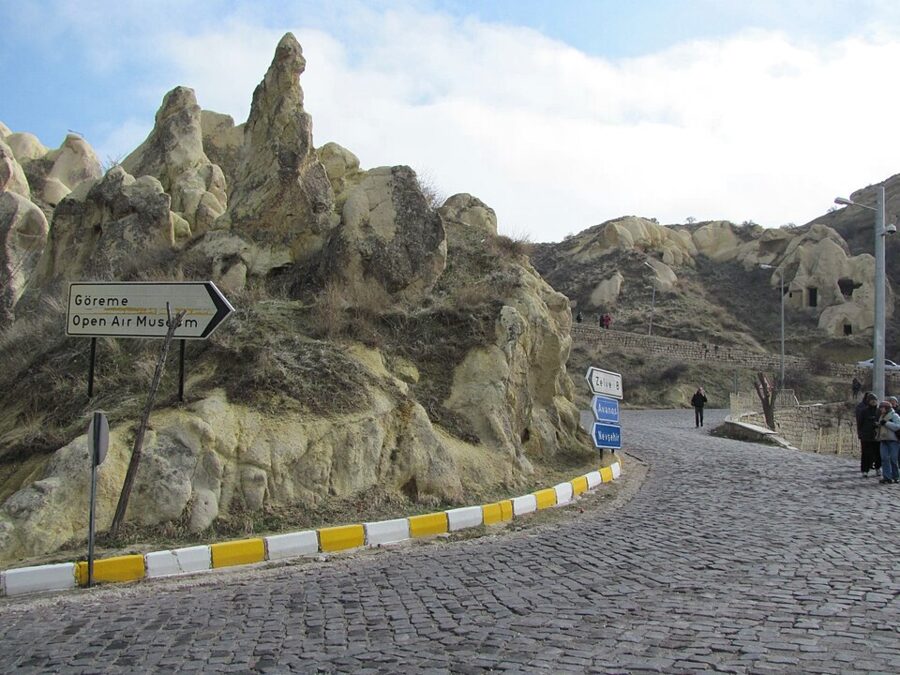
When prices in your own currency rise by almost 30% a year, anyone selling to foreigners has a reason to price in someone else’s. Hostels list their dorm beds in euros on the international booking sites, the ferries from the Greek islands sell in euros, balloon and gulet operators quote in euros, and carpet shops quote in whatever they think you carry. The state did the same: museums and archaeological sites run by the Ministry of Culture and Tourism price foreign visitors in euros, which is why Ephesus is €40 and the Göreme Open Air Museum €20.
You cannot hand euros over at those gates, though. The Ministry’s visiting directive says every transaction is in lira, converted from the euro price at the Central Bank’s effective selling rate of the previous business day. For tickets sold on Monday 23 November 2026, that is Friday’s 55.48, so the €40 Ephesus ticket costs 2,219 TL by card or in cash. A few lira either way does not matter; turning up with only euro notes does.

Cards work almost everywhere, with exceptions
In any Turkish city, a Visa or Mastercard pays for supermarkets, pharmacies, bus company offices, museum ticket desks, hostels and most restaurants, and contactless is the default. Turkish terminals accept a tap without a PIN up to 2,500 TL, although your own bank may still ask for one. A phone wallet usually works on any terminal that takes a contactless card.
Two things cost you at the terminal. Your own bank may add a foreign-transaction fee to every payment, so a card without one is worth arranging before you leave. And some terminals offer to charge you in your home currency; the answer is always lira, for the same reason as at the ATM. In the Grand Bazaar, some shops also offer a lower price for cash, so ask for both before you choose.
Transit: the Istanbulkart and bank cards
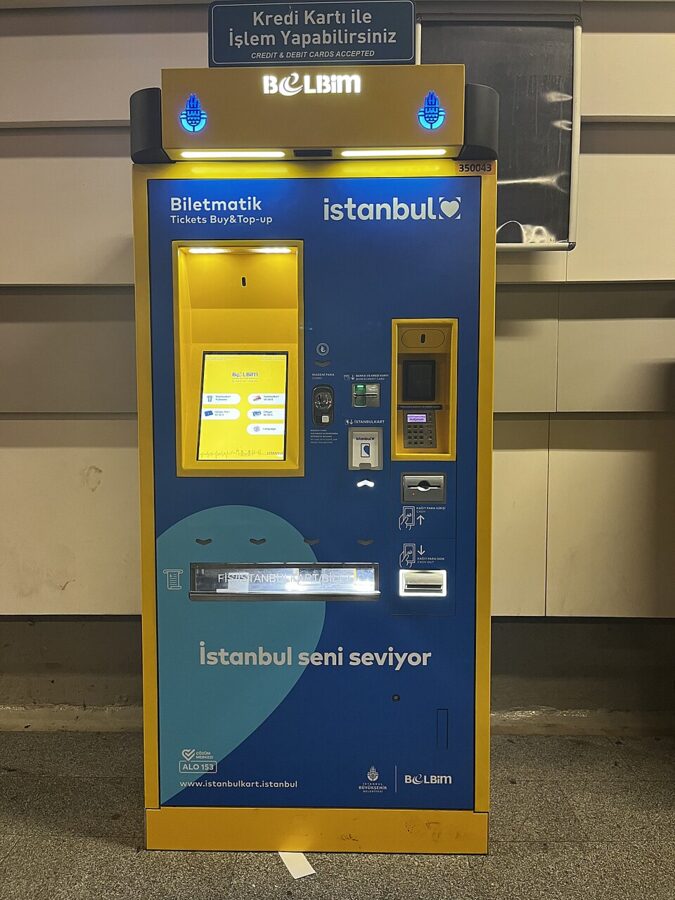
Istanbul’s metro, trams, buses, Marmaray trains and municipal ferries run on the Istanbulkart, a contactless transit card sold at the yellow and blue Biletmatik machines in stations and at piers. The card itself costs about 165 TL and a full fare is 46.20 TL, with discounts when you change lines within the transfer window. Where to buy it and how much to load on arrival are in the Istanbul travel guide.
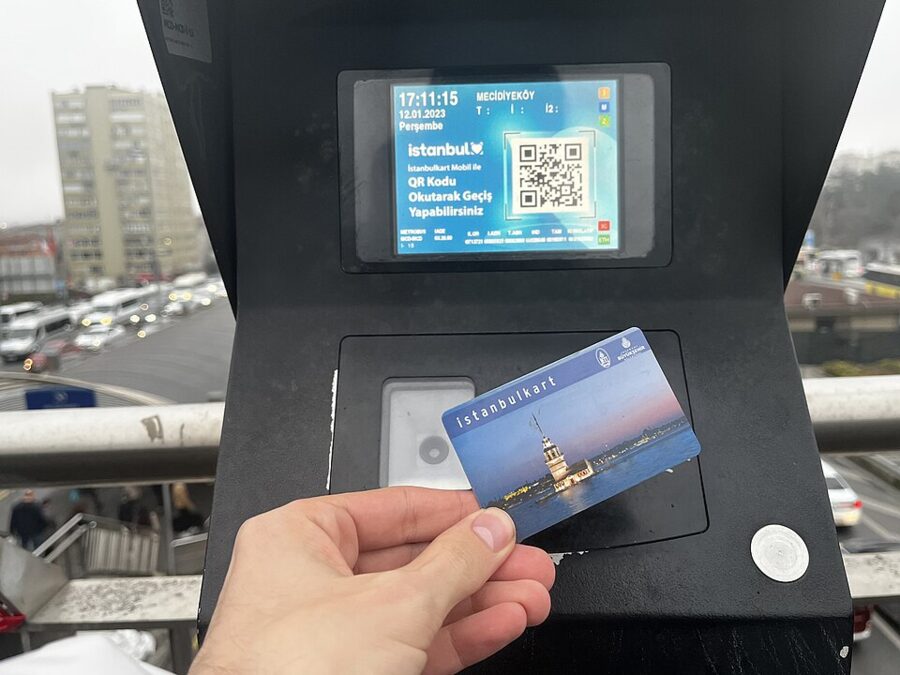

Since October 2022 many Istanbul readers have also accepted a contactless bank card, but the city charges more for that ride than for the Istanbulkart and you lose the transfer discounts. For one ride from the airport it saves a queue; for a week it is the expensive way. The Biletmatik machines take cash and, at many machines, bank cards, so load the Istanbulkart with a card and keep your notes for the places below.

Where only cash will do
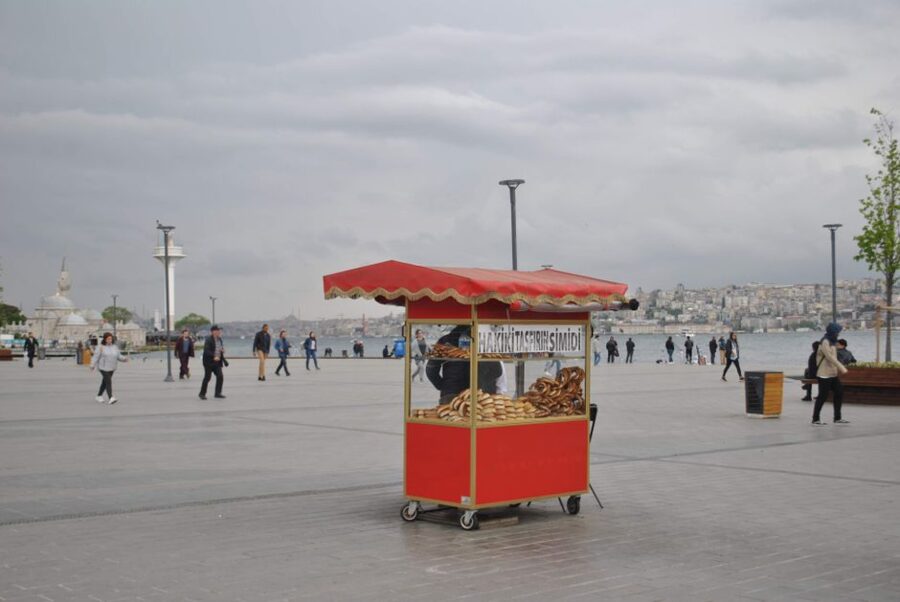
Outside the big-city transit systems, the lira note still rules. The dolmuş (shared minibus) and village minibuses take cash from the driver, and if you sit at the back your fare goes forward hand to hand. Simit carts, tea gardens, corner kiosks, market stalls, small family lokantas and most village pansiyons want cash, and so do some port fees: Ayvalık charges its 200 TL fee in cash at the terminal. For a taxi, have notes ready rather than counting on a card reader.
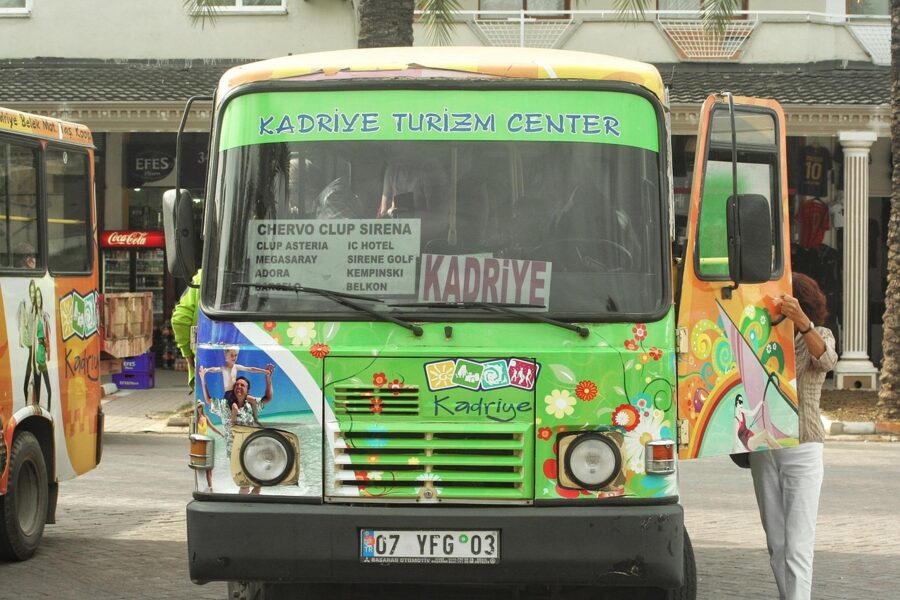
None of this takes much: 1,000–2,000 TL in small notes covers a few days of minibuses, tea and lunch. The dolmuş routes and the long-distance coaches, which sell tickets by card, are covered in getting around Turkey.
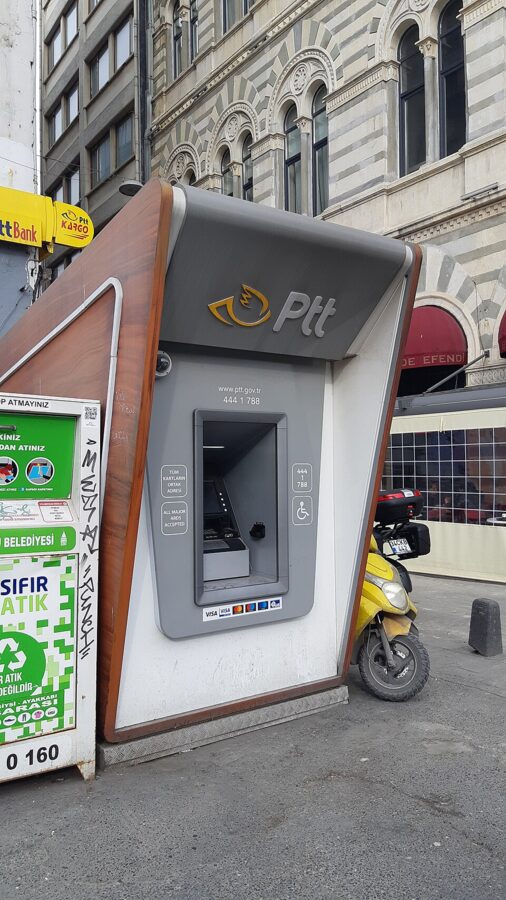
ATMs: which machine, and what it costs
A Turkish ATM can charge you three ways on one withdrawal. The bank that owns the machine adds an access fee for a foreign card, your own bank may add its own fee, and the machine may try to convert the amount into your home currency at its own rate. The banks’ published tariffs are written for their own customers (İş Bankası’s 2026 list, for example, prices ATM use for its cardholders and says nothing about foreign cards), so the only reliable figure is the one the machine shows on screen before you confirm. Read it, and cancel if it looks high; the machine next door belongs to a different bank.
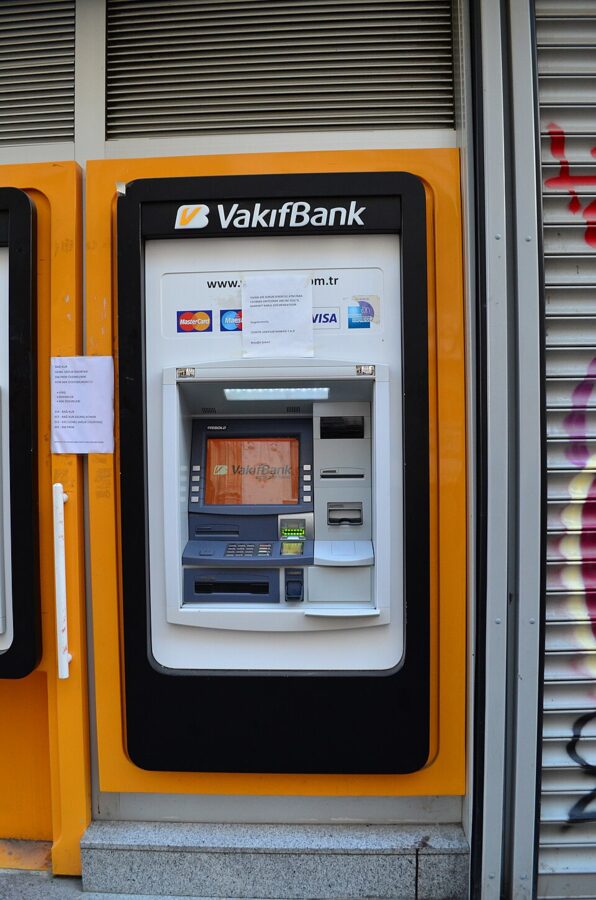

Because the access fee comes with every withdrawal, five small withdrawals cost far more than one large one. Take out what you need for several days, split it between your wallet and your bag, and use the card for anything over a few hundred lira. Stick to machines that belong to a bank, and prefer one built into a branch: it is watched by cameras, and during opening hours there is someone inside to talk to if the machine keeps your card.
Say no to the conversion
This is the one that costs real money. After you enter the amount, many machines show a screen offering to charge your account in euros, pounds or dollars “at a guaranteed rate”. That is dynamic currency conversion: the machine’s operator sets the exchange rate, and it is worse than the one your card network applies. Choose to be charged in lira, often labeled “without conversion”, and let your own bank do the arithmetic.
You can test the offer in a few seconds. Divide the lira amount by the euro figure on the screen: if 5,000 TL is offered as €98, the machine is valuing a euro at 51 lira against the Central Bank’s 55.30, a markup of about 8%. Inside the EU, a 2019 regulation obliges ATMs and card terminals to show that markup against the European Central Bank’s rate before you confirm. Turkey is not bound by it, so do the sum yourself, or simply always say no.

Limits and skimming
Every machine caps a single withdrawal; if the amount you ask for is refused, try a smaller one and repeat. Your own bank sets a daily limit too, so check it in your banking app before you leave if you plan to draw a week’s cash at once.
Skimming devices turn up at cash machines in every country that sees tourists. Before you insert the card, look at the slot and the keypad for anything that sits loose or looks added on, shield the keypad with your other hand as you type the PIN, and walk away from any machine where a helpful stranger offers to show you how it works.
Exchange offices, banks and hotels
If you bring cash, bring euros or dollars in clean notes; worn or written-on notes may be refused or get a worse rate, and foreign coins are not exchanged. The best place to change them is a döviz bürosu on a commercial street with several in a row, where each board is a few steps from its competitor. In Istanbul, the streets between Çemberlitaş and the Grand Bazaar are lined with them.
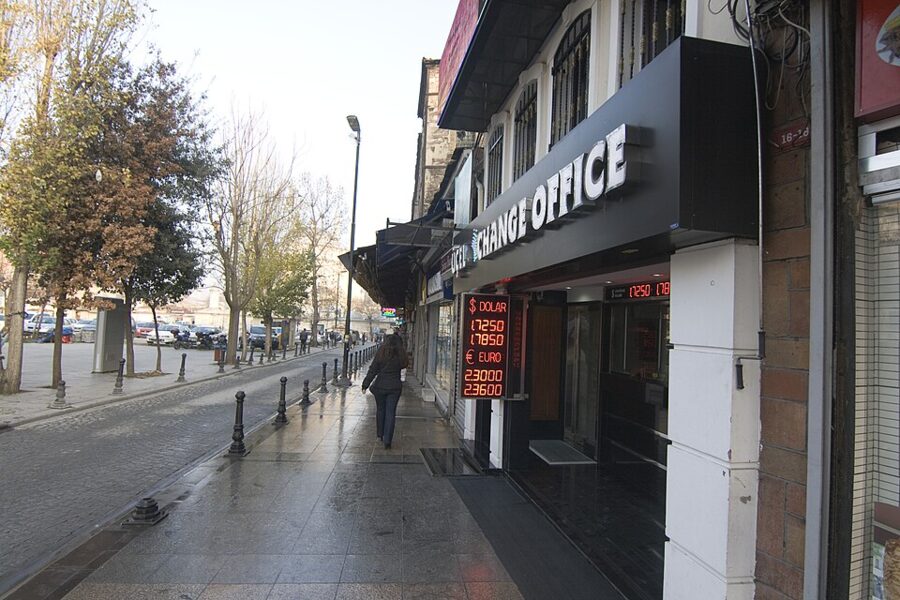

Banks change cash too, but you take a queue ticket, show your passport and wait. Hotel desks and airport exchange counters give some of the worst rates you will see; change only enough there for the first ride and the first meal, or skip them and use a bank ATM in the arrivals hall.
Reading the rate board
Every office shows two columns. Alış (“we buy”) is what the office pays you for your euros or dollars; satış (“we sell”) is what it charges you for them. When you are selling euros, only the alış column matters. Compare it with the Central Bank’s rate for the day: the closer the two, the better the office, and a narrow gap between alış and satış shows an office that wants your business.
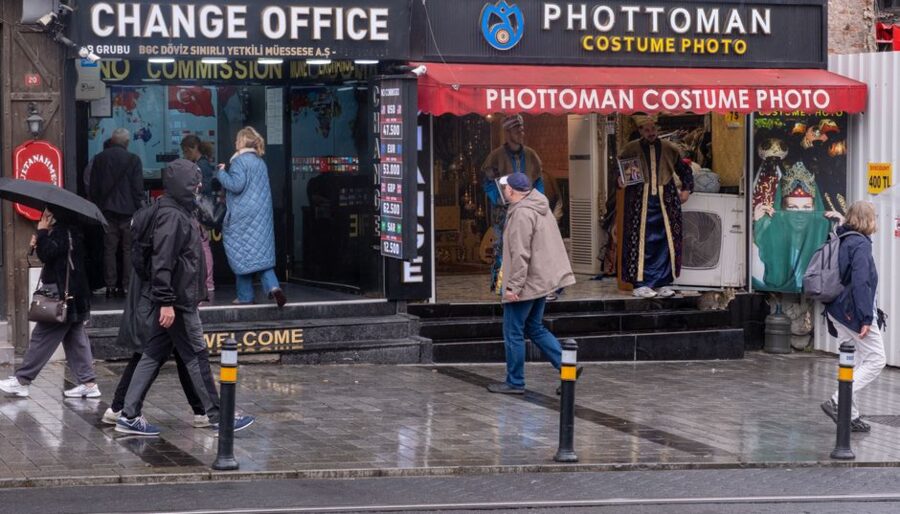
Count the lira at the window before you step away, and take the receipt. Never change money with anyone who approaches you on the street, whatever rate he names.
When someone offers to take euros or dollars
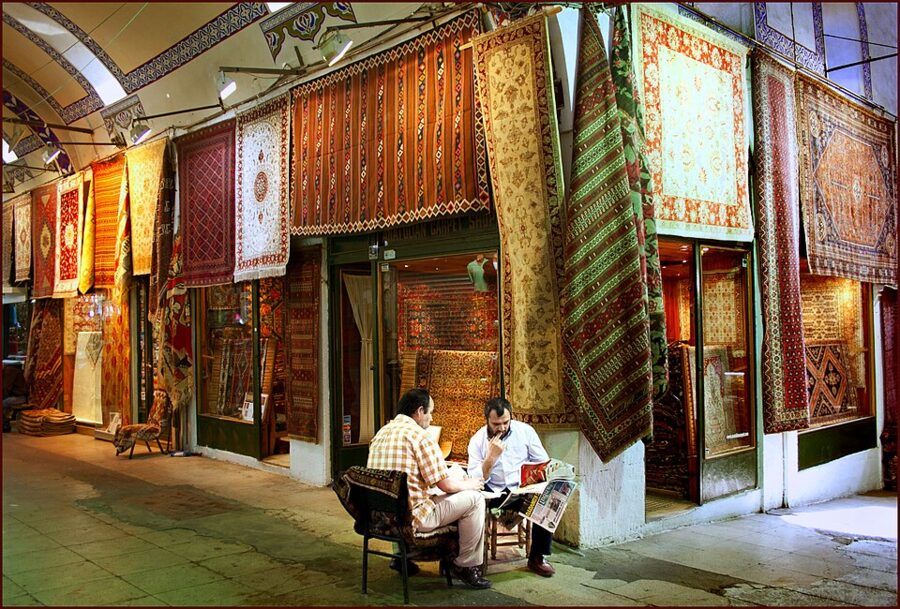
You will be offered the choice in tourist streets: a carpet shop, a leather jacket, a boat trip on the quay, a transfer from your guesthouse. Paying in euros can be convenient, but it is rarely cheaper. The seller sets the rate, and the rounding nearly always goes the seller’s way.
A quick example with November 2026 numbers. A jacket marked 1,000 TL is quoted to you as €20. At 55.30 lira to the euro, €20 is worth 1,106 TL, so you have paid about 10% extra for the convenience. Ask for the price in lira first, then decide how to pay.

The exceptions are prices genuinely set in euros: the ferries from the Greek islands, hostel beds booked through the international platforms, and balloon flights. Even then, pay by card where you can, and let your own bank convert.
Small change and tips
A big withdrawal comes out mostly in 100s and 200s, and nobody selling a 30 TL simit wants to break a 200 at 07:30. Break big notes where the till is full: supermarkets, pharmacies, bus company counters and the ticket windows at ferry piers. Keep a pocket of 5, 10 and 20 TL notes and 1-lira coins for minibuses, tea, public toilets and tips.
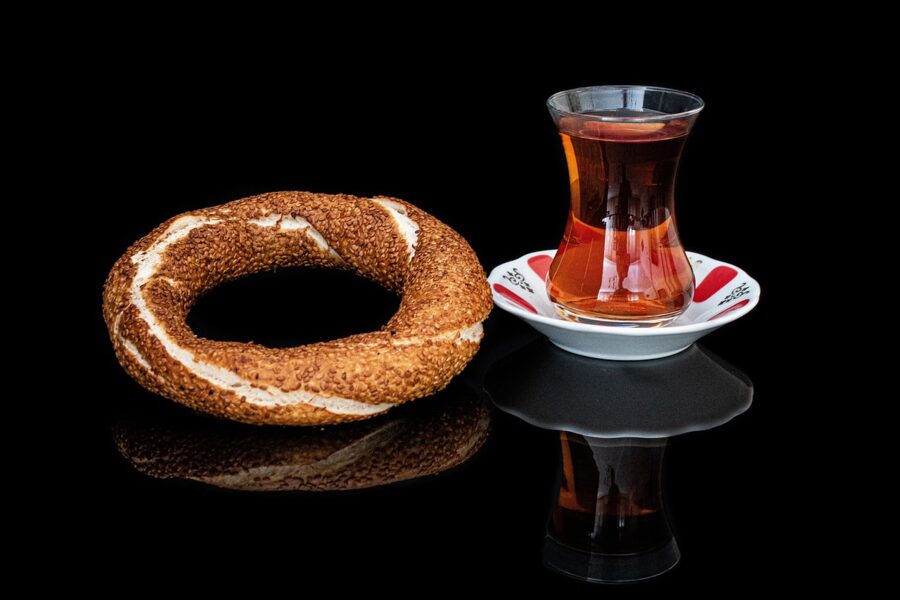
Tipping is small and in cash. Since 30 January 2026, restaurants, cafés and patisseries may no longer add a service charge, table charge or cover to the bill, so 5–10% at a sit-down meal is up to you; at a lokanta counter the coins from your change are plenty, and taxi fares get rounded up. Hammam attendants, guides and the rest are in the Turkey travel tips.

A daily budget for 2026
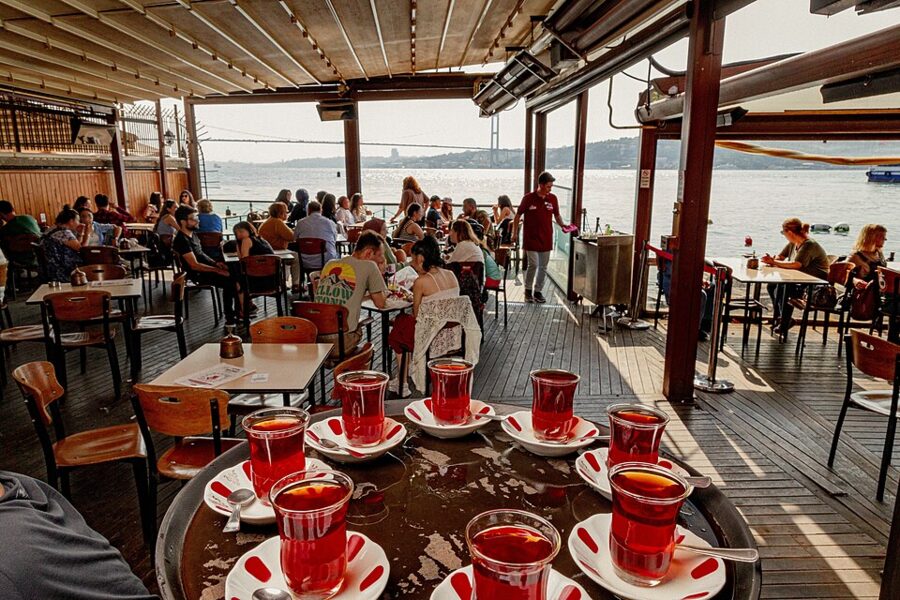
Here is a lean day in Istanbul in late 2026, with a dorm bed and meals the way local people eat them, converted at €1 = 55.30 TL. The food prices match the Turkish food guide and the fares the city’s July 2026 tariff.
| Item | Lira (late 2026) | Euros | Notes |
|---|---|---|---|
| Dorm bed, central Istanbul | about 775–1,000 TL | €14–18 | Low-season rates; more in July and August |
| Simit and a glass of tea | 40–50 TL | under €1 | Cash, from a cart or a teahouse |
| Lokanta lunch: soup, a stew, rice | 400–650 TL | €7–12 | Less in Anatolian towns; half portions cut it further |
| Dinner: chicken döner wrap or pide | 200–340 TL | €4–6 | A meat döner wrap was about 360 TL |
| Four transit rides | about 185 TL | €3.30 | 46.20 TL a full fare; transfers cost less |
| Tea, water and snacks | about 100 TL | €2 | A 5-liter bottle of water was about 36 TL |
| Total | about 1,700–2,300 TL | €31–42 | Before any paid sight |
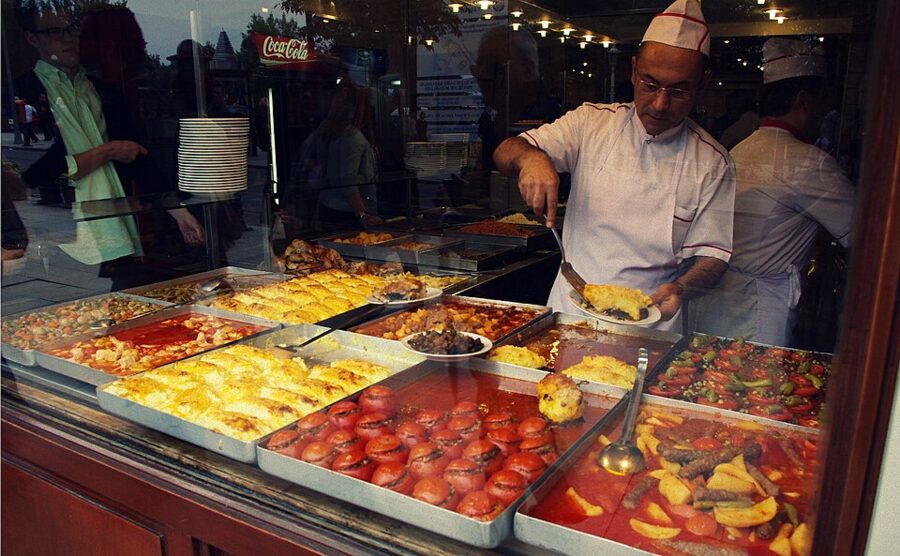

One paid sight roughly doubles that day: the Archaeological Museums are €15, Galata Tower €30, and Topkapı Palace with the Harem 2,750 TL. On the road, a day with your share of the long-distance bus fares and the site tickets comes to about 2,200–2,800 TL, or €40–50, on the loop in the Turkey itinerary. Dorm prices on the hostel booking platforms are quoted in euros, so that part of the budget moves least.
The euro-priced extras are what break a Turkish budget: balloon flights, gulets, organized tours, and alcohol, which is taxed hard. Decide on those before you arrive. Then land, find the bank machine in the arrivals hall, take out a few days of lira in one go, and press the button that says no to the conversion.