On Friday 27 November 2026, the cheapest seat in a stranger’s car from Paris to Brussels was listed at €19.49. The cheapest FlixBus that day cost €8.99, and the cheapest train €35. That spread is the carpooling question in three numbers: a shared car is rarely the cheapest way along Europe’s busy corridors, but it is often the cheapest fast one, and on the roads that buses and trains ignore it can be the only one.
The short answer, then. Take the bus when it runs direct at a sane hour, because on the three classic legs priced below it undercut the cheapest carpool by €6 to €26. Book a carpool when the bus leaves at the wrong time, needs a change, or does not go where you are going at all. BlaBlaCar covers most of the continent; the smaller sites in the table fill its gaps, and they cost little or nothing to use.

| Platform | Where it matters | What the passenger pays on top | How you pay |
|---|---|---|---|
| BlaBlaCar | France, Spain, Portugal, Italy, Germany, Belgium, the Netherlands, UK, Poland, Czechia, Slovakia, Hungary, Romania, Croatia, Serbia, Ukraine, Turkey; newer Greek and Bulgarian sites | A service fee calculated from the driver’s price, included in the total you see; none where rides are cash-only | Online at booking in France, Spain, the UK and the west; cash to the driver across much of Central and Eastern Europe and in Turkey |
| Mobicoop | France, with some runs into Belgium and Germany | Nothing: a cooperative with no commission and no ads | Agreed with the driver |
| bessermitfahren.de | Germany, plus long rides out of it | Nothing: free to list and to search | Agreed with the driver |
| Oszkár and its Motar sites | Hungary; Motar for Slovakia, Austria, Poland and cross-border rides | The driver’s contribution, shown before you book | Mostly cash to the driver, sometimes online |
| Prevoz.org | Slovenia and rides to its neighbors | Nothing to the site | Arranged directly with the driver |
| Skjutsgruppen | Sweden | Membership of the nonprofit, 80 kr a year | Costs split with the driver |
| Local Facebook groups | Gaps everywhere: the Balkans, islands, small towns | Nothing | Cash, with no refund and no platform behind you |
My verdict: carpool when it buys you a daytime ride the bus cannot, and treat the platform fee as the price of a refund policy and a review history. Hitchhiking still works across most of Europe, at a median wait of 20 minutes, and it has its own section at the end.

Contents
How BlaBlaCar works in 2026
A driver publishes a ride with a route, a departure time, a meeting point and a price per seat. You search, pick a driver, book, and meet at the agreed spot, usually a station, an airport or a shopping center. Prices are fixed when the ride is published and are not negotiable. BlaBlaCar suggests a price from the distance and the driver’s real costs, and caps it so the driver cannot turn a profit.
Instant booking or a request
Some drivers switch on Instant Booking, and your card is charged the moment you book. Others review each request: the driver then has up to 3 hours in the daytime and 12 hours at night to accept, while your bank holds the money without taking it. If the request is declined or expires, the hold drops off, which can take up to seven days depending on the bank. For a last-minute ride, filter the search to Instant Booking and skip the wait.
Many drivers publish only a few days ahead, so an empty search for a date two weeks out means little. Create a ride alert for the route and date instead; BlaBlaCar sends up to five notifications within 24 hours when matching rides appear.
The service fee, and when you pay cash
Only the passenger pays a service fee, and it is calculated from the driver’s price and built into the total you see in the results. In France, Spain, the UK and the other “online” countries, the whole amount goes on your card at booking, and the driver is paid by the platform an hour after the estimated arrival time. That delay is the reason a no-show is worth reporting: the money has not gone anywhere yet.
Further east it changes. BlaBlaCar’s help pages list passengers paying the driver in cash in Czechia, Hungary, Poland, Romania, Slovakia, Croatia, Serbia, Turkey and Ukraine. In Slovakia and Ukraine the service fee is still charged online and the fare is cash; in Croatia, Serbia and Turkey there is no service fee at all, and the whole price goes to the driver in person. The booking screen tells you which system applies before you commit.
Cash has rules. Drivers take only the currency of the country where the ride starts, the price shown is the exact amount, drivers are not obliged to carry change, and you pay when you sit down. A driver who sends a payment link or asks for a bank transfer is breaking the platform’s rules, and that is the one request to refuse every time.
Cancellations and refunds
The passenger rules are the same in the UK, French and German help pages. Cancel more than 24 hours before departure and the fare comes back, minus the service fee. Cancel inside 24 hours and you get 50% of the fare back, again without the fee, and the driver keeps the other half. If you booked inside the 24 hours and cancel within 30 minutes of booking, you get the full fare back without the fee.
Fail to turn up and the driver gets your whole contribution. If the driver cancels, you get everything back including the fee, automatically. If the driver simply does not appear, report it under Your rides as “you didn’t travel together” within an hour of the estimated arrival time; the driver then has seven days to agree or dispute it. On a cash ride none of this applies: there is nothing to refund, so keep the backup bus in mind.
Profiles and ratings
A Verified Profile badge means the member has had an ID document, an email address and a phone number checked; it is optional, and BlaBlaCar is explicit that it runs no background checks. Ratings appear only after both people have rated each other, so nobody can retaliate. Silence for 14 days counts as a positive rating, and a late cancellation or a no-show triggers an automatic negative one. Members with three or more ratings now get an AI-written summary of up to 50 recent reviews on their profile, which saves scrolling but flattens the detail, so read the newest few yourself.
BlaBlaCar Bus, briefly
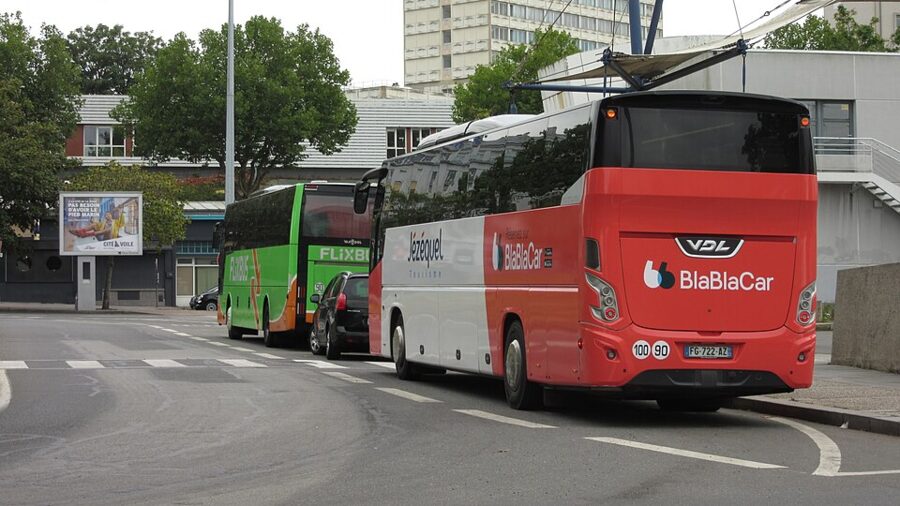
On 21 April 2026, BlaBlaCar announced it would stop operating its own coaches in France under the BlaBlaCar Bus name by the end of 2026, cutting 40 jobs, after a year in which the network carried more than 6 million passengers on 400 lines. The app keeps selling coach seats run by partner companies, so bus results will not vanish from searches. If you hold a BlaBlaCar Bus voucher, read the dates: vouchers issued from 2 November 2026 are valid for two months, and a bank refund of a live voucher is possible only after 31 December 2026, once you have booked another trip through the platform. Vouchers issued between 22 April and 1 November 2026 cannot be refunded at all and expire on 31 December 2026.
While its own coaches run, the luggage rule is generous: two free pieces of hand luggage and one free hold bag of up to 23 kg per passenger, with up to two more hold bags for a fee. Partner operators set their own rules, so check the carrier named on the ticket.
The alternatives, country by country
France: Mobicoop. A cooperative owned by its members, running on open-source software, with no commission and no ads, so the price is the driver’s cost share and nothing else. It posted new projects through 2026, including a cross-border rural scheme with the Catalan cooperative Som Mobilitat. Its long-distance listings are thinner than BlaBlaCar’s, but for a short rural hop it is worth a search before you pay a fee.
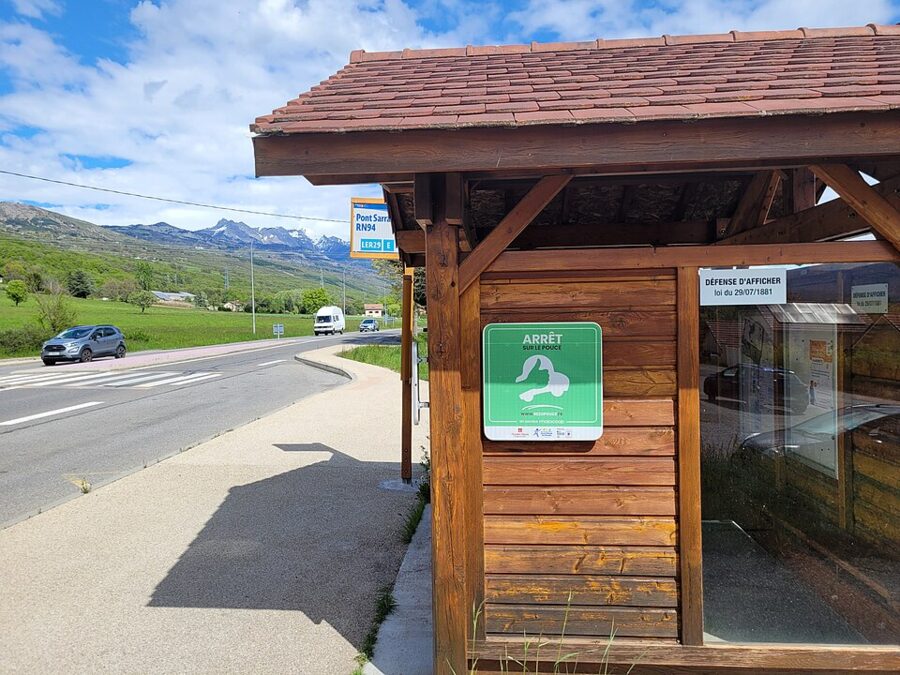

Germany: bessermitfahren.de. The German word for a carpool is Mitfahrgelegenheit, and BlaBlaCar now dominates the market. Bessermitfahren is the free alternative: in late November 2026 it carried listings such as Dresden to Belgrade on 29 December for €50 and Wilsdruff to Ditzingen on 28 November for €24. There is no booking engine, no fee and no refund; you contact the driver and settle up between you.
Hungary and around: Oszkár. Hungary’s own carpool site was still posting rider news in November 2026, including advice for the Christmas-market runs to Vienna, Bratislava and Prague. The driver sets the contribution, the site shows it before you book, and you usually pay the driver in cash, sometimes online. Its sister sites under the Motar name cover Slovakia, Austria and Poland and run in English.
Slovenia: Prevoz.org. Slovenia’s own rideshare board. It coordinates rides within Slovenia and to the neighboring countries, its Android app was updated in October 2026, and you deal with the driver directly.
Sweden: Skjutsgruppen. A nonprofit association running since 2007. Membership costs 80 kr a year and members split costs evenly or simply give each other lifts.
Greece, Bulgaria and the Balkans. BlaBlaCar now runs Greek and Bulgarian sites, with rides listed on routes such as Athens to Thessaloniki, but coverage away from the big cities is thin. Where it runs out, local Facebook groups carry rides across the region; you get no reviews, no refund and no platform to complain to, so meet in public and pay on arrival.
Turkey. BlaBlaCar works here on a cash-only basis with no service fee. The intercity bus network is so dense and cheap that a carpool rarely wins, as the guide to getting around Turkey shows.
Gone. GoMore in Denmark and Amovens in Spain, both once known for ridesharing, now only rent out private cars and lease them. Old forum advice pointing to either is out of date.
Sample routes: carpool, bus and train on 27 November 2026
All prices are for one adult on Friday 27 November 2026, taken from the operators’ own listings on 22 November 2026. The carpool price is the cheapest BlaBlaCar seat for that day, fee included; the bus is the cheapest FlixBus or RegioJet fare.
| Route | Cheapest carpool | Carpool time | Cheapest bus | Bus time | Train |
|---|---|---|---|---|---|
| Paris to Brussels (322 km) | €19.49 | About 3h40 | €8.99, FlixBus | 4h–4h15 | €35 that day, about 1h30 |
| Berlin to Prague (347 km) | €22.29 | About 3h55 | €15.99, FlixBus, 16:20 or 19:00 onward; €17.90, RegioJet, 19:00 | 4h15–4h35 | Direct EuroCity trains; fare varies by booking date |
| Madrid to Lisbon (638 km) | €35.79 | About 6h55 | €9.49, FlixBus, 09:05 or 10:50 | 8h05–8h15 | No direct train |
Paris to Brussels. The bus wins on price and the train on time. The carpool sits in between and only makes sense when it saves you a crossing of Paris: rides listed on 22 November left from suburbs such as Issy-les-Moulineaux and Saint-Mandé and dropped off in Saint-Gilles, Woluwe-Saint-Lambert, even Antwerp. On Wednesday 25 November the cheapest carpool fell to €14.49 and the cheapest train to €19, so the gap moves by the day.
Berlin to Prague. The €15.99 bus fares were only on the late-afternoon and evening coaches; daytime FlixBus departures that Friday cost €25.99 to €56.99, and RegioJet’s daytime coaches €21.90. Against those, a €22.29 carpool is the cheapest daylight option, if you can get one of the five or so seats offered a day.
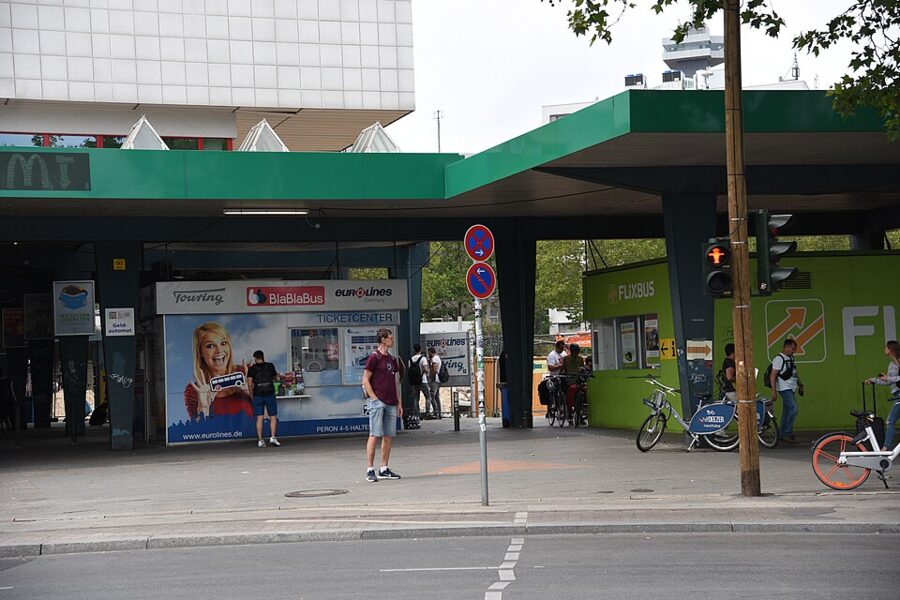
Madrid to Lisbon. This is the bus’s leg. FlixBus asked €9.49 for a daytime coach against €35.79 for the cheapest carpool, and the car saves only about an hour over 638 km. There is no direct passenger train between the two capitals in 2026, so the rail option means changes and most of a day.
At either end you are back on city transport; tickets, passes and the airport links for the big cities are in the guide to public transport in Europe.
Safety, borders and the law
Most of the safety work happens before you get in. Pick a driver with a Verified Profile, ratings and some experience; read the newest reviews rather than the average. Keep messages inside the app. Meet somewhere public, check that the car’s make and model match the listing, and if they do not, cancel and report the member.
Charge your phone, screenshot the ride details, and send the plate and route to someone who will notice if you go quiet. Women can use the Women Only filter, which shows rides where a woman is driving and only women are aboard; it is visible only when you are logged in.
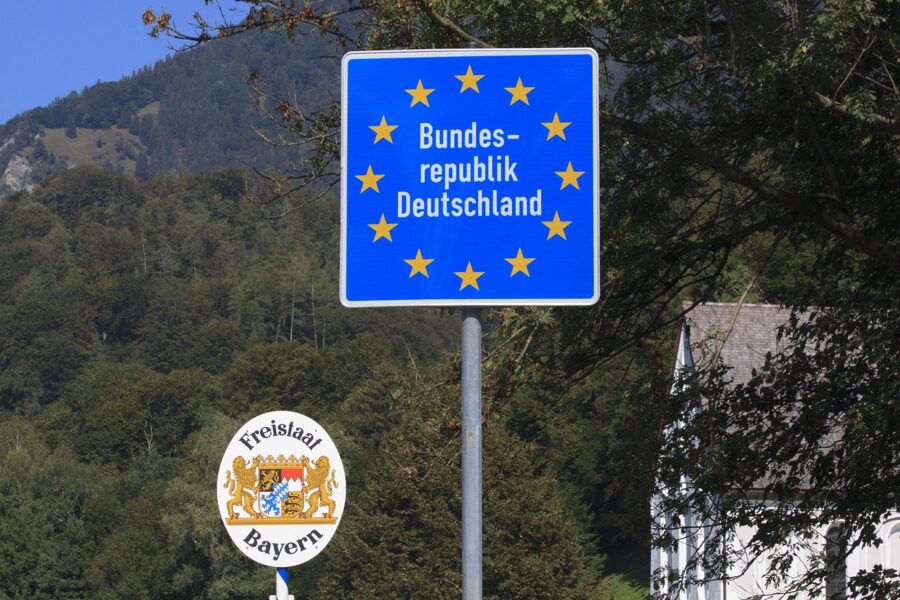
Borders. Bring a passport or national ID card on any cross-border ride, Schengen or not. BlaBlaCar advises drivers to check their passengers’ documents at pickup and may ask you to verify your ID for cross-border travel. Non-EU travelers now pass through the EU’s Entry/Exit System at the Schengen frontier, with fingerprints and a photo, so a carpool from Serbia or Turkey into the EU can take longer at the crossing than the listing suggests.
Insurance and the law. Passengers are covered by the driver’s compulsory third-party insurance, and cost-sharing is legal as long as nobody profits. The UK writes it into section 1(4) of the Public Passenger Vehicles Act 1981: charges agreed in advance and no more than the car’s running costs.
Germany’s Passenger Transport Act exempts private car rides when the total charged comes to no more than 30 cents per kilometer, which on the 347 km Berlin to Prague run means about €104 for all passengers combined. Four people paying €22.29 each come to €89.16, comfortably under the line.
Hitchhiking in 2026
Hitchhiking in Europe now runs on a shared map. Hitchmap, the open spot map that absorbed Hitchwiki’s old list of spots, logs where people stood and how long they waited, and its reviews from Poland, Germany, Spain and Lithuania were still coming in through November 2026. Across 22,283 European reviews with a waiting time recorded between 2024 and 2026, the median wait was 20 minutes.

The fast countries in that data are Turkey, Estonia, Ireland and Moldova at a 10-minute median, with Albania at 12. France, Czechia, Romania and the Netherlands sit at 15, Germany, Poland and Italy at 20. The slow ones are Spain, Austria and Hungary at 25, and Greece and Croatia at 30. These are hitchhikers’ own reports and skew toward people who got a ride, so read them as a ranking, not a promise.
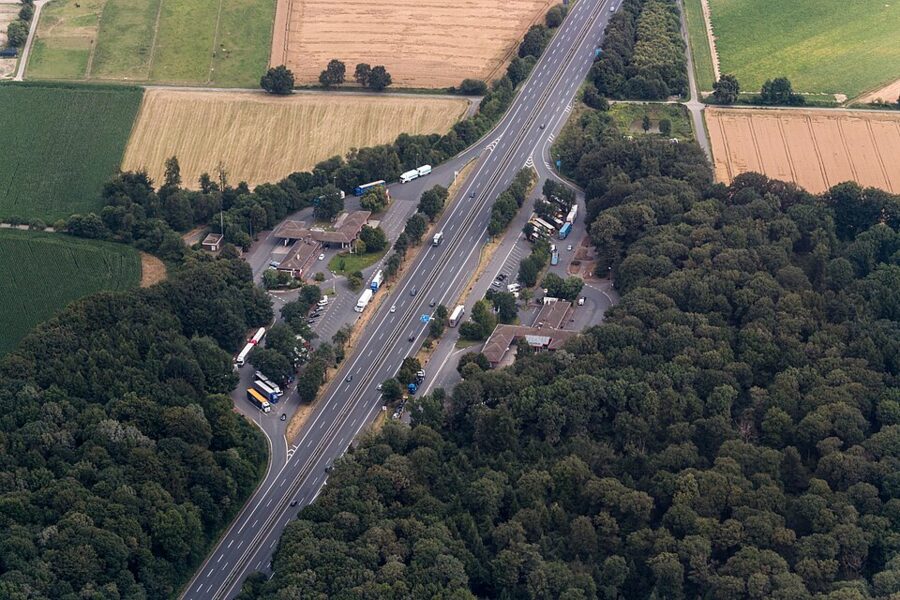
Where you stand matters more than where you are. German traffic law (StVO section 18) keeps pedestrians off the Autobahn entirely, hard shoulder and the ramp past the blue sign included, and France’s road code (article R421-2) does the same for the autoroute. The legal spots are the on-ramp before the blue sign and the service areas, where you ask drivers at the pumps face to face rather than holding out a thumb.

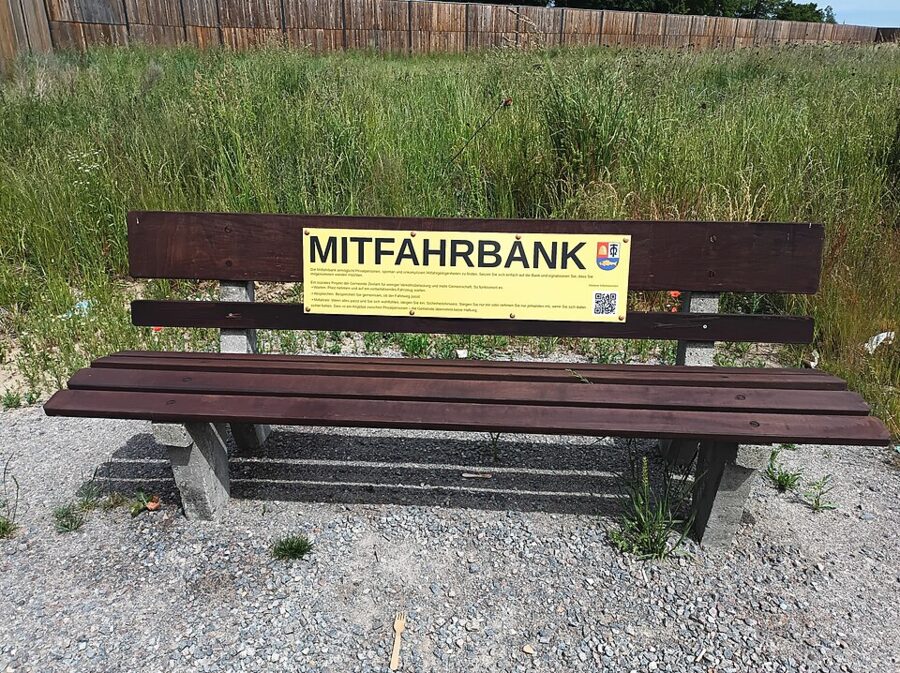
Villages have built their own versions. Rezo Pouce stops in rural France and the Mitfahrbank, a bench with a destination sign, in German and Swiss villages turn waiting into an accepted thing to do.
The safety line is simple. Hitch in daylight, ask where the driver is going before you say where you are going, keep your bag on your lap rather than in the trunk, and get out at the next fuel stop if anything feels wrong. If the last lift leaves you short at dusk, sleeping out is its own skill, covered in safe camping and sleeping outdoors in Europe.
For a planned trip, though, a booked seat beats a thumb. Set the BlaBlaCar alert on Monday for a Friday ride, keep the cheapest evening bus open in another tab, and book the bed at the far end from the list of best hostels in Europe for solo travelers before the driver confirms.