Pamukkale charges €30 to let you take your shoes off and walk up a white hill. It is still one of the best tickets in Turkey, as long as you do not spend it between 11:00 and 15:00, when the coaches from Antalya, Marmaris and Kuşadası have all arrived and the warm pools hold more legs than water.
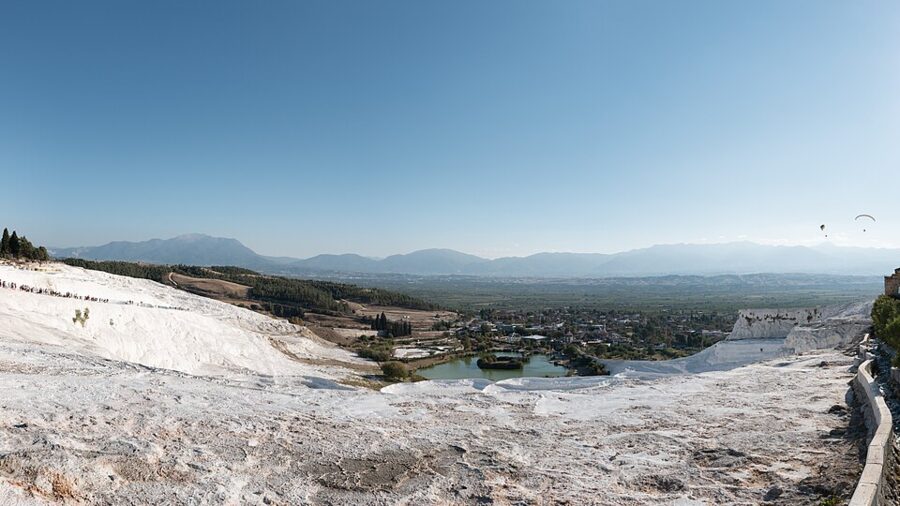

The terraces are only half of what the ticket buys. On the plateau above them sits Hierapolis, a Greek and Roman spa town with a theater that held something like 15,000 people, a necropolis that runs on for more than 2 km, a cave the ancients called a gate to the underworld, and a hilltop shrine to the apostle Philip. Most day-trippers see the white slope, the pool and the theater, then get back on the bus. With a night in the village you get the terraces in the empty first hour and again at sunset, and the ruins in between.
The rest is arithmetic. A minibus from Denizli otogar to the village is about 40–45 TL, a family pension room runs from about 1,400 TL in winter, and the only real extras are the Antique Pool (600 TL for foreigners in 2026) and, if you want a second ancient city, Aphrodisias or Laodicea at €12 each.

Contents
- Pamukkale at a glance
- What the white is, and how it nearly went gray
- Tickets, hours and the three ways in
- An order that beats the coaches
- Hierapolis: the spa town above the slope
- The Antique Pool: worth 600 TL?
- Karahayıt and its red spring
- Laodicea, across the valley
- Aphrodisias as a day trip
- Pamukkale village: beds, food and the hustle
- Day trip or a night?
- Getting there and away
Pamukkale at a glance
These are the numbers to plan around. The Ministry of Culture prices foreign adults in euros at its sites; everything else in and around the village is in lira, and lira prices move every few months.
| Item | Cost or time (late 2026) | Notes |
|---|---|---|
| Hierapolis and the travertines | €30 | One ticket covers the terraces, the ruins and the archaeological museum |
| Antique Pool swim | 600 TL | Separate ticket at the pool; free to walk past and look |
| Winter hours (October to April) | 08:00–18:00 | Ticket office and village path close at 17:00 |
| Summer season (May to September) | Longer days | Early opening at the south gate and evening openings; check the Ministry listing |
| Laodicea | €12 | Separate site 10 km south, on the way back to Denizli |
| Aphrodisias | €12 | About 2.5 hours away by public transport |
| Minibus Denizli otogar to the village | About 40–45 TL | Cash to the driver; 30–45 minutes |
| Time you need | One full day | Better: an afternoon, a night, and the next morning |
What the white is, and how it nearly went gray
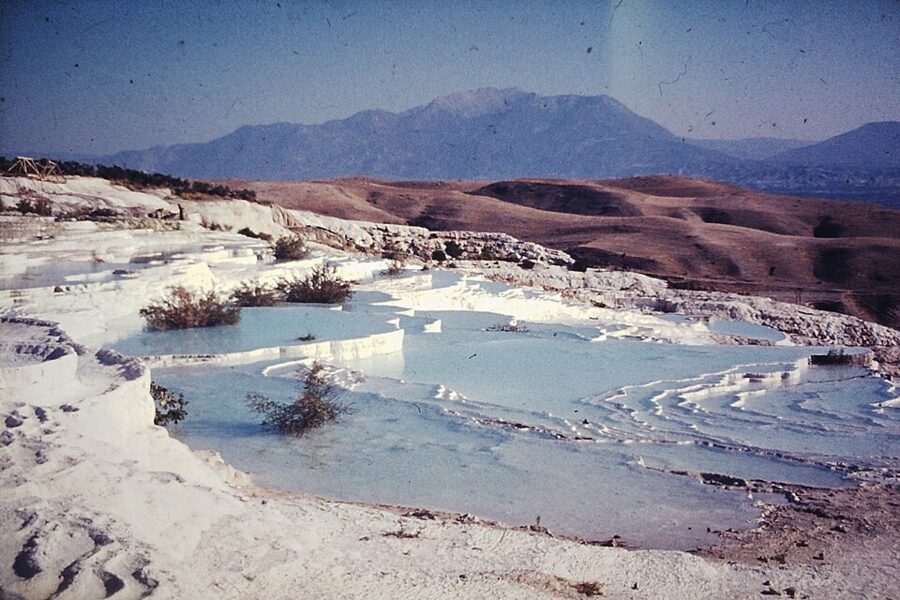
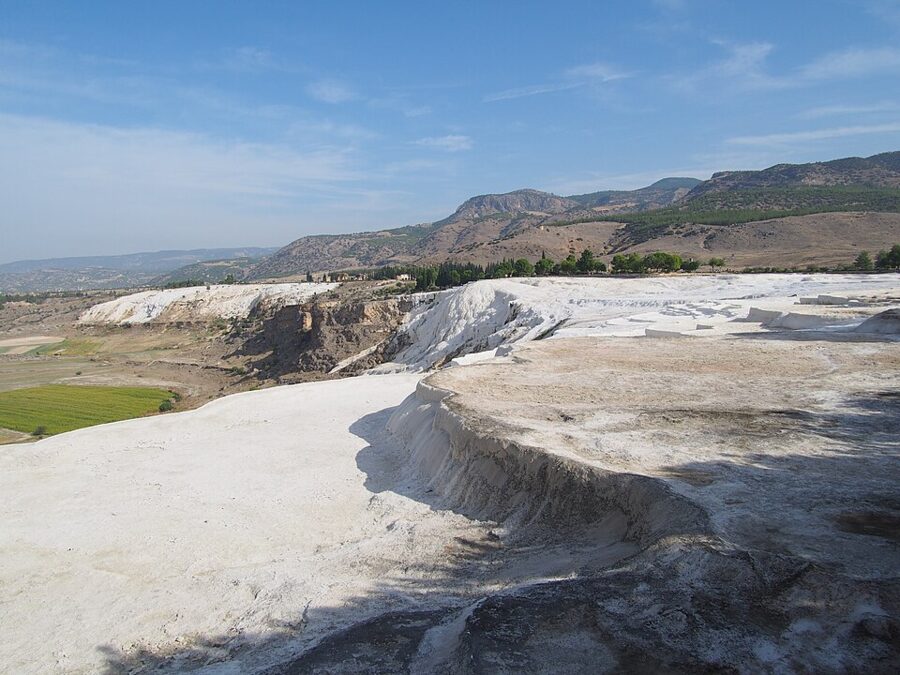
The white is rock that is still being made. Hot water rises from springs on the plateau loaded with dissolved calcium carbonate, and when it reaches the air it loses carbon dioxide and can no longer hold its load. The mineral drops out as a soft white film that hardens into travertine. Layer on layer, that film has built a cliff almost 200 m high and about 2.7 km long, with each terrace rim growing a little every time water spills over it.

The same chemistry made Hierapolis rich. The springs fed Roman baths, and the calcium-heavy water was used to fix dyes in the town’s wool. The Romans also learned its drawback: it furs up anything it runs through, and you can still see stone water channels on the plateau choked solid with travertine.
The modern damage came fast. From the 1960s motels went up on the plateau among the ruins, a road ran across the terraces, and the hotels piped the spring water into their own pools. With less water reaching the slope, the travertine dried, cracked and yellowed. After Hierapolis and Pamukkale went onto the UNESCO World Heritage List together in 1988, the state took the hotels off the plateau, closed the road across the south-east terraces, banned private cars from the site, and stopped people walking wherever they liked.

The rules on the slope now
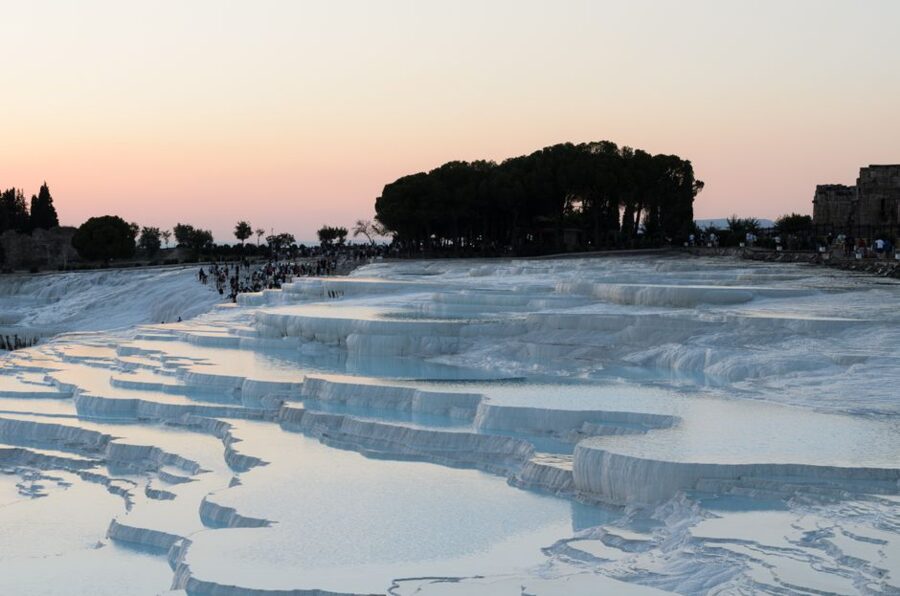
You can walk on the travertine only along one marked path, and only barefoot. Shoes come off at the guard post at either end of it, and guards with whistles keep people off the rest of the slope. The pools beside the path are open for paddling and sitting; most of the famous pools you see in aerial photos are fenced off.
Water is moved around the slope through channels, and the managers switch sections on and off so the white surface has time to recover. That means the pools by the path can be brimming one month and half empty the next. It is not a trick on you, and no ticket gets you onto the closed sections.
Bring a bag for your shoes, because you carry them the whole way. The surface is ridged and gritty in places and slick with algae in others, so walk on the flat rims rather than the pool edges. In winter the stone is cold enough to hurt, and in July and August the dry stretches get hot in the afternoon.
Tickets, hours and the three ways in
The ticket is €30 for foreign adults in 2026, bought at the gate or online through the Ministry of Culture’s own ticket site, and it covers the travertines, all of Hierapolis and the archaeological museum. The Antique Pool is extra. Turkish citizens use the MüzeKart; the Museum Pass Türkiye covers Hierapolis for foreigners, but it only pays off if you are also seeing Ephesus and several other state sites within its validity, so do the sums against your actual route.
Hours change twice a year. From October 2026 the Ministry lists the site at 08:00–18:00 every day, with the ticket office and the village path closing at 17:00 and the museum at 17:30. From May to September the Denizli culture directorate extends the hours: in recent summers the south gate has opened at 06:30, and evening openings have run until 23:00 with their own ticket. Check the Hierapolis page on muze.gov.tr before you plan a dawn start.
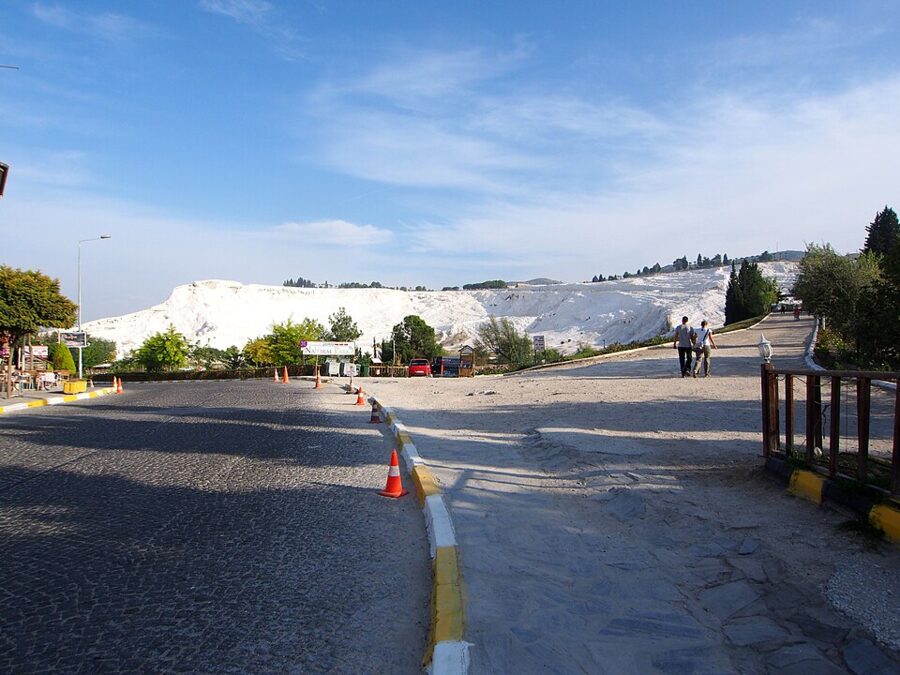

There are three ways in, and where you enter decides your whole day.
| Entrance | Where it puts you | Best for |
|---|---|---|
| South gate (Güney Kapı) | Top of the site, near the Antique Pool and the theater | Dawn in summer; arriving by car or taxi; skipping the barefoot climb |
| North gate (Kuzey Kapı) | The northern necropolis, then the Frontinus Gate and the main street | Seeing Hierapolis in order; this is where most tour coaches unload |
| Village path (yaya girişi) | The foot of the travertines in Pamukkale village | Sleeping in the village; walking up the white slope barefoot |
The south gate is about 45 minutes’ walk uphill on the road from the village, which is a dull walk in the dark. A taxi is the easy answer. Some village hotels run their guests up to the top gate for free, so ask when you book. The north gate is on the road toward Karahayıt, and it is where the coaches unload, so it is the one to avoid in the late morning.
The village path is the one most backpackers use, because it starts five minutes from the pensions and you climb the terraces themselves rather than looking down on them. The barefoot climb takes about half an hour if you stop to paddle. Its downside is the clock: it opens at 08:00 and closes earlier than the top gates.

An order that beats the coaches
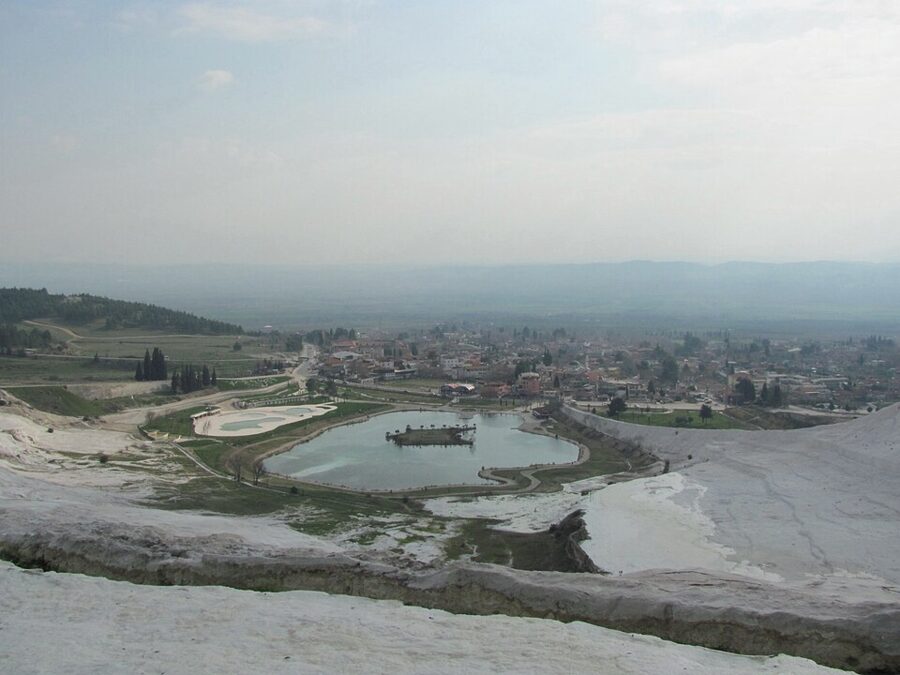
The day trips that fill Pamukkale leave the coast at dawn and arrive late in the morning, and most of them head home by mid-afternoon to make the drive back to their resorts. Your job is to be on the terraces before they come and after they go, and to spend the middle of the day in the ruins, the museum or the shade.
If you slept in the village, this is the order I would use:
- 08:00: Walk up the village path barefoot as it opens. The slope faces west, so the morning light is soft and the pools are still quiet.
- 09:00: Shoes back on at the top. Walk over to the Antique Pool and swim early if you are going to, before the coach groups arrive.
- 10:00: Climb to the theater, then cross to the Plutonion and the Temple of Apollo just below it.
- 11:30: The museum, which is cool, small and quiet while everyone else is in the water.
- 13:00: Walk north along the main street to the Frontinus Gate and the necropolis, and climb to the Martyrium of St Philip if you have the legs.
- Late afternoon: Back to the top of the terraces as the coaches leave. Sit out the sunset, then walk down the path before it closes; in winter, that means starting down before 17:00.
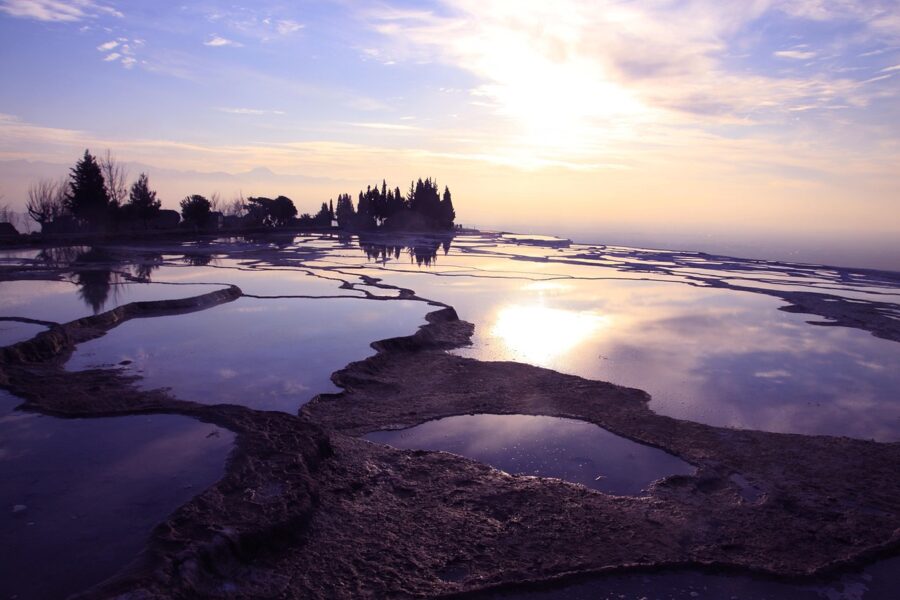
Two warnings about the ticket. It is sold for a single entry, so do not count on leaving for lunch and walking back in; take water and food in with you. And the village path closes earlier than the top gates, so if you want to stay on the slope for the last light, make sure you know which way you are leaving. Walking down the terraces barefoot in the last half-hour is one of the best things here, but the guards will turn you around if the path is already closed.
Coming from somewhere else for the day, you will arrive mid-morning at best. Go straight to the ruins, and leave the terraces for after 15:00, when the coach groups start drifting back to their buses.

Hierapolis: the spa town above the slope
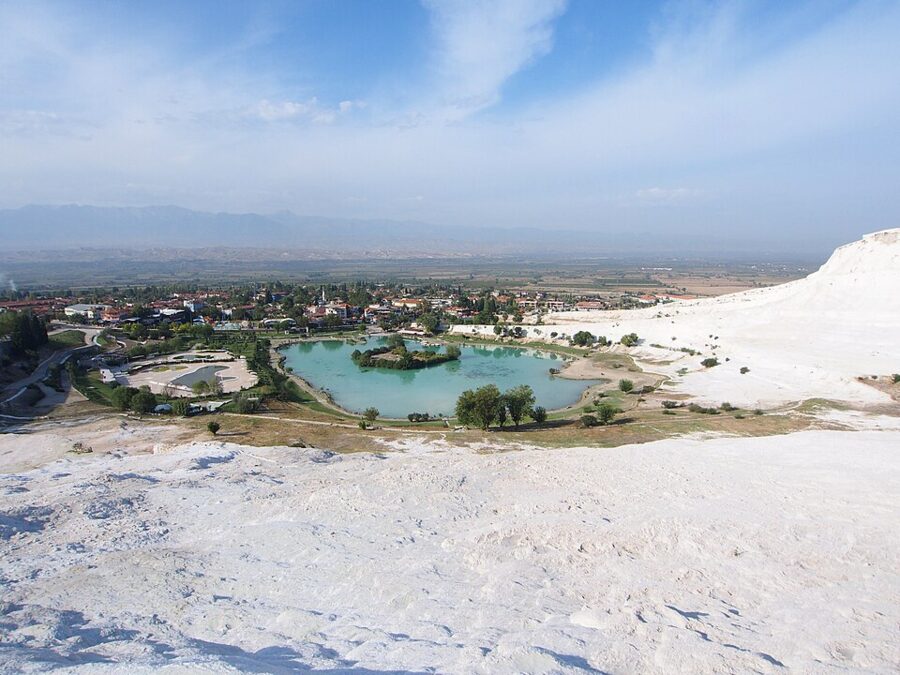
Sources disagree on who founded Hierapolis. The Ministry of Culture credits Eumenes II, king of Pergamon, in the 2nd century BC; other historians put a first foundation under the Seleucid kings in the 3rd. Either way, it grew up beside a sanctuary that was already old, built around a cave full of deadly gas, and its fortune came from the hot water.
Earthquakes shaped what you see. One in AD 17 wrecked the town, a worse one around AD 60 flattened it again, and the Romans rebuilt it on a grid with imperial money, which is why most of the standing buildings date from the late 1st to the 3rd century. A 7th-century earthquake finished the classical city; a small town hung on through the Byzantine and Seljuk centuries, and the site was empty by the end of the 14th. Since 1957 an Italian archaeological mission, now run from the University of Salento, has dug and restored much of what you will walk through.
The theater
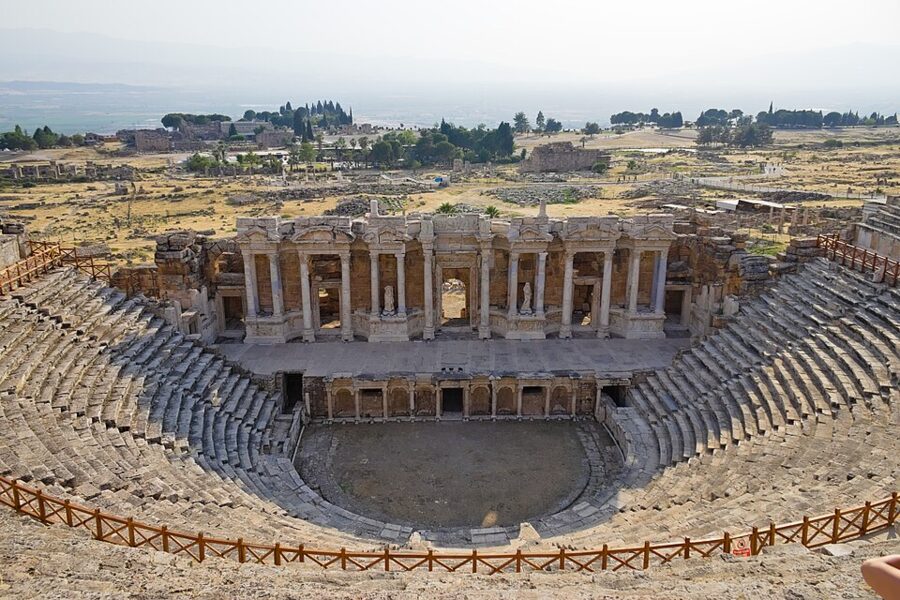
The theater is the reason to climb the hill. It was built in the 2nd century AD, probably under Hadrian, and given its three-story stage front under Septimius Severus early in the 3rd. It seated about 15,000, there was an imperial box in the middle of the cavea, and after an earthquake in the 7th century the stage building lay in pieces until the restoration of 2004–2014 put much of it back.
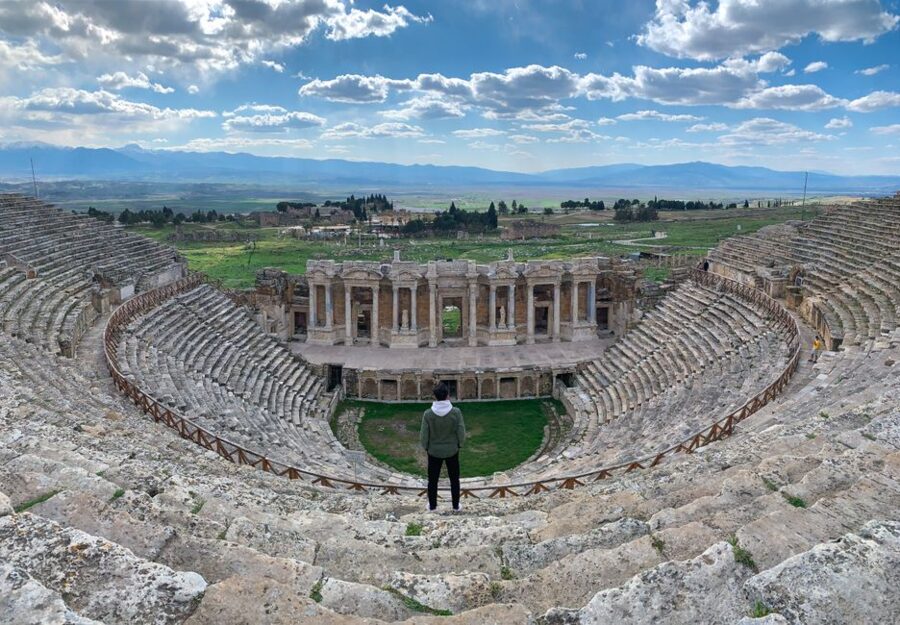
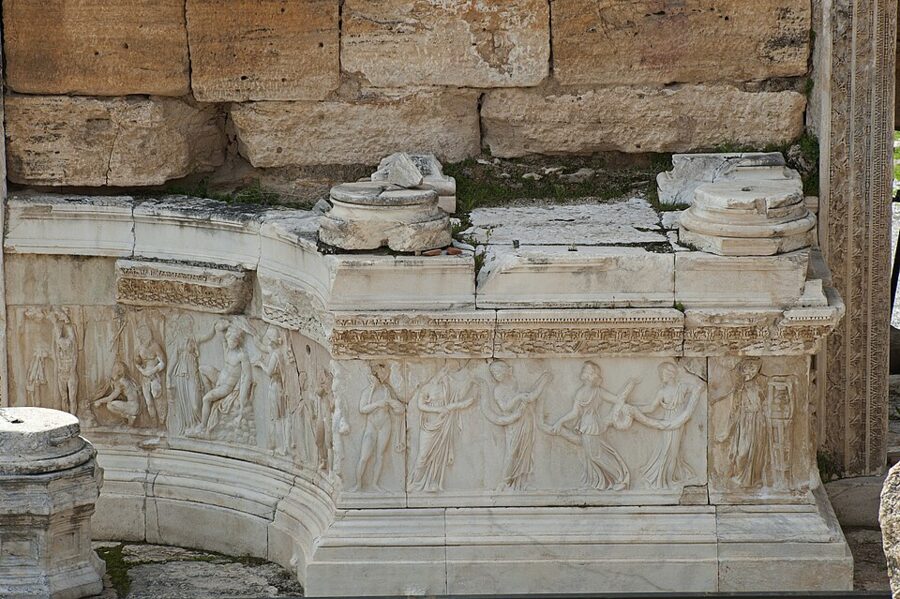
Walk down to the orchestra and look at the lowest band of the stage front. The marble reliefs there show Apollo and Artemis, Dionysus and his followers, and a scene with Septimius Severus, his wife Julia Domna and their sons Caracalla and Geta. More of the stage-front reliefs, too fragile to put back, fill a hall of the museum.

The Plutonion, or Gate of Hell
Below the theater, in a fenced hollow, is the oldest holy place in Hierapolis. Carbon dioxide still rises from a cleft in the rock here, and because the gas is heavier than air it pools close to the ground in still weather. The Greek geographer Strabo wrote that he threw sparrows into the opening and they died at once, while the eunuch priests of Cybele could go in and come out alive, probably by keeping their heads above the gas.
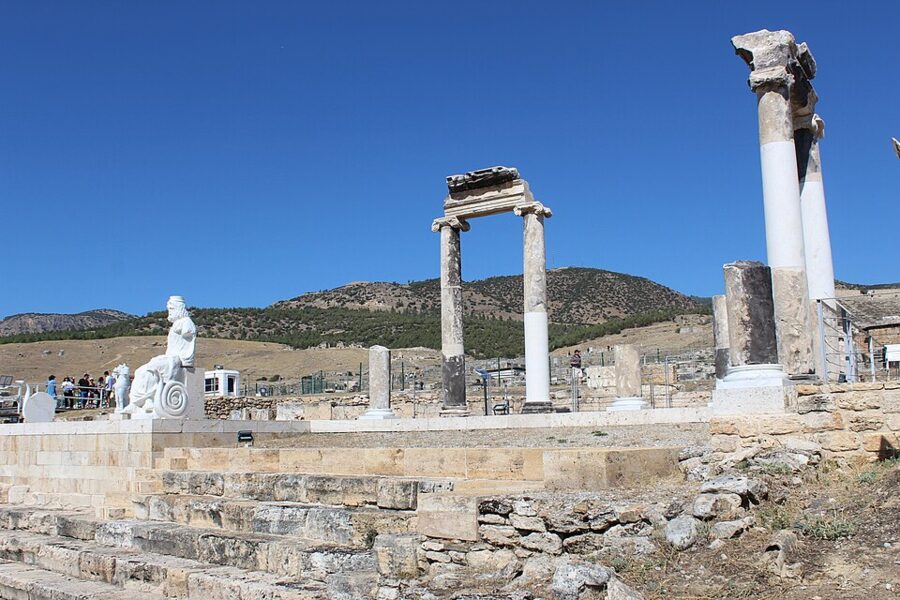

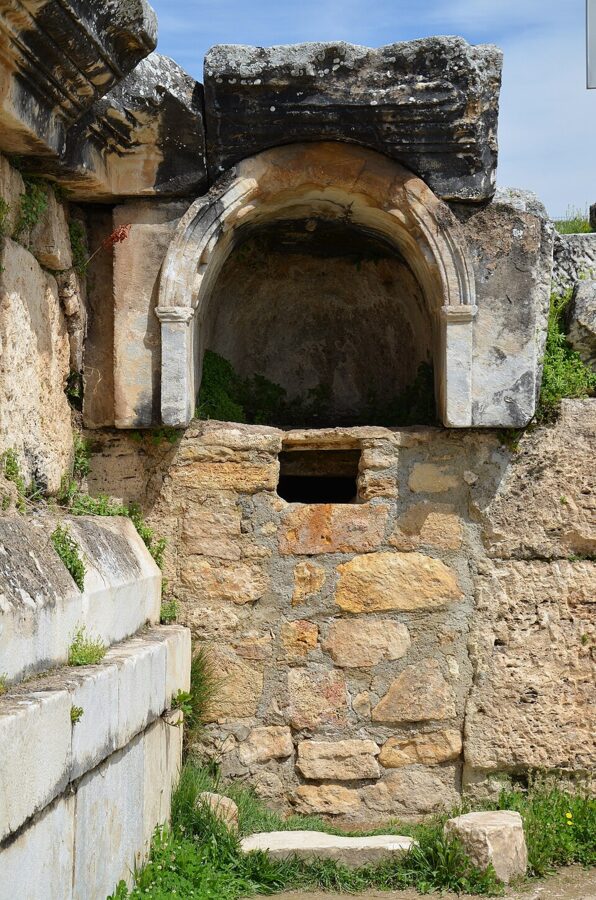
Christians filled the entrance with stones in the 4th century, and for a long time a small arched cave below the Temple of Apollo was taken to be the famous gate. In 2013 the team led by Francesco D’Andria of the University of Salento announced the real sanctuary a short way to the east: a pool, an arena-like court with stepped seats where pilgrims watched animals being led into the gas, and the cave mouth itself. You see it from walkways, and you should stay on them.
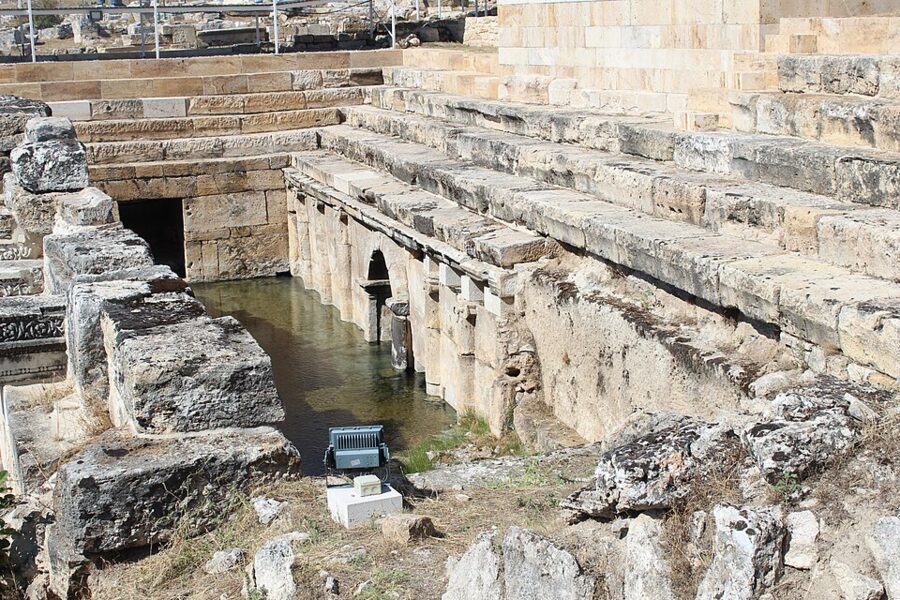

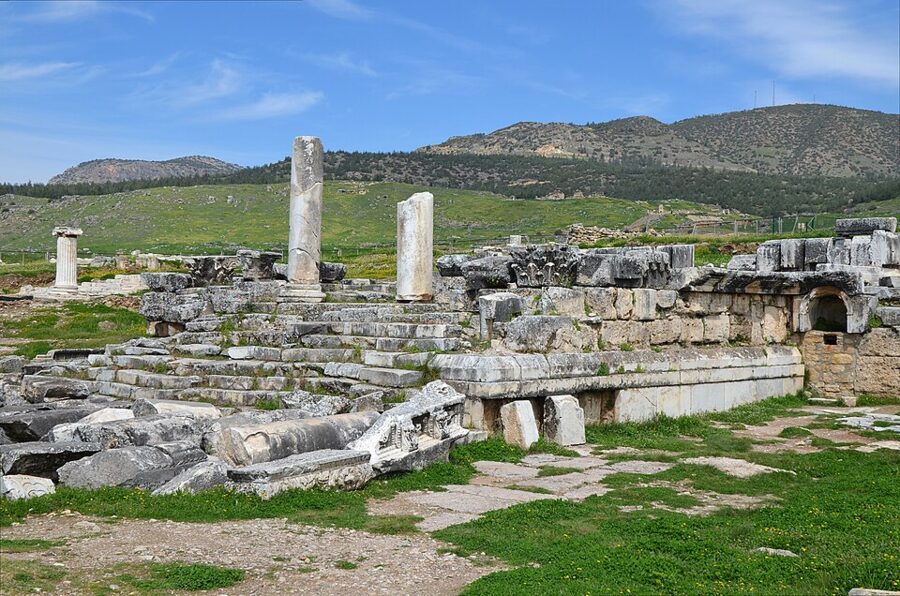
Right beside it is the Temple of Apollo, the god who took over the old sanctuary in Greek times. What stands now is a marble platform and steps from a 3rd-century rebuilding that reused blocks from the earlier temple. Researchers have noted that both this temple and the Plutonion sit on the line of a geological fault, which is where the gas comes from.


Frontinus Street and the Frontinus Gate
The main street ran the length of the town, north to south, about a kilometer of paving with colonnades and shops on both sides. The northern stretch has been put back together with re-erected columns, and it is the best place on the plateau to picture the town working. Near its north end is a long public latrine, its columned front still standing.
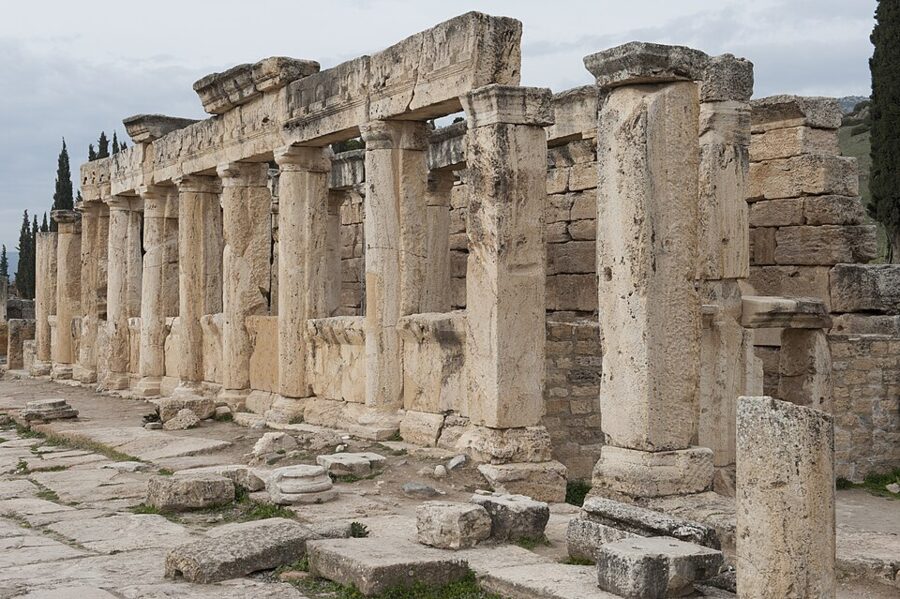

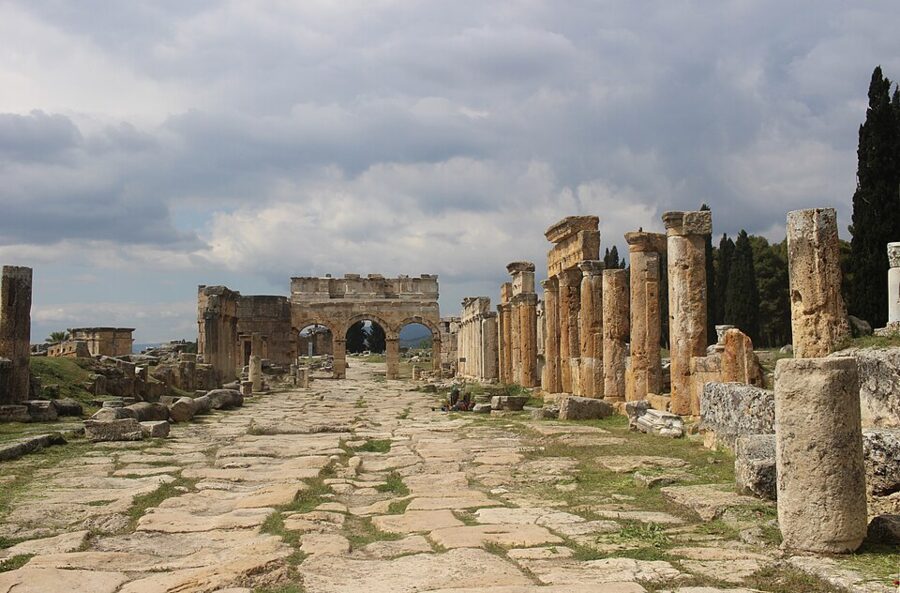

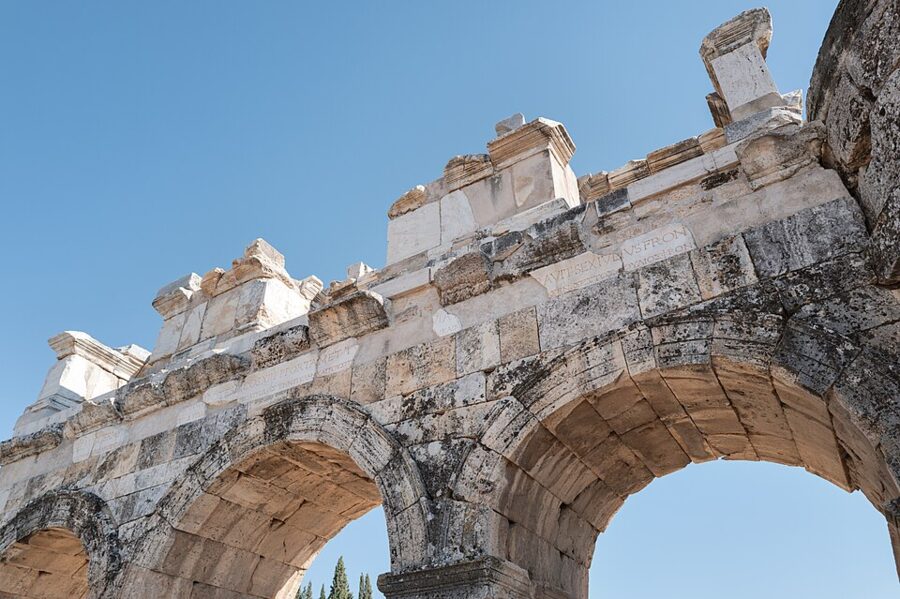
At the north end stands the Frontinus Gate, three arches between two round towers, put up in AD 84–86 and dedicated to the emperor Domitian. It carries the name of the man who paid for it, Sextus Julius Frontinus, then proconsul of the province of Asia. A decade later he was in charge of Rome’s water supply and wrote the treatise on its aqueducts that engineers still quote, which is a neat fit for a gate in a town built on its plumbing.

The necropolis
People came to Hierapolis to be cured, and plenty of them stayed for good. The cemeteries outside the walls hold roughly 1,200 tombs spread over more than 2 km, and the Ministry calls it the largest necropolis in south-west Anatolia. You get every kind of grave in one walk: Hellenistic burial mounds with a vaulted chamber inside, house-shaped family tombs, and stone sarcophagi with Greek inscriptions naming the dead and their trades.
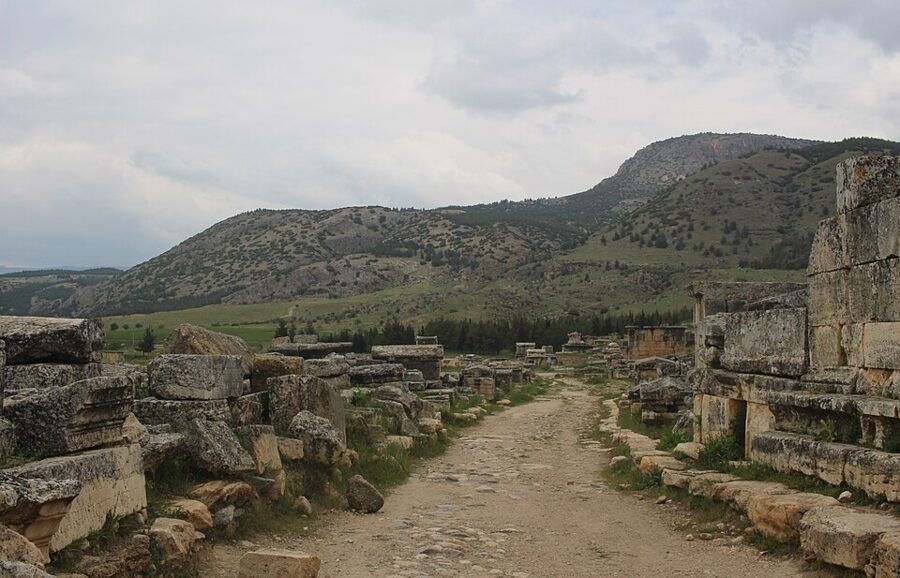

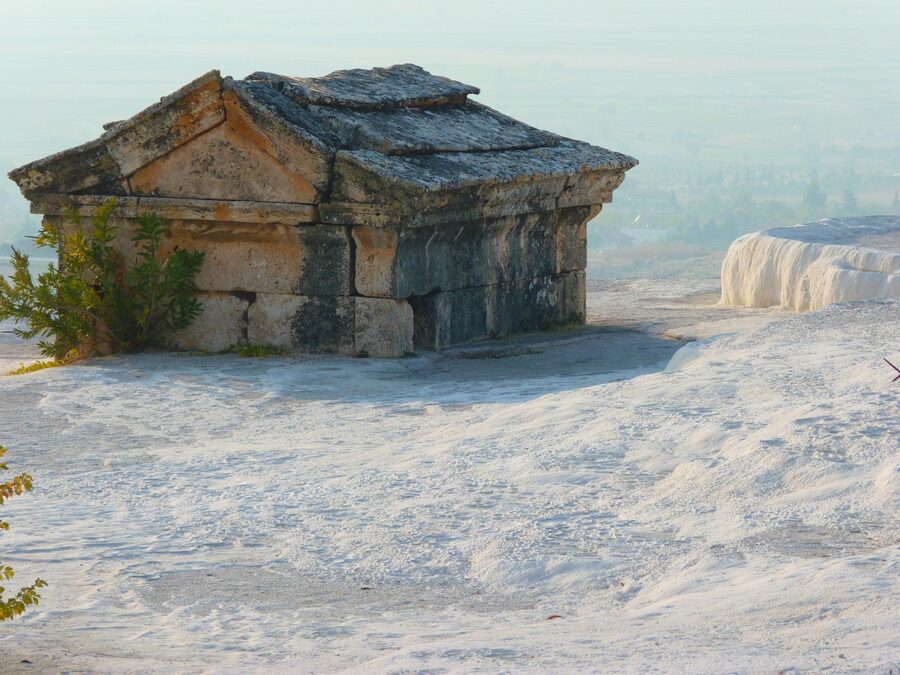
The northern stretch, along the road from the north gate, is the one most people see, because the coaches drop their groups at its far end. The tombs at the edge of the travertines are the oddest: water spilling off the plateau has slowly buried some of them in the white rock, so they look half sunk in snow.
The Martyrium of St Philip
Tradition says the apostle Philip was killed at Hierapolis in about AD 80, and in the 5th century the town built him a martyrium on the hill east of the main street. It is an unusual building: an octagonal hall about 20 m across, ringed by rectangular rooms and chapels, with an arcade around the whole thing. Fire marks on the columns show that it burned at the end of the 5th or early in the 6th century.
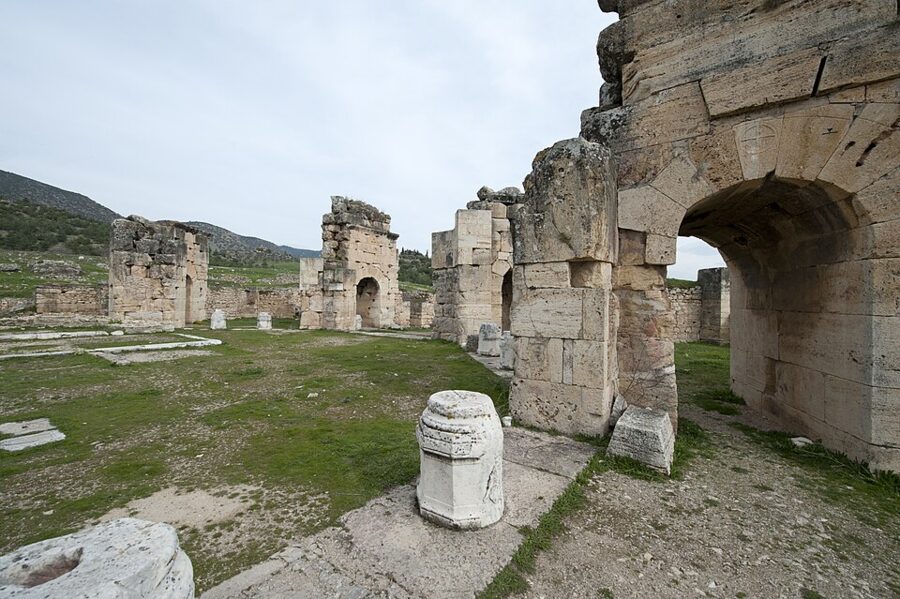

In 2011 the Italian mission announced that it had found what it believes is Philip’s tomb, inside a church about 40 m from the martyrium. Not every scholar is convinced, and early Christian writers were themselves unsure whether the Philip of Hierapolis was the apostle or Philip the evangelist. Either way, the hill is one of the quietest corners of the site, with a view over the whole plateau, and the climb thins out the coach groups.
The archaeological museum
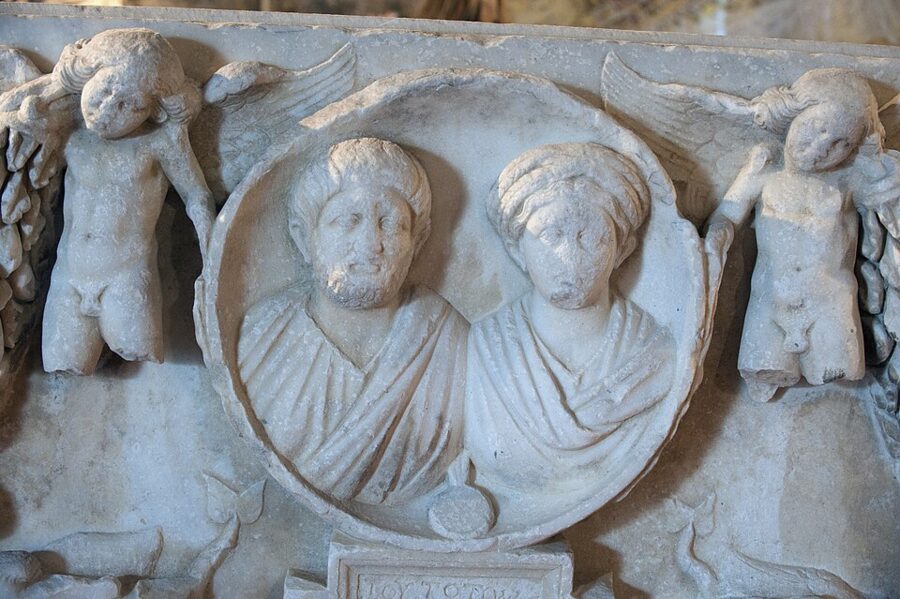
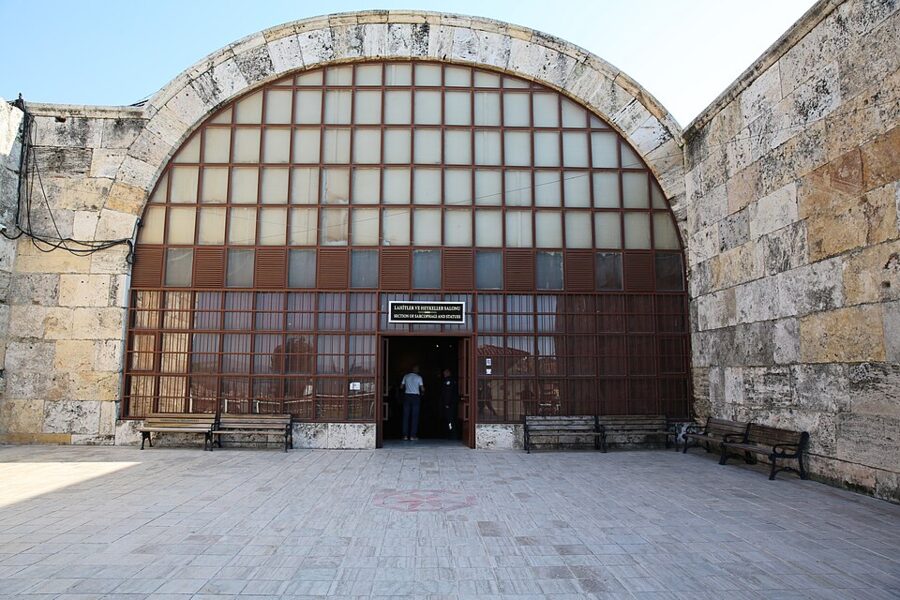
The museum is included in your ticket and sits inside the vaulted halls of a Roman bath, next to the Antique Pool. It is small: one hall of statues and sarcophagi from Hierapolis and Laodicea, one of small finds such as coins, lamps and jewelry, including Bronze Age pottery from Beycesultan near Çivril, and one for the theater reliefs. Give it 45 minutes in the middle of the day. In winter it opens 08:00–17:30, with the last tickets at 17:00.


The Antique Pool: worth 600 TL?
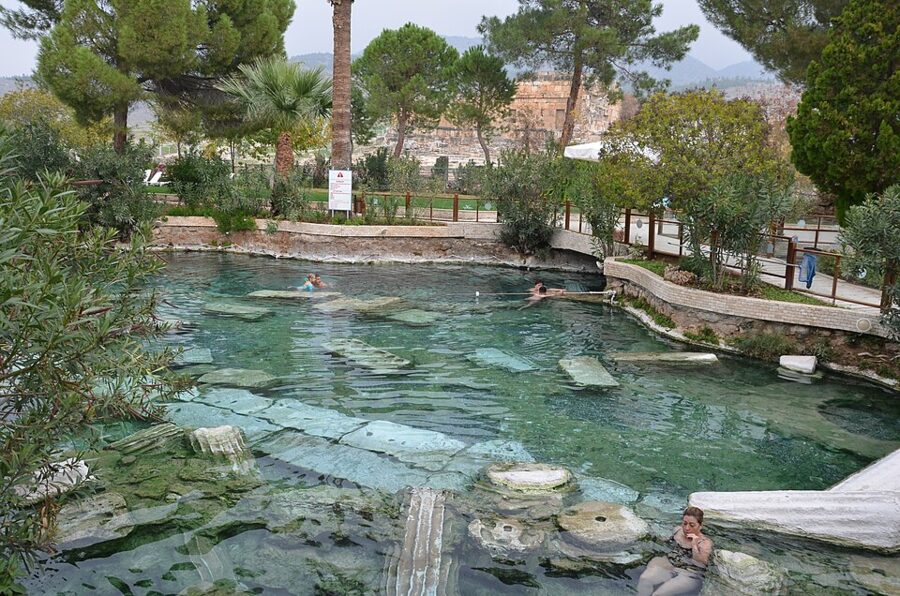
The Antique Pool, sold to tour groups as Cleopatra’s Pool, is a natural spring pool in the middle of the ruins. It formed when an earthquake in the 7th century brought down a marble colonnade around the sacred spring, and the fallen column drums and capitals still lie on the bottom. The water comes out at about 36°C in every season, so in winter you swim in steam. There is no evidence that Cleopatra ever saw it.
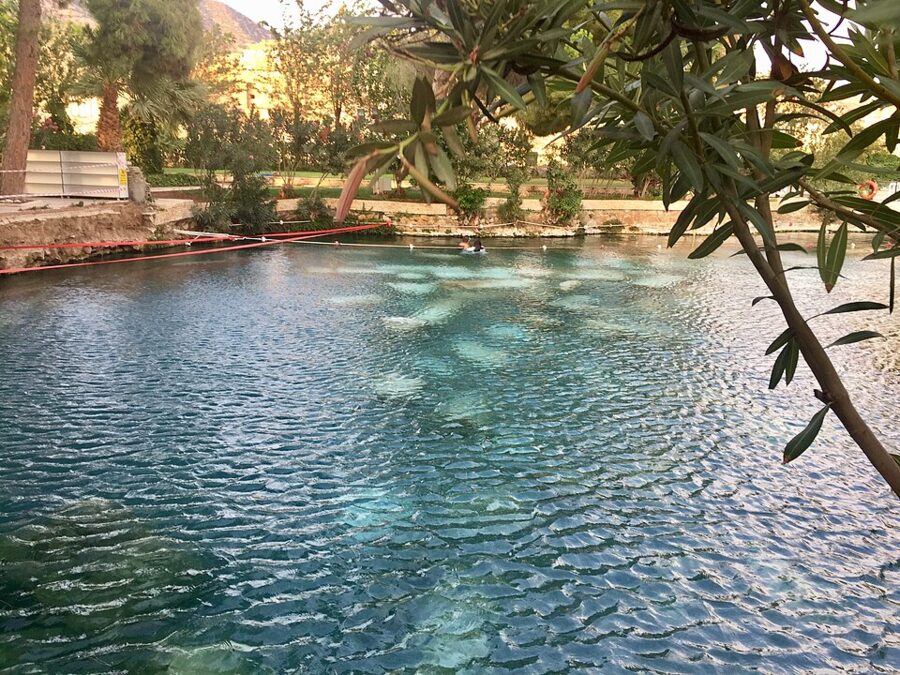

It was closed from January 2025 while the unlicensed buildings around it were pulled down and the complex rebuilt, and it reopened on 1 May 2026 after 16 months, now run by AKG, the company that operates shops and cafes at state museums. The prices set at the reopening were 600 TL for foreign adults, 235 TL for Turkish MüzeKart holders and 125 TL for ages 7–18, with under-sevens free. Summer hours in 2026 were 08:00–19:00; ask at the pool for the winter times, which are set separately from the site.
Is it worth it? If you have come all this way and like warm water, yes, once, and early. It is a genuinely strange thing to swim over Roman columns, and 600 TL is a little more than two pides in the village. At midday it is a crowded hot tub with a souvenir shop, and you can see everything from the railing for free.
Bring your own towel and swimwear, and leave valuables in your room.
Karahayıt and its red spring
Karahayıt is a spa village about 5 km north of the travertines, full of thermal hotels and not much else. Its draw is the Kırmızı Su, the Red Spring, where water comes out at around 58°C and leaves iron oxides behind as it cools, so the deposits around it are rust-red, green and white rather than pure white.
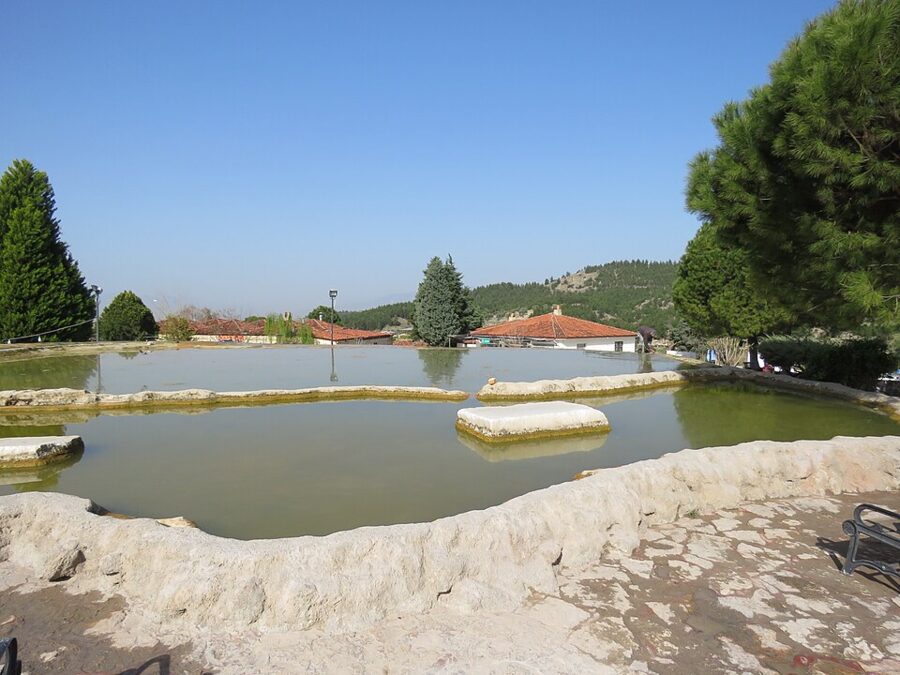

It is small, and nobody should cross Turkey for it. But if you are leaving by the north gate it is a short ride on, and it shows you what the white terraces would look like with a different mineral in the water. The bigger hotels sell thermal mud baths; most backpackers just look and leave.
Laodicea, across the valley
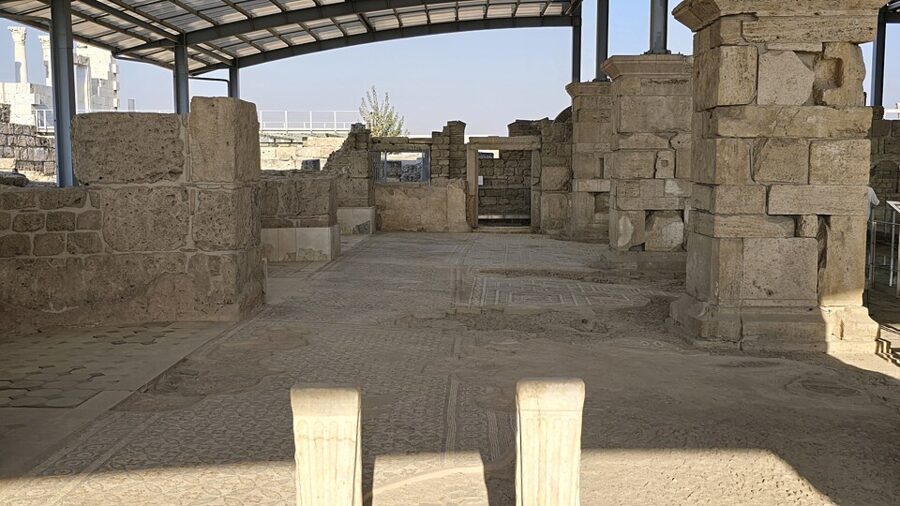
Laodicea sits on a low ridge across the Çürüksu valley, about 10 km south of Hierapolis and 6 km north of central Denizli. It was a rich banking and wool town in Roman times, and it is the Laodicea of the Book of Revelation, the church told it was “neither cold nor hot”. Its ruins spread wider than Hierapolis and draw a fraction of the crowd: two theaters, a stadium, colonnaded streets and a 4th-century church restored under a modern roof.
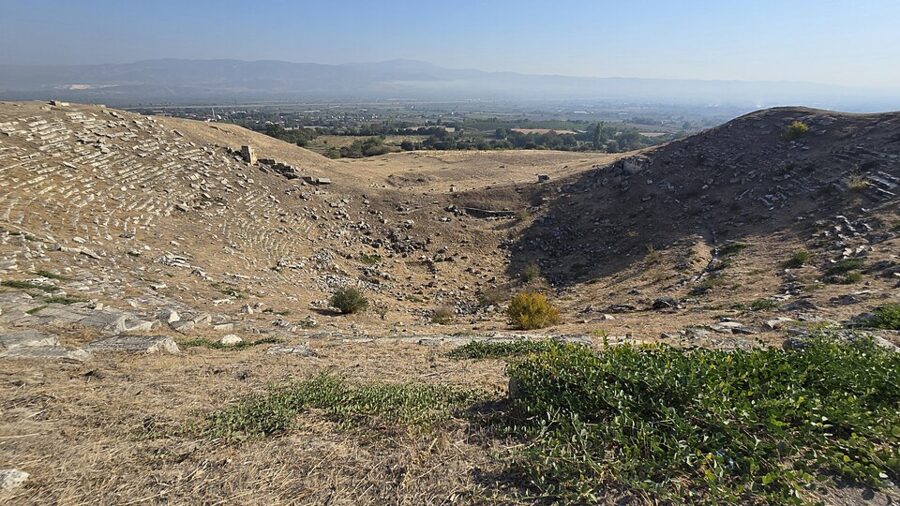

The ticket is €12, and in winter the site opens 08:00–17:30 with the last tickets at 17:00. It fits neatly into your last morning: take the minibus toward Denizli, ask the driver to drop you at the Laodikeia junction, walk the signposted road to the gate, and flag the next minibus on to the otogar afterward. The full story of the city and its church is told with the rest of the seven churches of Revelation.

Aphrodisias as a day trip
If Hierapolis leaves you wanting more marble, Aphrodisias is the place. It was the city of Aphrodite and the home of a school of sculptors who worked the white marble quarried on the slopes above it, and it went onto the UNESCO list in 2017. The site lies beside the village of Geyre in Aydın province, about 2.5 hours from Pamukkale by public transport, and it is far quieter than anything on the Pamukkale plateau.
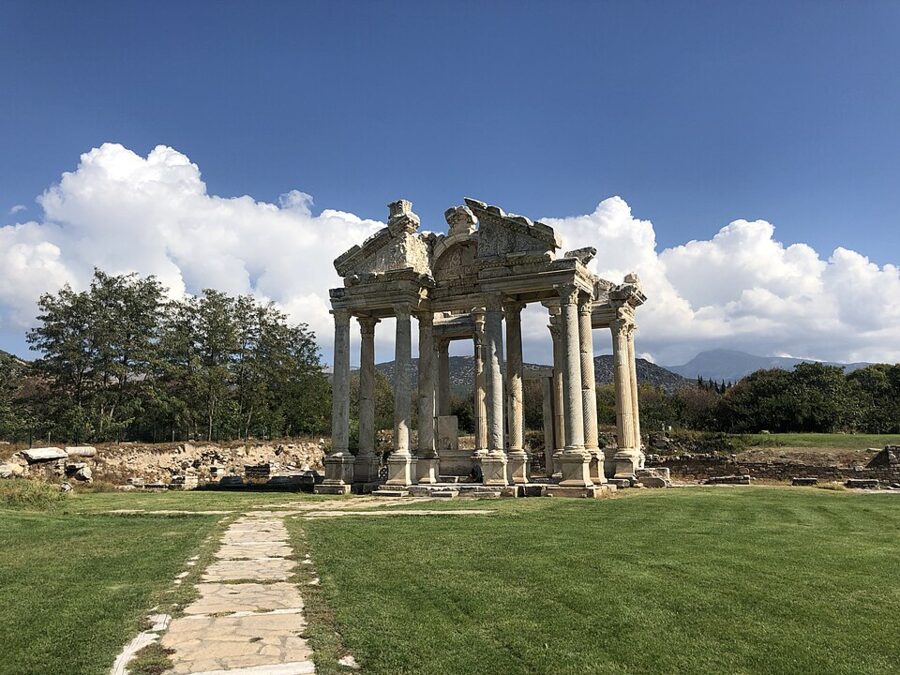

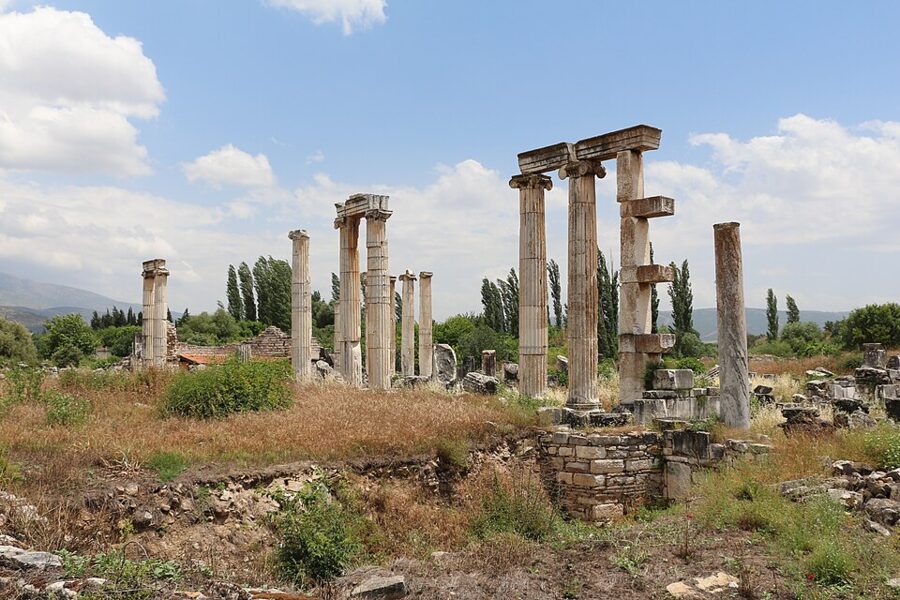
The highlights are the Tetrapylon, the Temple of Aphrodite (turned into a church in the 5th century), a white marble theater, the council house, and the stadium. That stadium is 270 m long, seated about 30,000 people, and is one of the best preserved anywhere in the Roman world. The site museum, home to the famous Sebasteion reliefs, has been under renovation, and the British charity that supports the excavation gives a reopening date years away, so do not go for the museum alone.

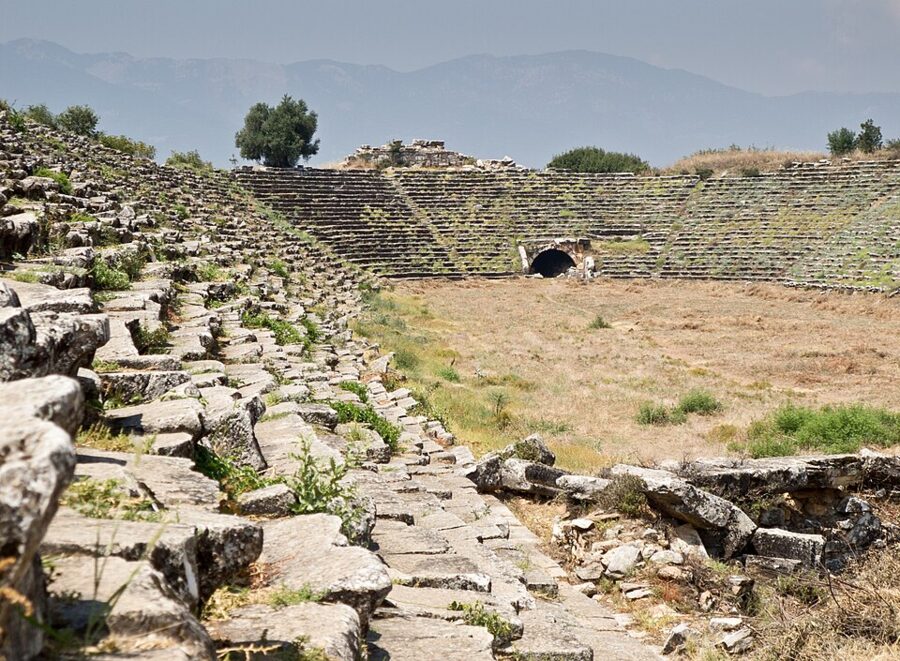

The ticket is €12. Hours are 08:30–17:30 in winter with the ticket office closing at 17:00, and 08:30–19:30 in summer. Allow at least three hours on site.
Getting there without a car takes some patience. Go down to Denizli otogar early and take a bus west to Nazilli (about 1 hour 10 minutes, from about 200 TL in late 2026, with buses all day). From Nazilli, minibuses run every 20–30 minutes south to Karacasu, 42 km away; from Karacasu it is another 13 km to the site, by an infrequent minibus or a taxi.
The other route is a minibus from Denizli to Tavas and a taxi for the last 30 minutes. Confirm your return times in Karacasu before you head up, because the last minibus back down leaves in the late afternoon.
If there are three or four of you, a hired car or a taxi for the day saves about two hours of changes, and the cost split that way gets close to the bus fares. Tours from Pamukkale run too; if you take one, check that the entry fee is included and how long you get on site, because a two-hour stop is not enough.
Pamukkale village: beds, food and the hustle
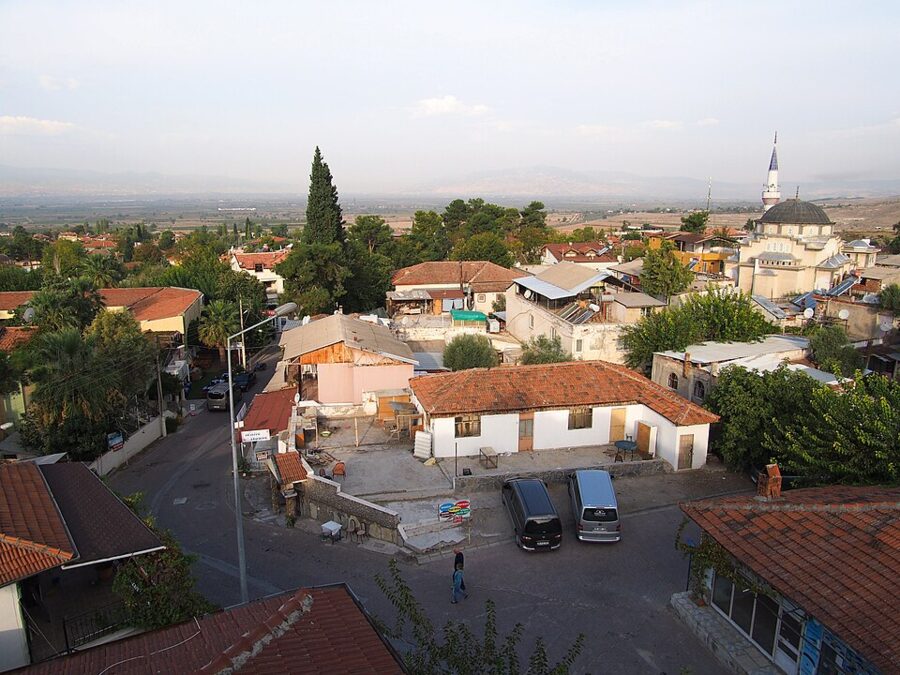
Pamukkale village is a few streets of pensions, restaurants and souvenir shops at the foot of the terraces, and it lives entirely off the slope above it. That makes it a little worn and a little pushy, but it also means you can sleep 5–10 minutes from the bottom gate in a family-run room at small-town prices. There is no real dorm scene; the budget bed here is a pension room, often with a small pool and breakfast included.

Where to sleep
Room prices swing with the season. For one person on a weekday in early December 2026, the cheapest family places in the village ran about 900–1,700 TL a night; for a May night prices started around 1,300 TL and most of the pensions below sat between 1,900 and 2,000 TL. All of these were taking guests in November 2026:
- Kervansaray Hotel-Pension: family-run, in a quiet lane about 150 m from the village center and a five-minute walk from the travertines; about 1,650 TL for one in early December.
- Aspawa Hotel: small and family-run on Turgut Özal Caddesi, with a pool, free tea and coffee, and a free shuttle for guests to the upper entrance, which solves the dawn problem at the south gate.
- Artemis Yörük Hotel: simple rooms on Atatürk Caddesi near the main square, breakfast included, among the cheapest in winter at about 1,400 TL.
- Melrose House: a step up, with a garden and home-cooked dinners, on Vali Vefki Ertürk Caddesi.
- Hotel Şahin: small rooms, very close to the bottom of the travertines.
- Mustafa Motel & Pension: rooms over one of the village’s busiest restaurants on Atatürk Caddesi.
Willy’s State on Mehmet Akif Ersoy Bulvarı is a campground with a restaurant, useful if you are carrying a tent. Book anything for July and August, and for any weekend in spring; in winter you can walk in and ask.
Where to eat
The restaurants on the main square and along Atatürk Caddesi are built for tour groups, and several of them price like it. The good cheap food is in the small family places a street or two back, where someone’s mother is rolling dough.
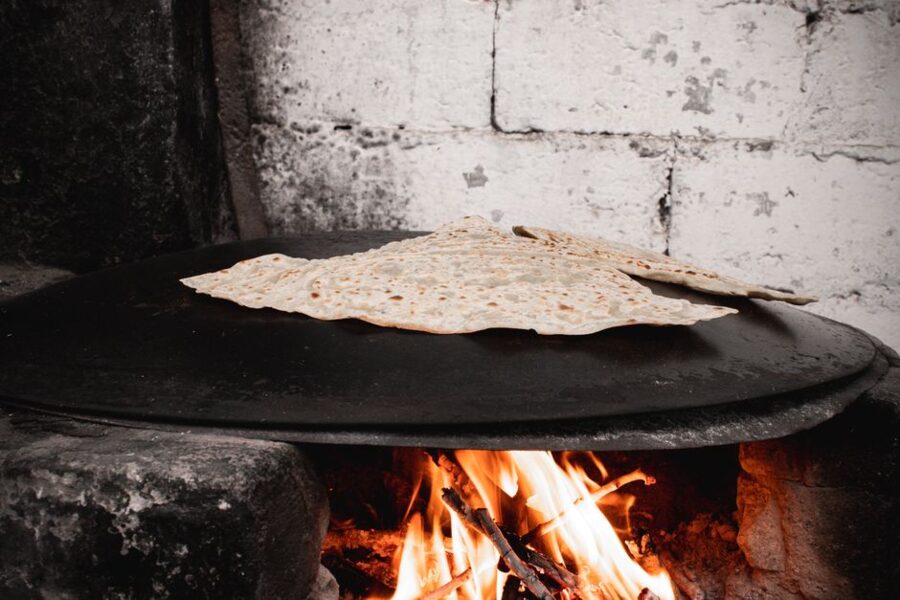
- Hanımeli Gözleme: gözleme and menemen made to order, a short menu and fair prices.
- Gülsüm Bacının Yeri: home cooking on Cumhuriyet Meydanı, the main square; the gözleme gets the praise.
- Ege Çorba Mantı Salonu: soup and mantı (small dumplings in yogurt) on Fatih Caddesi.
- Traverten Pide and Yağmur Pide & Izgara: pide from wood-fired ovens. At Yağmur in late October 2026, a meat-and-cheese pide was about 240 TL and a plate of köfte about 500 TL.
- As Teras Mantı Evi: mantı and grills, with big portions.
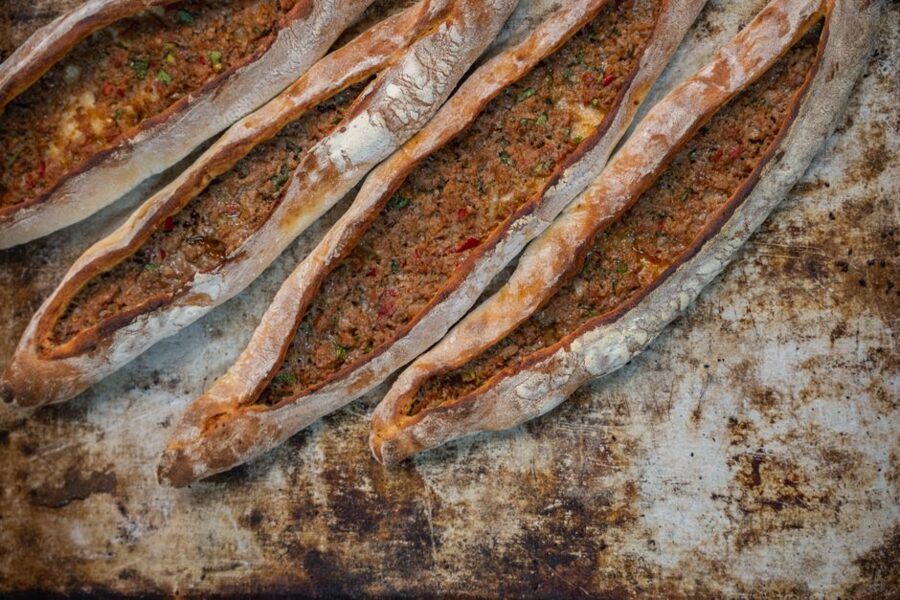
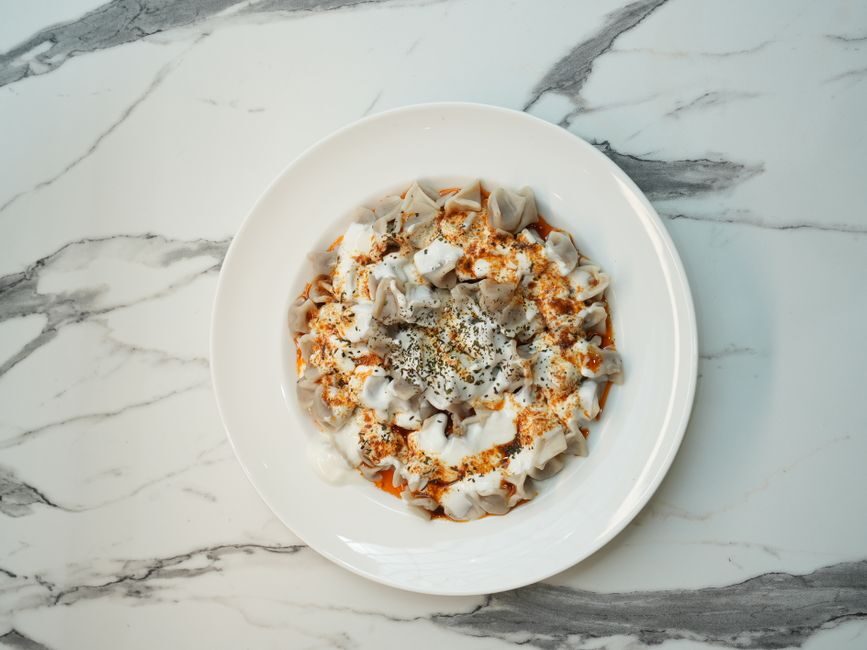
Denizli’s own dishes are worth asking for: Denizli kebabı, lamb slow-cooked in a wood oven and sold by weight, and tandır çorbası, a lamb soup. There is a BİM supermarket in the village for picnic supplies, which is the cheapest way to eat inside the site, where the cafes charge what you would expect.
The hustle
Nothing here is dangerous, but the business model is getting you into a tour or a taxi:
- At Denizli otogar: touts offer you a “free shuttle” or “the last bus” to Pamukkale. The public minibus leaves from the lower level of the otogar every 15–20 minutes through the day, shows Pamukkale in the window, and you pay the driver in cash. If a ride ends at a tour office, walk out.
- Taxis to the top gate at dawn: agree the fare before you get in. If a driver tells you the road is unsafe on foot in the dark, that is a sales pitch, not a warning; it is a quiet country road, just a dull one.
- “Packages” in the village: combined deals of balloon, paragliding, Karahayıt and Laodicea are sold hard on the main street. Everything except the flights is easy to do alone by minibus.
- Day tours from the coast: the ones from Antalya, Marmaris, Bodrum and Kuşadası involve three to four hours on a coach each way and put you on the terraces at the worst time of day, and some do not include the entry fee. Read the small print.
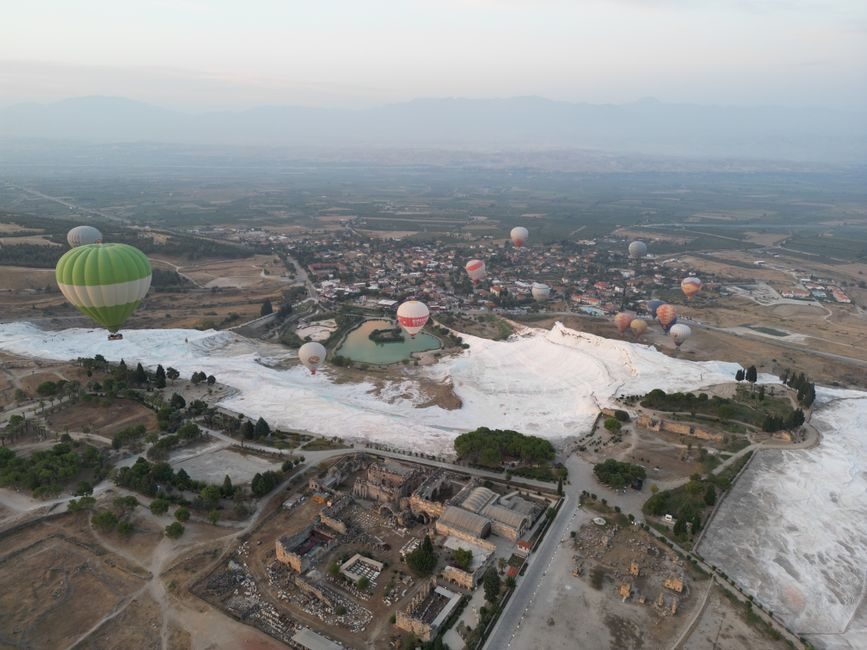
Pamukkale has dawn balloon flights over the terraces and tandem paragliding off the hill behind them, and both are things you cannot do alone. Before you pay, check the operator’s license, its insurance, whether the price includes transfers, and what happens if the flight is canceled for wind. Prices vary a lot by season and by how full the baskets are.
Day trip or a night?
Stay the night. A day trip from Selçuk means about three hours on a bus or train each way plus the minibus, which puts you on the terraces at the hottest, busiest time and sends you back before the light gets good. A day trip from Antalya or Fethiye is worse, with three and a half hours each way on the bus at best.
One night gives you the late afternoon and sunset on arrival day, then a full morning before the coaches, and you can still leave by early afternoon. Two nights let you add Aphrodisias or Laodicea and Karahayıt without rushing. More than that and the village starts to feel small.
The one case for a day trip is if you are passing through Denizli on a bus anyway. Ask at the otogar whether its left-luggage desk (emanet) is open and leave your pack there, ride up, see the terraces and the theater, and ride down for an evening bus out. It works; it is just not the same place at noon.
Getting there and away
Everything goes through Denizli, a big textile city 20 km south of the travertines. The otogar is in the center, and the train station is a short walk from it. From the otogar, the Pamukkale minibuses leave from the lower level every 15–20 minutes through the day and take 30–45 minutes to the village. Denizli’s city minibus fares went up on 1 November 2026, to 40 TL for a standard ride and 45 TL for longer routes, so expect to pay something in that range in cash.
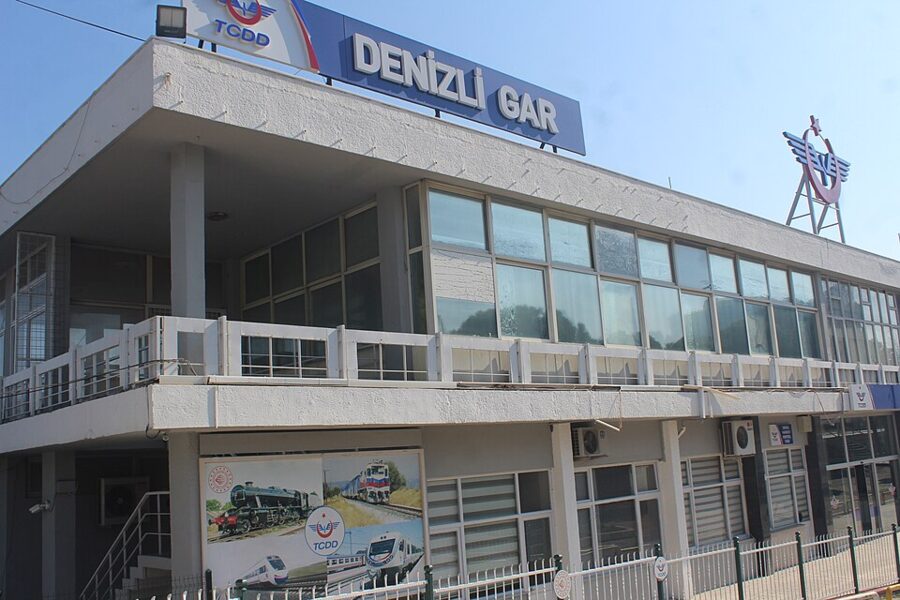

By train from Selçuk and İzmir
TCDD regional trains run between İzmir Basmane and Denizli nine times a day, stopping at İzmir airport, Selçuk, Aydın and Nazilli on the way. From Basmane the trip takes 4.5–5 hours, and fares started at 380 TL in autumn 2026; from Selçuk, the town for Ephesus, it is about 3 hours 20 minutes. The timetable posted in July 2026 had departures from Basmane at 07:00, 08:35, 09:55, 11:10, 12:40, 14:10, 16:50, 18:05 and 23:10, and from Denizli back toward İzmir at 04:30, 05:50, 06:25, 08:20, 10:35, 12:15, 17:05 and 18:35, plus one in the small hours. Timetables change, so check TCDD before you go.
Coming from Istanbul or Ankara, there is also the daily Pamukkale Ekspresi, a slow loco-hauled train between Denizli and Eskişehir, where it connects with the high-speed trains. It makes for a long day, and the bus is usually quicker, but it is the one way to reach Pamukkale from the north entirely by rail.
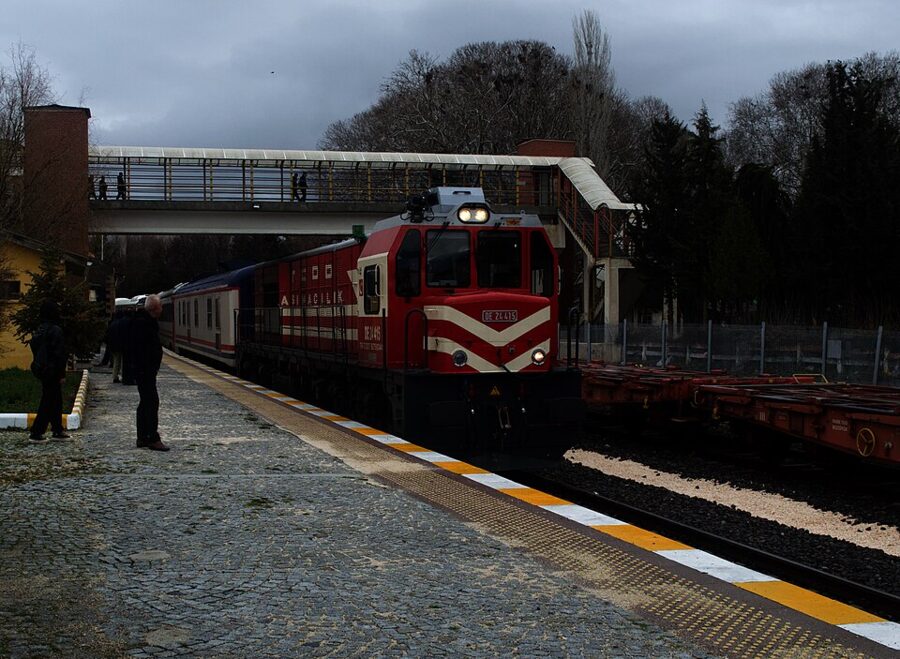

The İzmir train is slower than the bus but cheaper, and you can walk around. Buses from Selçuk to Denizli are fewer than you might expect, about six a day taking 2.5–3 hours for 600–800 TL, while İzmir to Denizli has buses almost every half hour.
By bus, onward
Denizli is a crossroads, and the onward legs are what make Pamukkale work on a loop around western Turkey. These are the late-2026 numbers from Denizli otogar:
| Route | Time | Fare (late 2026) | Buses a day |
|---|---|---|---|
| Denizli → Fethiye | about 3.5 h | 500–650 TL | about 19, mostly morning to early evening |
| Denizli → Antalya | about 3.5 h | 455–680 TL | about 58, around the clock |
| Denizli → Göreme (Cappadocia) | about 10 h | 1,000–1,500 TL | about 10, mostly 18:30–midnight |
| Denizli → İzmir | about 3 h | from 500 TL | about 96 |
| Denizli → Istanbul | about 10 h | from 1,400 TL | over 100, many overnight |
| Denizli → Nazilli (for Aphrodisias) | about 1 h 10 min | from 200 TL | all day |
Pamukkale Turizm runs the most buses to Antalya, İzmir and Istanbul, Kamil Koç the most to Göreme, and the Çameli cooperative most of the departures to Fethiye. The most common next stop is the coast at Fethiye or Antalya; the overnight bus to Cappadocia saves a hotel night and a day if you are heading inland. How the leg fits into a two- or three-week route is in the Turkey itinerary, and booking, seat classes and the otogar routine are in getting around Turkey.
By air
Denizli Çardak airport is 65 km from Pamukkale, with flights from Istanbul. Shuttle buses meet the flights for the run to Denizli and Pamukkale; a taxi for the full distance is expensive, so only take one if you are splitting it.
Whichever way you arrive, aim to reach the village by mid-afternoon, drop your bag, and walk up the slope barefoot for the last hour of light. Then buy your onward ticket at Denizli otogar on the way out, not the day before: the Fethiye and Antalya buses leave often enough that you can pick the one that fits after a last look at the terraces at 08:00.