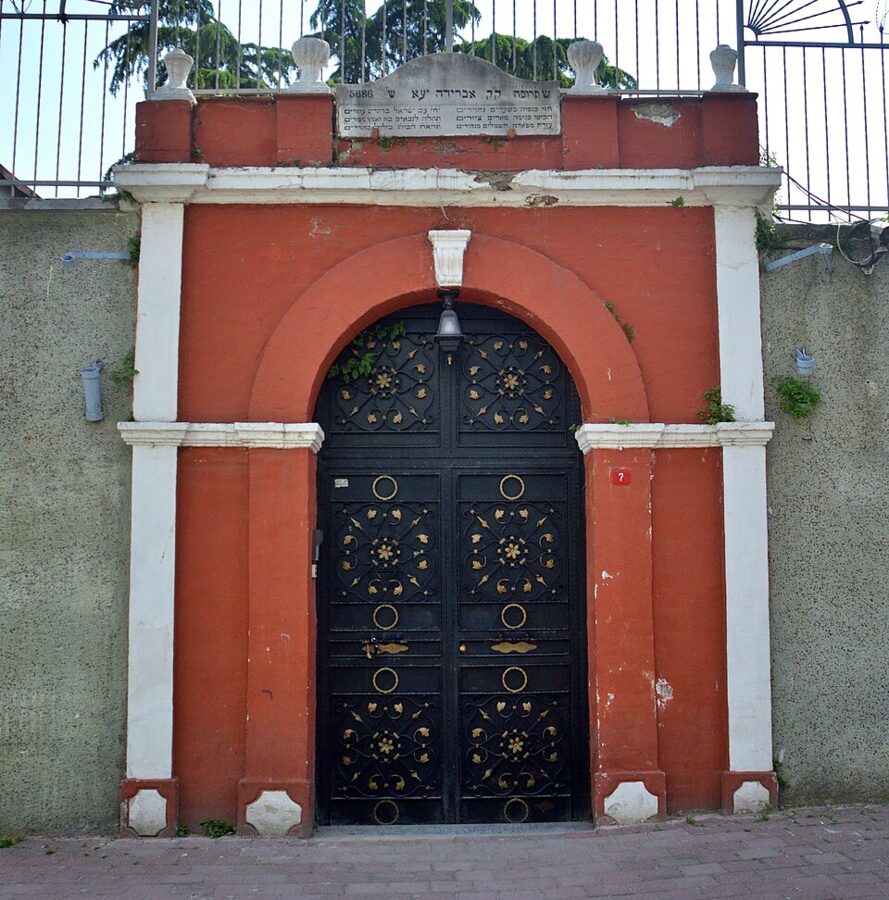
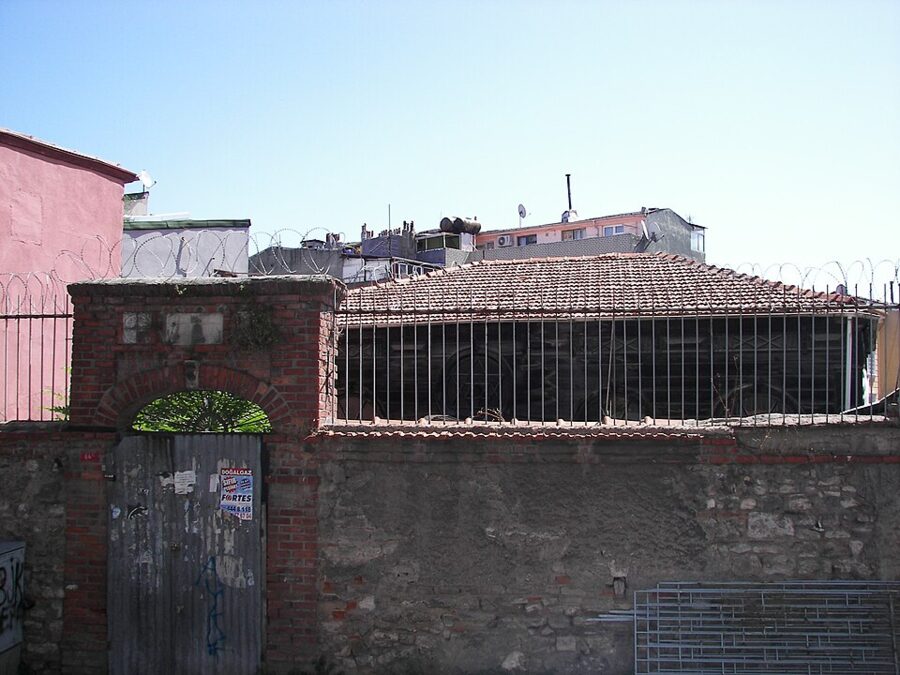
The synagogue most often called the oldest in Istanbul does not sell tickets, and it does not take walk-ins. To see inside the Ahrida in Balat you book at least three days ahead, hand over your passport details, and turn up on a weekday between 10:00 and 14:00. Turn up unannounced and you get a red-painted gate in a high wall, which is still worth the walk, but it is not the building.
That is Jewish Istanbul in one scene. The history runs from Greek-speaking Jews under the Byzantine emperors to a community of perhaps 14,500 today, and most of it is still standing: synagogues in Galata, Balat, Hasköy and Kuzguncuk, cemeteries in Hasköy and Kuzguncuk, a museum, a staircase built by a banker. The community is small and careful, though, and almost every door needs an email first.

One place takes you without notice. The Jewish Museum of Turkey, in the Neve Shalom complex below the Galata Tower, charges 500 TL to a foreign adult in 2026, checks your passport at the door, and walks you through to the largest working synagogue in the city. Start there, send the Balat booking before you go if you have not already, and build the rest of the route around the replies.

The rest is cheap: trams, a Golden Horn ferry and a Bosphorus crossing take you round the Jewish quarters of Istanbul for less than the museum ticket. What it costs is planning, and the plan starts with the rules.

Contents
- How visiting works: arrangements, passports and Shabbat
- Two thousand years in Istanbul, in brief
- The Jewish Museum of Turkey
- Galata and Karaköy: synagogues, stairs and a banker’s quarter
- Balat and Hasköy, on the Golden Horn
- Kuzguncuk and the Asian shore
- Beyond Istanbul: Edirne, İzmir and Sardis
- A two-day plan, and what it costs
How visiting works: arrangements, passports and Shabbat
Istanbul’s synagogues are working houses of prayer, not monuments, and the Chief Rabbinate (Hahambaşılık) publishes the terms in Turkish under “Sinagog Ziyaretleri”, synagogue visits. In plain English, it says three things.
First, nobody enters without an identity document. For a foreign traveler that means the passport itself, not a photo of it. Second, every entrance has a security check, and the community says to expect questions, as at an airport. Third, apart from the museum, every visit or service is arranged in advance by email, with your passport details sent ahead.
I would add one rule of my own: do not photograph the security staff, the cameras or the entrance arrangements, and do not linger outside taking pictures of doors. The attacks on Neve Shalom in 1986 and 2003 are why the checks exist. Treat them like airport security and they take a few minutes.

Who to contact for what
The rabbinate’s page lists a contact address for each synagogue that receives outsiders. These are the ones a traveler is likely to want, with the terms as the community states them in 2026.
| Place | What the community offers | How to arrange it |
|---|---|---|
| Jewish Museum of Turkey and Neve Shalom (Karaköy) | Museum visit, with the synagogue entered through the museum. Sun–Thu 10:00–17:00, Fri 10:00–13:00, last entry 45 minutes before closing | Walk in with your passport; 500 TL for foreign adults, 250 TL for students |
| Ahrida and Yanbol (Balat) | Weekday visits 10:00–14:00; none on holidays, Friday after 12:00 or Shabbat | Book at least three days ahead through the Balat Ahrida synagogue foundation (balatsinagoglari.com) |
| Neve Shalom services | Prayers; in the winter months, Saturday mornings only | Email the Neve Shalom foundation with your passport details |
| Beth Israel (Şişli) | Prayers every morning and evening | Through the Neve Shalom foundation, passport details first |
| Ashkenazi Synagogue (Galata) | Prayers Monday, Thursday and Saturday mornings, and Friday evening | Email the Ashkenazi foundation with your passport details |
| Etz Ahayim (Ortaköy) | Prayers every morning and evening | Email the Ortaköy foundation with your passport details |
| Bet Yaakov (Kuzguncuk) | Visits by arrangement | Contact the Kuzguncuk synagogue foundation, passport details first |
| Hemdat Israel (Kadıköy) and Bet El (Caddebostan) | Visits to Hemdat Israel; services at Bet El every morning and evening | Email the foundation the rabbinate lists for them, with your passport details |
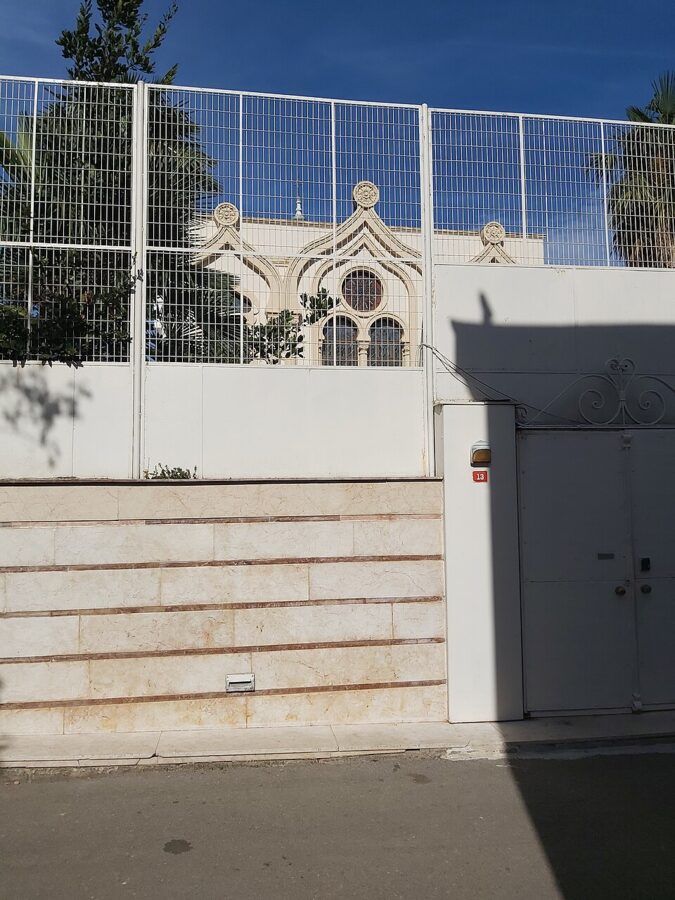
The addresses themselves are on the Chief Rabbinate’s visiting page, and the museum keeps its own hours on muze500.com. Write in English with your name as in the passport, nationality, passport number and preferred dates, and leave a day or two of slack. Synagogues not on the list, such as the Italian Synagogue in Galata, do not publish visiting arrangements, so plan on seeing their facades.
Shabbat, holidays and what to wear
Shabbat runs from sunset on Friday to after sunset on Saturday, and the museum is shut all day Saturday. Balat stops taking visits at noon on Friday. In practice Balat means Monday to Thursday, with Friday morning as a short extra, while the museum also opens on Sunday.
The museum also closes on Jewish holidays and on Turkish national holidays. The big Jewish ones fall in spring (Pesach), early summer (Shavuot) and September or October (Rosh Hashanah, Yom Kippur and Sukkot), and their dates move every year with the Hebrew calendar, so check them against your dates before you book a flight around Balat. The national closures are the same days as everything else in the Turkish public holidays calendar.
Dress as you would for a mosque: shoulders and knees covered, nothing with slogans. Men are normally handed a kippah at the door of a prayer hall if they need one. Ask before taking any photograph inside, and put the phone away completely during a service.
Two thousand years in Istanbul, in brief
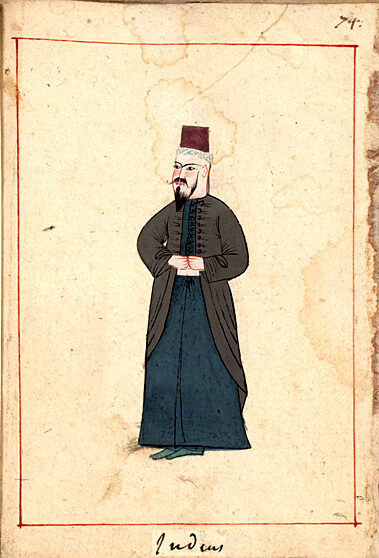
Jews were living in Anatolia long before there was a Constantinople. The great synagogue excavated at Sardis, near İzmir, was a working building in the fourth and fifth centuries, and the Jews of the Byzantine capital spoke Greek, prayed in a Greek-inflected rite and called themselves by the empire’s own name. They are the Romaniotes.
The Romaniotes and the conquest of 1453
When Mehmed II took Constantinople in 1453, he found a half-empty city and set about filling it. Muslims, Christians and Jews were moved in from across the empire, and the Jews came from Greek and Balkan towns whose names they kept for their new congregations. Ahrida is Ohrid in present-day North Macedonia; İstipol is Štip, a few hours east of it.
The resettlement was an order, not an invitation. Minna Rozen, whose history of the community’s first century is the standard account, describes how the deportees and their descendants remembered it as an exile, and Ottoman tax registers kept them under a separate heading as sürgün, deportees. For a generation they were also the largest Jewish community in the city.
1492: the Sephardim and Bayezid II
Then came the expulsion from Spain in 1492 and the forced conversions in Portugal five years later. Bayezid II, Mehmed’s son, admitted the refugees, and Sephardic families settled in Istanbul, Edirne, Thessaloniki, Safed and a string of Anatolian towns. Within a generation they outnumbered the Romaniotes, and their language, Judeo-Spanish or Ladino, became the language of Ottoman Jewry.
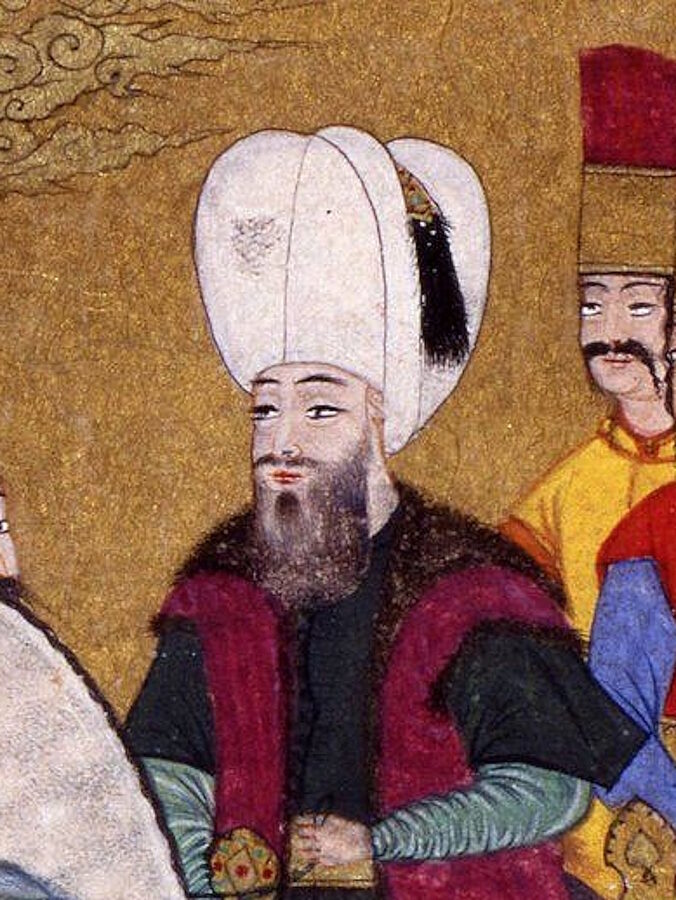
The famous line, Bayezid mocking Ferdinand of Spain for impoverishing his own kingdom and enriching the sultan’s, comes from Immanuel Aboab, a Sephardic writer of the 17th century. It was written down more than a hundred years after the event, so treat it as what the exiles’ grandchildren believed. What is not in doubt is what the refugees brought: the Nahmias brothers, David and Samuel, set up the first printing press in the Ottoman Empire in Istanbul in 1493.
The 16th century was the high point: Moses Hamon was physician to Süleyman, Joseph Nasi became Duke of Naxos under Selim II, and Doña Gracia Nasi ran a banking house that moved refugees out of Portugal.
Sabbatai Zevi, the long decline and the Camondos
In 1665 a rabbi from İzmir, Sabbatai Zevi, was proclaimed the Messiah, and much of the Jewish world believed it. The Ottoman authorities arrested him in 1666 and gave him a choice; he converted to Islam. The community turned inward for the better part of two centuries, and its own histories describe the early 19th century as a time of poverty and suspicion of new learning.
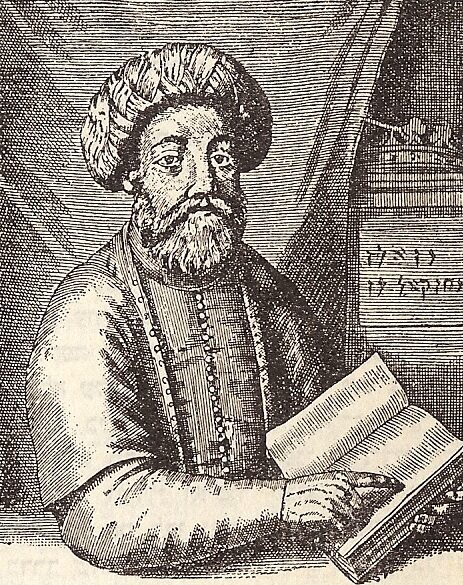
The change came from bankers. Abraham Salomon Camondo, born in Istanbul in 1781, ran the family bank in Galata and lent to the Ottoman treasury before the Ottoman Bank existed. In 1858 he opened a school with a modern curriculum in Hasköy, and some rabbis excommunicated him for it. The school ran for about thirty years and trained many of the Jewish officials who later served the state.

The same century brought new arrivals. Ashkenazi Jews from Austria and Eastern Europe were praying in a congregation of their own in Galata by 1831, and Italian-protected families broke away from the Galata community in 1862 to found a third. Officially the empire recognized a single Chief Rabbi for all its Jews only in 1835; before that each city chose its own.
The 20th century: 1934, 1942, 1948
The Republic of 1923 recognized Jews as a minority under the Treaty of Lausanne, and the community moved its schooling into Turkish. In 1934 mobs in Thrace drove Jewish families out of Edirne, Çanakkale and smaller towns, and most went to Istanbul.
In 1942 the Varlık Vergisi, a one-off wealth tax, was assessed at rates many times higher for non-Muslims than for Muslims. Those who could not pay within weeks lost their property, and non-Muslim men who still could not pay were sent to labor camps, the best known at Aşkale in the east. It is still remembered in the community as a catastrophe.
Then Israel was founded. Between 1948 and 1951 about 35,000 Turkish Jews emigrated there, close to 40 percent of the community, most of them from the poorer families. The riots of September 1955 were aimed mainly at the city’s Greeks, but Jewish and Armenian shops and houses were wrecked too, and more families left.
The community today
Estimates in the 2020s put Turkey’s Jewish population at around 14,500, nearly all of it in Istanbul, with a smaller community in İzmir. About 96 percent is Sephardic. The weekly newspaper Şalom has been published in Istanbul since 1947, in Ladino until 1983 and in Turkish since, and El Amaneser, a monthly printed in Istanbul, is one of the very few periodicals in the world written entirely in Ladino.
Most families now live in Şişli and in districts up the European shore of the Bosphorus such as Ulus and Etiler, which is why the old quarters below have synagogues and almost no Jewish residents.
The Jewish Museum of Turkey
The museum’s full name is the Quincentennial Foundation Museum of Turkish Jews (500. Yıl Vakfı Türk Musevileri Müzesi), and it was founded to mark 500 years since the arrival of the Sephardim. It opened on 25 November 2001 in the old Zülfaris Synagogue on Perçemli Sokak, and in December 2015 it moved into purpose-built galleries attached to Neve Shalom.

Hours, tickets and getting in
- Address: Büyük Hendek Caddesi 39, Beyoğlu, a short walk downhill from the Galata Tower.
- Hours: Sunday to Thursday 10:00–17:00, Friday 10:00–13:00. Last entry 45 minutes before closing.
- Closed: Saturday, Jewish holidays and Turkish national holidays.
- Tickets (2026): 500 TL for foreign adults, 250 TL for foreign students; 250 TL and 125 TL for Turkish citizens. Children of 10 and under, disabled visitors with one companion, and licensed guides go free.
- Bring: your passport. There is a security check before the ticket desk.
- Getting there: the M2 metro to Şişhane, then about 5 minutes on foot; or the T1 tram to Karaköy and a steep 10-minute climb; or the old Tünel funicular from Karaköy to the top station and a short walk back down.
Allow an hour and a half for both. The 500 TL is the most expensive line of the route, and it earns its price: the galleries put everything you see later into order, and the synagogue is otherwise closed to you outside services.
What is inside
The galleries run over three floors. The history section moves in order from the earliest Jewish communities in Anatolia through the Ottoman centuries to the Republic, with the community’s part in the life of the state as a running theme. Another section turns to ethnography: the life cycle from circumcision to marriage to burial, traditions, dress, and the towns and quarters where Turkish Jews lived.
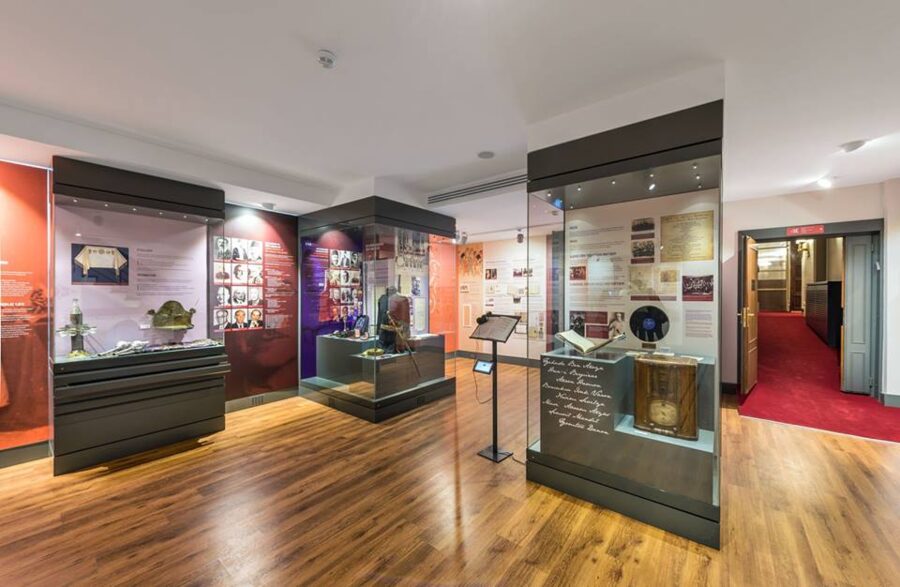

Look for two printed books among the religious objects. One is the 1511 Midrash Tehillim from the Nahmias press; the other is a volume of the 1732 Istanbul edition of Me’am Lo’ez, the great Ladino commentary on the Bible that Yaakov Culi began writing in the city. Between them they show the city as a capital of Jewish printing.
The museum gives space to the German Jewish professors who found posts at Istanbul University after 1933 and to the Turkish diplomats who saved Jews in occupied Europe. The Chief Rabbinate’s own site carries pages on darker episodes too, among them the 1934 Thrace events and the Struma, a refugee ship that sank in the Black Sea in 1942 after Turkey refused to let its passengers land, with almost everyone on board lost.
Neve Shalom
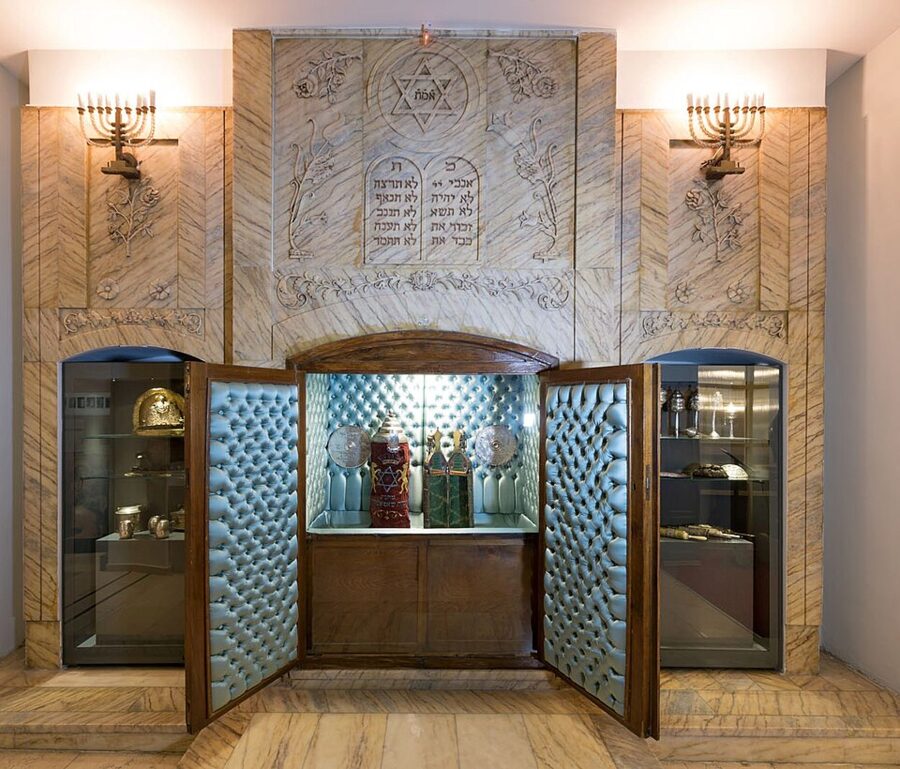
A hall called the midrash links the museum to the synagogue, and from it you can look into the main prayer hall. When a wedding, a bar or bat mitzvah or a circumcision is under way, the museum lets you watch from there.
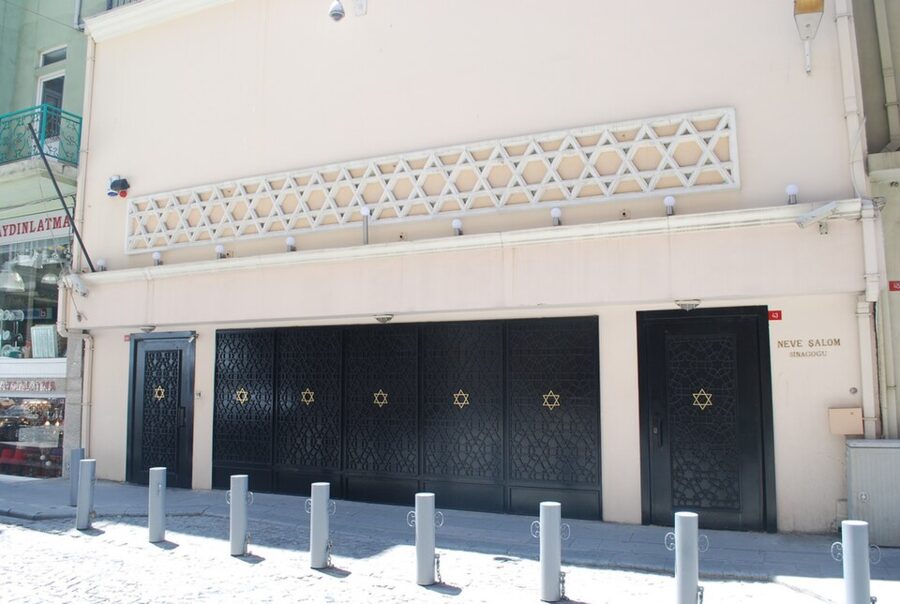
Neve Shalom means “oasis of peace”. The community built it because the old Galata synagogues were too small for the families moving into the district in the 1930s: two young Jewish graduates of Istanbul Technical University, Elio Ventura and Bernard Motola, designed it in 1949, and it opened on 25 March 1951. The community believes it stands on the site of the Aragon Synagogue founded by Spanish exiles in the 15th century. Three chief rabbis have been installed here, and it is where gunmen killed 22 worshippers during a Shabbat service on 6 September 1986.
Galata and Karaköy: synagogues, stairs and a banker’s quarter
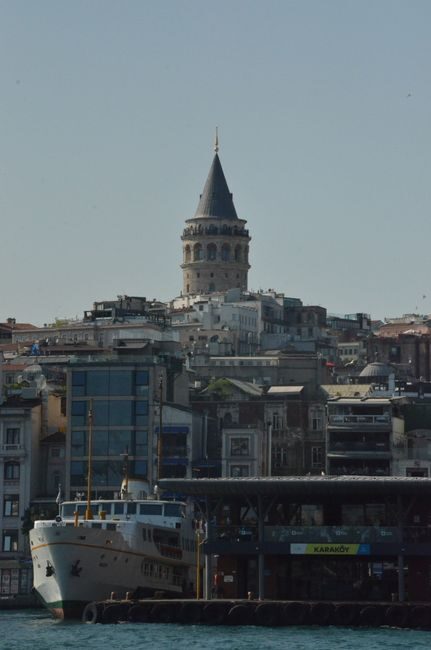
Galata, the hill north of the Golden Horn, was a Genoese colony under Byzantium and a quarter of foreign merchants, bankers and minorities under the Ottomans. Its Jewish streets cluster in a small triangle between the Galata Tower, Karaköy and Bankalar Caddesi, the street of banks. Everything below is within a 20-minute walk of the museum, most of it downhill.

The Ashkenazi Synagogue
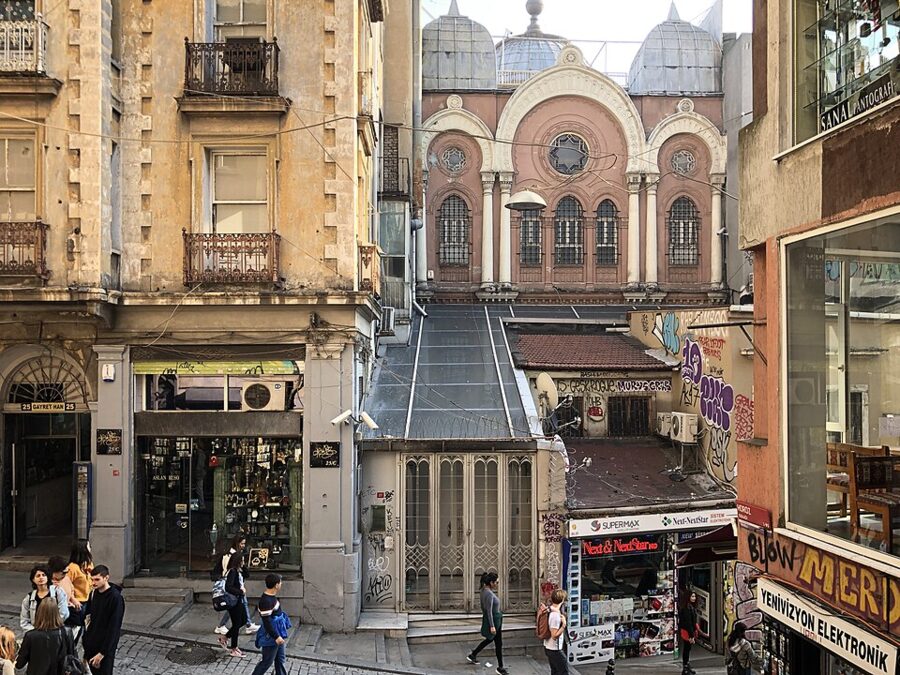
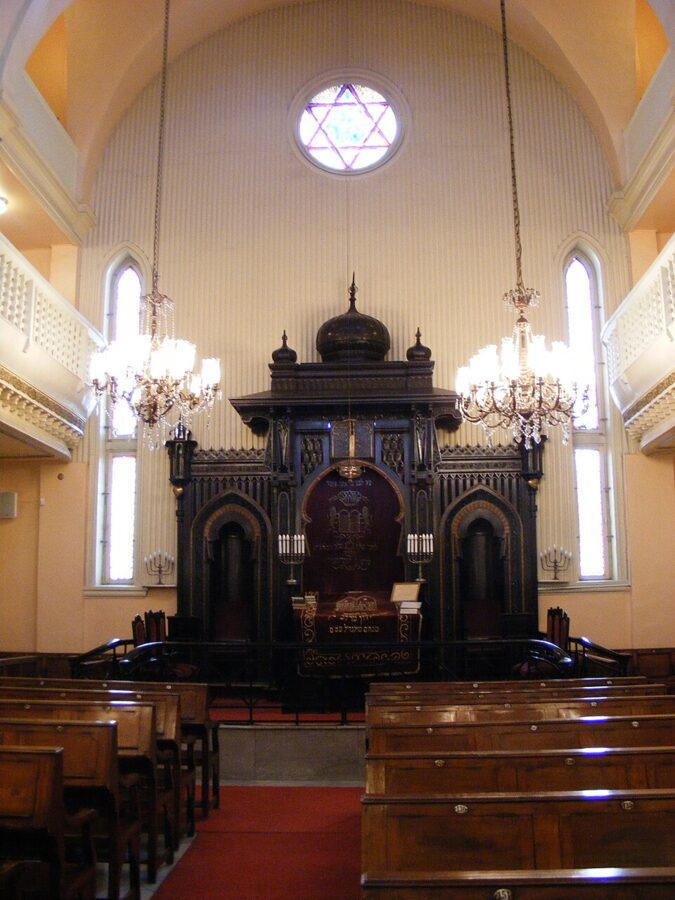
Ashkenazi Jews were praying in a house on Büyük Hendek Caddesi by 1831; when it burned in 1866 they built a wooden synagogue on Yüksek Kaldırım, the stepped street below the tower. The stone building that stands there now opened on 17 September 1900, designed by the Venetian architect G. J. Cornaro, with a front that looks more like Vienna than Istanbul.
Inside, the ark and the reading desk are carved from ebony. A member named Carl Carlman commissioned them in 1904 from a craftsman called Fogelstein in memory of his wife, Rachel. It is the last of three Ashkenazi synagogues the community once had in the city, and the only one still holding services in the Ashkenazi rite.

The Italian Synagogue, Kal de los Frankos
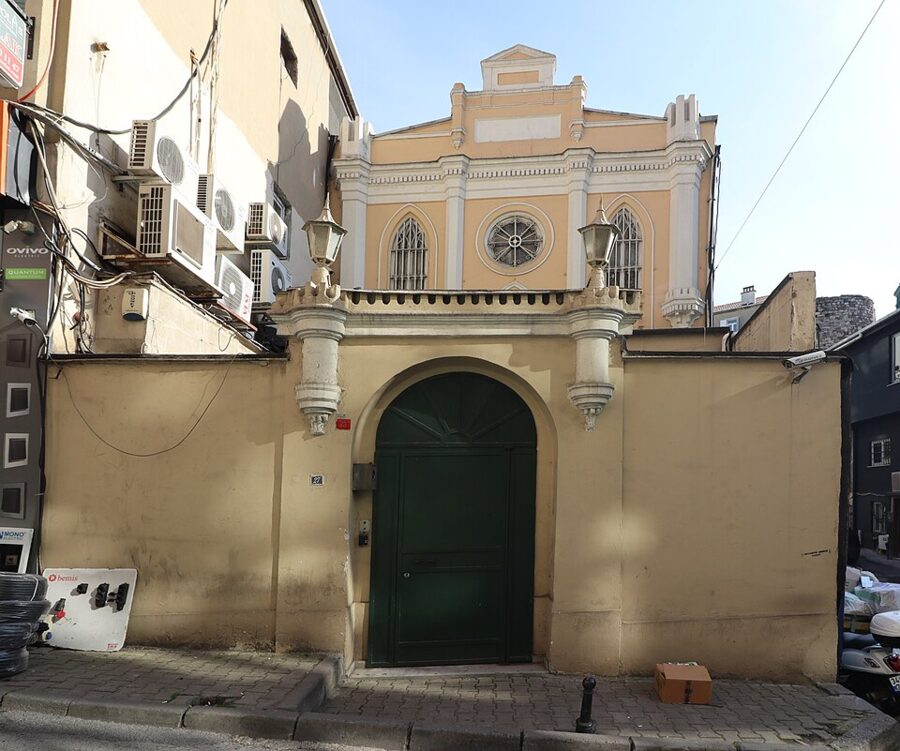
The Italian congregation began in a dispute over money. In the 1860s foreign-born members of the Galata community, most of them Italian subjects, quarreled with its leaders over the fees charged for weddings and funerals, and in 1862 they founded their own congregation under the protection of the King of Italy. Ladino speakers called it Kal de los Frankos, the synagogue of the Franks, meaning Europeans.
The present building on Şair Ziya Paşa Yokuşu dates from 1931, a Gothic Revival front in yellow render behind a courtyard wall. For years it ran Friday lectures in the twelve weeks before Pesach, and since 1999 the community has held its Shavuot celebrations here. It does not appear on the rabbinate’s list of places that receive outsiders, so take it as a facade on the way down the hill.

Zülfaris and the Schneidertempel
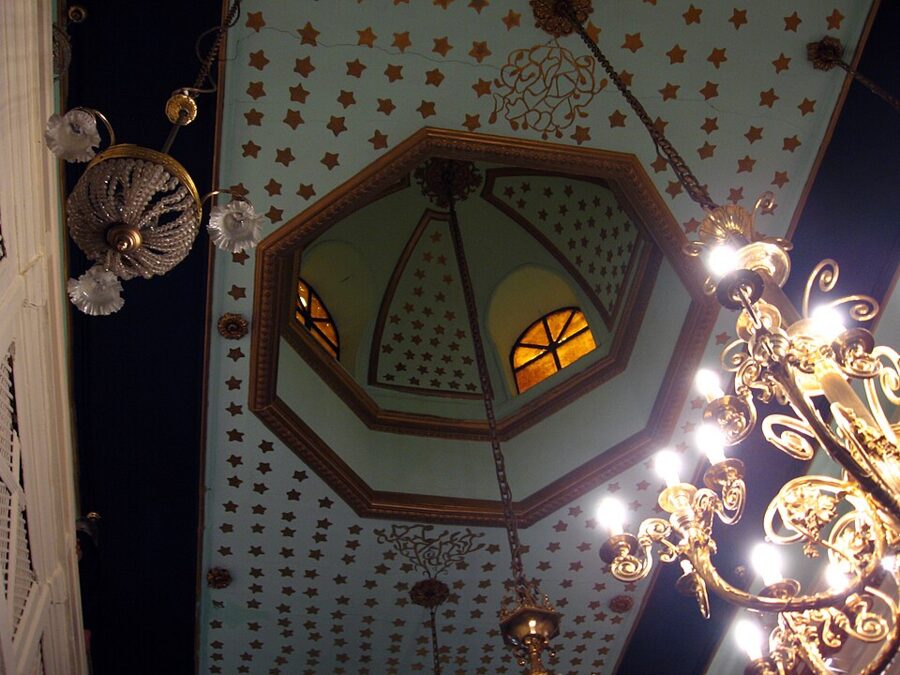
Two former synagogues in the lanes above Bankalar Caddesi have found other lives. Zülfaris, on Perçemli Sokak, is recorded as a synagogue by 1671 and was rebuilt on its old foundations in 1823. Its name is a street shortening of the Ottoman “zülf-ü arus”, a bride’s lock of hair, and the Camondo family paid for a major repair in 1890. The congregation had dwindled to nothing by 1985, and from 2001 to 2015 the building housed the Jewish Museum.
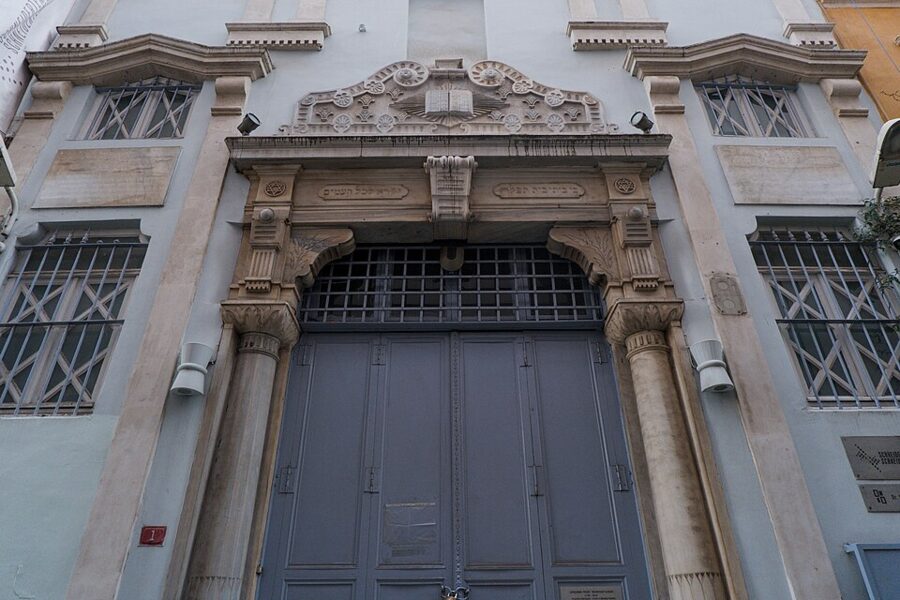
The Schneidertempel was the synagogue of the Ashkenazi tailors’ guild, Tofre Begadim. It has run as an art center since 1999 and was still hanging exhibitions through 2026, so it is worth a look at the door to see what is showing. The carved stone doorway is the best surviving piece of the old building from the street.

The Camondo Stairs and the Camondo family
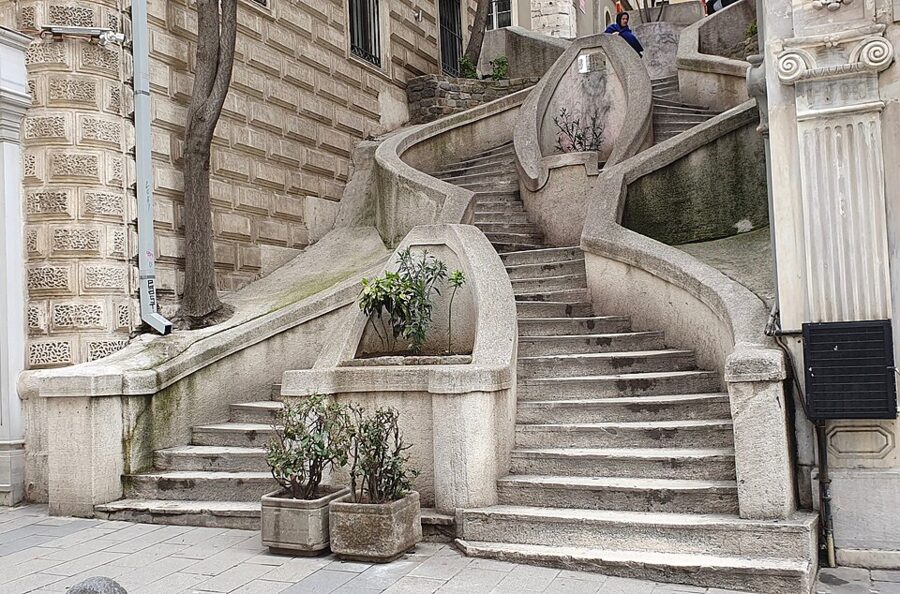
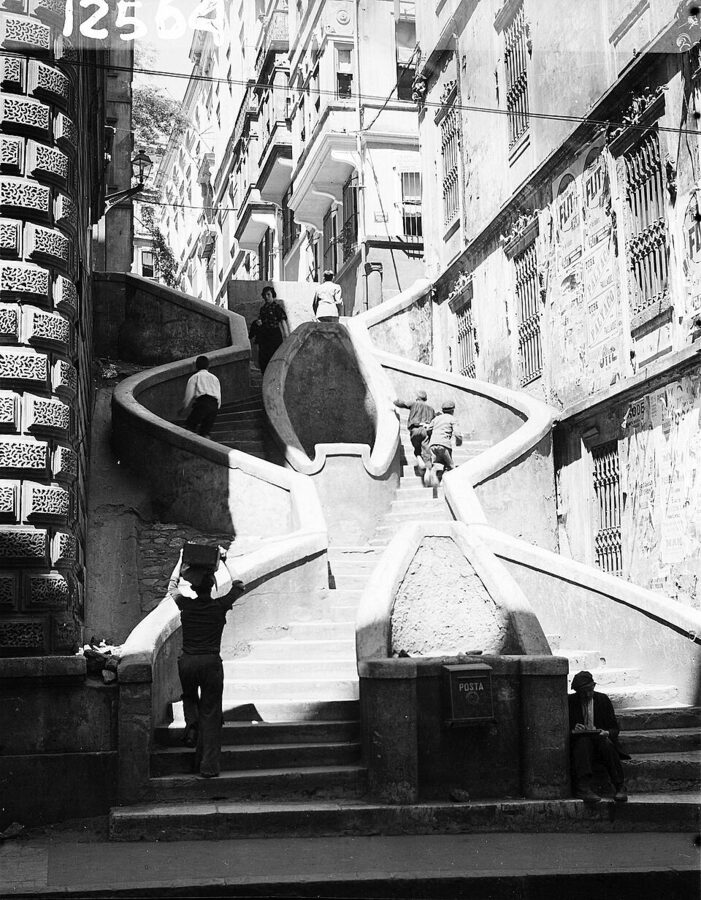
The stairs connect Bankalar Caddesi with Kart Çınar Sokak, which in the 19th century was called Rue Camondo because the family lived on it. Abraham Salomon Camondo had them built so he could walk from home to the bank, and the family’s children used them to reach the Austrian school nearby. Sources date them to the 1850s or to about 1870–1880, and nobody has settled it; either way they are a piece of Neo-Baroque with an early Art Nouveau curl, and Henri Cartier-Bresson photographed them in 1964.
The family’s story runs from here to Paris and ends badly. Abraham Salomon’s grandsons moved the business to Paris in 1869, he followed, and when he died there in 1873 his body was brought back to be buried at Hasköy, across the Golden Horn. The bank in Istanbul closed in 1894. His great-great-grandson Nissim was killed as a pilot in 1917, and in the 1940s Nissim’s sister Béatrice and her two children were deported from France and murdered at Auschwitz.
Their Paris house is now the Musée Nissim de Camondo. In Istanbul the family left a seaside mansion in Kasımpaşa, long since a naval building, a grave at Hasköy, and these stairs.
Balat and Hasköy, on the Golden Horn
Balat was the main Jewish quarter of the city from the late 15th century until the 1950s, home at its peak to about ten thousand Jews and, by the usual count, 18 synagogues. The first families there, according to the Balat synagogue foundation, were about a hundred poor households from Kastoria in Macedonia; Sephardic exiles followed after 1492, and families from Rhodes in 1599. The emigrations of 1948–1951 emptied it.
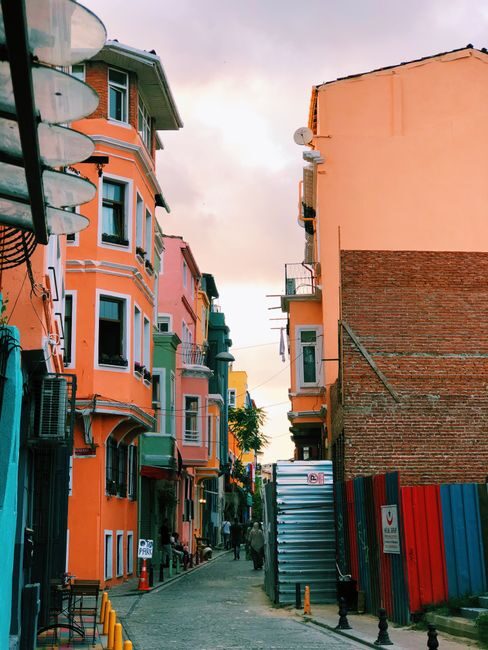
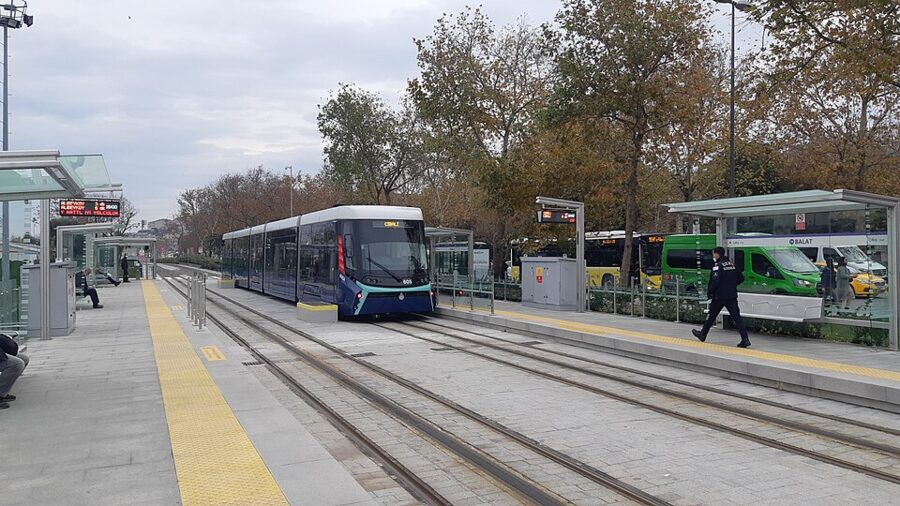
Balat today means painted houses, cafés, photographers and the walk from Fener to the Chora, all covered on the Süleymaniye, Chora and Golden Horn walk. The T5 tram stops at Balat, and the Haliç ferry calls at Balat pier about once an hour.

The Ahrida Synagogue
Ahrida, on Kürkçü Çeşme Sokağı, is the largest and grandest of the Balat synagogues and the one to book. An Ottoman decree of 1693 records that it existed before the conquest of 1453, and its founders came from Ohrid. It was badly damaged in the great fire of 1660, rebuilt under a decree of 1694, and renovated again and again; one tradition says the present hall joined two neighboring synagogues, probably one Romaniote and one Sephardic, by knocking down the wall between them.

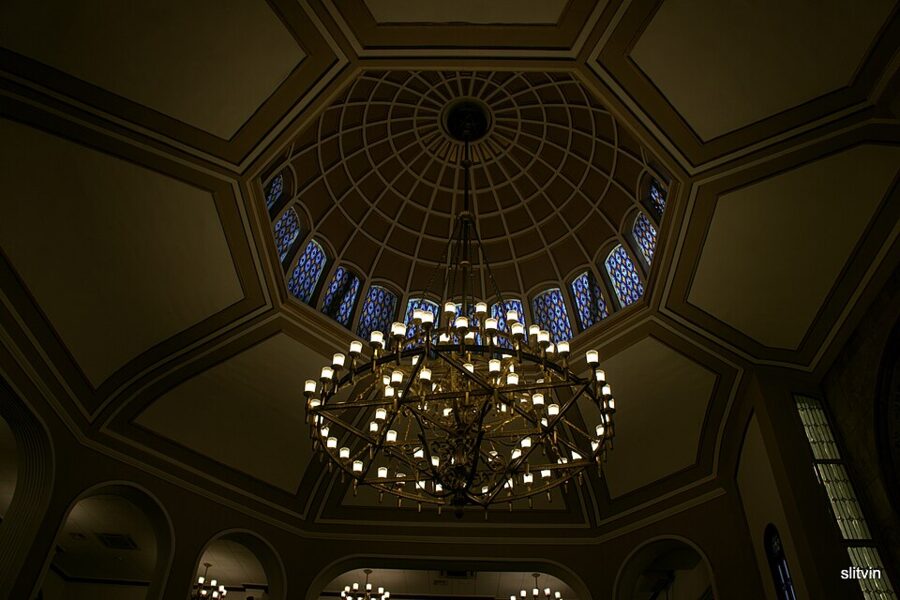
What you come for is the teva, the platform from which the Torah is read. It is built like the prow of a ship. One tradition says it is Noah’s Ark; the other, which the community likes better, says it is the Ottoman galleys that carried the Sephardim from Spain.
Sabbatai Zevi is said to have preached here one Shabbat. On 18 May 1877 the congregation prayed for an Ottoman victory over Russia with the grand vizier, İbrahim Edhem Pasha, in attendance, and during the Second World War mobilization a cavalry unit was quartered inside. In 1992 the Quincentennial Foundation restored it, to a design by the architect Hüsrev Tayla.
Yanbol and İstipol
Yanbol stands a few minutes from Ahrida and can be seen on the same booking. The 1693 decree places it in the Byzantine period too, and like Ahrida it is named for the Balkan town its founders came from. The main building was rebuilt after a fire in the 17th or 18th century and repaired in 1709, 1865 and 1895; its ceiling is painted in oils with scenes of nature, and the doors of the ark are inlaid with mother-of-pearl.
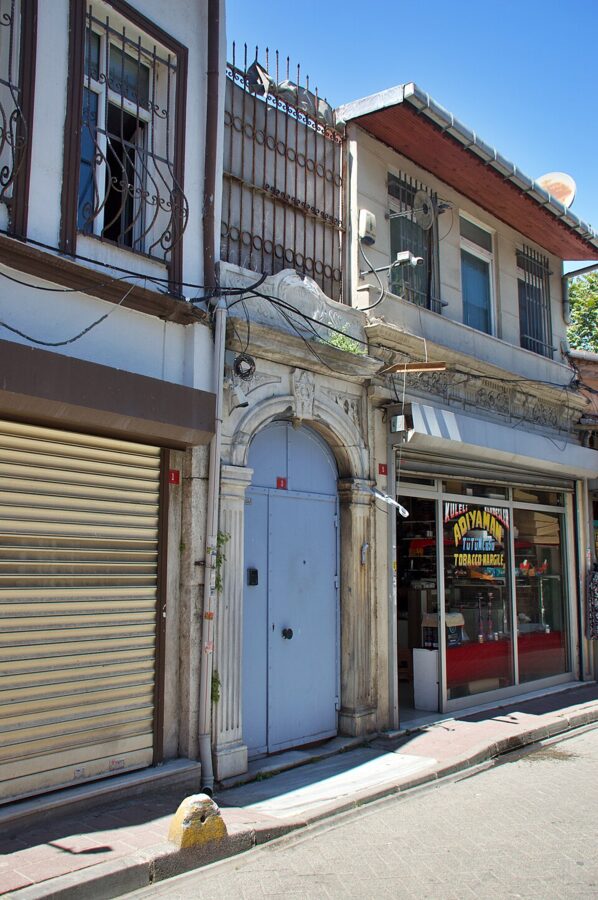

İstipol, on Kasım Gürani Caddesi (the old Salma Tomruk Sokak), is the one you will only see from outside. Named after Štip, it burned to its foundations and was rebuilt in 1898, a wooden prayer hall in a sunken courtyard with four wooden columns around the reading desk. The Chief Rabbinate lists it as no longer used for worship.

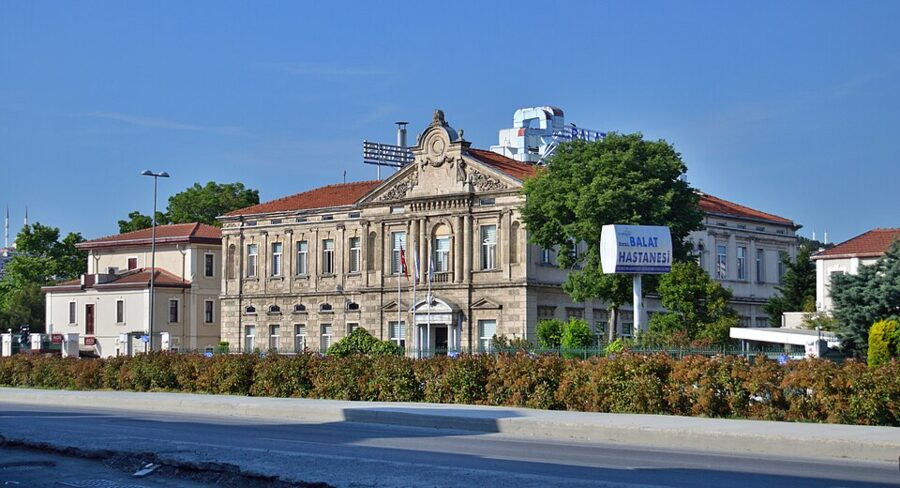
One more Balat building is still in daily use. The Or-Ahayim hospital, opened in 1899 for the quarter’s Jewish poor, now treats everyone, and you will pass it in Balat.

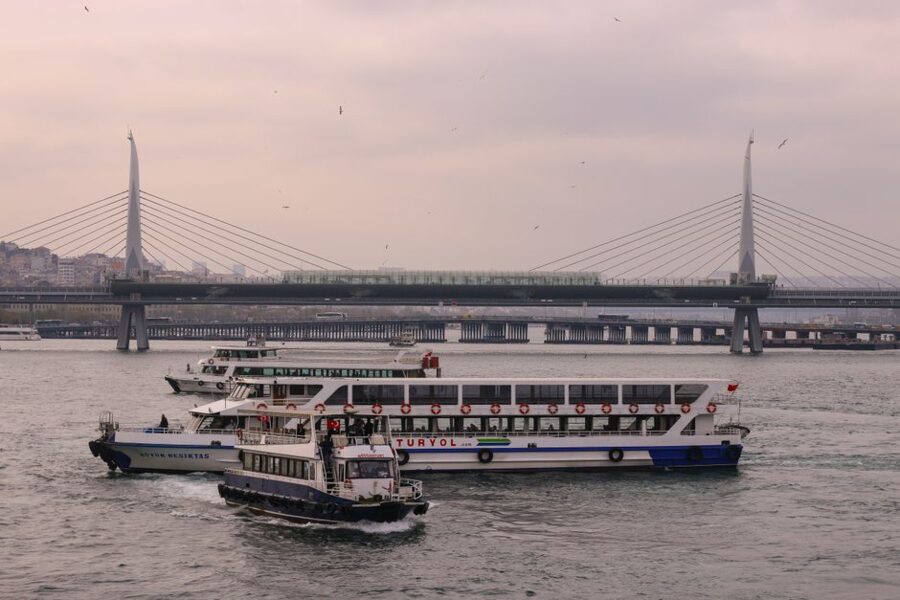
Across the water to Hasköy
Hasköy faces Balat across the Golden Horn, and the Haliç ferry links the two piers in a few minutes. It was a Jewish quarter from the 15th century, with Karaites and Armenians alongside, and Camondo’s modern school opened here in 1858. Today it is a district of shipyards and workshops, with one synagogue left.
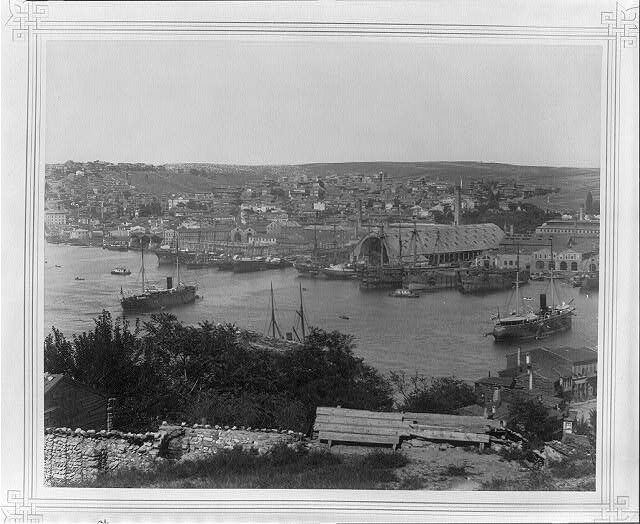
The Maalem Synagogue stands on the slope above the water beside the community’s home for the elderly, and it still holds weekday and Shabbat prayers. It is not on the list of synagogues that receive outsiders, so see it from the lane and move on.

The Hasköy cemetery
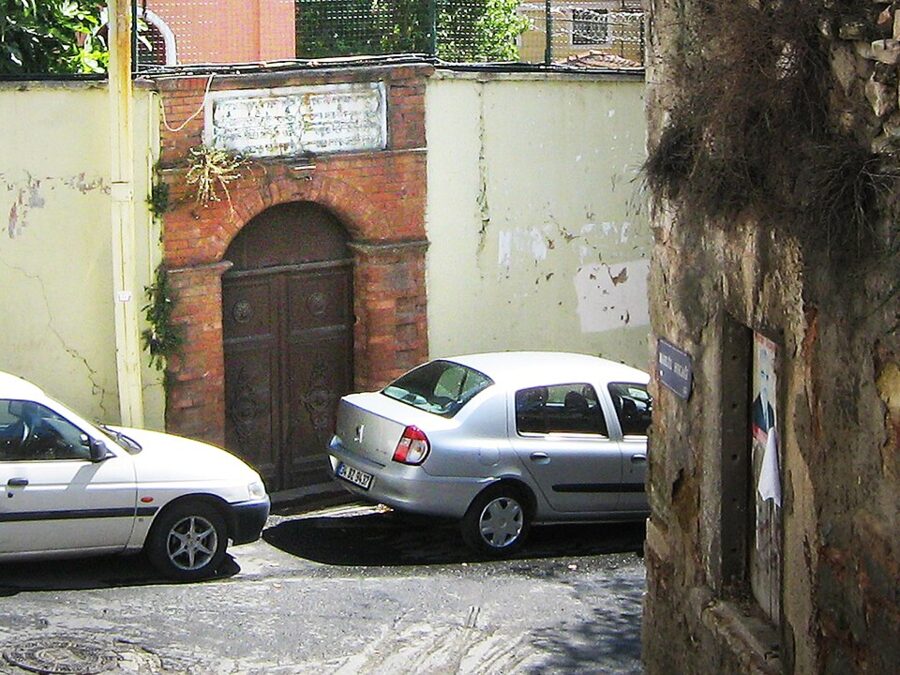
Up the hill is the city’s great Jewish cemetery, known as Hasköy or Çıksalın, in the Halıcıoğlu neighborhood. In 1582 the community was granted 128 dönüm of land from the foundation of Sultan Bayezid II; the plague of 1809 filled it, and more land was added in 1814 and again in 1836. Abraham Salomon Camondo lies here, and one corner belongs to the Karaite community.
The approach roads built for the bridges of the 1970s cut through the middle of it, and graves from the expropriated strip, many of them 19th century, were moved twice. Burials still take place in the Çıksalın section, and the Neve Shalom foundation looks after the ground. It is an active cemetery with no published visiting arrangement, so unless you are looking for a family grave, see it from the road; if you are, go through the community first.
Kuzguncuk and the Asian shore
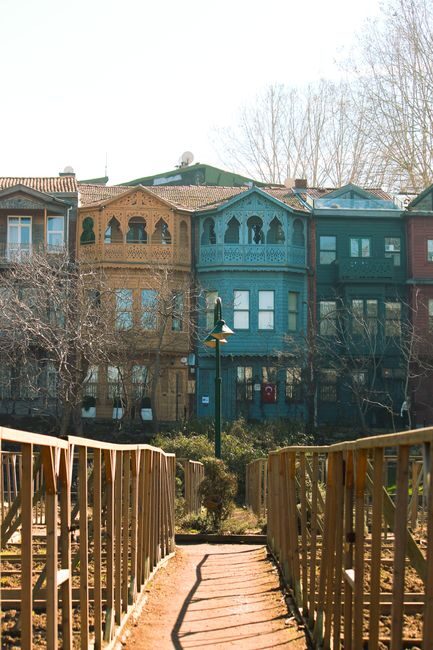
Kuzguncuk sits in a small valley on the Asian shore of the Bosphorus, between Üsküdar and Beylerbeyi, and its mix of houses of worship survived better than anywhere else in the city. Sephardic families settled here after 1492 by choice rather than by order, and Armenians and Greeks came later. The Jewish population fell fast after 1948 and the Greeks and Armenians left after 1955, but their buildings stayed.
Synagogue, church and mosque
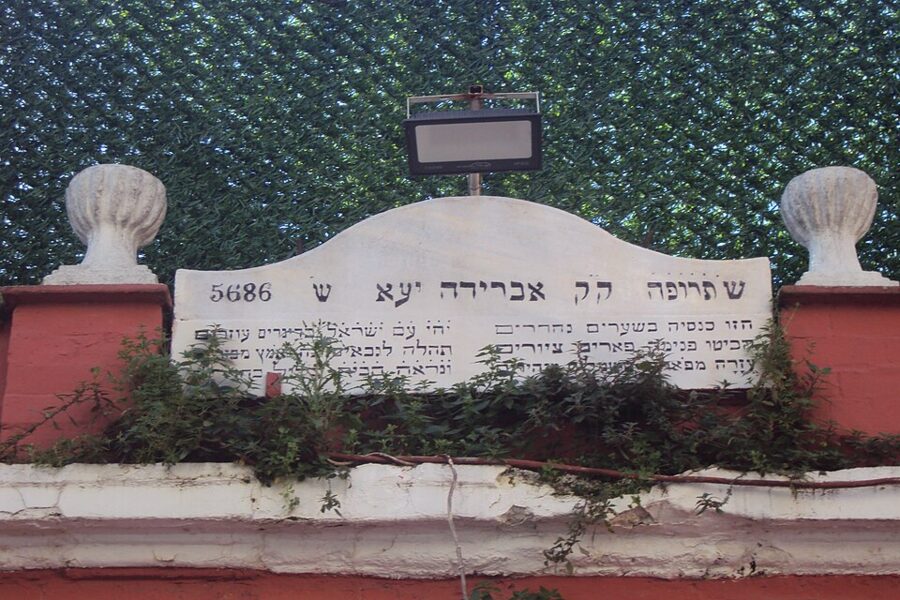
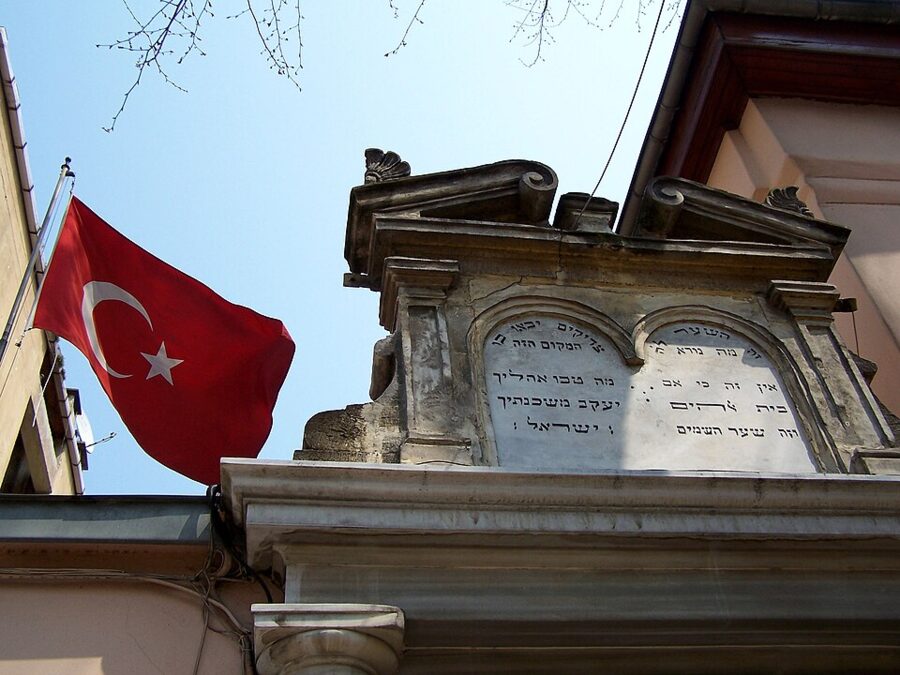
Bet Yaakov stands at the bottom of İcadiye Caddesi, the main street up from the shore. It was built in 1878 and is known in Ladino as Kal de Abaşo, the lower synagogue; the marble over the street door carries a Hebrew text stitched from Psalms, Genesis and Numbers that begins “This is the gate of the Lord”. Inside, an octagonal dome is painted with scenes inspired by the Torah, and the hall with its L-shaped women’s gallery holds about 260 people.

Bet Nissim, higher up on Yakup Sokak, is probably older, from the 1840s, though the historian İbrahim Hakkı Konyalı gave 1884; for a while its survival rested on one man. When the congregation could no longer raise a minyan, the athlete Eliezer Hara went alone to read the daily prayers so the building would not be closed. It was renamed in 1997 for Nissim Albala, who had spent much of his life keeping the Kuzguncuk congregation going.
A few steps up İcadiye Caddesi from Bet Yaakov is the reason Kuzguncuk ends up on postcards. The Armenian church of Surp Krikor Lusavoriç, first built in 1835 and rebuilt in 1861, shares its plot with the Kuzguncuk Mosque, built in 1952 in the church’s courtyard.
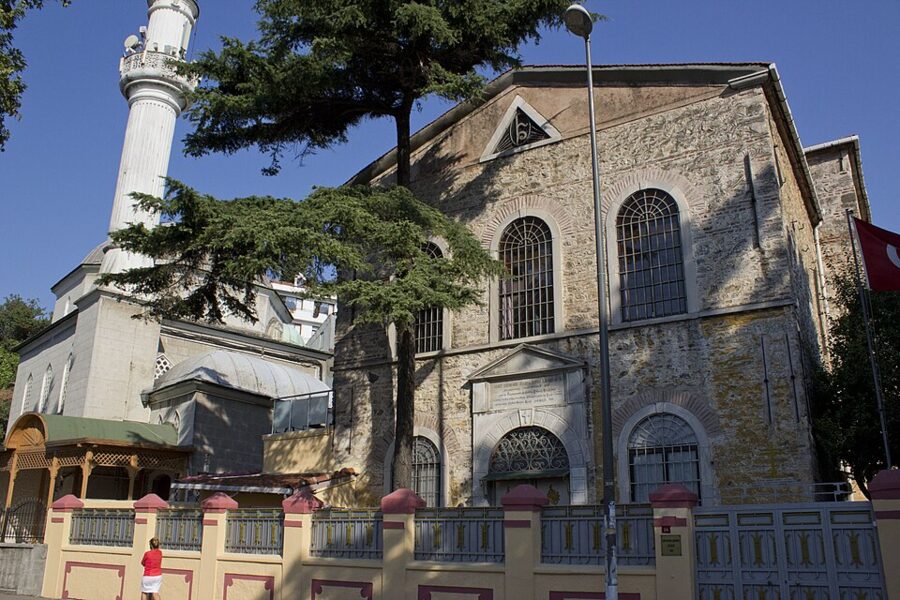

The mosque closes to visitors during the five daily prayers and for longer at Friday noon prayer, like every mosque in the city. To see inside Bet Yaakov, write to the Kuzguncuk synagogue foundation with your passport details, as the rabbinate’s page sets out.
The Kuzguncuk cemeteries
The community counts Kuzguncuk’s old Jewish cemetery as the oldest surviving one in Istanbul. Its earliest known stone, for Rabbi Eliezer Mitsriel, is dated 1562, and there are stones for Rabbi Avraham Farhi (1615) and Rabbi Avraham Meyohas (1616). A legend held that European Jews who could not reach the Holy Land asked to be buried here instead.
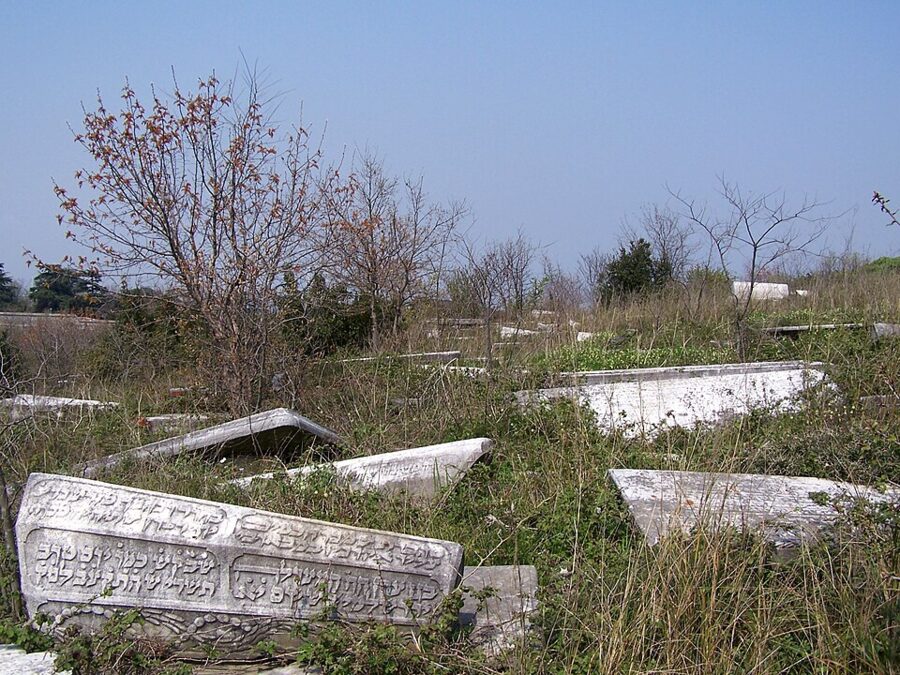

No burials take place in the historic cemetery now. The newer Nakkaştepe cemetery is on the hill above, and the same rule applies as at Hasköy: look from outside unless you have a reason to go in and have asked first.
Getting there
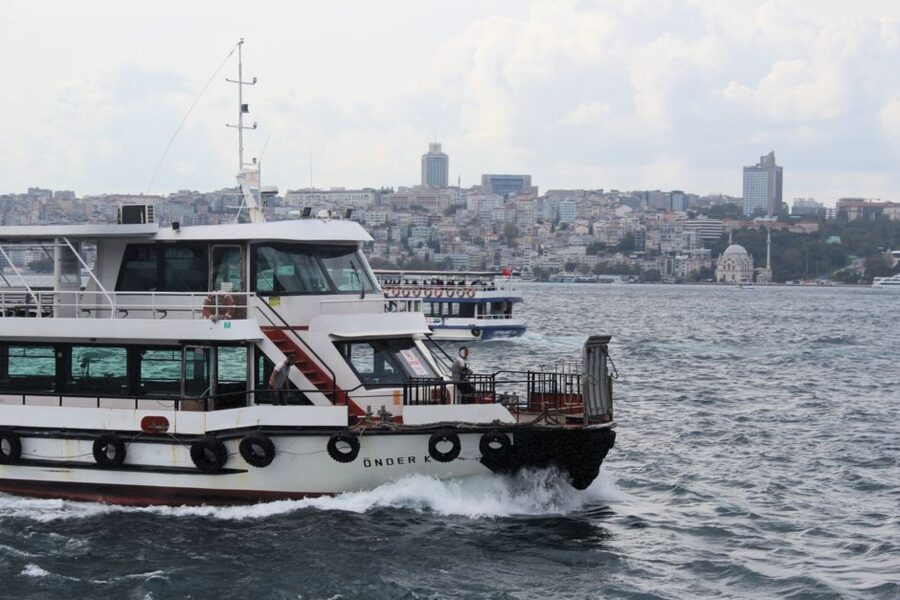
Kuzguncuk has its own pier, but only a few city ferries a day call there. The easy way is a Bosphorus ferry to Üsküdar from Eminönü or Beşiktaş, for a single Istanbulkart fare, then about 2.5 km north along the shore, half an hour on foot. Buses up the shore road from Üsküdar stop in Kuzguncuk if your legs have had enough.
Büyükada, in summer
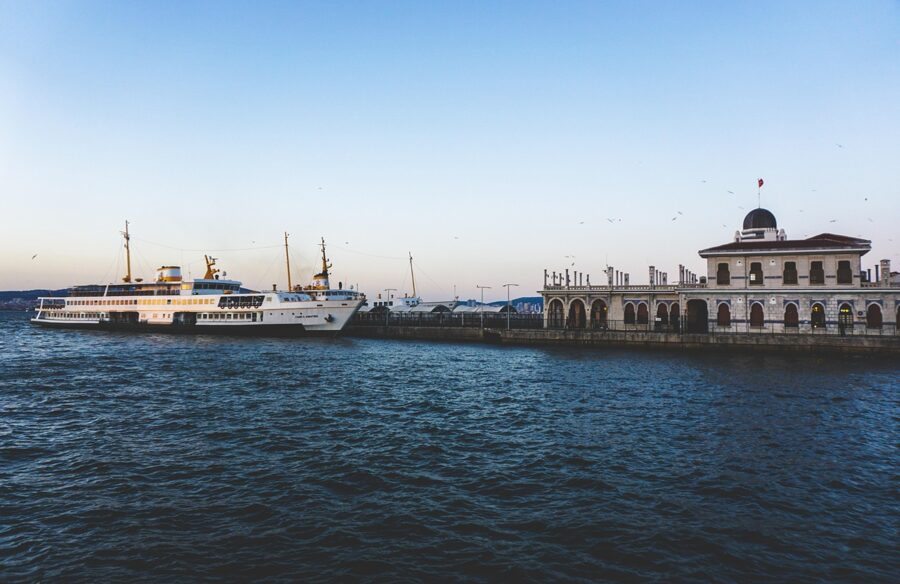
The Princes’ Islands were the summer retreat of Istanbul’s minorities, and the Jewish community still keeps synagogues on three of them. The one on Büyükada, Hesed le Avraam, opened at Pesach in 1904 on land given by Avram Arslan Efendi Fresko and was rebuilt to its present size in 1921. It opens for worship only in summer, between Shavuot and Sukkot, when the families are on the island.

Beyond Istanbul: Edirne, İzmir and Sardis
Edirne: the Great Synagogue
Edirne, the Ottoman capital before Istanbul, had one of the empire’s oldest Jewish communities; the community’s own records cite a gravestone in its cemetery dated 1466. In August 1905 a fire destroyed the city’s synagogues, and the community, around 20,000 people at the time, decided to build one large one instead of many small ones. Sultan Abdülhamid II’s permission came on 6 January 1906.
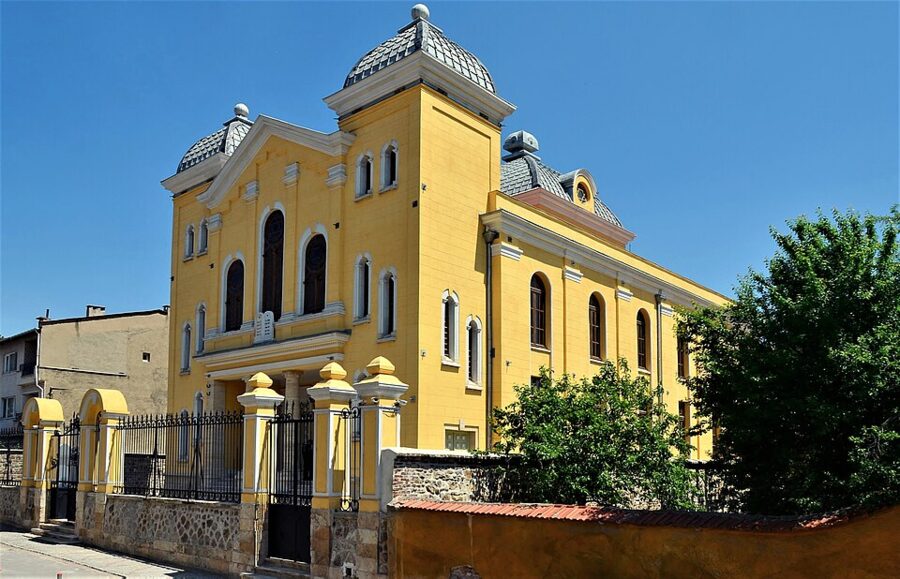

The French architect France Depré modeled the Kal Kadosh ha-Gadol, the Great Synagogue, on the Leopoldstädter Tempel in Vienna. When it opened is less certain than you would think: the Chief Rabbinate’s own history says April 1909, on the eve of Pesach, while the community newspaper Şalom and most Turkish accounts say 1907. Most of Edirne’s Jews left after the Thrace riots of 1934, the synagogue held its last services in 1983, and in January 1997 the roof fell in under the weight of snow.
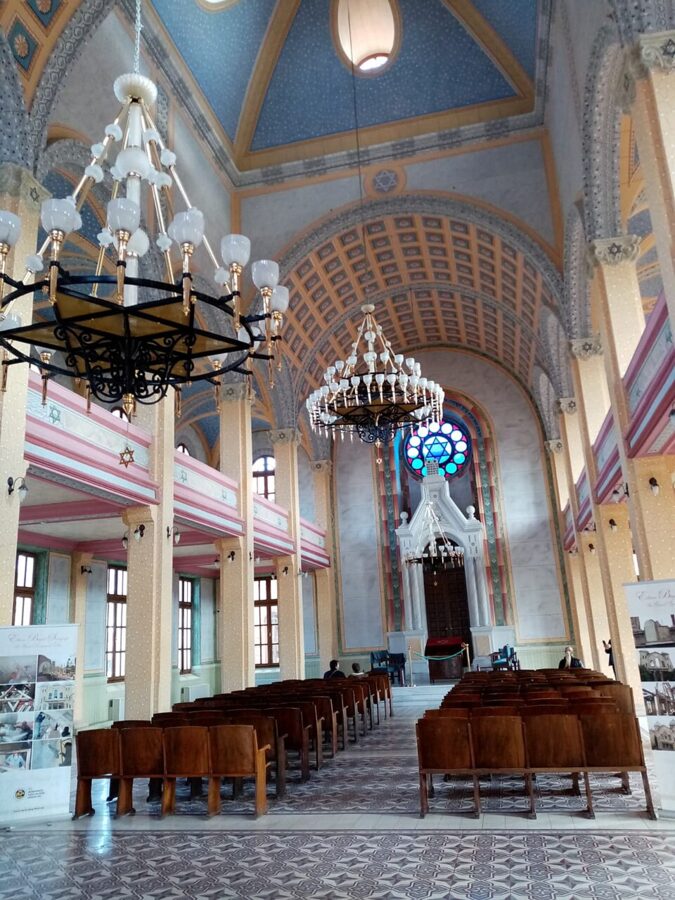
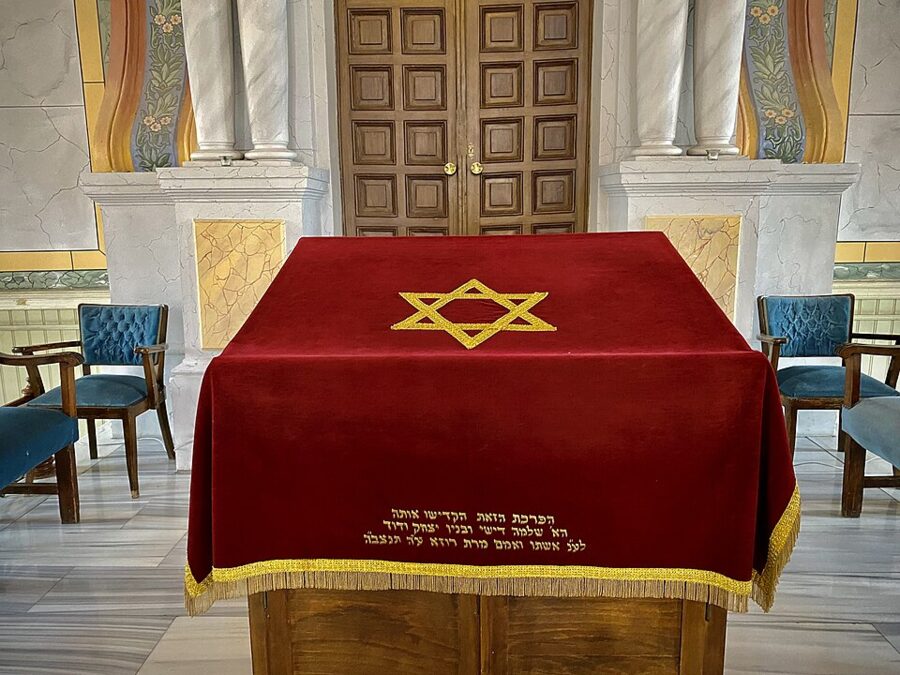
The Directorate of Foundations (Vakıflar) took it over, put the restoration out to tender in March 2010 for 3.7 million lira, and reopened it on 26 March 2015 in a ceremony with state officials and the community. It is in Kaleiçi, the old town, on Maarif Caddesi. Visiting hours are not published by the Directorate or the community, so go on a weekday during working hours and carry your passport, as for any synagogue in the country.

İzmir: Havra Sokağı and the Kemeraltı synagogues
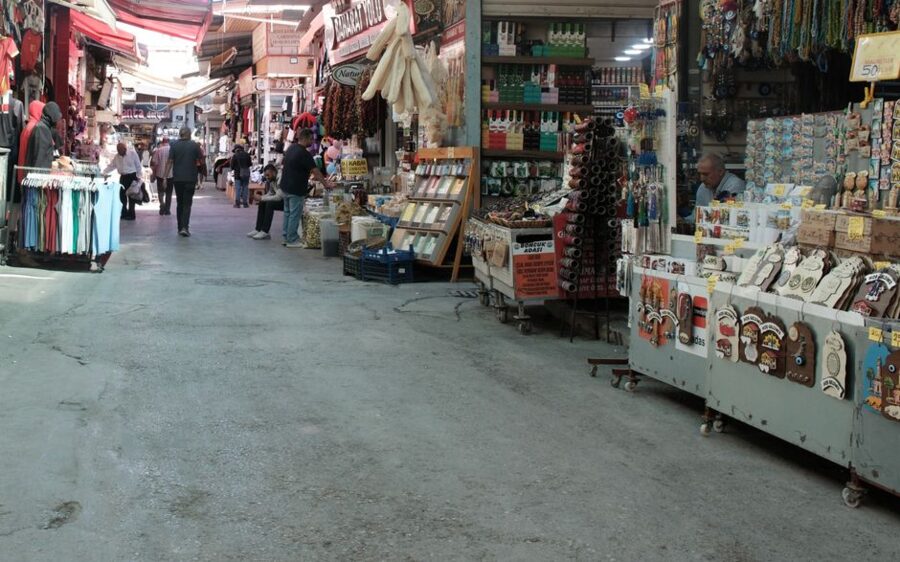
İzmir was the birthplace of Sabbatai Zevi and, by the 19th century, one of the largest Jewish cities in the Ottoman world. Its old Jewish quarter lies inside the Kemeraltı bazaar, and its spine is Havra Sokağı, Synagogue Street, officially 927 Sokak. It was the community’s food market, where kosher meat, fish, cheese and wine were made and sold.
Nine synagogues survive in the old quarter, and around 2009 six of them had lost their roofs or floors. The İzmir Jewish Community Foundation has been saving them one at a time with municipal and European money. Beit Hillel, restored in 2014, is open to visits; the Portugal Synagogue, restored in 2018, is a culture and events center; Etz Hayim is an arts venue with a gallery; and Hevra, whose roof fell in 1999, has been stabilized under a temporary roof and is used for performances.
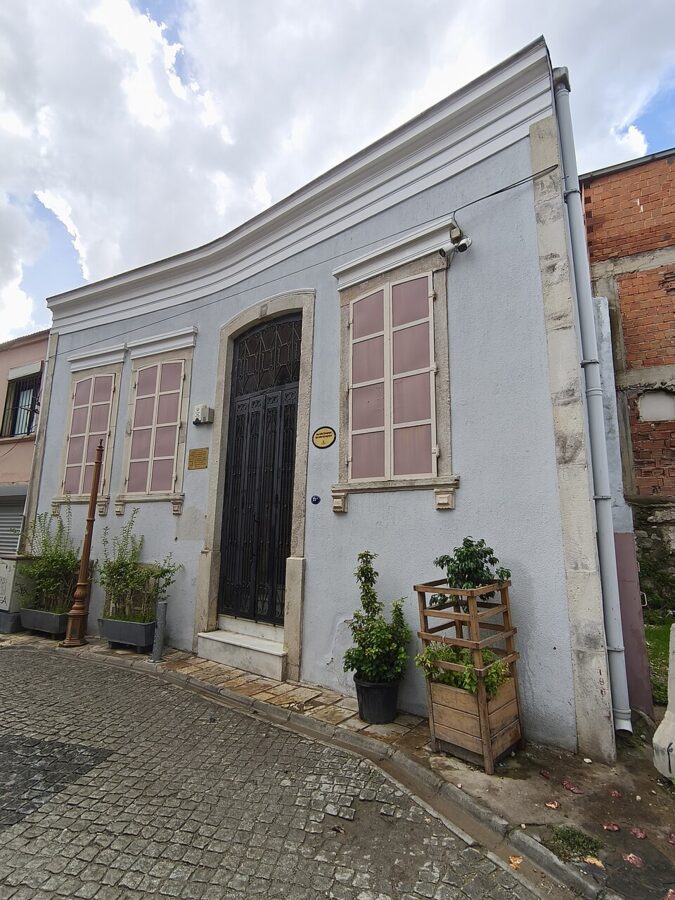

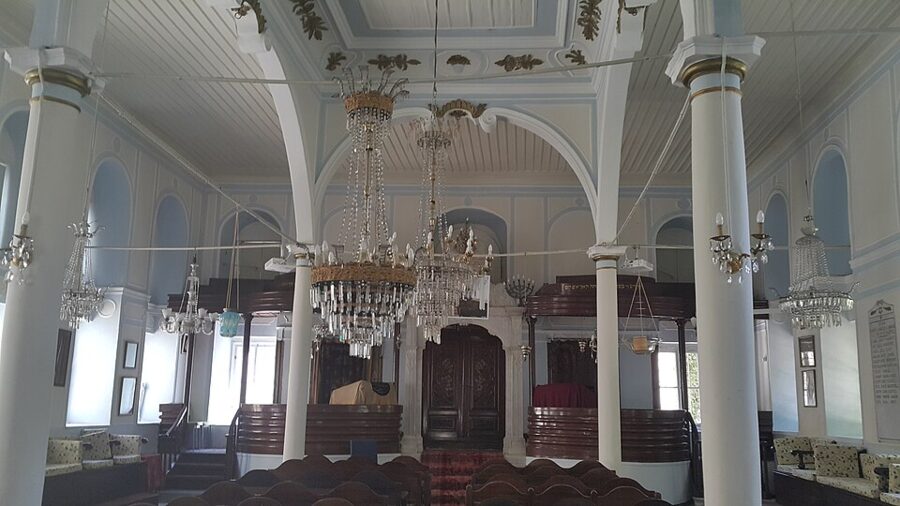

Shalom was the only one to come through the fire of 1841 undamaged, with its painted ceiling and cushioned benches along the walls like an Anatolian house. Bikur Holim began in 1724 as a house given by Salomon de Ciaves, a Dutch Jew of Portuguese origin. The Portugal Synagogue was the stronghold of Sabbatai Zevi’s opponents until his followers broke in and chased out the rabbis.
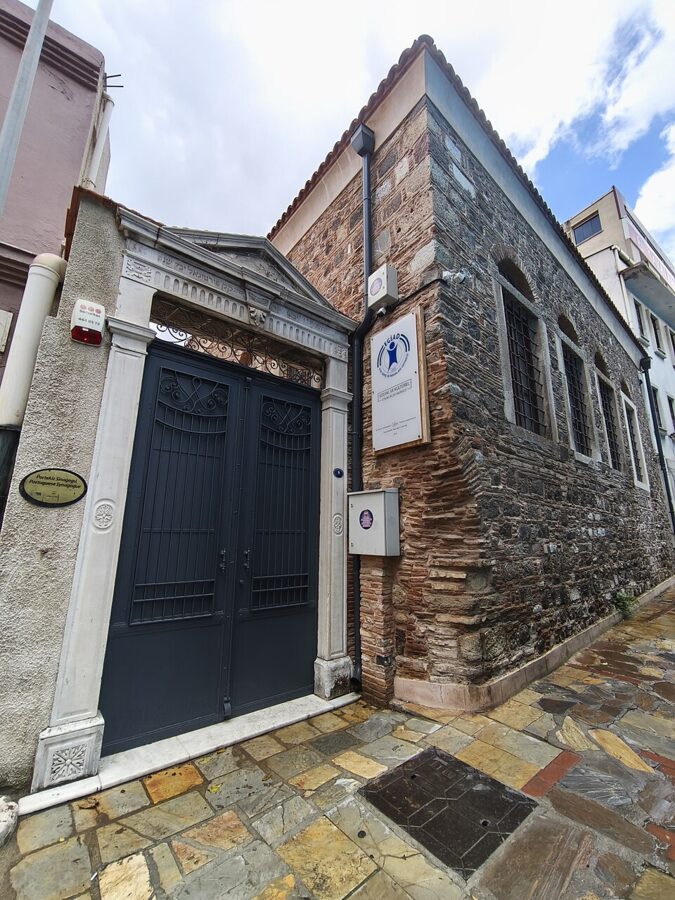

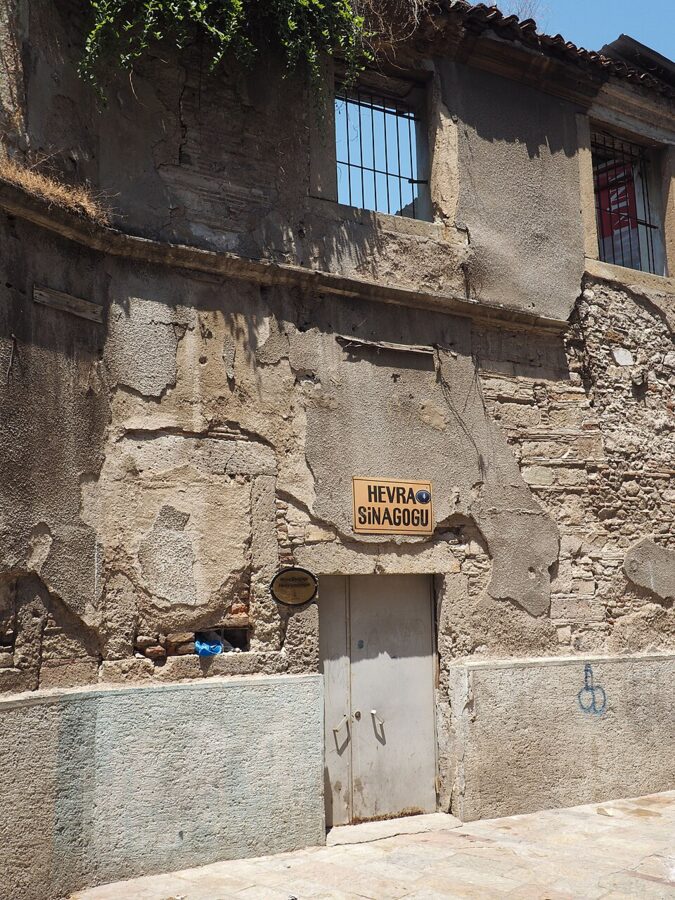

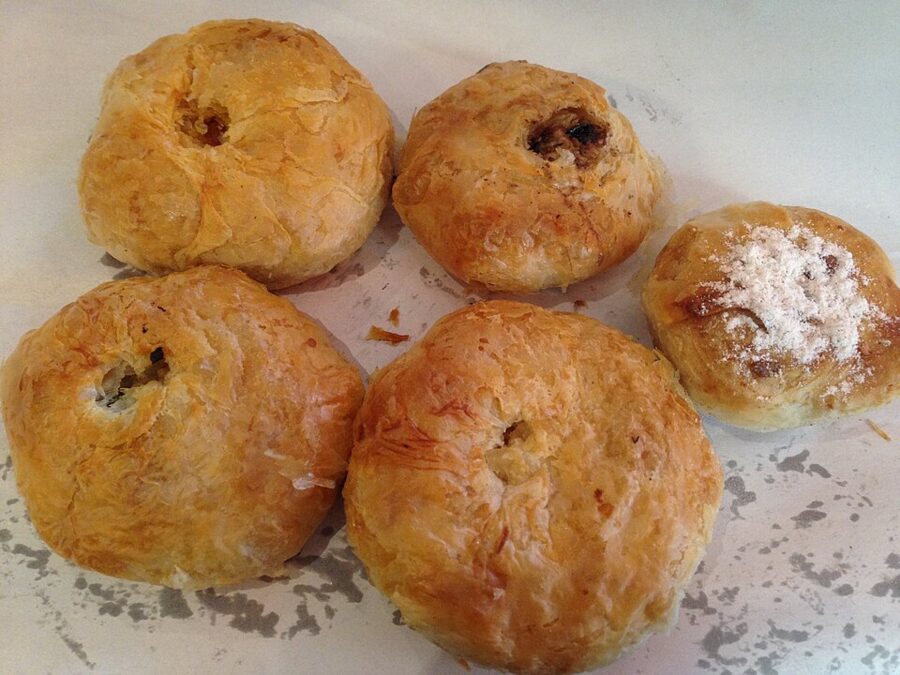
No visiting timetable is published for the working synagogues, so treat the arts venues as walk-past or walk-in depending on what is on, and arrange anything else through the İzmir Jewish Community Foundation. Eat a boyoz, the oily pastry İzmir has for breakfast, while you wander: it is usually traced to the city’s Sephardic bakers.

Sardis: the oldest synagogue in Turkey
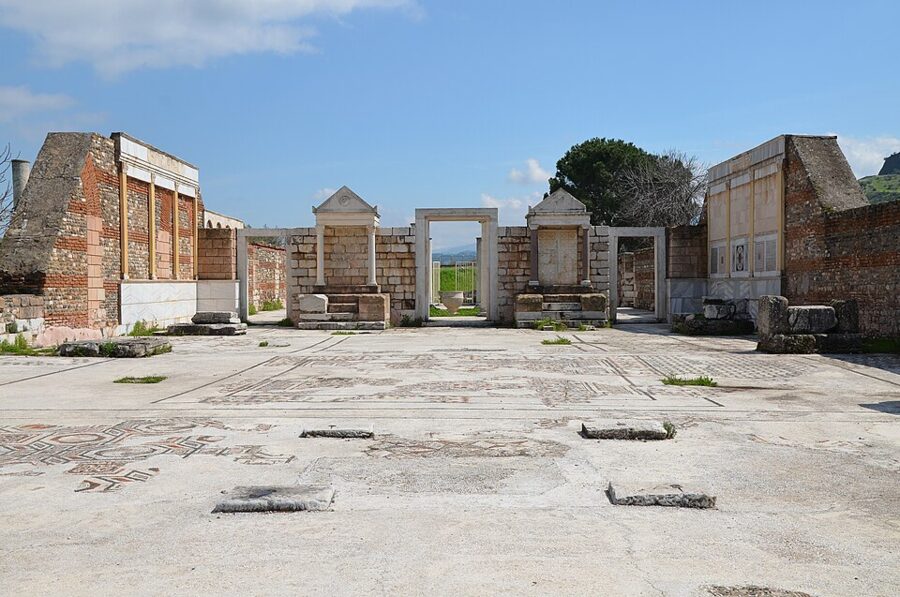
East of İzmir, at Sart, is the synagogue that makes every other building here look recent. Built into a corner of a Roman bath-gymnasium and used in the fourth and fifth centuries, it could hold close to a thousand people, and its floors still carry mosaics with the donors’ names, some panels now replaced by casts. The site, with the train times from İzmir, is covered in the guide to the seven churches of Revelation, Sardis among them.

A two-day plan, and what it costs
The opening hours decide the order. Balat only takes visits from 10:00 to 14:00 on weekdays, and the museum stays open until 17:00, so Balat goes first and Galata second. Book Balat at least three days ahead and make Day 1 a Monday to Thursday.
| When | Where | How |
|---|---|---|
| Day 1, 10:00 | Ahrida and Yanbol, Balat (booked) | T5 tram to Balat, or the Haliç ferry from Karaköy, about 20 minutes |
| Day 1, 12:00 | Balat streets, İstipol from outside, lunch | On foot |
| Day 1, 13:30 | Hasköy: Maalem from the lane, the cemetery from the road | Haliç ferry across the Golden Horn |
| Day 1, 15:00 | Jewish Museum and Neve Shalom | Haliç ferry back to Karaköy, then uphill on foot; last entry 16:15 |
| Day 1, late | Ashkenazi Synagogue and Italian Synagogue facades, Camondo Stairs | On foot, downhill to Karaköy |
| Day 2, morning | Kuzguncuk: Bet Yaakov (booked), church and mosque, the old streets | Ferry to Üsküdar, then 30 minutes on foot along the shore |
| Day 2, afternoon | Back on the water | Ferry from Üsküdar to Eminönü or Karaköy |
If the ferry times do not line up in Hasköy, skip it: the Maalem and the cemetery are both outside views, and the museum is the stop you cannot move. Balat’s weekday rule means Monday to Friday morning, so if your only free day is a Sunday, do Galata and the museum and see Balat from the street.
The sums
- Jewish Museum and Neve Shalom: 500 TL (250 TL with a student card).
- Synagogue visits by arrangement: no published fee; whatever the foundation asks when it confirms.
- Tram rides: 46.20 TL each on the Istanbulkart on the tariff in force since July 2026.
- Ferries: priced line by line; Üsküdar to Eminönü is 58.52 TL on the card in 2026.
- Total for two days: comfortably under 1,000 TL in tickets and fares, before food.
Spend what you save on a long lunch in Kuzguncuk, on the street that kept its church, its mosque and its synagogue side by side.
Then write the emails tonight: Balat first, Kuzguncuk second, three days’ notice for each. On the morning, take the Haliç ferry from Karaköy up the Golden Horn and get off at Balat with your passport in your pocket.