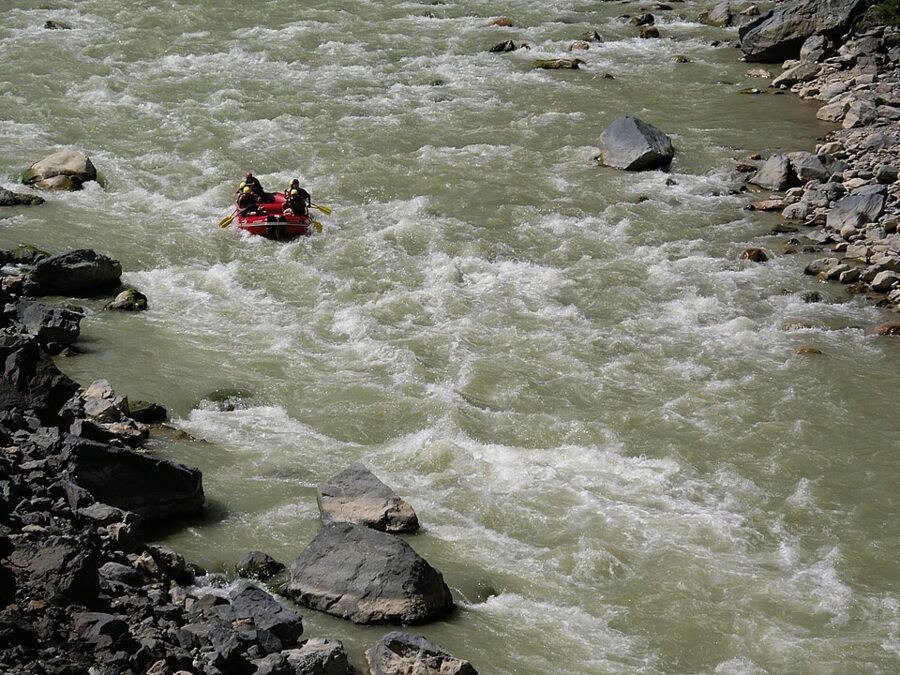
Nineteen euros buys a day on the Köprüçay river in 2026: a helmet, a life jacket, a guide at the back of the raft, about three hours on cold green water through a national park, and a chicken-skewer lunch when you climb out. A tandem paraglider off Babadağ costs seven to ten times that, and a balloon over Cappadocia more again. Turkey’s outdoor menu is long and cheap at the bottom, and on a backpacker budget the trick is knowing which items need a company at all.
Most of the good ones don’t. The Lycian Way is free and painted with waymarks, the Saklıkent gorge costs an entry ticket, and in Kaş the snorkeling off the town rocks costs a mask. Where you do need an operator, for a raft, a dive boat or a guided kayak, the price question is easy. The safety question is the one to get right, because Turkey’s worst outdoor headlines of 2026 came down to what a company did, not what a river did.
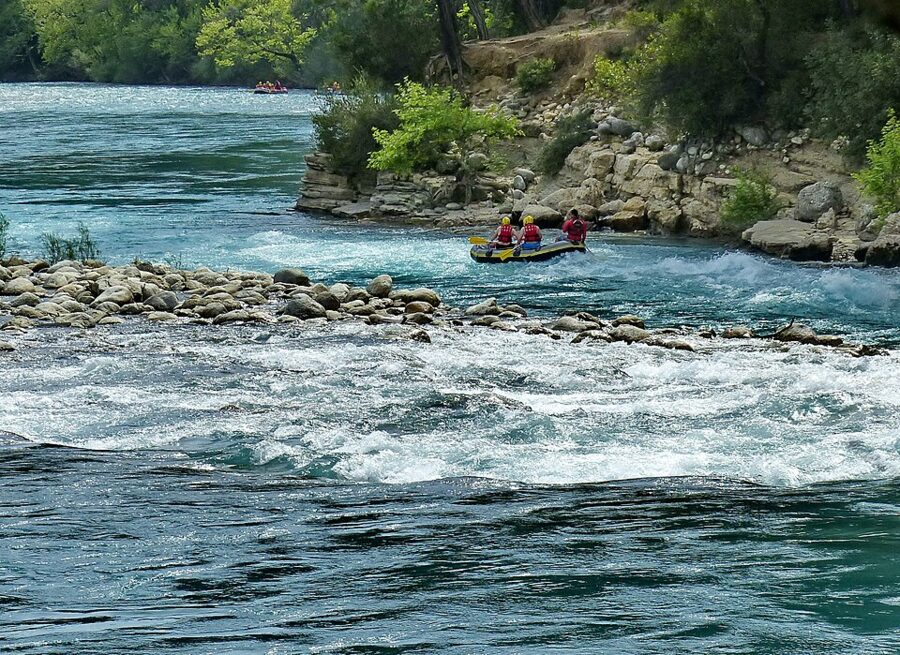

Rafting at Köprülü Canyon is the place to start: it is the cheapest proper adventure in the country and the one most often sold badly. Kaş is the best value underwater, the canyons and Kekova fill the hot months, and when the coast cools the crags at Geyikbayırı and the long trails take over. All of it can be reached on buses and minibuses rather than a hotel package, and none of it should be paid for before a few questions.

Contents
Which activity where, and what it costs in 2026
Adventure operators on the south coast mostly quote in euros; lira prices are 2026 figures and go stale within months. Where a company quoted in both, the two were roughly the same money in late 2026.
| Activity | Best place | Season | 2026 price | Doable without a tour? |
|---|---|---|---|---|
| White-water rafting | Köprülü Canyon, inland from Antalya and Manavgat | April–October; biggest water in spring | €19 if you get to the base, €29 with hotel pickup; Antalya agencies 800–1,500 TL | Partly: bus to Manavgat, then the operator’s minibus or a taxi |
| Scuba diving | Kaş; also Antalya, Kemer and Fethiye | April–November; winter dives on calm days | Try-dive €50; two guided dives €80; Open Water course €375 | Yes: bus to Kaş, walk into a dive center |
| Snorkeling | Kaş, Kaputaş beach, rocky coves along the Lycian coast | June–October | The price of a mask | Yes |
| Canyoning | Saklıkent near Fethiye; Göynük near Kemer; Köprülü | July–September for the cold-water gorges | Göynük canyon ticket €25; rafting plus canyoning at Köprülü €40 | The walk-in parts, yes; anything with ropes, no |
| Sea kayaking | Kekova, from Üçağız | April–October | Guided day about 2,240–2,720 TL | Getting there, yes; the paddle is guided |
| Sport climbing | Geyikbayırı, west of Antalya | October–May | The rock is free; gear hire and guiding extra | Yes: city bus 521 from the Antalya otogar |
| Long-distance hiking | Lycian Way, St Paul Trail, the Kaçkar | February–May and September–November on the coast; July–September in the Kaçkar | Free; pay only for beds and food | Yes |
| Paragliding | Babadağ above Ölüdeniz | Spring to autumn, wind permitting | Tandem about 4,900–7,500 TL, or €135–190 | No: tandem with a licensed pilot |
| Hot-air ballooning | Göreme, Cappadocia | All year, weather permitting | From about €100 in winter; €150–260 April–October | No: licensed operator only |
The shape of a budget trip falls out of those prices. The two things you cannot do alone, flying and ballooning, are the two most expensive, and neither is better than a day on the river or a morning on the trail. If the money only stretches to one paid thing, I’d take the raft at Köprülü or two dives at Kaş over a balloon basket, and spend the balloon money on a week of pensions along the Lycian Way.
White-water rafting at Köprülü Canyon
Most commercial rafting on the Turkish Mediterranean happens on one river. The Köprüçay rises in the Taurus Mountains in Sütçüler, in Isparta province, and runs south through a limestone gorge to the sea east of Antalya. The Greeks and Romans called it the Eurymedon, and in the 460s BC an Athenian fleet and army beat the Persians at its mouth in one of the big battles of the age. Today its busiest traffic is rubber boats.
The river, the park and its bridges
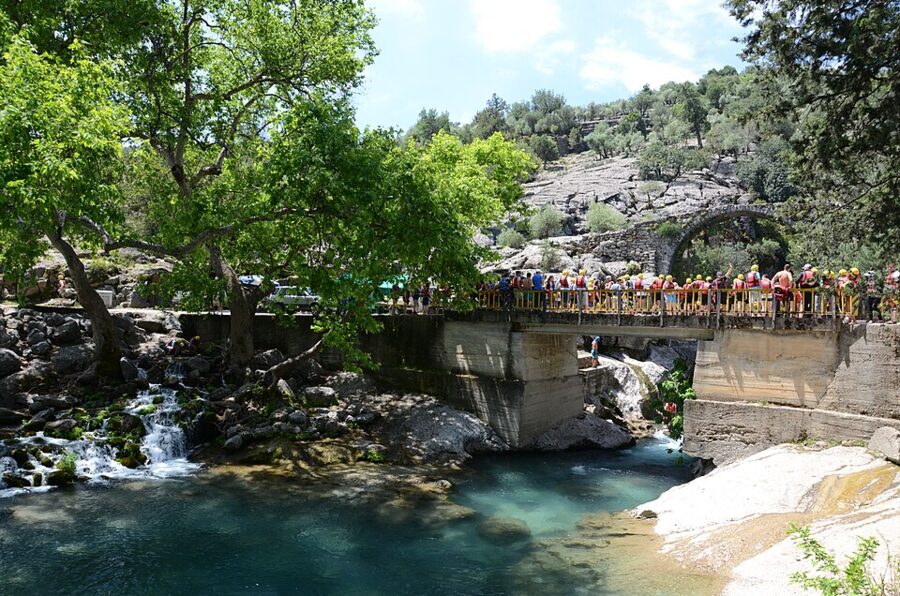
The canyon has been a national park since 1973 and covers about 36,600 hectares, much of it pine and cypress forest on steep limestone. The name means “canyon with bridges,” and two of them are Roman. Oluk Bridge, a single arch of fitted stone thrown across the narrowest point of the gorge, carried the old road up to Selge, and the road to the village still crosses it. Büğrüm Bridge is a second Roman arch close by.
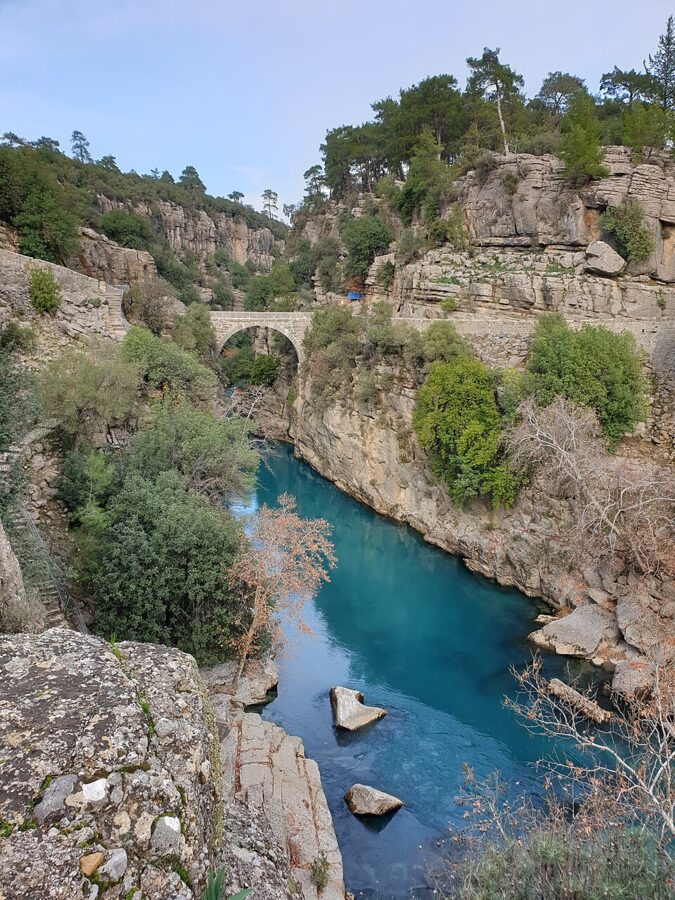

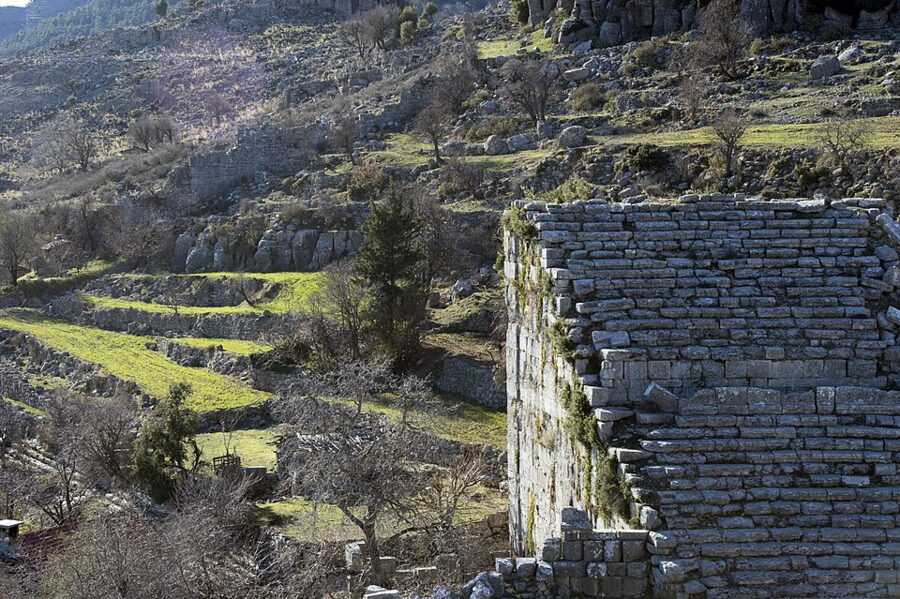
Selge itself sits up the hill in the village of Altınkaya, a Pisidian city whose theater and walls lie scattered among village fields. It is worth the climb if you have your own wheels or are walking the St Paul Trail, which starts a branch at Beşkonak, right by the rafting bases. Few rafters bother, which is half the reason to go.

How hard is it?
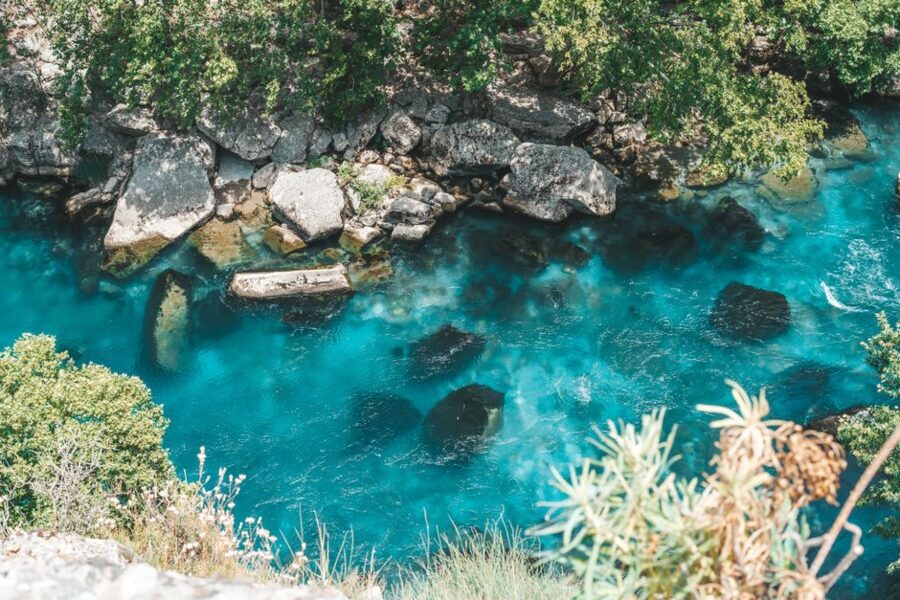
Not very, and that is the selling point. Operators who give a grade call the Köprüçay class II to III, and none of the listings ask for experience; the guide steers, you paddle on command. The standard run is about 14 km and takes around three hours in summer and two and a half in quieter months, with swim stops in the pools. Spring is different: in April and May snowmelt lifts the river, the waves stack up and the water is at its coldest, so if you want the rapids to mean something, go then.
If you have rafted the Zambezi or the Futaleufú, this is a float with splashes. If you have never been in a raft, it is a good first river, warm air and cold water and a guide who has done the run a thousand times. Families with children from about five or six join most trips, which tells you the level.

A day on the river
Pickup buses leave the resorts early: one long-running operator lists 07:10 from Kemer, 08:25 from central Antalya and about 09:25 from Side, all aiming at an 11:00 launch, with extra sessions at 14:00 and 16:00 in the busy weeks. At the base you change, leave your bag, get a helmet, a life jacket and a paddle, and hear a briefing on the commands: forward, back, stop, get down. Then you are taken to the put-in, groups of six to eight load into each raft, and you are off.
The run itself goes in stages: a rapid, a long pool where the guide lets you swim or jump off a rock, another rapid, a stop at a riverside shack selling gözleme and tea. Somewhere along the way a photographer on the bank shoots every boat, and at the end you are offered the pictures. Lunch at the base is usually an open buffet of chicken skewers, bulgur or rice, pasta and salad; drinks are extra almost everywhere.
- Wear: swimwear under shorts and a T-shirt, and shoes that strap on. Flip-flops come off in the first rapid and some bases won’t take you in them.
- Bring: a towel and a full set of dry clothes for the ride back, sunscreen, a strap for your glasses, and cash for drinks, photos and the shoe stall.
- Leave: jewelry and anything you’d mind losing. A phone only goes in a sealed pouch tied to you.
The upsells are part of the business. You will be offered water shoes at the base, a waterproof phone case, the photo package, and on combo trips an ATV or buggy ride in a cloud of dust. None of it is needed. Sneakers you don’t mind soaking do the job of water shoes, and the river is better than any buggy track.
What it costs in 2026
Prices at Köprülü are low, and the valley is crowded with companies. One TÜRSAB-licensed operator with its own base in Karabük village charged €19 per adult in 2026 if you reached the base yourself, or €29 with return hotel transfer from anywhere between Kemer and Alanya, children €10 and €15. That price covered the guide, the kit, insurance and lunch. There is no entry fee for the national park on top.
Agencies in Antalya quoted the same day at 1,300 TL with transfer from the city, and the general run of lira prices for 2026 sat between about 800 and 1,500 TL depending on transport and what was thrown in. Combos stack up quickly: rafting with zipline was €29 if you drove or €39 with pickup, rafting with canyoning or a jeep safari €40 or €50, and five activities in one day €65 to €75. I’d buy the plain rafting and spend the difference on dinner.
Getting there: bus versus pickup
Public transport gets you most of the way. Buses and minibuses run from the district platform at the Antalya otogar to Manavgat in one and a half to two hours, and charged 220 TL in September 2025, so expect a little more now. The bases sit in the valley around Beşkonak and Karabük, well inland of Manavgat, and the last leg is where public transport stops being practical. Operators collect from points in Manavgat town (one uses the front of the Novamall shopping center), or you take a taxi.
Run the numbers and the pickup wins. From Antalya the difference between driving yourself and being collected is €10, and two bus fares to Manavgat plus a taxi up the valley cost more than that before you start. If you are already staying in Side or Manavgat, the case is even clearer. Antalya’s otogar sits on the T1 tram line, and from there the intercity buses fan out along the whole coast.
The one reason to make your own way is timing. Pickup customers all arrive for the 11:00 session; with your own car or a hired driver you can take the 14:00 or 16:00 boats in July and August, when the morning crowd has gone. Avoid the long public holidays at the end of Ramadan and at Kurban Bayramı, when domestic day-trippers fill the bases.
Safety: helmets, life jackets, guides and licenses
Rafting in Turkey sits under the Ministry of Culture and Tourism’s regulation on sporting activities for tourism, the Turizm Amaçlı Sportif Faaliyet Yönetmeliği of 2011. It names rafting outright. A company needs a permit from the provincial governor’s office for each type of activity, and the conditions include the required equipment on hand, staff with the qualification the sport demands, accident and liability insurance for both staff and customers, and first-aid equipment.
Paper does not paddle the boat, so check the kit yourself before you get in:
- The life jacket should be tightened until you cannot pull it up past your chin by the shoulder straps. If it slides up to your ears, ask for a smaller one.
- The helmet should sit level and stay put when you shake your head, with the chin strap done up.
- A guide in every raft, sitting at the back and steering, not a single guide on the bank for a convoy of self-steered boats.
- A briefing on land before anyone gets wet, covering the commands and what to do if you go in: on your back, feet up and pointing downstream, never trying to stand in fast water.
- A license number. A travel agency selling the trip should show an A-group TÜRSAB number, the registration of Turkey’s travel agents’ association, on its site and its receipt.
The river is not the only risk. In June 2026, 52 day-trippers from Konya went to hospital with suspected food poisoning after the lunch at a Köprülü rafting base; prosecutors had the company’s owner arrested and Manavgat municipality sealed the business. In April 2022 a tourist guide drowned at the take-out point after falling from a raft. Neither tells you the river is dangerous; both tell you that the cheapest company in the valley is not automatically the one to pick.
The Dalaman and the Çoruh, in brief
The Dalaman Çayı, inland from Dalaman airport, is where Marmaris agencies send their rafting trips, on a run of about 12 km starting near the Akköprü dam. It is also where, on 19 August 2026, a 14-year-old boy from Kocaeli died after his family’s raft flipped near Gürleyik village and he was pinned against rocks. His mother told reporters there was no safety briefing before the trip, the life jackets were loose enough to slide off the shoulders and the helmet did not fit; an instructor was arrested. Those are exactly the checks in the list above, and they apply on any river.
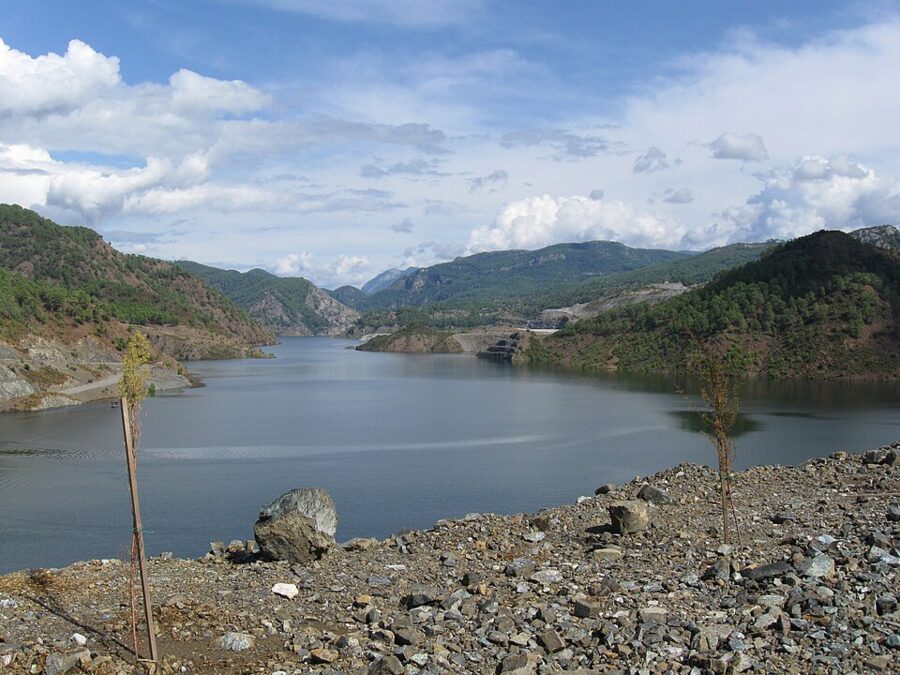

The Çoruh in the northeast was once the river rafters crossed the country for, but a chain of dams has drowned most of it, including the reservoir behind the 275 m Yusufeli dam, the highest in Turkey, which now covers the old district town and seven villages. What survives is short: a 4 km stretch between the Deriner and Borçka dams near Artvin was test-run in 2022 and judged more a gentle rafting safari than an adrenaline run. Go to the Kaçkar for the mountains, not for the Çoruh.

Diving and snorkeling: Kaş first
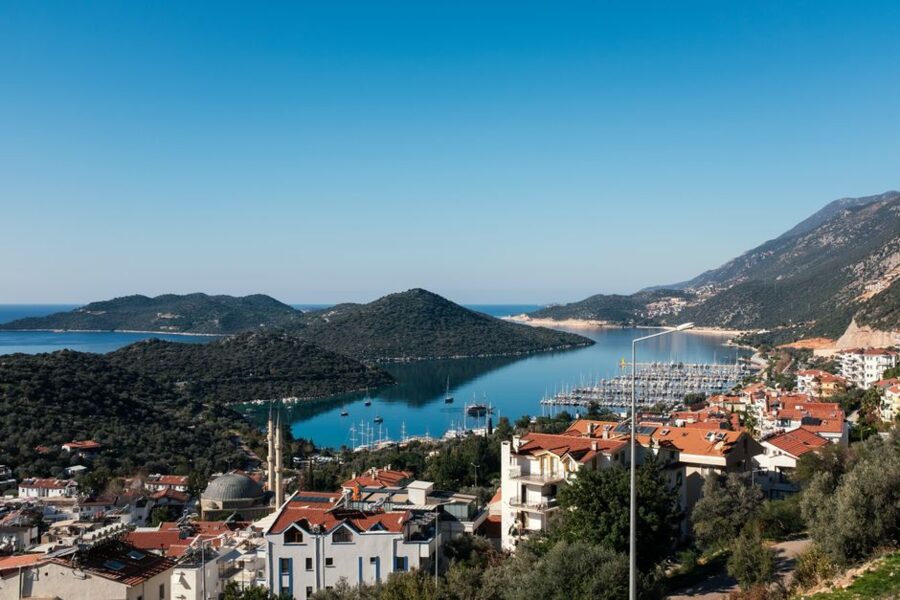
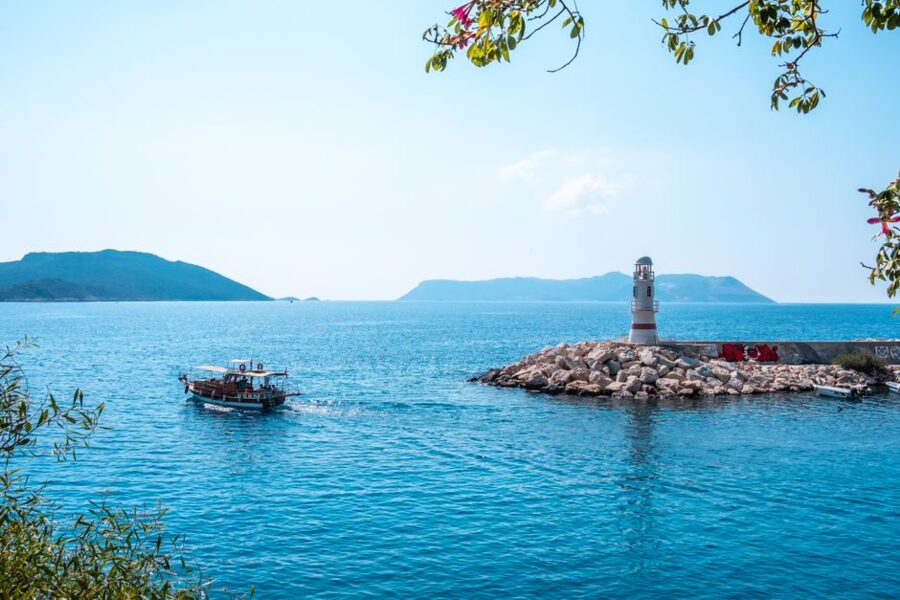
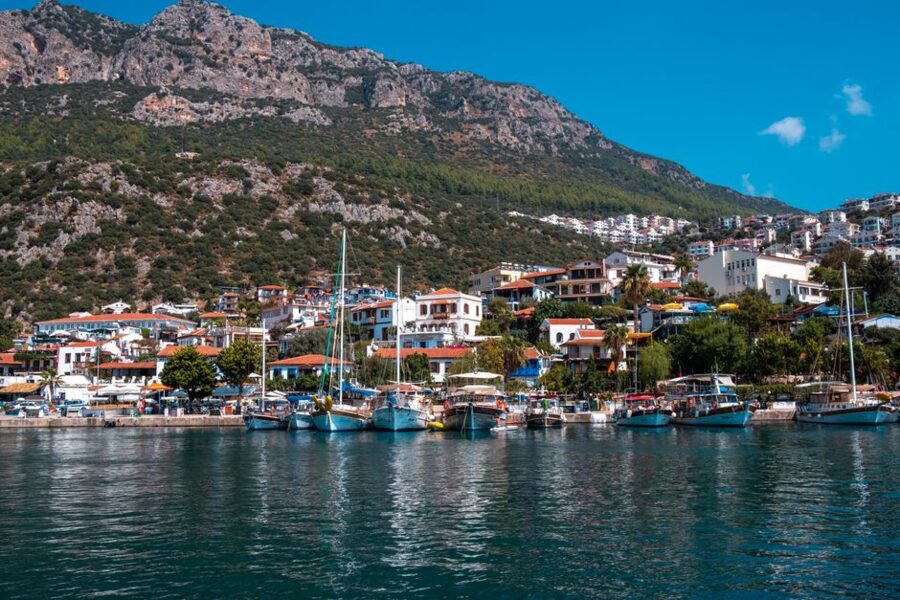
Kaş is a small harbor town on the Lycian coast, four hours west of Antalya by bus (from 485 TL in 2026) and about two from Fethiye (400–490 TL). It has some of the clearest water on the Turkish coast, a cluster of serious dive centers around the harbor and a sea floor that drops away fast from the shore. Little river water reaches this stretch, which is why visibility over 20 m is normal for most of the year and better on good days.
The dive sites
Kaş dive centers list 28 sites within reach of the harbor, and a week of two-dive days would barely cover the obvious ones. These are the ones people come for:
- The Canyon (Kanyon). Two walls meet in a V, with the top at 5 m and the floor at 22 m. Follow the left wall and the bottom falls to 55 m; on the right lies the Dimitri, a Greek steel freighter that hit the cliffs carrying cotton long ago and now sits between 27 and 42 m. In July and August the walls are thick with silverside shoals.
- The C-47 Dakota. A retired military transport plane sunk in 2009 as an artificial reef, sitting intact at about 22 m on the east side of Limanağzı. An older wreck with a wooden keel and big amphorae, thought to be Ottoman, lies nearby at 23 m. Centers usually want an Advanced certificate and some experience for the plane.
- The tank. A decommissioned tank at about 16 m, deep enough to feel like a wreck dive and shallow enough for new Open Water divers.
- Fener. The point south of the harbor mouth, used for training dives because it slopes gently, going down to 38 m for the experienced.
- Reefs and islands: Neptün reef, Flying Fish, Besmi Island and the Blue Cave, where daylight turns the inside blue.
The famous one you will not see is the Savoia-Marchetti SM.79, an Italian three-engined bomber hit by anti-aircraft fire while raiding the British on Meis (Kastellorizo) in the Second World War. It ditched off Kaş, was found in 1990 and lies between 57 and 71 m in strong current, beyond recreational limits. A replica is on show at the Antalya Aquarium, which is as close as most divers get.
Water temperature by month
These monthly averages come from three years of daily sea-surface readings off Kaş. The surface warms long before the water at 20 m does, so centers hand out thick suits in spring and thin ones only once the sea passes about 25°C, from July to September.
| Month | Sea, °C | Month | Sea, °C |
|---|---|---|---|
| January | 18.6 | July | 27.3 |
| February | 17.6 | August | 28.6 |
| March | 17.2 | September | 27.8 |
| April | 18.0 | October | 25.2 |
| May | 20.4 | November | 22.6 |
| June | 23.9 | December | 20.2 |
The season runs roughly April to November, and the centers keep diving through winter on calm days in thick suits with the sites to themselves. For a first dive, June to October is the comfortable window. For experienced divers, September and October are the pick: the sea still holds the summer’s warmth and the boats are quieter.
Try-dive or certification course?
A try-dive, sold as Discover Scuba Diving by PADI centers, puts you underwater for 20 to 25 minutes, one to one with an instructor, in a sheltered shallow spot such as Hidayet Bay or Limanağzı. One established Kaş center charged €50 in 2026, kit included. It is a taster, not a qualification, and you cannot dive without an instructor afterward.
The Open Water course is the real thing: three or four days of theory, confined water and four open-water dives, and a card you can use anywhere in the world. The same center charged €375 for it in 2026, with Advanced Open Water at €350. Already certified, you pay €40 for a single guided dive, €80 for a two-dive day and €350 for a ten-dive package, and a non-diving friend can ride along for €25. Other centers in town quote by WhatsApp, so ask two or three and compare like with like: boat, kit, insurance and VAT included or not.
If you have five or more days, I’d take the course in Kaş rather than at home. The training dives happen in water you can see 20 m through, and the price is lower than many dive schools in Europe charge.
Snorkeling for the price of a mask
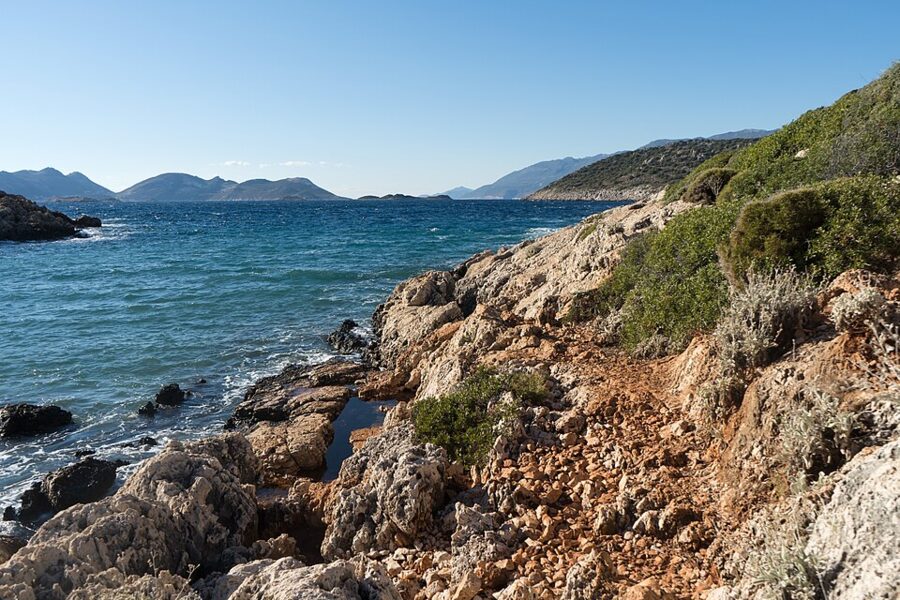
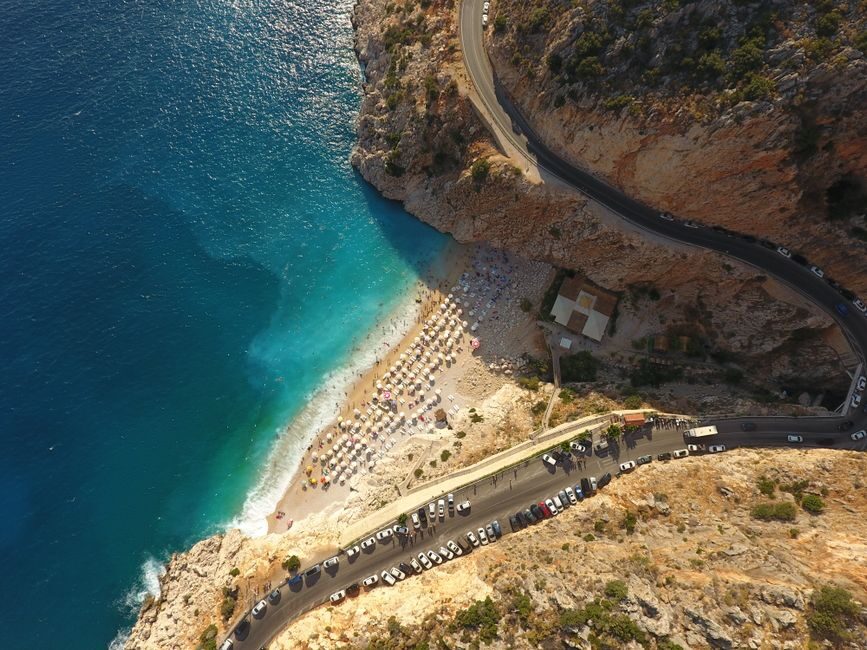
You don’t need a boat. The rocky shore around Kaş drops quickly into clear water, so a mask from a shop in town gets you started on the first afternoon. Kaputaş beach, the pale cove at the foot of a long stairway below the coast road between Kaş and Kalkan, has some of the best water color in the country; ask the Kaş–Kalkan minibus to let you off at the top of the steps. The cove is small, so it pays to arrive early in summer.
Antalya, Kemer and Fethiye
Antalya has dive centers and wrecks of its own, including a twin-engined Dornier Do 28 sunk off the city center in 2012 at about 25 m, and Kemer’s dive boats head for the Üç Adalar islets off Tekirova. I’d only dive here if Antalya is already your base, and save the big dive days for Kaş. In Fethiye, day boats for two dives with lunch were advertised at about 3,500 to 5,500 TL in late 2026, close to what Kaş charges.
How to check a dive center
Recreational diving in Turkey is governed by the Turkish Underwater Sports Federation (TSSF), which is also the national representative of CMAS, the world underwater federation. Dive centers work under a TSSF authorization certificate (yetki belgesi), and their instructors and dive guides are registered with the federation; certificates from PADI, SSI and the other international agencies are recognized. Kaş centers are usually affiliated to PADI or SSI as well, and display it.
- Ask to see the center’s TSSF authorization and your instructor’s card. A center that hesitates is your answer.
- Ask how many people per guide or instructor. One to one for a try-dive, and no more than four to six certified divers per guide, is a sensible standard.
- Check the kit before it gets wet: no cracks in the regulator mouthpiece, a working alternate air source, a buoyancy jacket that holds air, a gauge that reads.
- Look for oxygen and a first-aid kit on the boat, and ask whether dive insurance is included.
- Expect to fill in a medical form. If you have asthma, heart trouble or recent ear problems, you may need a doctor’s signature first.
- Plan the flight home: the usual rule is no flying for 12 hours after a single dive and 18 after several days of diving.
Canyoning: Saklıkent and others
Canyoning means going down a gorge on foot, by swimming, by sliding and, in the serious ones, on a rope. Turkey’s best-known canyon is Saklıkent, 18 km of limestone up to 300 m deep cut by the Karaçay, where the springs come out of the rock at around 5 to 8°C all year. The walk in from the entrance, the cold wade across the river and the scramble up the bed as far as the first big boulder need no guide at all, and the gorge is an easy day trip by dolmuş from Fethiye, 45 km away.
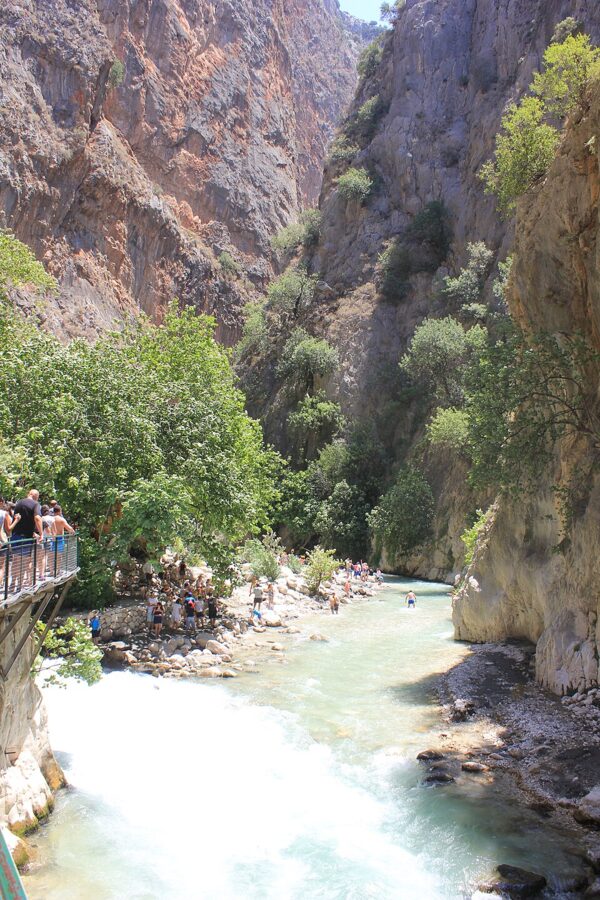

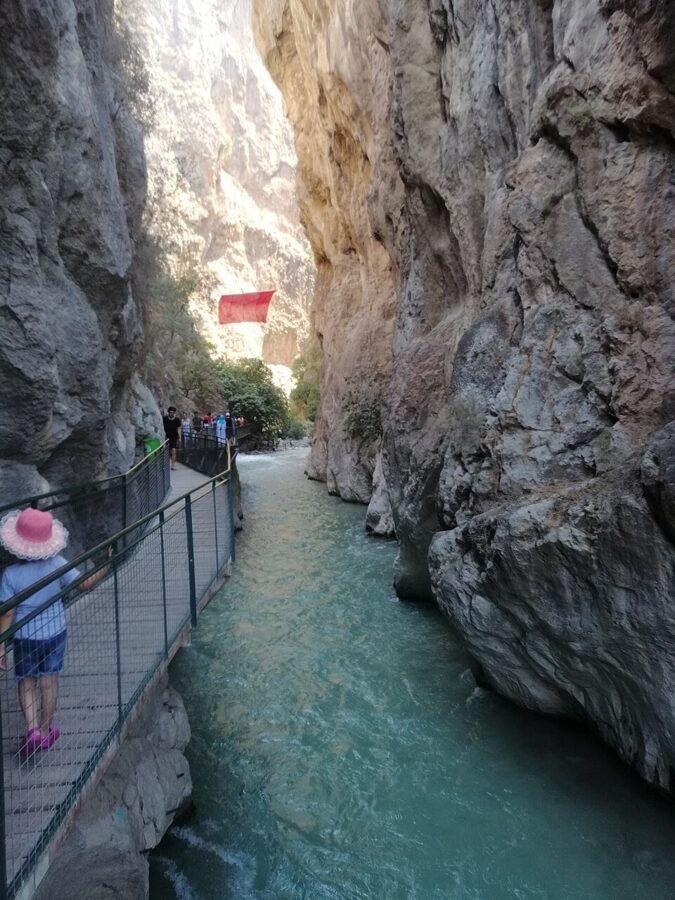

Everything beyond the walk-in section is canyoning proper: harness, abseils down dry falls, wetsuits against the cold, and a guide who knows where the rope anchors are. The area was chosen to host an international canyoning meeting in April 2024, which tells you the upper canyon is the real thing. Book that only with a specialist canyoning guide, not a jeep-safari stall, and ask how many abseils there are, how long the descent takes and what happens if the water rises.
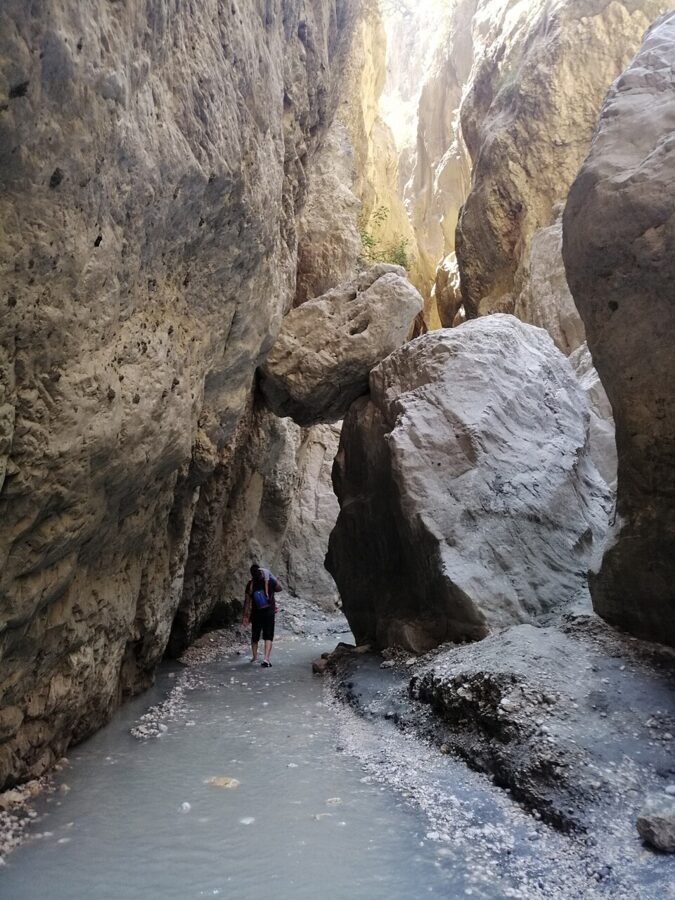

Göynük Canyon, near Kemer on the coast south-west of Antalya, is the gentler option and a commercial park. Its canyon walk of about three hours cost €25 in 2026, with a canyon boat ride at €30 and a zipline at €25, transfers from the Kemer hotels extra. Back at Köprülü, a short canyoning section added to the rafting day was €40 with the raft, or €50 with pickup. Tazı Kanyonu, a sheer side canyon in the same national park, is a viewpoint rather than a descent, and the jeep-safari combos from the rafting bases stop at its rim.

Sea kayaking at Kekova
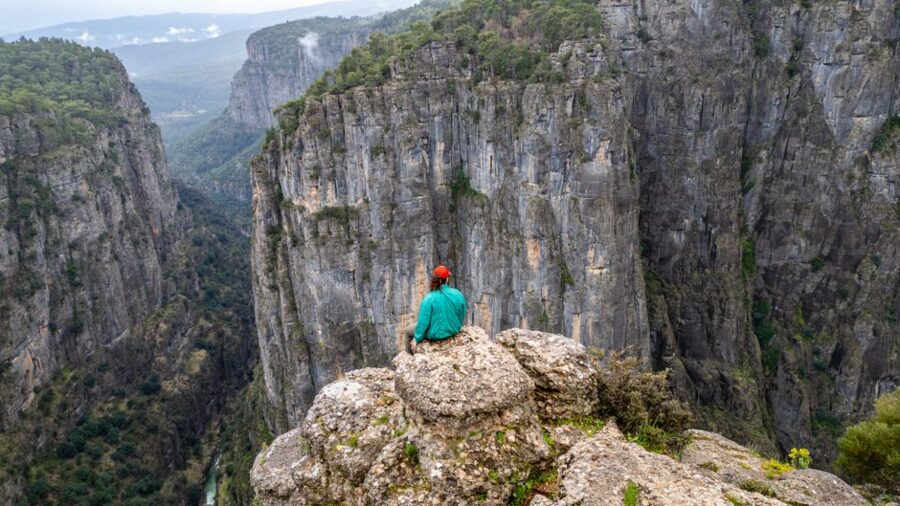
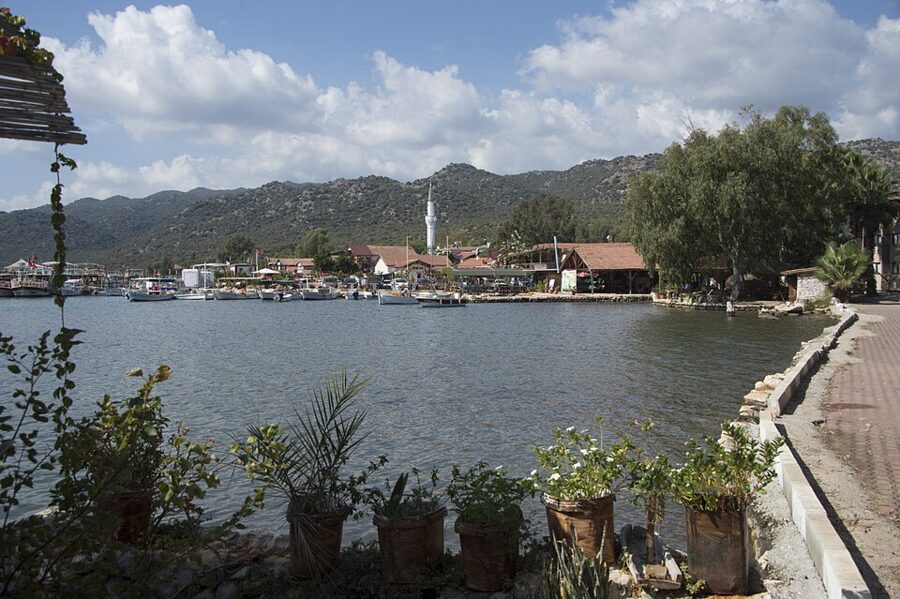
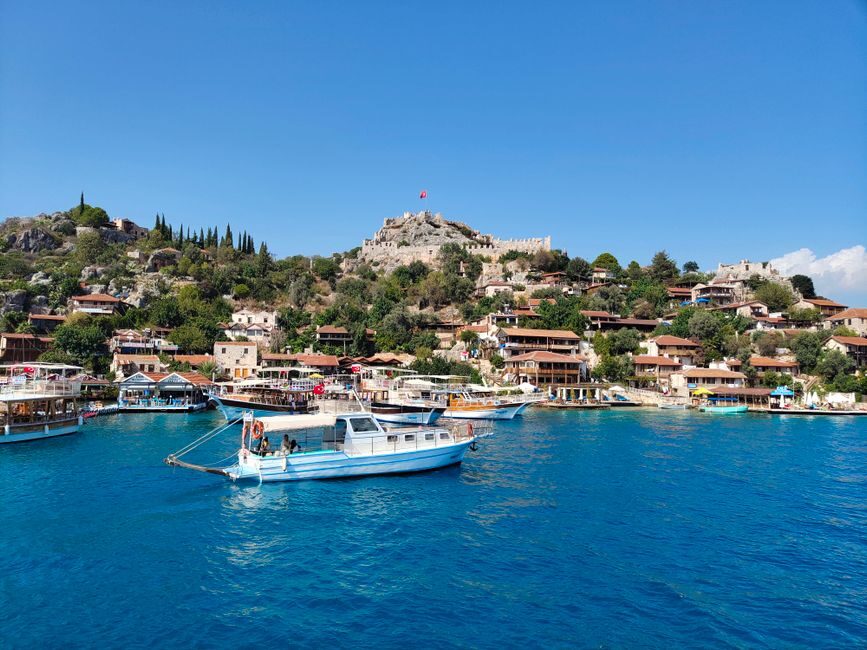
Kekova is the sheltered sound behind a bare island east of Kaş, full of Lycian ruins: a half-drowned town along the island’s shore, sarcophagi standing in the shallows and a castle on the hill at Kaleköy. Day boats from Kaş and Üçağız cover it in an afternoon, and the gulet cruises along this coast stop here too. A kayak is slower and better, because you sit at water level a meter from the walls and can slip into coves the tour boats can’t.

The standard guided day starts in Üçağız and covers about 8 km in three paddling legs of 45 minutes, with two to three hours of swimming and stops in between. Routes cross to Tersane Bay, the cove of ancient Xera, and run along the shore of the sunken town, called Dolichiste in some sources. Some land at Kaleköy for lunch below the castle; others paddle back past the tombs of Teimiussa. No experience is needed: you get a double kayak, a briefing and a dry bag.
In 2026 one Üçağız outfit, licensed as a travel agency, charged 2,240 TL per person, with lunch 750 TL extra and a transfer from Kaş 550 TL extra; a Kaş agency sold the whole day with transfer at about 2,720 TL. Summer meetings in Kaş are as early as 07:30, which is the point: the sea is flat and the motorboats haven’t arrived yet.
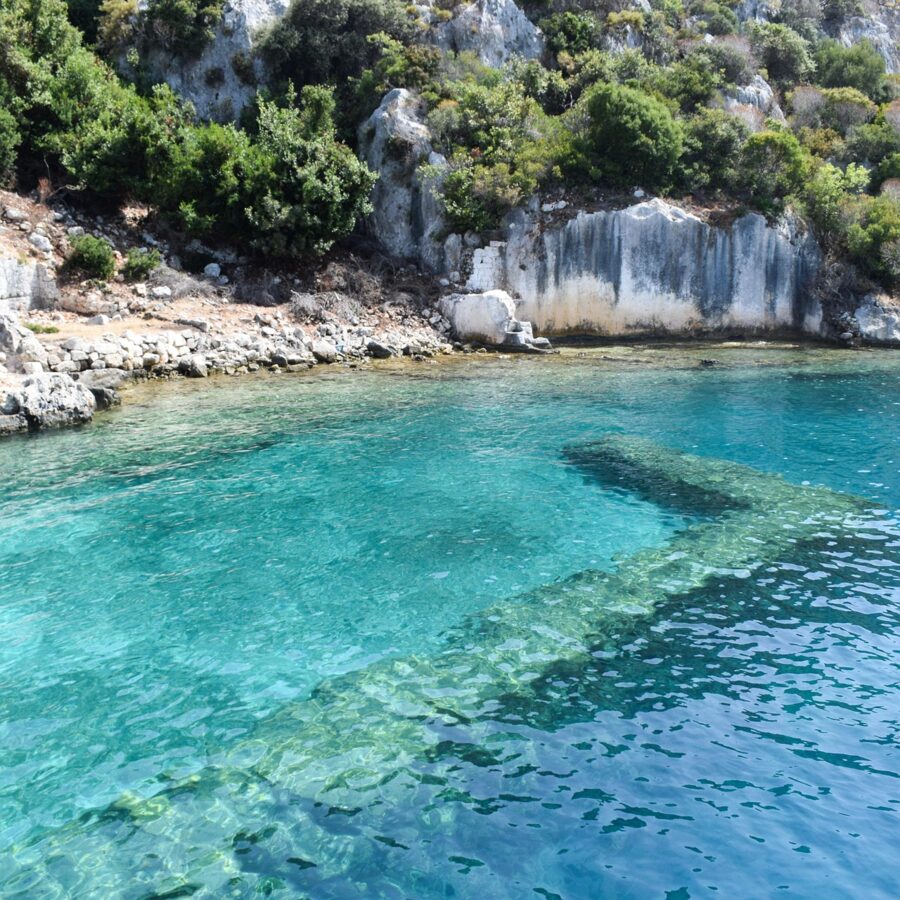
Leave your mask in the bag here. Scuba diving over the sunken town has been banned since 1990, when Kekova became a Special Environmental Protection Area, and so is swimming over the ruins. If you want to dive, Kaş is 40 minutes to an hour back down the road.
Climbing at Geyikbayırı
Geyikbayırı is a scatter of limestone crags in the hills west of Antalya, above Konyaaltı, and the best-known sport-climbing area in Turkey. The rock is steep orange and gray limestone, full of pockets, caves and streaks, and climbers bolt 20 to 30 new routes a year. Most of the routes fall between 5c and 8b, with harder lines for the few who need them.
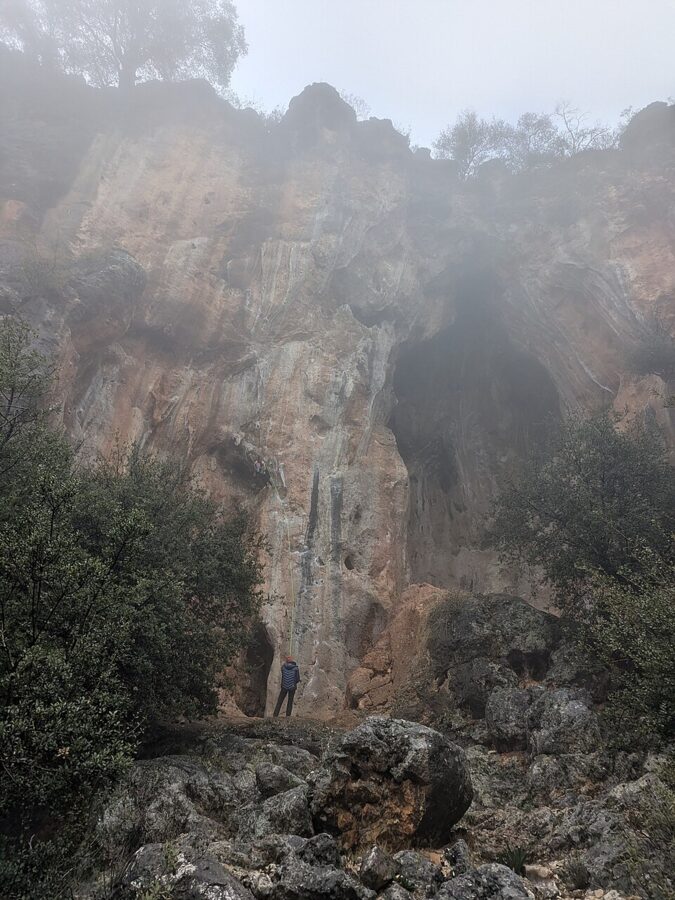

The season is the reverse of the beaches: autumn to spring. In July you’d have the crags to yourself for a good reason. City bus 521 runs from the Antalya otogar through Geyikbayırı to Çağlarca a handful of times a day, so you can be on the rock without a car or a transfer.
Climbing camps near the crags rent out rooms and gear and run courses for beginners, so you don’t need to fly with a rope. The local guidebook sells out, so buy one when you see it or borrow one at the camp. The Lycian Way also ends here, which gives tired hikers an odd but good reason to stay on.
Hiking the long-distance trails
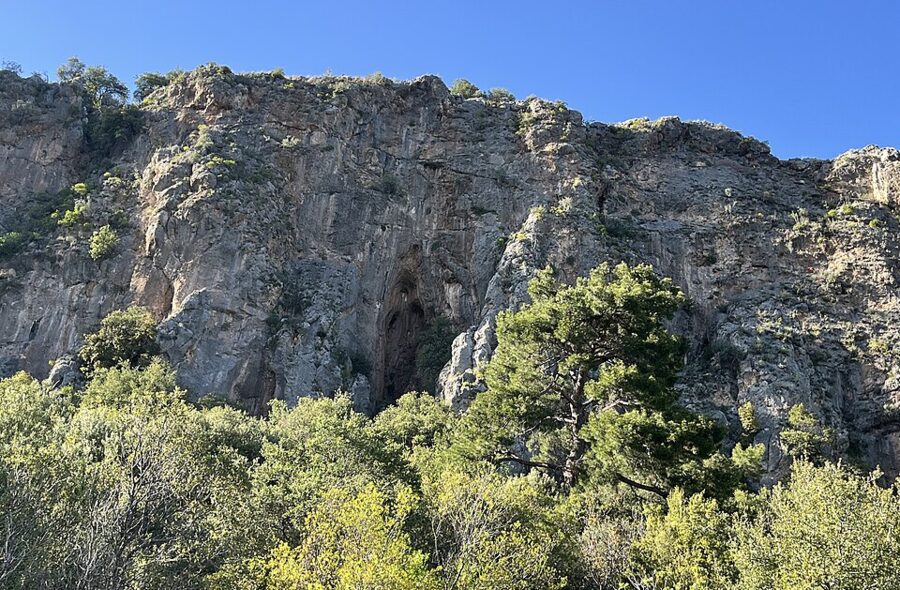
Turkey’s marked long-distance trails mostly go back to Kate Clow, a British-Turkish amateur historian who researched and waymarked the Lycian Way in 1999, and to the Culture Routes Society, the nonprofit that now looks after them and publishes the guidebooks. They follow Roman roads, mule paths and old village tracks. On a budget they are the best value in the country: the path is free, the village pensions are cheap, and the views are the same ones the boat trips sell.
The Lycian Way
The Lycian Way is Turkey’s first long-distance footpath, opened in 1999 and now about 760 km long with its branches, roughly 35 days from Ölüdeniz near Fethiye to Geyikbayırı outside Antalya. It is waymarked in red and white paint, often hard and stony underfoot, and climbs steeply between coast and mountain. Except on three high sections, you can sleep every night in a village house, a pension or a small hotel, and wild campers find plenty of spots with water nearby outside the fire season, when provincial governors can close forest areas from about June to October.
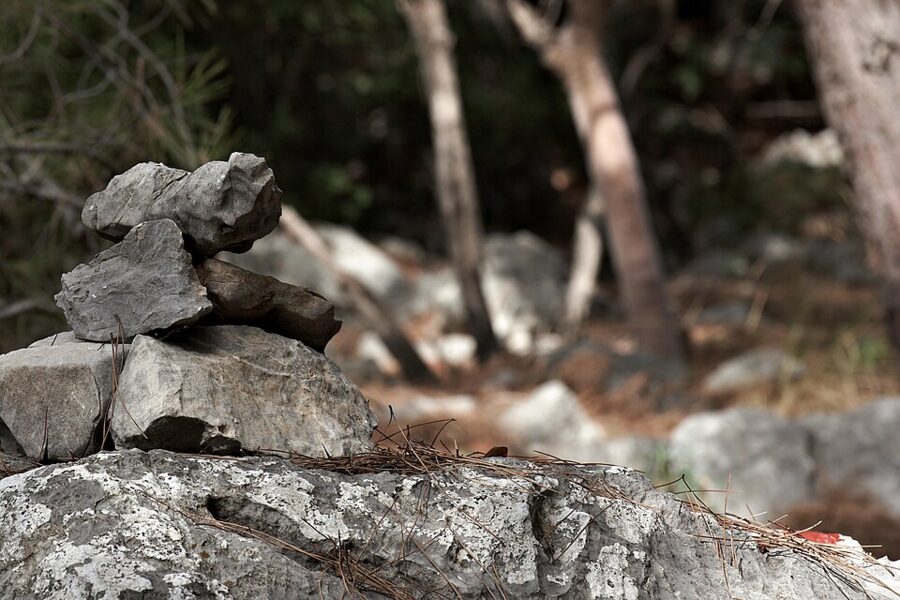

The first stage, from Ovacık over the shoulder of Babadağ to Faralya, is about 12.8 km with 765 m of climbing, close to six hours of walking, within easy reach of Fethiye. For a first taste beyond that, the coastal days around Kaş and the stretch from Adrasan to Olympos and Çıralı are good choices, and the society notes good public transport all along the trail, so you can walk a section and bus back.
Walk in spring or autumn. The society recommends February to May and September to November, and singles out February, which is often warmer and sunnier than March; summer in Lycia is too hot for long walks. Water is the main planning job: village fountains and old cisterns are the sources, and a cistern can be low by late summer, so carry two liters and refill at every village.

The St Paul Trail
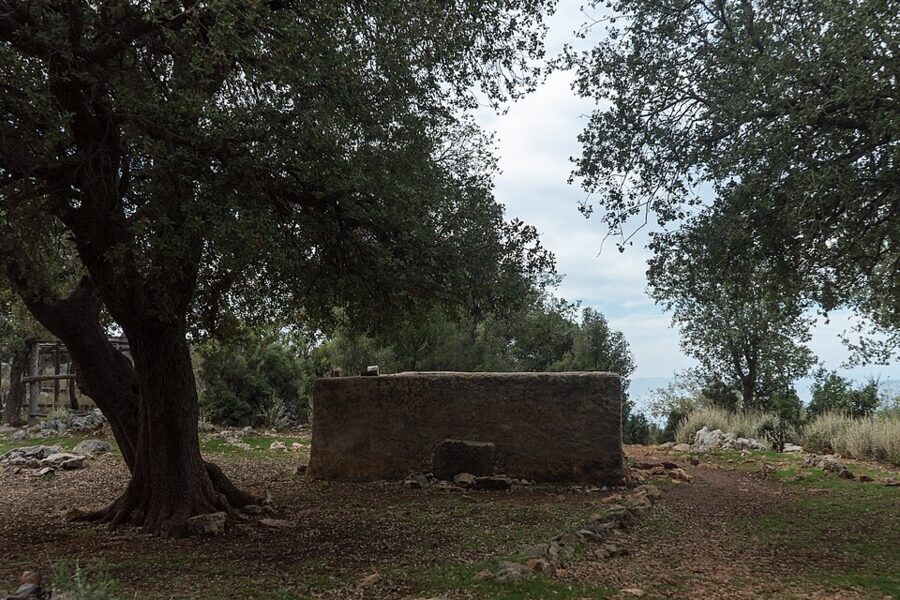
The St Paul Trail is wilder: about 500 km and 27 days from Perge, 10 km east of Antalya, north to Yalvaç near Lake Eğirdir, loosely following the apostle’s journey from the coast to Antioch in Pisidia. A second branch starts at Beşkonak, the rafting village below Köprülü Canyon, and joins the main line at the Roman site of Adada. It climbs from sea level to 2,200 m, with two optional peaks around 2,800 m.
The trail uses Roman roads, footpaths and forest tracks, and on longer sections there are no villages, so you need a tent. Spring and autumn are the seasons; July and August are hot. Eğirdir, with its lake and cheap pensions, is the transport and supply hub on the northern half.
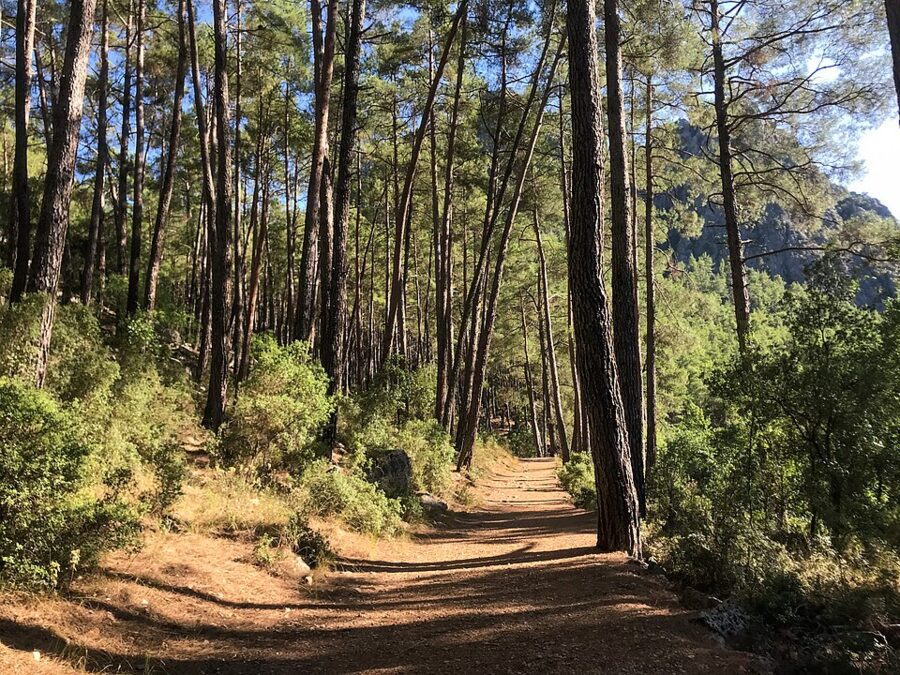

Cappadocia’s valleys
The easiest walking in Turkey is in Cappadocia, where the valleys around Göreme, Uçhisar and Çavuşin are short, mostly flat and free, and link villages with buses back. Rose and Red valleys and Pigeon Valley are the classics, and most of them start on foot from Göreme. Go in spring or autumn, take water, and expect to lose the path at least once in the gullies.
The Kaçkar
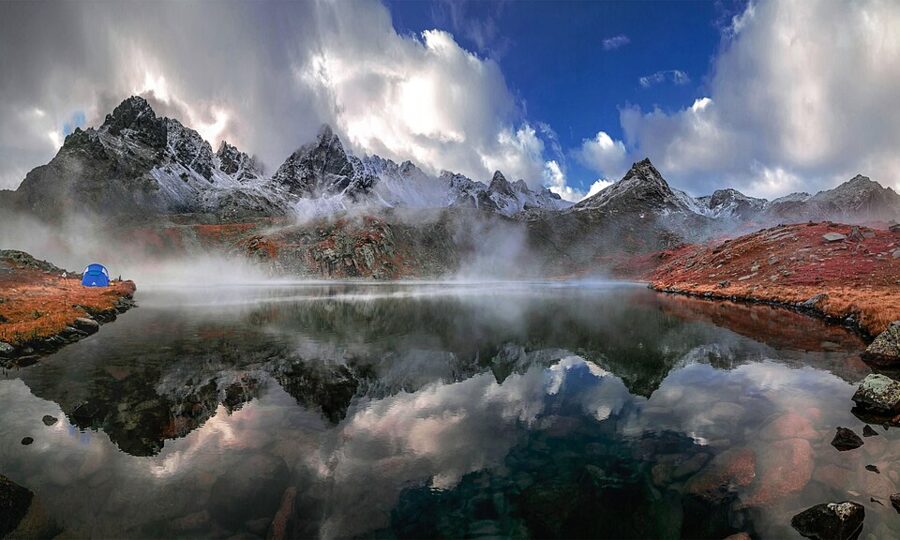
The Kaçkar mountains, above the Black Sea coast in the northeast, are the opposite of Lycia: sharp peaks, three small glaciers, glacial lakes, high summer pastures and dense fir forest below the treeline at about 2,100 m. They are an extension of the Caucasus, and Hemşin and Laz are still spoken in the villages. Mount Kaçkar, the highest summit, reaches 3,937 m.
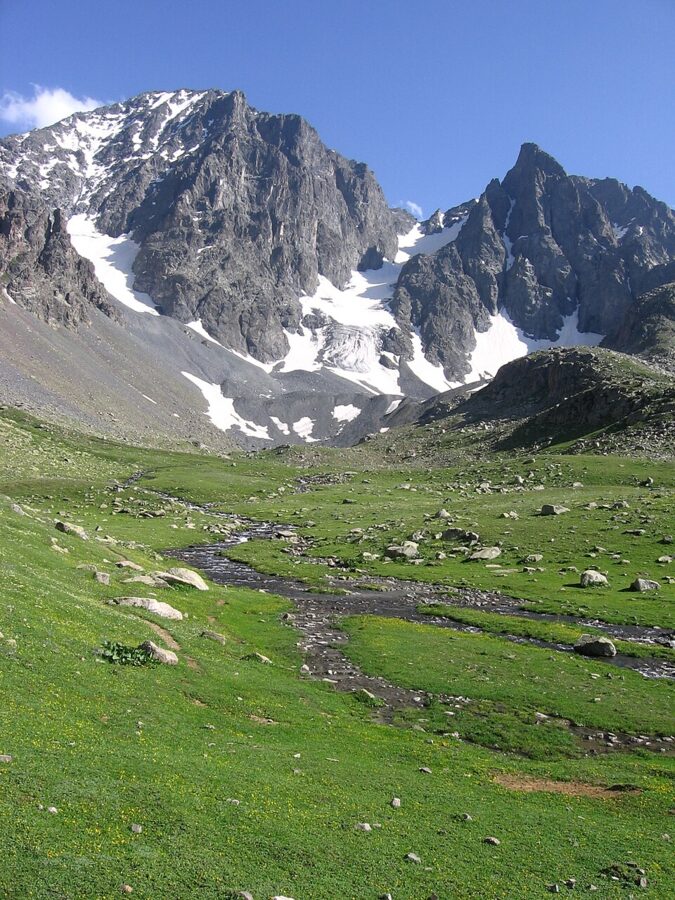

The Culture Routes Society’s Kaçkar guidebook describes eight long trails of three to six days over different passes, and they are not waymarked: below the treeline the paths are steep and hard to find, above it they are easy to follow. Lower day walks open for five or six months, but the summits and high passes are only open from July to September unless you have snowshoes. Mules and drivers can be hired for baggage, and the larger villages have pensions.

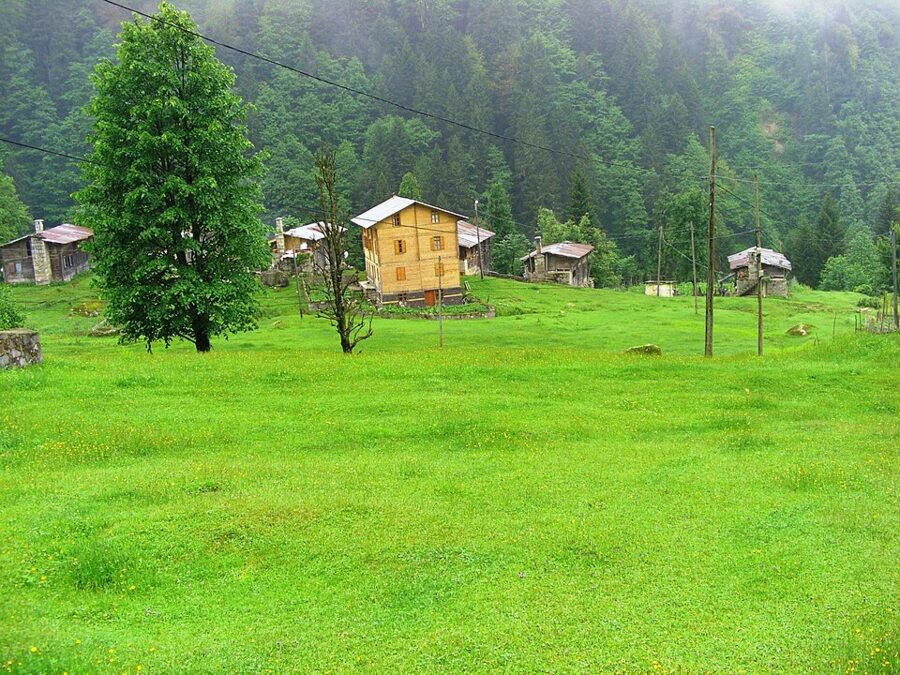
The northern side is reached from Trabzon and Rize, with Ayder in Çamlıhemşin district as the base; the southern side from Erzurum; Artvin has the other main bus station. Daily public buses connect the towns and villages.

Water, waymarks and seasons on any Turkish trail
- Carry an offline map and the guidebook. Paint fades, forestry roads cut across old paths, and junctions on plateaus can be confusing.
- Plan around water, not distance: two liters minimum on the coast in spring, more from May.
- Respect the seasons. Coast and lakes in spring and autumn, the Kaçkar in July to September, nothing long on the Mediterranean in July and August.
- Ask in villages. A pension owner knows which spring is dry and which path washed out last winter.
- Dogs: shepherd dogs guard flocks. Stop, stand still and let the shepherd call them off.
Paragliding and balloons, briefly
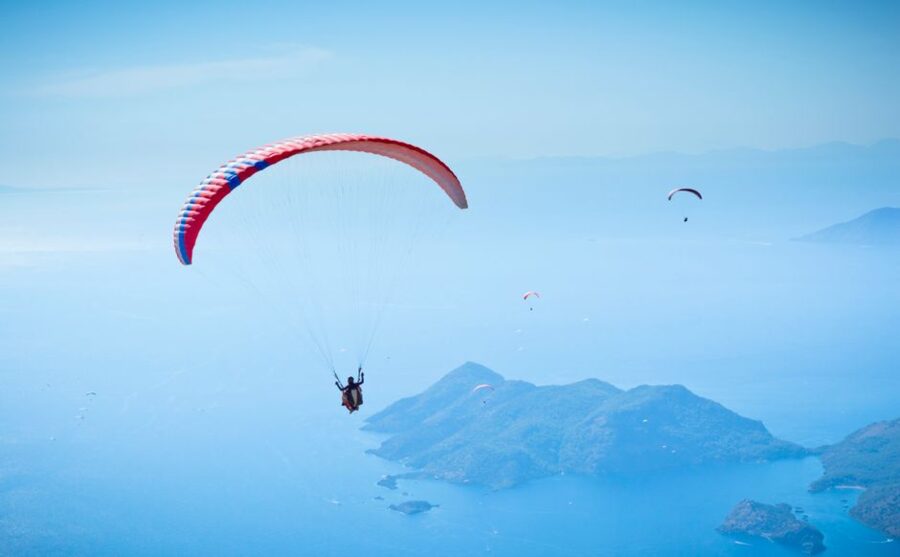
The tandem flight off Babadağ above Ölüdeniz flies from one of the busiest paragliding sites in Turkey: you launch from around 1,700 to 1,900 m with a licensed pilot and land on the beach promenade at Ölüdeniz. In 2026 Fethiye operators listed it at about 4,900 to 7,500 TL depending on the season, or €135 to €190 where it was sold in euros, with photos and video extra. If you’d rather keep your feet on something, the Babadağ cable car climbs to the same view for 950 TL in 2026.
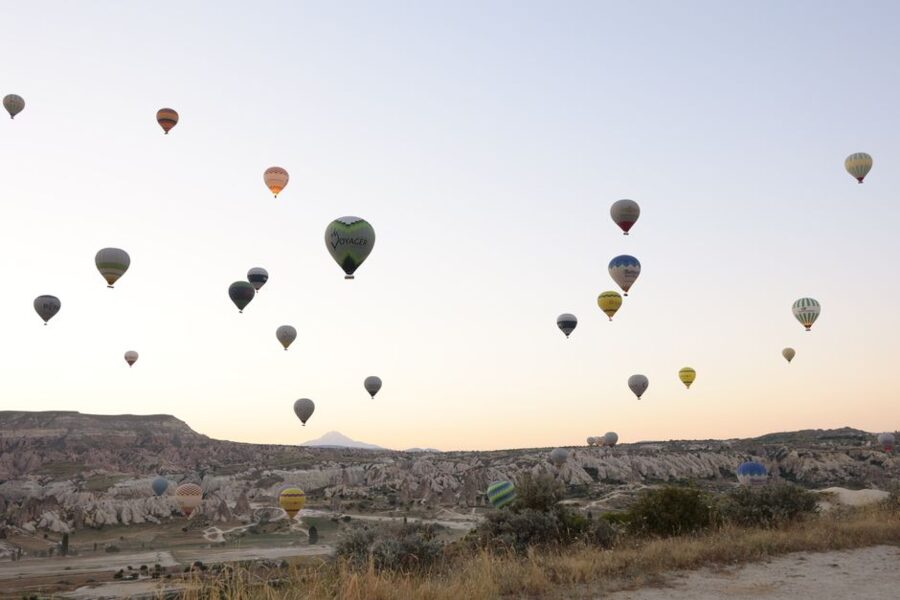
Hot-air balloons over Cappadocia start around €100 for a standard flight in winter and run €150 to €260 from April to October, with private baskets far above that. Every commercial balloon company is licensed by the civil aviation authority, and the wind grounds flights more often than the brochures admit; watching from the ridge above Göreme costs nothing.
Safety and money
Insurance that actually covers it
Standard travel insurance often excludes exactly these activities, or covers them only up to a point. Read the policy wording for each activity by name before you leave: rafting (and up to what grade), scuba (and to what depth, with or without a qualification), paragliding (often excluded outright), canyoning with ropes, and trekking above a certain altitude in the Kaçkar. If the answer is no, an adventure add-on usually costs less than one night in a private hospital.
The operator’s insurance is not a substitute. Turkish regulation makes rafting and other sports companies carry accident and liability cover for their customers, but it is there to protect the company as much as you, and it won’t fly you home. For dive trips, separate dive insurance is cheap and covers chamber treatment, which general policies may not.
What to ask before you pay
- Is the company licensed, and can it show the license? For rafting and other tour sales, an A-group TÜRSAB number; for diving, the TSSF authorization.
- Who is my guide, and what qualification do they hold? For rafting, one guide per boat; for diving, an instructor for a try-dive and no more than four to six divers per guide.
- What is included: transfer, kit, insurance, lunch, park fees, photos? What will I pay extra on the day?
- What happens if the weather or water level is wrong? A good operator moves the date or refunds in full.
- How many people go out at once? Fifteen rafts in convoy and one photographer is a different day from four rafts.
Red flags
- No briefing on land before you get in the water.
- A life jacket that slides up past your chin, a helmet that wobbles, or kit that looks older than the guide.
- Questions about age limits or health brushed aside with a vague “anyone can come.”
- A “rafting trip” whose route the operator can’t describe, or that starts at a riverbank with no base, no changing room and no vehicle.
- Street touts selling seats for someone else’s boat or balloon at a discount that seems too good. It usually is.
- Cash only, with no receipt and no company name.
The cheapest season for each
- Rafting: prices barely change, but April, May and late September give you more water or fewer boats for the same €19.
- Diving: the shoulder months, April to May and October to November, when packages are easiest to negotiate and the sites are quiet.
- Kayaking and canyoning: June and September, when the water is warm enough but the boats and buses are not full.
- Climbing: winter, which is also when beds in Antalya are cheapest.
- Hiking: February to April and October to November on the coast, when pensions drop their prices or close; check ahead in the smallest villages.
- Paragliding and balloons: the end of the season for paragliding and winter for balloons, when the lowest prices of the year apply, if the weather lets you fly at all.
Start where the money goes furthest. From the Antalya otogar the buses to Manavgat leave every 20 minutes or so, the raft operators collect from Manavgat for the 11:00 launch, and €29 later you are on cold green water under a Roman bridge with a guide shouting “forward.” Book it the evening before, and keep the next morning free for the bus west to Kaş.