Paul crossed from Troas to Neapolis in two days with the wind behind him. Coming back the other way, Acts says, the same crossing took five. You will make the trip between Turkey and Greece on a night coach from Istanbul to Thessaloniki, about ten and a half hours for around 1,400 TL in late 2026, and you will see more of what he saw than most people expect.
Put the journeys on one map and they make a long, lopsided loop: from Tarsus east to Antioch, the city that sent him out, west over the Taurus to the plateau around Konya, and north up the Aegean coast to the Dardanelles. Then it jumps the sea to Kavala, follows the Roman road west to Thessaloniki and drops south to Athens and Corinth. The voyage to Rome adds a tail along the Lycian coast, under Crete and onto the rocks of Malta.
If you only have time for a handful, these are the ones I would cross a border for:
- Ephesus, where he stayed longest and where the theater still stands.
- Pisidian Antioch at Yalvaç, for the city where Acts gives him his first long sermon, with almost no one else there.
- Perge, a tram ride from Antalya, the best-preserved street plan on the first journey.
- Philippi, the first church in Europe, with Lydia’s baptistery down the road.
- Ancient Corinth, for the Bema and eighteen months of his life.
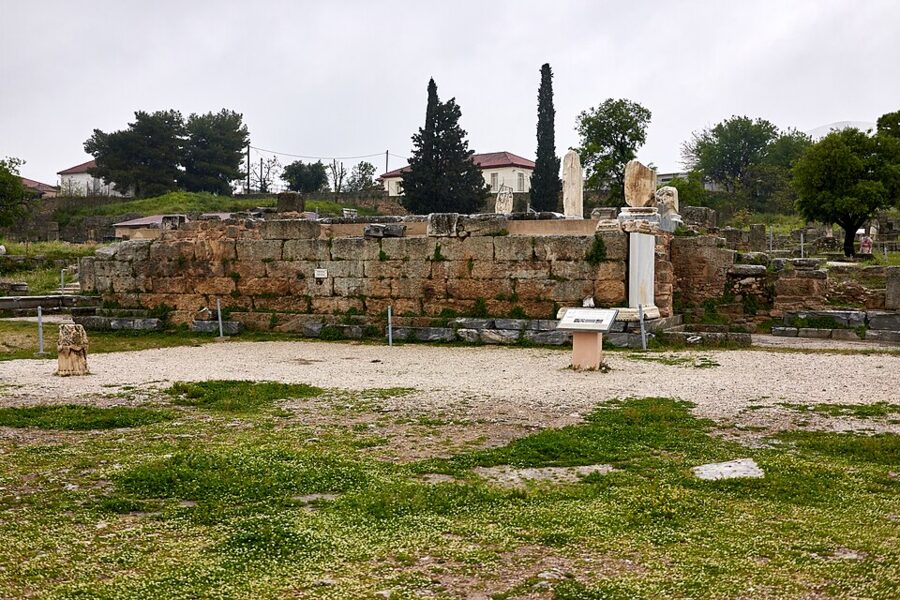
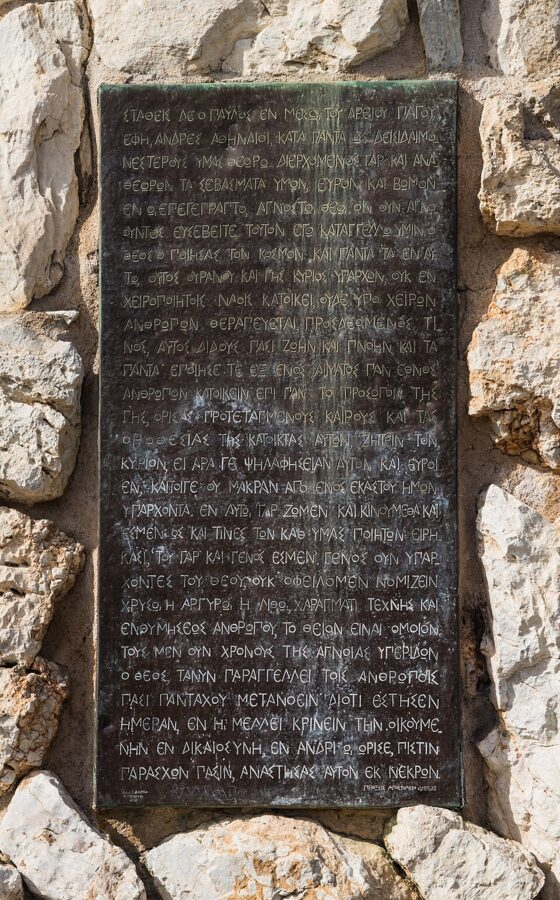
- The Areopagus in Athens, free, and the one spot where Acts names the exact hill he stood on.
Turkey takes longer. The sites run more than 1,000 km from Antakya to the Dardanelles, and doing all of them by coach is a two-and-a-half-week trip. The western core, from Troas down to Perge, fits a hard week. Greece is smaller and better served: one week covers Kavala, Philippi, Thessaloniki, Veria, Athens and Corinth by bus and train.

Contents
The journeys in outline: what Acts says, and what Paul says
Where Paul went comes from two sources. The Acts of the Apostles, written a generation or more after his death, tells the story as a sequence of journeys. Paul’s own letters, the seven that nearly all scholars accept as his (Romans, 1 and 2 Corinthians, Galatians, Philippians, 1 Thessalonians and Philemon), mention places in passing and sometimes disagree with Acts. Where they agree, as they do on Philippi, Thessalonica, Athens and Corinth, you are on firm ground.
The neat “three missionary journeys” are a later reader’s way of dividing Acts, not Paul’s. The dates below are approximate and follow the scheme in F. F. Bruce’s Paul: Apostle of the Heart Set Free; other scholars shift them by a year or two either way.
Tarsus, Damascus and Antioch
Acts has Paul call himself “a Jew of Tarsus in Cilicia, a citizen of no mean city” and a Roman citizen by birth. After the vision on the road to Damascus (Acts 9), he spent time in Damascus and, by his own account in Galatians, in “Arabia” before going up to Jerusalem three years later. After years back in Tarsus, Barnabas fetched him to Antioch, where “the disciples were first called Christians.”
Antioch became his base. Galatians adds a scene Acts leaves out: Paul confronting Peter there “to his face” over whether Jewish and Gentile believers could eat together. Keep that in mind when you stand in the cave church that bears Peter’s name.

The first journey: Cyprus and the plateau (about 46–48)
Paul and Barnabas sailed from Seleucia, Antioch’s port, to Cyprus, then crossed to Perga in Pamphylia, where their young companion John Mark turned back (Acts 13–14). They climbed to Pisidian Antioch, then moved east to Iconium (Konya), Lystra and Derbe. At Lystra the crowd took them for Zeus and Hermes, and then stoned Paul and left him for dead. They retraced their steps, preached at Perga, and sailed home from Attalia, today’s Antalya.
The second journey: into Europe (about 49–52)
After the council in Jerusalem, Paul went back overland through the cities of the plateau, picked up Timothy at Lystra and reached Troas on the Aegean. There a vision of a man of Macedonia called him across. He landed at Neapolis, founded the church at Philippi, was beaten and jailed, and moved on to Thessalonica and Berea. He went south alone to Athens and then to Corinth, where he stayed eighteen months, and sailed home from its eastern port, Cenchreae.
The third journey: Ephesus and the long way round (about 53–57)
This time Ephesus was the center: two to three years, by Acts’ count, ending with the riot in the theater. Paul then went through Macedonia to Greece for three months, where Romans was written, and came back through Philippi to Troas. He walked from Troas to Assos to join his ship, then sailed down the coast, met the elders of Ephesus at Miletus, and changed ships at Patara for Phoenicia and Jerusalem.
The voyage to Rome (about 59–60)
Arrested in Jerusalem and held for two years at Caesarea, Paul appealed to the emperor. Acts 27 is one of the most detailed sea narratives to survive from antiquity: a change of ship at Myra, a stop at Fair Havens on the south coast of Crete, a storm of fourteen days and a wreck on Malta. Acts ends with him in Rome under house arrest. His death there under Nero comes from later tradition, not from the New Testament.
What can be located, and what is tradition
The cities are certain; exact spots usually are not. Nobody knows which house in Tarsus was Paul’s, where the river prayer place at Philippi was, or where in Lystra he was stoned. What survives is usually the city he walked into, often rebuilt a century or two later, plus shrines that later Christians put where they believed things happened. Keep the two apart, because the guides at the gate often blur them.
Turkey: from Tarsus to the Dardanelles
Paul was born and spent most of his working life in what is now Turkey. Most of the sites below are run by the Ministry of Culture, which prices foreigners in euros, and they run here from southeast to northwest rather than in the order of the journeys.
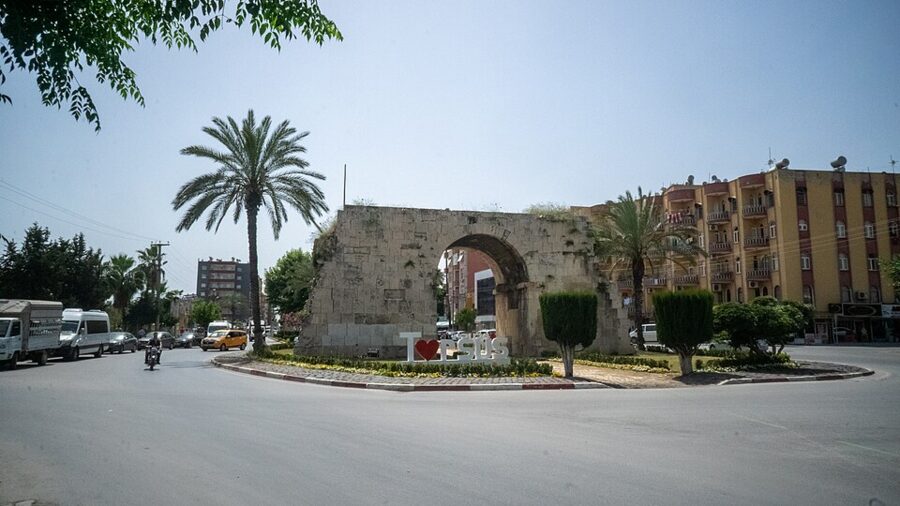
Tarsus: the well and the church
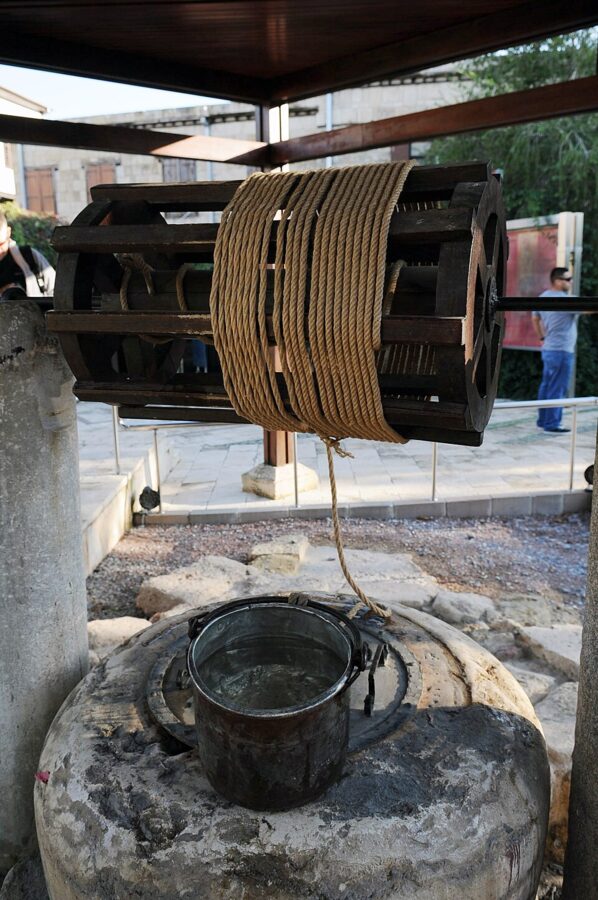
Tarsus is a busy farm town between Mersin and Adana, with Paul’s city underneath. St Paul’s Well sits in a courtyard in the old Kızılmurat quarter, about 300 m north of the main square: an 18 m shaft that tradition, not evidence, places in the yard of his family’s house. Around it are columns and a glass-covered excavation of a Roman house, which give you a better sense of the ancient town than the well itself.
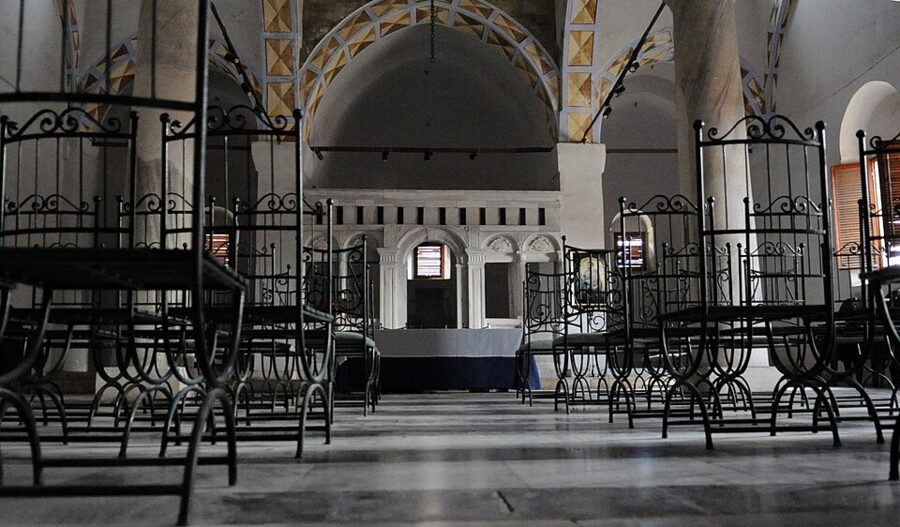
The second is the St Paul Memorial Museum, a three-aisled church built for the Orthodox Arab community in 1850, used for other purposes until 1993 and restored as a museum in 2001. The ceiling frescoes show Christ and the four evangelists. The ministry lists both as open 08:00–19:00 (box office 18:30), the church closed on Mondays, but shows no foreign-visitor price for either, so bring cash.
Getting there has changed. The suburban trains between Mersin, Tarsus and Adana stopped on 22 April 2024 for work on a high-speed line, and in November 2026 they were still not running. Take a coach instead: Adana to Tarsus is about 40 minutes, with around 28 departures a day listed from 350 TL in late 2026, and Mersin to Tarsus about 35 minutes.

Antakya: the cave church of St Peter after the 2023 earthquake
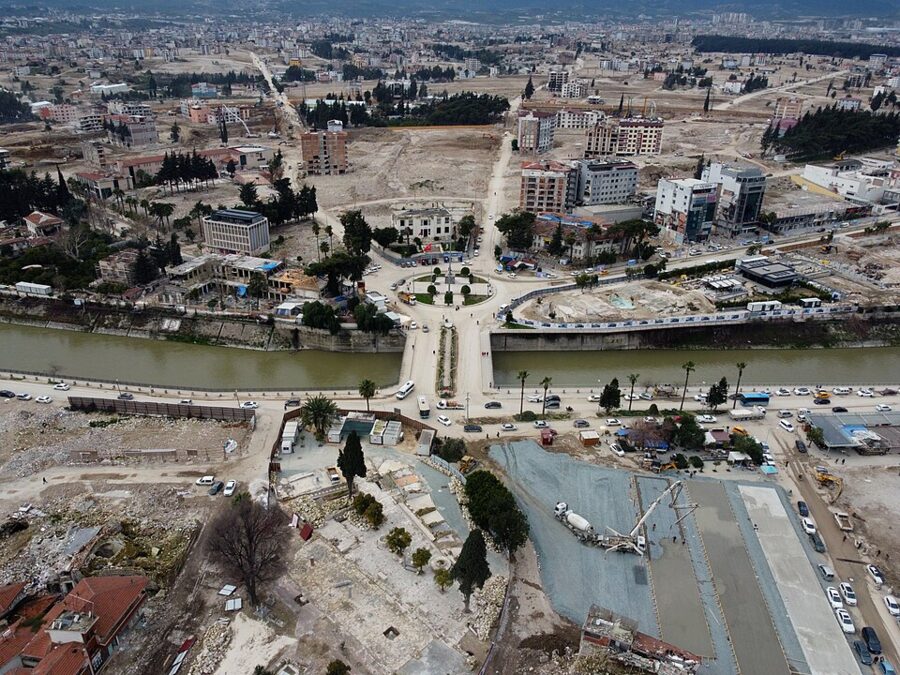
Antakya stands on Antioch on the Orontes, the third city of the Roman east. The earthquakes of 6 February 2023 destroyed most of the old town, and the city is still being rebuilt. The Hatay Archaeology Museum, with one of the great mosaic collections anywhere, was still listed by the ministry as closed in November 2026. The Greek Orthodox church in the old town was left partly in ruins; its community held a memorial service inside the damaged building on the third anniversary in February 2026.
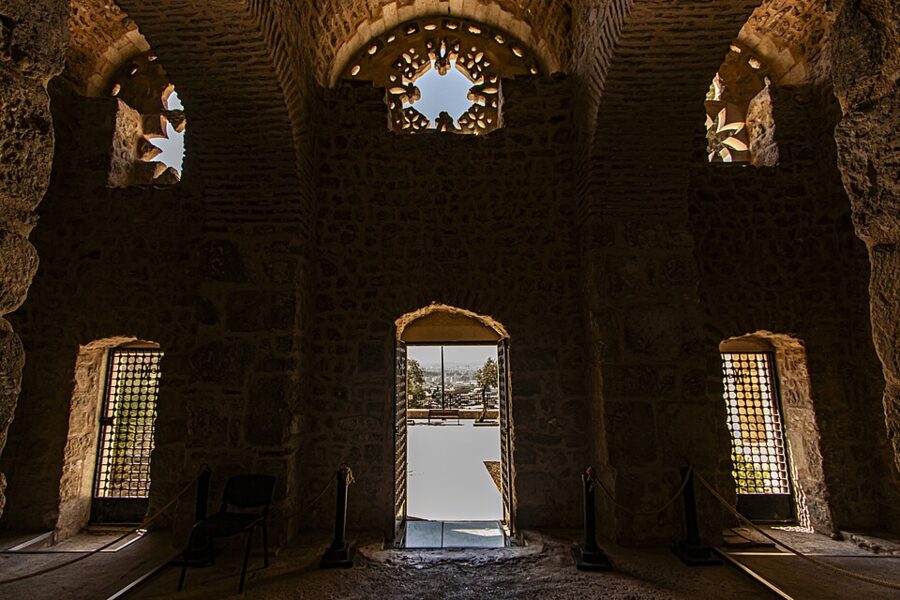

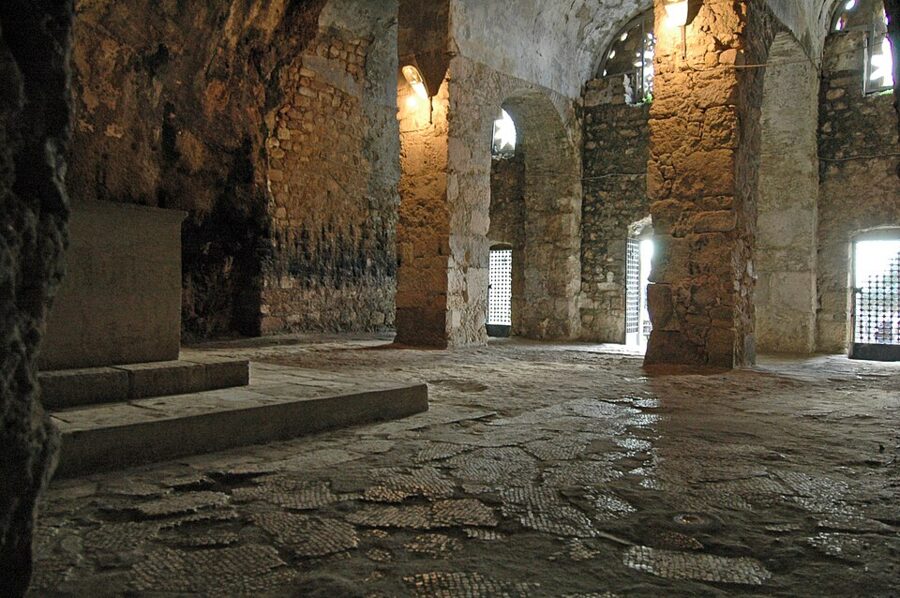
The cave church of St Peter, on the western slope of Mount Staurin about 3 km from the center, came through better. Reports at the time showed the retaining wall in front of it collapsing in the February 2023 quakes, while the cave itself was described the following year as undamaged. Feast-day services for Peter and Paul were held in the cave on 29 June 2024, with the Greek Orthodox Patriarch of Antioch, and again on 29 June 2025. In November 2026 the ministry listed it as open every day, 08:30–17:00 with the box office closing at 16:30, for €8.
Tradition makes the cave the meeting place of Antioch’s first Christians; nothing ties it to Paul in particular. The Crusaders added the facade in the 12th or 13th century, and inside are traces of 4th- and 5th-century mosaic, a spring and a tunnel tradition calls an escape route.

Coaches run from Adana to Antakya in a little over three hours, with around a hundred departures a day listed from 400 TL in late 2026. Seleucia Pieria, the port Paul and Barnabas sailed from, lies on the coast near Samandağ; I would only make that trip with a car and a full day.
Perge and Attalia
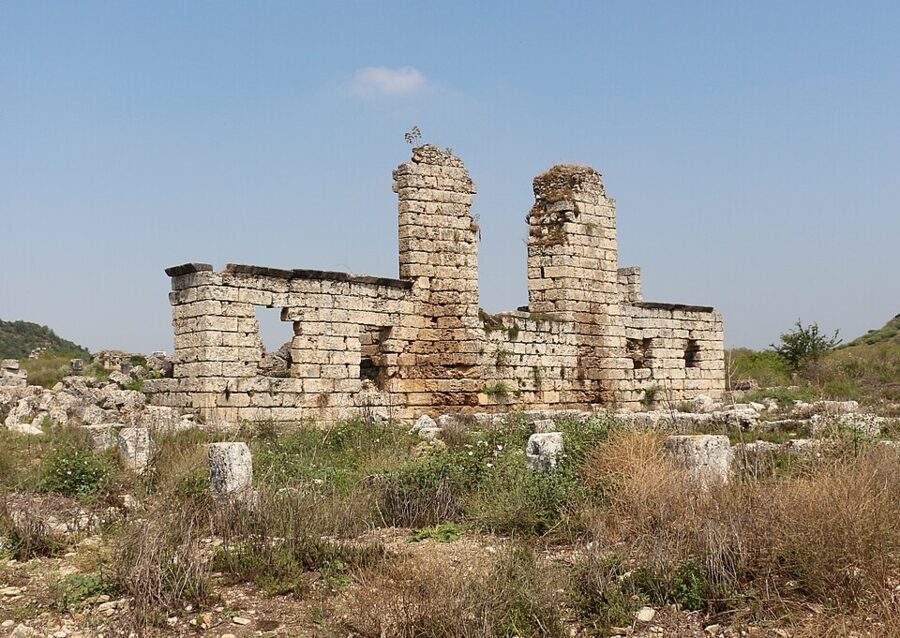
Perge is where John Mark left the mission, and where Paul and Barnabas preached on the way home. Its colonnaded street, gate towers and stadium are covered in the Antalya guide; in short: AntRay tram to Aksu, about 2 km on foot, €11 at the gate, open 08:00–17:00 with the box office closing at 16:30.

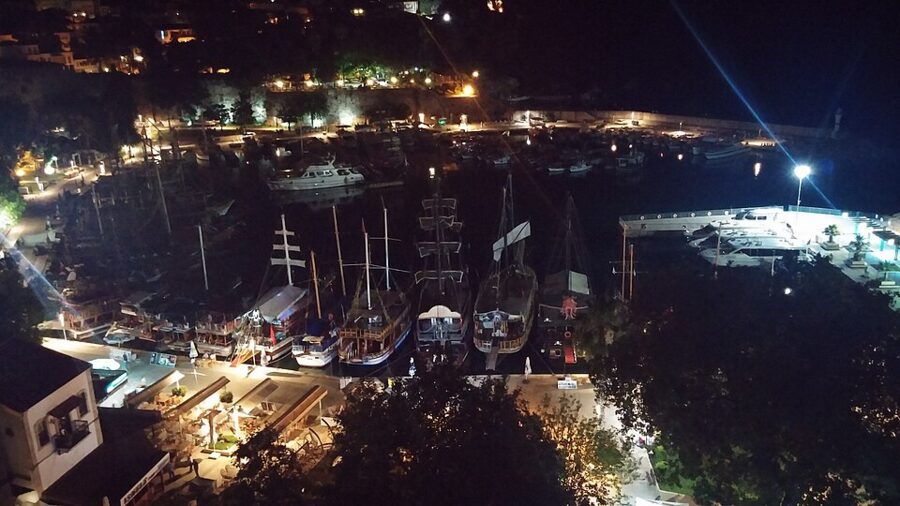
Attalia is the little harbor below the walls of Kaleiçi, Antalya’s old town, where Acts says they “went down” to sail for Antioch. Nothing from the 1st century is labeled, but the basin is the ancient one, free to walk down to at any hour.

Pisidian Antioch at Yalvaç
This is the site I would most like more people to see. Antioch “near Pisidia” was a Roman colony of veterans on a hill at about 1,200 m, about 1 km north of the modern town of Yalvaç. Acts 13 gives Paul a long synagogue sermon here, the first of his speeches it records, and says he turned to the Gentiles when part of the synagogue turned against him. An English chaplain, Francis Arundell, identified the ruins in 1833, and fragments of Augustus’s own record of his reign, the Res Gestae, were later dug up here.
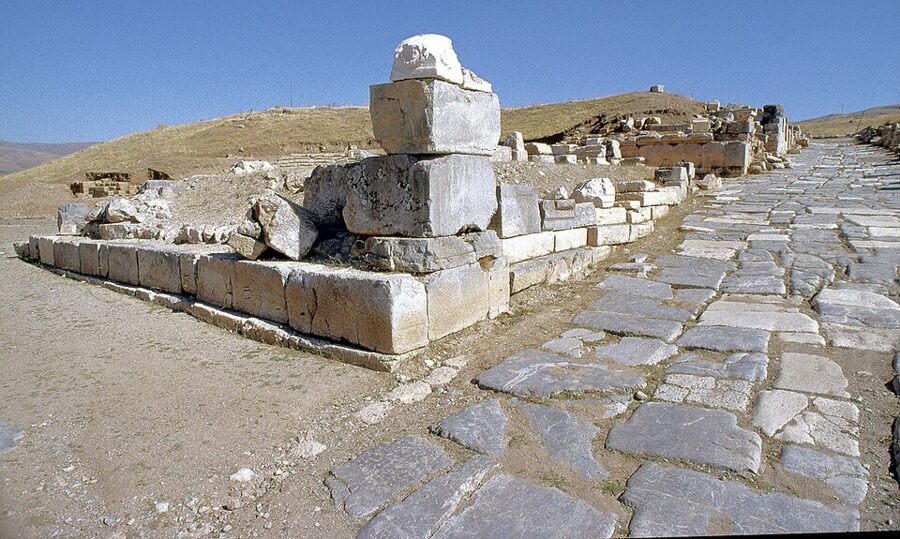

Inside a 46-hectare circuit of walls you walk through a triple-arched west gate and up the main street to the Temple of Augustus, past the theater and baths. The 70 m basilica near the walls, reworked at the end of the 4th century, is now called the Basilica of St Paul, a later dedication. The ministry lists the site as open every day, 08:30–19:00 in its summer listing, with no price shown for foreigners. The Yalvaç Museum in town, which has a hall on Paul and the finds from the site, was listed as closed in November 2026.
Isparta Petrol Turizm runs a direct coach from Antalya to Yalvaç, about four hours, eight a day listed at 800 TL in late 2026. From Konya it is about 2 hours 40 minutes, with 17 departures a day listed from 400 TL, which makes Yalvaç a natural stop between Antalya and Konya.
Konya (Iconium), Lystra and Derbe
Iconium is Konya, and the ancient city is buried under the modern one. Paul and Barnabas preached here on the first journey until a plot to stone them drove them on to Lystra. The 2nd-century Acts of Paul and Thecla, a romance rather than history, made Iconium the home of Thecla, who left her fiancé to follow him.
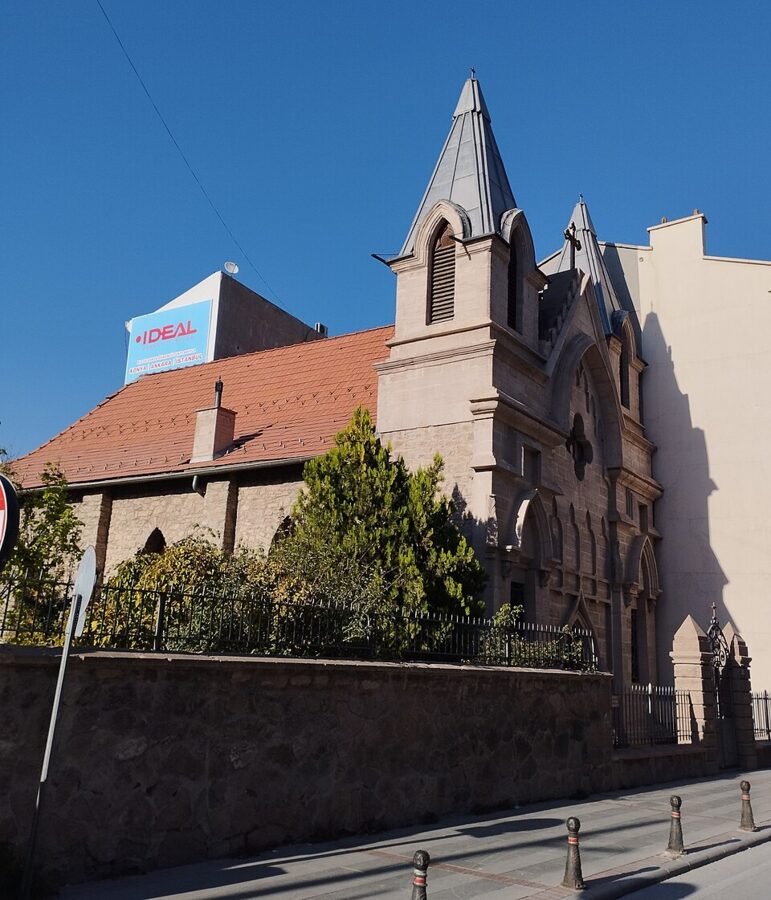
St Paul’s Catholic Church, Aziz Pavlus Kilisesi, is still a working parish: in January 2026 its posted Sunday Mass was at 17:00, and it was still holding Mass in mid-November 2026. In the village of Sille, about 8 km northwest of the center, the restored Byzantine church of Aya Elena is the best-known Christian building in the area; local tradition credits its founding to the empress Helena, which you can take or leave.
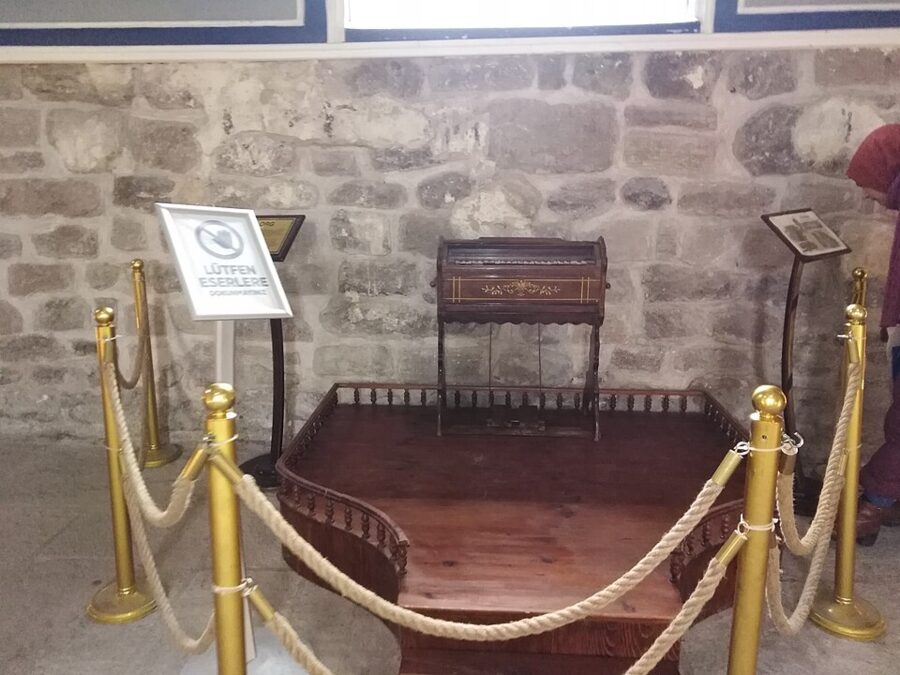
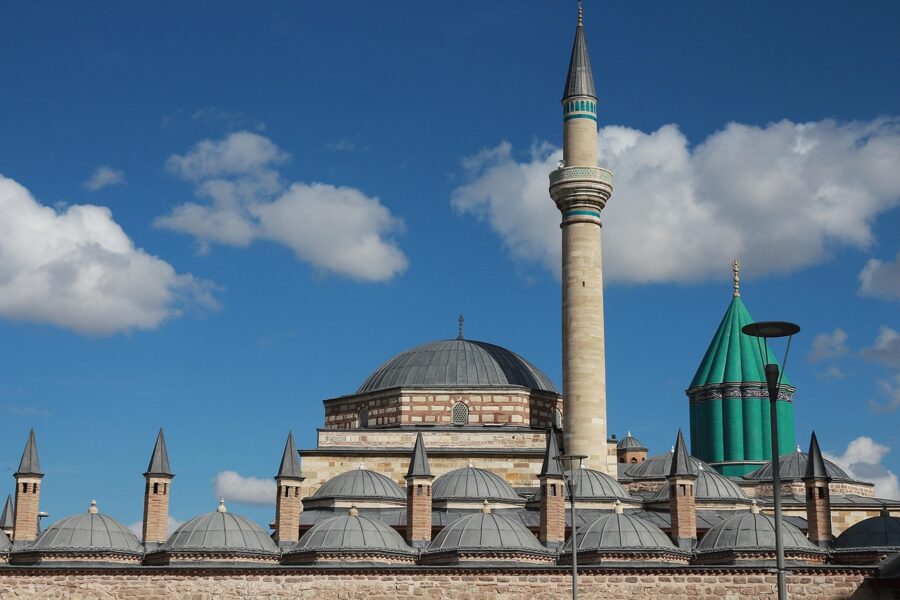
Most people come to Konya for the Mevlana Museum, the tomb of the poet Rumi, and you should too. Konya is about five hours by coach from Antalya, with more than fifty departures a day listed from 950 TL in late 2026, and on the high-speed train line from Istanbul and Ankara.
Lystra and Derbe are for the completist. Lystra is a mound near Hatunsaray, south of Konya, identified in 1885 by the American epigrapher John Sterrett from a Latin altar naming the Roman colony: a sign and a field. Do not confuse it with Kilistra, a Byzantine rock-cut village at Gökyurt often sold as Paul’s Lystra.
Derbe is one of two mounds near Ekinözü, northeast of Karaman, located from inscriptions found in the 1950s and 1960s. Scholars still argue over which mound, and neither has anything to see.
Ephesus
Paul spent longer in Ephesus than anywhere else on his travels, wrote 1 Corinthians there and left after the silversmiths’ riot in the theater. The site and the town of Selçuk have their own guide; the ticket is €40 in 2026.
Alexandria Troas and Assos
Troas is where Europe came into the story: Acts sets the vision of the man of Macedonia here, and on a later visit a sermon that ran past midnight, when a young man named Eutychus fell asleep in a third-floor window and fell out. The second letter to Timothy, whose authorship is disputed, has Paul asking for the cloak and books he left at Troas with a man called Carpus.
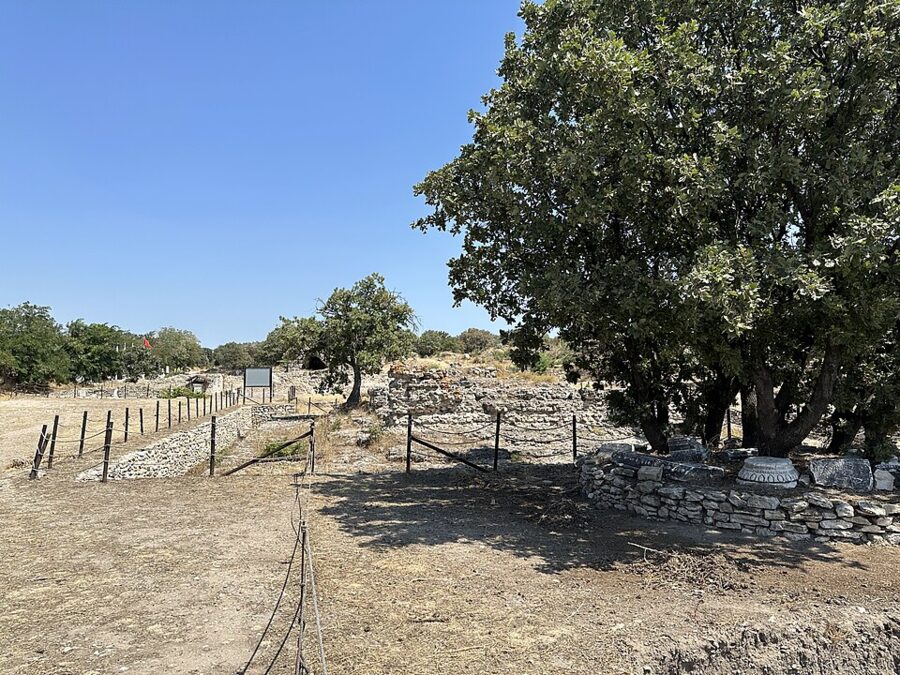

Alexandria Troas lies near the village of Dalyan in the Ezine district, a big, quiet site of baths, walls and a silted harbor. The ministry lists it as free and open every day. It is awkward without wheels: a coach from Çanakkale to Ezine takes about 45 minutes, and from there you need a taxi. The rest of the region, including Troy itself, is in the guide to the Troad.
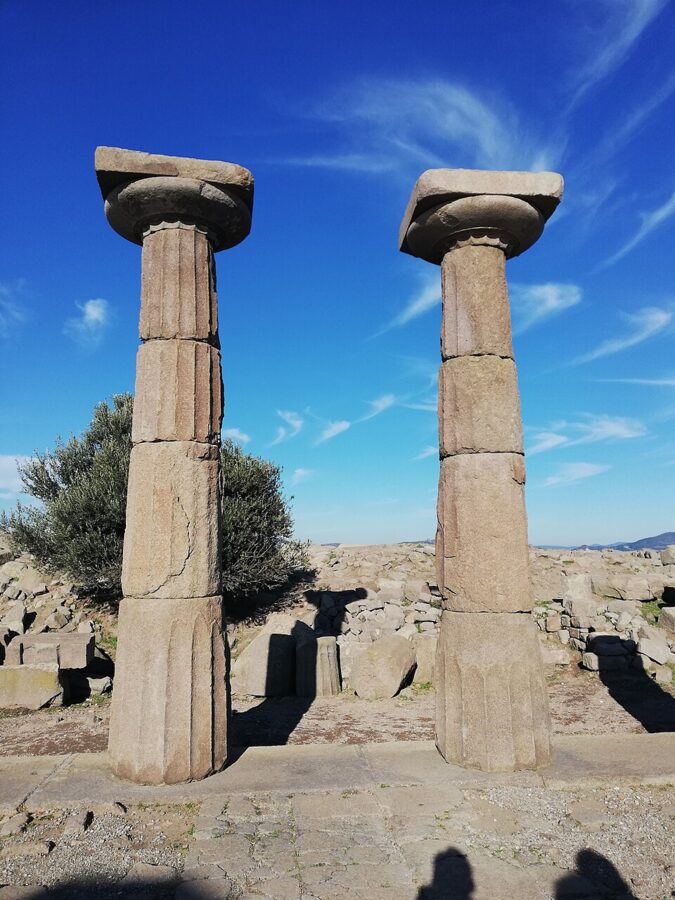
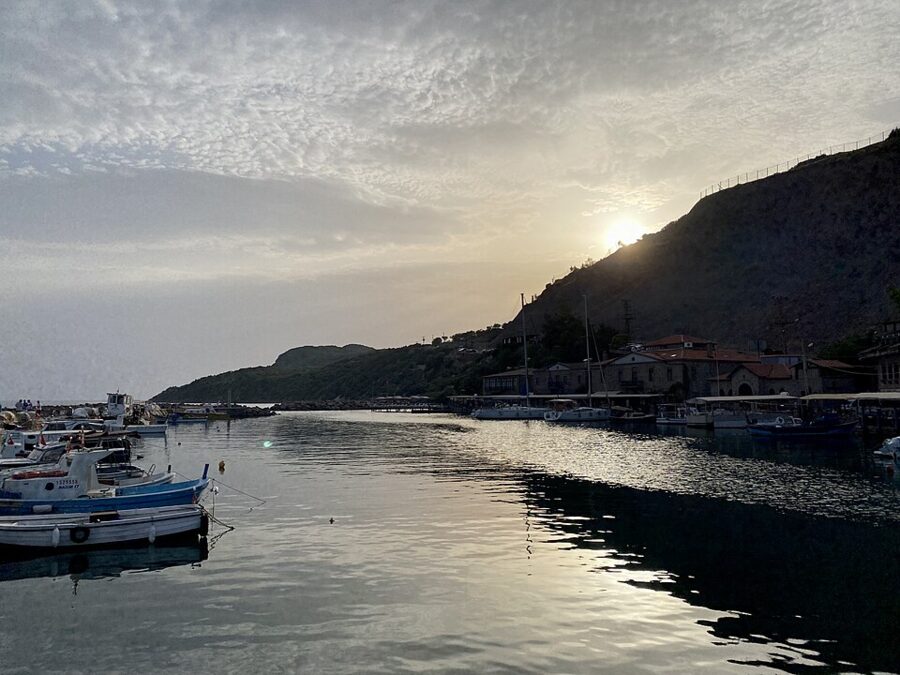
Assos is the reward. Paul chose to walk here from Troas while the others sailed round, and boarded the ship at the harbor below (Acts 20:13–14). The Temple of Athena crowns an old volcano above the Gulf of Edremit, where Aristotle lived for a few years in the 340s BC. The site is €11, open 08:30–17:30 (box office 17:00); take a coach from Çanakkale to Ayvacık, then a village minibus or a taxi up to Behramkale.


Miletus
Miletus is where Paul, in a hurry to reach Jerusalem, sent for the elders of Ephesus rather than going back himself, and gave the farewell speech of Acts 20. “They all wept,” it says, because he told them they would not see him again. The harbor that made the city has silted into farmland, so the giant theater now looks over fields.
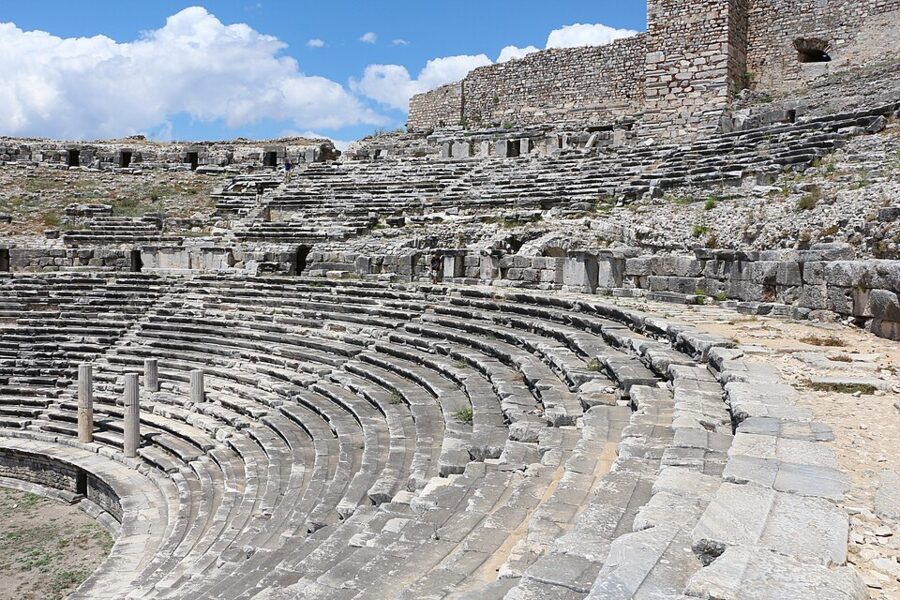

The ticket is €3 and also covers the Miletus Museum; the site is listed as open daily, 08:30–17:30, box office closing at 17:00. From Selçuk, take a coach to Söke (about an hour, from 300 TL in late 2026), then one of the Balat Birlik minibuses that run between Söke and Didim through Balat, the village by the ruins.
Patara and Myra
On the way to Jerusalem, Paul’s party changed ships at Patara for one bound for Phoenicia (Acts 21:1–2). On the way to Rome, his guards found an Alexandrian grain ship at Myra and put the prisoners aboard (Acts 27:5–6). Both are better known today for St Nicholas, born at Patara and bishop of Myra.
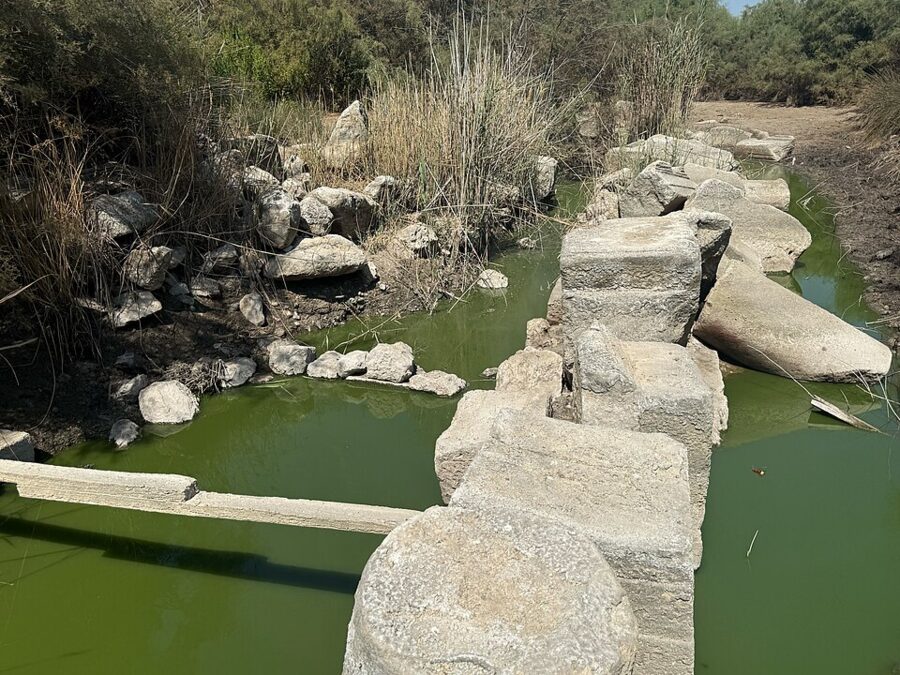

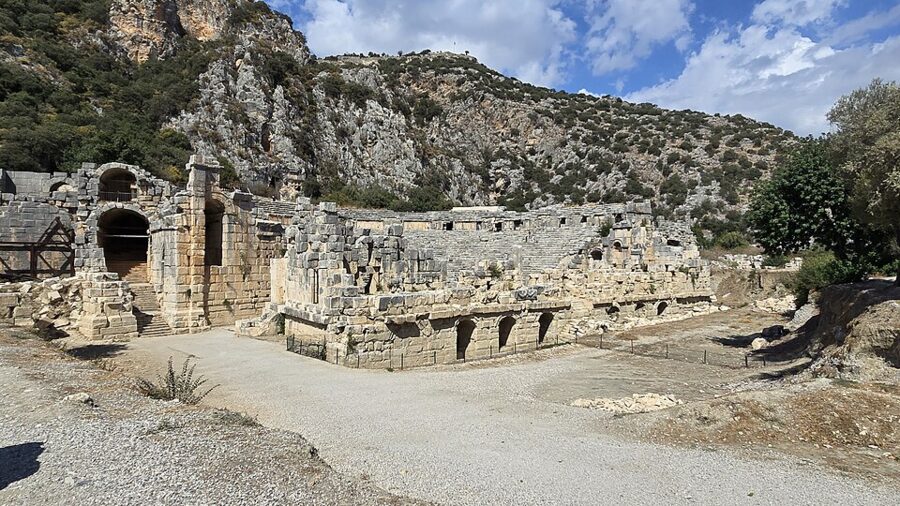
Patara costs €15 and is listed as open 08:00–19:00. Coaches between Fethiye and Kaş, about two hours with 17 a day listed from 400 TL, pass the turn for Gelemiş, the village by the site. Myra sits at Demre, three hours from Antalya by coach (from 410 TL): the rock tombs and theater are €13, and the Church of St Nicholas €17. Andriake, Myra’s harbor where the grain ship would have tied up, is a few kilometers down the road.

Greece: from Neapolis to Cenchreae
The Greek half is shorter, cheaper to get around and better signposted. The sites run by the Hellenic Ministry of Culture are free on the first and third Sunday of each month between November and March, and on a handful of national days.
Kavala (Neapolis)
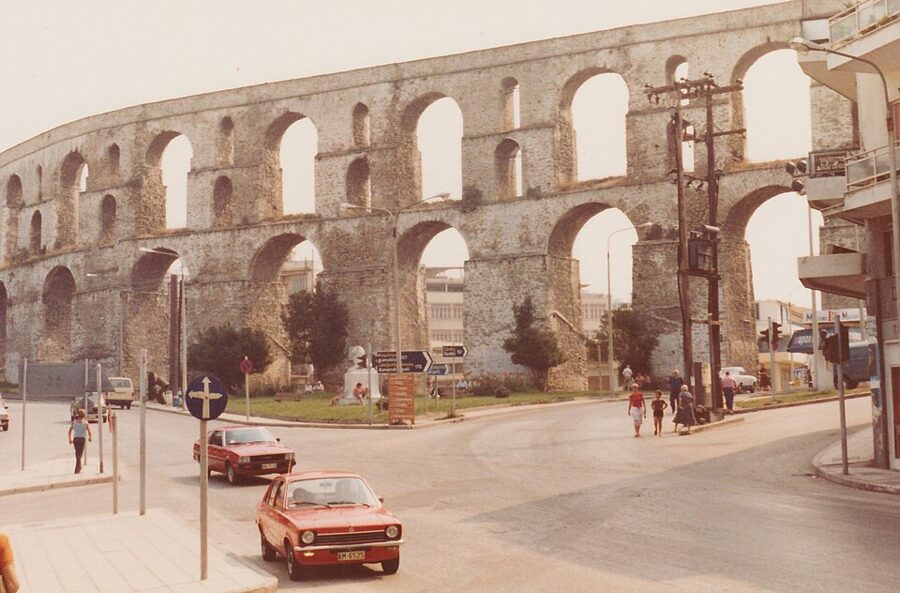
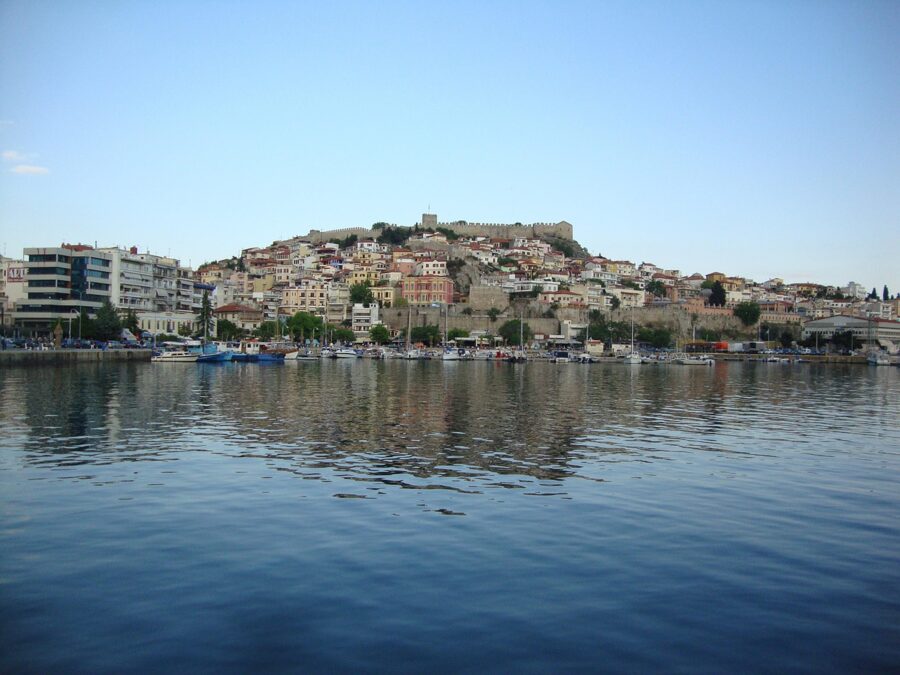
Kavala is Neapolis, the port where Paul first set foot in Europe (Acts 16:11). Nothing from his day stands out in the modern town, but the harbor is the point: the same bay, the same climb to the Via Egnatia, the Roman road that carried him inland. The old quarter on the headland, with its castle and aqueduct, is a fine place to spend an evening.
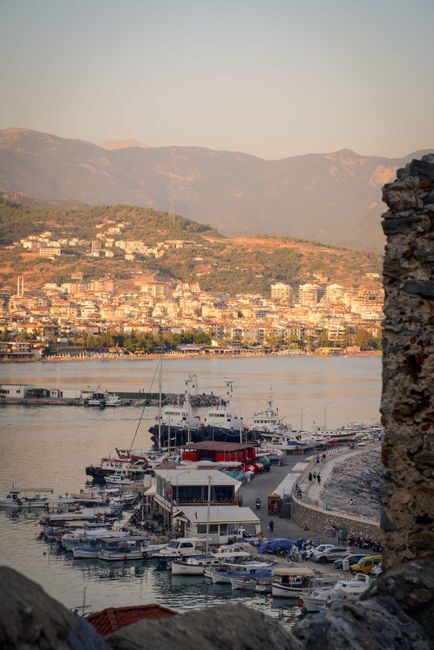

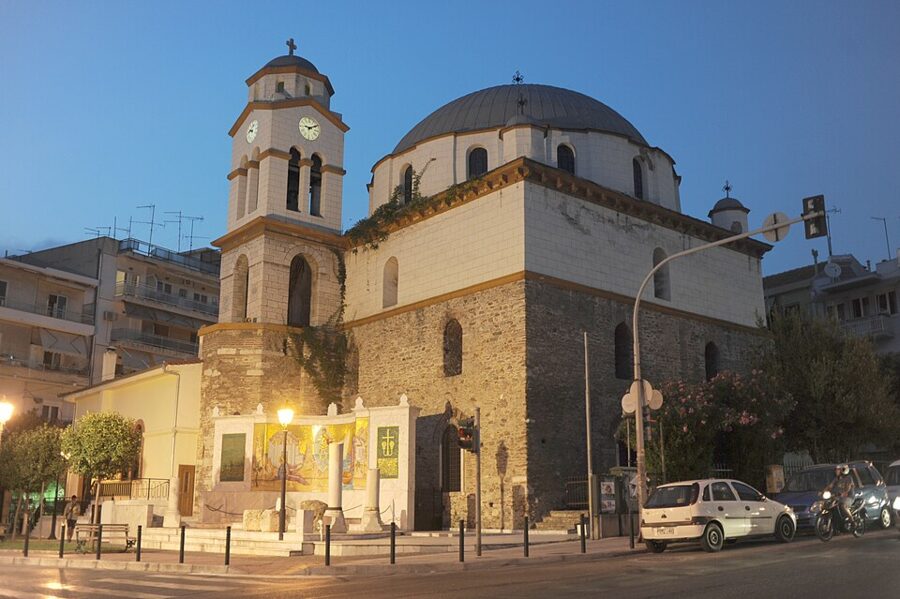
Near the harbor, the church of Agios Nikolaos was the Ibrahim Pasha mosque under the Ottomans and is now an Orthodox church. KTEL coaches from Thessaloniki take about two hours, and the fare at the Kavala station was €18 in August 2026.

Philippi and the baptistery of Lydia
Philippi, a UNESCO World Heritage Site since 2016, is the most complete Pauline city in Greece. Acts 16 has a whole chapter here: Lydia, the dealer in purple cloth from Thyatira, baptized by the river outside the gate; the slave girl with a spirit of divination; Paul and Silas beaten and thrown in prison; the earthquake and the jailer’s conversion. Paul’s own letters back it up, which is rare: he reminds the Thessalonians how he had been “shamefully treated at Philippi,” and his letter to the Philippians thanks them for sending money more than once.
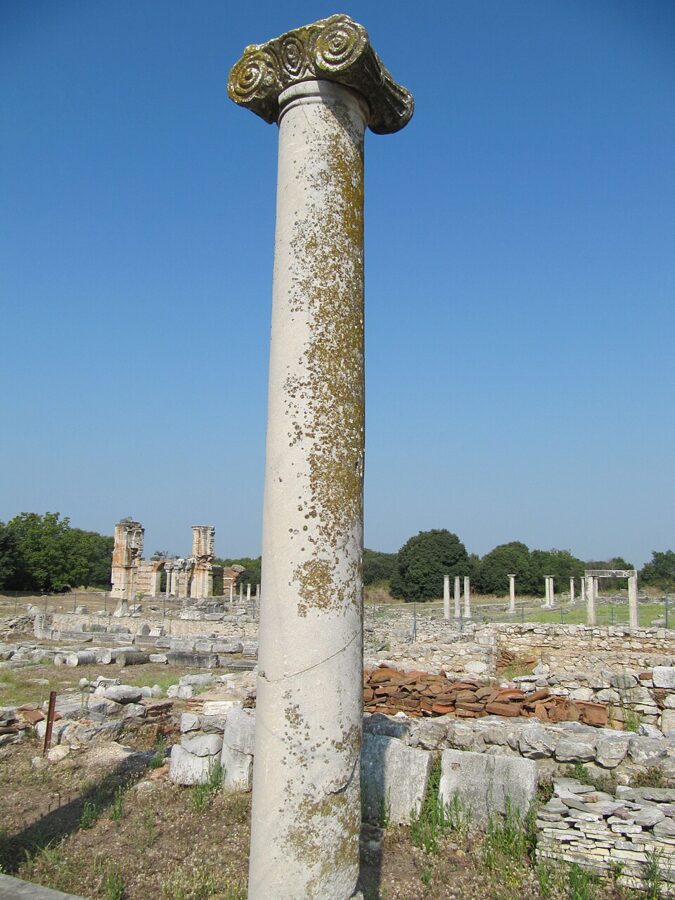

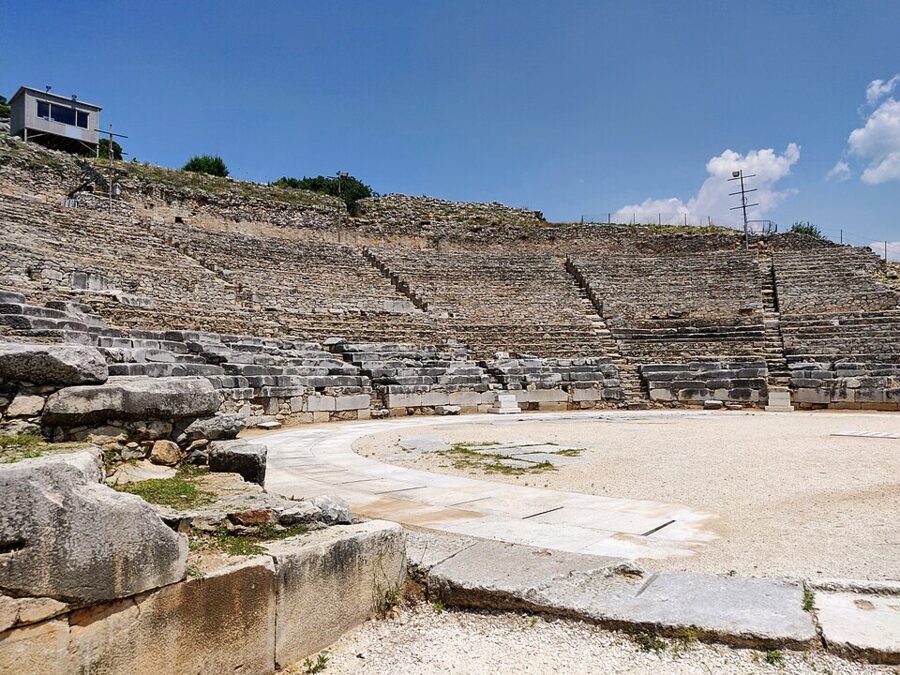
What you walk through is the Roman colony, much of it rebuilt after Paul: the forum, the theater cut into the acropolis hill and two great early Christian basilicas. A small Roman cistern is shown as the “prison of Paul”; it was venerated from early Byzantine times, but nobody can show that it held him. The ticket is €10 for the site and museum, and winter hours (1 November to 31 March) are 08:00–15:30 daily, with summer opening until as late as 20:00. It closes on 1 January, 25 March, 1 May, Easter Sunday and 25–26 December.

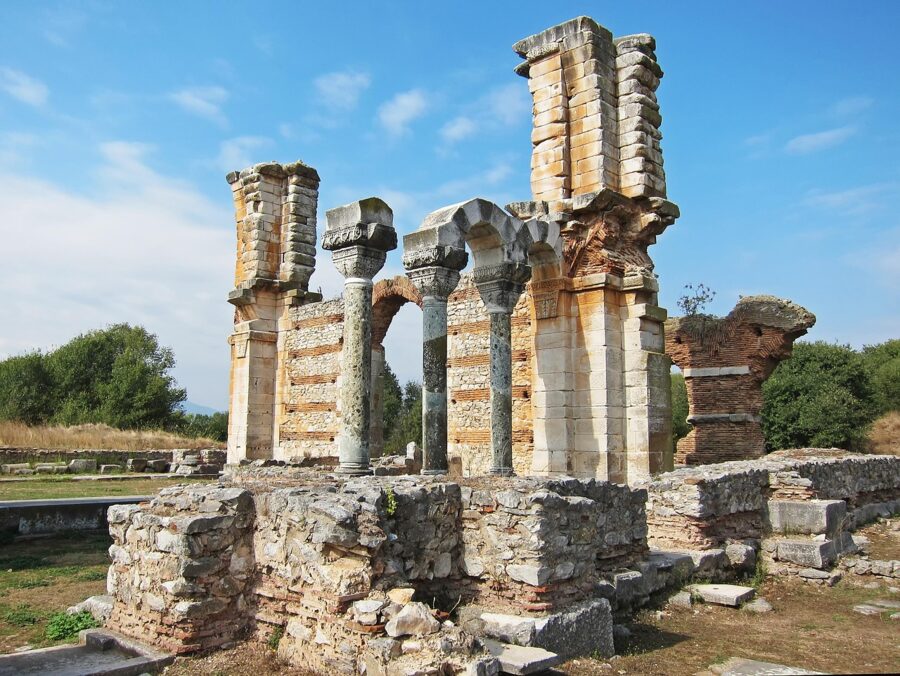
The bus makes it easy. Take a KTEL coach from Kavala toward Drama and get off at the “Krinides, Ancient Theatre” stop for the site, or at the “Lydia” stop for the baptistery. The baptistery is a modern open-air font and church by a clear stream at the village of Lydia, about 1 km northwest of the site, where tradition places the river prayer place; it is free.
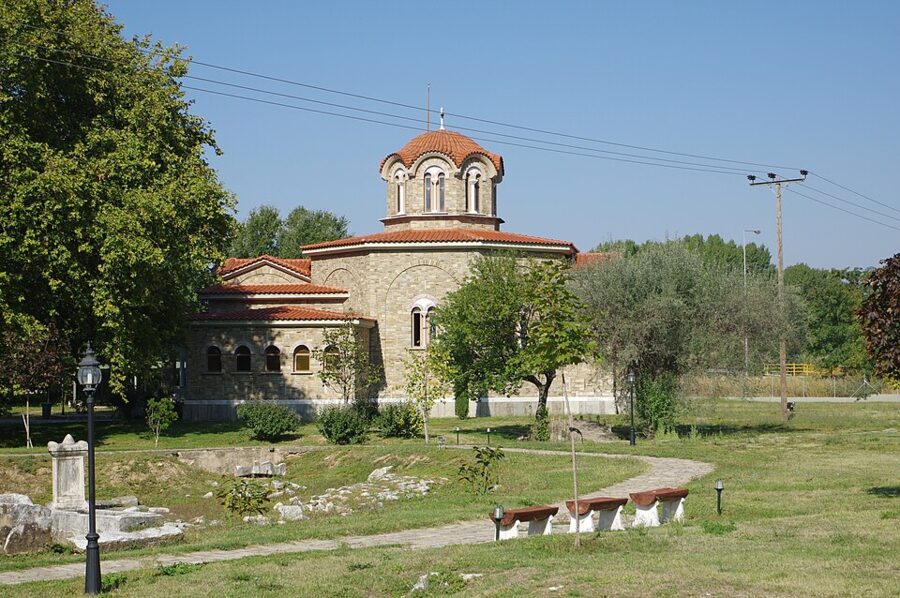

Thessaloniki
Paul preached for three Sabbaths in the synagogue here before a mob attacked the house of his host, Jason, and the believers sent him away by night (Acts 17:1–9). His first letter to the Thessalonians, written a few months later from Corinth, is probably the oldest Christian text that survives. Nothing in the city can be tied to him, but it is the cheapest and best-connected base in northern Greece.
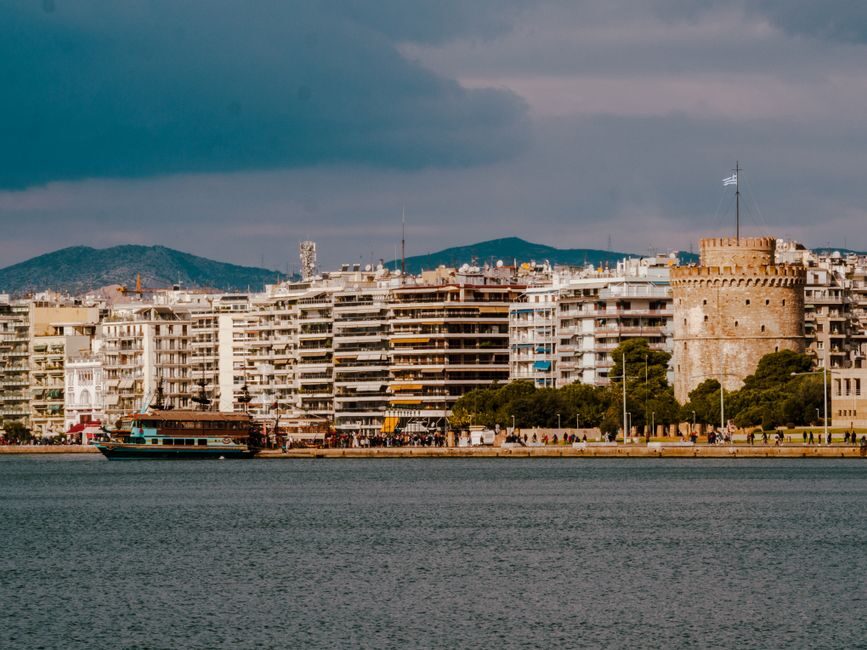
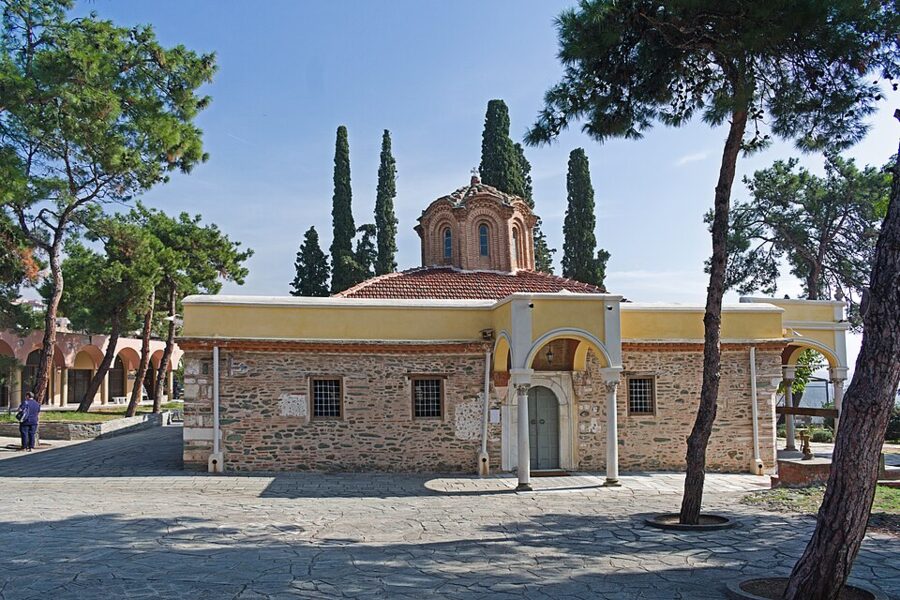
Climb to the Upper Town for the Vlatadon Monastery, a 14th-century foundation inside the walls. Local tradition says Paul slipped out of the city by night through a gate near here, and the monastery terrace has one of the best views over the gulf. It is a working monastery, so dress for it and keep your voice down.

Veria (Berea) and the Bema
The Bereans were “more noble” than the Thessalonians, says Acts 17, because they checked Paul’s claims against the scriptures every day. One of them, Sopater, later traveled with him. Agitators from Thessalonica followed him here too, and he was sent on to the coast and Athens.
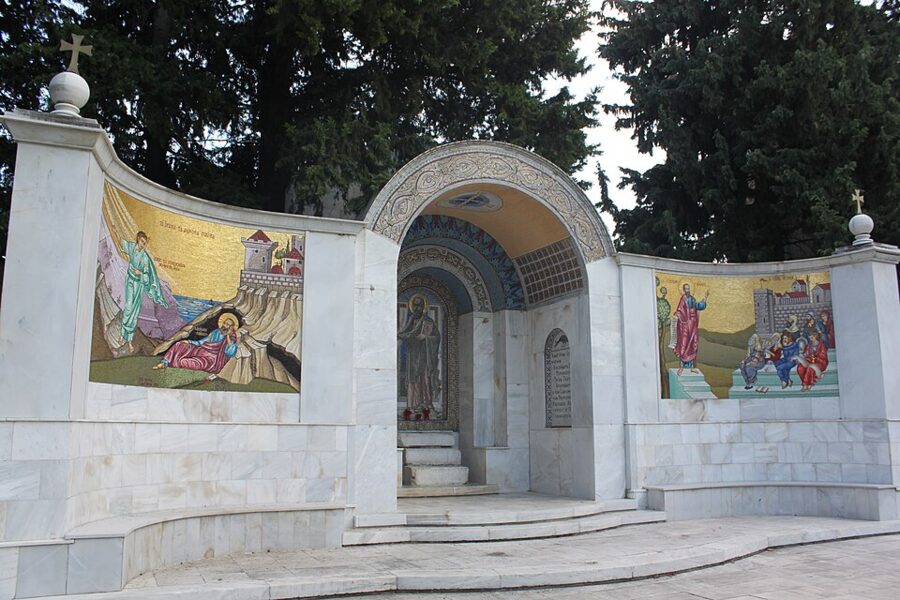

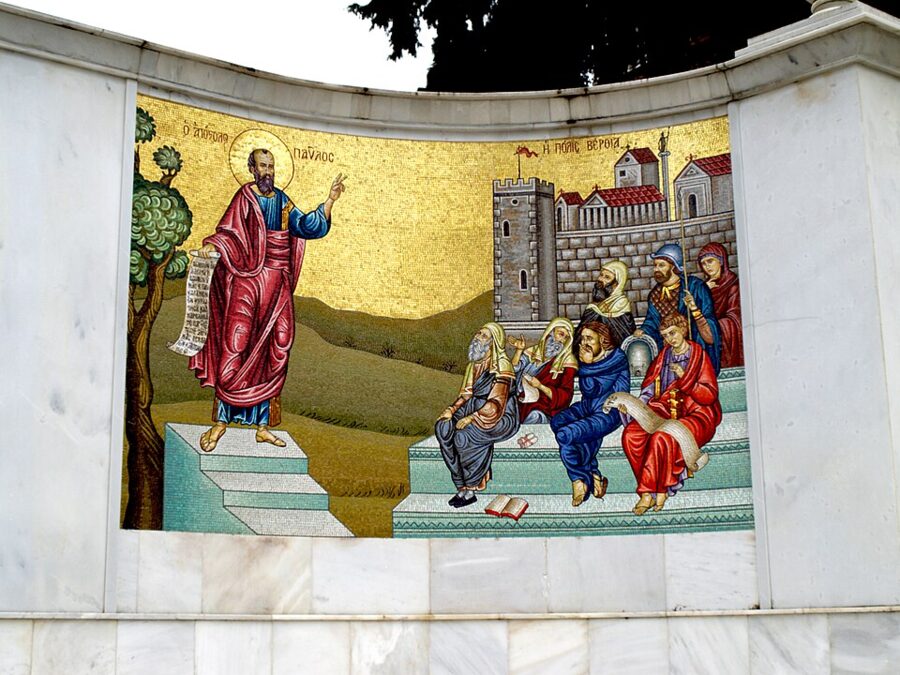
In the center of Veria, a flight of marble steps decorated with mosaics, the Bema of the Apostle Paul, marks where tradition says he preached. Around his feast day on 29 June the local church holds the Pavleia, services and lectures that have run since 1995, with evening prayers at the Bema. Veria is about an hour from Thessaloniki by KTEL coach or regional train, and its old Jewish quarter and small Byzantine churches fill the afternoon.

Athens and the Areopagus
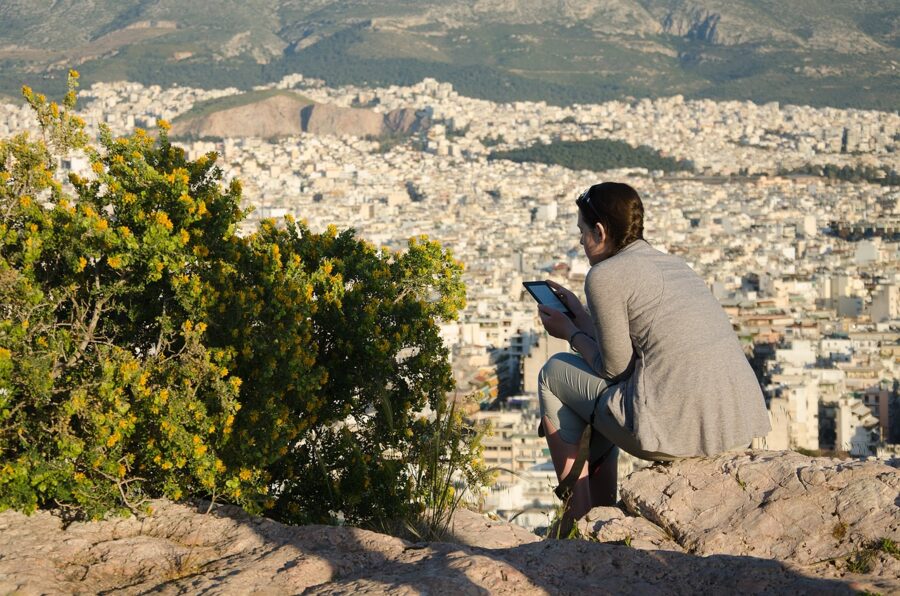
Paul reached Athens alone and waited there for Silas and Timothy, a detail his own first letter to the Thessalonians confirms. He argued in the synagogue and the marketplace, and was brought to the Areopagus, the rocky hill below the Acropolis where the old council met. There, Acts says, he spoke about the altar “to an unknown god.” Some mocked; a few believed, among them Dionysius, a member of the council, and a woman named Damaris.
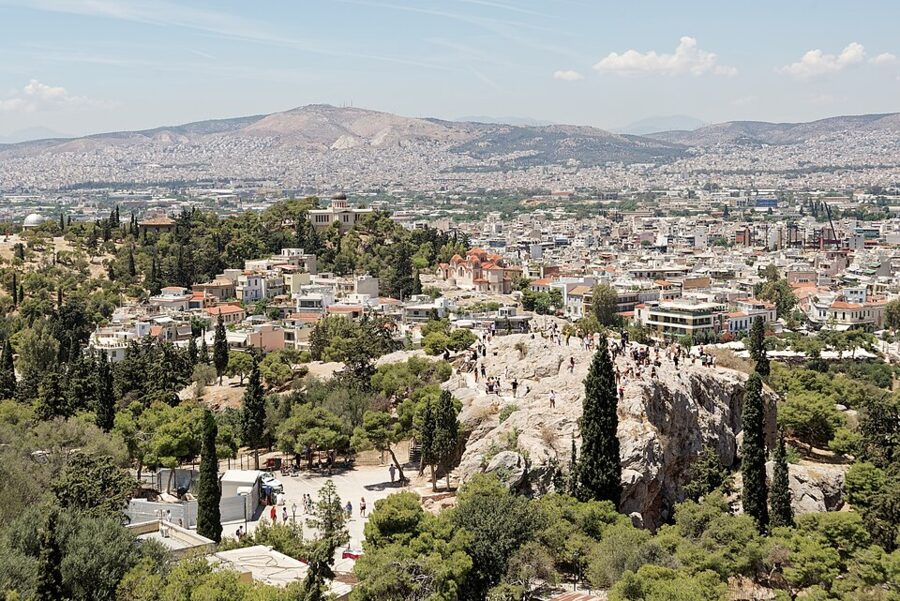

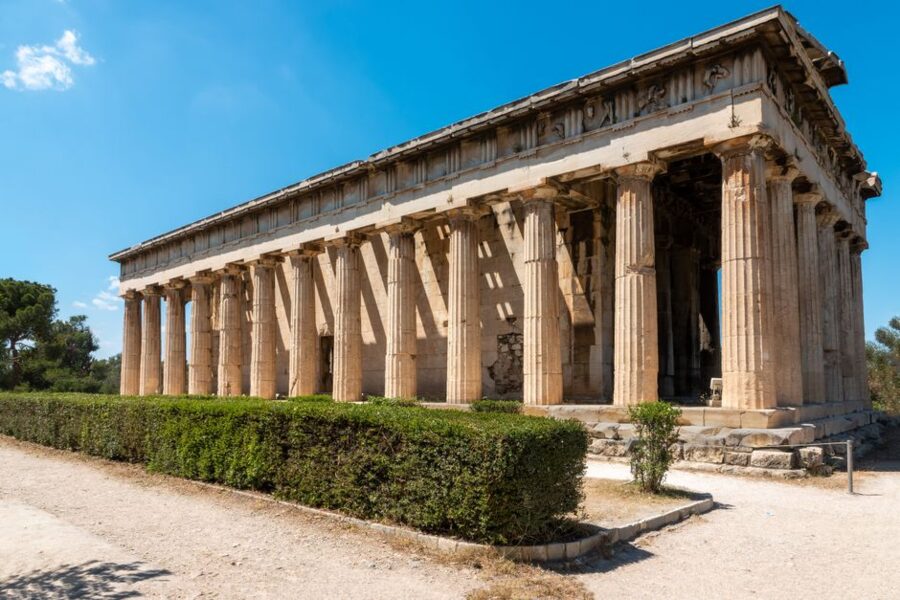
Whether the speech happened on the hill or before the council meeting in the Agora is an old scholarly argument, but the hill is where you go: it costs nothing and looks down over the whole Agora. The Ancient Agora itself, where Paul argued “daily with those who happened to be there,” is €20 for the site and the museum in the Stoa of Attalos, open 08:00–17:00 every day in winter and until 20:00 at the height of summer.
Ancient Corinth and the Bema
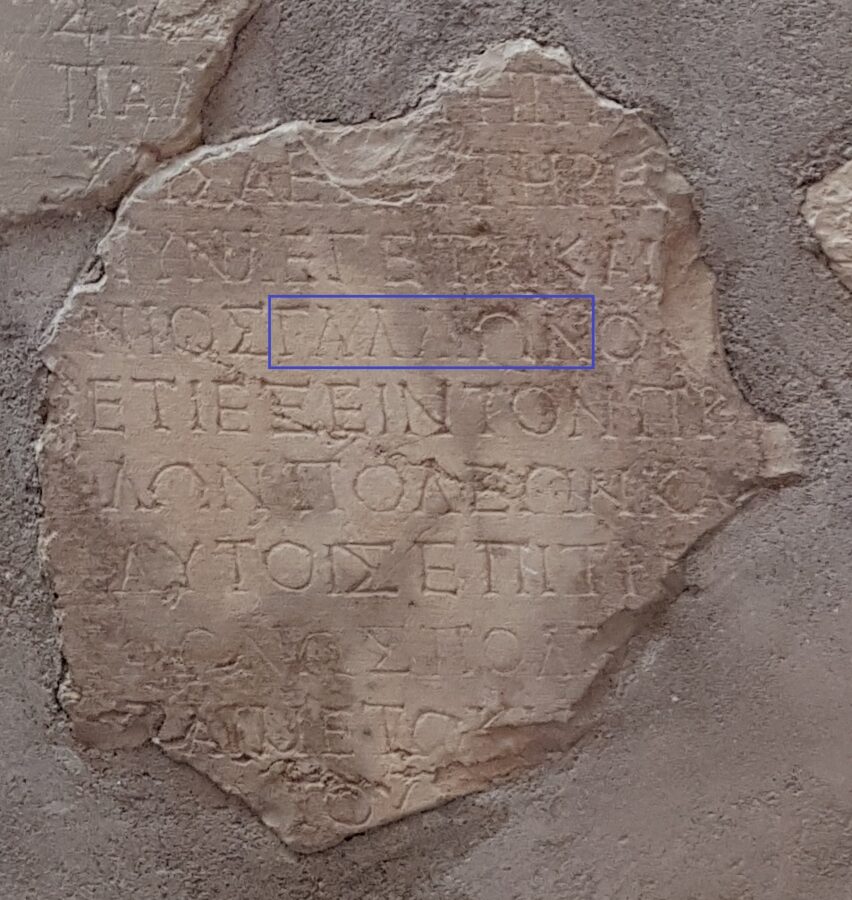
Corinth gave Paul his longest stay in Greece: eighteen months, working at his trade with Aquila and Priscilla, Jews recently expelled from Rome by Claudius. When the synagogue leaders brought him before Gallio, the proconsul threw the case out as a dispute about words and names (Acts 18:12–17). He wrote to the Thessalonians from here, and later wrote two letters to the Corinthians and, on a return visit, Romans.
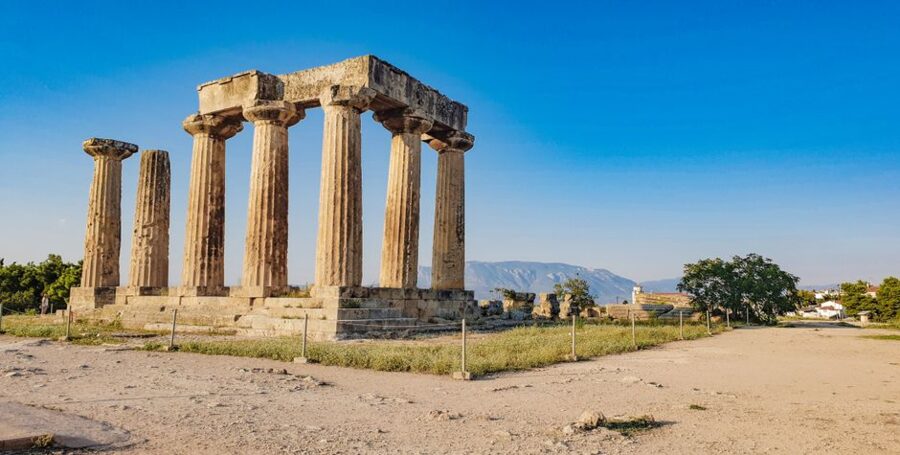
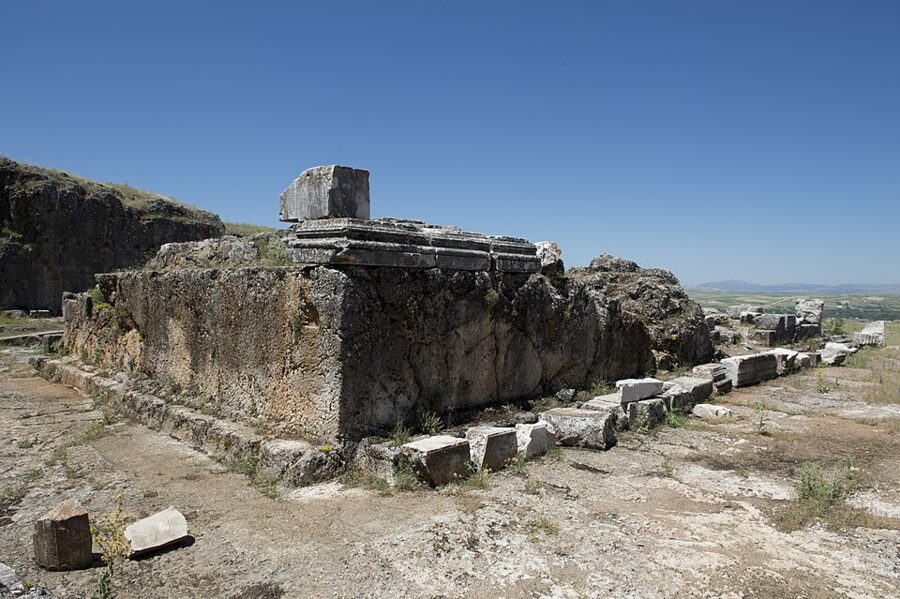
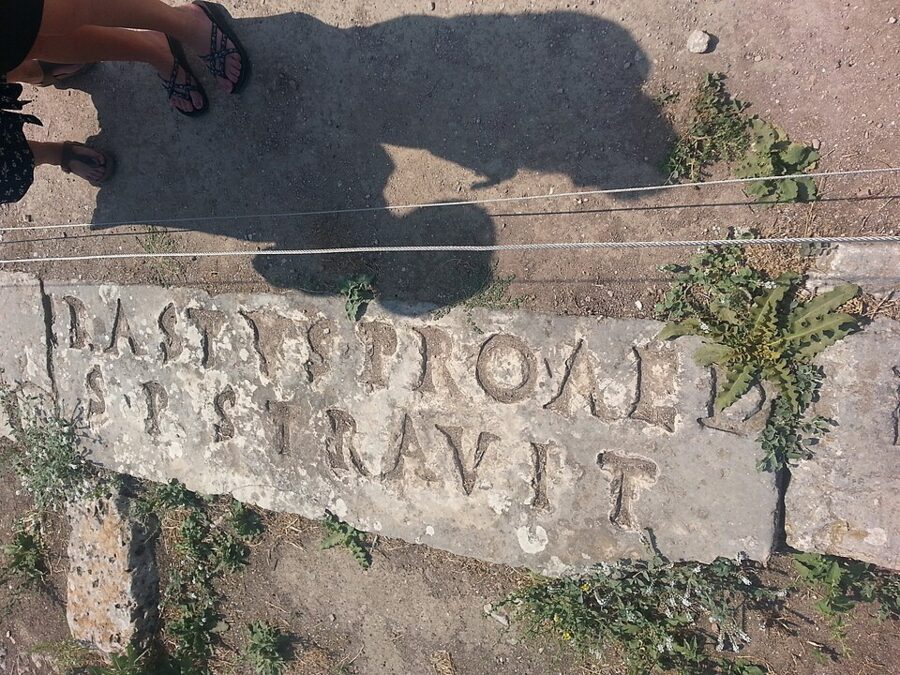
The Bema is the raised platform in the middle of the Roman forum, built in the mid-1st century and later turned into a church. Most scholars accept it as the place of the hearing, though Acts does not say exactly where Gallio sat. Near the theater, a paving stone carries a Latin inscription: an Erastus laid this pavement in return for his office as aedile. Paul’s letter to the Romans sends greetings from “Erastus, the city treasurer”; whether they are the same man is still debated.

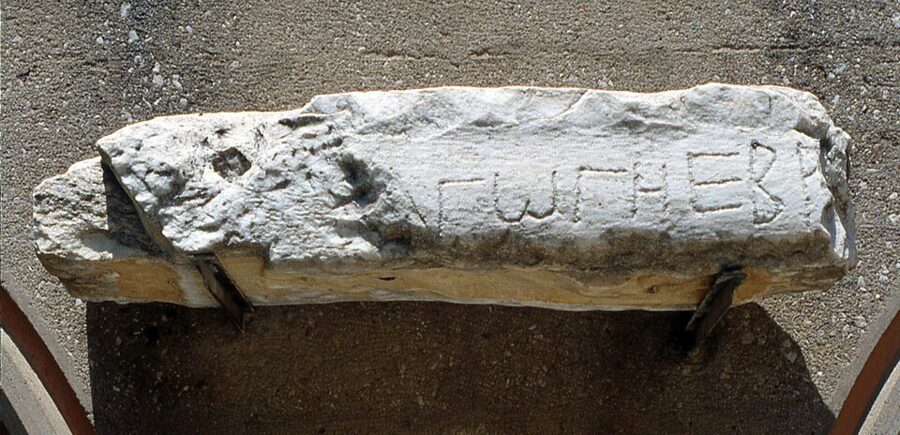
The museum keeps a marble lintel inscribed “synagogue of the Hebrews,” found in 1898 on the road to the old harbor; it is probably later than Paul, but it shows where the community lived. The site and museum are €15 together. Winter hours, 1 November to 31 March, are 08:30–15:30, closed on Tuesdays; from May to August it opens 08:00–20:00 every day.

From Athens, KTEL Korinthias coaches leave the Kifissos terminal for Corinth, about 1 hour 10 minutes and roughly €10, and the Hellenic Train suburban line runs to Corinth station. From modern Corinth a local bus or a short taxi ride covers the last few kilometers to the village of Ancient Corinth.
Cenchreae
Cenchreae, today’s Kechries, was Corinth’s harbor on the Saronic Gulf. Paul had his hair cut here under a vow before sailing for Ephesus (Acts 18:18), and Romans commends to its readers “Phoebe, a deacon of the church at Cenchreae,” the first woman the New Testament names with that title. The remains of the harbor lie in the shallows and along the shore beside the modern beach south of Isthmia: moles, a tower, and a temple of Isis that became a church.
Rhodes, Crete and Malta
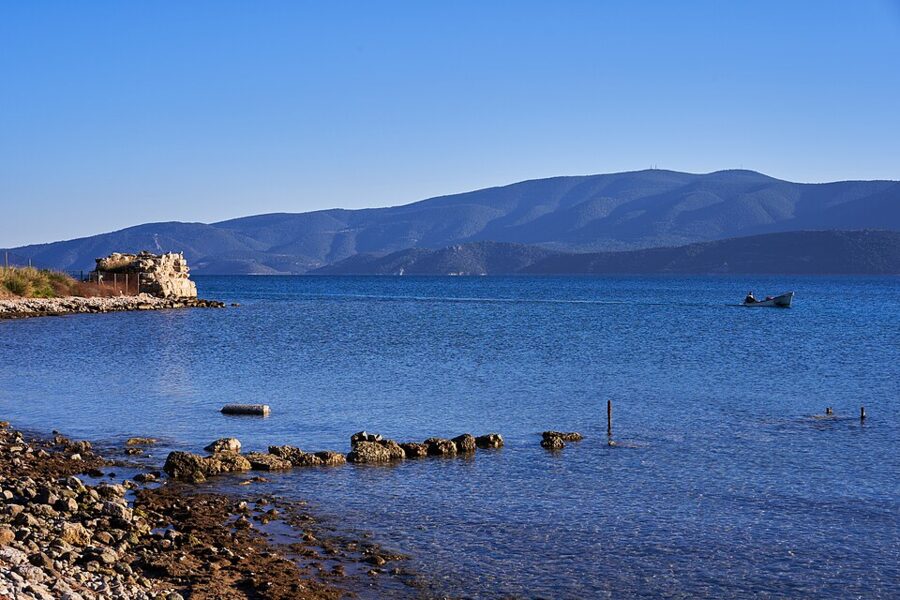
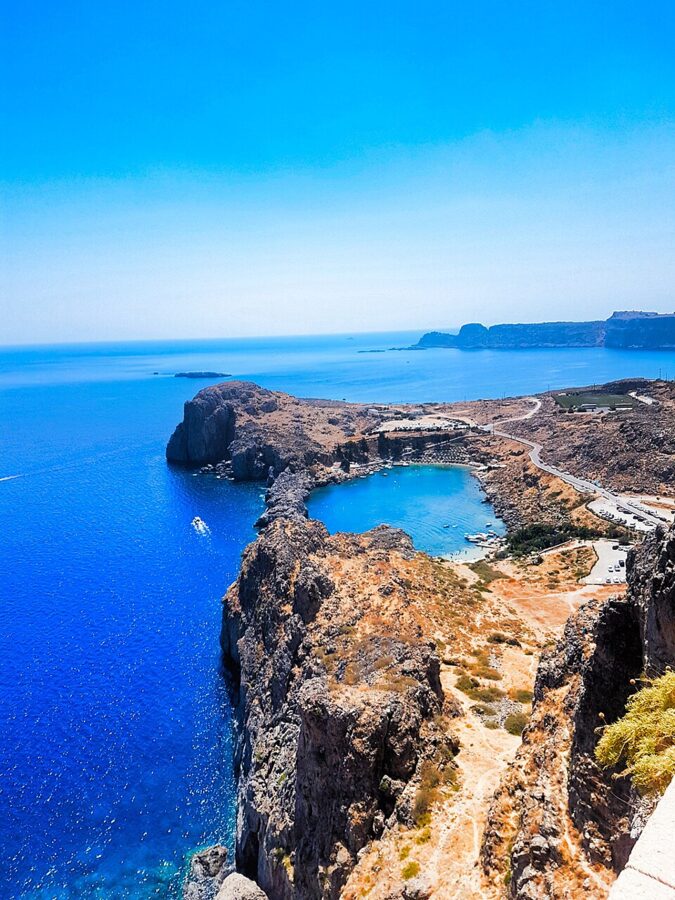
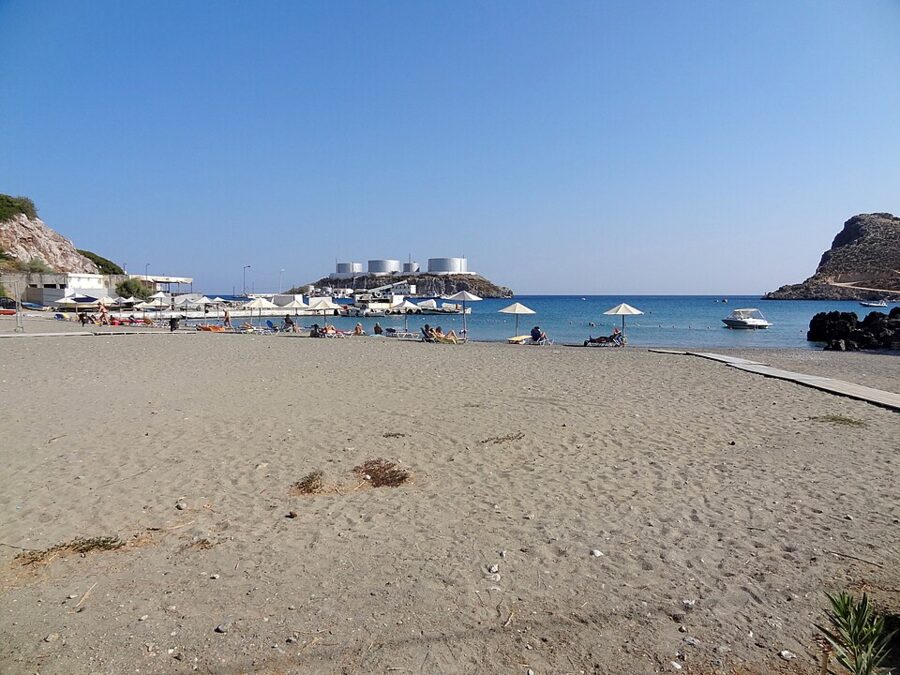
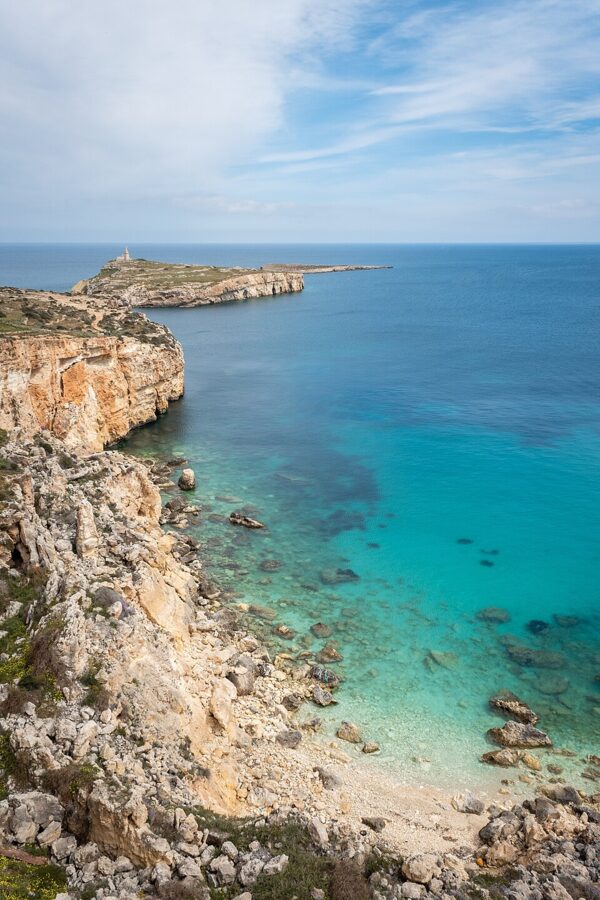
Rhodes: Acts names the island as a stop on the way to Jerusalem, and tradition lands Paul in the tiny St Paul’s Bay below Lindos. Crete: the ship sheltered at Fair Havens, today’s Kali Limenes on the south coast, before the fatal decision to sail on. Malta: the wreck, the viper and three months on the island, where Publius, its chief man, first took them in, with St Paul’s Bay and St Paul’s Islands as the traditional site.



Getting between them
Turkey: coaches, minibuses and the missing train
Turkey runs on intercity coaches. Every town has an otogar, usually on the edge of town, where big companies like Metro Turizm and Isparta Petrol Turizm run alongside small regional ones. For the last stretch to a village or ruin you change to a dolmuş or village minibus, paid in cash to the driver. Book long legs a day ahead in summer and at holidays.
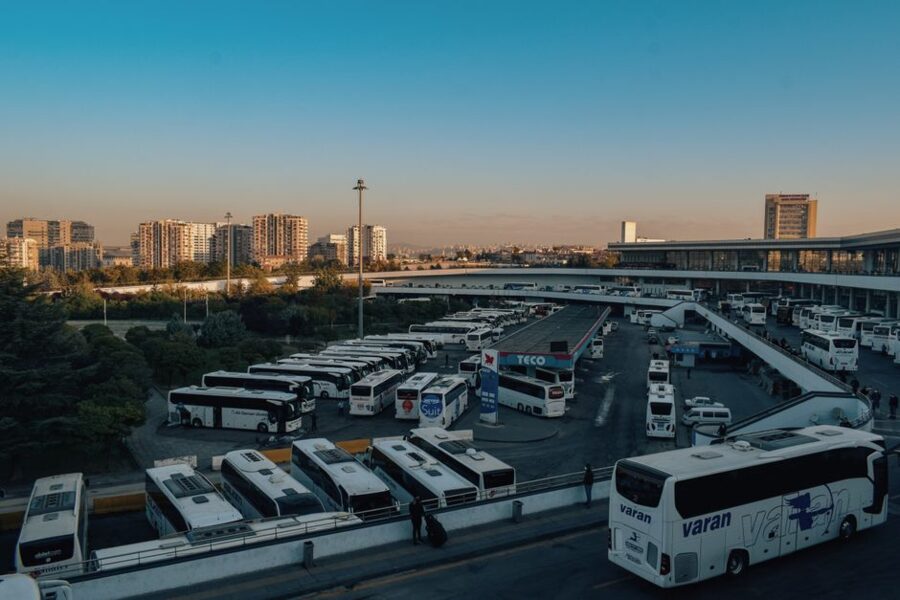
Rail is the exception. The high-speed YHT links Istanbul, Ankara, Konya and Karaman, which helps on the plateau. In the south the news is bad: the line from Mersin through Tarsus to Adana has had no passenger trains since April 2024. These are the coach legs that matter, with times and the cheapest fares listed for late 2026:
| Leg | Time | From (late 2026) | Departures a day |
|---|---|---|---|
| Adana to Tarsus | about 40 min | 350 TL | around 28 |
| Adana to Antakya | about 3 h 15 | 400 TL | around 100 |
| Antalya to Yalvaç (direct) | about 4 h | 800 TL | 8 |
| Yalvaç to Konya | about 2 h 40 | 400 TL | 17 |
| Antalya to Konya | about 5 h | 950 TL | more than 50 |
| Istanbul to Çanakkale | about 5 h | 1,050 TL | more than 150 |
| Çanakkale to İzmir | about 5 h 30 | 880 TL | around 50 |
| Selçuk to Söke | about 1 h | 300 TL | 8 |
| Fethiye to Kaş (for Patara) | about 2 h | 400 TL | 17 |
| Antalya to Demre (Myra) | about 3 h | 410 TL | around 20 |
Lira fares move fast, so treat these as a guide to the gap between legs rather than a promise.
Greece: KTEL coaches and Hellenic Train
Greek intercity buses are run by regional KTEL companies, each with its own terminal and timetable: KTEL Kavala for Philippi, KTEL Imathias for Veria, KTEL Korinthias for Corinth. In Thessaloniki most leave from the Macedonia terminal west of the center, and the timetables posted at the window beat anything online.
Hellenic Train runs the main line from Thessaloniki to Athens in about five hours, with advance fares from roughly €40–45, and regional trains from Thessaloniki to Veria. The line has had repeated works and timetable changes since 2023, so check the day before.
Crossing between Turkey and Greece
Three ways work on a budget. Overnight coaches from Istanbul to Thessaloniki take about ten and a half hours through the border at Kipoi and İpsala, with around eleven a day listed from 1,400 TL in late 2026 (FlixBus, Arda Tur, Alpar and Lüks Tempo among them). Short ferries cross from the Turkish coast to the Greek islands: Çeşme to Chios cost €30–40 one way in 2026, and Kuşadası to Samos, the port for Ephesus, about €37 in summer. From the islands, the big ships of Greek ferries run on to Piraeus.
Two routes with costs
A week in western Turkey
From the Dardanelles to the south coast, with Pisidian Antioch and Konya as a two-day extension.
| Day | Route and sites | Tickets |
|---|---|---|
| 1 | Istanbul to Çanakkale by coach | – |
| 2 | Coach to Ayvacık, minibus to Assos; or Ezine and a taxi for Alexandria Troas | Assos €11; Troas free |
| 3 | Coach to İzmir and on to Selçuk | – |
| 4 | Ephesus | €40 |
| 5 | Coach to Söke, minibus to Miletus, then south to Fethiye | €3 |
| 6 | Patara on the way to Kaş | €15 |
| 7 | Demre (Myra and St Nicholas), then Antalya | €13 + €17 |
| 8–9 | Perge; then coach to Yalvaç and on to Konya | €11 |
The tickets for the first seven days come to €99, or €110 with Perge. The coach legs priced in the table above come to about 3,000 TL for the week and 4,250 TL with the Yalvaç and Konya extension, before the minibus hops, the short run from İzmir to Selçuk and the long leg from Söke to Fethiye. Beds are the variable: in late 2026 dorms in Selçuk and Antalya’s old town were advertised from about €10–15.
A week in northern Greece and Corinth
| Day | Route and sites | Tickets |
|---|---|---|
| 1 | Thessaloniki: Upper Town and Vlatadon | free |
| 2 | Coach to Kavala, about 2 h | – |
| 3 | KTEL bus to Philippi and Lydia; back to Kavala | €10 |
| 4 | Back to Thessaloniki; afternoon in Veria | free |
| 5 | Train to Athens, about 5 h | – |
| 6 | Areopagus and the Ancient Agora | €20 |
| 7 | Ancient Corinth and Kechries | €15 |
Site tickets total €45, or less if you hit a free Sunday between November and March. Transport is about €18 each way to Kavala, €40–45 for the train if you book ahead, and about €10 each way to Corinth: roughly €100 for the main legs, plus the Veria trip and local buses. Greek beds cost more than Turkish ones.
When an organized pilgrimage makes sense
Every place above works by public transport. A group tour earns its price when you want Tarsus, Antakya, Konya and the Aegean in ten days, which is a lot of coach hours alone, or when you want a scholar or priest to read the texts with you at each stop. Before you book, check that the guides are licensed in each country, the group size, whether site tickets are included (well over €100 on a long route) and the cancellation terms.
Tickets, Sundays and what to wear
Both countries price these sites in euros; Greek ticket offices list reduced and free categories.
| Site | Ticket (2026) | Note |
|---|---|---|
| Tarsus: St Paul’s Well and Memorial Museum | no foreign price listed | Museum closed Mondays |
| Antakya: Church of St Peter | €8 | Open daily, 08:30–17:00 |
| Perge | €11 | Open daily, 08:00–17:00 |
| Pisidian Antioch | no foreign price listed | Yalvaç Museum closed |
| Ephesus | €40 | Terrace Houses extra |
| Alexandria Troas | free | Open daily |
| Assos | €11 | Open daily, 08:30–17:30 |
| Miletus | €3 | Includes the museum |
| Patara / Myra / St Nicholas, Demre | €15 / €13 / €17 | Open daily |
| Philippi | €10 | Free 1st and 3rd Sunday, Nov to Mar |
| Lydia’s baptistery, Veria Bema, Areopagus, Kechries | free | Open sites |
| Ancient Agora, Athens | €20 | Free 1st and 3rd Sunday, Nov to Mar |
| Ancient Corinth | €15 | Closed Tuesdays in winter |
Sundays and services
Greek Orthodox churches hold the Sunday liturgy in the early morning, usually finished by mid-morning, and you are welcome to stand at the back. The big day on this route is 29 June, the feast of Peter and Paul, with the Pavleia in Veria and services at the cave church in Antakya. In Turkey, Konya’s St Paul’s Church is the one regular Sunday Mass on the route. Remember that in Greece the archaeological sites close on Easter Sunday, which moves with the Orthodox calendar.
What to wear
For Orthodox churches and monasteries, and Catholic churches in Turkey, cover shoulders and knees; at a working monastery like Vlatadon, long trousers or a long skirt are the safe choice. At the ruins, the rule is practical: a hat, water and shoes with grip, because Roman paving and the Areopagus rock are slick, and almost none of the Turkish sites have shade.
The seven churches as an add-on
The seven churches of the Book of Revelation, Ephesus, Smyrna, Pergamum, Thyatira, Sardis, Philadelphia and Laodicea, lie in the same corner of western Turkey and share Ephesus with this route; Lydia, the first convert at Philippi, came from Thyatira. With a second week in Turkey, that loop is the natural follow-on.
If you only do one thing from all of this, take the KTEL bus from Kavala toward Drama, get off at Krinides, and walk the Via Egnatia through the middle of Philippi. Then catch the coach back down to the harbor at Neapolis, where the whole European half of the story began.