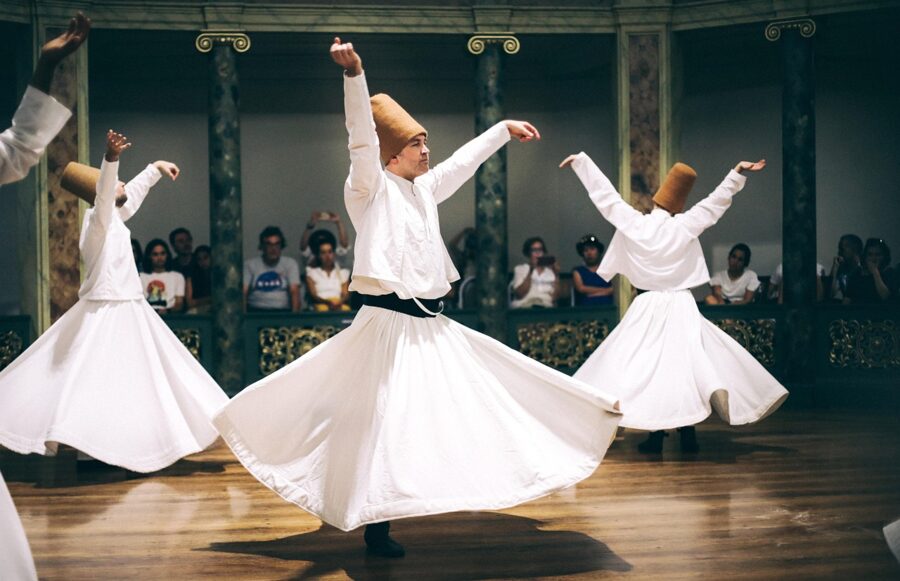
Three afternoons a week at 17:00, a stone gateway on a sloping back street in Kasımpaşa opens onto a wooden floor where dervishes have turned since the 17th century, and a seat costs 1,400 TL. Every evening at 19:00, across the Golden Horn in Sirkeci, a converted Ottoman bathhouse stages the same rite in an hour flat for 42 US dollars. Both are the Mevlevi sema, the turning prayer of Rumi’s followers, and both are a world away from the dervish who spins between courses at a dinner show.
Here is the short version for Istanbul in late 2026, with the detail further down:
- Hodjapasha Culture Center, Sirkeci: every day at 19:00, plus 17:00 on Tuesdays, Thursdays, Saturdays and Sundays. About 60 minutes. 42 US dollars on the venue’s own site (30 at 17:00), or from about 1,200 TL on Turkish ticket sites in November 2026. The easiest to fit in, two stops from Sultanahmet on the tram.
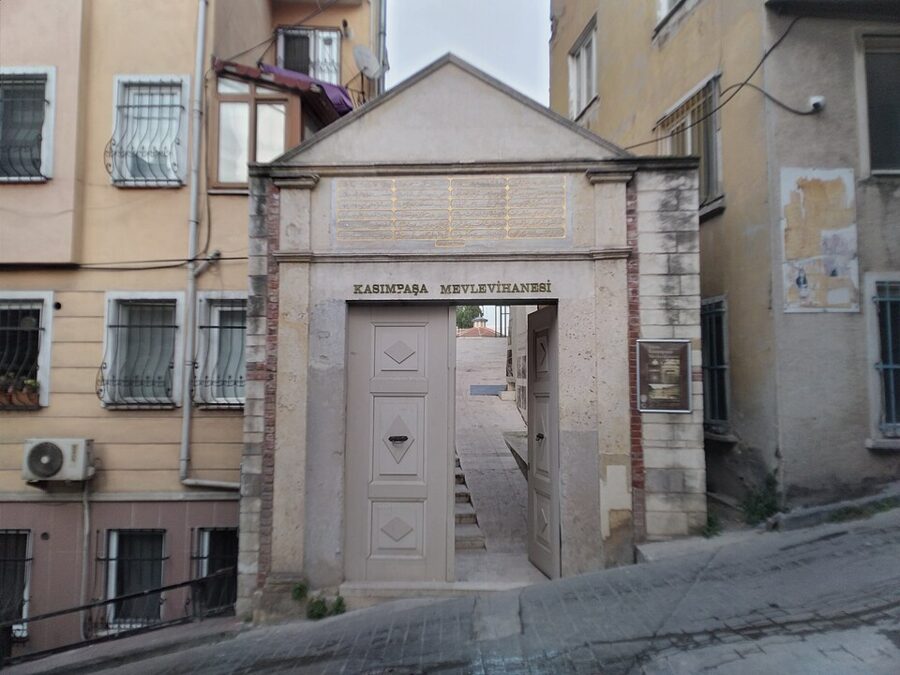
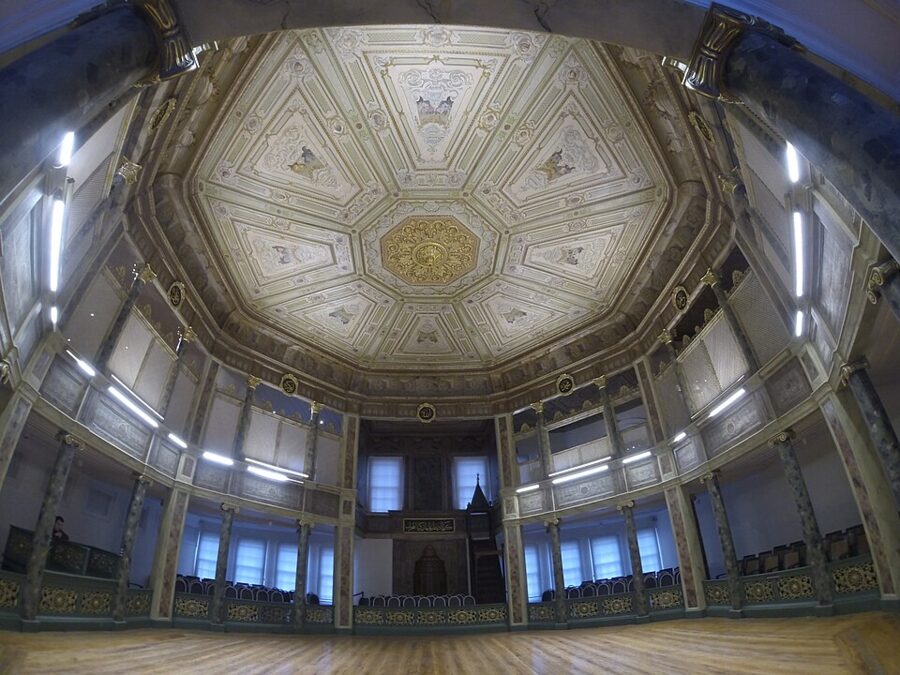
- Kasımpaşa Mevlevihanesi, Beyoğlu: Wednesdays, Fridays and Sundays at 17:00. About an hour, with a spoken introduction. 1,400 TL in November 2026, booked ahead through Turkish ticket sites. A working lodge building rather than a theater, and the closest thing in the city to a ceremony in its own home.
- Galata Mevlevihanesi, Tünel: a state museum (€7, closed Mondays) with the most beautiful sema hall in Istanbul, but no public ceremony on its 2026 listing. Go for the building, see the rite elsewhere.
The one-line test: a ceremony starts with a sung prayer and a reed flute, runs about an hour in white robes with live musicians, and ends without applause. A show has colored skirts, recorded music, a plate of food in front of you, and a bow at the end.


Contents
What the sema is
The word comes from the Arabic for “listening.” Sufis had long gathered to hear poetry and music, and some rose and turned when the words moved them; the Mevlevi order shaped that habit into a fixed ritual with its own music, dress and choreography. The dancers are semazens, the musicians the mutrip, and the whole rite, in the order’s own language, is a mukabele. Turkish ticket sites call it a sema töreni, a sema ayini or a semazen töreni, and all three mean the same thing.
Rumi, and an order he did not found
Jalal al-Din Rumi, called Mevlana (“our master”) in Turkey, was born in 1207, in Balkh according to the traditional account, though the scholar Franklin Lewis argues for Vakhsh in present-day Tajikistan. His family fled ahead of the Mongols and settled in Konya, the Seljuk capital, in 1228. He was a preacher and teacher there until a wandering dervish, Shams of Tabriz, arrived in 1244 and turned his life over. Out of that friendship and its loss came the poems of the Divan-i Shams, and later, at a disciple’s urging, the long Masnavi.
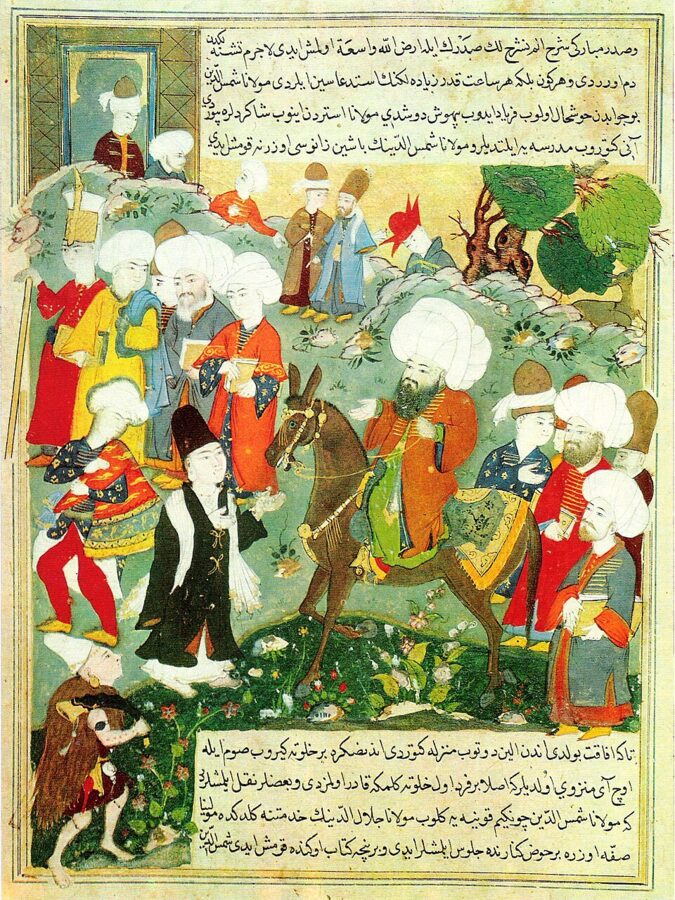
Rumi turned in ecstasy, sometimes in the street, but he never wrote a rulebook. He died in Konya on 17 December 1273, and it was his son Sultan Veled, with his disciple Husameddin Çelebi, who organized his followers into an order and built the tomb under its green dome. The ceremony was given its set form much later: in the 15th century under Pir Adil Çelebi, with final changes by Pir Hüseyin Çelebi in the 17th.
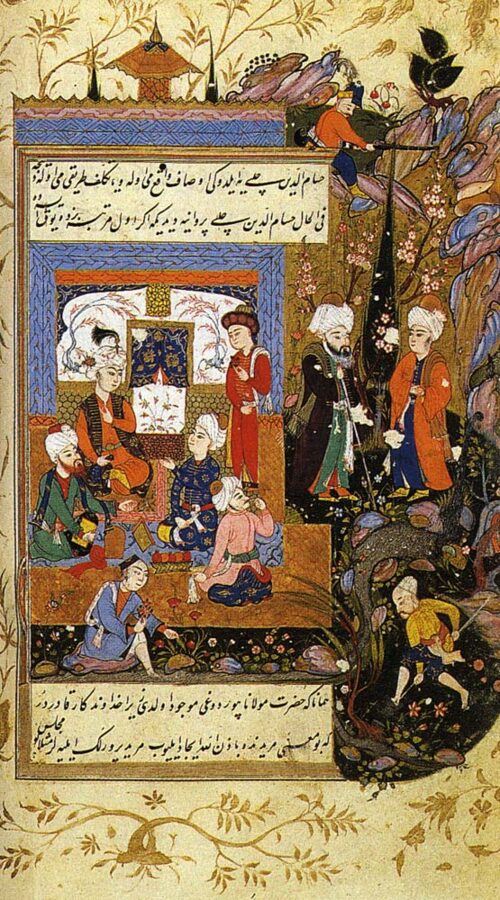
The ceremony, part by part
A full sema follows the same order wherever it is done properly, and knowing it turns an hour of spinning into something you can follow:
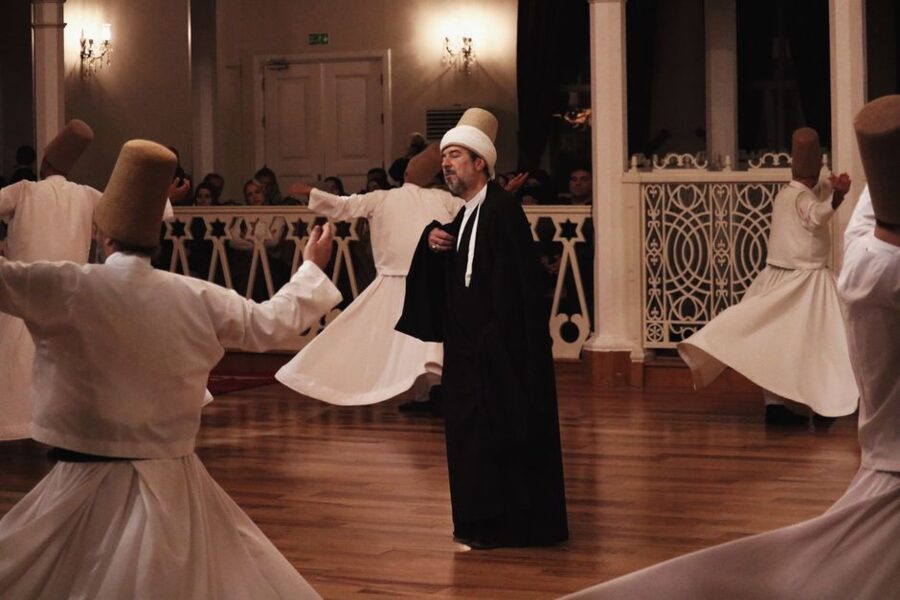
- Entry. The musicians take their places, then the semazens in black cloaks, then the sheikh, who stands on a red sheepskin (the post) that stands for Rumi’s own seat.
- The naat. A solo singer performs the Naat-ı Şerif, a hymn in praise of the Prophet set by the 17th-century composer Itri. No instruments, no movement.
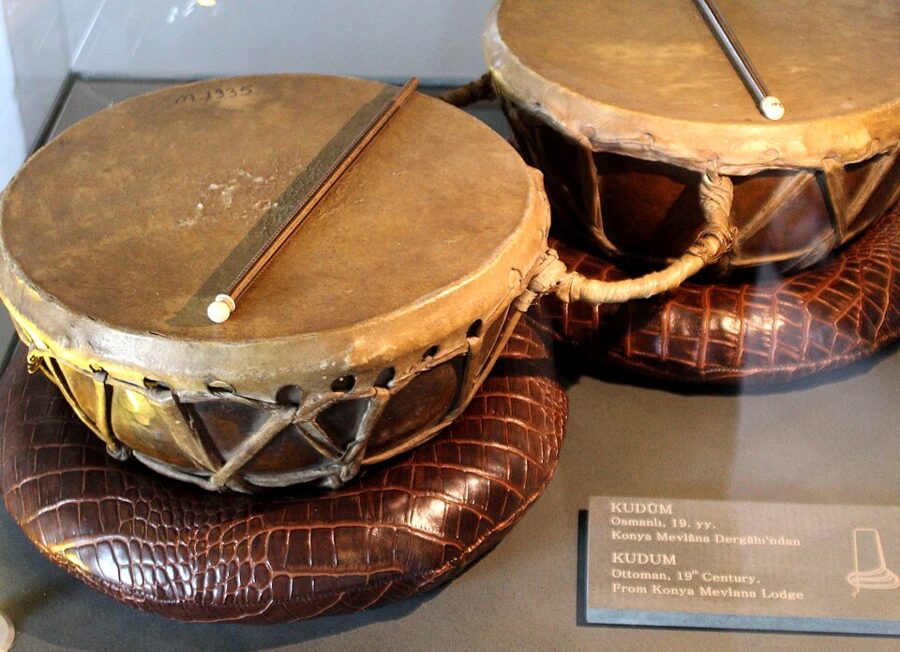
- The drum. A single strike of the kudüm, the small kettle drums, stands for the divine command “Be!” that began creation. Then the ney, the reed flute, plays a free improvisation, the breath that gave creation life.
- The Sultan Veled walk. The sheikh and dervishes circle the floor three times, slowly, bowing to one another at the post on each pass. This is the Devr-i Veledi, named for Rumi’s son.
- The four selams. The dervishes drop their cloaks, kiss the sheikh’s hand, and one by one unfold their arms and begin to turn. There are four movements, each with its own music and a pause between; the order describes them as birth into truth, rapture at creation, the dissolving of the self in love, and the return to service. In the fourth the sheikh himself joins in.
- The close. A recitation from the Quran, usually beginning with the verse “wherever you turn, there is the face of God,” then the Fatiha, a closing prayer, and a greeting from the sheikh as he leaves.
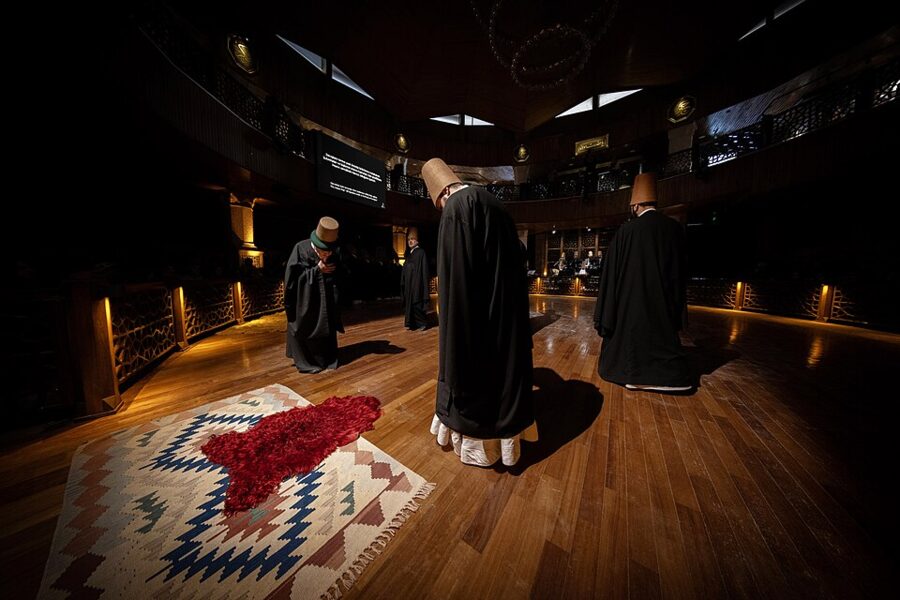

The semazenbaşı, the senior dancer, walks among the turning dervishes and keeps them spaced, with a glance or a step rather than a word. Watch him. He is the one who notices a dancer tiring and draws him out of the circle before anyone in the audience does.
The music
The Mevlevi ayin, the long composition played for the sema, is one of the great forms of Ottoman classical music, and the order trained many of its best composers. UNESCO’s description of the rite asks for at least a singer, a ney player, a kettledrummer and a cymbal player; a full ensemble may add the rebab, tanbur, oud, kanun or kemençe. Each ayin is in one makam (mode), and the program for a given night names it: the Konya ensemble spent October 2026 on works in Karcığar, Bestenigâr and Hicaz.

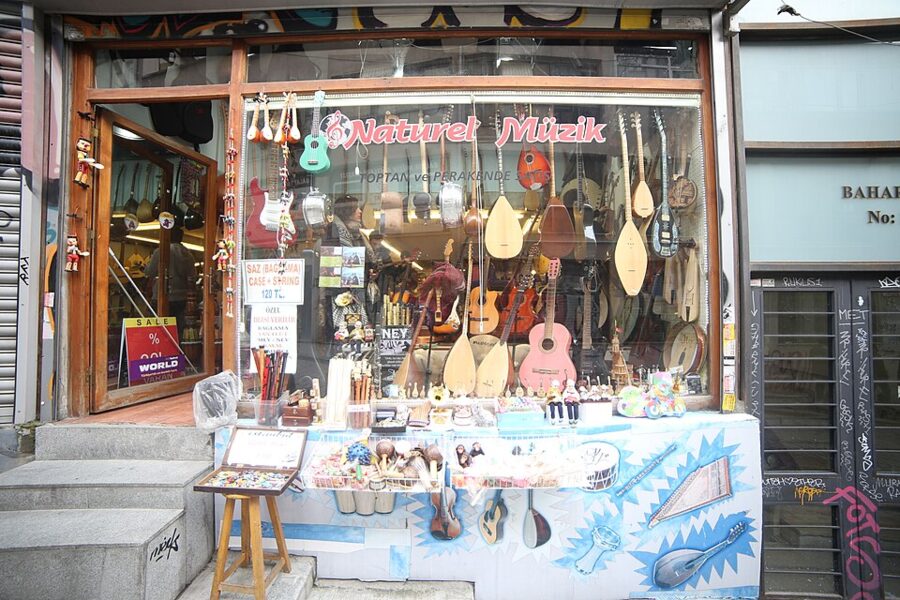
The ney carries the most meaning. The Masnavi opens with it: a reed cut from its bed, lamenting the separation, which is the soul away from God. Galip Dede Caddesi, the street that runs downhill from Tünel past the Galata lodge, is lined with instrument shops, and it is the place to look if the sound stays with you.

Hat, cloak and skirt
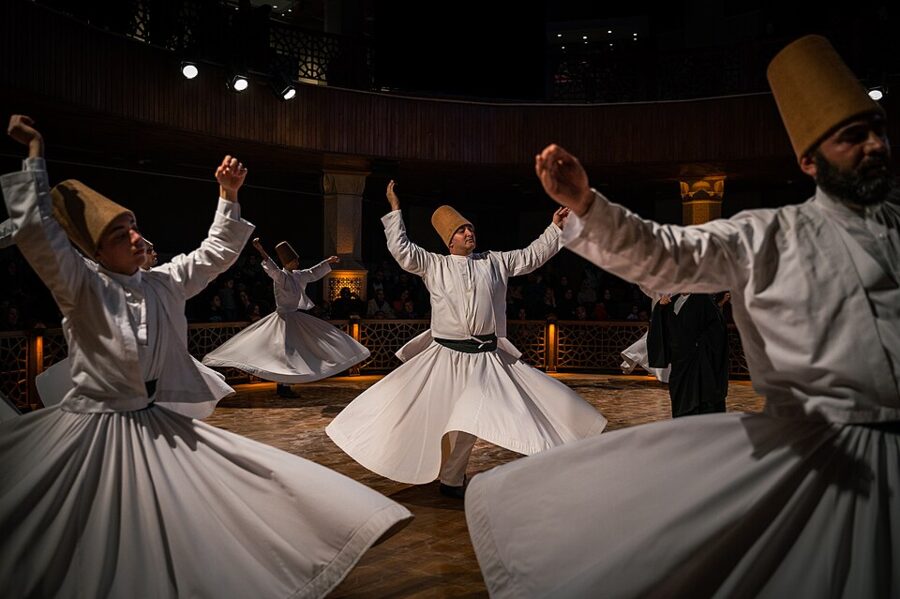
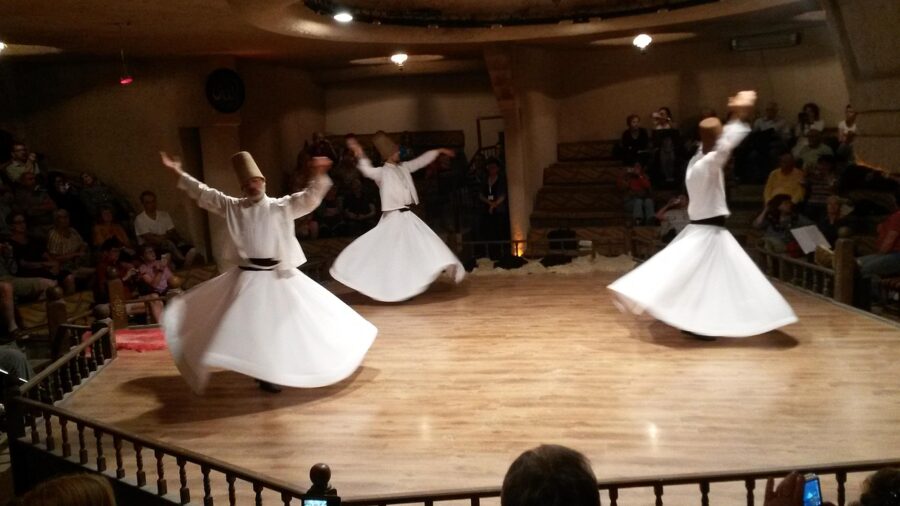
Everything a semazen wears is about the death of the ego, the self that has to be left behind. The tall felt hat, the sikke, is its tombstone. The white skirt, the tennure, is its shroud, and the black cloak, the hırka, its grave; dropping the cloak before the first selam is a rebirth.
Each dervish enters with arms crossed over the chest, hands on the shoulders, a shape the order reads as the figure one, for the oneness of God. As he turns, the right palm opens upward to receive and the left turns down to pass on what he has received. He turns to the left, counterclockwise, around his own left foot, and around the hall as a whole, the way the order sees everything in creation turning, from atoms to planets.

UNESCO proclaimed the Mevlevi sema a masterpiece of humanity’s oral heritage in 2005 and inscribed it on the Representative List of the Intangible Cultural Heritage in 2008. Its file records that dervishes once trained for 1,001 days in a lodge before they joined the order, then went back to their jobs and families.
From the lodges to the stage
The order spread with the Ottoman state. By the 19th century there were Mevlevi lodges (mevlevihane) from the Balkans to Cairo, sultans endowed them, and Selim III, who played the ney and composed for the order, is the reason many call his reign its golden age.
Istanbul’s lodges
Galata came first, founded in 1491 on land given by İskender Pasha, an official of Bayezid II, as a hunting estate above the harbor. Yenikapı followed around 1597, outside the land walls, and grew into the largest lodge in the city; the composers Itri and İsmail Dede Efendi and the poet Şeyh Galip all trained there. Kasımpaşa, the third, was built in the first half of the 17th century, and later lodges rose at Bahariye on the Golden Horn and at Üsküdar.

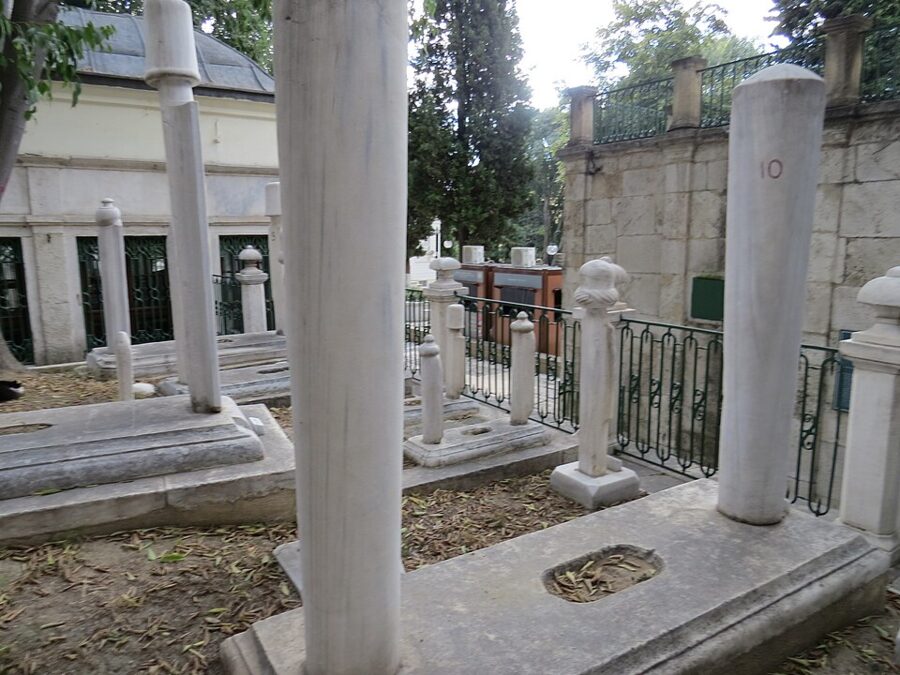
Each was a working community with cells for the dervishes, a kitchen where novices did their service, a library, a graveyard and a sema hall. The dervishes were not monks: after their training most went home to their trades and families and came back for the ceremonies.
1925
The young Republic closed them all. Law 677, passed on 30 November 1925, shut every tekke, zaviye and tomb shrine in Turkey, abolished the titles of sheikh and dervish, and banned the dress that went with them. It is still in force, and since 1982 the constitution has protected it as one of the reform laws.
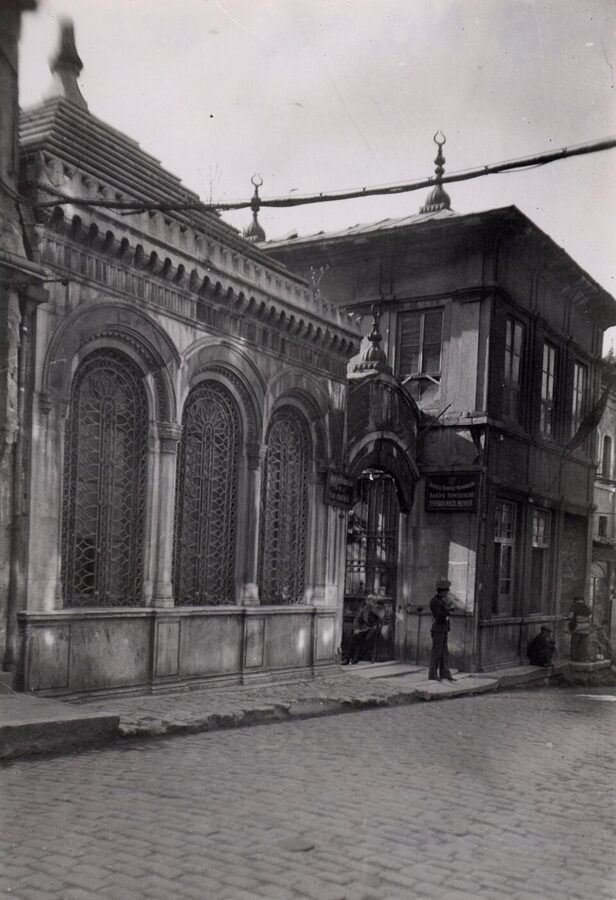
The Konya lodge reopened in 1926 as a museum of antiquities and was renamed the Mevlana Museum in 1954. Galata’s main building became a school and staff housing. Yenikapı was used as a student dormitory, burned in 1961, was left to the weather after a second fire in 1997, and was restored only between 2005 and 2010.
The revival
Konya began to hold commemorations on 17 December in the 1940s, at first concerts of excerpts from the ayins with no turning. In the 1950s the government allowed the full sema again at the December ceremonies, performed in public as culture rather than worship. The first dancers were old Mevlevis who had learned before 1925; from 1963 the semazens came from courses run by a Konya tourism association.
That is the sema you see today: a rite kept alive by state ensembles, foundations and cultural centers, legal because it is presented as heritage. UNESCO’s own file is frank about the cost. It notes that decades of transmission in private kept the music better than the spiritual training, and that many ceremonies are now shortened and simplified for tourist audiences.

Where to see a sema in Istanbul
Many halls and agencies sell “whirling dervish ceremonies” in Istanbul, and the names and times on reseller pages change often. The venues below are the ones with dated 2026 schedules from the venue or the ticket systems that sell for it.
| Venue | When (late 2026) | Length | Price | What it is |
|---|---|---|---|---|
| Hodjapasha Culture Center, Sirkeci | Daily 19:00; also 17:00 Tue, Thu, Sat, Sun | About 60 min | 42 US dollars (17:00: 30); from about 1,200 TL on Turkish ticket sites | Full sema with live music in a restored hamam, staged for visitors |
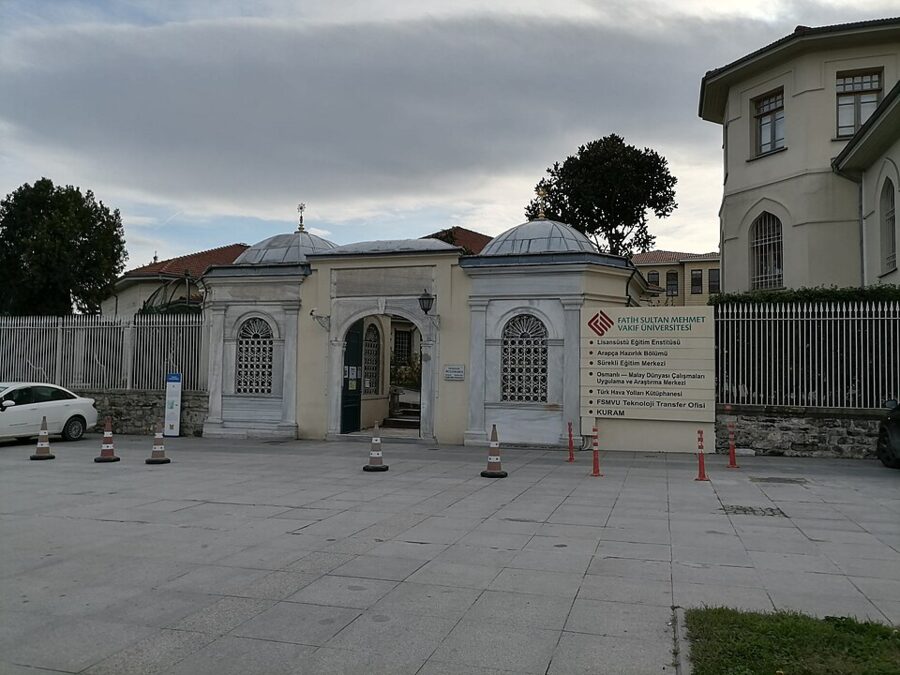
| Kasımpaşa Mevlevihanesi, Beyoğlu | Wed, Fri, Sun 17:00 | About 60 min | 1,400 TL (November 2026) | Narrated sema in a historic lodge, run by a foundation |
| Galata Mevlevihanesi Museum, Tünel | 09:00–18:30, closed Mon; last tickets 17:30 | Allow 45 min | €7 | Museum; no public sema on its 2026 listing |
Hodjapasha Culture Center, Sirkeci
This is the one most visitors see, and for good reason: it runs every night of the year, it is a short walk from the Sirkeci stop on the T1 tram and the Marmaray, and the ensemble is good. The hall is part of a 15th-century double hamam named for Hoca Sinan Pasha, tutor and vizier to Mehmed the Conqueror, and the dervishes turn under the old bathhouse domes.

The evening runs like a compact sema: a five-minute introductory video, about ten minutes of Sufi music, then a 45-minute ceremony with the naat, the walk and the four selams. The venue’s own site sells tickets at 42 US dollars for adults and 24 for children aged 7–12, with a cheaper 17:00 performance at 30 dollars on Tuesdays, Thursdays, Saturdays and Sundays. Turkish ticket sites list the same ceremony from about 1,200 TL in November 2026, and that is usually the cheapest legitimate seat.
Check-in is 30 minutes before the start and seats go in booking order, so book a day or two ahead in summer. Children under 7 are not admitted, photography and video are banned during the ceremony, bottled water is free, and the venue says it is not suitable for wheelchairs. The same hall hosts “Rhythm of the Dance,” a folk and belly dance revue, on Tuesday, Thursday and Saturday nights at 20:30; it is a different show, so read your ticket.

Is it a ceremony or a show? The venue itself answers that it is a spiritual ceremony and tells anyone who wants entertainment to book the dance revue instead. The rite is complete and the music is live; what you lose is the setting, since you are in a theater seat in a former bathhouse rather than a lodge.
One warning applies to every venue. Agency and app listings described as “a ceremony near Hagia Sophia” can turn out to be a Hodjapasha ticket at a different hour, and buyers have reported exactly that. Book on the venue’s own site or a Turkish ticket system and you know where and when you are going.
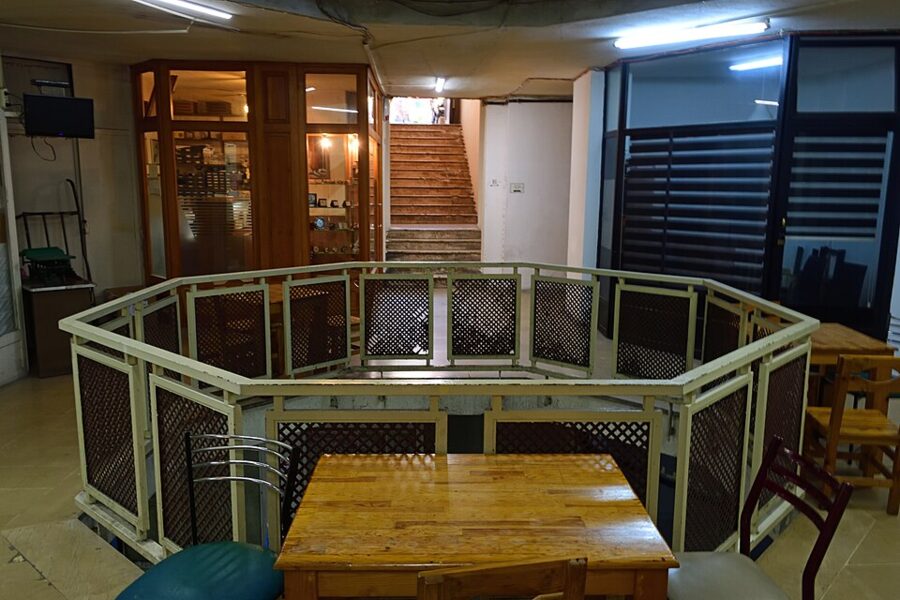
Kasımpaşa Mevlevihanesi, Beyoğlu
If you have time for only one sema and want it in a real lodge, come here. The Kasımpaşa lodge was rebuilt under Selim III and his mother Mihrişah Sultan, and the 1834 inscription over the courtyard gate is in the hand of the calligrapher Yesarizade Mustafa İzzet, with the tughra of Mahmud II. It is run today by the İnsan ve İrfan Vakfı, a foundation that also works at the Sünbül Efendi lodge in Kocamustafapaşa and says plainly that it does not want the rite turned into a commercial show.
Ceremonies run on Wednesdays, Fridays and Sundays at 17:00, about an hour long, and they open with a short spoken explanation of why the semazens turn, what the music says and what the clothes mean. Tickets were 1,400 TL in November 2026 through Biletinial and Passo, the main Turkish ticket systems, and a reservation is required; bought tickets cannot be refunded or changed. December dates were already on sale in late November.
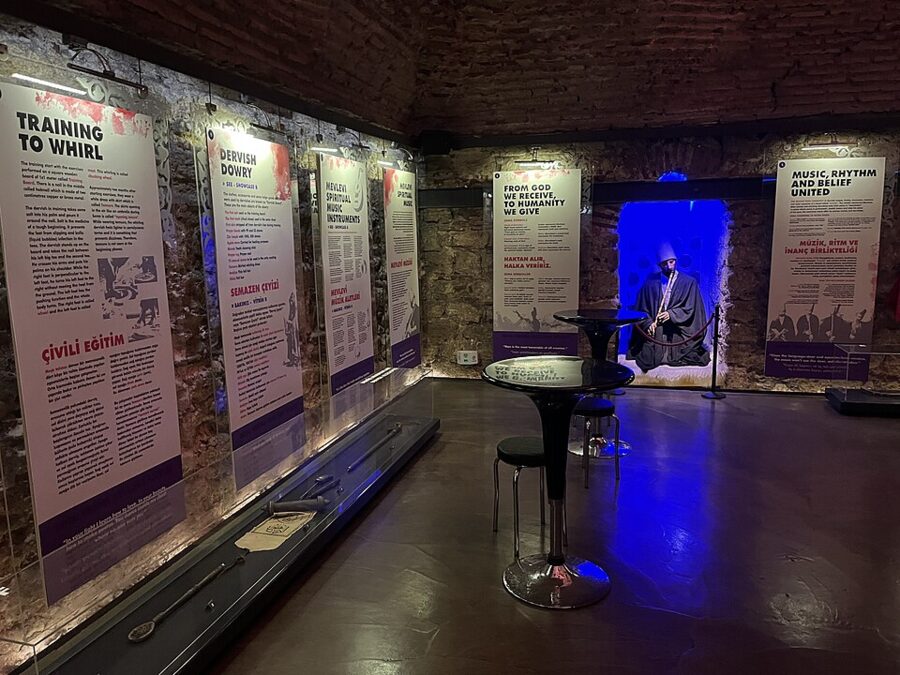
The house rules are those of a place of worship: no photos, no video, no applause, phones silent, and shoulders and knees covered. Before or after, you can see the lodge’s exhibition of tekke objects, a display of a dervish’s trousseau, and an upstairs gallery of calligraphy and miniature painting. There is a lift, the hall is wheelchair accessible, and an information leaflet comes in Turkish, English, Arabic and Persian.
The lodge is at Keramet Sokak 17 in Kasımpaşa, below the ridge of Beyoğlu on the Golden Horn side. The M2 metro to Şişhane and a walk downhill is the simplest route; give it extra time the first time, as the back streets are steep and badly signed.
Galata Mevlevihanesi: the museum
The oldest lodge in the city sits at the top of Galip Dede Caddesi, a short walk from the upper station of the Tünel funicular. Through the gate are the tombs of Şeyh Galip and Halet Efendi, a library and fountain, the graveyard with its hat-shaped stones, and the sema hall with its walnut floor, the galleries for the musicians and the sultan, and calligraphy panels on the walls.
The museum opens 09:00–18:30, closed on Mondays, with the ticket office shutting at 17:30, and costs €7. In late 2026 a temporary exhibition was being installed, and the ministry listing said only the tombs, the sema hall, the temporary display in the old administrative building and part of the garden were open. Older guides mention a Sunday sema here; the museum’s 2026 listing shows none, so treat it as a museum visit and see the ceremony elsewhere.
The other lodges, and the halls in Sultanahmet
Yenikapı, the grandest of the Istanbul lodges, now belongs to a university; it has hosted the occasional concert or ceremony, but it is not a regular venue. Several smaller halls in and around Sultanahmet, in old medreses and mansions near Hagia Sophia, also stage a sema for visitors, sold mostly through tour apps. Their days and prices shift through the year, so if you choose one, check that the listing names the building, the hour and live musicians, and buy directly where you can.

Ceremony or show: how to tell
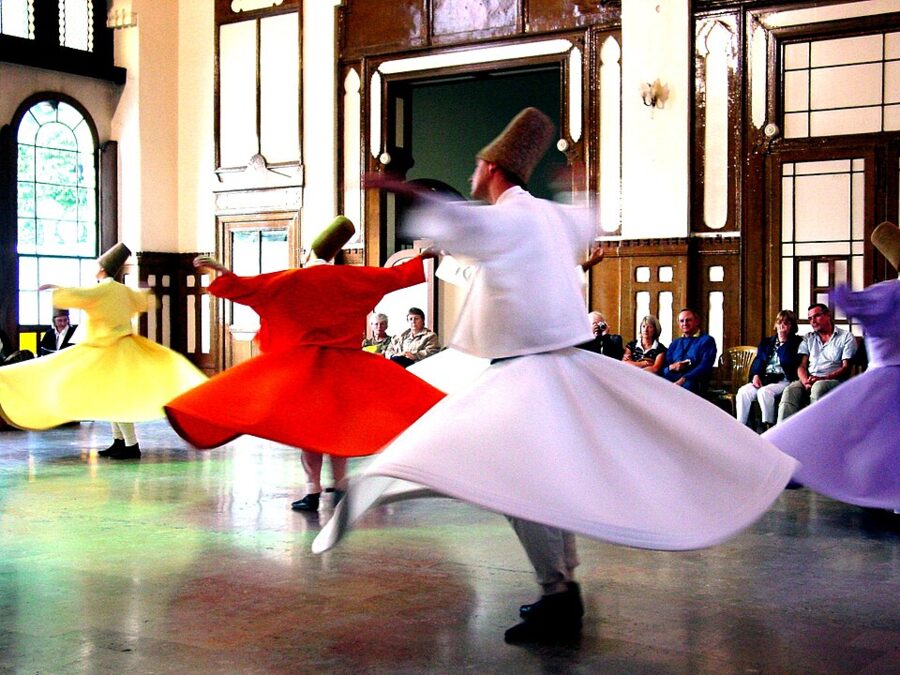
The dervish is the most-used image of Turkish tourism, and you will see him on dinner boats on the Bosphorus, in hotel lobbies and at the end of a Turkish night, between the folk dancers and the belly dancer. Those are entertainment, and there is nothing wrong with enjoying one as such. They are not the sema, and the difference is easy to spot:
- Music. A ceremony has live musicians, at least a ney and a kudüm and a singer. A recording or a backing track means a show.
- Length and order. A ceremony runs about an hour and follows the sequence above: naat, drum, walk, four selams, recitation. A show gives you five minutes of turning between other acts.
- Dress. White tennure, black cloak, brown or camel felt sikke. Colored skirts, skirts that light up or a dancer who lifts a second skirt over his head are stagecraft.
- Numbers. A ceremony has several semazens and a sheikh on a red post. A lone spinner is a soloist.
- The end. Semazens leave in silence and do not bow to the audience. If the dancer bows and the room claps, you have been to a show.
- Food. Nothing is served during a sema. A set menu means a dinner show.
How to behave
Treat it as a prayer you are allowed to attend, because that is what it is. The rules are short:
- No applause, not at the end of a selam and not at the end of the ceremony. When the semazens and sheikh have left, the evening is over; stand and go.
- No photos or video during the ceremony, and no flash under any circumstances. Some halls allow a short photo moment after the close; wait to be told.
- Stay seated until the semazens have left the floor, and do not walk in front of the rail.
- Phone off, not on vibrate. The silence between selams is part of the rite.
- Dress modestly: shoulders and knees covered, as for a mosque. The Istanbul venues ask nothing more, but carry a scarf for the Mevlana Museum in Konya, which is a shrine as well as a museum.
- Arrive early. Hodjapasha checks in from 30 minutes before; Kasımpaşa starts on the hour and may not admit latecomers.
You do not need to be Muslim to attend, and nobody will ask. The invitation most often quoted for the sema, “come, come, whoever you are,” is usually credited to Rumi, though scholars trace it to the earlier Persian Sufi Abu Said Abu’l-Khayr; either way, it describes the audience. What is asked of everyone is attention.
Children are a judgment call. Hodjapasha does not admit under-7s, and an hour of slow music in near silence is a long time for an older child too; a 10-year-old who has had the four selams explained beforehand usually does fine. During Ramadan, start times can move later to fall after the evening meal, so check the time on your ticket.

Konya: the sema at home
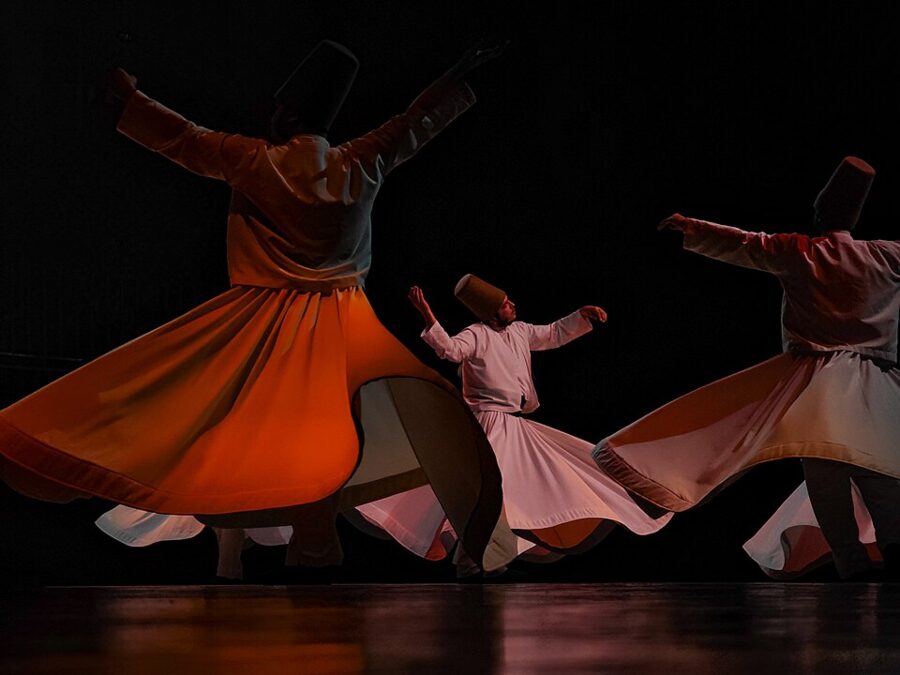
Istanbul has the lodges, but Konya has Rumi. The city on the Anatolian plateau is where he lived, taught and is buried, where the order had its mother lodge, and where the state ensemble performs the rite every week of the year for a fraction of Istanbul prices.
The Mevlana Museum
Rumi’s tomb under the fluted green dome was built in 1274, the year after his death, and the lodge grew around it: the sema hall, a mosque, dervish cells, a kitchen and a fountain court, most of it from the 16th century. The museum is free, open every day 09:00–17:00 with last entry at 16:30, and opens at 10:00 on Mondays. Inside are the tomb, manuscripts of the Masnavi, Mevlevi instruments and dress, and the cells with life-size figures of dervishes at their work.
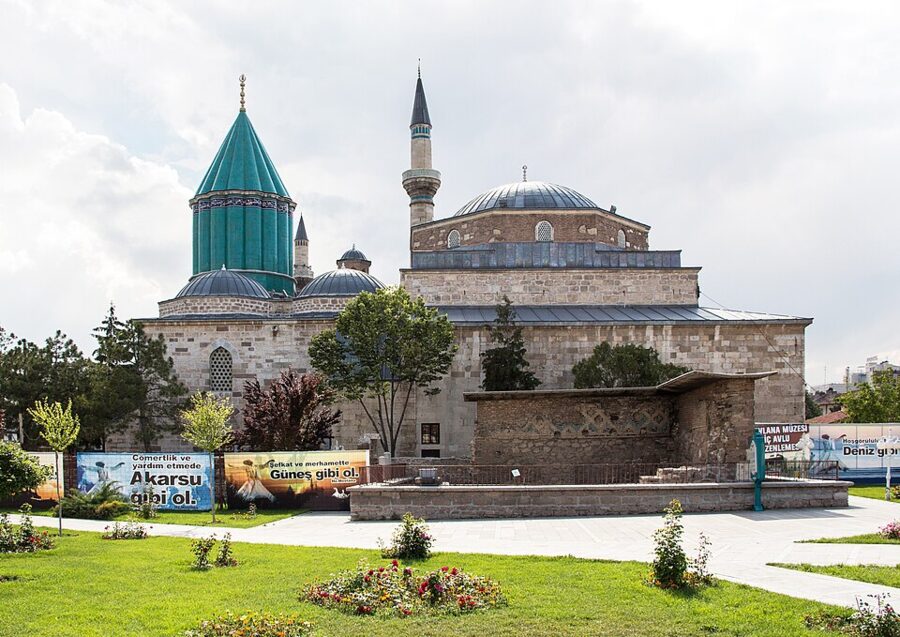

It is a shrine as well as a museum: keep your voice down at the tomb and do not photograph people at prayer.
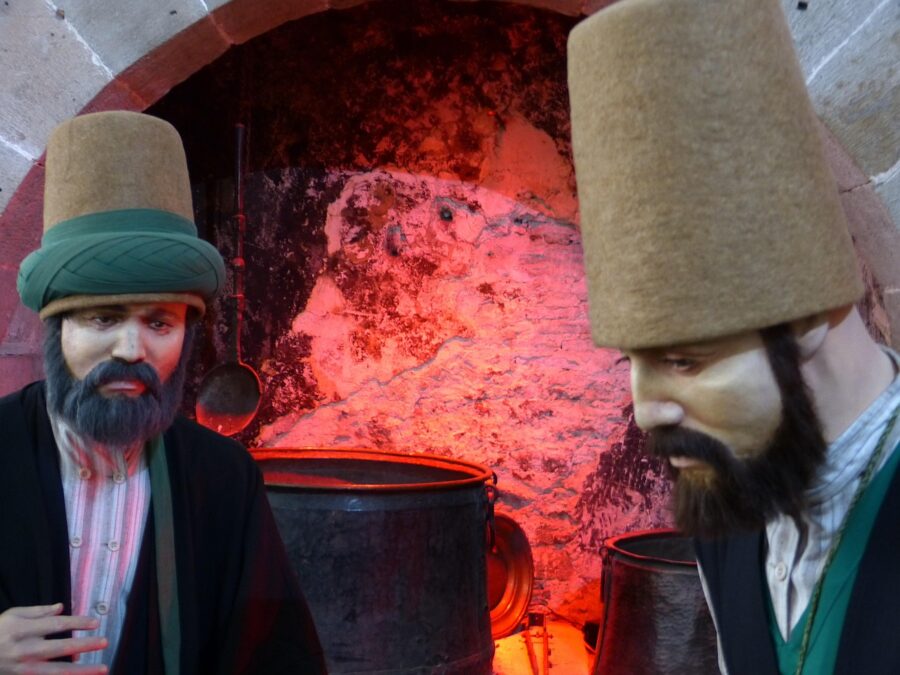
Every Saturday at the Mevlana Cultural Center
The Konya State Turkish Sufi Music and Sema Ensemble, a Ministry of Culture company, performs a full sema every Saturday at 19:00 at the Mevlana Cultural Center, a short walk from the museum. Tickets are sold on Biletinial from 200 TL in late 2026, and the program names the ayin for each week. During Ramadan the start moves to 21:00, after the fast is broken.
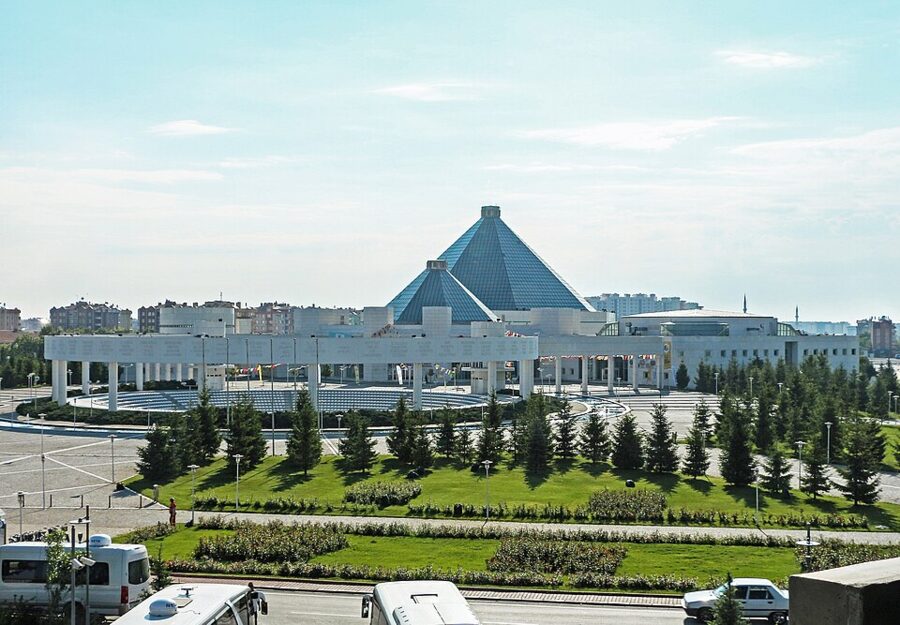

One Hodjapasha ticket bought on a Turkish site costs as much as six seats at the Konya Saturday sema.
Şeb-i Arus, 7–17 December 2026
Rumi’s followers speak of his death as his wedding night, his union with God, and the Persian phrase for it, Şeb-i Arus, names the commemoration held in Konya every December. In 2026 it marks the 753rd anniversary, runs from Monday 7 to Thursday 17 December under the theme “İnsan Vakti” (“the time of the human”), and centers on the sema hall of the Mevlana Cultural Center.
Ticket sales opened on Biletinial on 9 October 2026, with prices from 300 TL, and Turkish press reported the sema tickets sold out soon after. The session plan on the sales page:
| Date (December 2026) | Sema |
|---|---|
| Mon 7 | 19:00 |
| Tue 8 – Fri 11 | 20:00 |
| Sat 12 and Sun 13 | 14:00 and 20:00 |
| Mon 14 – Wed 16 | 20:00 |
| Thu 17 | 14:00 |
Sold out is not the end of it. The Ministry of Culture has said the other concerts, talks and exhibitions held around the city during the commemoration are free, and the Konya ensemble’s regular sema has dates on sale either side of it, from late November into January. Konya’s hotels fill for these ten days, so book a bed before you chase a ticket.
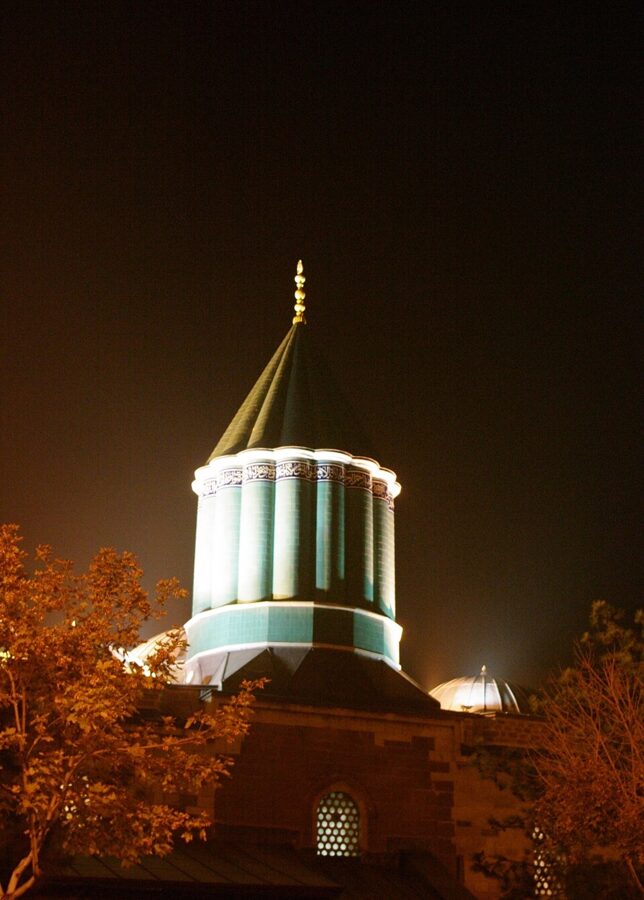

Getting to Konya
The high-speed train is the way to do it. Direct YHT services run between Istanbul and Konya in about 4 hours 40 minutes, changing direction at Eskişehir without a change of train, and the January 2026 tariff put the Istanbul–Konya fare at 1,355 TL. Book through TCDD Taşımacılık, the state rail operator, and book early for December, when trains fill with the commemoration crowd.
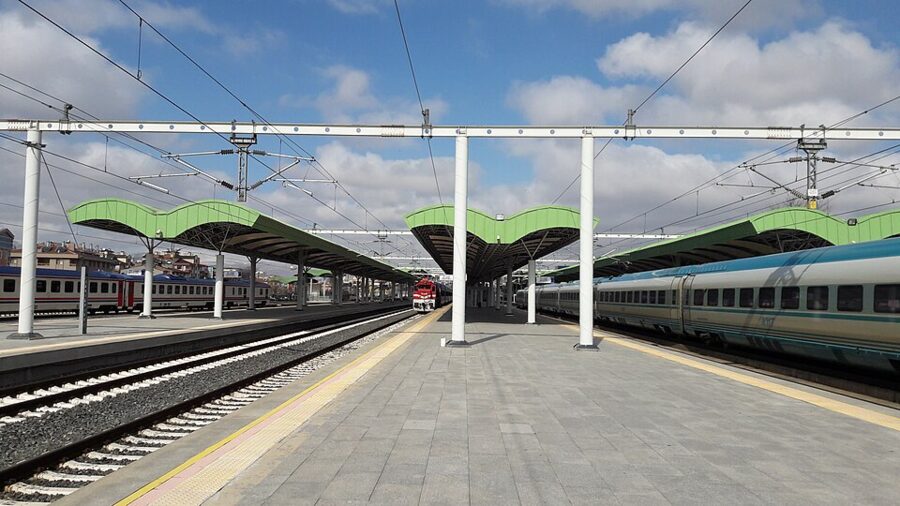

From either station, Konya’s trams run to the Mevlana quarter in the old center, and the museum and cultural center are both walkable from there. Overnight buses from Istanbul take around ten hours and cost more than the train, which makes them a poor deal unless the trains are full.
Which one, then
For a single evening in Istanbul with no planning, take the 19:00 at Hodjapasha, buy the ticket on a Turkish site, and spend the half hour before check-in in the foyer exhibition. If you can be in Beyoğlu on a Wednesday, Friday or Sunday afternoon, take Kasımpaşa instead: the lodge, the introduction and the house rules make it the more complete experience for about the same money.
Visit Galata for the building, ideally on the same day as Kasımpaşa, since they are on the same side of the Golden Horn. And if Konya fits your route, plan it for a Saturday, or for the December week if you can find a ticket and a bed.
Whichever you choose, book the seat before the day, turn the phone off at the door, and keep your hands in your lap when the last semazen leaves the floor. Then walk out into the evening: from Sirkeci it is two stops on the T1 back to Sultanahmet, and from Kasımpaşa an uphill walk to Şişhane and the metro home.