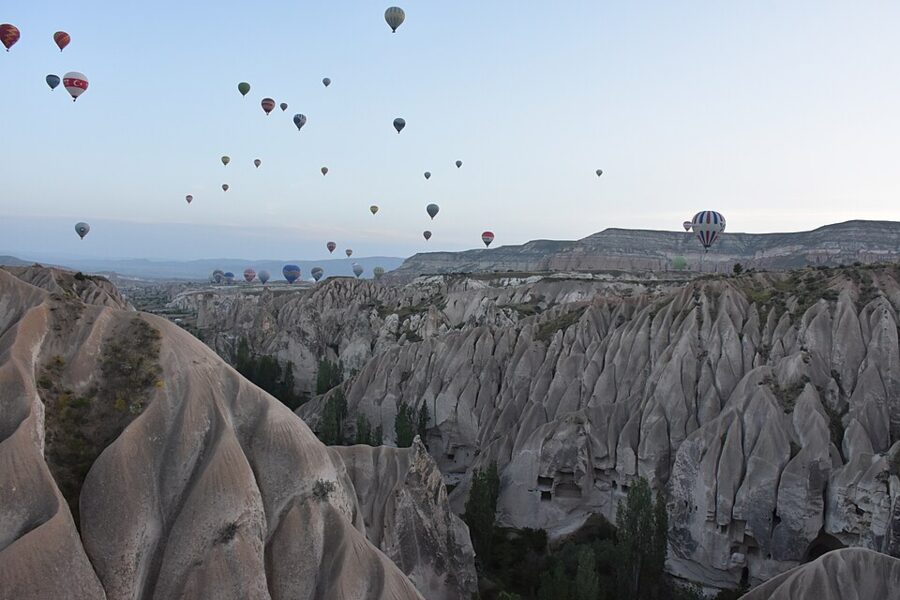
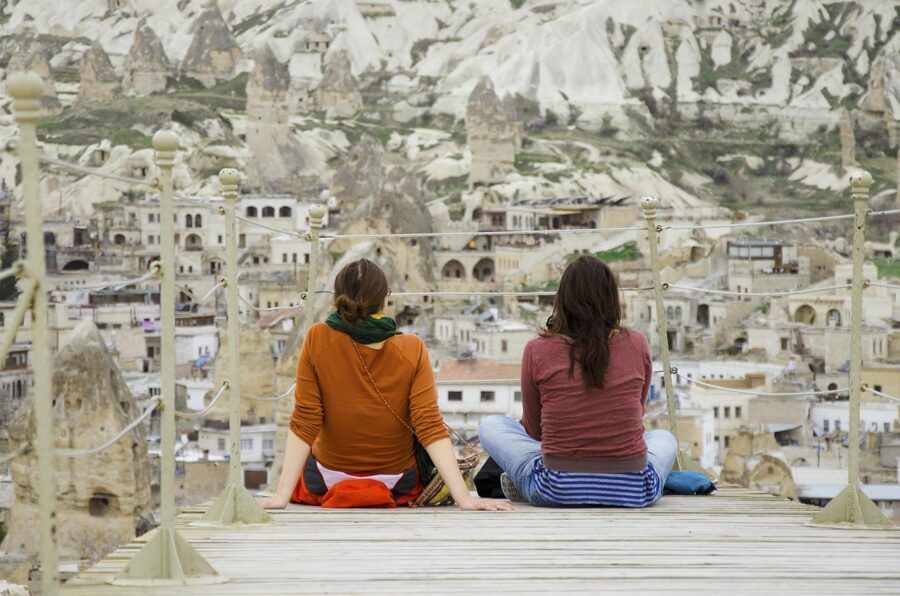
About 754,000 people paid to fly over Cappadocia in 2025. Plenty of others stood on the ridge above Göreme on the same mornings, watched well over a hundred balloons lift out of the valleys at first light, and paid nothing. That trade sets the terms for the whole region: the expensive things here are optional, and the best of it is free, on foot, and a short walk from a cave dorm.

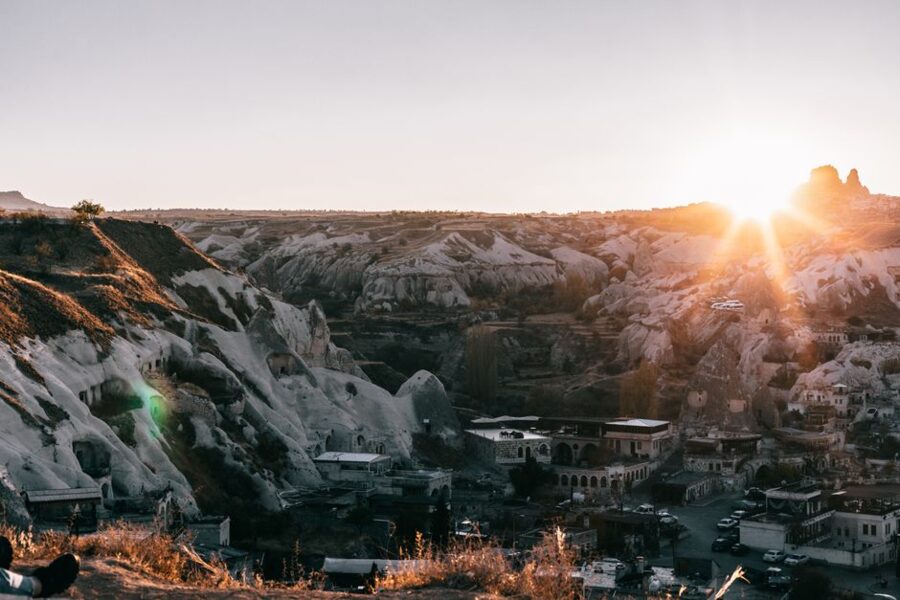
Cappadocia is a volcanic plateau in central Turkey, around the provincial capital Nevşehir, where soft volcanic rock has weathered into cones, pillars and ravines. For more than a thousand years people carved homes, churches, dovecotes and whole underground towns into that rock. Göreme sits in the middle of it all, and it is where I’d base a budget trip: the bus station is in the village, the trails start at the end of its lanes, and most of the region’s dorm beds are here.
Give it three days, four if you can. Two go on walking, one on the churches and an underground city, and the spare morning is for the balloons, because the wind grounds them more often than the brochures say: in 2025 they flew on 223 days of the year. If Cappadocia is one stop on the classic Turkey itinerary, end the loop here, because the night bus back to Istanbul is the easiest long leg in the country.

Contents
- The rock, the volcanoes and the towns
- Getting there and getting around
- The valleys on foot
- The Göreme Open Air Museum and the rock churches
- The underground cities
- Balloons: watching for free, and flying
- Day trips and short stops
- Where to sleep cheaply
- Eating cheaply
- Money, manners and the usual tricks
- Three days in Cappadocia
- What three days cost
- Moving on
The rock, the volcanoes and the towns
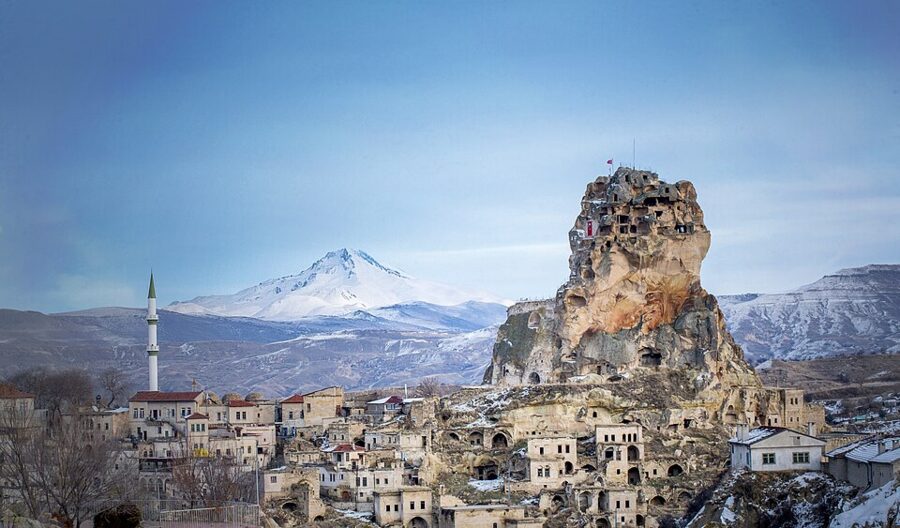
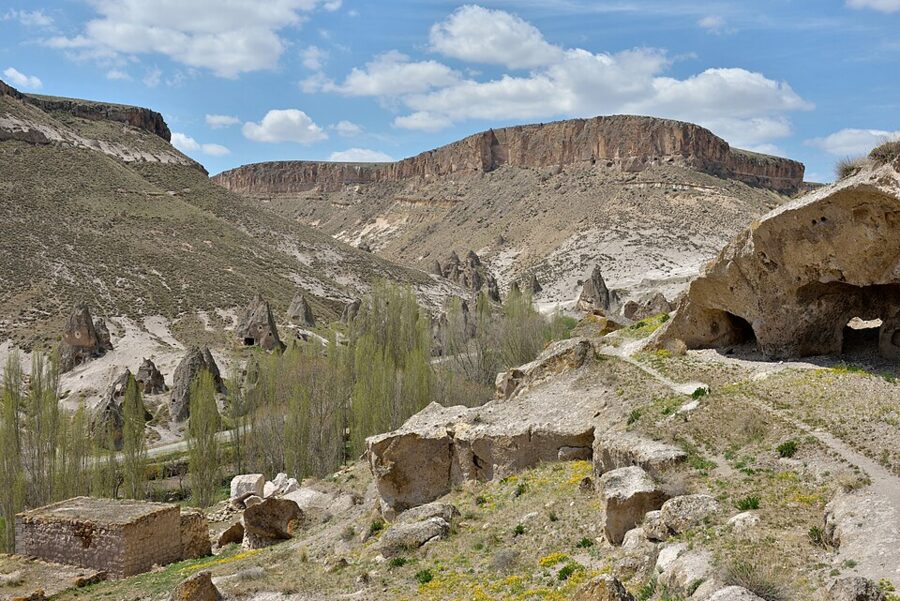
Three volcanoes made Cappadocia. Erciyes, at 3,917 m the highest peak in central Anatolia, rises above Kayseri to the east; Hasan Dağı, about 3,250 m, stands to the south-west near Aksaray; and the smaller Göllüdağ lies between them. Over millions of years their eruptions dumped thick layers of ash across the plateau, and the ash compacted into tuff, a pale stone soft enough to cut with a hand tool.

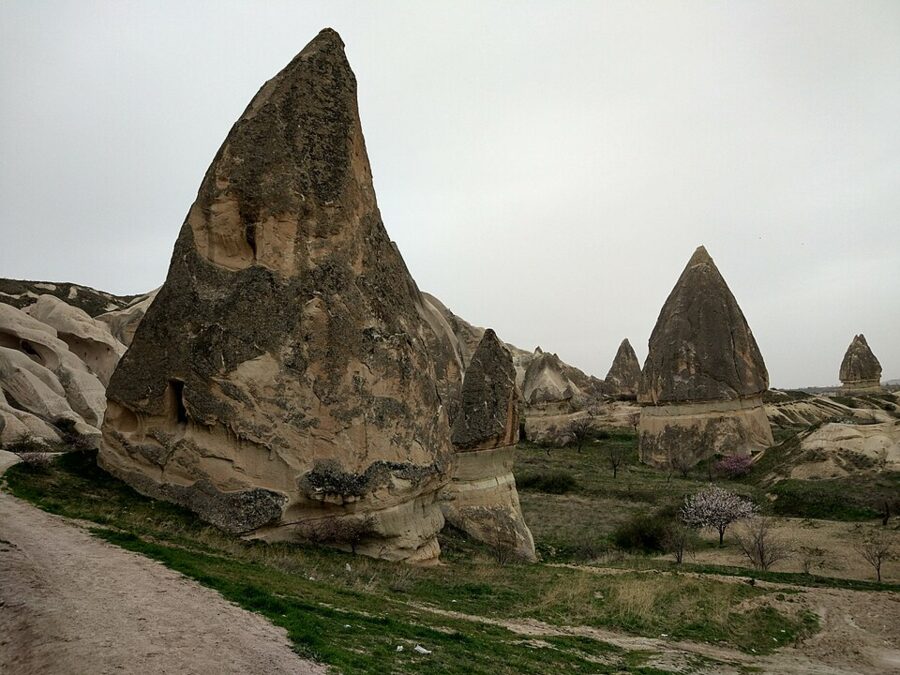
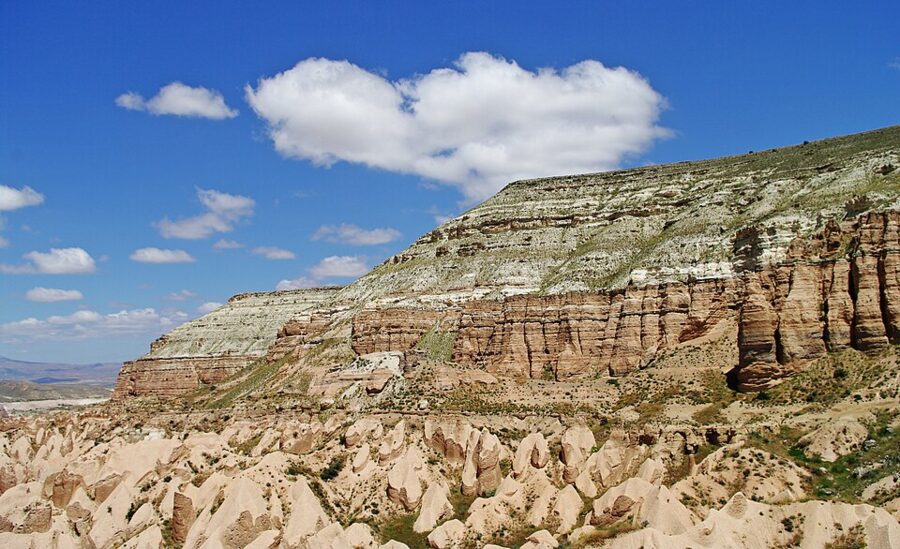
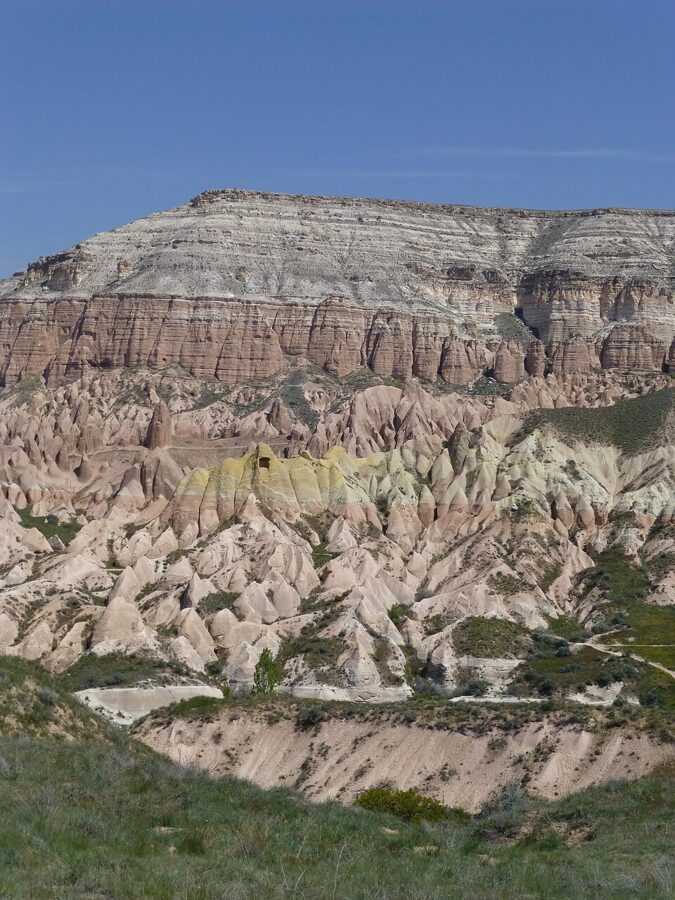
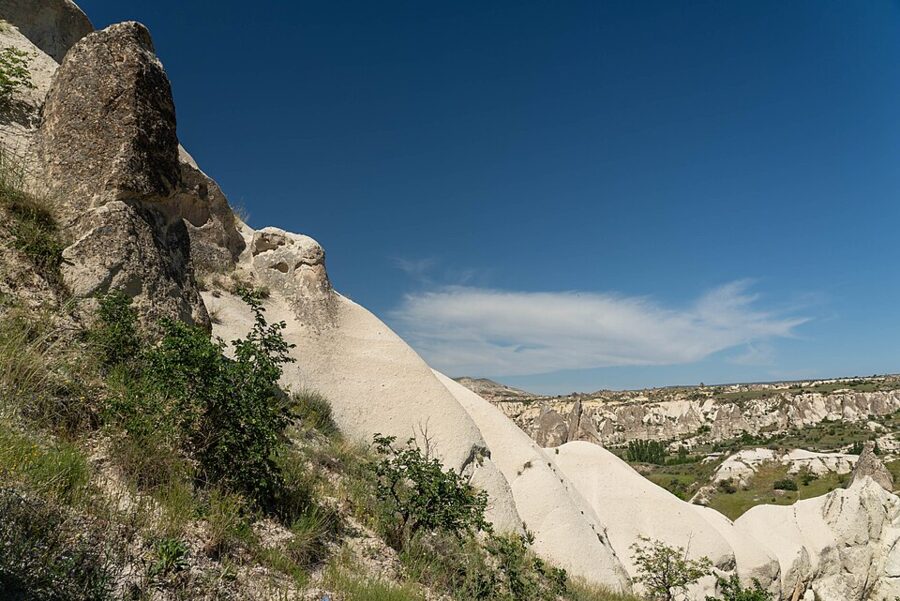
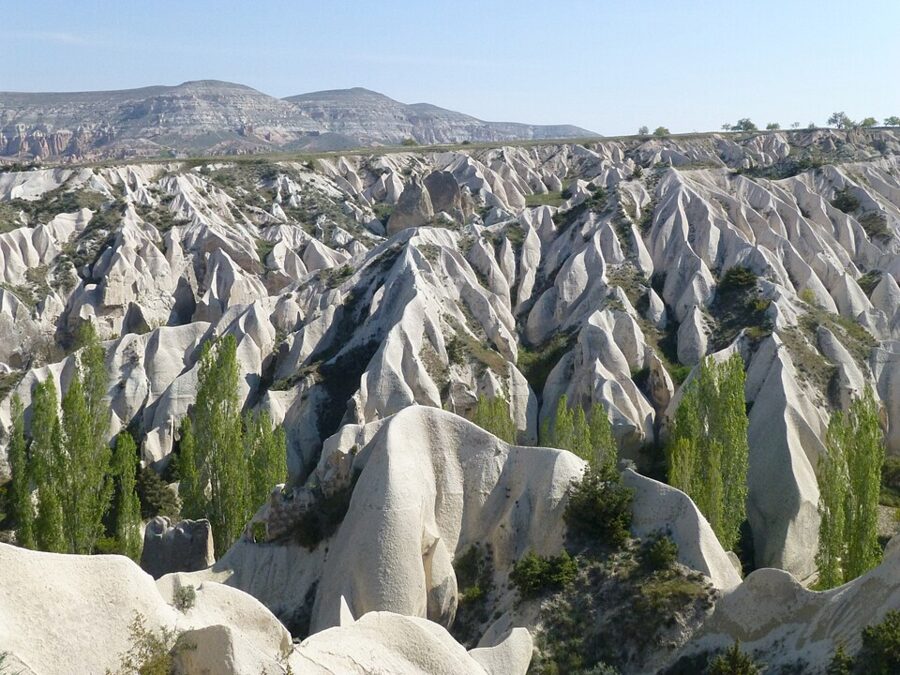
Rain, frost and wind did the rest. Where a harder layer of rock sat on top of the tuff, it acted as an umbrella, and the soft stone underneath survived as a column with a cap: the fairy chimneys, peribacaları in Turkish. Where nothing protected it, the tuff wore into ridges, cones and gullies streaked pink, cream and ochre by the different ash falls.
The soft rock is the reason people stayed. A family could dig a cool room in summer and a warm one in winter with a pick, add a store room behind it, and keep pigeons in holes above for their droppings, which fertilized the vineyards.
Monks followed from the 4th century, when Basil of Caesarea, born in what is now Kayseri, shaped the monastic rules that much of Eastern Christianity still follows. The painted churches you visit today are mostly from the 9th to 13th centuries. UNESCO listed the area in 1985 as Göreme National Park and the Rock Sites of Cappadocia.
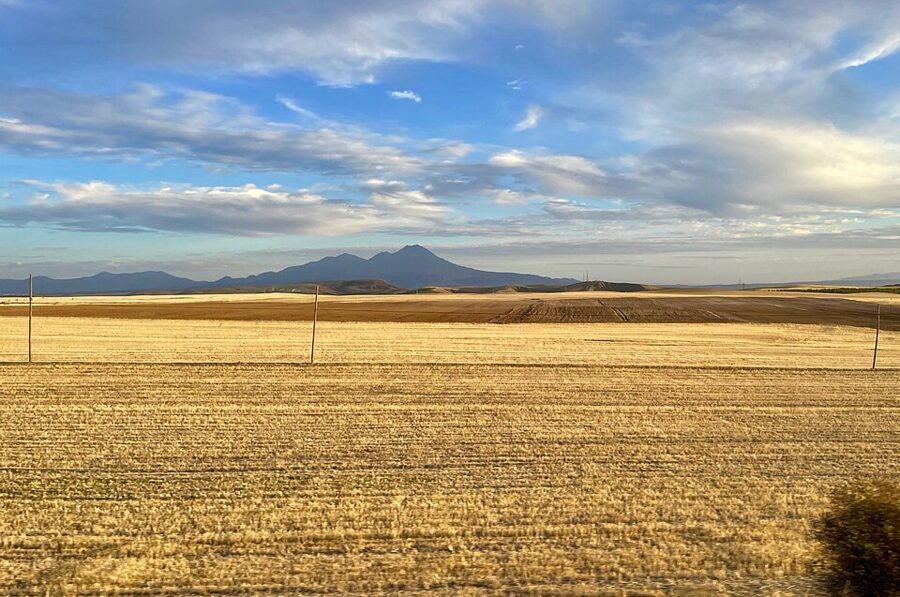

The name is older than any of it. The Persians called the region Katpatuka, which is usually translated as “land of beautiful horses”, though scholars argue about that reading. Erciyes is a ski mountain in winter, and skiing on Erciyes from a Göreme base is a realistic day trip once the lifts open in December.
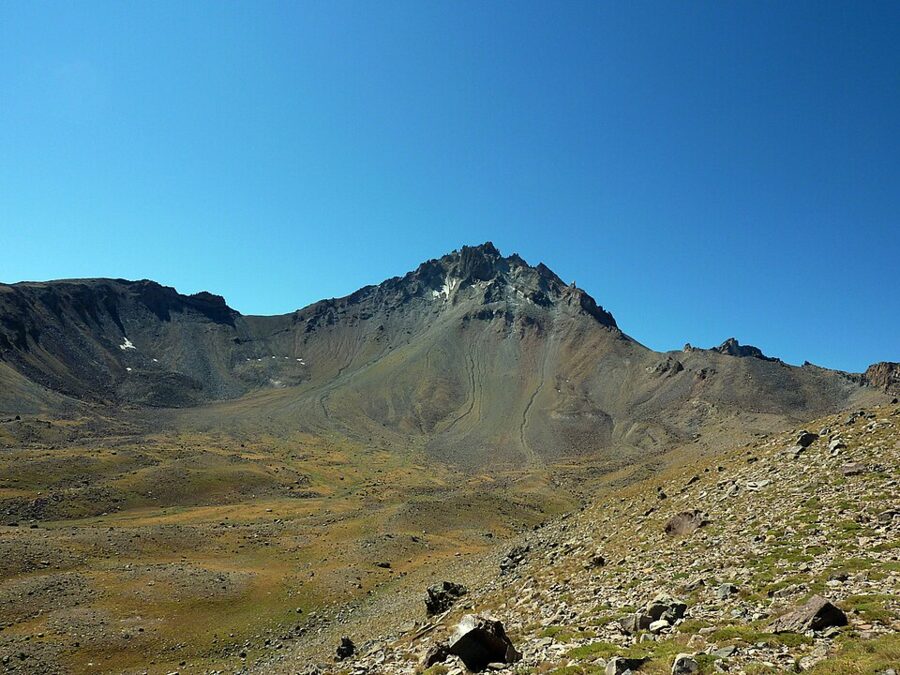
When to go
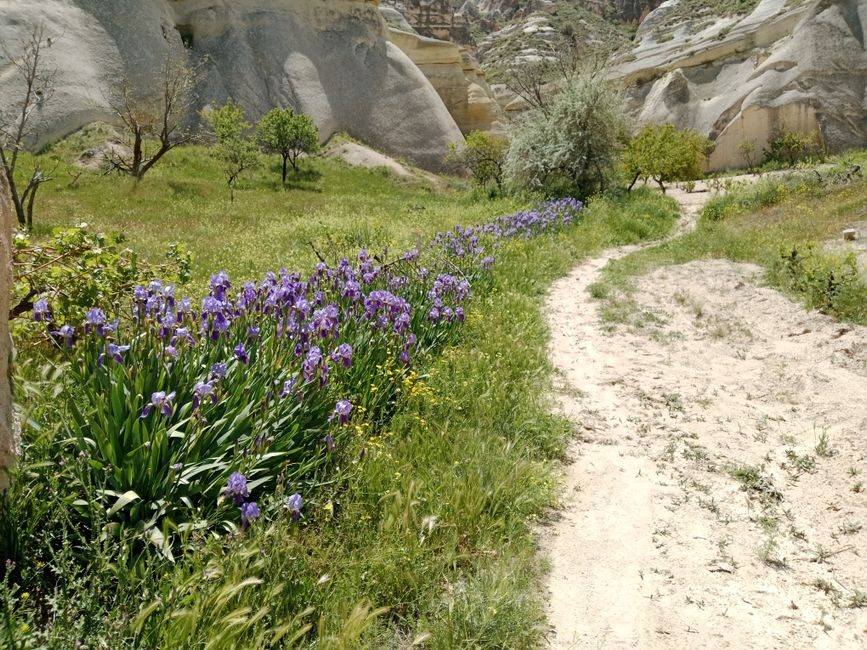
Göreme sits at more than 1,000 m on an open plateau, and that height shapes the year. Summer days are hot and dry, with cool nights; winter brings frost most nights and snow on the cones some years, which photographs beautifully and turns the valley paths to clay. Spring and autumn are the walking seasons, and they are also when dorms fill and prices rise.
- April to June: green valley floors, fruit blossom, long days. Good walking, busy weekends, balloon prices climbing toward the high-season rate.
- July and August: the heat makes midday walking hard and the light flat. Balloons fly on most mornings, because summer air is usually calm at dawn.
- September and October: the best balance of weather, light and walking, and the most crowded weeks of the year. Book beds ahead.
- November to March: the cheapest beds and flights, empty museums, snow some years. Wind and fog ground the balloons more often, so allow extra mornings.
The balloon figures show how lopsided the year is. In the first half of 2026, Turkey’s balloons made 13,000 flights with 308,000 passengers, about a third of the 40,000 flights and 915,000 passengers of the whole of 2025, and more than 80% of all Turkish flights take off in Cappadocia. The windy, foggy months account for much of the difference.
Which town to stay in
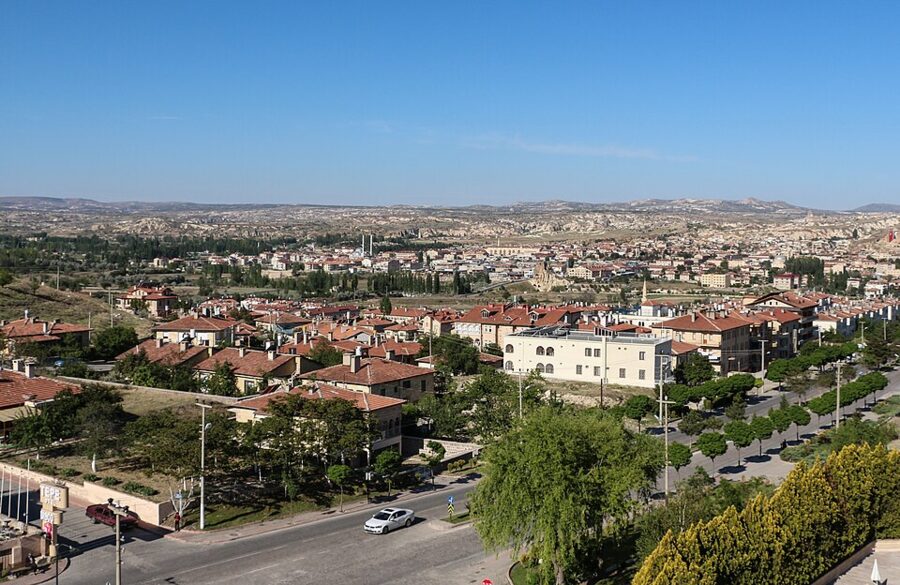
Five small towns sit within about 10 km of each other, and the choice matters more for your budget than for your sightseeing.
| Town | For | Against |
|---|---|---|
| Göreme | Most dorms and cheap pensions; bus station in the village; valleys start on foot; the balloon views | Busy, touristy main street, prices to match |
| Uçhisar | Highest point, castle, Pigeon Valley on the doorstep, quiet at night | Few cheap beds; mostly boutique cave hotels |
| Ürgüp | A real town with shops, wine and more local restaurants | Valleys are a bus or scooter ride away |
| Avanos | River town, pottery, local prices, near Zelve and Özkonak | Little choice of dorms; the valleys are farther |
| Ortahisar | Quiet village under its castle rock, close to the Red and Meskendir valleys | Very few beds; few buses |
For a first trip on a dorm budget, stay in Göreme. Ürgüp suits a second visit, or anyone who wants evenings that are not built around tourists.

Getting there and getting around
Flying in: Kayseri or Nevşehir
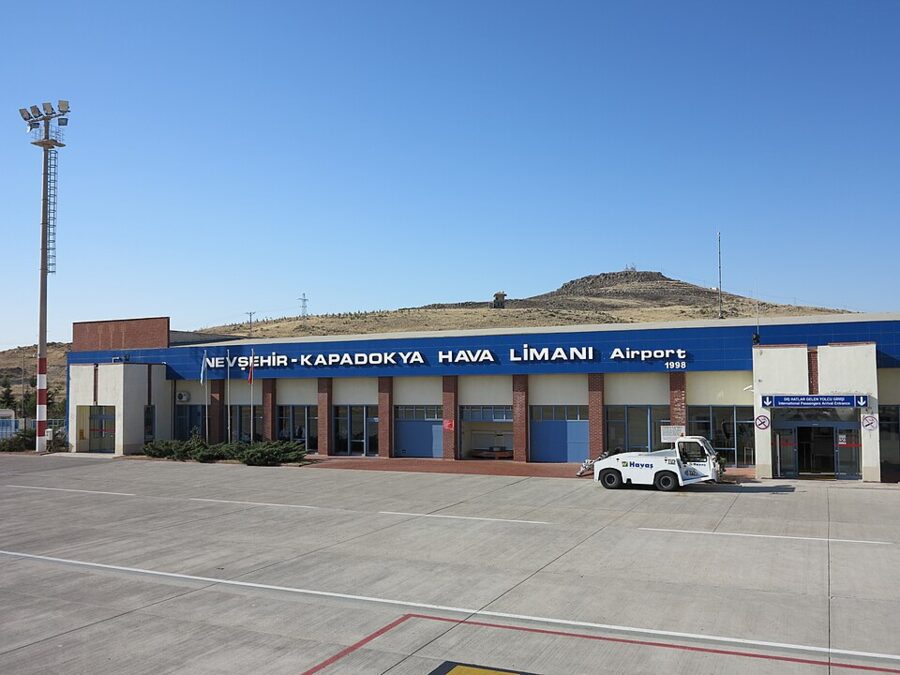
Two airports serve Cappadocia. Nevşehir Kapadokya Airport (NAV) is about 40 km from Göreme, with fewer flights, mostly to Istanbul. Kayseri Airport (ASR) is about 75 km away, on the edge of a big city, with more flights and usually cheaper fares.
There is no direct public bus from either airport to Göreme. Shared shuttle minibuses meet flights at both and drop you at your guesthouse door; Helios Transfer is one operator that sells seats online for both airports, and most hostels book a seat for you if you send your flight number a day ahead. A shared seat costs a fraction of a taxi, which is the reason to book it rather than negotiate at arrivals.

By night bus
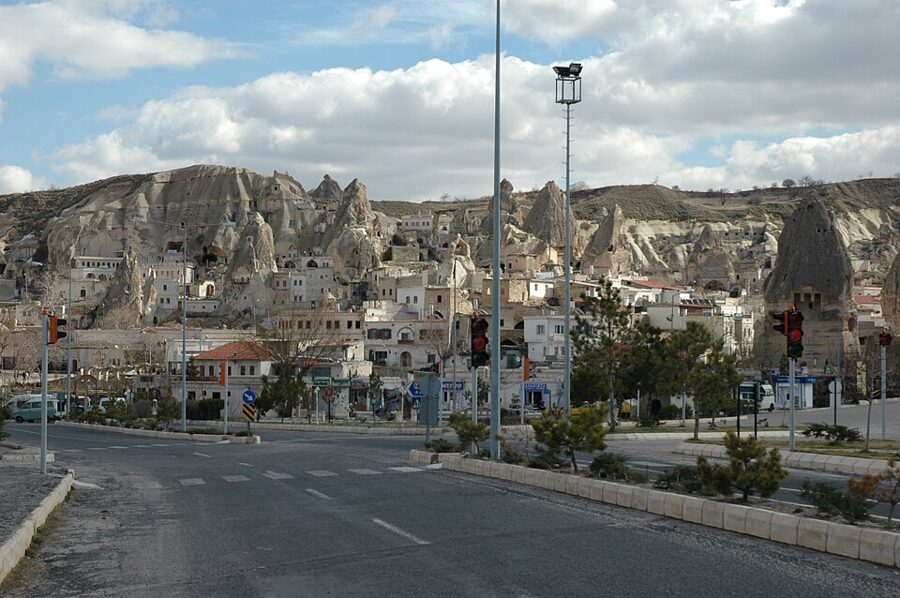
Most backpackers arrive by long-distance bus, and Göreme’s small bus station, the otogar, sits in the middle of the village. The overnight bus from Istanbul takes about eleven hours and cost about 2,000 TL in November 2026, with departures through the evening. The bus companies, otogars and booking apps work the same way across the country, and getting around Turkey by coach is simpler than it looks at the first ticket window.
Two things to check when you buy the ticket. First, whether the bus actually reaches Göreme or ends at the Nevşehir otogar with a free transfer minibus (servis) for the last stretch. Second, the arrival time: many night buses from the coast arrive between 01:00 and 05:00, so tell your guesthouse, or choose the later departure.

Local buses and minibuses
The Göreme municipal bus to Nevşehir is the backbone of getting around without a tour. In November 2026 the municipality’s timetable showed departures from Göreme every half hour from 07:30 to 20:00 and from Nevşehir every half hour from 07:00 to 19:30, plus a late run around 22:00. Nevşehir is where you change for the underground cities, and local fares in the region ran about 25–35 TL in 2026.
A slower minibus loop links Ürgüp, Göreme, Çavuşin, Avanos and the turn-offs for Zelve and Paşabağ, roughly hourly in daytime and thinner in winter. The times change by season, so ask at the Göreme otogar in the morning and note when the last one comes back.
Scooters, bikes and ATVs
A rented scooter is the cheapest way to see the scattered sights in one day. A loop from Göreme through Çavuşin, Paşabağ, Zelve, Devrent, Avanos, Uçhisar and back via Ortahisar is roughly 40 km of quiet roads with one or two busy junctions. You need a valid driving license, the rental shop should give you a helmet, and you should check that your travel insurance covers motorbikes, because many policies do not.

Bicycles work for short hops, but the roads climb steeply out of every valley and there is little shade in summer. ATV tours, sold everywhere in Göreme from about €20 for two hours, ride the same sandy tracks the walkers use. I’d skip them: the dust and noise are the main thing hikers complain about, and you see more on foot.
The Red, Green and Blue tours
Every agency and most guesthouses sell the same three full-day minibus tours, named by color. In late 2026 they ran from about 09:30 to 17:00 or 17:30, in groups of up to about 16, and prices ranged from about €40 to €80 depending on what was included. Some cheap versions leave out the entry tickets, so read the inclusions before you compare.
| Tour | Usual stops | Worth paying for? |
|---|---|---|
| Red (north) | Göreme viewpoint, Open Air Museum or Zelve, Paşabağ, Devrent, Avanos pottery, Uçhisar | No: everything on it is reachable by bus, scooter or on foot |
| Green (south) | Göreme panorama, an underground city, Ihlara Valley walk, lunch in Belisırma, Selime Monastery, Pigeon Valley | Yes: Ihlara is awkward by public transport, and the tickets alone are €28 |
| Blue (south-east) | Kaymaklı or Derinkuyu, Mustafapaşa, Soğanlı, sometimes Ürgüp viewpoints | Only if you want Soğanlı and have no car |
Before you pay, ask four things: is the group capped, are museum tickets and lunch included, how long is the Ihlara walk (it should be at least an hour), and how many shop stops are there. A tour that spends an hour in an onyx or carpet showroom is paid for partly by those sales.
The valleys on foot
The valleys are free, open all day, and the best reason to come. Most start within a 15-minute walk of Göreme, and you can join two or three into a full day. The trails are a mix of dirt tracks, sandy gullies and narrow paths cut by farmers; some junctions have wooden signs, many do not.
The names cause confusion before you even start. In Turkish, Güllüdere means “rose stream” and Kızılçukur “red hollow”, but signs, maps and guides swap the English names “Rose Valley” and “Red Valley” between the two freely. They run side by side and join, so treat them as one walk and do not worry about which one you are in.
Rose and Red valleys (Güllüdere and Kızılçukur)
This is the classic walk. The most common route starts on the Göreme–Ortahisar road beyond the Open Air Museum, drops into Kızılçukur, crosses into Güllüdere and ends in Çavuşin, about 6–8 km and 3–4 hours depending on detours. From Çavuşin it is 2.5 km back to Göreme along the road, or catch the minibus.

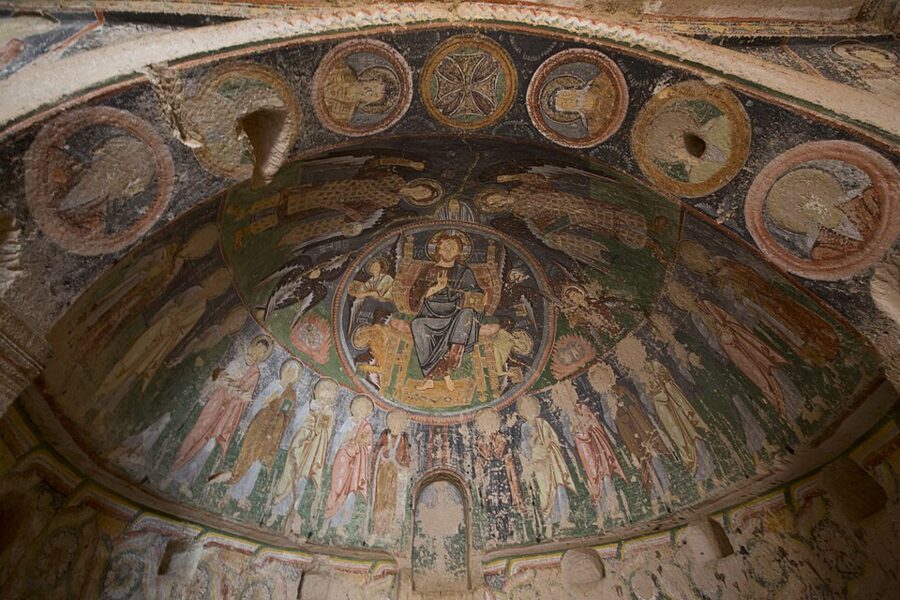
Along the way are several rock-cut churches, unstaffed and free, from simple chapels to the Haçlı Kilise (Church of the Cross) high on a slope, with a large cross carved into its ceiling. Bring a phone light; some are dark inside, and a few have steep or broken steps. Their paintings are fragile, so no flash and no touching.

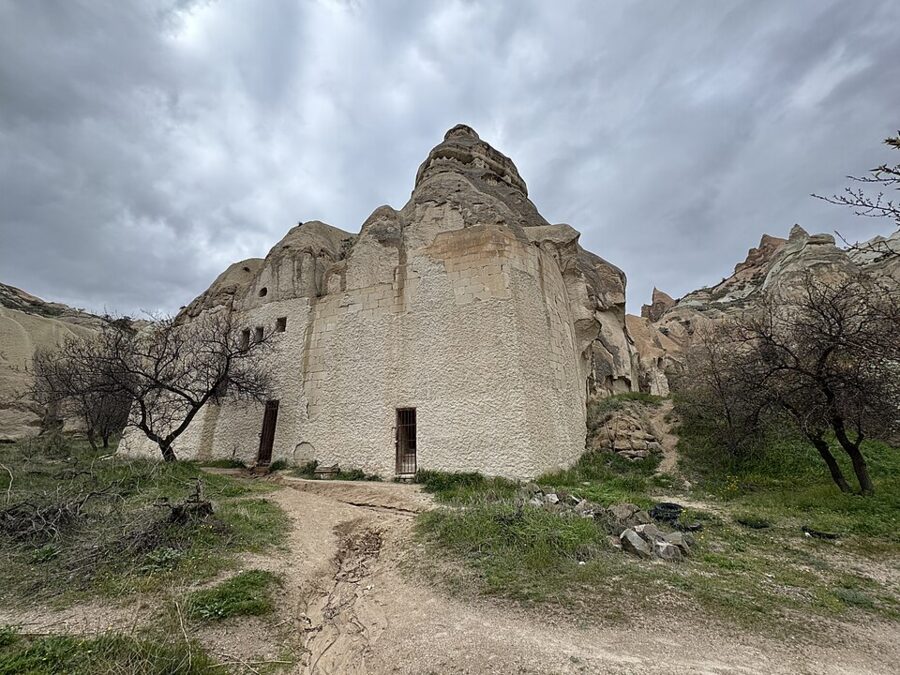

For sunset, the Kızılçukur viewpoint at the top of the valley is the favorite. It has a car park and drink stands, and it fills in summer. The walk down in the dusk afterward is easy on the main track, but carry a light.


Love Valley (Bağlıdere)
Love Valley’s name is a joke you get at once: its pillars are tall, smooth and shaped exactly like what you are thinking. The valley lies north-west of Göreme, and the easiest way in is from the rim road on the Uçhisar side, then down along the valley floor toward the Göreme–Avanos road. Allow two hours at a stroll.
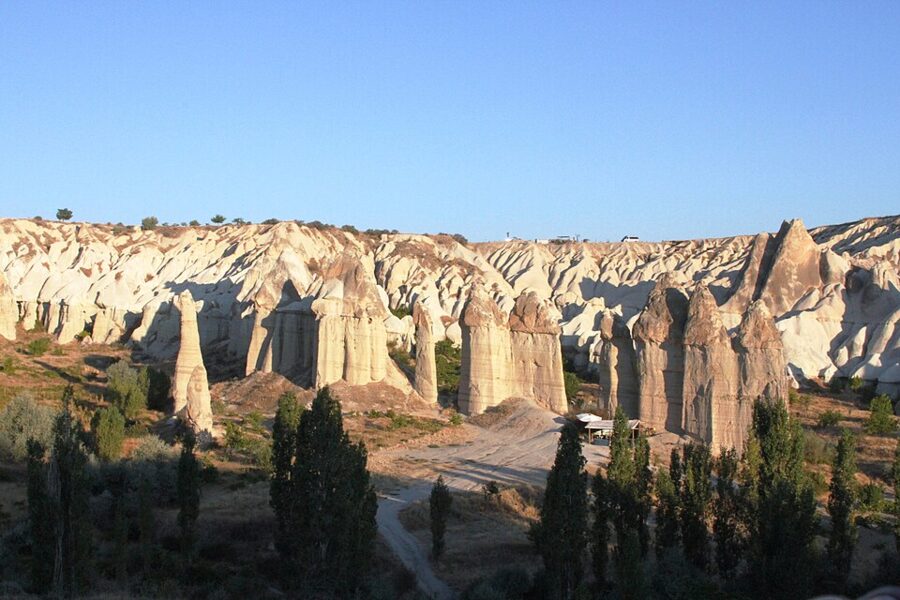

The plateau above it is one of the balloon launch areas. If you walk out to the rim before dawn, you can watch crews inflate the balloons a few meters away, which is closer than you get from the ridge above Göreme.
Pigeon Valley (Güvercinlik)
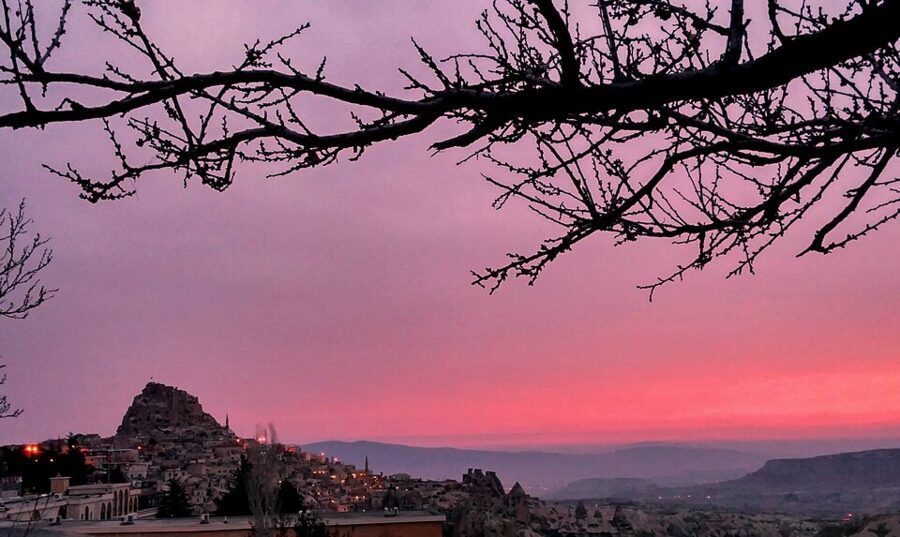
Pigeon Valley links Göreme and Uçhisar, about 4 km of path through gardens and white tuff, with dovecotes cut into the cliffs. Walk it from Uçhisar downhill to Göreme: the climb the other way is steep and sandy near the top. Take a taxi or the Nevşehir bus up (ask the driver for Uçhisar), visit the castle, then walk home in an hour and a half.
Zemi and Meskendir
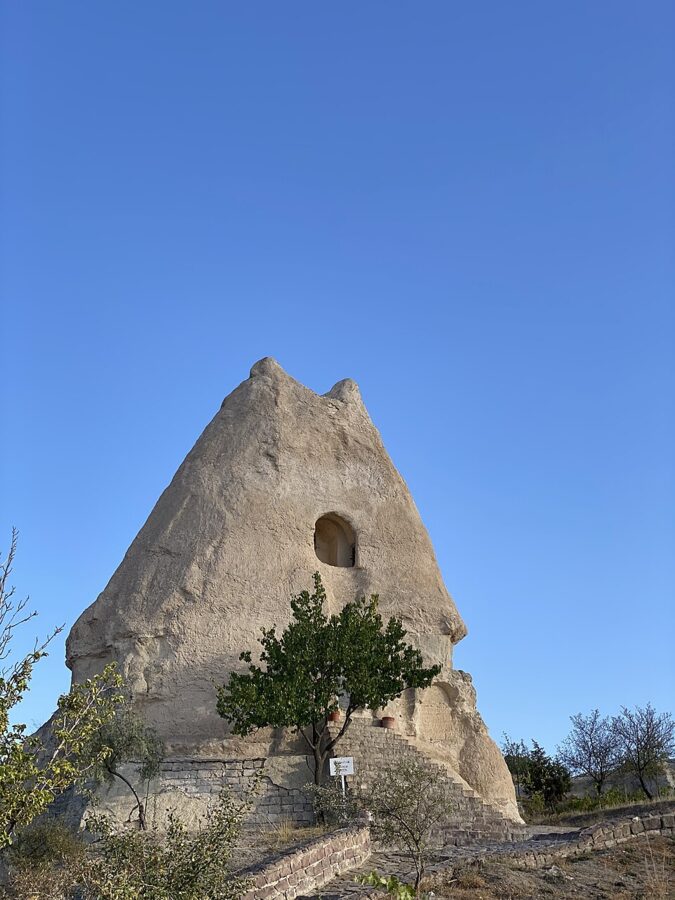
These are the quiet ones. Zemi runs south-west from Göreme toward Uçhisar, parallel to Pigeon Valley but narrower and greener, and El Nazar Church sits near its Göreme end. Meskendir starts near the Göreme–Ortahisar road and runs north into Kızılçukur, so you can use it as a longer approach to the Rose and Red walk.


Waymarking, water and getting lost
- Map: download an offline map that shows footpaths before you leave the guesthouse. Mobile signal disappears in the deeper gullies.
- Water: carry 1.5–2 liters per person in summer. A few juice and tea stands open in the main valleys in season; there are none in Zemi or Meskendir.
- Heat and shade: from June to September, walk before 11:00 or after 16:00. Most valleys have no shade on the upper paths.
- Winter: the tuff turns into slick clay after rain or snow. Good soles matter more than anything else you pack.
- Getting lost: it happens to everyone, and it is rarely serious. Climb to a ridge, find Uçhisar castle or the Göreme rooftops, and walk toward them.
- Dogs: farm dogs bark at walkers; they nearly always back off if you keep walking calmly.
The Göreme Open Air Museum and the rock churches
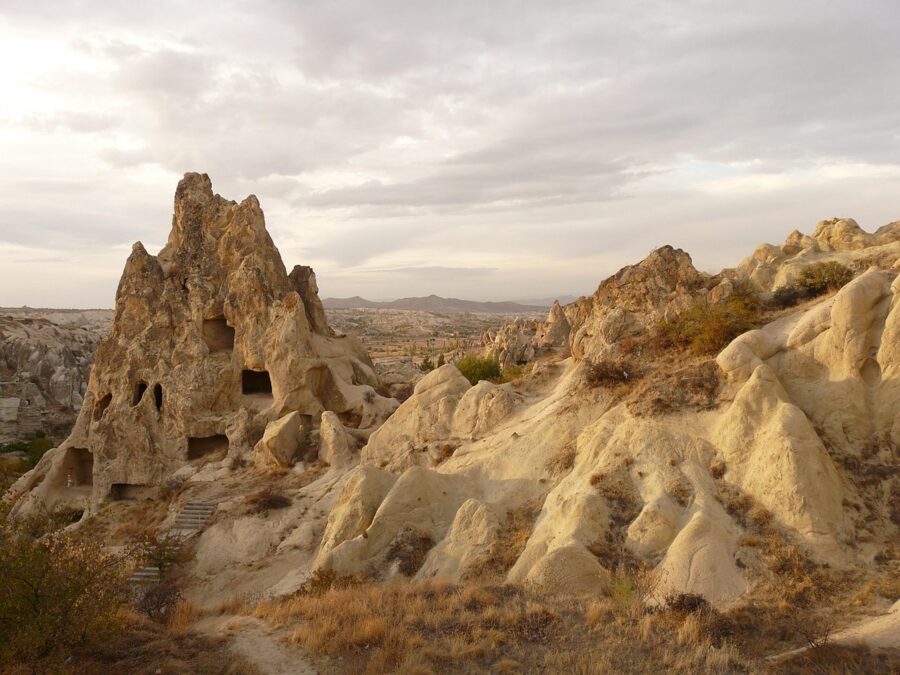
The Göreme Open Air Museum is a cluster of monastic churches, chapels and refectories cut into rock cones about 20 minutes’ walk uphill from the village. Monks lived and taught here from the 4th to the 13th century, and the complex opened to visitors in 1967. In November 2026 the Ministry of Culture listed entry at €20, open every day 08:00–17:00 with the ticket office closing at 16:15; the closing time runs later in summer.
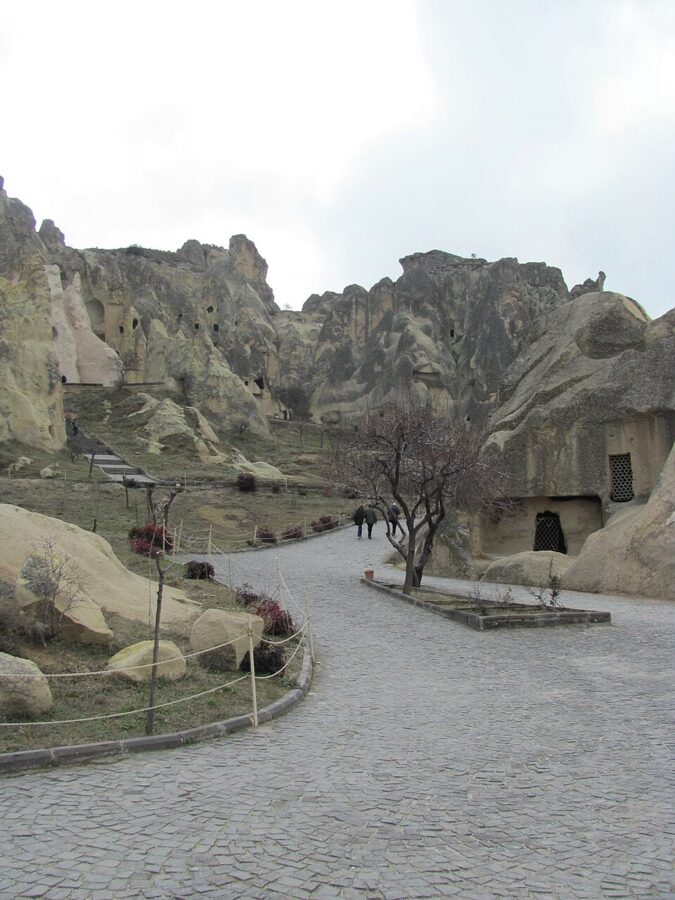

The churches to see are Elmalı (Apple), Yılanlı (Serpent), Çarıklı (Sandals) and St Barbara, plus the refectory with its long rock table. Allow two hours. Guards enforce the rules on photography in the painted churches, and there is no flash anywhere.
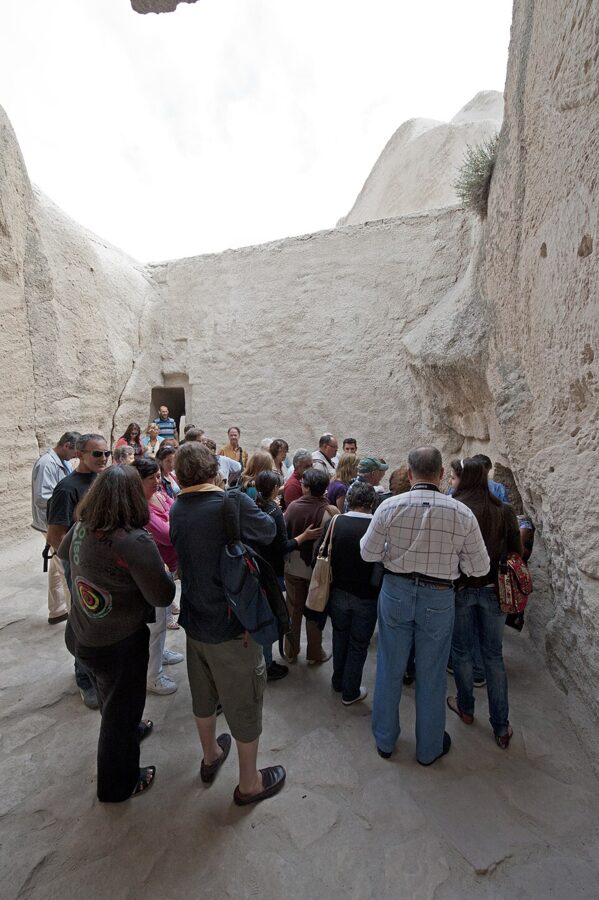

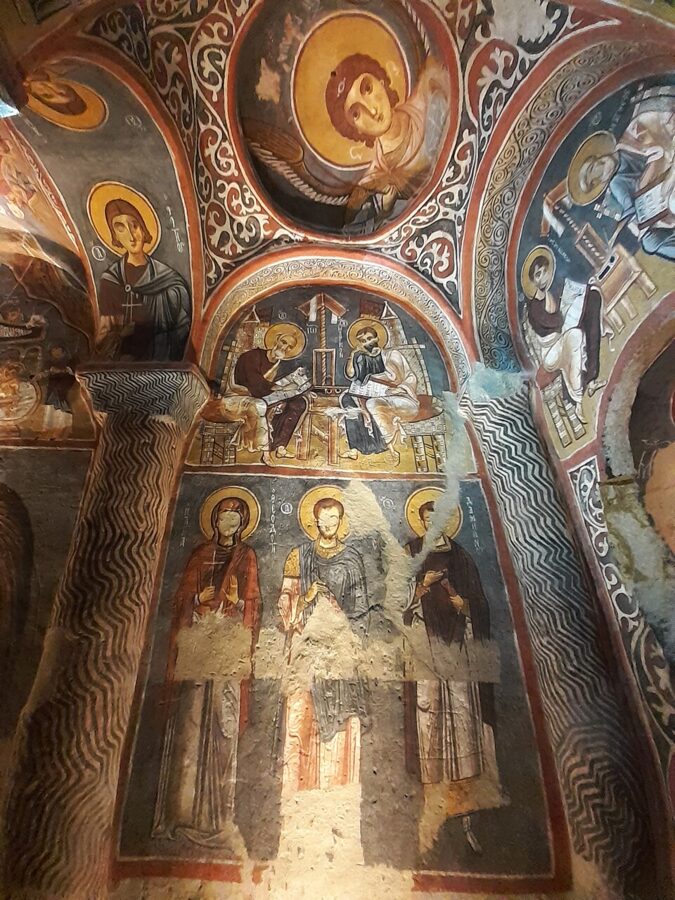
The Dark Church (Karanlık Kilise) has its own ticket at the door, €6, with the office open until 16:45. It is worth it. The church, from the late 11th or early 12th century, has only one small window, and that lack of light kept its frescoes vivid: Nativity, Baptism, Last Supper, Betrayal, Crucifixion and Ascension, close enough to read faces.

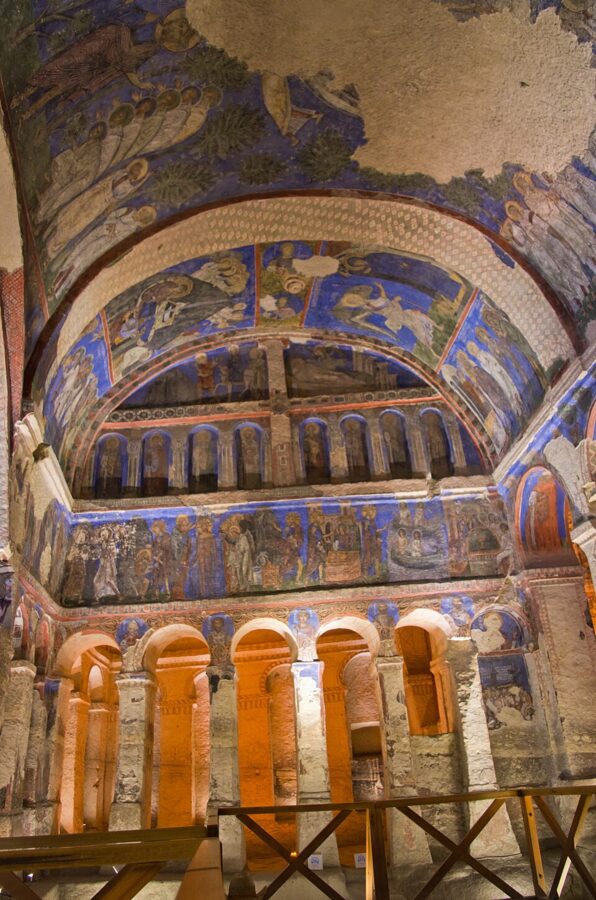
The church most people miss is Tokalı Kilise, beside the road just below the museum entrance, on the same ticket. It is the largest church in Göreme, really four spaces cut one into another, and its 10th-century frescoes on a deep blue ground are the finest in the complex. Visit it on the way out.

Zelve and Paşabağ
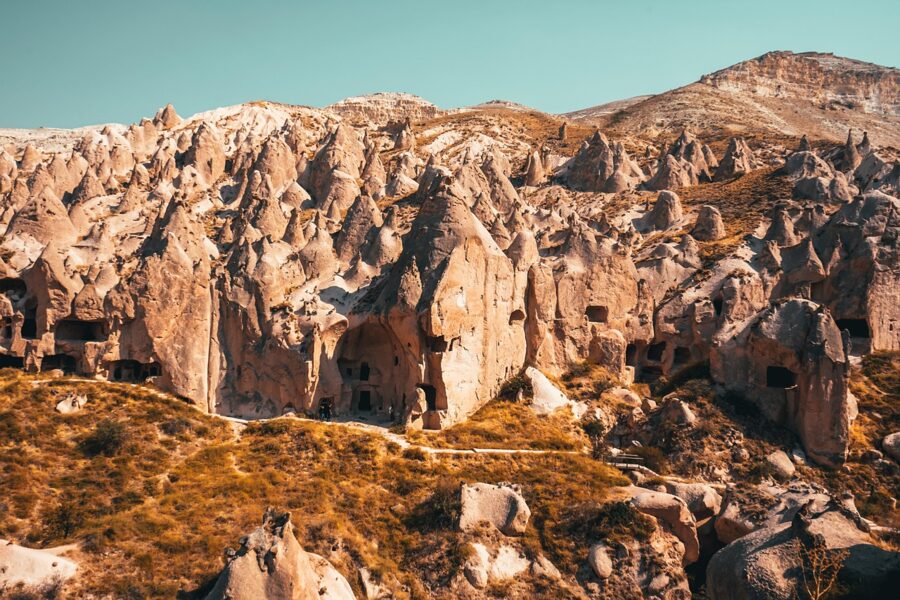
Zelve is an abandoned cave town in three valleys north of Göreme, with churches, a mill, a mosque and houses carved into the cliffs. People lived here until the middle of the 20th century, when rockfalls made it unsafe and the village was moved. The ticket, €12 in November 2026 with the same hours as Göreme, also covers Paşabağ, a short walk or ride back along the road.
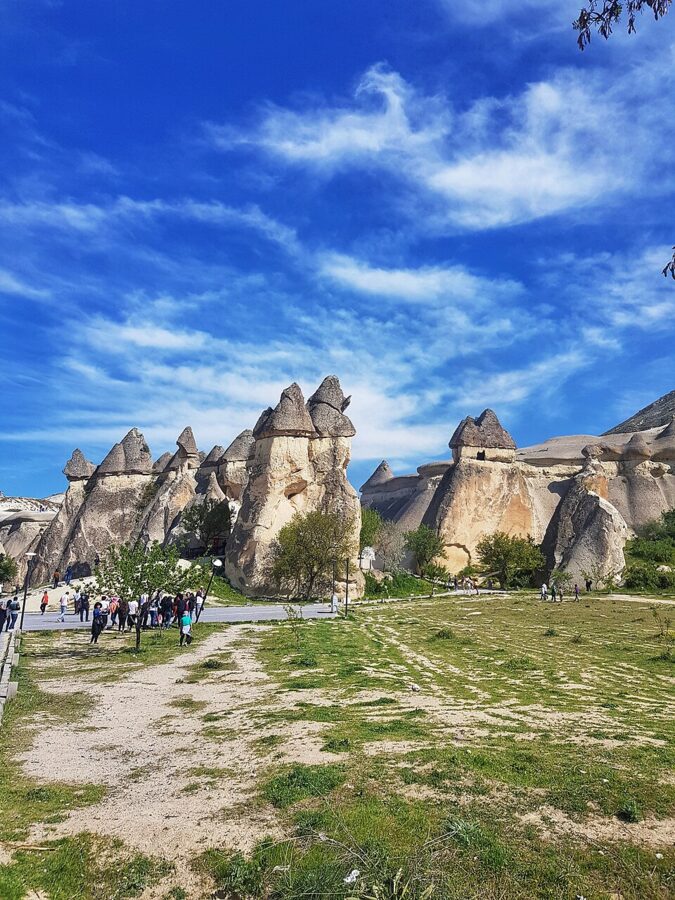

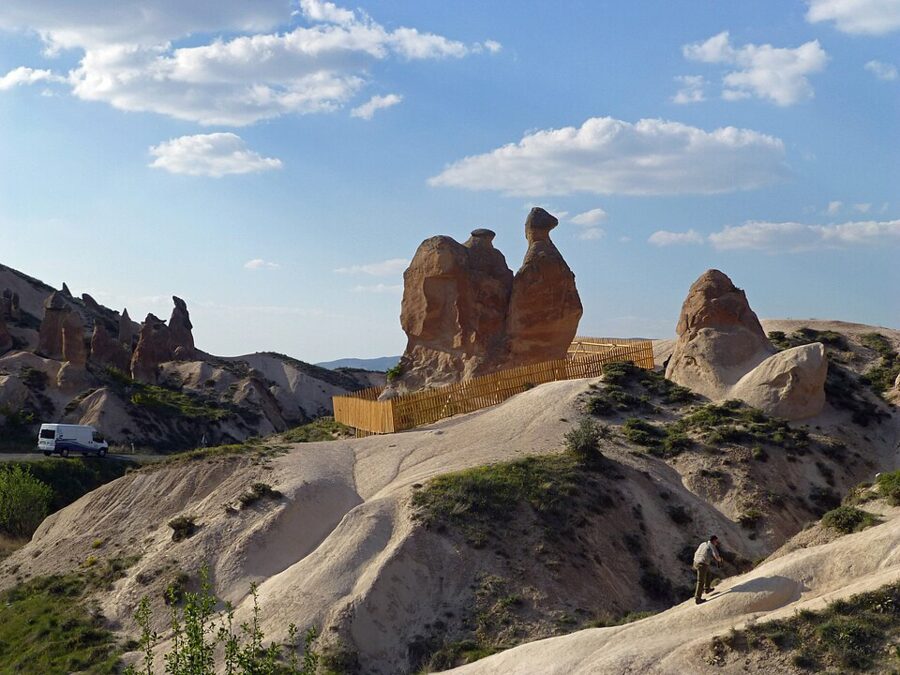
Paşabağ, also called the Valley of the Monks, has the most photographed fairy chimneys in the region, many with two or three caps. One three-headed chimney holds a chapel to St Simeon, the Syrian hermit who lived on top of a pillar near Aleppo in the 5th century; Cappadocian monks copied the idea in rock.

Çavuşin
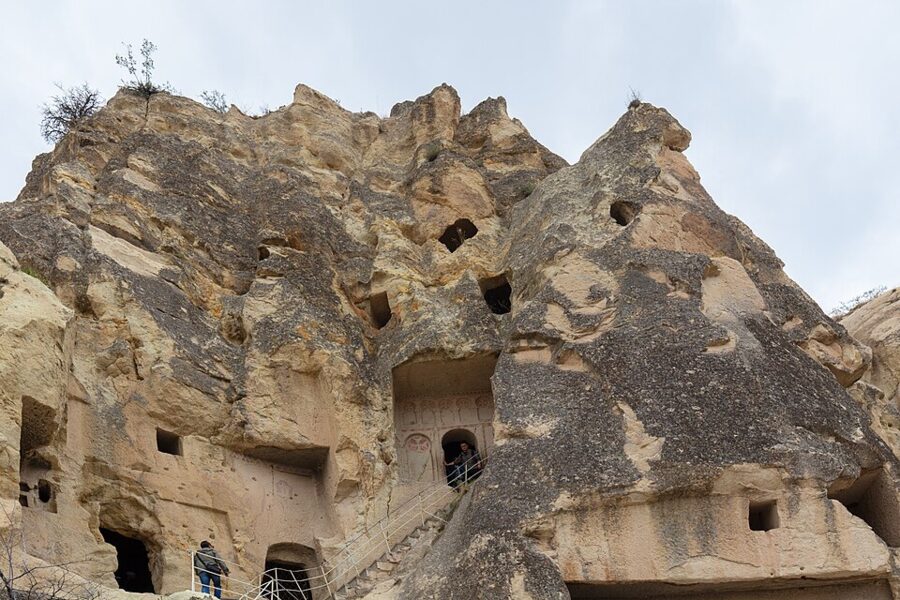
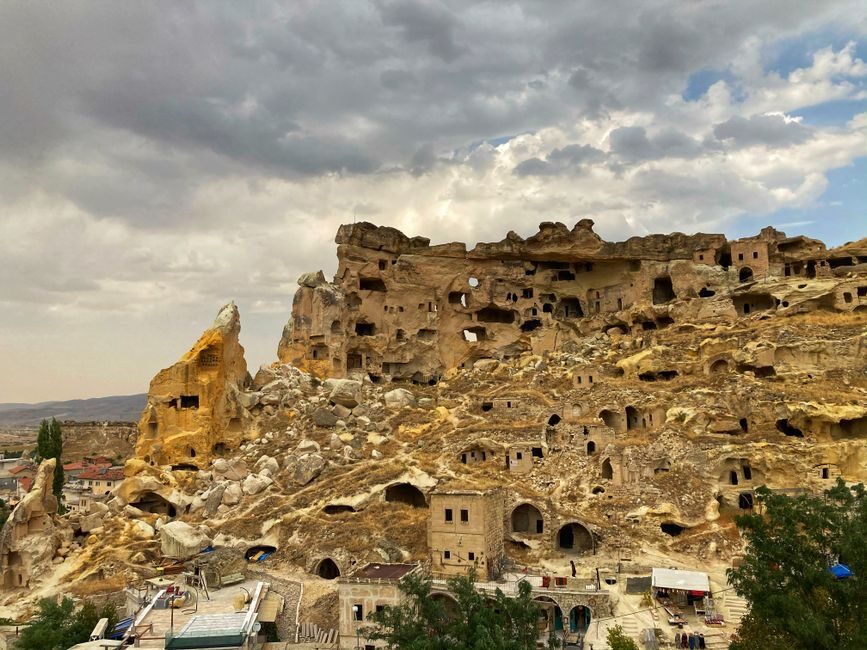
Çavuşin, 2.5 km from Göreme on the Avanos road, is the end point of the Rose and Red valley walk and worth an hour on its own. The old village climbs a cliff above the new one; it was abandoned after rockfalls in the last century, and its cave houses now stand open. At the top is the Church of St John the Baptist, one of the oldest in the region, reached by a steep scramble.
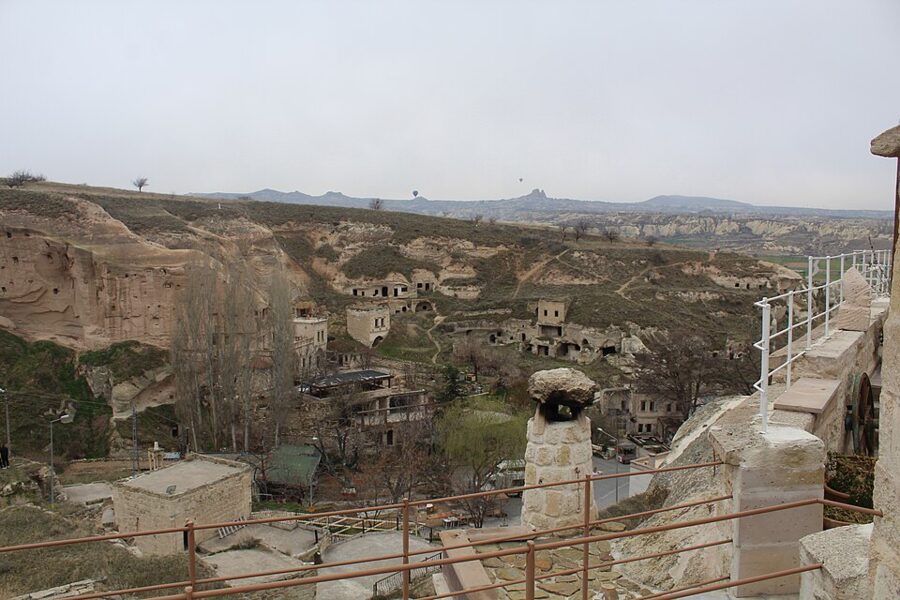

The separate Çavuşin Church on the main road, built in 964 or 965 after the Byzantine emperor Nikephoros Phokas visited the region, carries portraits of the emperor and his family. In November 2026 the Ministry listed it as closed.
Uçhisar Castle
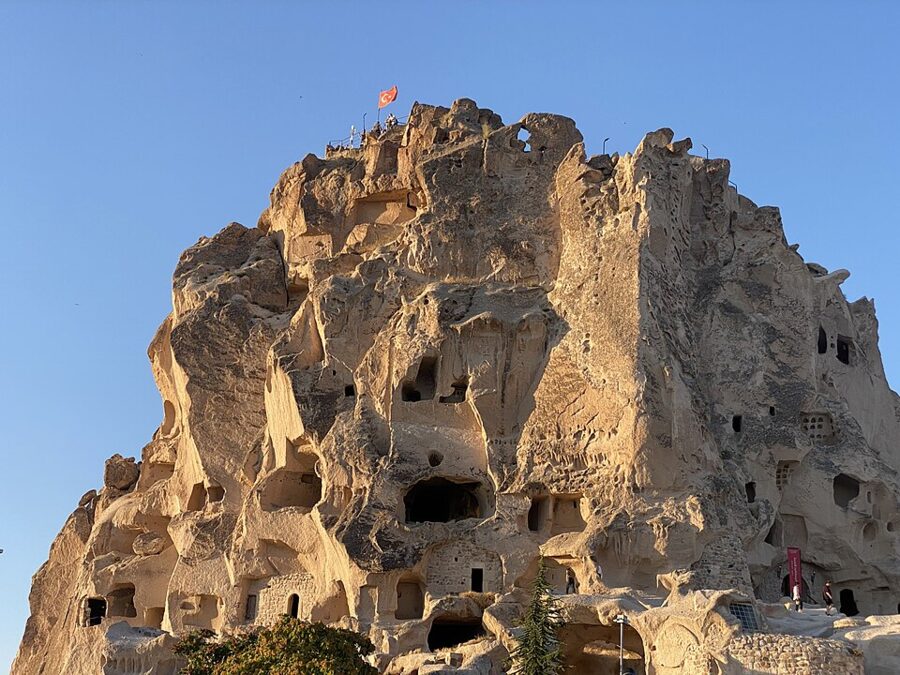
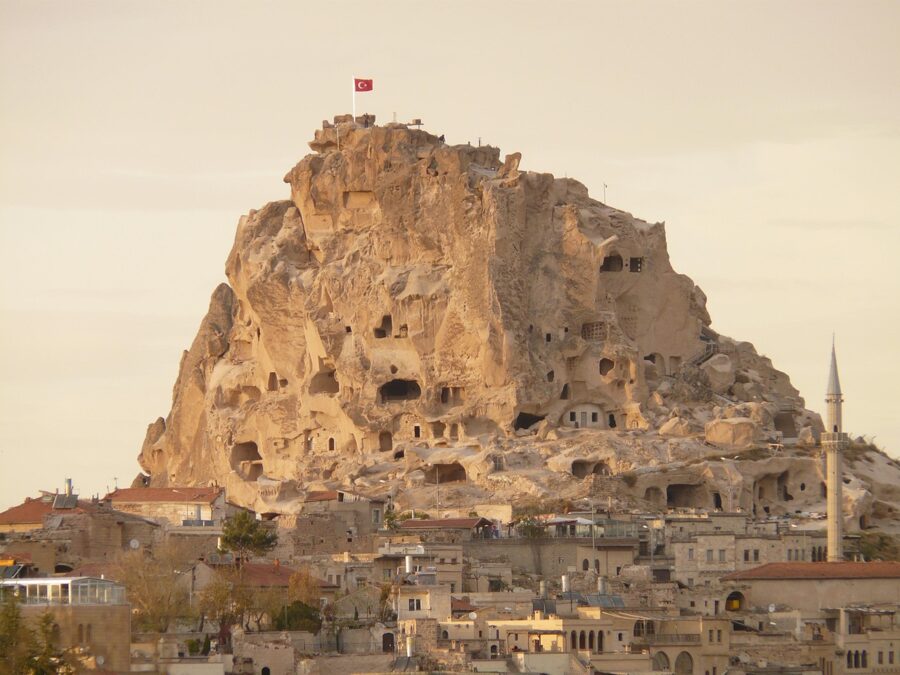
Uçhisar Castle is not a castle at all but the highest rock around Göreme, honeycombed with rooms and tunnels, and the view from the top takes in the whole of central Cappadocia. It is run by the town, not the Ministry, so MuseumPass does not work here. The entry was 320 TL in 2025; expect a little more now.

MuseumPass Cappadocia: does it pay?
MuseumPass Cappadocia cost €65 in November 2026, valid for three days from the first entry, with one entry to each of more than ten Ministry sites. The Ministry’s list includes the Open Air Museum, the Dark Church, Zelve-Paşabağ, Derinkuyu, Kaymaklı, Özkonak, Mazı, Ihlara and the Selime end of Ihlara.
| Site | Ticket (Nov 2026) | Hours |
|---|---|---|
| Göreme Open Air Museum | €20 | 08:00–17:00, office to 16:15 |
| Dark Church | €6 | 08:00–17:00, office to 16:45 |
| Zelve-Paşabağ | €12 | 08:00–17:00, office to 16:15 |
| Derinkuyu Underground City | €13 | 08:00–17:00, office to 16:15 |
| Kaymaklı Underground City | €13 | 08:00–17:00, office to 16:15 |
| Özkonak Underground City | €6 | 08:00–17:00, office to 16:15 |
| Ihlara Valley | €15 | 08:30–17:00, office to 16:15 |
| Uçhisar Castle (municipal) | about 320 TL in 2025 | Not on the pass |
Do the sums before you buy. The Open Air Museum, the Dark Church, Zelve and both big underground cities come to €64, a euro under the pass. Add Ihlara on a DIY trip and you reach €79, and the pass saves €14. If your Ihlara visit is on a Green Tour that includes tickets, pay at the gate instead.
The underground cities
The Ministry estimates there are 150–200 underground settlements in Cappadocia, from a few rooms under a house to multi-level towns. People cut down into the tuff for safety in times of raids, and used the cool, steady air for storing food and wine. Rolling stone doors, a meter or more across, could seal each level from inside; narrow, low passages slowed anyone who got in.
Who dug the first rooms is disputed. Local guides say Hittites, others say Phrygians, and the evidence for either is thin; what is clear is that most of what you walk through was enlarged in the Byzantine centuries, when Arab raiding armies crossed the plateau almost every year. The Greek writer Xenophon described villagers in eastern Anatolia living underground with their animals around 400 BC, and his passage is quoted in almost every account of the cities, though he was writing about Armenia, well to the east.
Two are open as large sites, Kaymaklı and Derinkuyu, 10 km apart on the road south from Nevşehir. Both charged €13 in November 2026 and keep the same hours as the museums. Take the Göreme bus to Nevşehir, then a minibus south from the town; they ran roughly every half hour in daytime.
Derinkuyu
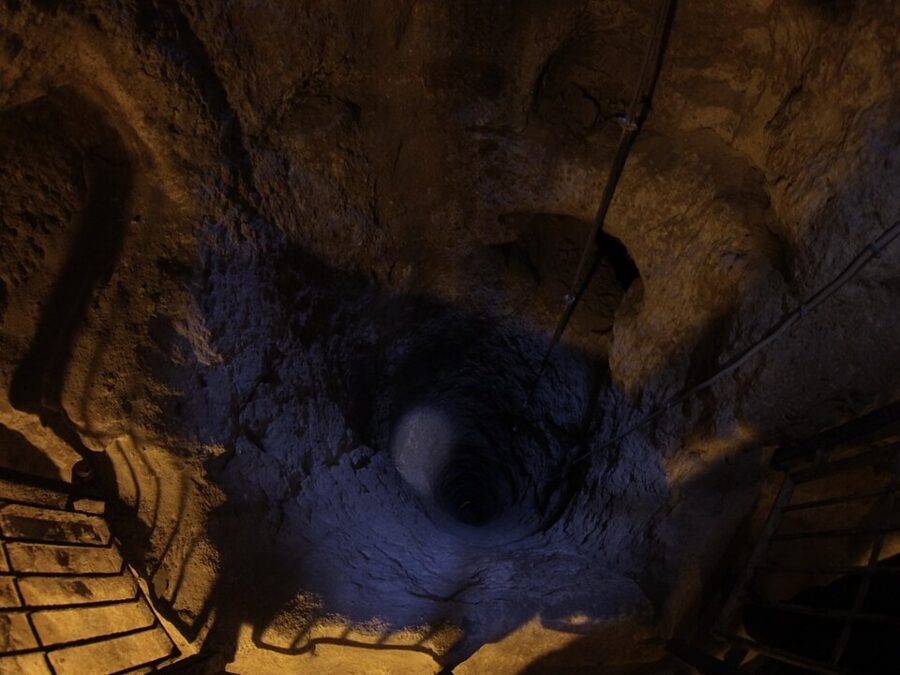
Derinkuyu is the deep one, about 85 m down, and only around a tenth of it is open. A 55 m ventilation shaft that doubled as a well runs through the middle. On the levels you visit are stables near the top, kitchens and wine presses, a chapel and a room that may have been a school.

Kaymaklı
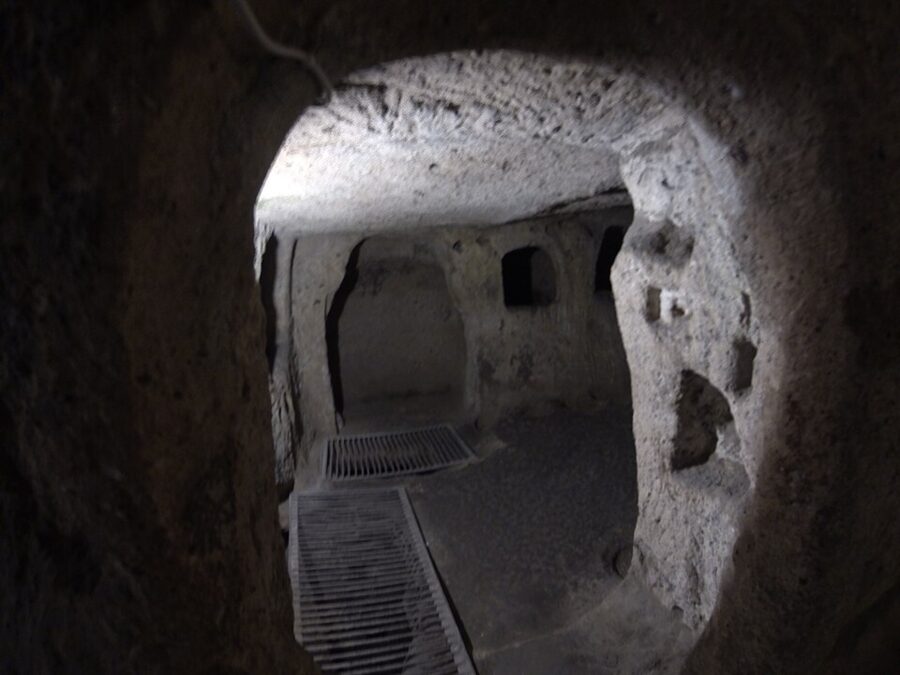
Kaymaklı is shallower, with four floors open, but wider, and the Ministry calls it the broadest of the explored cities. Its third floor has the most interest: storerooms, wine presses and an andesite block with 57 holes worn into it for grinding. The village above still uses parts of the tunnels as cellars.

The quieter ones, and how to choose
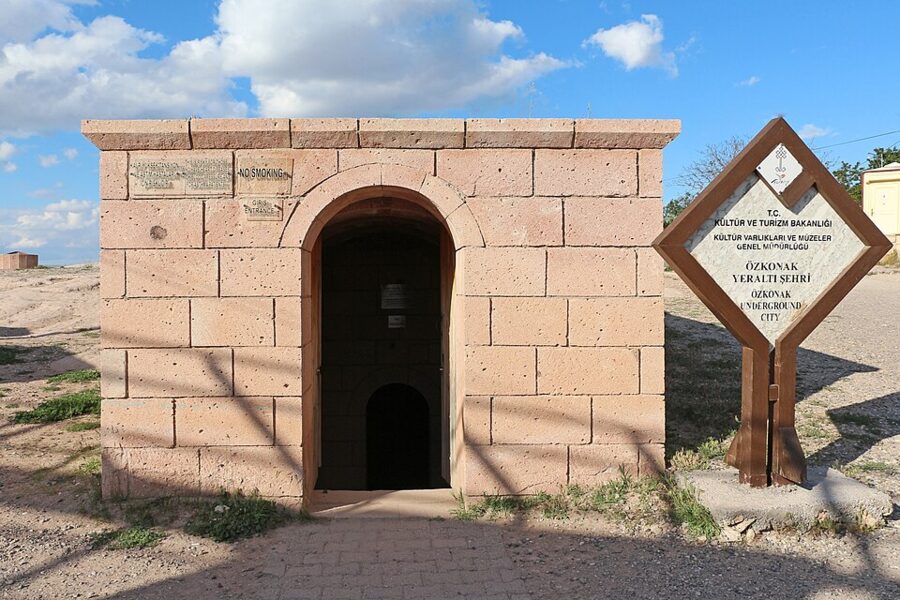
Özkonak, 14 km from Avanos, costs €6 and sees a fraction of the crowds. It is smaller, but has an unusual feature: narrow holes, about 5 cm across, drilled between floors so people could talk from one level to another. Mazı, near Ürgüp, is also on the pass and is quieter still.

One underground city is enough for most people. Choose Kaymaklı if you want the easiest visit, Derinkuyu if you want depth and can handle stooping, and Özkonak if you are staying in Avanos or want to avoid the tour groups, which fill the big two from late morning to mid-afternoon. If you get uneasy in tight spaces, stay on the upper levels; the passages only get lower.
Balloons: watching for free, and flying
Watching from the ground
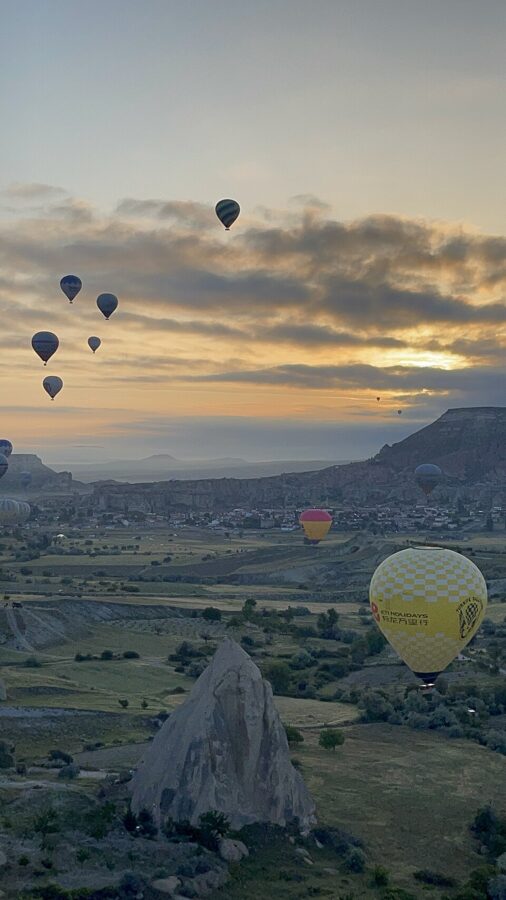
Most people watch from the ridge above Göreme, a 15-minute walk up from the village, which fills with tripods and couples before sunrise. Love Valley’s rim, the launch fields on the Uçhisar road, and any guesthouse rooftop work as well. Be in place 45 minutes before sunrise: the burners light in the dark, and the first balloons are up as the sky turns pink.
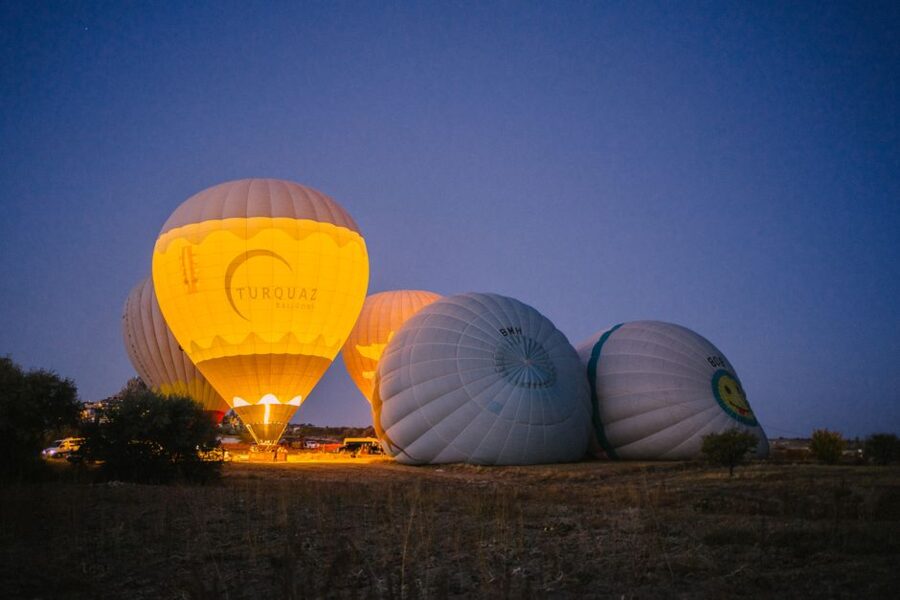
Whether they fly is decided the night before and confirmed early that morning. The Slot Service Center of the Directorate General of Civil Aviation (SHGM) publishes a weather call for each sector of the flight area on its public page, shmkapadokya.kapadokya.edu.tr. A red or yellow flag means no balloon takes off; a green flag leaves the final call to the pilot and the operator. From 11 November 2026, wind grounded every balloon for at least five days in a row.
What a flight costs in 2026
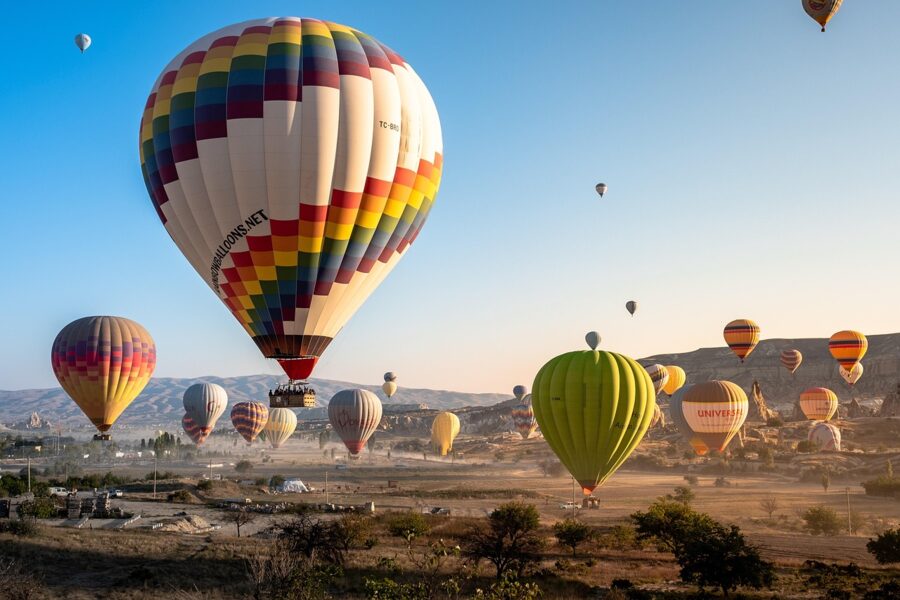
A standard flight is about an hour in a large shared basket, with hotel pickup around 90 minutes before sunrise and a toast on landing. In late 2026 Göreme listings started at about €100 for a standard flight in low season; between April and October standard flights ran about €150–260, larger-basket “comfort” flights over €300 and a private basket from about €800. Prices move daily with demand, and the cheapest flights are on winter weekdays.

Licensing, safety and cancellations
Every commercial balloon operator in Turkey is licensed by SHGM, which counted 71 authorized companies nationwide in 2026. In Cappadocia, about 30 companies flew 367 balloons with 585 pilots in 2025, and at the busiest moments 156 balloons were in the air at once. That year 754,098 passengers flew on 29,479 balloon flights; in 2024 it was 769,814 passengers over 236 flying days.
Accidents are rare against those numbers, but they happen, almost always on landing when the wind rises. In October 2022 two Spanish tourists died in a hard landing in Cappadocia. In June 2025, in Ihlara, a pilot died and 19 passengers were injured when the wind changed after take-off; a second balloon landed hard the same morning and injured 12 more. The 2025 balloons had taken off in permitted conditions before the wind rose, which is why a pilot who cuts a flight short is not short-changing you.
How to choose an operator
- License: ask for the company’s SHGM authorization. A legitimate operator can show it.
- Basket size: standard baskets carry 20 or more people. Ask how many will be in yours; smaller costs more.
- Cancellation: if SHGM grounds the flight, you should get a full refund or a move to the next flyable morning. Get that in writing.
- Timing: book for your first morning in Cappadocia, so a canceled flight can move to the second or third.
- Price: street touts quoting far below the going rate are reselling seats; book with a company that shows its license, or through your guesthouse.
- Insurance: check that the operator’s passenger insurance is included, and whether your travel insurance covers ballooning.
Day trips and short stops
Ihlara Valley and Selime
Ihlara is a canyon 14 km long and up to 120 m deep, cut by the Melendiz river through the ash and lava of Hasan Dağı, about 90 minutes’ drive south-west of Göreme in Aksaray province. Its walls hold dozens of painted churches. The Ministry ticket was €15 in November 2026, open 08:30–17:00 with the office closing at 16:15.
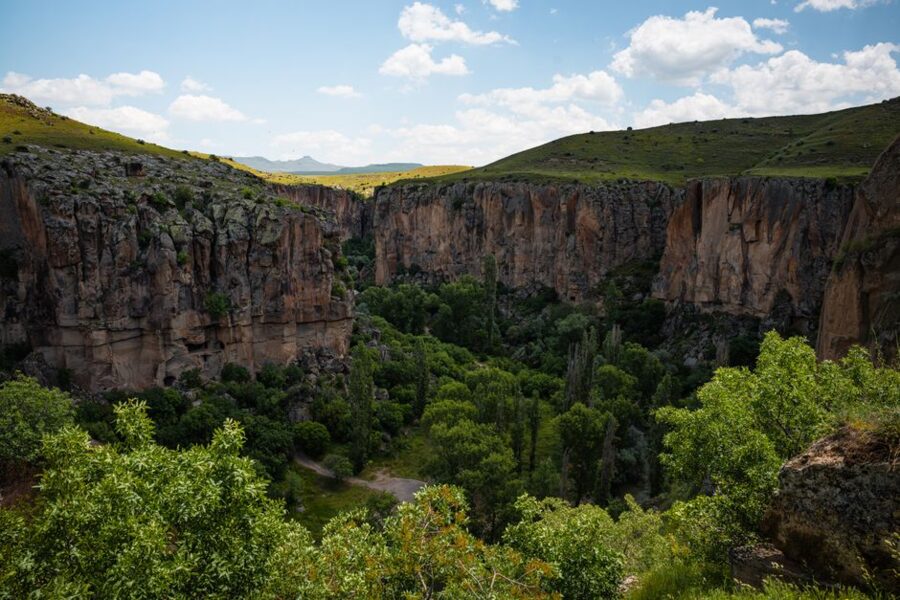
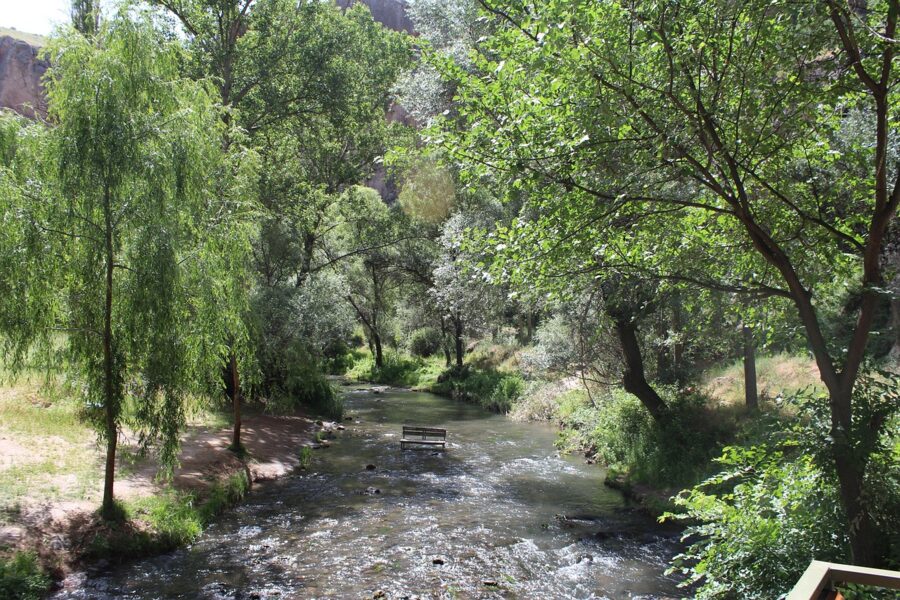
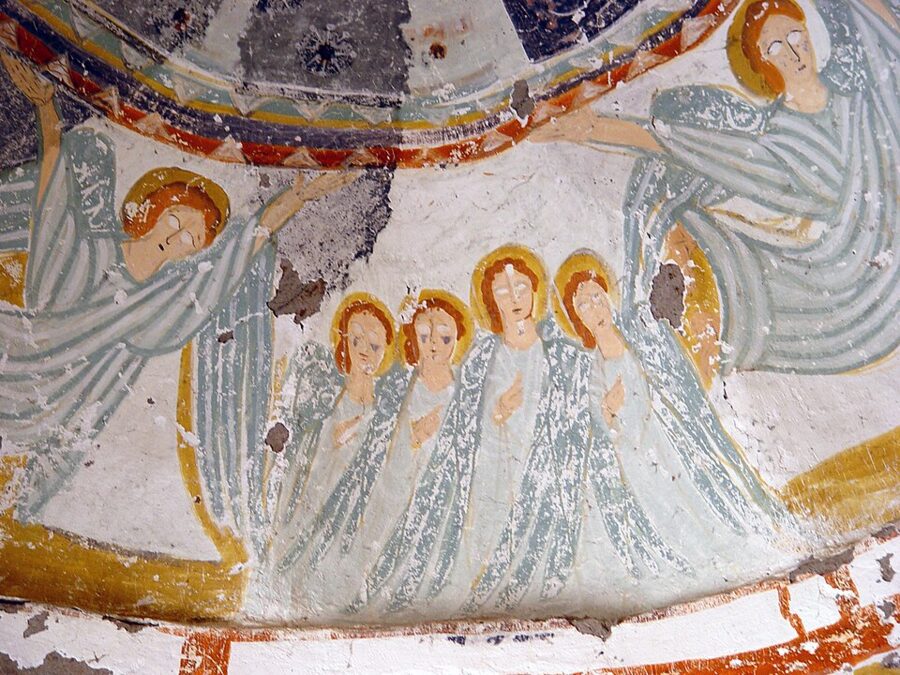
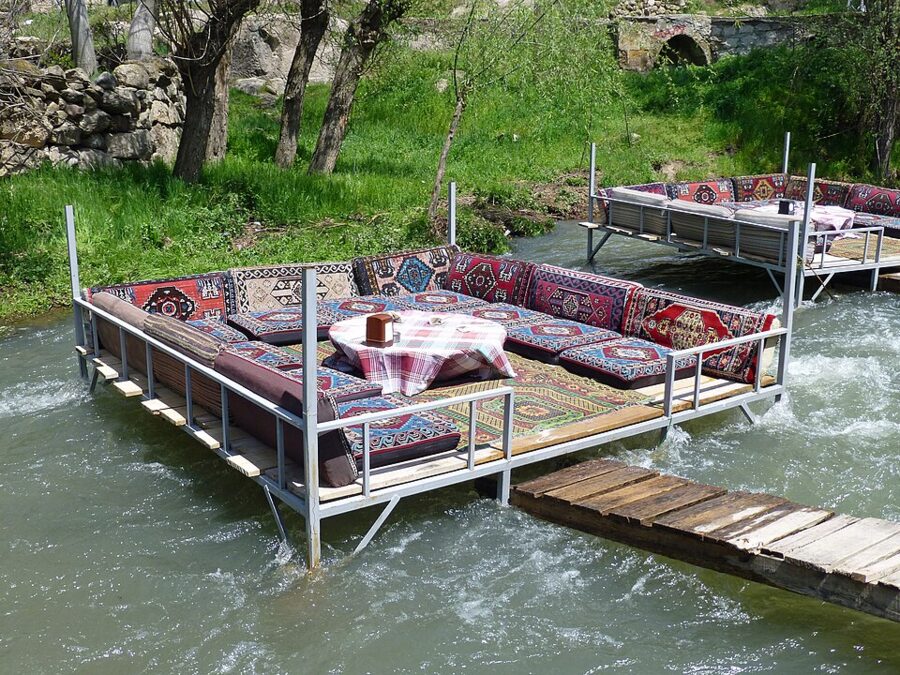
The usual walk runs from the stairs at Ihlara village to Belisırma, about 4 km along the river, where several restaurants serve trout and grills on platforms over the water. On the way, stop at Ağaçaltı Church; the Ministry dates its frescoes to the 9th to 11th centuries, while some scholars put the Ascension in its dome earlier, before the Iconoclast ban on images in the 8th century. In Belisırma, see Kırkdamaltı Church, painted between 1283 and 1295 for a lady named Tamar, probably of Georgian birth, who appears holding a model of the church.
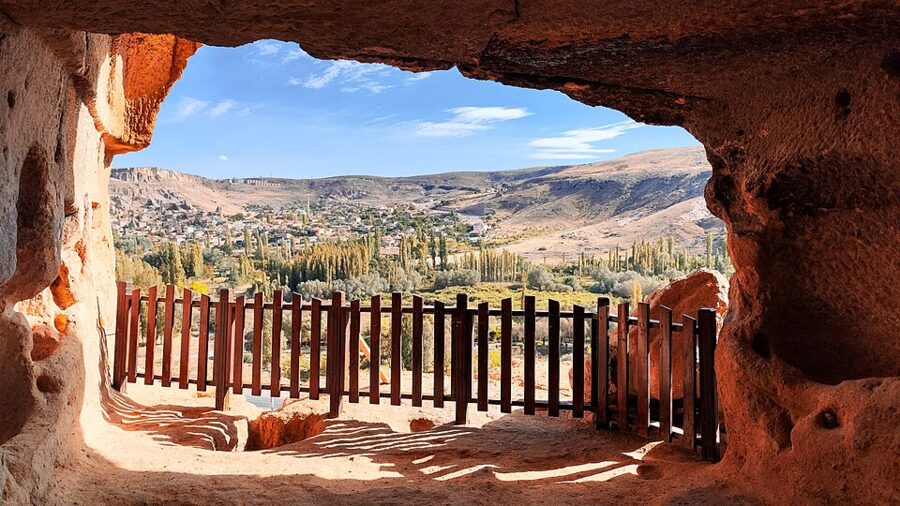
Selime Monastery, a cathedral and living quarters cut into the cliff, stands at the northern end of the canyon.



By public transport it means buses via Aksaray and a minibus to Ihlara or Güzelyurt, with little margin on the return. This is the one day where the Green Tour beats doing it yourself.
Soğanlı
Soğanlı is a pair of valleys south of Ürgüp, over the line in Kayseri province, with rock churches, dovecotes and a village where women sell rag dolls in local costume. It is quiet even in summer, because there is no useful bus; you go by Blue Tour, scooter or car, about an hour’s drive from Ürgüp through Mustafapaşa.

Avanos pottery
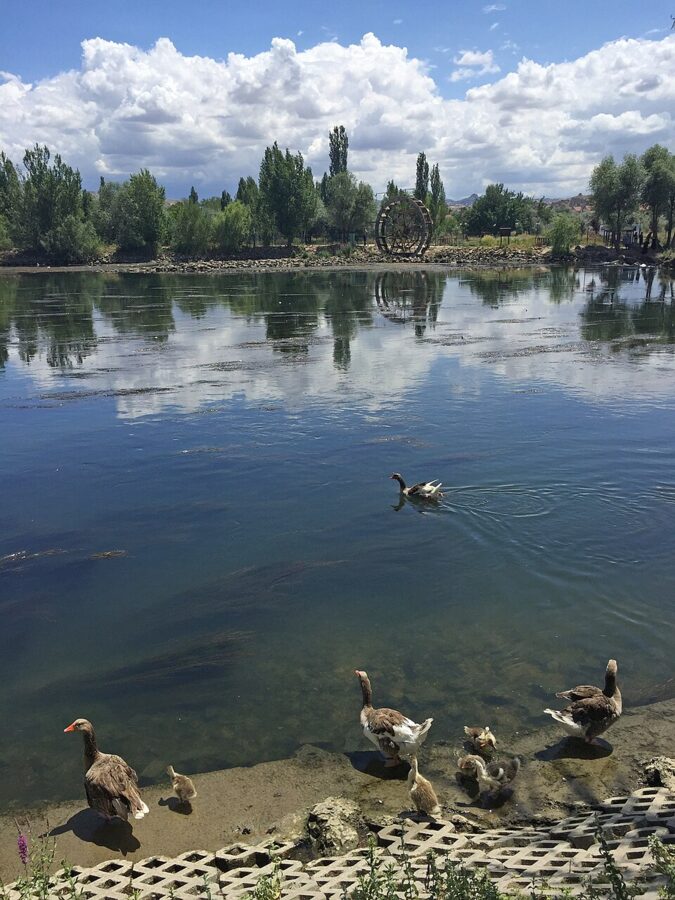
Avanos sits on the Kızılırmak, the “red river”, the longest river entirely within Turkey, and has made pots from its red clay for thousands of years. Workshops along the river give free wheel demonstrations and let you try; the deal is that you then walk through a showroom. Buy something small and wrap it well, as carry-on bags and dorm lockers break pottery.

Ürgüp wine and Mustafapaşa
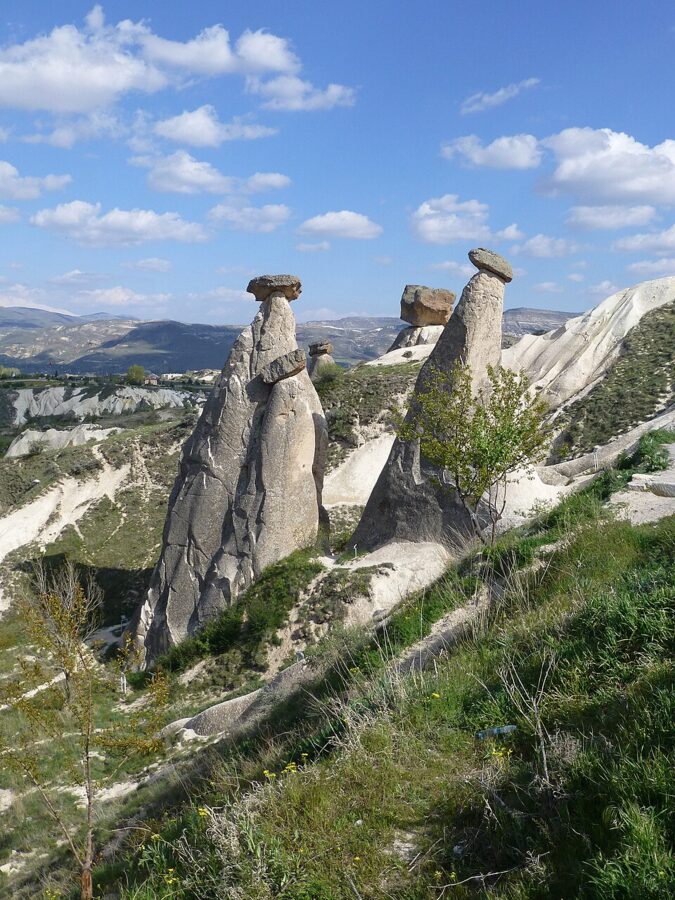
Cappadocia has grown grapes since antiquity, and the rock cellars kept wine cool long before refrigeration. In Ürgüp, the Turasan winery’s tasting room opened daily 09:00–18:00 in 2026. Walk up to the Three Beauties (Üç Güzeller), a trio of capped chimneys on the edge of town, for the view, and to the hill above the old quarter.

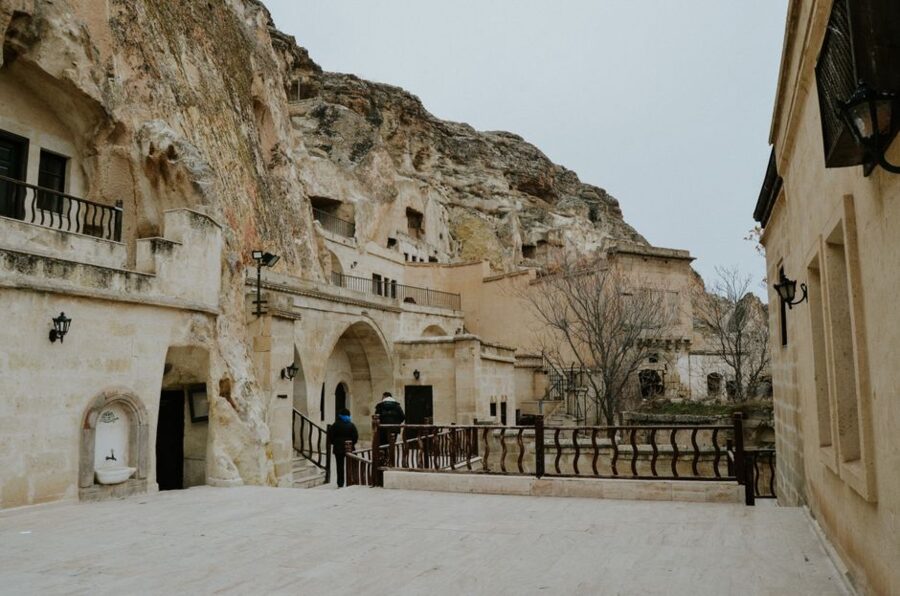
Mustafapaşa, 6 km south of Ürgüp, was the Greek town of Sinasos until the population exchange of 1924, when its Orthodox families left for Greece. Their carved stone mansions still line the streets, and it is a calm half-day with a café on the square.
Ortahisar
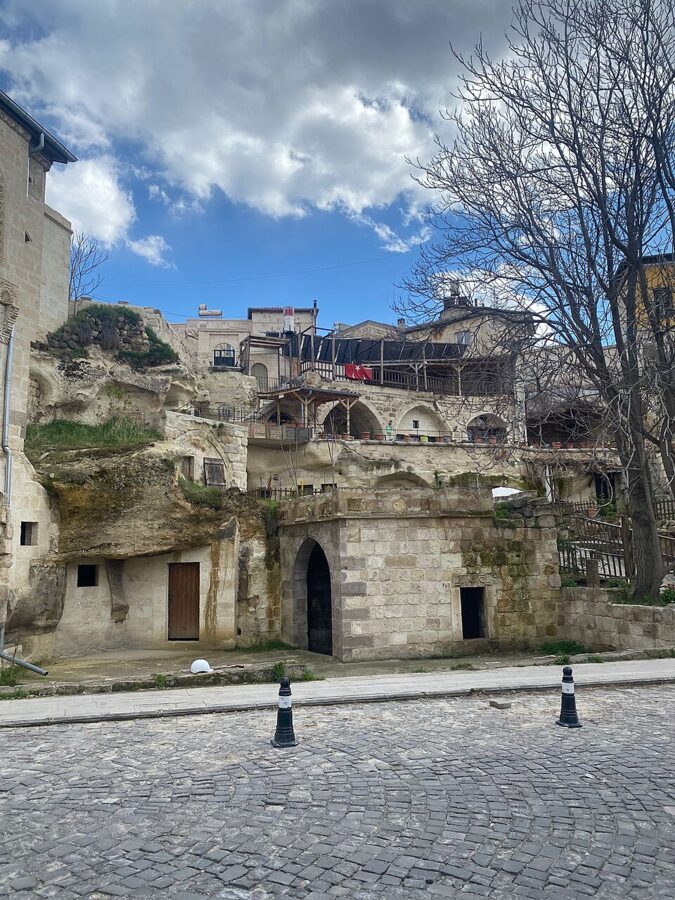
Ortahisar is a farming village under its own castle rock, between Göreme and Ürgüp. Its cool rock cellars are still used to store fruit and potatoes, and you will see trucks loading at the cave doors in autumn. The lanes around the castle are quiet in the evening, and the trailheads for Meskendir and the Rose and Red valleys are close.
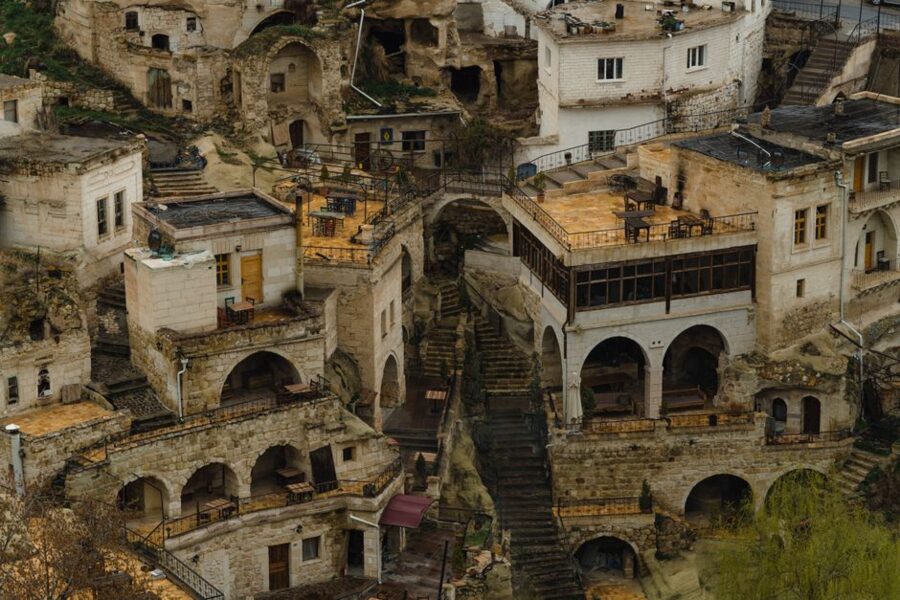
Where to sleep cheaply
Göreme has the cheapest beds in Cappadocia. In late 2026 a dorm bed ran about €10–20 a night in low season (roughly 550–1,100 TL), more on spring and autumn weekends and during Turkish holidays, when it is worth booking ahead. All of the places below had guest stays in October or November 2026.
- Köse Pension: a long-running Göreme pension with dorms and private rooms, a pool that opens from mid-April to November, and breakfast included.
- Terra Bella Pansion: five mixed dorms and four private rooms, a roof terrace, and a guest kitchen with a fridge and microwave (no cooking on the stove).
- Diadem Cappadocia Guest House & Hostel: a 10-bed mixed dorm, an 8-bed female dorm and en-suite doubles in the Aydınlı quarter, with breakfast included.
- HomeStay Cave Hostel: dorm beds in cave rooms with curtains, lockers and lights, a rooftop and a kitchen (stove use costs extra); check-in 12:00–23:00.
Cave rooms sound romantic and mostly are, but they keep a steady temperature, which means cool in July and cold and damp in January. In winter, ask whether the room is heated before you book. Rooms deep in the rock also have no window, which is either a blessing or a problem depending on how you sleep.
Eating cheaply
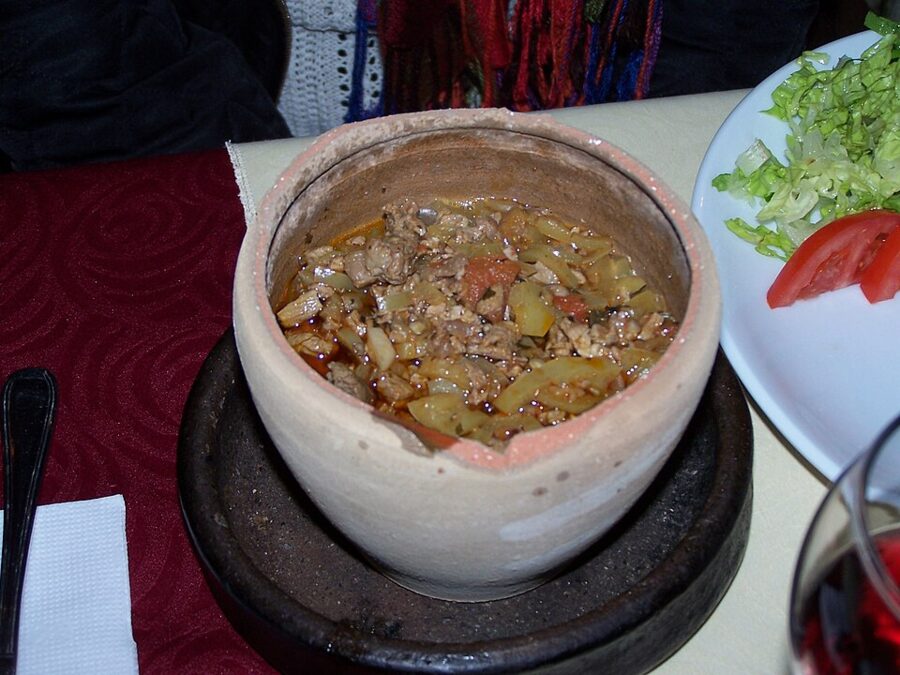
The dish to order once is testi kebab: meat and vegetables sealed in a clay jug and cooked for hours in a wood oven, then cracked open at your table. It is a showpiece priced like one, usually for two people, and some places want an hour’s notice.

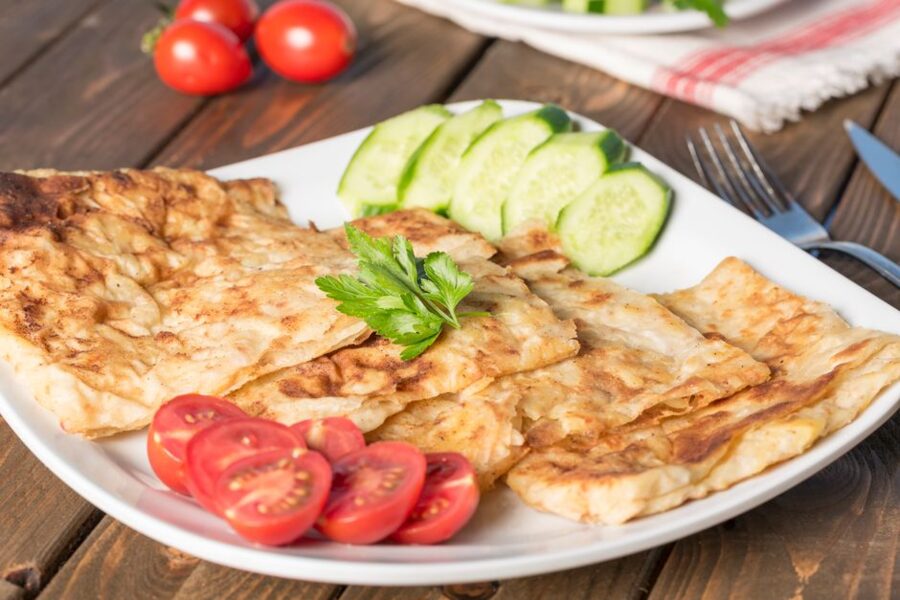
For everyday eating, look for gözleme, thin flatbread folded around cheese, spinach or potato and cooked on a griddle, sold by village women at stands in the valleys and on the Uçhisar road. Pide shops, soup places and the lokanta canteens with dishes behind glass feed workers for much less than the restaurants on Göreme’s main street. Mantı, small dumplings with yogurt and chili butter, come from Kayseri and are on most local menus.
On walking days, a supermarket picnic is cheaper still: bread, cheese, olives, tomatoes, dried apricots and a big bottle of water. Most people drink bottled water here, so buy the 5-liter jugs and refill a small bottle in your room.
Money, manners and the usual tricks
Museum and underground-city tickets are priced in euros; pay by card at the ticket office, or buy e-tickets and MuseumPass on the Ministry’s own site. Everything else runs in lira: minibuses and village stands want cash, so carry small notes and coins. Göreme has cash machines on the main street; use the ones attached to a bank branch, and decline the machine’s offer to convert your withdrawal into your home currency.
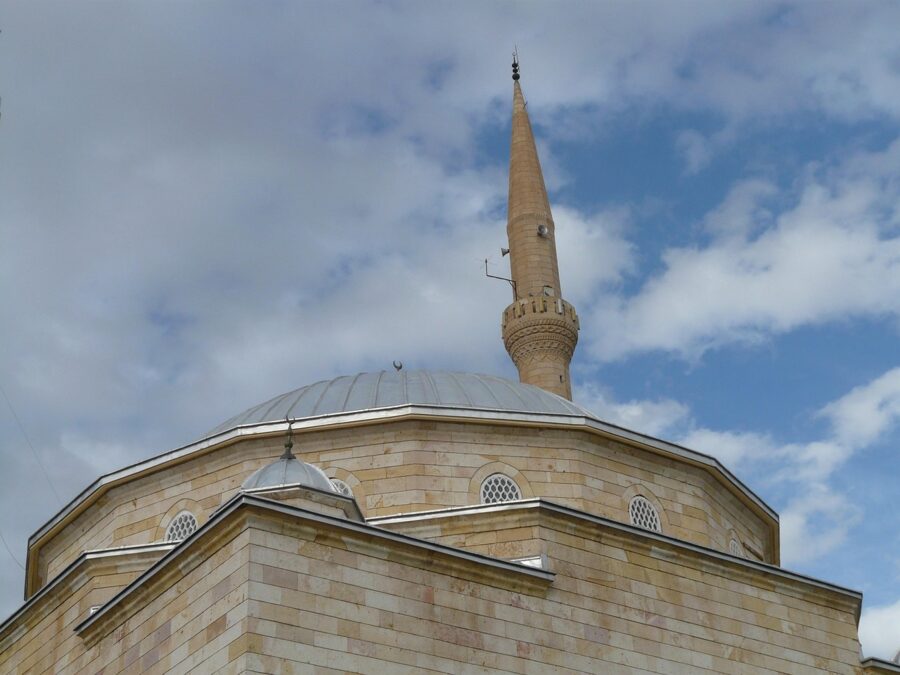
Dress for the villages, not the beach. Shoulders and knees covered is the norm away from Göreme’s main street, and a scarf is needed for women entering a mosque. Mosques close to visitors during the five daily prayers and for longer at Friday noon prayer, so plan a visit to the mosques of Avanos, Ürgüp or Uçhisar between prayer times.
The tricks here are mild compared with Istanbul. The ones that still run:
- Cut-price balloon seats from street touts, resold from unlicensed or overbooked companies, sometimes with no pickup on the morning. Book through a licensed operator or your guesthouse.
- The free demonstration: pottery, onyx and carpet workshops show you round for nothing, then walk you into a showroom. Watching costs nothing; enjoy it and leave without guilt.
- Tour shop stops: a cheap day tour can spend more time in shops than at the sites. Ask how many shop stops are on the program before you pay.
- Taxis without a meter running: agree the fare before you get in, or ask your guesthouse to call one.
Three days in Cappadocia
| Day | Morning | Afternoon and evening |
|---|---|---|
| 1 | Arrive on the night bus, drop bags, Open Air Museum at 08:00, Dark Church and Tokalı | Rose and Red valleys to the Kızılçukur viewpoint for sunset; walk or minibus back |
| 2 | Balloons from the ridge (or your flight); bus or taxi to Uçhisar, castle, walk down Pigeon Valley | Scooter or minibus to Çavuşin, Paşabağ and Zelve; sunset in Avanos |
| 3 | Green Tour: underground city, Ihlara walk, Selime | Back by 17:30; evening night bus or a late flight from Kayseri or Nevşehir |
| 4 (spare) | Balloon flight if day 2 was canceled; Love Valley and Zemi on foot | Ürgüp wine and Mustafapaşa, or Soğanlı on a scooter |
If you only have two days, drop the Green Tour and take the bus to Kaymaklı on day 2 instead of Zelve. If you have five, add Soğanlı and a slower day in Ürgüp.
What three days cost
| Item | Budget | Notes |
|---|---|---|
| Dorm, 3 nights | €30–60 | Low season; more on spring and autumn weekends |
| Open Air Museum, Dark Church, Zelve | €38 | Or MuseumPass €65 if you add two underground cities and Ihlara |
| Green Tour | €40–80 | Check that tickets and lunch are included |
| Uçhisar Castle | about 320 TL or more | Municipal ticket, cash or card |
| Local buses and minibuses | a few hundred TL | 25–35 TL a ride in 2026 |
| Scooter, one day | varies | Plus fuel; compare two shops |
| Food | modest | Gözleme, pide and picnics; one testi kebab night |
| Balloon flight (optional) | €100–260 | Low season to high season, standard basket |
Without a balloon, three days in Cappadocia come in well under the cost of the flight itself. That is the strongest case for watching from the ridge: the money pays for another week of the trip.
Moving on
The night bus to Istanbul is the classic exit, about eleven hours, leaving Göreme in the evening and reaching the city’s main bus terminals between 06:00 and 08:00. Flights from Kayseri and Nevşehir to Istanbul cost little more if booked early, once you count the airport shuttle. Ankara is about four to five hours by bus, and from there the high-speed train runs to Istanbul or Konya.
Heading west, buses go to Denizli for Pamukkale and on to Selçuk for Ephesus and the Seven Churches of Revelation, the cities of the earliest Christian communities in Asia Minor, centuries before the monks of Göreme. Heading south, the evening buses to Antalya reach the coast by morning.
Whichever way you go, buy the ticket a day ahead, and take the latest morning departure you can if the balloons were grounded: one more dawn on the ridge costs nothing.