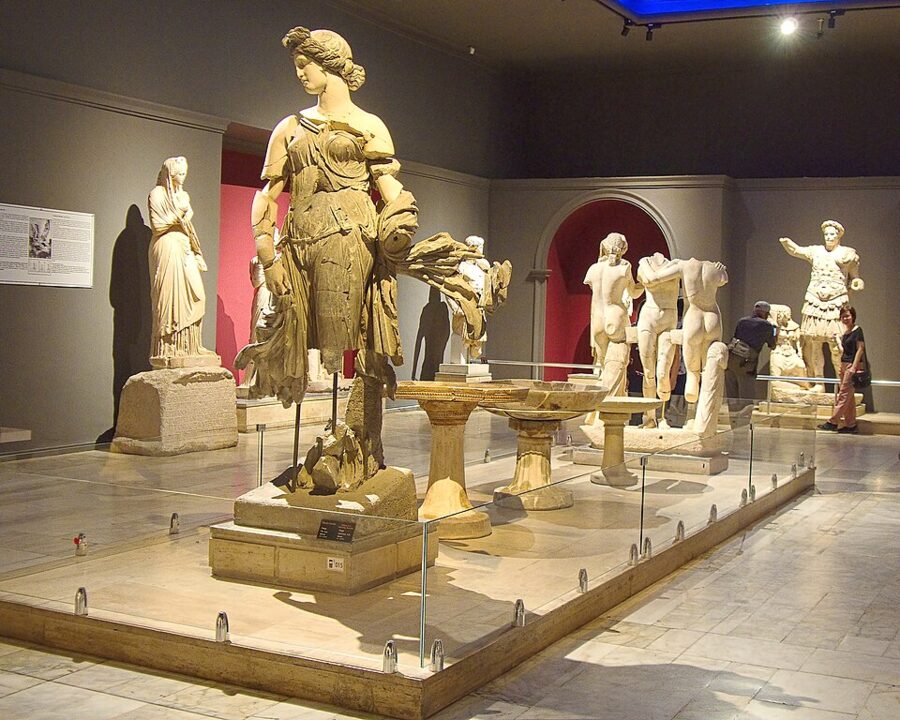
The most famous statue in Antalya, a marble Heracles leaning on his club after killing the Nemean lion, is not on show anywhere. Since September 2025 it has been packed away with nearly 100,000 other objects from the Antalya Museum, in temporary storage beside the empty lot where the museum used to stand. The city it came from, Perge, is still open, and from the old town a 42 TL tram ride and a 25-minute walk get you to its gate.
That is Antalya on a budget in one sentence. The city is big, sprawling and ringed by all-inclusive resorts, but the parts a backpacker comes for are cheap or free: a walled Ottoman quarter above a Roman harbor, two long public beaches, a waterfall that drops straight into the sea, and four ancient cities within reach by tram, bus and minibus. The tours sold on every corner of Kaleiçi bundle those cities into one rushed day. You can do most of them yourself for the price of the tickets and a few bus fares.

Below is how I would spend three or four days here: where the cheap beds are, what the old town is worth on foot, which beach to pick, how to reach Perge, Aspendos, Side and Termessos without a tour, and what it all cost in late 2026. If Antalya is one stop on a longer Turkey itinerary, the last section covers the buses out.

Contents
- Antalya in a few lines, and why a backpacker stops
- Kaleiçi on foot
- The Antalya Museum in 2026: closed, demolished, rebuilding
- The beaches: Konyaaltı, Lara and the cove under the walls
- The waterfalls: Düden and Kurşunlu
- Day trips to the ancient cities by public transport
- Getting around: AntRay, Antalyakart, the airport and the otogar
- Where to sleep cheaply
- What to eat: piyaz, şiş köfte and the cheap end
- Seasons and costs
- Onward: the coast, the plateau and the long way round
Antalya in a few lines, and why a backpacker stops
Antalya began as Attaleia, a port founded in the middle of the 2nd century BC by Attalos II, king of Pergamon, who wanted a harbor on this coast. Building work on the site of the old eastern bus station in 2008 turned up graves older than that, so people were already living here when the king’s men arrived. Pergamon passed to Rome in 133 BC, and the city did well enough under the emperors to build a triumphal gate when Hadrian came through in 130 AD.
The Seljuk Turks took the city in 1207, and their sultans left the fluted minaret that is still its emblem. The crusader king of Cyprus captured it in 1361 and held it for a time; the Ottomans followed. After the First World War, Italian troops occupied it briefly.
The modern city is something else: well over a million people, a huge airport, and a coast lined with resort hotels from Kemer round to Belek. None of that is why you stop. You stop because Antalya is the hub of the south coast, because a dorm bed in the old town costs about the same as a ticket to Perge, and because no other base puts this many Roman cities within a day’s reach by public transport.
Three or four nights is the right length. One day for the old town and a beach, one for Perge and Aspendos, one for Side or Termessos, and a spare for the waterfalls or for doing nothing at Konyaaltı. With one night, Antalya works as a change of buses between the coast and Cappadocia, but you will leave having seen a gate and a bus station.
Kaleiçi on foot
Kaleiçi means “inside the castle”, and until the 20th century it was more or less the whole city: a walled town on a cliff above the harbor. Most of the land wall came down in the 19th century, but the street plan survived, and so did hundreds of Ottoman houses with timber upper floors that lean out over the lanes. Nobody sells a ticket to Kaleiçi. The lanes, the gate and the harbor are public at all hours.
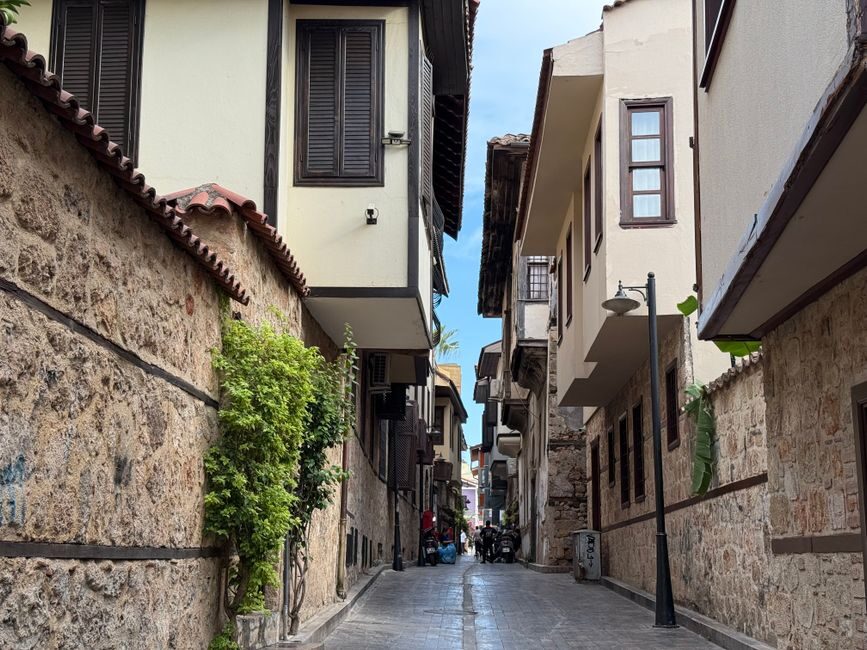
Allow two hours for a first loop and half a day if you add a museum and lunch. The lanes run downhill toward the harbor, so start at the top. The nearest tram stop is İsmetpaşa on the T1 line, on the northern edge of the old town, and Hadrian’s Gate is about ten minutes’ walk from there along the outside of the walls.
Hadrian’s Gate
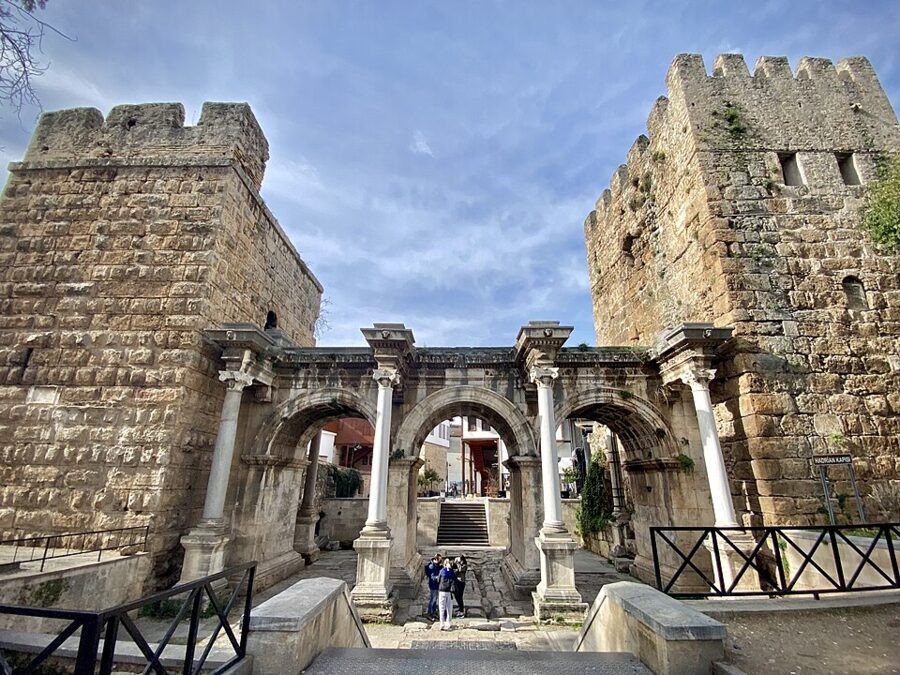
The gate went up in 130 AD for the emperor’s visit, and it is the finest Roman monument in the city: three equal marble arches, granite columns on each face, and carved coffers in the vaults that you only see by standing at the edge of an arch and looking up. It survived because later builders walled it into the city’s defenses. When the walls on this side came down in 1882 the gate reappeared, and a 1959 restoration lowered the ground to the Roman road again.
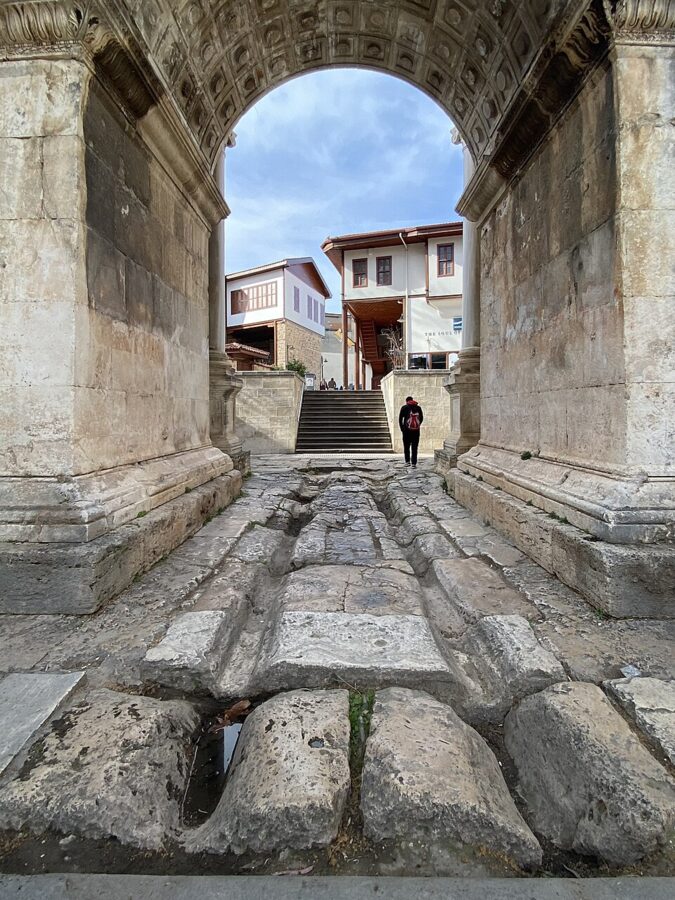

The original gate had a second story, probably carrying statues of Hadrian and his family. The hydrographer Francis Beaufort still described an upper level in 1817; by the end of the century it had gone. What stands now is a little over 8 m high.
Hesapçı Sokak and the Kesik Minare
From the gate, Hesapçı Sokak runs southwest through the old town. It was the main street of ancient Attaleia and is still the spine of Kaleiçi, lined with restored houses, small hotels and the cafés that pay for them. Ten minutes along it is the Kesik Minare, the “broken minaret”, which tells the city’s whole history in one building.
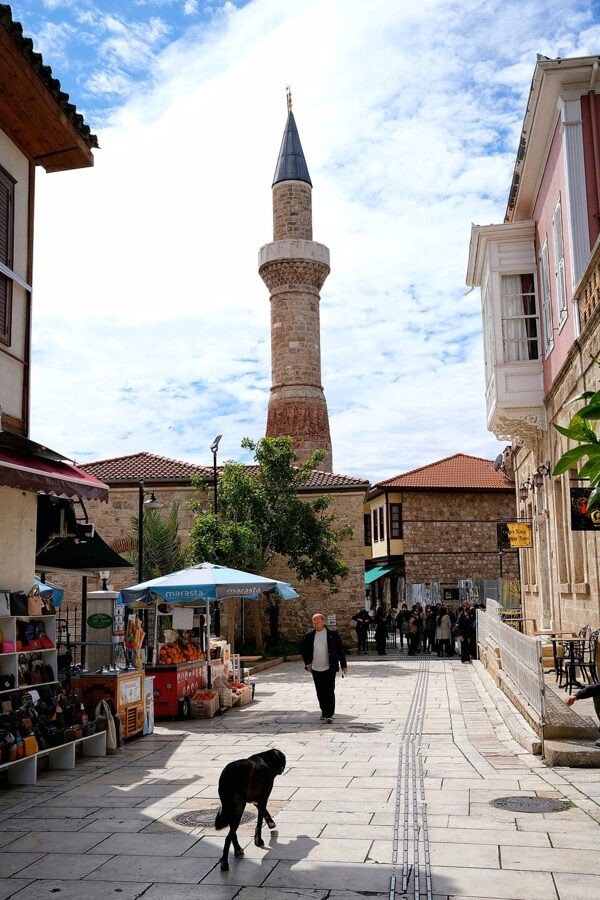

It began as a Roman temple in the 2nd century AD and became a Byzantine church of the Virgin. The Seljuks made it a mosque and added the minaret; the Cypriot crusaders turned it back into a church after 1361; under the Ottomans it became a mosque again, named after Prince Korkut, a son of Sultan Bayezid II. A fire in 1896 gutted the building and snapped the top off the minaret.
For more than a century it stood as a ruin. Restoration began in 2018, the pointed cap went back on, and the mosque reopened on 5 March 2021, the anniversary of the Seljuk conquest. The name stuck even though the minaret is whole again.
Hıdırlık Tower and Karaalioğlu Park
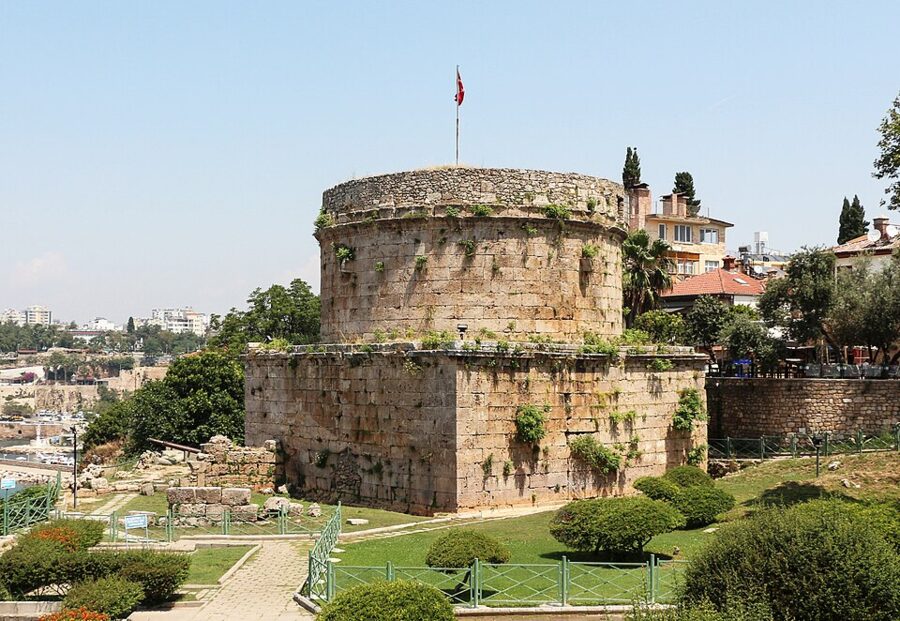
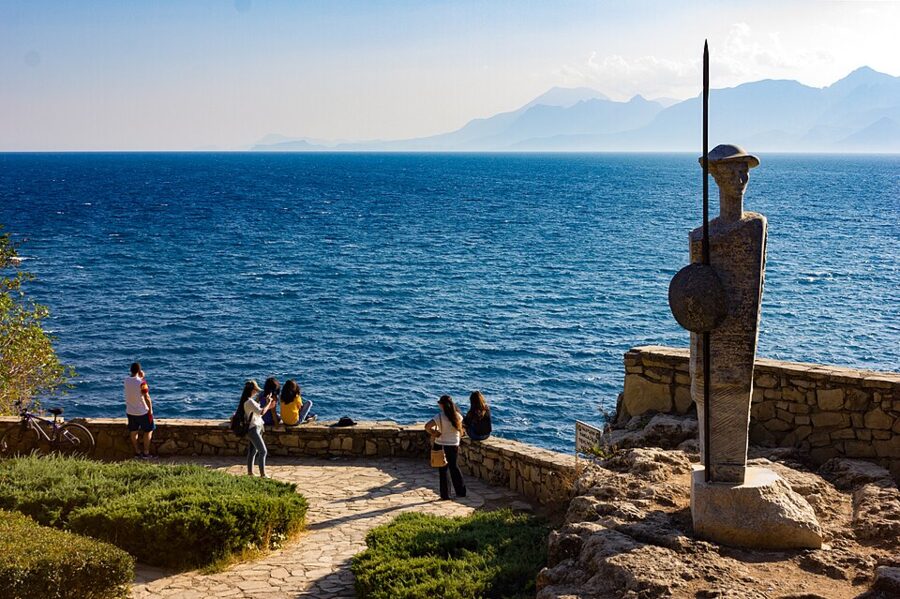
Hesapçı Sokak ends at Hıdırlık Tower, a round stone drum on a square base where the land walls met the sea walls. It dates from the 2nd century AD, and whether it was a lighthouse, a watchtower or a tomb is still argued. The tower itself is fenced off for excavation, but the clifftop beside it is open, and the view across the gulf to the Beydağları mountains is the best free sunset in the city.

South of the tower, Karaalioğlu Park runs along the cliff, shaded, full of benches and ice-cream carts, and the place where half the city seems to walk on a summer evening. If you need to avoid steps, finish the walk here: the route down to the harbor is all stairs.

The clock tower, the Yivli Minare and the Mevlevi lodge
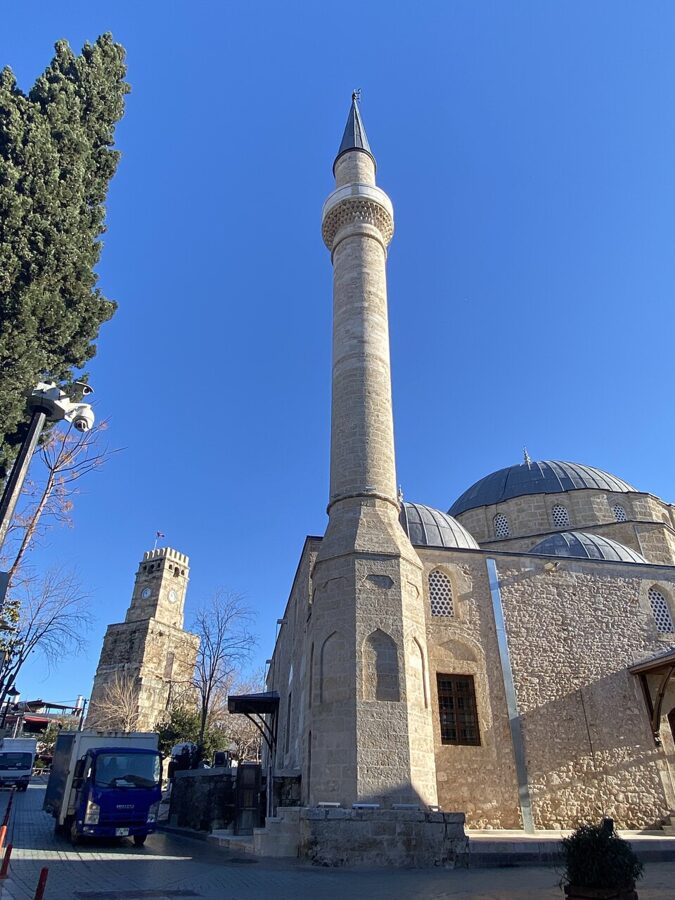
The other way in is from the north, at Kalekapısı, where the clock tower stands on a surviving bastion of the old wall. It went up under Sultan Abdülhamid II; sources give 1901 for the tower and 1921 for its completion, and the top was rebuilt in the 1940s. At about 14 m it is the meeting point everyone uses.

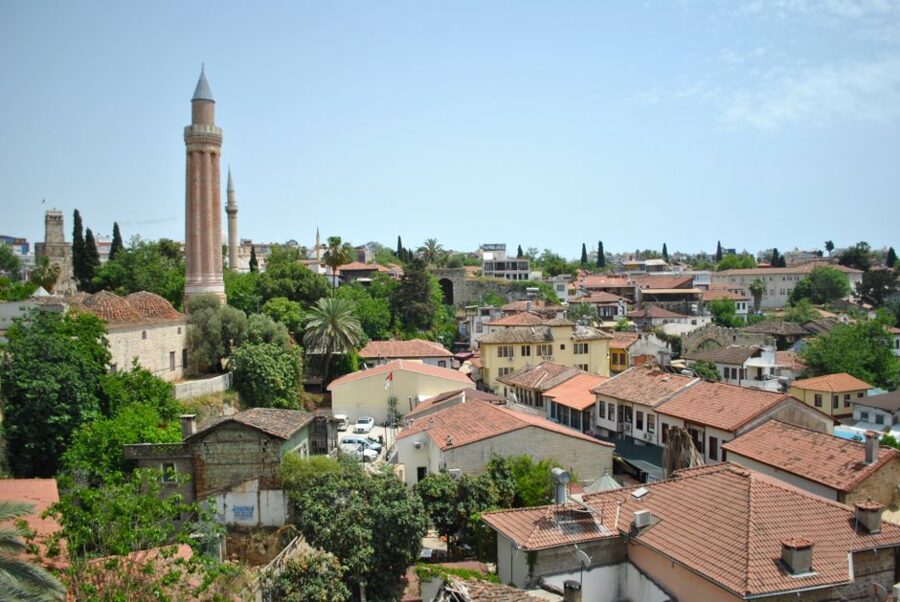
A few steps away is the Yivli Minare, the fluted minaret, a 13th-century Seljuk work usually credited to Sultan Alaeddin Keykubad I. It is 38 m tall, brick on a cut-stone base, with eight vertical flutes that were once banded with turquoise tiles. The six-domed mosque beside it is later and still in daily use. It is open to visitors outside the five daily prayers and closed longer at Friday noon; the minaret’s balcony is not open.
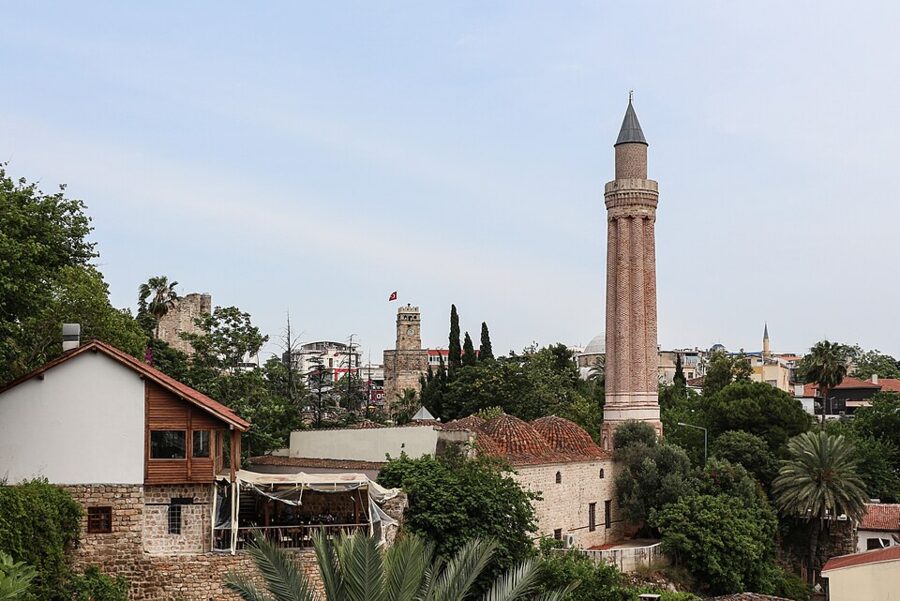

The minaret is one piece of a Seljuk complex. Behind it are the ruins of a 13th-century medrese, two tombs, and the Mevlevi lodge, a domed hall where the dervishes of Rumi’s order once performed the sema. The lodge is now a small state museum, the Mevlevihane Museum, listed by the Ministry of Culture as open daily. One of the tombs, dated 1377, belongs to Mehmet Bey, nicknamed the Chain Breaker because he took the city by breaking the chain across the harbor mouth.
The old harbor, the walls and two small museums
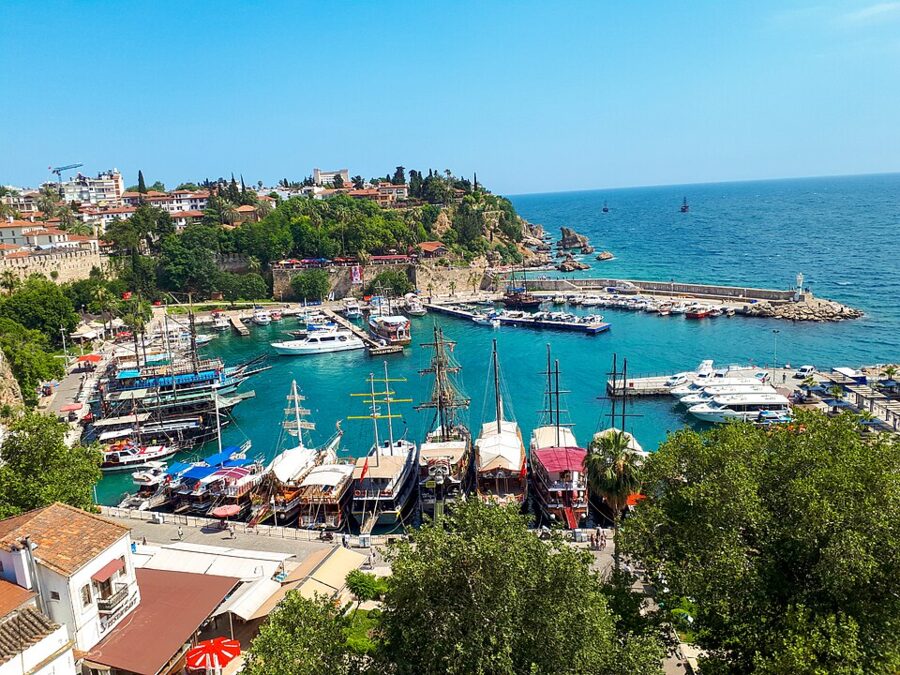
From the Yivli Minare, stepped lanes drop to the old harbor, a horseshoe of quays below the cliff. The walls above it are the best-kept stretch of the city’s defenses, and you only see them properly from the water’s edge, looking up. The boats moored here sell everything from one-hour harbor cruises to day trips with lunch; prices are agreed at the quay, so ask two or three captains and get the route, the time on board and any swim stops said out loud before paying.
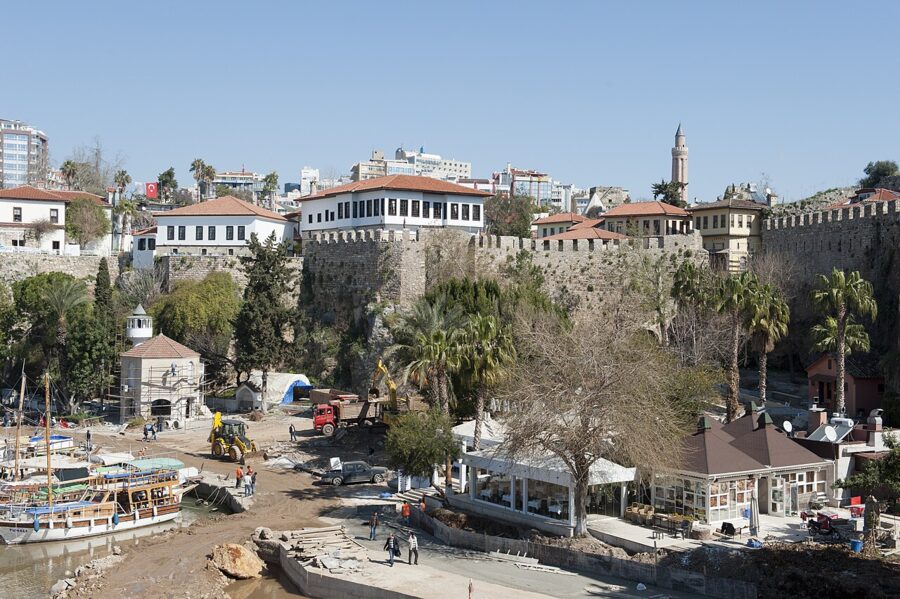

To get back up without the stairs, use the free panoramic elevator at the western end of the harbor, which rises to a glass viewing terrace beside Cumhuriyet Square. It stops for maintenance now and then; the stairs take about five minutes and some breath.
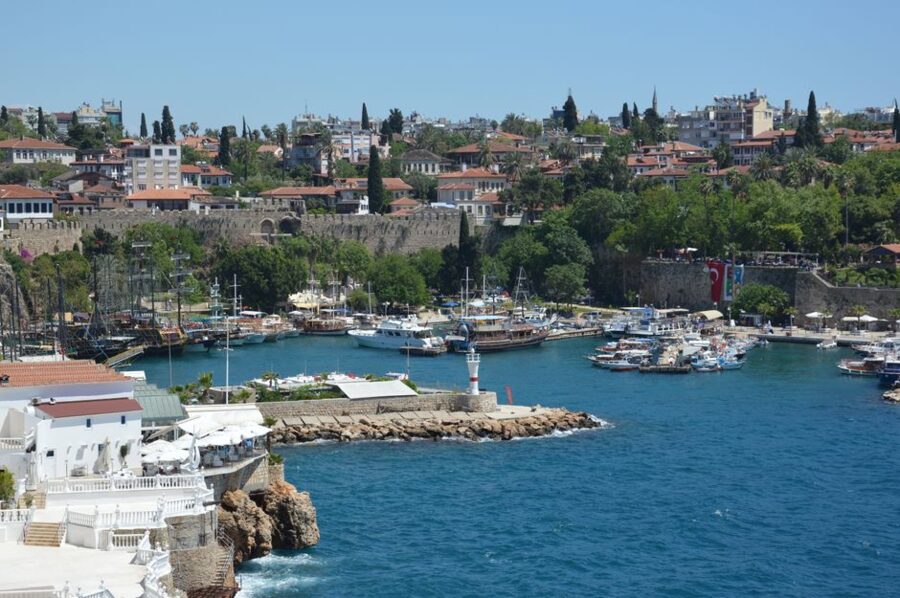
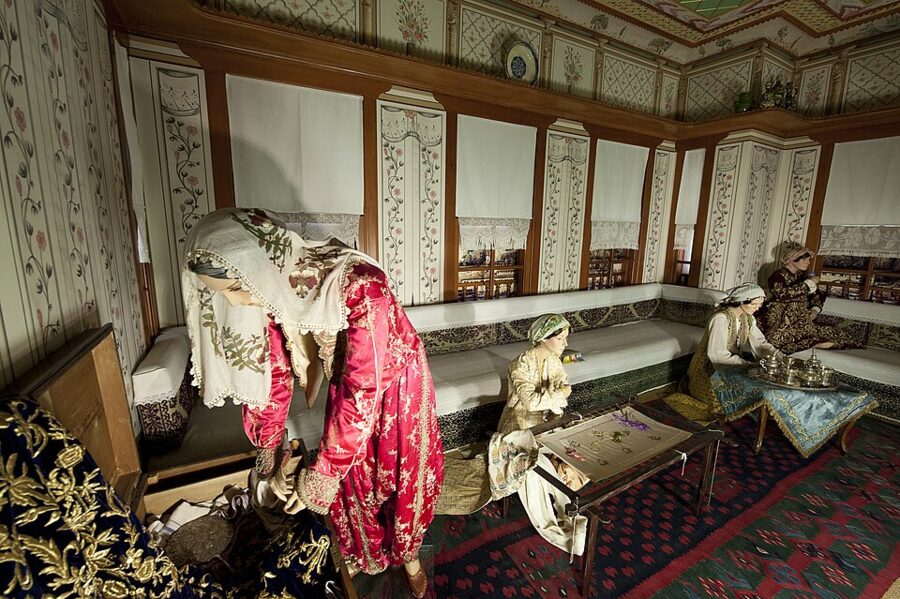
Two small museums sit inside the walls. The Suna and İnan Kıraç Kaleiçi Museum, a private collection on Kocatepe Sokak, fills an Ottoman house with rooms set up as a 19th-century family lived in them, and a former Greek Orthodox church of St George next door. It opens Tuesday to Sunday, 09:00–18:00; the state museum pass does not cover it. The Ministry of Culture’s Ethnography Museum, in two Ottoman mansions on Mermerli Banyo Sokak, shows Döşemealtı carpets, looms, ceramics and reconstructed rooms.

Kaleiçi is also where the carpet shops, the “my cousin has a shop” walks and the boat touts concentrate. None of it is aggressive by Istanbul standards, and a smile and a walk away end every conversation. Prices in the lanes nearest Hadrian’s Gate and the harbor are the highest in the city.
The Antalya Museum in 2026: closed, demolished, rebuilding
If you are working from an older guide, cross this one off. The Antalya Museum, the region’s great archaeological museum on Konyaaltı Caddesi, closed to visitors at 08:30 on 16 July 2025. The Ministry of Culture said the 1972 building was not earthquake-safe, and in September 2025 it was demolished, after staff packed nearly 100,000 objects, about 200 of them large statues and sarcophagi, into sealed, climate-controlled containers in the museum garden.
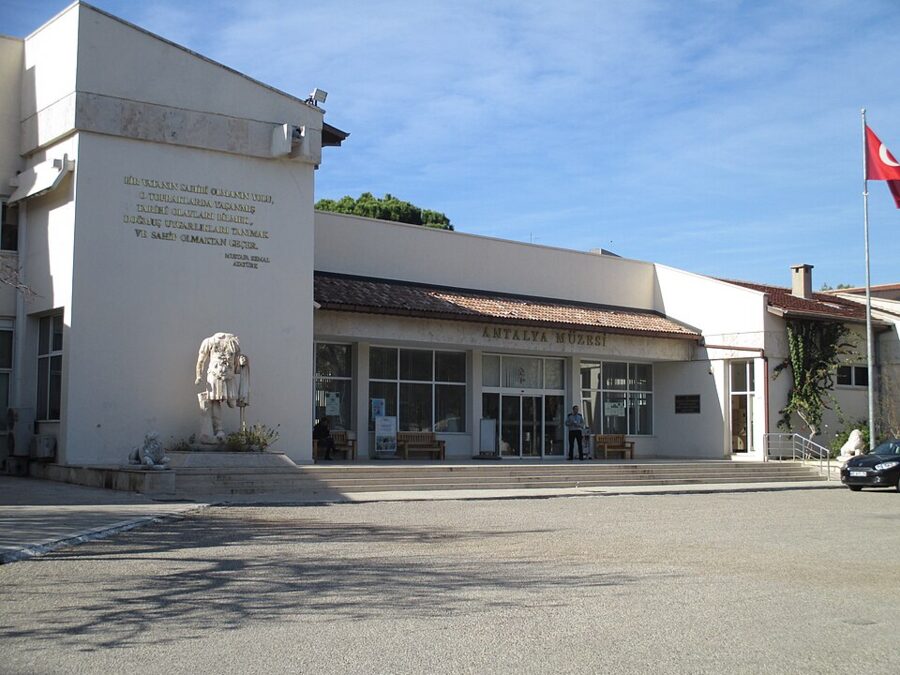

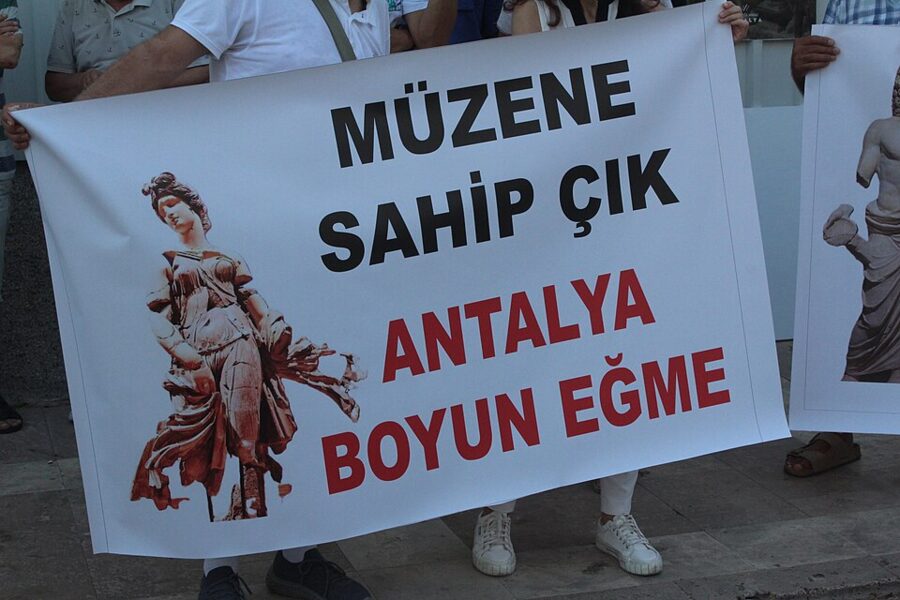
The decision was fought. Archaeologists, architects and residents held sit-ins outside the gates from 5 July, arguing that the building, which campaigners called the first museum of the Republic designed through an architecture competition, should be strengthened rather than flattened. The case went to court; the demolition went ahead.

The replacement is planned at about twice the size, with 19,500 square meters indoors and far more gallery space. The opening was first promised for summer 2026, then for the end of 2026, and in November 2026 the ministry’s own museum listing still showed it as closed. Plan as if it does not exist, and treat a reopening as a bonus.

What to see instead
The loss stings most for Perge, because the museum held the statues that made Perge famous: the emperors’ hall, the sarcophagi, and the Weary Heracles, whose upper half was smuggled abroad and only came home in 2011. You can still walk the city they came from, and that is the best substitute.
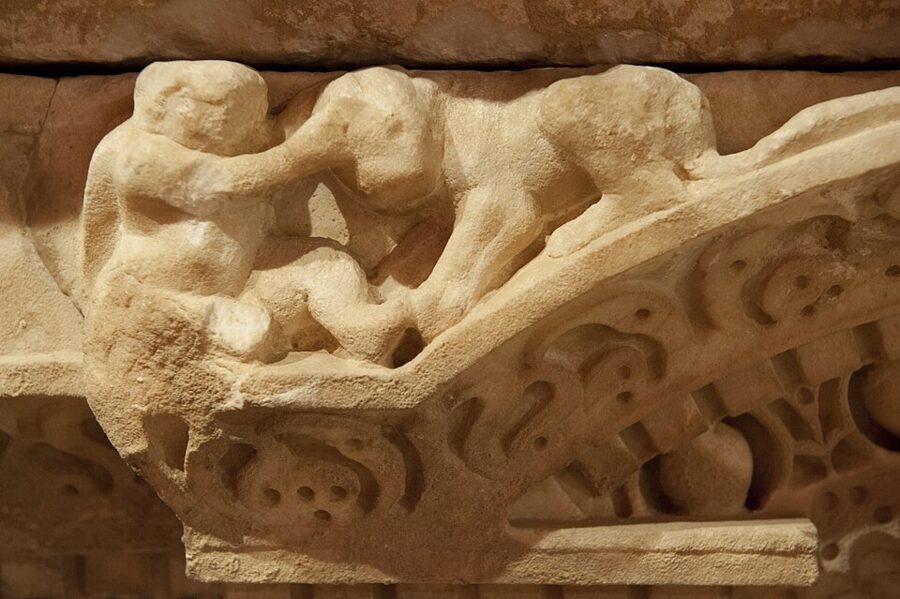

Closer in, the Antalya Necropolis Museum covers the city’s eastern cemetery at Doğu Garajı, the old eastern bus station in Çaybaşı, a short walk from Hadrian’s Gate. Rescue digs between 2008 and 2010, and again in 2020, uncovered 865 graves, some from the late 4th century BC. The ministry lists it as open daily, and tickets were €5 in late 2026.
Further out, the Side Museum, in a Roman bath at Side, holds sculpture from that city’s excavations. And the Kaleiçi Museum and the Ethnography Museum cover the Ottoman centuries that the archaeological museum never really did.
The beaches: Konyaaltı, Lara and the cove under the walls
Antalya has two long city beaches on opposite sides of the old town, and they are different enough that the choice matters. Konyaaltı, to the west, is pebble and shingle with a mountain backdrop. Lara, to the east, is sand. Both are public and free; you pay only if you want a lounger.

Konyaaltı
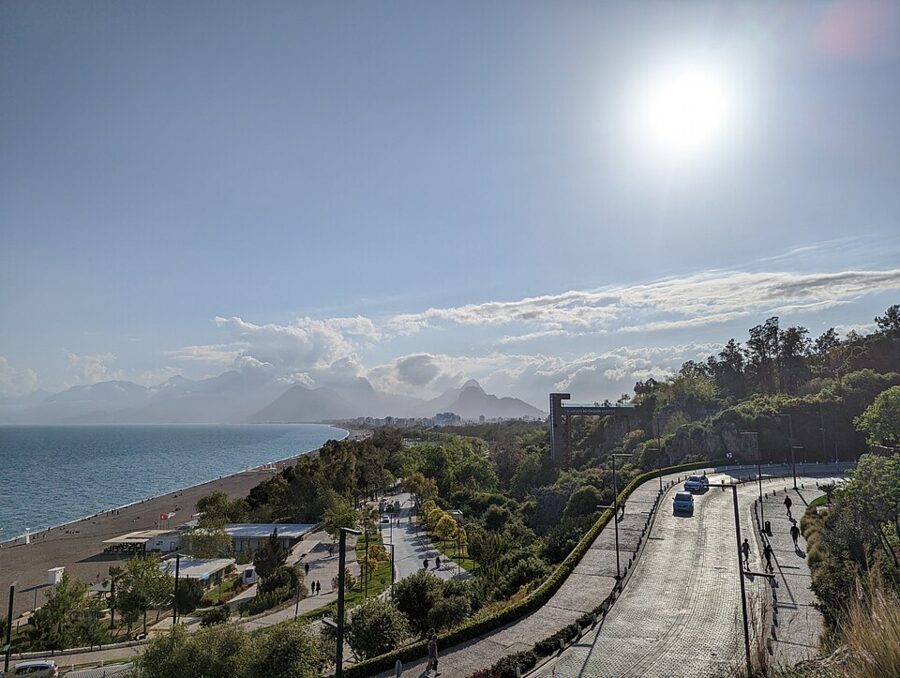
Konyaaltı runs for several kilometers west from the cliffs below the old museum site, backed by a promenade, a park and a strip of cafés. More than 30 businesses run lounger concessions along it, and in August 2026 the local press found sunbeds at 300–600 TL a day and daybeds at 1,000–1,500 TL. A towel on the public stretch between them costs nothing. A council rule bans charging for the public showers and changing cabins, so do not pay anyone who asks.
The sea shelves quickly and the pebbles are big at the waterline; cheap water shoes help. Mornings are calmest, as an onshore wind often picks up after midday. For a first visit, aim for the central Beach Park section, which has the most cafés, showers and playgrounds.
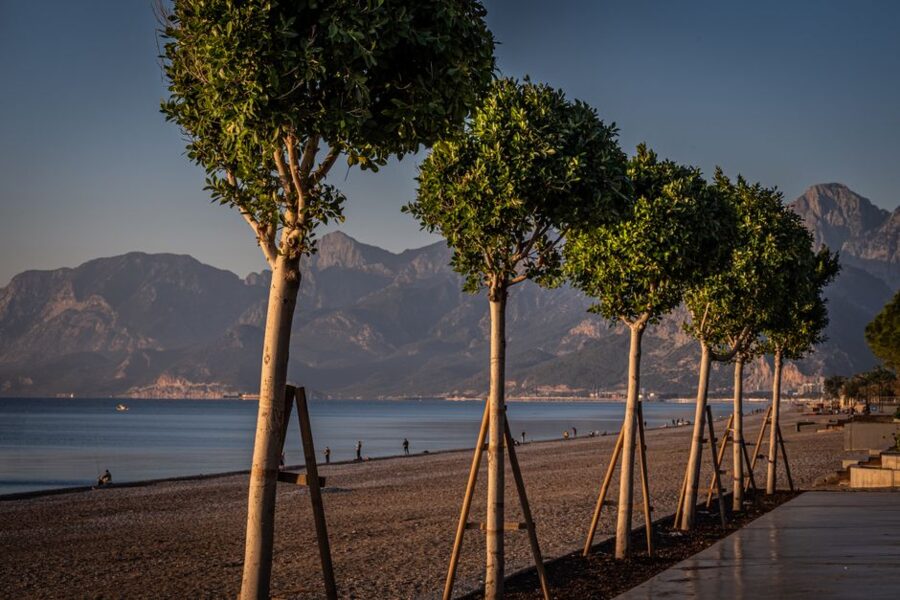
The eastern end is at the clifftop by the old museum site, called Müze on transport maps, with a steep paved path and a free panoramic elevator down to Beach Park. The tram that served Müze was running as a replacement bus in November 2026 (more on that below). City bus KL08 runs along the Konyaaltı side between Sarısu and Güzeloba, and from the airport, bus 400 crosses the city and continues through Konyaaltı.
Lara
Lara is the sand beach, on the eastern side of the city past Düden Park. Its public section, Lara Birlik, is run by a municipal company with toilets, showers, changing rooms, cafés and a playground, open 08:00–20:00, and a sunbed and umbrella cost 300 TL there under the municipality’s 2026 tariff. Further east the sand belongs mostly to beach clubs and then to the resort hotels of Kundu, which are a different trip entirely.
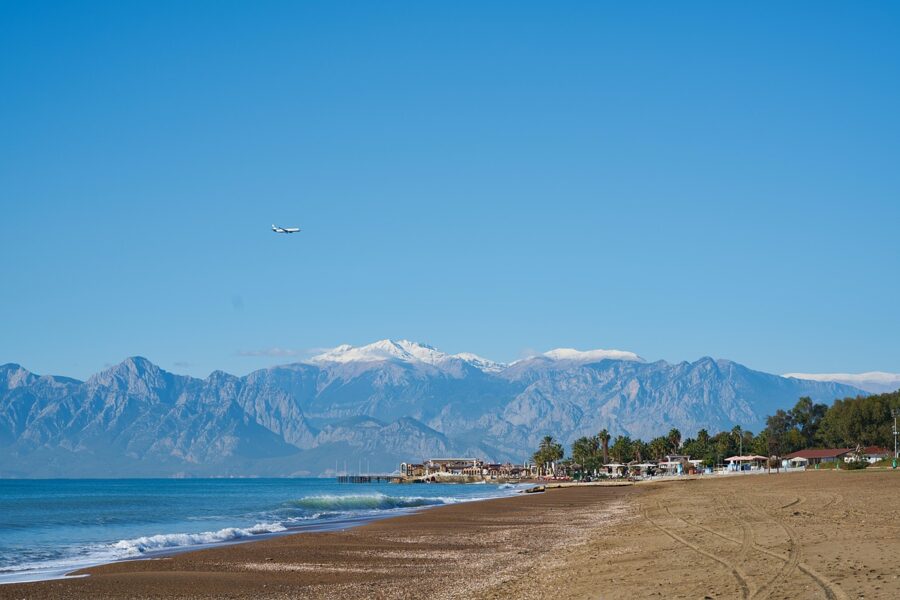
Buses KL08, LF09 and LF10 stop at Lara Cd-9 (stop number 10086) by the public beach entrance. Planes on the approach to the airport pass low overhead, which is either a feature or a reason to choose Konyaaltı.
Mermerli, the cove under the walls
If you are staying in Kaleiçi and only want a swim, there is a small bathing cove below the eastern walls, reached through the Mermerli restaurant. It is not free: visitors reported paying 800 TL in summer, separate from anything they ate. For that money I would rather take a bus to Konyaaltı and buy lunch, but on a hot afternoon with an hour to spare the convenience is real.
The waterfalls: Düden and Kurşunlu
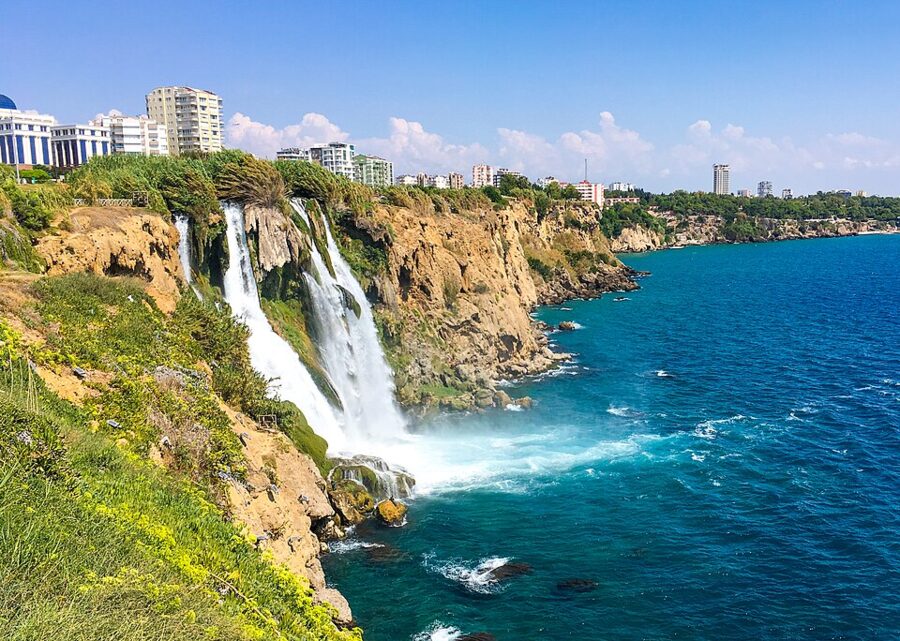
The Düden river runs underground for part of its course through the limestone north of the city, which is why it surfaces in such odd places. It forms two separate waterfalls on opposite sides of the city, and people regularly turn up at the wrong one. Upper Düden is an inland park with a cave behind the water. Lower Düden is a clifftop park in Lara where the river falls straight into the sea.

Lower Düden (Karpuzkaldıran)
This is the one to see if you see only one. The falls drop about 40 m off the cliff into the Mediterranean, the park around them is free and open, and the visit takes half an hour. There is no path down to the water and no ticket office; if someone at the park tries to sell you a waterfall ticket, walk on. From the airport, bus 800 runs along the Lara coast past Düden Parkı.
The flow is strongest in late winter and spring, after the rains. Antalya gets about 250 mm of rain in December and almost none in July, and by late summer the curtain thins out, partly because some upstream water is diverted for a hydroelectric plant.
Upper Düden (Düdenbaşı)
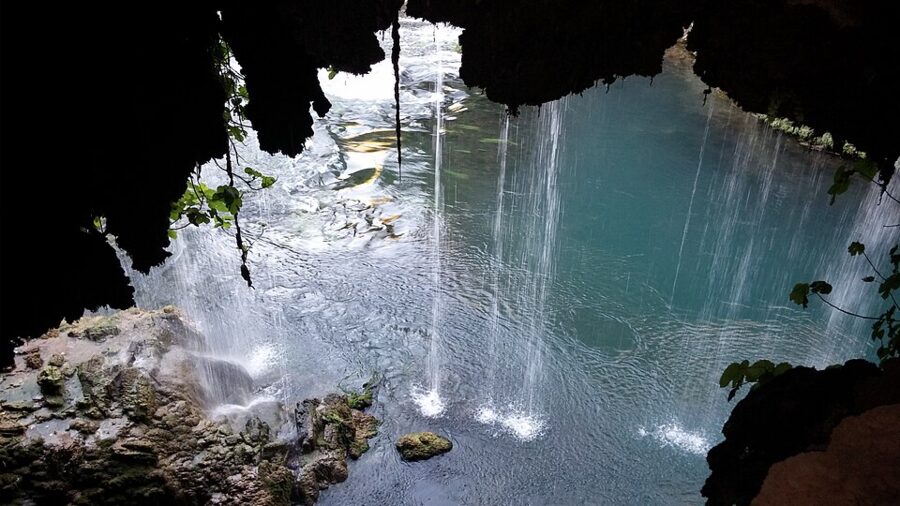
Upper Düden sits in a municipal park in Kepez, north of the center, with shady paths, picnic tables and a souvenir row. The reason to pay is Dilek Mağarası, a small cave behind the falling water, reached by steep, narrow stairs, where openings in the rock let you look out through the spray.
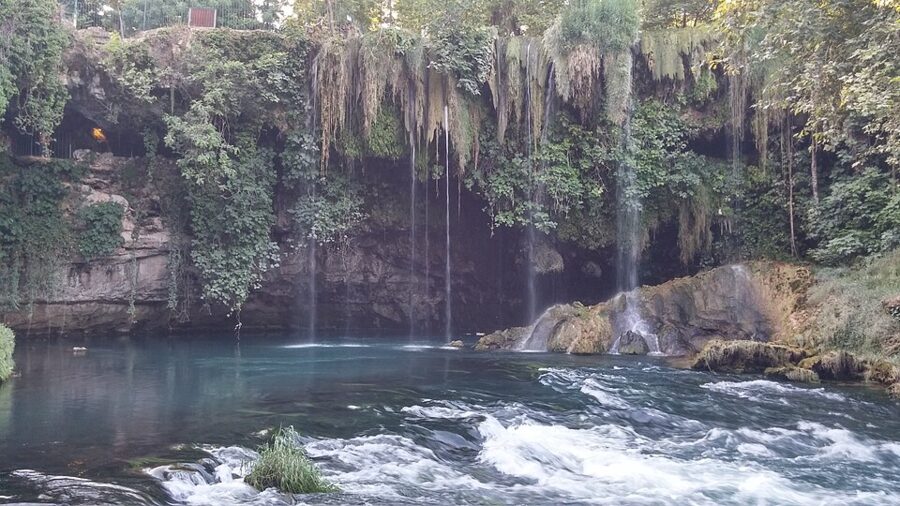

Admission for international adults was 200 TL at the gate in late 2026. The park is run by ANSET, a municipal company, so neither the museum pass nor the Müzekart works here, but since August 2026 the turnstiles accept the Antalyakart. Hours run 08:00–19:00 from April to October and 08:00–18:00 from November to March.

Kurşunlu
Kurşunlu is the quieter alternative, a protected nature park about 22 km northeast of the center in Aksu: an 18 m main fall, a string of turquoise pools and a shaded loop through pine forest, with turtles on the rocks in the calm stretches. Allow 90 minutes. Roughly a hundred uneven stone steps lead down from the entrance to the water, and the climb back is the hard part.
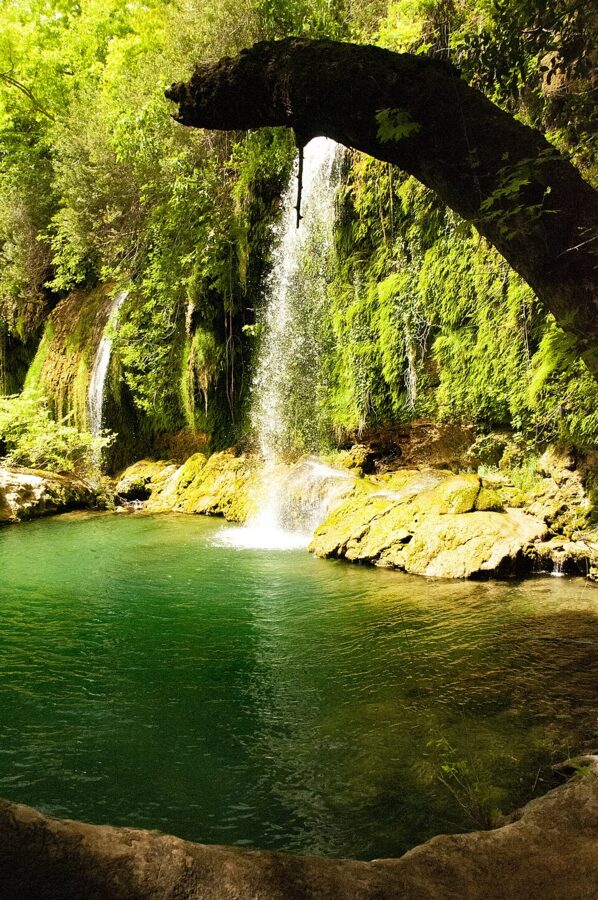

It opens daily 08:30–17:30. The park is run by the forestry authority, whose 2026 tariff sets a base adult price of 95 TL for parks in its top category, but the rules allow a separate foreign-visitor rate of five to ten times that, so check the board at the kiosk. City bus MK80, signed Kurşunlu Şelalesi, runs to the gate from Demirciler Çarşısı about every 15–20 minutes through the day; make sure it is MK80 and not MK80A.
Day trips to the ancient cities by public transport
The coast east of Antalya was Pamphylia, and its cities grew rich in the Roman peace of the 2nd and 3rd centuries AD. Four of them make day trips: Perge and Aspendos on the plain to the east, Side on the coast beyond, and Termessos in the mountains to the northwest. Three are easy without a tour. One is not.
| Site | Ticket (late 2026) | How to get there | Time from Kaleiçi | Tour worth it? |
|---|---|---|---|---|
| Perge | €11 | AntRay tram to Aksu, then 2 km on foot | about 1 hour | No |
| Aspendos | €15 | Bus SA19 to Serik, then taxi or Belkıs dolmuş, about 8 km | 1.5–2 hours | Only to fit Perge and Side in the same day |
| Side | Museum €5; theater closed | Bus to Manavgat, then dolmuş 8 km to Side | about 2 hours | No |
| Termessos | €3 site plus 475 TL national park | No practical bus to the ruins; taxi with waiting time, car or tour | about 1 hour by road | Yes, unless you have a car |
State archaeological sites price their tickets in euros and charge in lira at the day’s rate at the ticket office, by cash or card. If you plan to see more than half a dozen state sites in a week, the seven-day MuseumPass Mediterranean (€90) may pay off; for Perge, Aspendos and Side alone, single tickets are far cheaper.
Perge
Perge is the easiest of the four and, with the museum closed, the most important. It lies about 17 km east of the center at Aksu. Take an AntRay tram on the Expo or Aksu branch from any central stop, get off at Aksu, and walk about 2 km north along Perge Caddesi to the entrance, which takes about 25 minutes and is signposted. The fare is the same flat 42 TL as any city ride on an Antalyakart.
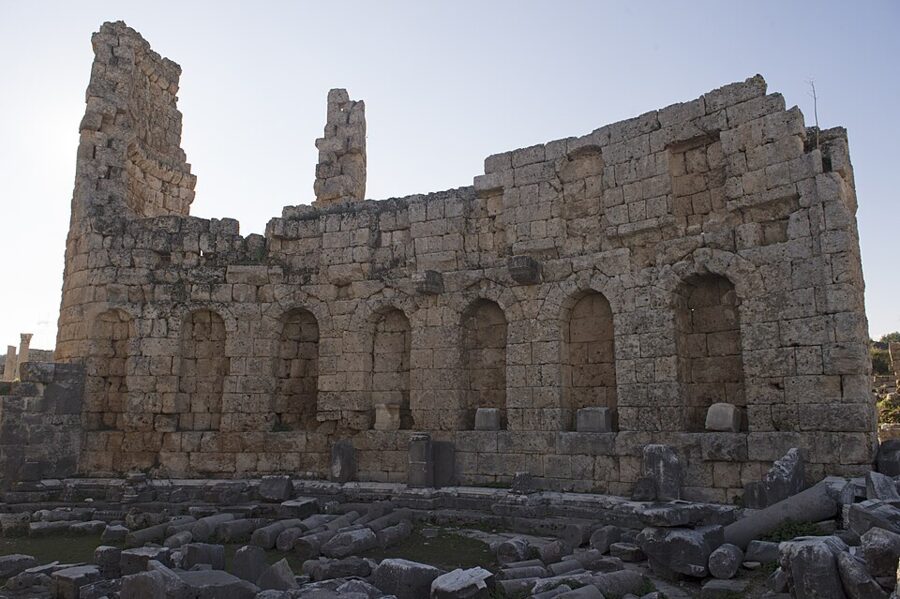

Tickets were €11 in November 2026. The site opens daily at 08:00 and in the November listing closed at 17:00, with the ticket office shutting at 16:30; summer hours run to 19:00. Allow two and a half to three hours.
You enter past the Roman gate and then the two round towers of the Hellenistic gate, the symbol of the city. Behind them a colonnaded street runs about 500 m north to a monumental fountain under the acropolis, with a water channel down its middle that fed four fountains, two big baths and the shops on either side. Much of the city’s 2nd-century look was paid for by Plancia Magna, a rich local woman who held priesthoods and civic office. St Paul passed through on his first missionary journey, which brings a steady stream of church groups.
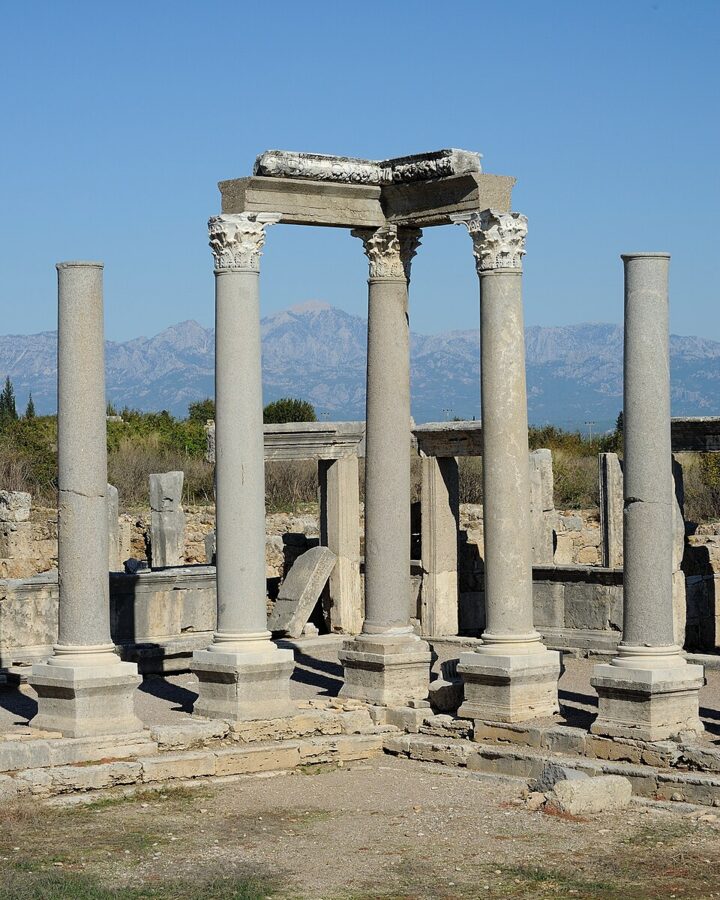

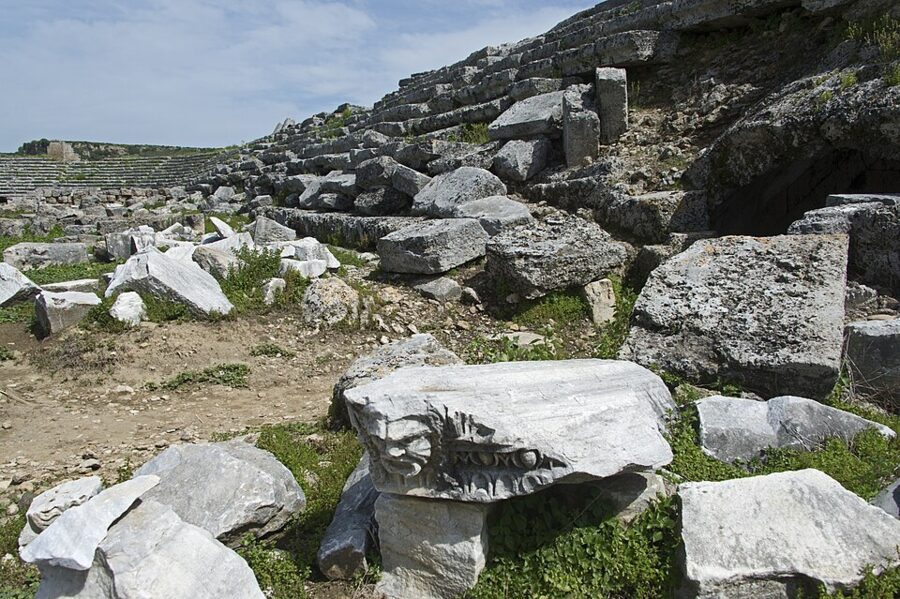
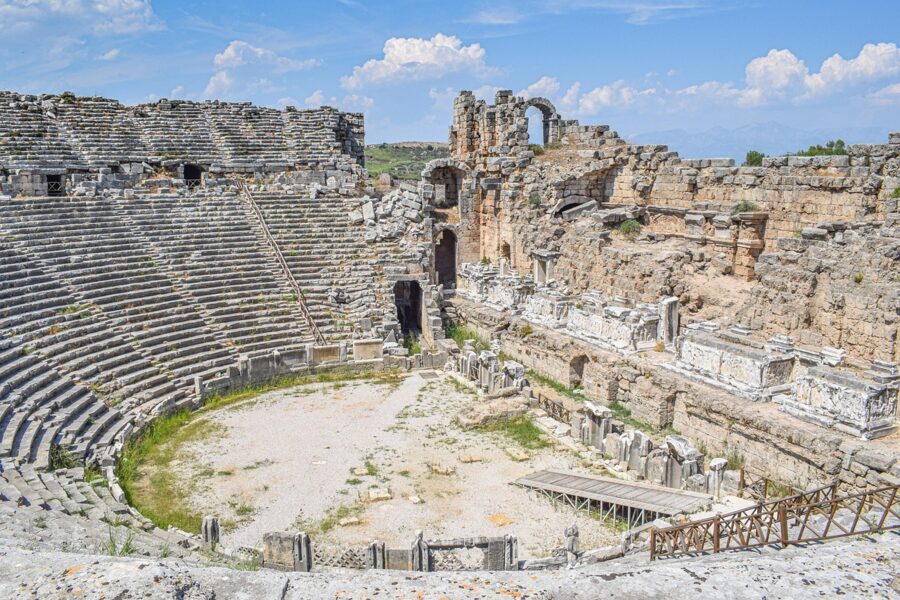
The stadium held about 12,000 people and is one of the best-preserved in Anatolia, with vaulted rooms under the seats that once served as shops. The theater, by contrast, was closed for restoration in late 2026, with no reopening date; you see it from the outside only.

Aspendos, and its theater season
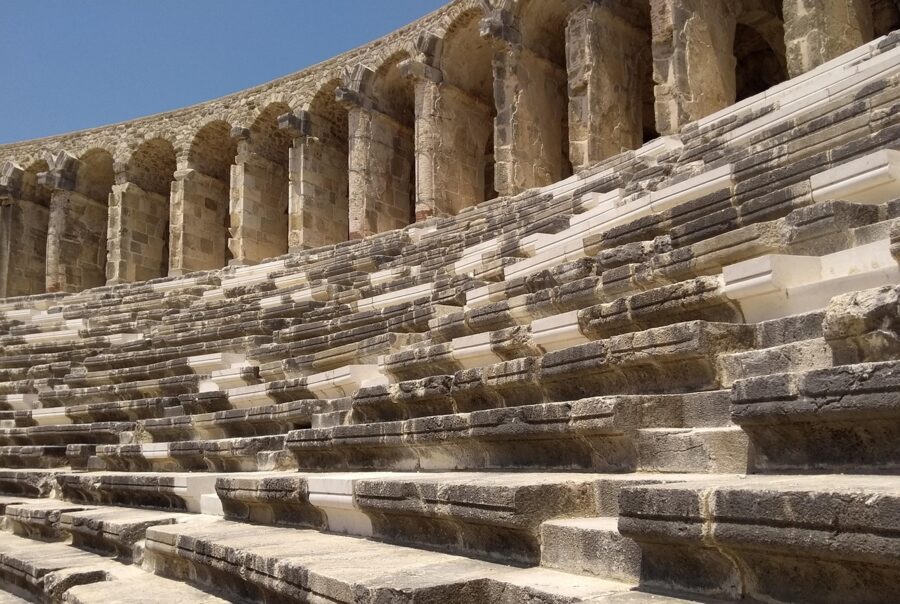
Aspendos has the best-preserved Roman theater in Turkey. It stands at Belkıs, by the Köprüçay river, the ancient Eurymedon, in Serik district, about an hour from Antalya by road. The architect Zenon built it in the middle of the 2nd century AD, and the Seljuks later used it as a palace, which is why the stage building still stands to its full height. The ministry gives its capacity as 15,000; other estimates are about half that.
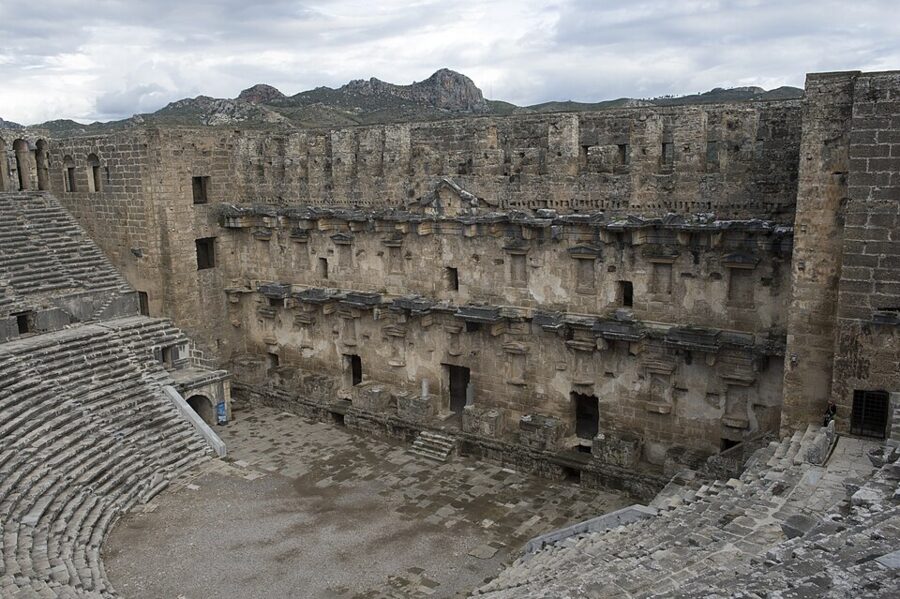

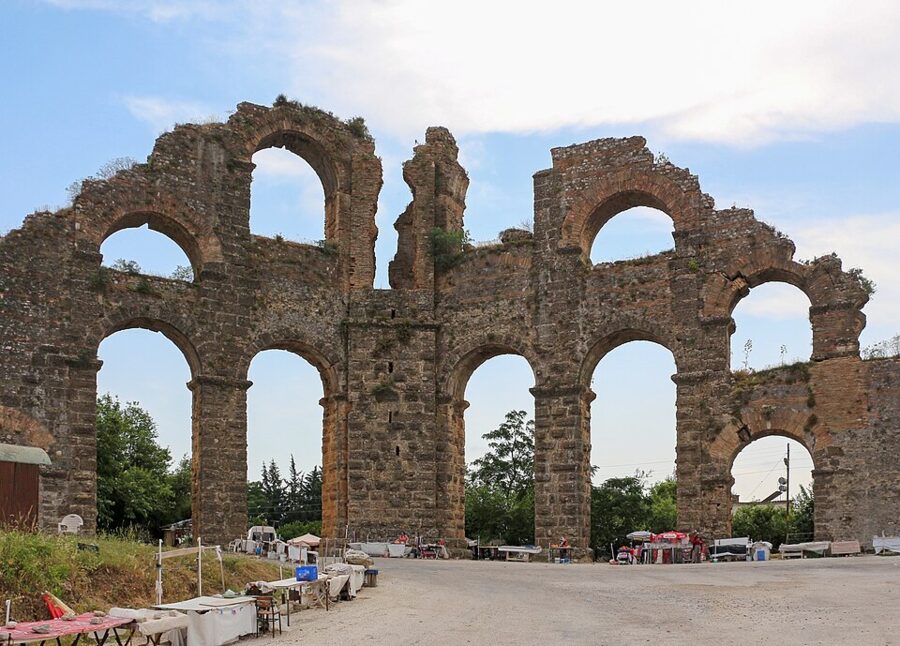
Tickets were €15 in November 2026, with the site open 08:00–17:00 and the ticket office closing at 16:30. Most people see the theater and leave, which is a mistake if you have an hour: a path behind it climbs to the acropolis, with a 100 m basilica, a monumental fountain and a view over the plain, and the arches of the aqueduct cross the fields below.
Getting there takes two stages. Bus SA19 runs between Antalya and Serik; in Antalya it leaves from the district platform (İlçe İndirme Peronu) at the otogar, and in Serik you get off near the Kooperatif transport hub. From Serik it is about 8 km to the theater, by a local Belkıs dolmuş or by taxi. The dolmuş does not wait for the bus, so leave a margin, and if you take a taxi, agree a return pickup at the theater car park before you go in.

In September the theater does what it was built for. The 33rd Aspendos International Opera and Ballet Festival, staged by the State Opera and Ballet, ran from 12 to 26 September 2026: Verdi’s Attila, the ballets Anna Karenina and Spartacus, and Carmina Burana with a cast of about 250, all at 21:00. Tickets were sold through Biletinial. An opera in a working Roman theater is worth planning a trip around, but performances finish after the last buses, so share a taxi back.
Side
Side sits on a small peninsula 75 km east of Antalya and 8 km from Manavgat. The name means pomegranate in the old local language, a branch of Luwian. It was Pamphylia’s main port, a pirate haunt until Rome cleared them out in the 1st century BC, and it was abandoned in the 12th century. Today the ruins and a resort village share the same ground, with souvenir shops running between Roman walls.
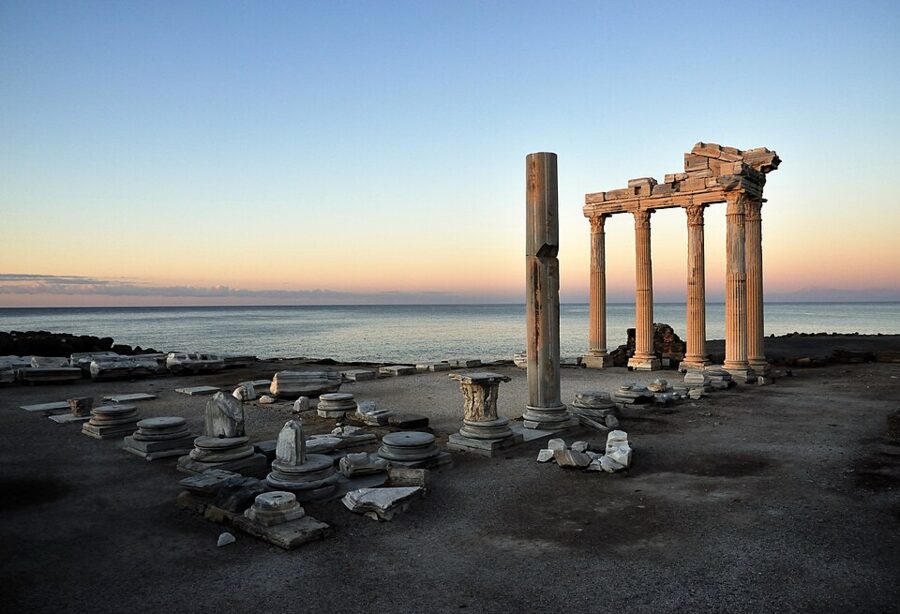

Set your expectations first. Side’s great theater has been closed to visitors since 29 November 2024 for restoration, and was still shut in November 2026. What you can see is free: the colonnaded street, the city gate and nymphaeum, the harbor, and the Temple of Apollo on the shore. The one paid sight is the Side Museum (€5 in late 2026), in a 2nd-century Roman bath opposite the agora, open 08:30–17:30 in the current listing with the ticket office closing at 17:00.
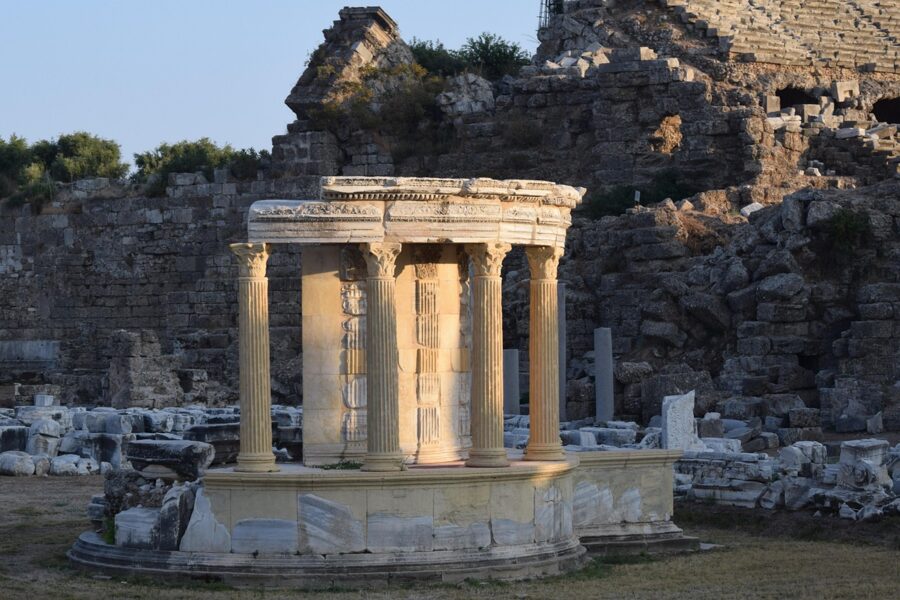
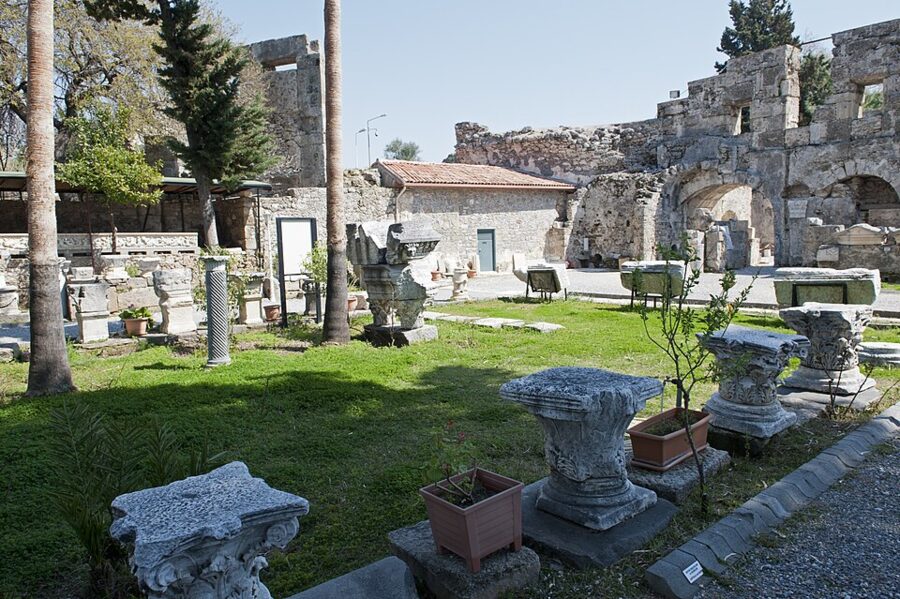

To get there, take a bus from the Antalya otogar to Manavgat, one and a half to two hours, then a dolmuş signed Side for the last 8 km to Side Garajı, the minibus stop by the ruins. The minibuses between Antalya and Manavgat charged 220 TL in September 2025, so expect a little more now. Add the Manavgat waterfall, a short broad cascade about 12 km from Side, if you have the energy.
Termessos
Termessos is the one I would not try to do by bus. It sits high on Güllük Dağı, the Solymos of the ancients, inside a national park 34 km northwest of Antalya. Its people held out against Alexander the Great in 333 BC, and he moved on without taking it. The city was never resettled after it was abandoned, so its theater, walls and tombs lie in the pine forest much as they fell.
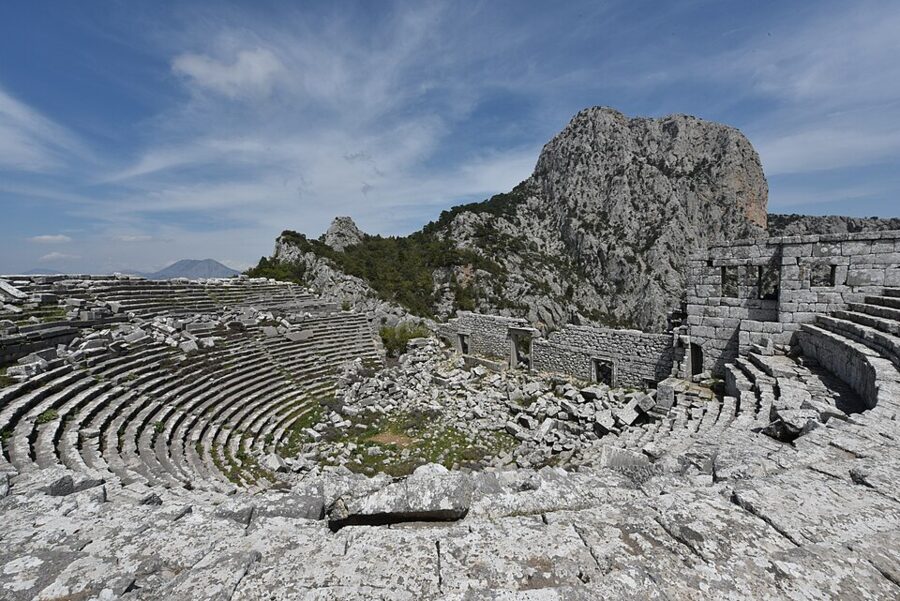

The problem is the last stretch. The park gate is at the 24th kilometer of the Antalya to Korkuteli road, and Korkuteli-bound buses can drop you at the turnoff, but from the gate a 9 km mountain road climbs to the upper car park, with no bus and no taxis waiting. Then comes about a kilometer on foot to the theater.
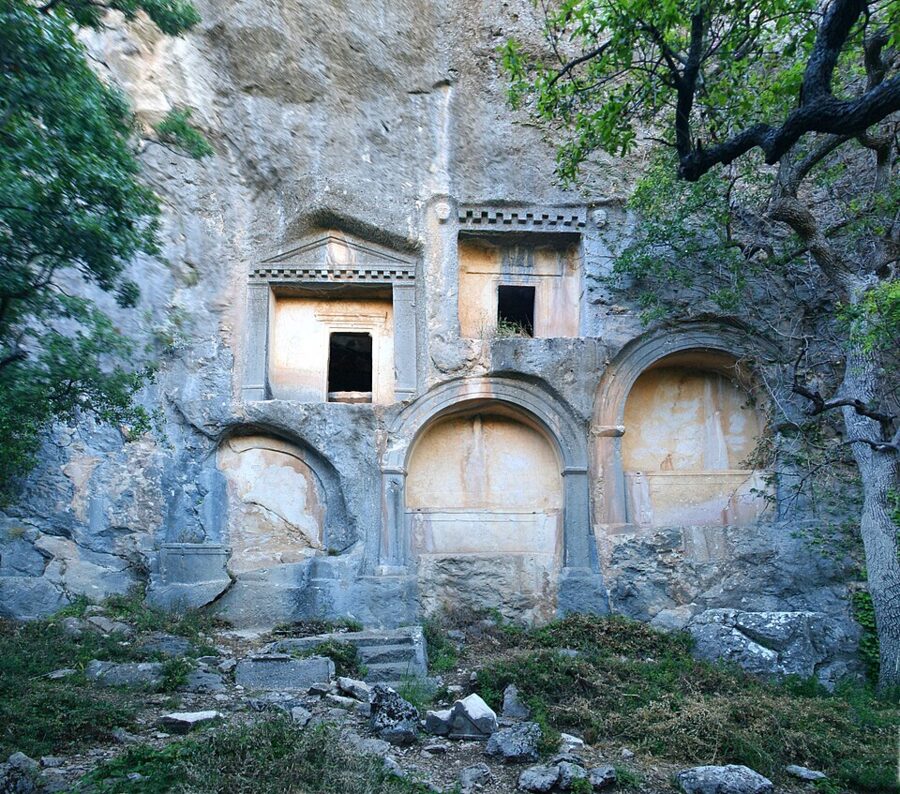

The realistic options are a rental car, a taxi from the city that waits for you (agree the waiting time and total price before you leave), or a small-group tour. This is the one ancient site near Antalya where I would pay for a tour, and if you do, ask how long you get at the site: anything under two hours is not enough.
Tickets come in two parts. The archaeological site cost €3 in late 2026, with the ticket office closing at 15:30, and the national park gate charged foreign visitors 475 TL each, five times the base price, with no extra charge for the car. Keep the park receipt if you leave and come back the same day.
When a tour makes sense
The agencies in Kaleiçi sell a one-day package of Perge, Aspendos, Side and the Manavgat waterfall. It solves the transport, but it gives each site an hour or less, and with Side’s theater closed part of that hour is spent looking at a fence. Done yourself, Perge is a half day by tram and Aspendos and Side take most of a day each. If you have one day and want all three, a tour is the only way to fit them in.
Before booking, check whether entrance fees are included (often they are not), how many people share the minibus, how long each stop lasts, and the cancellation terms.
Getting around: AntRay, Antalyakart, the airport and the otogar
The city’s transport runs on one card and one flat fare. The AntRay tram and the city buses, airport buses included, take the Antalyakart, a rechargeable card, or a contactless bank card tapped at the reader. Cash is not accepted. Fares across the country are compared in the guide to getting around Turkey; the Antalya details are below.

Fares and the card
Since the rise of 23 March 2026, a full-fare ride costs 42 TL on an Antalyakart and 50 TL on a bank card. The plain, unregistered card (Tam Kart) costs 100 TL from the machines marked Kart Satış ve Dolum at tram stops, the otogar and the airport station, plus whatever credit you load. An Antalyakart also gives a free transfer between five minutes and an hour after boarding; a bank card gives none.
The card pays for itself at around the thirteenth ride, sooner if you change between bus and tram. For three days with a couple of beach buses and the Perge tram, I would just tap a bank card; for a week, buy the card. One card can pay for two people on the same ride, but the second tap cancels the free transfer, so a couple making connections is better off with two.
The tram lines in late 2026
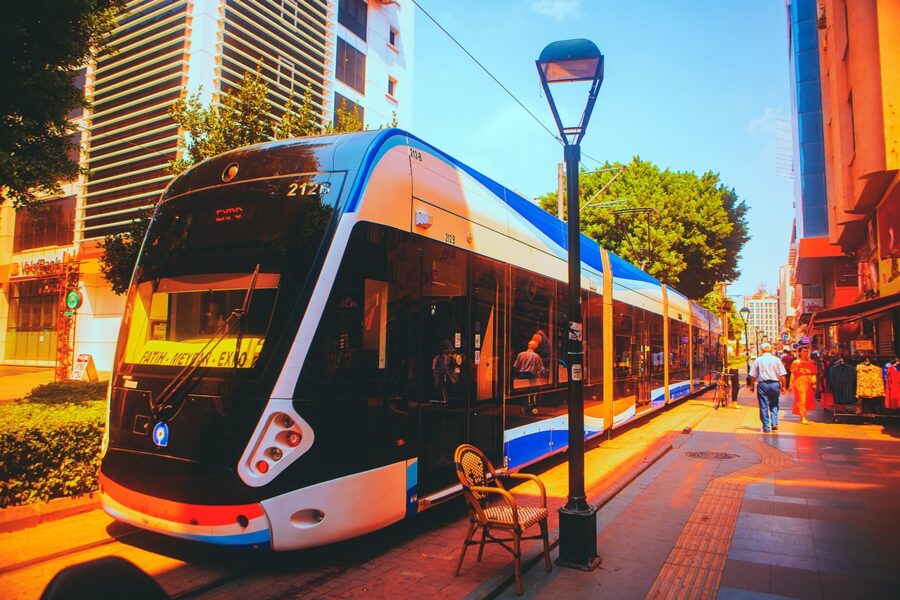
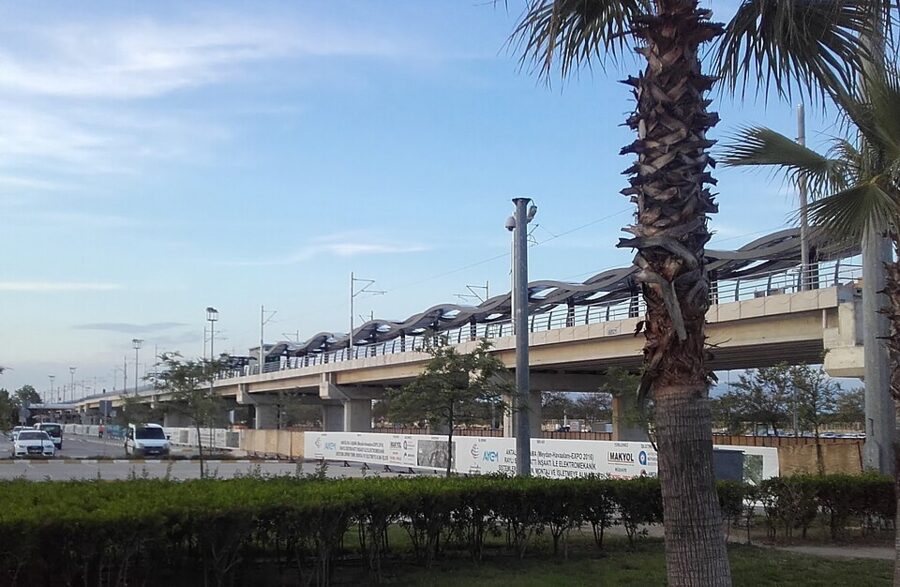
The T1 line crosses the city from Fatih in the northwest, past the otogar and through the center at Muratpaşa and İsmetpaşa, the stop for Kaleiçi, and then splits: one branch to the airport (Havalimanı), the other east to Aksu and Expo. Read the destination board, because both branches share the central tracks.
Two other lines were running as buses in November 2026. The T3 line, from Varsak via the otogar to Müze at the eastern end of Konyaaltı, had its trams moved to the Expo branch while the COP31 climate conference met in the city. The 1957 cars of the T2 heritage tram along the seafront boulevard were stopped in July 2026 for safety checks after breakdowns and accidents. Buses cover both routes at the same fare.
From the airport
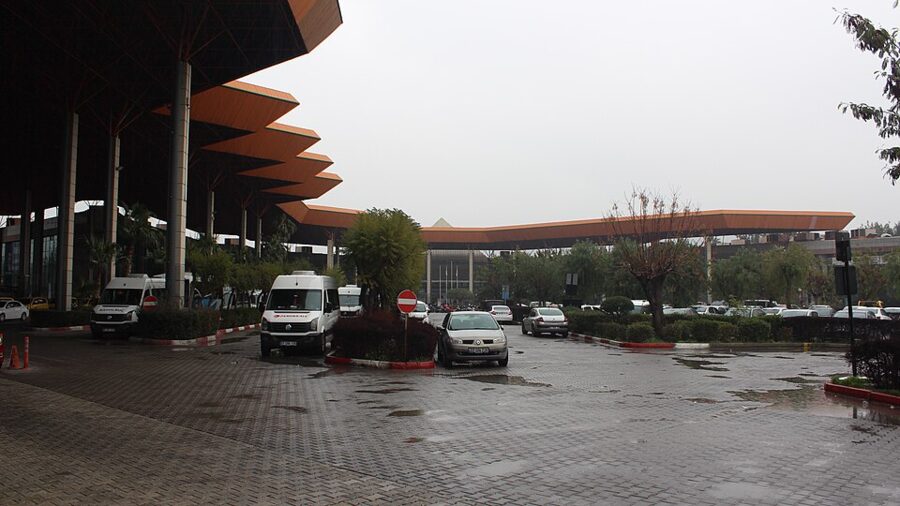
From the domestic terminal and International Terminal 1, take the T1 tram signed Fatih and get off at İsmetpaşa for Kaleiçi, about 31 minutes, then walk ten more. International Terminal 2 has no tram stop: a free shuttle runs every 20 minutes to the domestic terminal, or take a city bus straight from Terminal 2, the 800 along the Lara coast or the 400 across the city to Konyaaltı. The Havaş airport coach costs 230 TL and runs via the otogar to the Migros mall at Konyaaltı, which is handy only if you are staying out there.
The otogar
Antalya’s bus station is on Dumlupınar Bulvarı, north of the center, with a T1 stop beside it. It has two halves: the main intercity terminal for long-distance coaches, and a district terminal (İlçeler Terminali) for buses and minibuses to Serik, Manavgat and other towns in the province. For Side or Aspendos, you want the district side. Long-distance tickets are sold at company booths inside, and the cheapest seat is often on a smaller regional firm rather than the big names.

Where to sleep cheaply
Stay in or beside Kaleiçi. It is walking distance from the tram, the harbor and the bars, and that is where the hostels and the old pansiyons are. Konyaaltı suits a beach week; Lara is mostly resort hotels.
Prices below are the low-season “from” rates on the big booking sites in late November 2026, which quote these places in euros; summer costs more. All four were taking bookings for current dates, with guest reviews posted between June and November 2026.
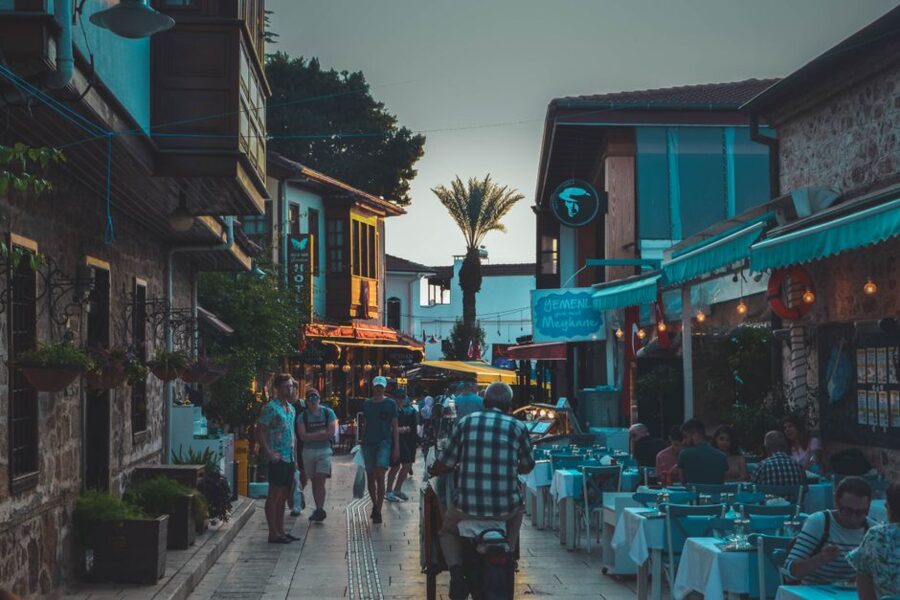
- Gold Coast Hostel, Tabakhane Sokak, inside Kaleiçi a minute from Hadrian’s Gate. Dorms from about €12, privates from about €10; rooftop terrace and regular events.
- Be Bold Hostel, in Haşimişcan just north of the old town. Dorms from about €15, privates from about €20, with something organized most evenings.
- Flaneur Hostel, near the old town. Dorms from about €10.
- Sabah Pansiyon, a long-running pension inside Kaleiçi, open all year, with a seasonal pool. Private rooms only, from about €11.
One warning: at least one old Kaleiçi pension website has lapsed and been taken over by an unrelated site. Book through the place’s current listing, and never send a deposit to a site that does not look like the place you are staying.
What to eat: piyaz, şiş köfte and the cheap end
Antalya’s own dish is piyaz, and it is not the onion-and-bean salad you meet elsewhere in Turkey. Here the white beans come in a thick tahini dressing, and the Antalya version is registered with the Turkish Patent Office as a regional product. It is served as a starter, almost always with şiş köfte, minced meat grilled on flat skewers, and the pair is the city’s standard working lunch.
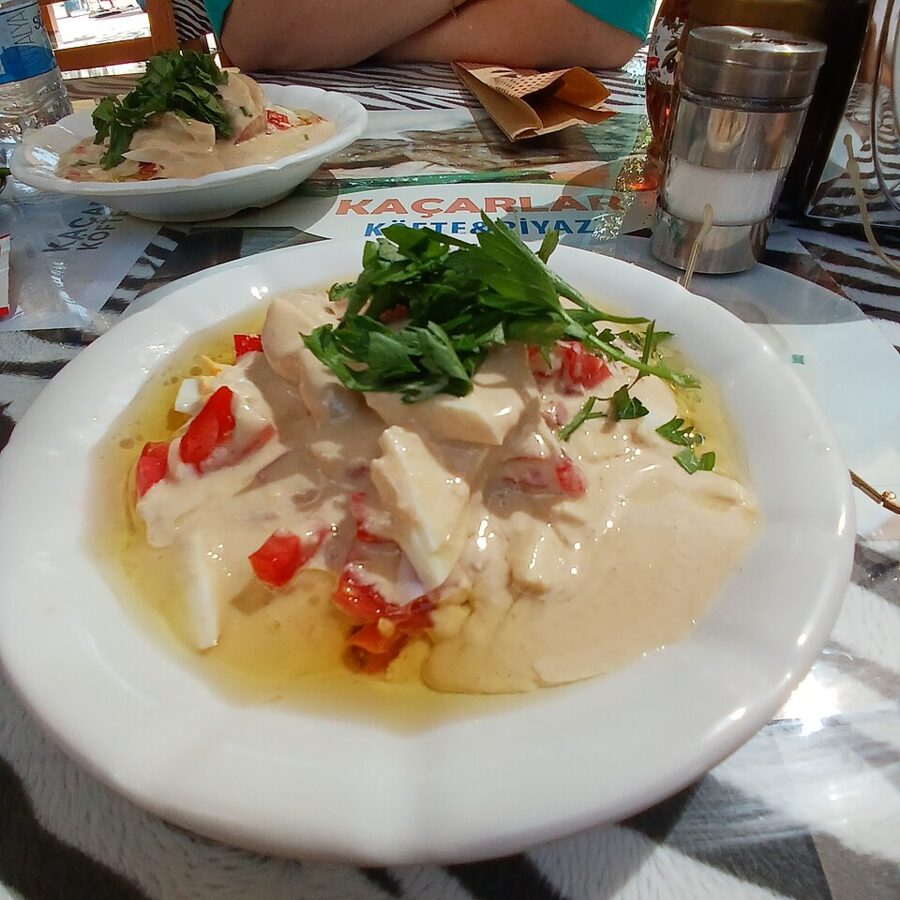
Look for “köfte piyaz” or “piyaz salonu” on the sign, local office workers at lunch and a short menu; those places do one thing all day. Outside the old town’s tourist lanes the same plate costs noticeably less.
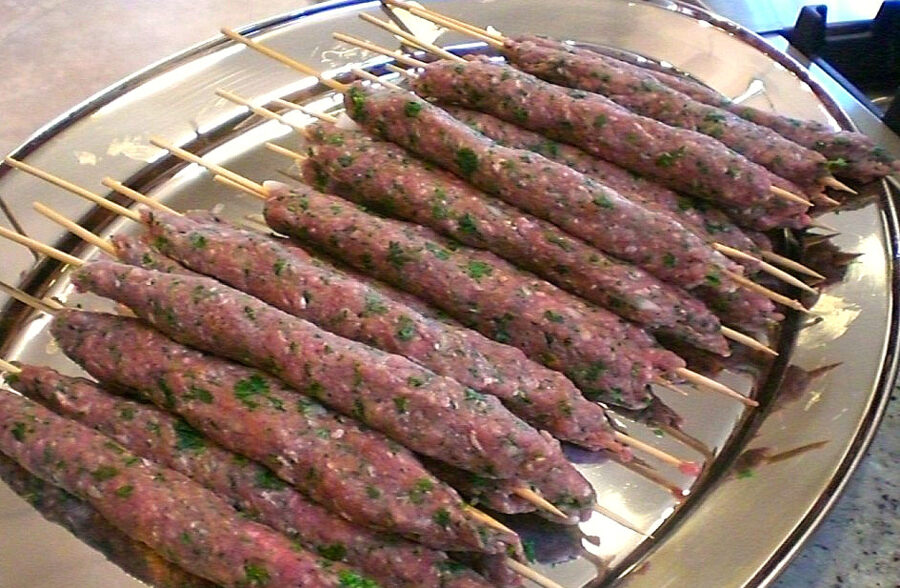

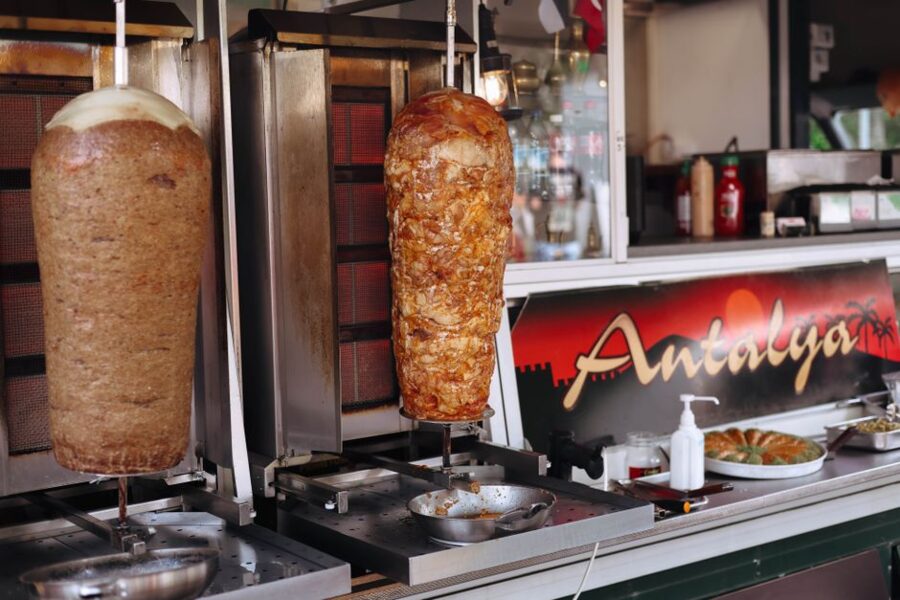
At the cheap end, a chicken döner wrap with chips and a drink cost about 270 TL in late 2026, and a bakery breakfast of simit or börek with tea costs a fraction of that. About 700 TL a day covers three simple meals. A grilled sea bream in a Kaleiçi restaurant runs to about 750 TL on its own, before drinks.
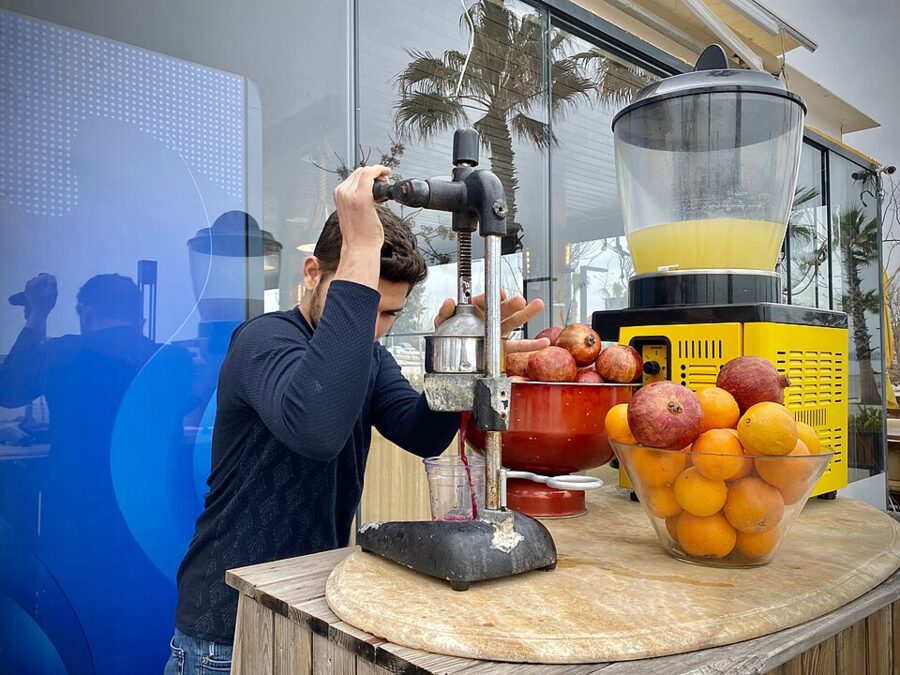
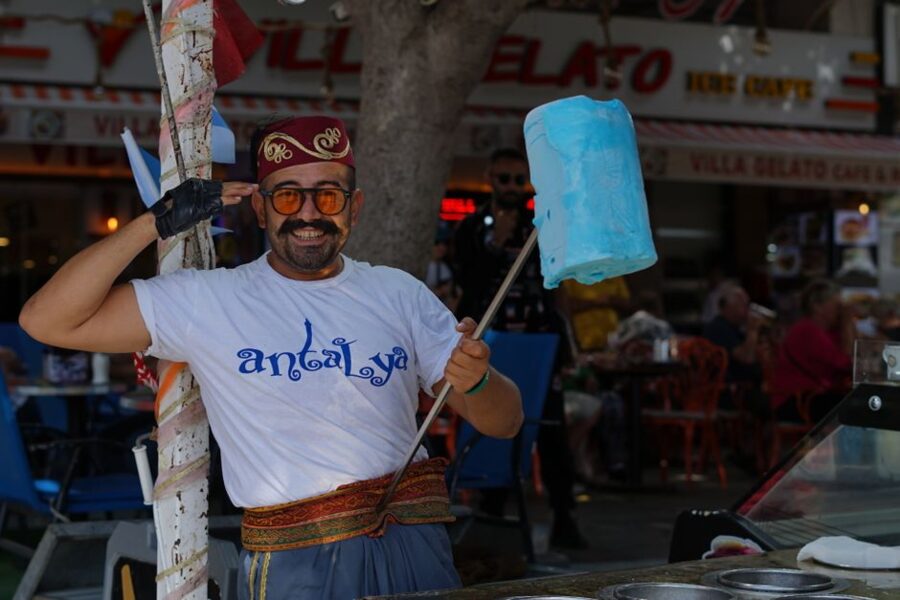
Every neighborhood has its weekly pazar, a street market for fruit, vegetables, cheese and olives, and that is the best value in the city for a picnic. In summer, the carts along the Konyaaltı promenade squeeze orange and pomegranate juice to order, and the Turkish ice-cream sellers in Karaalioğlu Park put on a show before they hand over the cone.

Seasons and costs
Antalya is warm for a long season and very hot in the middle of it. From June to September the average daily high is above 30°C, and in July and August it runs at 34°C, with almost no rain. The ruins are hard work in that heat: start at opening and be back in the shade by noon.
| Month | Average high | Average low | Rain | What it means |
|---|---|---|---|---|
| January | 15°C | 6°C | 226 mm | Wet, quiet, cheapest beds; ruins empty |
| April | 21°C | 11°C | 49 mm | Good for ruins and waterfalls; sea still cold |
| May | 26°C | 15°C | 33 mm | Sea warming, full waterfalls, prices still low |
| July | 34°C | 23°C | 5 mm | Beach weather; ruins only at dawn; busiest and dearest |
| October | 27°C | 15°C | 71 mm | Warm sea, cooler ruins, the best all-round month |
| December | 17°C | 8°C | 251 mm | Wettest month; Düden falls at their fullest |
These are the Turkish State Meteorological Service’s long-term averages. My pick is May or October: warm enough to swim, cool enough to walk round Perge at midday, and outside the summer price peak. Winter is mild and wet, and a good time for the ruins if you do not mind rain, though fewer boats run.
And the money, for one person in late 2026:
| Item | Cost |
|---|---|
| Dorm bed, Kaleiçi, low season | from about €10–15 |
| City bus or tram ride | 42 TL (Antalyakart), 50 TL (bank card) |
| Antalyakart (plain card) | 100 TL plus credit |
| Perge / Aspendos / Side Museum / Termessos | €11 / €15 / €5 / €3 plus 475 TL park fee |
| Upper Düden | 200 TL |
| Kurşunlu (base rate) | 95 TL; the foreign rate may be higher |
| Sunbed and umbrella at Lara Birlik | 300 TL |
| Döner wrap with chips and a drink | about 270 TL |
| Bus to Kaş | from 485 TL |
| Night bus to Göreme | 840–1,250 TL |
Put together, a frugal day with a dorm bed, two rides, cheap meals and one site ticket comes to roughly €25 plus 800 TL. A beach day with a towel instead of a lounger costs little more than the bus fare.
Onward: the coast, the plateau and the long way round
Antalya is the junction of the south coast. West, the road follows the Lycian shore to Olympos, Kaş and Fethiye. North, the buses climb onto the plateau toward Konya and Cappadocia. The otogar handles all of it.
West: Olympos, Kaş and Fethiye
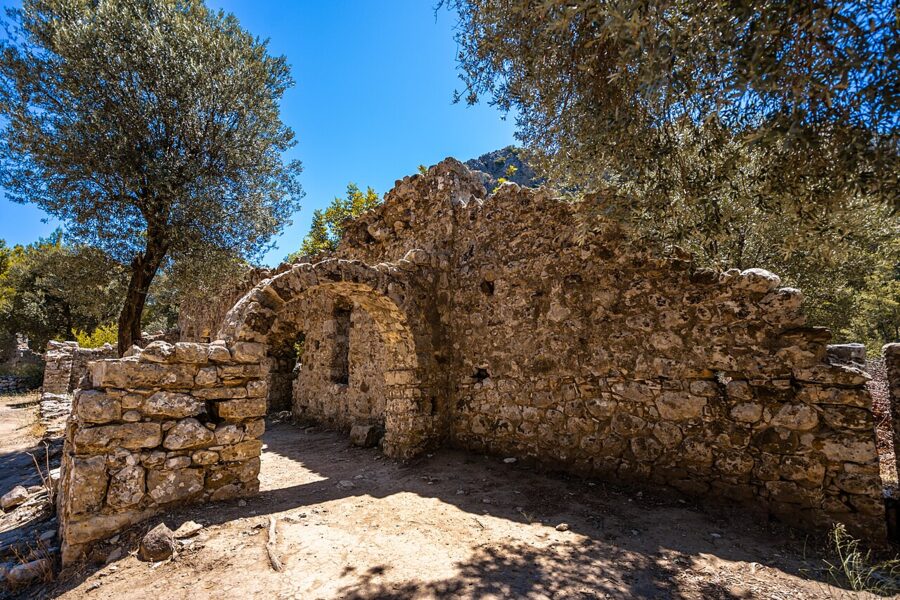
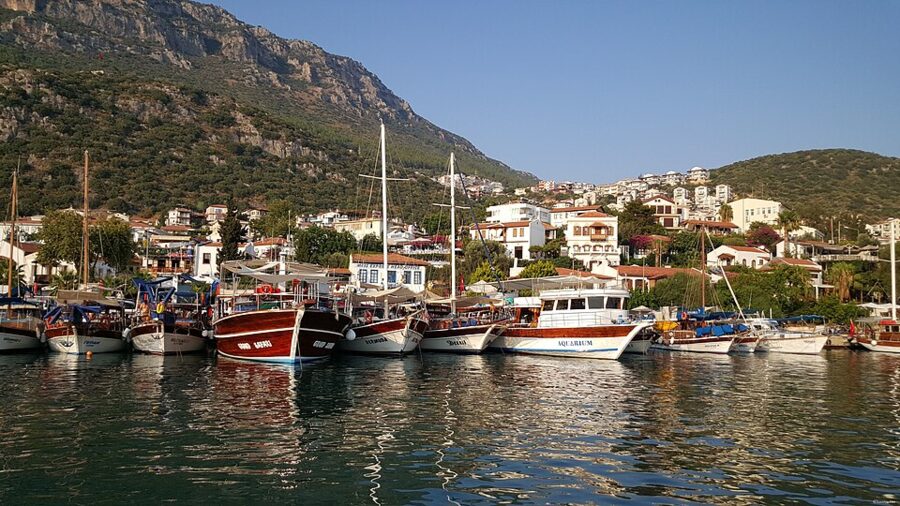
Buses to Kaş take about four hours and cost from 485 TL, with Batı Antalya running the most departures and Kumluca Çiçek Tur at the same lowest fare. The same buses pass the turnoff for Olympos, the valley of treehouse camps and Lycian ruins near the Chimaera flames; ask to be let off there and take the minibus down. Olympos and the boats along this coast are covered in the guide to the gulet cruise, whose cheapest route runs between Fethiye and Olympos.


North: Cappadocia, Konya and Pamukkale
The overnight bus to Cappadocia takes eight to ten hours and cost 840–1,250 TL in November 2026. Most departures leave between 15:00 and 21:00 and reach Göreme in the small hours, a bad time to look for a bed; the 21:00 bus, arriving around 07:30, is the one to take. To travel by day instead, break the trip at Konya, about five hours away, for the Mevlana Museum. To the northwest, buses run to Denizli for Pamukkale, whose white terraces and the Roman spa town of Hierapolis are the natural next step if you are working back toward the Aegean.
So spend the last day at Perge: tram to Aksu, the 2 km walk, the city where the Heracles was dug up, then köfte and piyaz back in town. Collect your bag, take the T1 to the otogar, and be on the platform by 20:30 for the 21:00 bus to Göreme.