The first six Ottoman sultans are buried in Bursa, and you can stand beside every one of them without buying a ticket. Osman, the founder, lies under a 19th-century dome on the hill at Tophane. His descendant Murad II lies in a tomb with a hole in the roof at Muradiye, because his will asked for the rain to fall on his grave. Between the two sit the mosques, silk inns and covered bazaar of the city that was the first capital of the empire, and almost all of it is free and within walking distance.
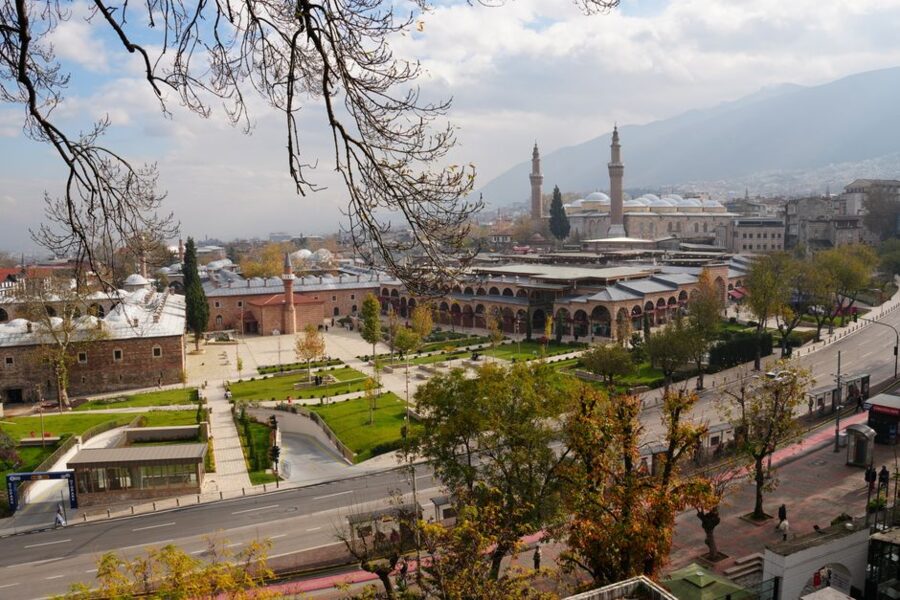
Bursa is also a big, busy industrial city of around 2.5 million people, spread along the foot of Uludağ, and the first view from a bus window is car factories and apartment blocks. Push through that. The old core is compact, the transit is cheap and well run, and the city’s two famous comforts, hot spring baths and İskender kebap, both come from here.

Two days is the right size. Day one covers the market district, Ulu Cami, the tombs at Tophane and the Muradiye complex, with a thermal bath in Çekirge in the evening. Day two is the Green Mosque and Green Tomb in the morning, then a bus out to the village of Cumalıkızık. It can be done as a long day trip from Istanbul, but the boats cost 720 TL each way in 2026, and I’d rather spend that on a night in a thermal hotel and a second day.
Contents
- Osman, Orhan and the first capital
- The old center on foot: Ulu Cami, the hans and Tophane
- The Green Mosque and the Green Tomb
- Muradiye: the garden of tombs
- Cumalıkızık: the village that fed the capital
- The thermal baths at Çekirge
- Food: İskender, pideli köfte and chestnuts
- Getting there from Istanbul
- Getting around, the Teleferik and a cheap bed
- Two days in Bursa
Osman, Orhan and the first capital
The Ottomans began as a small frontier principality in north-western Anatolia, and Bursa, the Byzantine city of Prusa, was the first large prize. Osman’s forces besieged it for years. His son Orhan took it in 1326, around the time Osman died; sources put the founder’s death between 1323 and 1326, and they disagree on whether he lived to hear of the surrender. Orhan made Bursa his capital, and it stayed the seat of the dynasty until the court moved to Edirne in the 1360s.
What makes Bursa different from later Ottoman cities is how it grew. Orhan did not rebuild the cramped Byzantine citadel; he built outside it, on drained marshland below the walls, and put up a complex, a külliye, of mosque, school, soup kitchen, inn and bath house. Each of the next four sultans did the same on his own hill: Murad I at Çekirge, Bayezid I to the east, Mehmed I at Yeşil and Murad II at Muradiye. Neighborhoods grew up around each complex, and the city filled in between them.

The money came from endowments, vakıf in Turkish. A sultan would assign villages, shops and inns to a complex, and their rents paid for the imam, the teachers and the free soup. Cumalıkızık was one of those villages, set up to feed income to Orhan’s complex. That is why UNESCO listed the two together in 2014 as “Bursa and Cumalıkızık: the Birth of the Ottoman Empire”: eight sites in all, the market district, five sultans’ complexes, Orhan’s tomb and the village.
Almost everything was knocked about by the great earthquake of 1855, and a lot of what you see was repaired or rebuilt in the decades after it. Keep that in mind at the tombs, where 19th-century domes sit over 14th-century graves. The buildings are still owned by the Directorate of Foundations, the modern heir of the old endowments, and the city’s metropolitan museums department runs the sultans’ tombs.
Mosque hours and what to wear
Every mosque in Bursa’s old center is a working mosque, and none charges for entry. They close to sightseers for around half an hour at each of the five daily prayers and for longer at Friday noon, so plan the interiors for mid-morning and mid-afternoon. Take your shoes off at the door and carry them in the plastic bags left there. Women cover their hair; everyone covers shoulders and knees, and shorts are a bad idea even in August.
The tombs keep their own hours. The metropolitan municipality opens the sultans’ tombs at 08:00 and closes them at 18:00 in winter and 20:00 in summer, and entry is free. Tombs are places of prayer for many Turks, so keep your voice down, do not step over the railings and do not pose for photos with the cenotaphs.
The old center on foot: Ulu Cami, the hans and Tophane
Start at Heykel, the square with the equestrian statue of Atatürk at the eastern end of Atatürk Caddesi; most city buses pass it, and the T1 tram stops on the same avenue. From Heykel it is a flat ten-minute walk west along Atatürk Caddesi to Ulu Cami, with the market district on your right. The whole loop below, Ulu Cami, the hans, the bazaar and the climb to Tophane, takes three to four hours at a sightseeing pace.
Ulu Cami
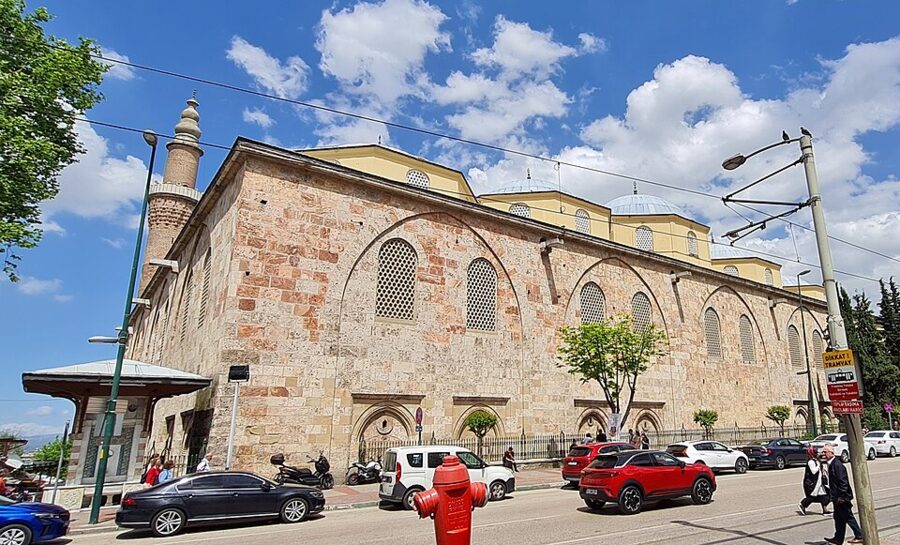
Bayezid I, the sultan they called Yıldırım, “the Thunderbolt”, ordered the Grand Mosque after his victory over a crusading army at Nicopolis in 1396. The usual story is that he had vowed to build twenty mosques and was talked down to one mosque with twenty domes. There is no foundation inscription, and the date 1399 carved on the pulpit door is taken as the year of completion. It is the classic many-pillared Ottoman congregational mosque: about 5,000 square meters under twenty domes set in five rows of four.
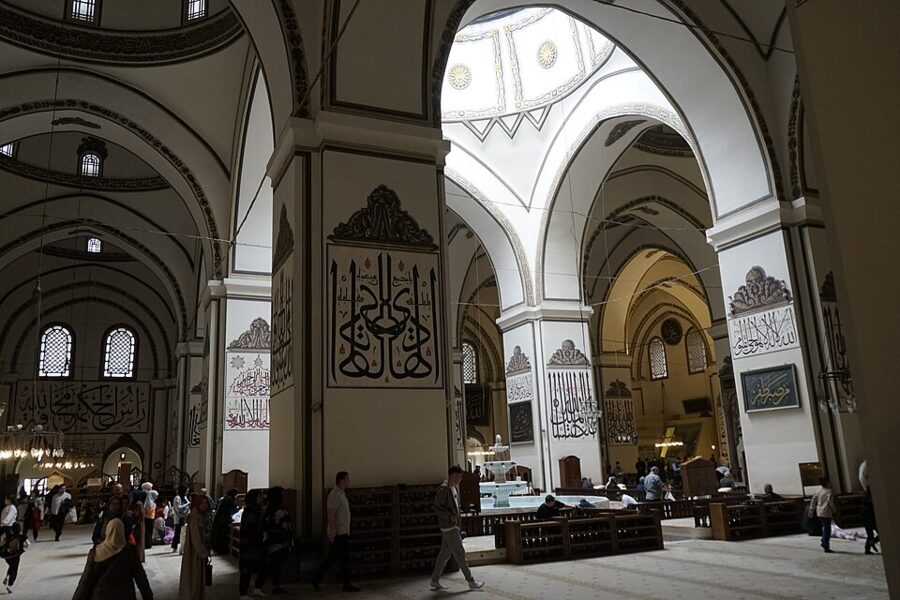

Inside, the thing you remember is water. A fountain, the şadırvan, stands in the middle of the prayer hall under a dome with an open top, so worshippers wash inside the mosque rather than in a courtyard, which is rare. The second thing is writing. The piers and walls carry 192 panels and wall inscriptions by different calligraphers, most of them from the second half of the 19th century and the early 20th, when Sultan Abdülmecid sent calligraphers from Istanbul to redo the big inscriptions after the 1855 earthquake brought down most of the domes.
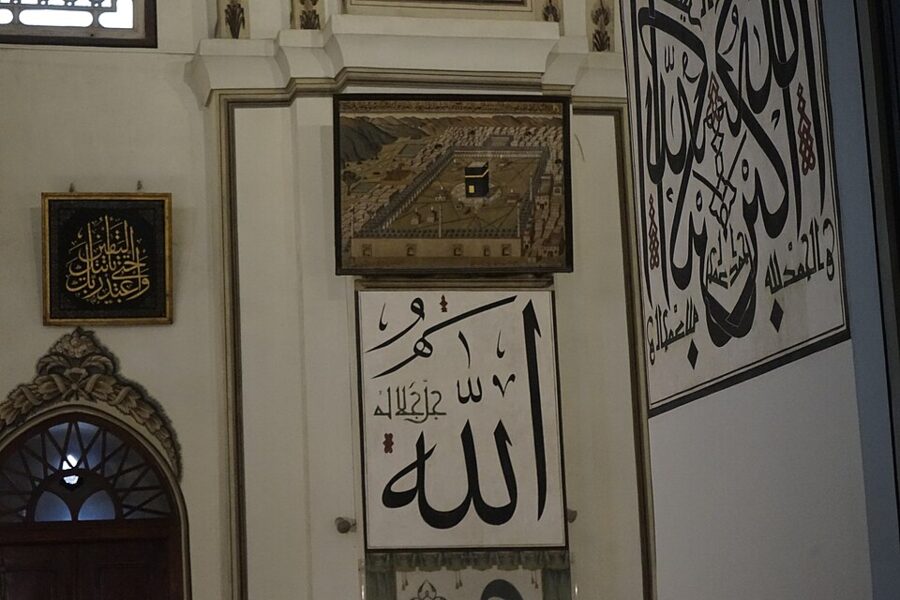

Look for the walnut pulpit, the minber, made in the kündekari technique of small carved panels fitted together without glue or nails; it is one of the finest pieces of early Ottoman woodwork anywhere. After he conquered Egypt in 1517, Selim I gave the mosque a cover from the door of the Kaaba in Mecca, which was hung beside the pulpit. Ulu Cami is one of the busiest mosques in the city, with a steady flow of worshippers all day, so find a quiet spot along the side walls and stay out of the rows near the front.
Koza Han and the hans
Leave Ulu Cami by the side facing the bazaar and you are in the Hanlar district, the inns quarter, which has been doing business since the 14th century. The hans were two-story courtyard buildings where merchants slept upstairs and stored goods below. Several still trade, and the walk between them is the most enjoyable hour in the city.
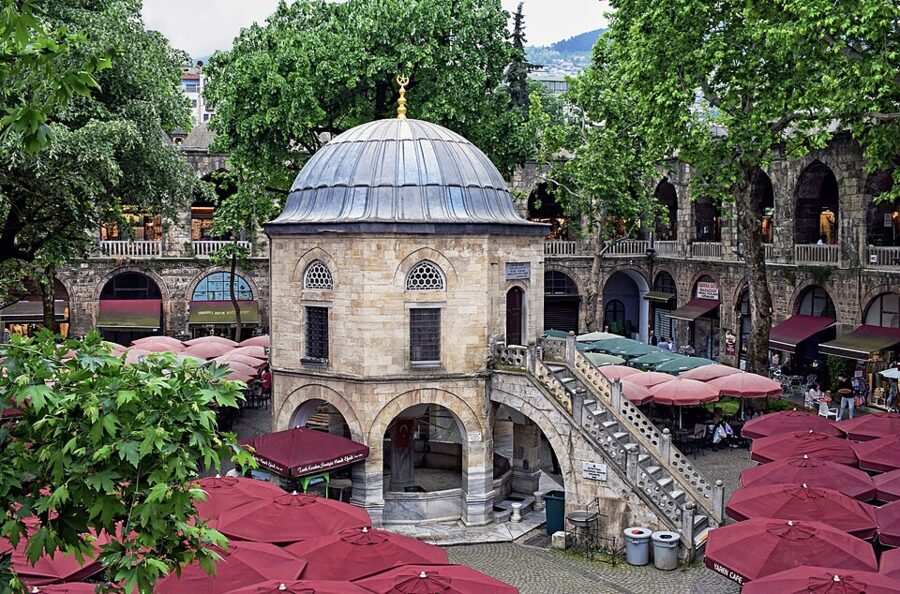

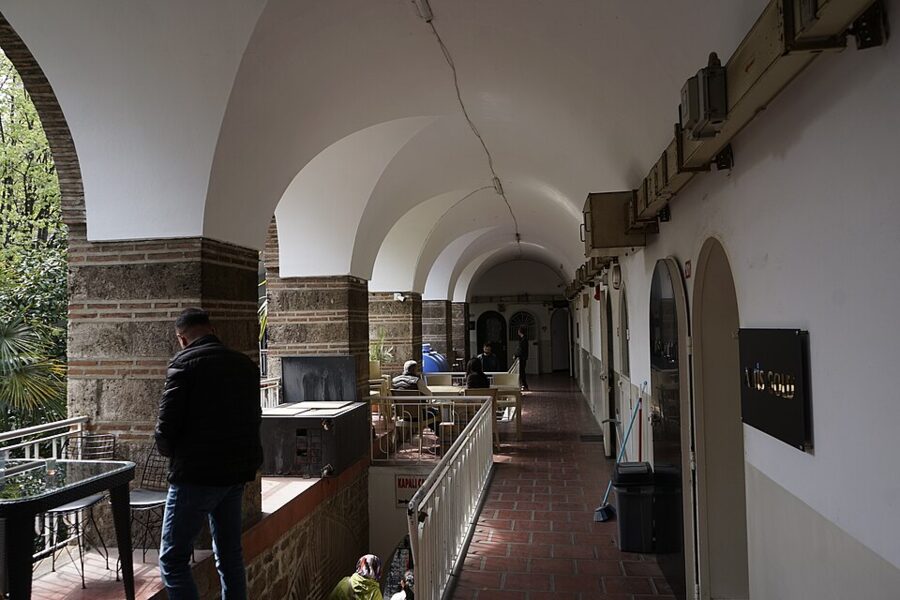
The Koza Han, the “cocoon inn”, is the one to see. Bayezid II built it at the end of the 15th century as an endowment for his mosque complex in Istanbul, so its rents were literally paying for buildings in another city. Silk merchants came to buy cocoons here, renting a pair of rooms, one above the other: the upper for business and sleeping, the lower for stock. It has 95 rooms around an arcaded courtyard, and a small octagonal mosque raised on arches over a fountain in the middle, a design inherited from Seljuk caravanserais.
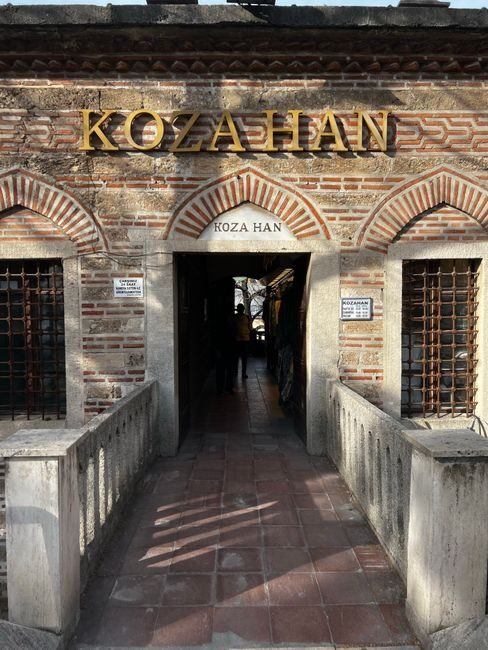
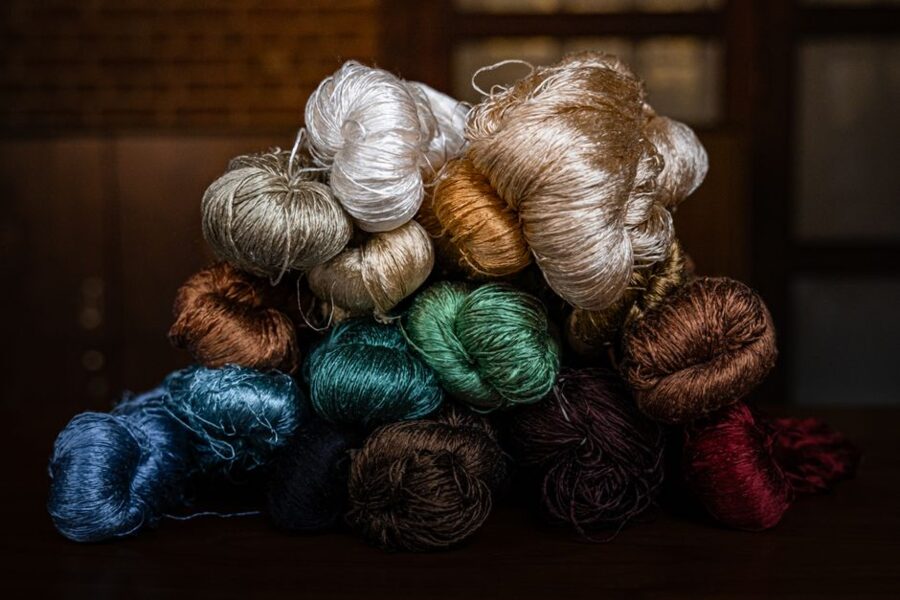
Silk is still sold here, mostly scarves on the upper floor. Prices run from cheap printed synthetics to real Bursa silk, and the difference is not always obvious. Ask what it is made of, feel a few, and if you want the genuine article, buy from a shop that will say “ipek” and stand behind it. Bargaining is normal for anything above a small purchase; a smile and a counter-offer go further than walking out.
The Koza Han is the best known of a row of hans. Emir Han, next to Orhan’s mosque and part of his original complex, is the one the whole district grew around. Fidan Han and İpek Han are close by, and the courtyards are open to wander through whenever the shops are open.

The Kapalıçarşı and the Bedesten
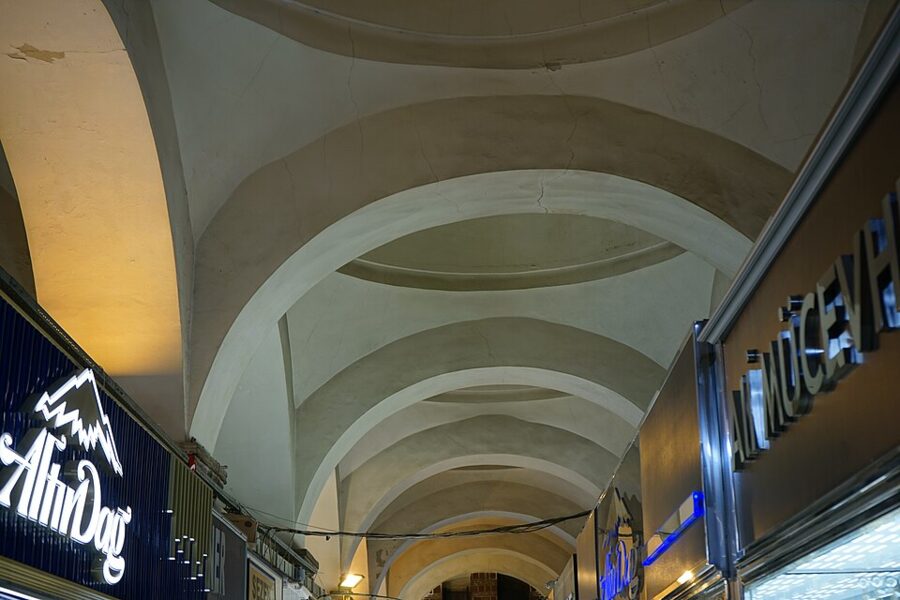
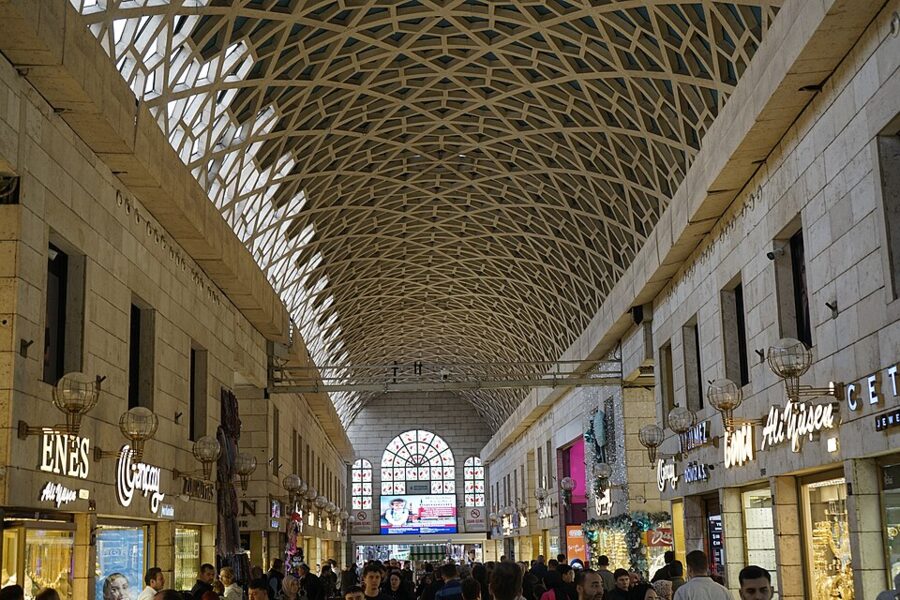
Behind the hans is the Kapalıçarşı, the covered bazaar, built out from a 14th-century core. The heart of it is the Bedesten, the domed hall that Bayezid I added for valuable goods, which still houses the jewelers and the money changers. Around it run the old trade streets: the coppersmiths, the towel and textile sellers, the shoemakers, and a lot of ordinary shops selling things locals actually buy.

This is the place for Bursa towels, which have a good reputation in Turkey, and for a peştamal, the thin cotton wrap you will want at the baths. It is also the place for a cheap lunch, covered further down. Many shops close on Sundays, so come on a weekday or a Saturday.

Tophane: the tombs of Osman and Orhan
From Ulu Cami, walk west and uphill for about ten minutes to Tophane, the oldest part of Bursa, on the rock where the Byzantine citadel stood. A stretch of the old walls survives, and the lanes behind it, the Hisar quarter, still have some of the city’s best timber-framed houses. The park at the top has the two tombs and a view straight down onto the domes of Ulu Cami.
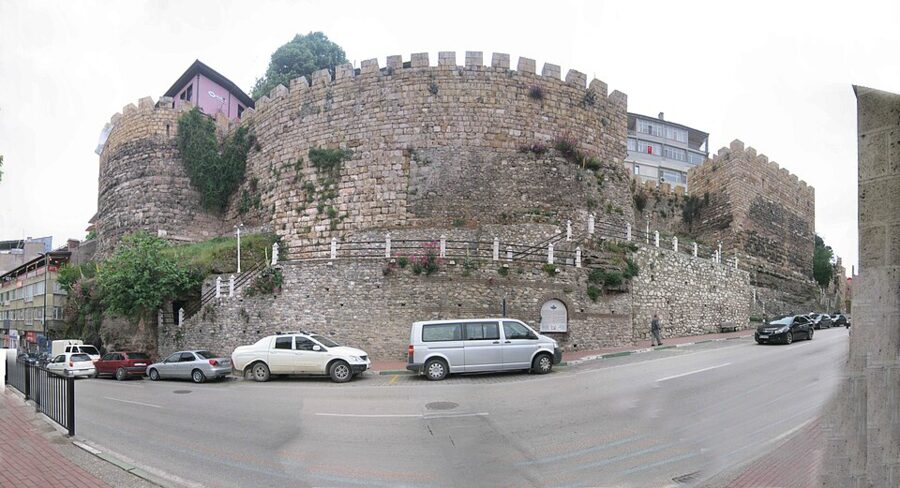

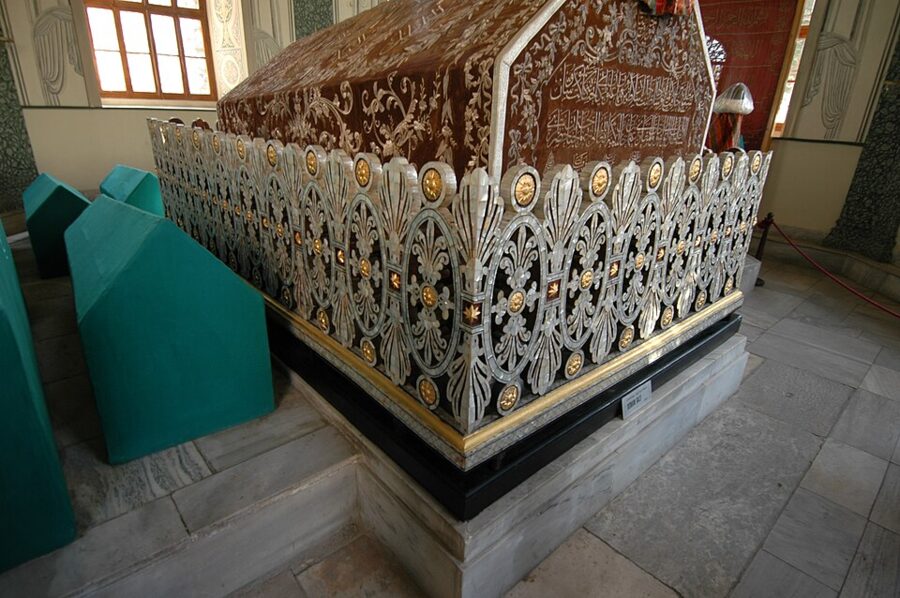

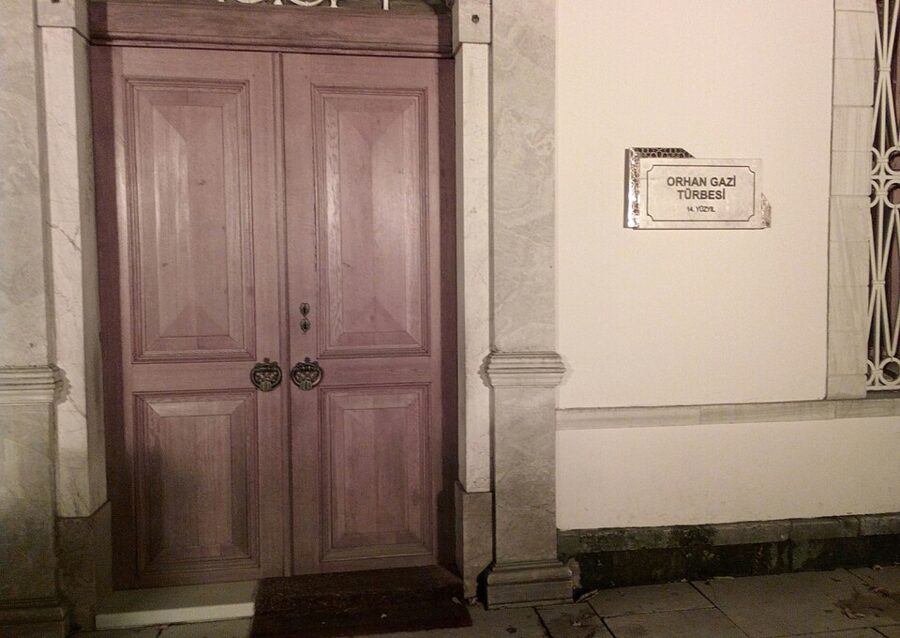
Tradition says that Osman, dying, pointed out a domed building in the besieged city and asked to be buried under it, and that Orhan brought his body here once Bursa fell. The building was a converted Byzantine church; the earthquake of 1855 wrecked it, and what stands now is an octagonal tomb of 1863 with Osman’s cenotaph under a velvet cover. Osman’s son Orhan, who died in 1360 or 1362 depending on the source, lies in a separate tomb a few steps away, built into part of the Byzantine monastery of Saint Elias. Look down inside: patches of the monastery’s floor mosaics survive around the graves.

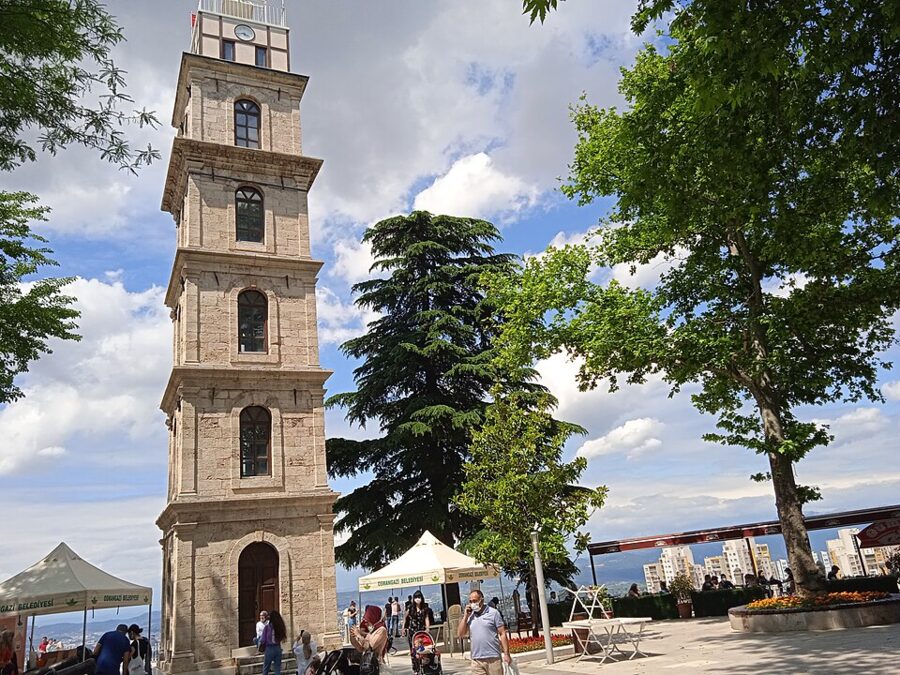
Behind the tombs stands the Tophane clock tower, 33 m of stone on six floors, finished in 1905 to mark the anniversary of Abdülhamid II’s accession, and used for decades as a fire lookout because of the view. The terrace beside it is the best free viewpoint in the city, and there are tea gardens around the park for the sunset.

If you have time after dark, walk back down to Ulu Cami. The mosque is floodlit at night, the bazaar streets are shuttered and quiet, and the evening prayer fills the hall with a different crowd from the daytime one.
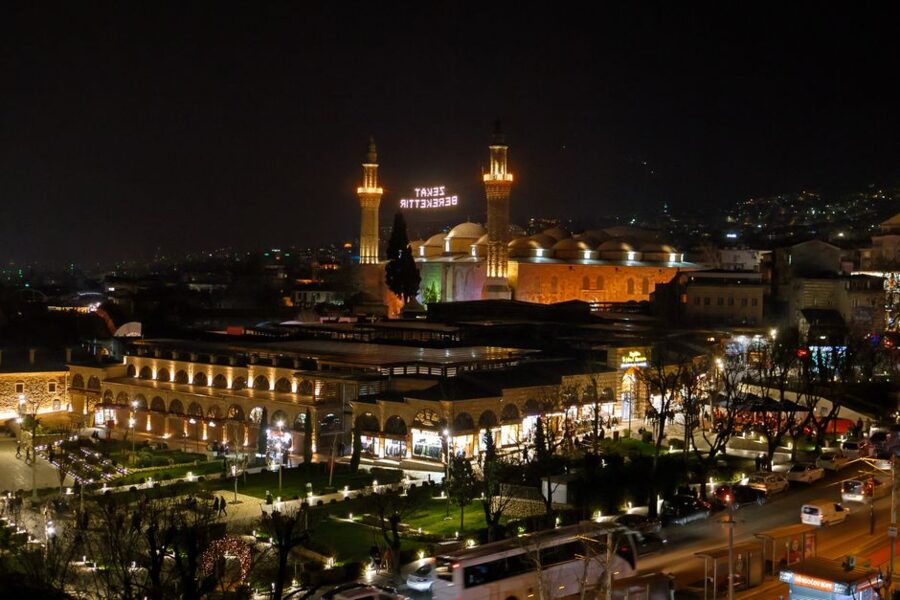
The Green Mosque and the Green Tomb
The Yeşil complex sits on a rise east of the center, about a 20-minute walk from Ulu Cami along Atatürk Caddesi, past Heykel and across the Gökdere stream. Mehmed I built it after he had won the eleven-year civil war between Bayezid’s sons that followed Bayezid’s capture by Timur at Ankara in 1402. It was meant to say that the dynasty was back, and it says it in tile.
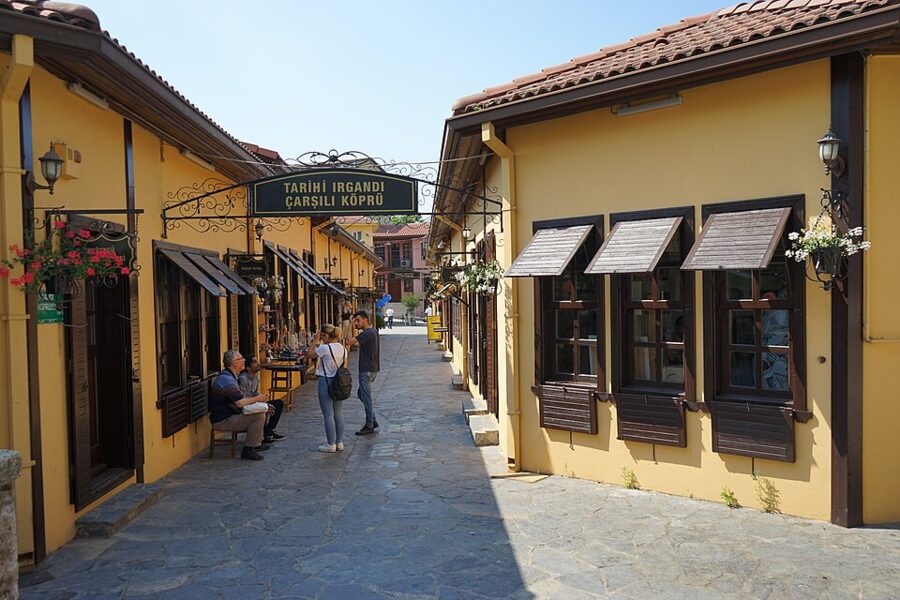

Yeşil Cami
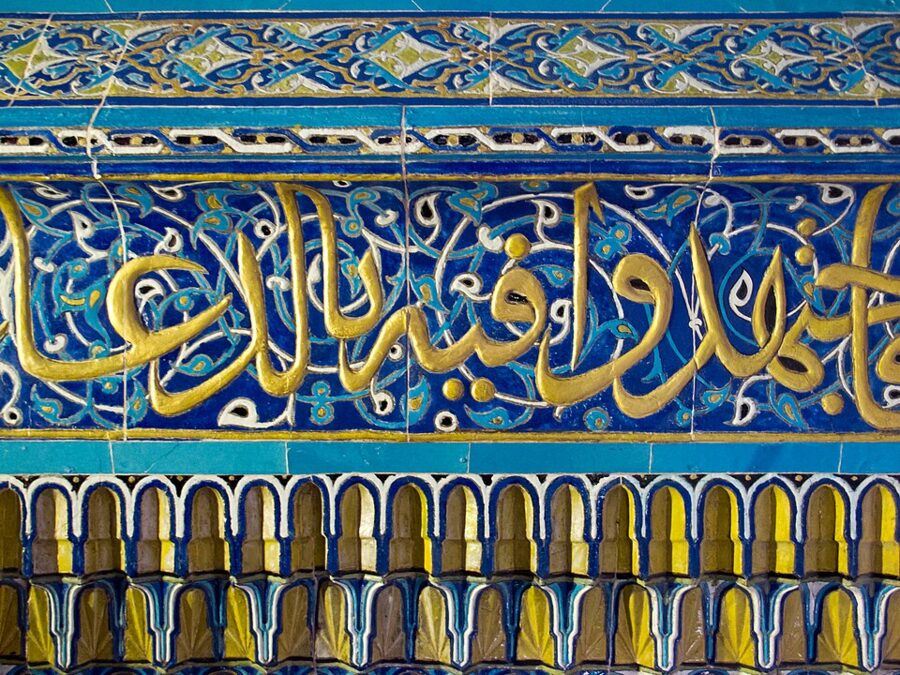
Building began in 1413 and the mosque was finished in 1419 or 1420; the decoration went on until 1424, into the reign of Murad II. The architect was the vizier Hacı İvaz Paşa, and the painted and tiled interior was the work of a team that included craftsmen from Tabriz, along with the painter Ali bin İlyas Ali, who signed his work. It is an “inverted T” mosque, the Bursa type: a central hall with side rooms that once served as lodgings and teaching spaces.
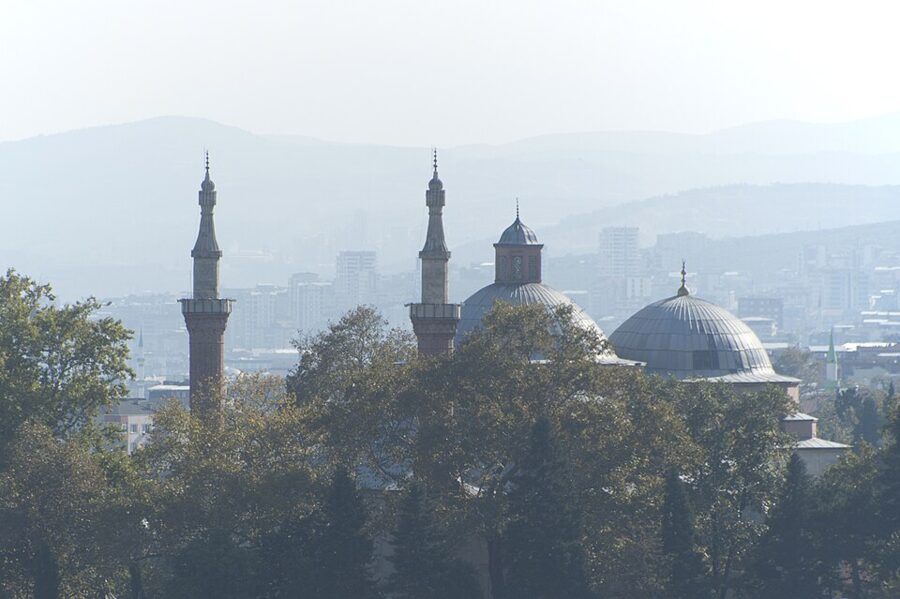

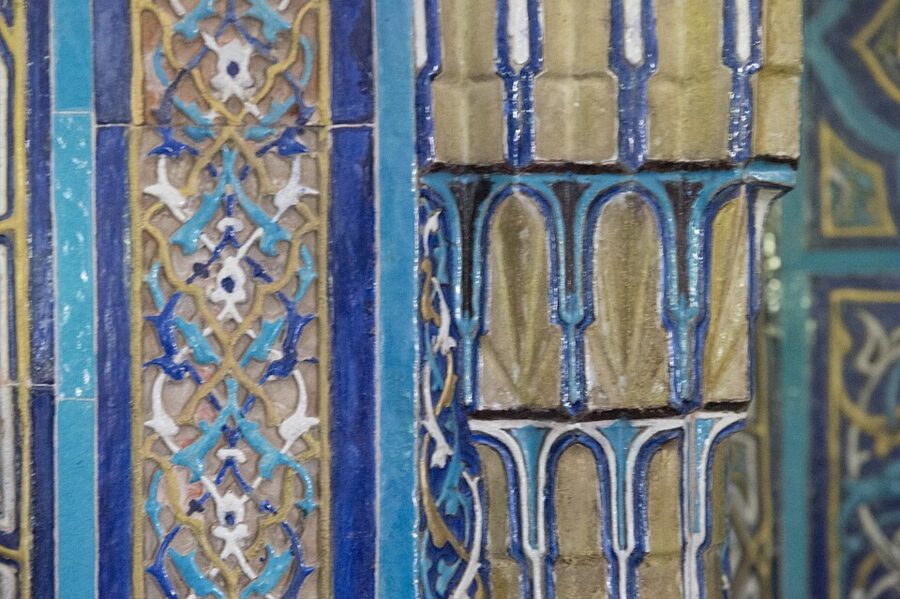
The portal is carved marble in the Seljuk manner, and the outside is plain enough. Inside, the walls of the prayer hall and the mihrab are lined with green and turquoise tiles, and above the entrance is the sultan’s private gallery, the first royal lodge in any Ottoman mosque. The turquoise of the original tiles is a shade that, according to the municipality, nobody has managed to reproduce since.
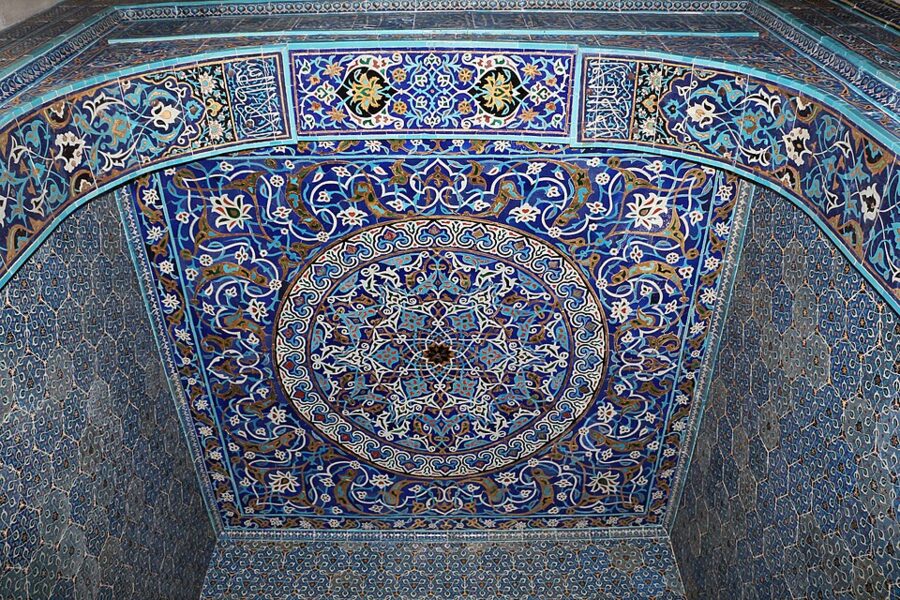

Yeşil Türbe, the Green Tomb
Across the lane and up some steps stands Mehmed I’s tomb, an octagon covered on the outside in turquoise tile, the only Ottoman tomb clad entirely in tile. Mehmed died in Edirne in May 1421, aged 42, and his body was brought back to Bursa. The municipal account says the tomb was finished forty days before his death; other sources credit his son Murad II with building it afterward.
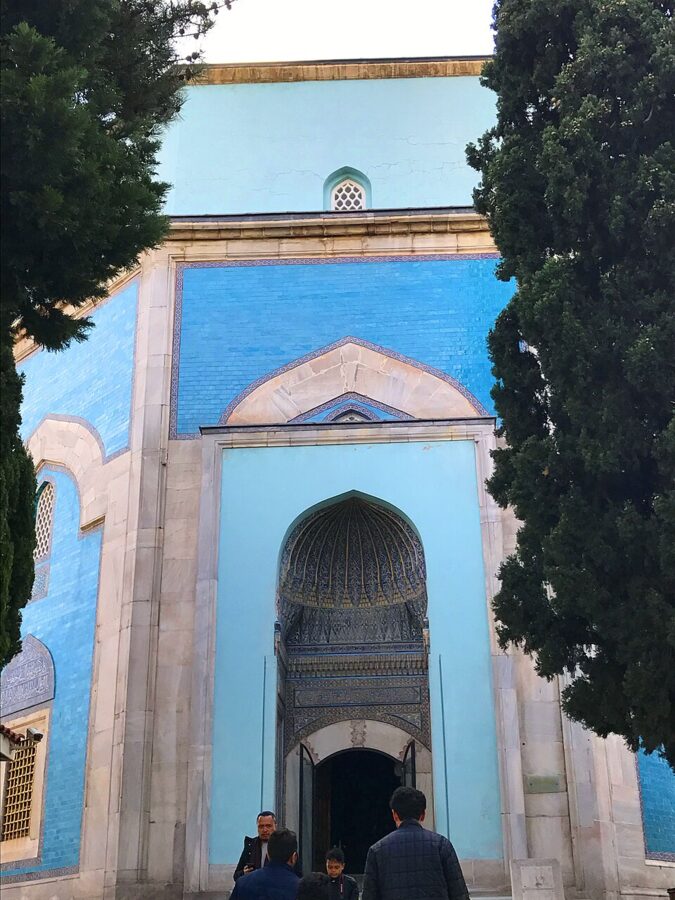

Inside are the sultan’s tiled cenotaph and those of his sons Mustafa, Mahmud and Yusuf, several daughters and his wet nurse, Daye Hatun. The prayer niche is a tall panel of glazed tile, and the door is carved wood. The tomb keeps the municipal hours, 08:00–18:00 in winter and to 20:00 in summer, and costs nothing.


The Museum of Turkish and Islamic Arts
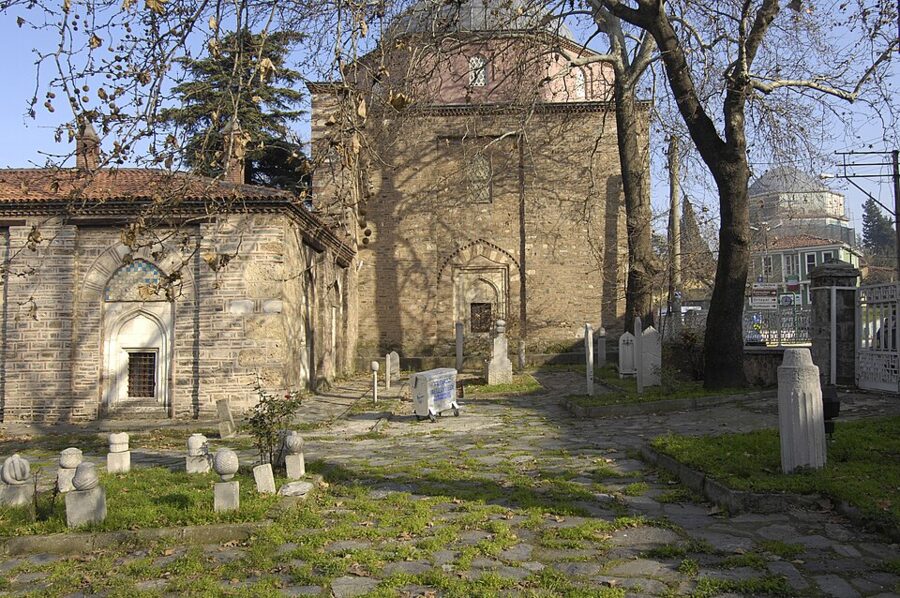
The complex’s college, the Yeşil Medrese, stands just west of the mosque and has been a museum on and off since 1930, as the Bursa Museum of Turkish and Islamic Arts since 1975. It is small: tiles and ceramics, carved wood, metalwork, Seljuk and Ottoman coins, embroidered costumes, and a garden of Bursa gravestones from the 15th to the 19th centuries. The Ministry of Culture lists it as open every day, 08:00–17:00, with the ticket office closing at 16:30. Worth half an hour if you liked the tiles next door.

Emir Sultan
Ten minutes further east, past the old cemetery, is the Emir Sultan Mosque, named for a Bukhara-born scholar who married Bayezid I’s daughter and became the city’s most revered holy man. The mosque in front of his tomb has been rebuilt more than once; the present one is Selim III’s rebuilding of 1804 after an earthquake in 1795, repaired again after 1855, and it is lighter and more ornate than the early mosques. Locals come here to pray at the tomb, so it is busier on Fridays and holidays than its size suggests.

Muradiye: the garden of tombs
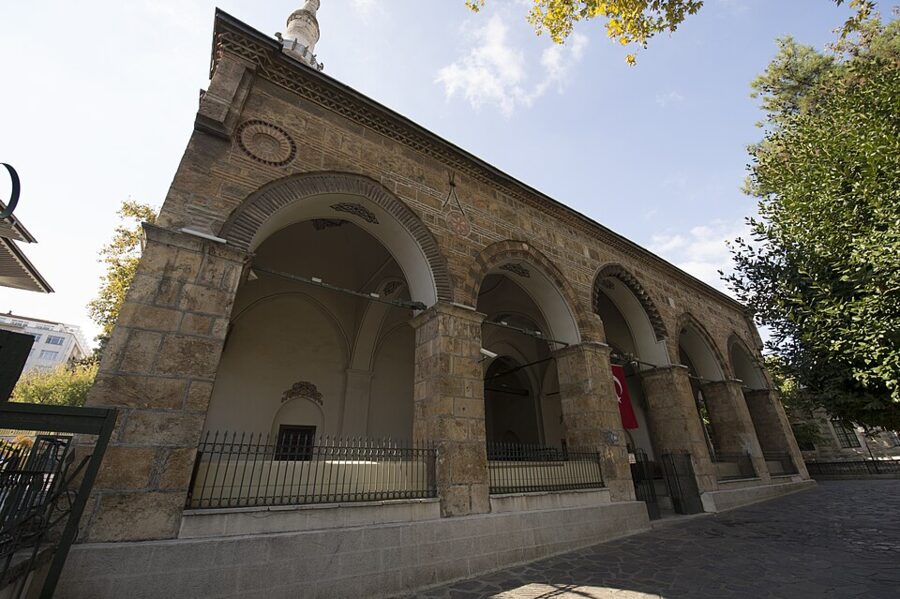
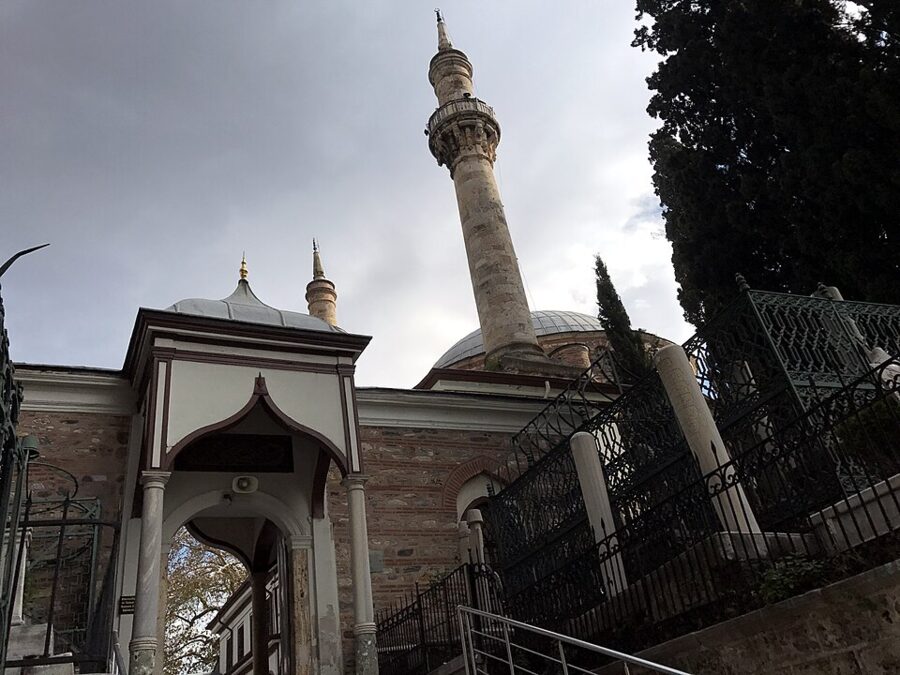
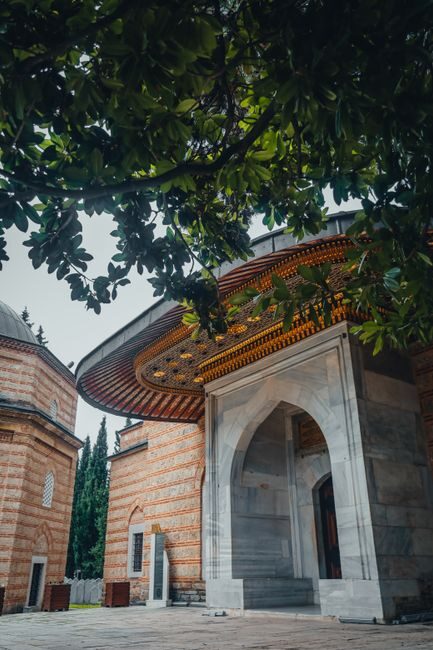
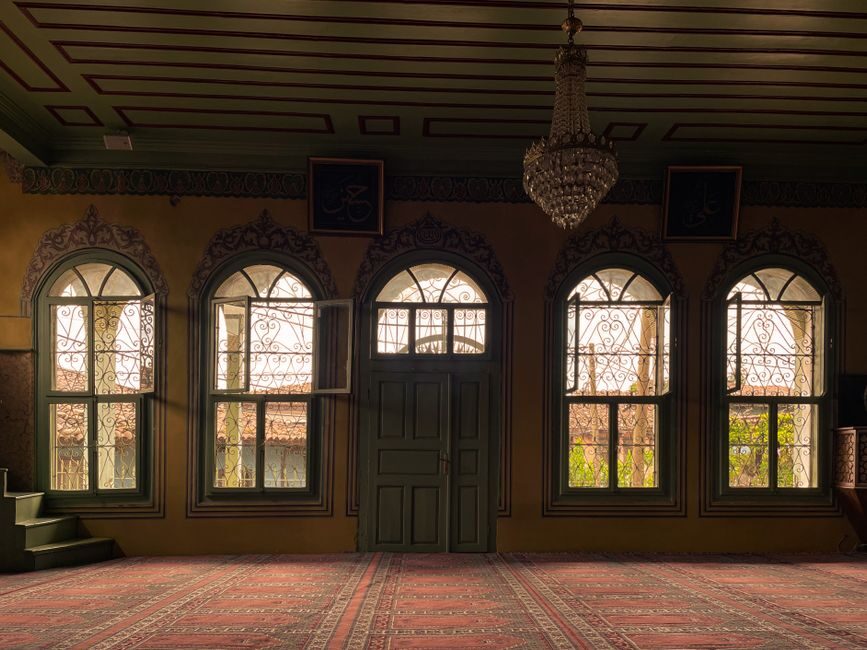
If Ulu Cami is the city’s crowded front room, Muradiye is its quiet garden. The complex lies about 15 minutes’ walk west of Tophane, in a residential neighborhood that still has old houses, and it is the last of the sultans’ complexes in Bursa. Murad II built the mosque in 1425–1426, again in the inverted T plan, and the tiled panels inside are close enough to those at Yeşil that the same Tabriz craftsmen are thought to have worked on both.
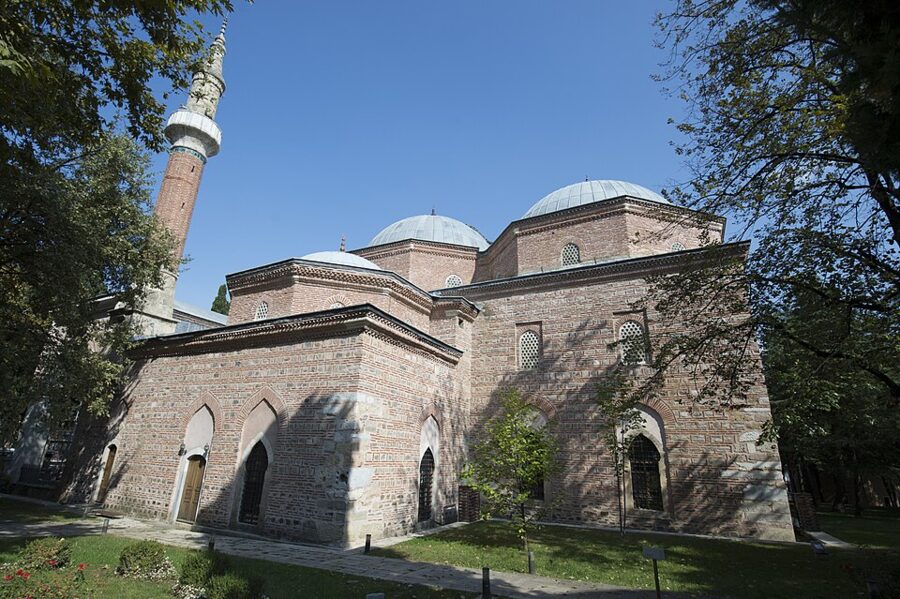

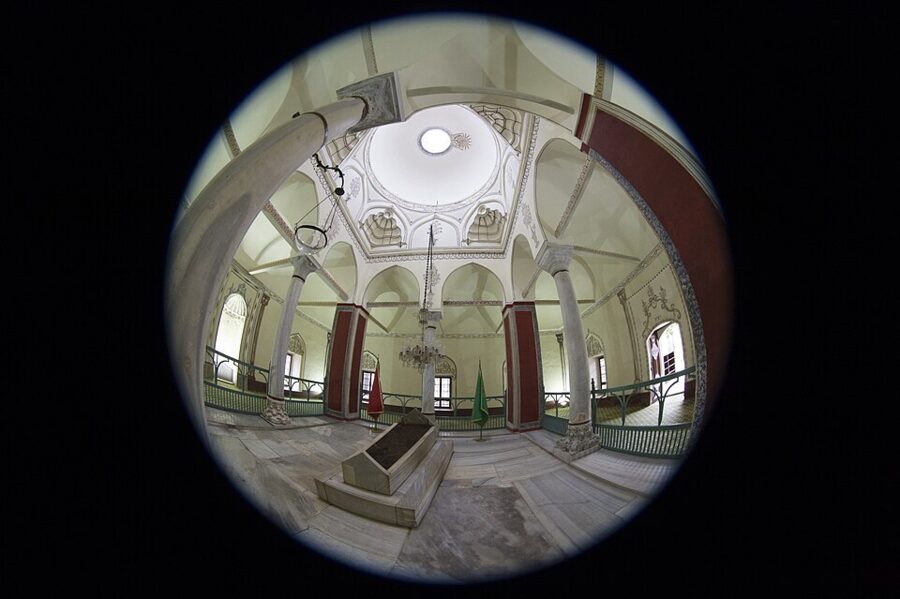
The reason to come is the garden behind it, where a dozen tombs stand among old trees and lawns. Murad II’s own tomb was built after his death in 1451 by his son Mehmed II, the future conqueror of Constantinople. Following Murad’s will, he was laid in the earth without a sarcophagus, the dome was left open over the grave so the rain could reach it, and a gallery was built around it for men to sit and recite the Quran.

The other tombs are the dynasty’s back pages, the princes who lost. Şehzade Mustafa, Süleyman the Magnificent’s eldest son, was strangled on his father’s orders in 1553; his half-brother Selim built his tomb, in 1555 or 1574 depending on the source, and his mother Mahidevran is buried beside him. Cem Sultan, the younger son of Mehmed II who lost the succession fight to Bayezid II and spent his last years as a hostage in Europe, died in Italy in 1495 and was brought back in 1499. The oldest tomb is that of Hüma Hatun, Mehmed II’s mother, from 1449.
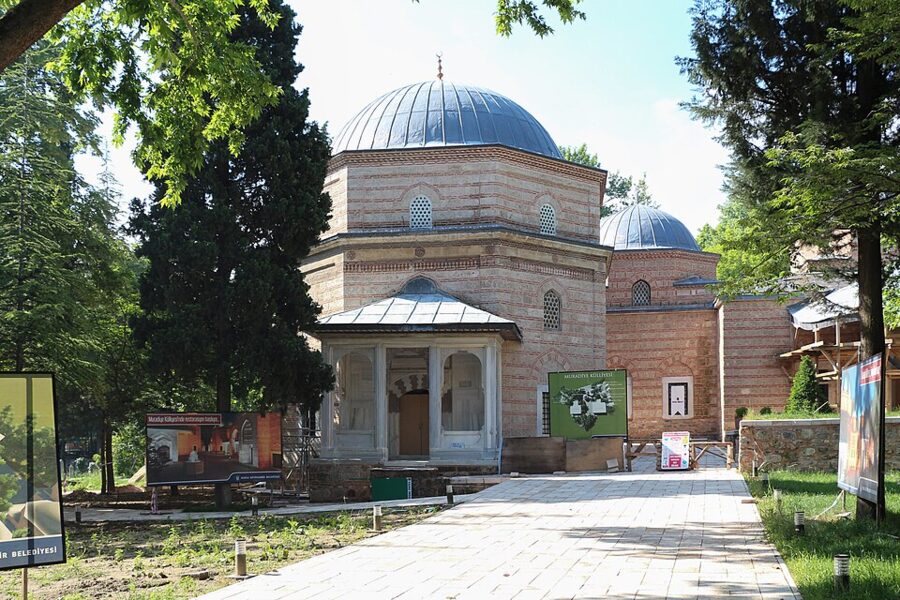

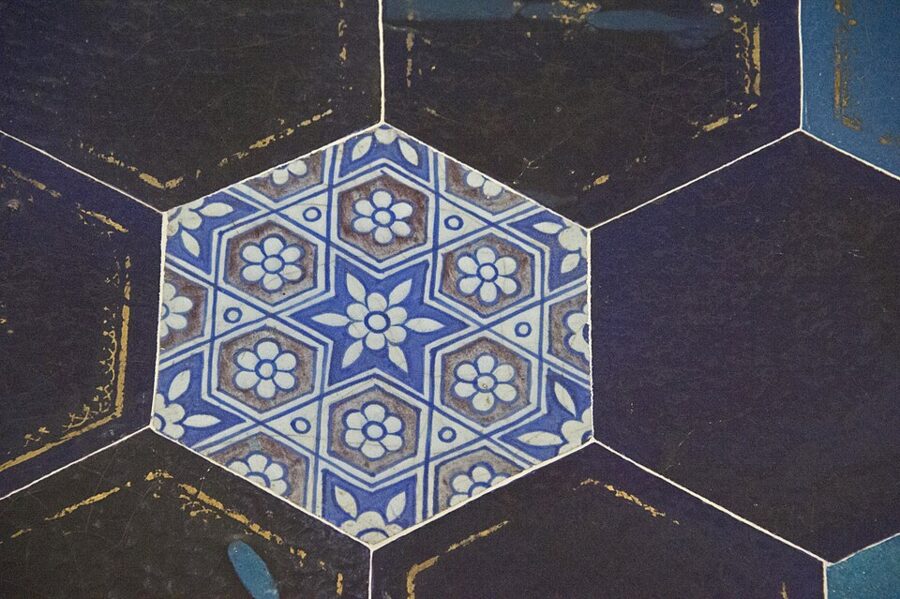
The decoration in these smaller tombs is the best surprise in Bursa: Iznik tiles in Şehzade Mustafa’s tomb, hexagonal blue-and-white tiles in Cem’s, painted plaster ceilings everywhere. The tombs keep the municipal hours of 08:00 to 18:00 in winter and 20:00 in summer, and entry is free. Some can only be seen from outside, which is not a reason to skip the garden.

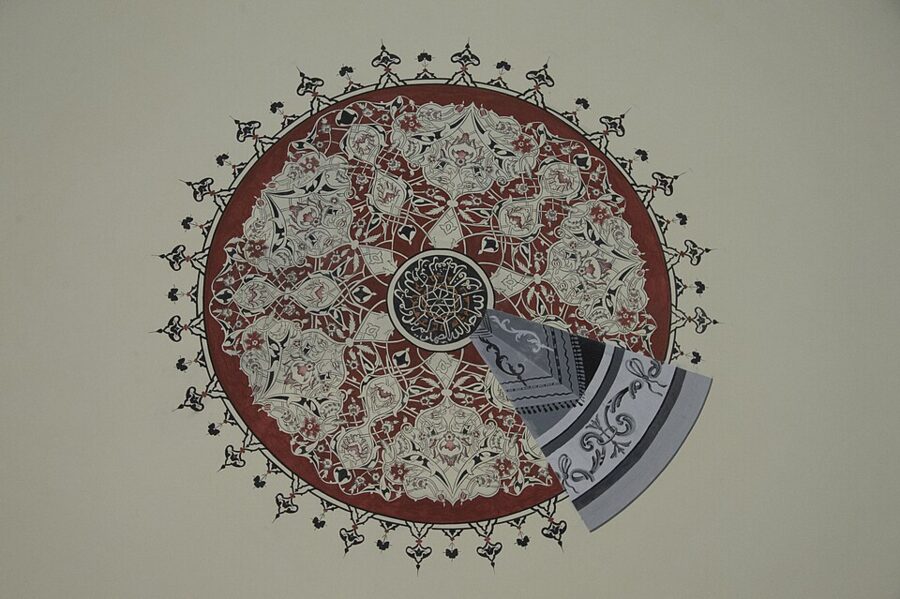

The complex’s old soup kitchen, east of the mosque, is now run as a restaurant serving traditional dishes, and the metropolitan municipality runs a gravestone museum and a manuscripts museum here too. Walk on through the surrounding lanes afterward: the streets around Muradiye still have a good number of old timber houses.
Cumalıkızık: the village that fed the capital
Cumalıkızık sits on the lower slopes of Uludağ, about 10 km east of the center, and it is the reason the UNESCO listing has a village in its title. When the Ottomans settled the slopes east of Bursa they called the villages there kızık, and named them by what set each apart. One near the stream became Derekızık; one that paid a ransom became Fidyekızık; the one where everyone went for Friday prayers, cuma, became Cumalıkızık. It was founded as an endowment village, and its rents went to Orhan’s complex in town.
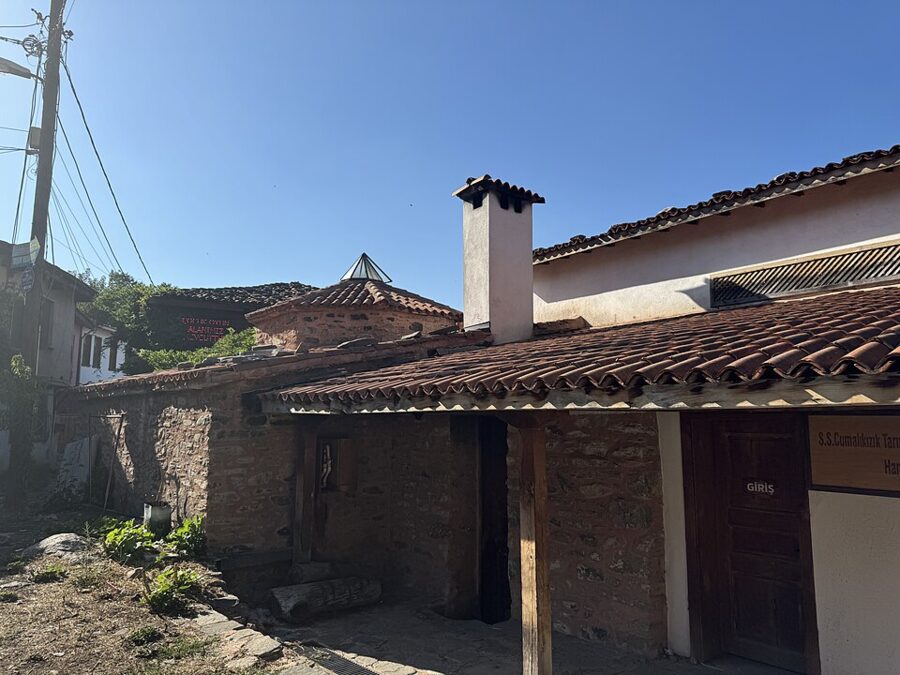

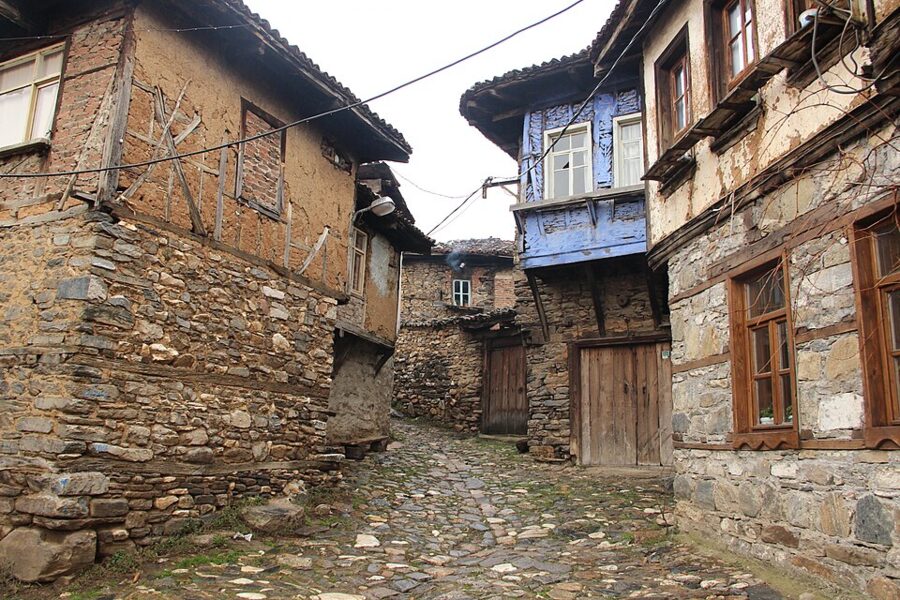
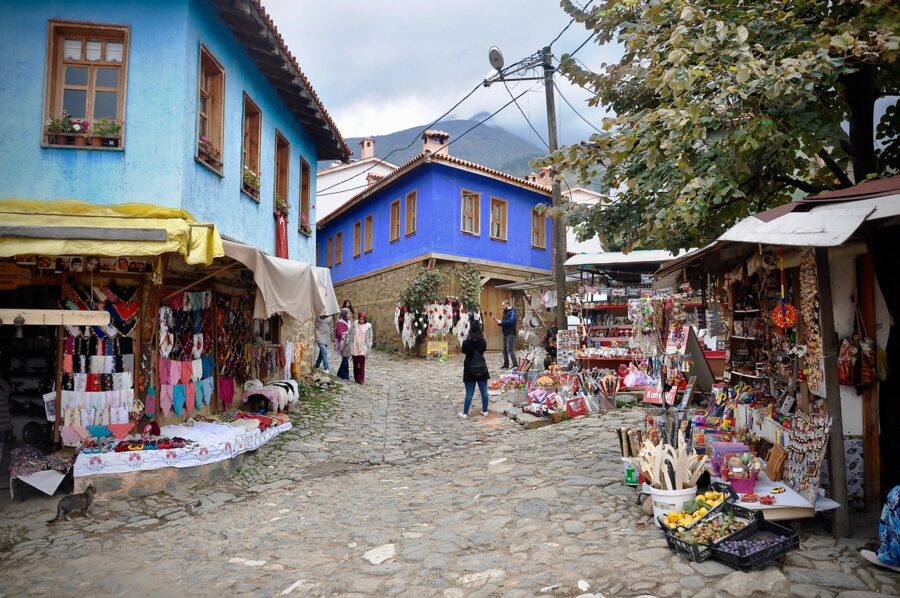
What survives is a whole Ottoman village. The Ministry of Culture counts 270 houses, 180 of them still lived in, most of them three stories of rubble stone below and timber and mud brick above, under tiled roofs with deep eaves. Many are washed in yellow, white, purple or blue. The ground floor held stores, the kitchen and the animals; the low first floor was for winter, the airier top floor for summer.
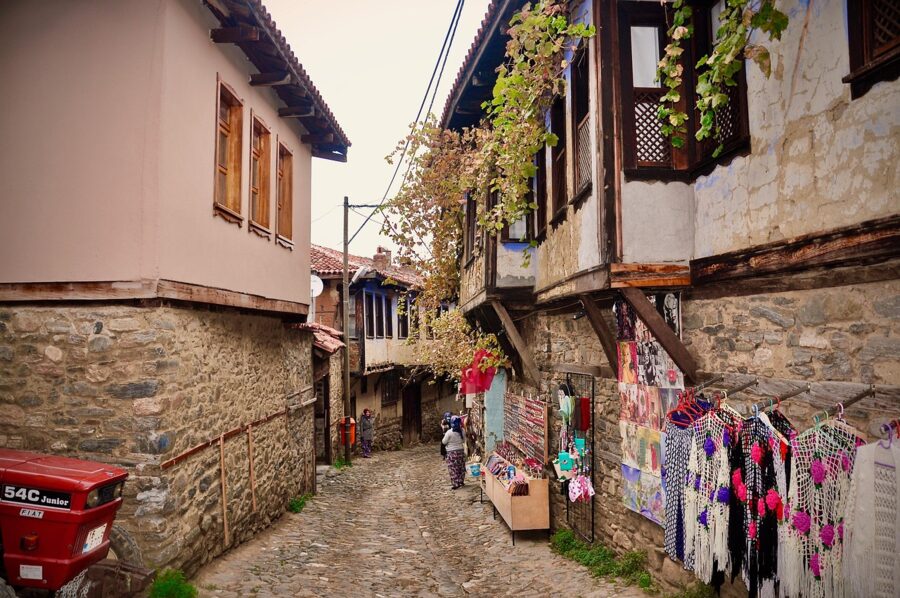
Look for the double front doors, usually walnut, bound with hand-forged iron and studded with big-headed nails, and for the upper windows with their wooden grilles. The village mosque on the square is 17th century, with a wooden portico. A small ethnography museum near the entrance to the village shows farm tools and household things, and the Koca Mezarlık, the old cemetery on the north side, has Ottoman gravestones.
Getting there by bus
City bus D10, run by Burulaş, the municipal transport company, links Timurtaş Paşa near the center with Hamamlıkızık and stops on the village square at Cumalıkızık Meydanı. Pay with a BursaKart. Check the next departure in the BursaKart app or at the stop before you go, because services thin out in the evening, and the last bus back is the one you do not want to miss. A taxi from the center is the fallback.
Visiting a village where people live
Cumalıkızık has become a weekend outing for half of Bursa, and on a sunny Sunday the lanes near the square fill up with breakfast tables and souvenir stalls. Come on a weekday morning and the village is yours, apart from the people who live in it. UNESCO’s own assessment of the site says the continued presence of the villagers is what keeps it authentic, so treat it the way you would want your own street treated.
- Stay on the lanes. A half-open door or an inner yard is somebody’s home, not a museum room.
- Ask before you photograph people, especially older women working on their doorsteps, and accept a no.
- Buy something. Local jam, dried fruit, chestnuts and a village breakfast are how the place earns its keep.
- Take your rubbish back to Bursa with you.
The thermal baths at Çekirge
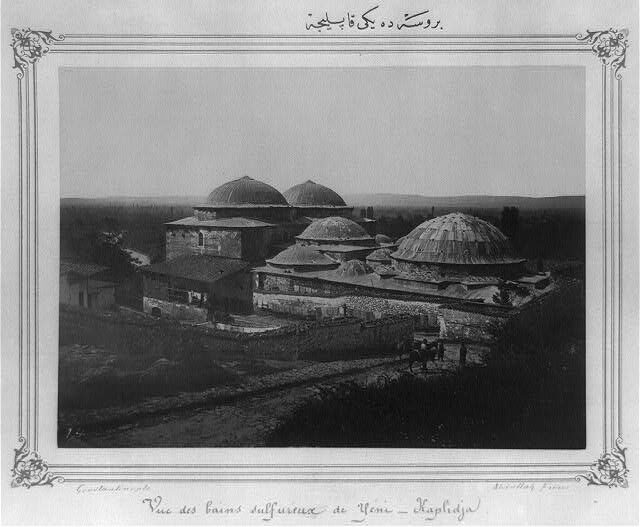
Bursa has been bathing in its own hot water since antiquity: Pliny the Younger, as Roman governor of the province, wrote to the emperor Trajan about building baths at Prusa. The springs come out on the slope west of the center, in and around Çekirge and the Kükürtlü neighborhood, and the old public baths there are still in use. Going to one is the easiest way to spend an evening in Bursa for a few hundred lira.

Yeni Kaplıca: the one that takes walk-ins
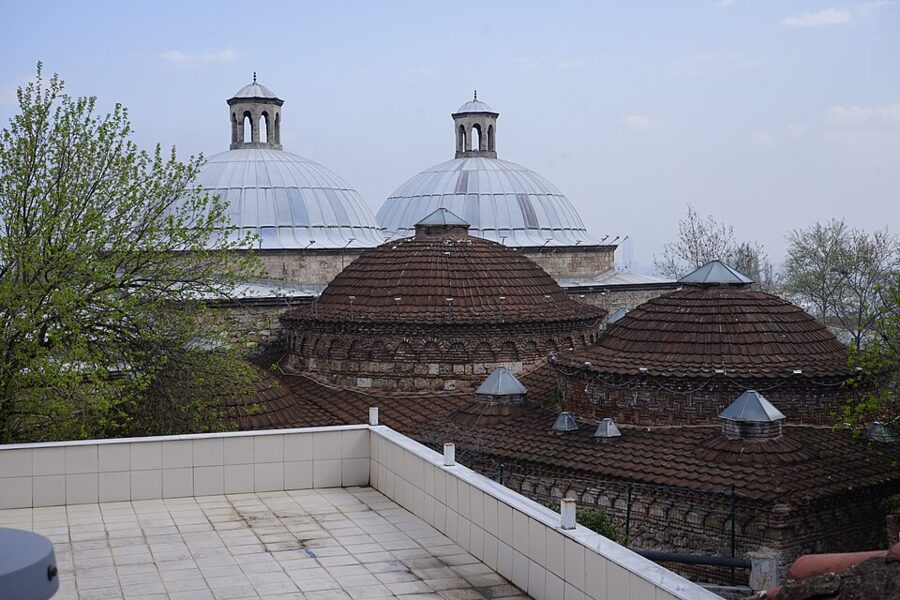
Yeni Kaplıca, the “new spring”, is new only by Bursa standards. Rüstem Paşa, Süleyman’s grand vizier and son-in-law, rebuilt a small bath here in 1552 after its water was said to have eased the sultan’s gout. The same company runs three baths on the site: Yeni Kaplıca itself for men, Kaynarca for women, and Kara Mustafa, with a general bath and private rooms. All take walk-ins, and the price list is posted on the company’s own site.
| Yeni Kaplıca, Kaynarca and Kara Mustafa, 2026 price list | TL |
|---|---|
| Bath entry | 500 |
| Bath entry on “people’s day”, Tuesdays (not 15 June–15 September or public holidays) | 430 |
| Kese (scrub with a rough mitt) | 550 |
| Foam massage | 650 |
| Towel hire | 150 |
| Private family cabin, two people, per hour (Kara Mustafa) | 750 |
Bring your own towel or buy a cheap peştamal in the bazaar, and the visit costs 500 TL, or 430 TL on a Tuesday outside summer. Add a kese and you are at about 1,000 TL for a full scrub in a 16th-century bath. Couples and families bathe together only in the private family cabins.
Eski Kaplıca
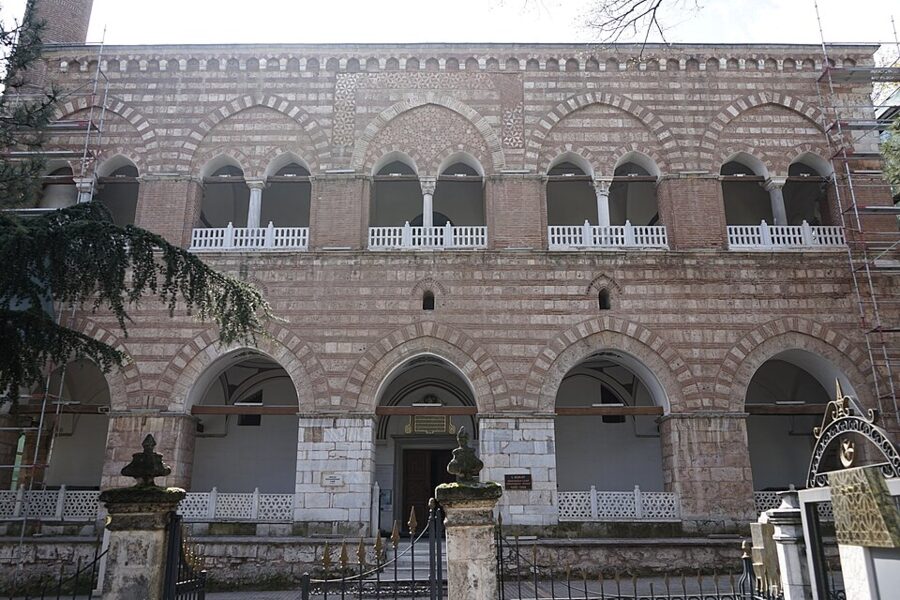
Eski Kaplıca, the “old spring”, is the more beautiful building: a domed bath of the 14th century, with a hot pool ringed by columns, on the site of Byzantine baths. It belongs to the Kervansaray Termal hotel next door, which advertises separate men’s and women’s baths, kese and soap massage, and spring water at 44°C. It publishes no prices and does not say plainly whether it takes walk-ins, so ask at the hotel desk before you undress.
How a Bursa bath works
- Men’s and women’s baths are separate. In the men’s side you keep the peştamal on the whole time, including in the pool; nudity is not the custom here, whatever happens in other countries’ spas.
- Rinse at a basin before you get into a shared pool, and do not pour soapy water back into it.
- The water is hot, around 40°C and up. Ten minutes in the pool at a time is plenty; drink water and come out slowly.
- The kese attendant will scrub harder than you expect. Say “yavaş” (gently) if you need to, and tip in cash.
- Leave your phone in the locker. Photography in the bathing rooms is not acceptable to the other bathers or the staff.
For the baths, take the BursaRay metro to Kültürpark station, which is also the stop for the city’s archaeology museum in the park, then walk uphill or take a short bus ride into Kükürtlü. While you are in Çekirge, walk up to the Hüdavendigar Mosque of Murad I, the third sultan, killed at the battle of Kosovo in 1389 and buried beside it. It is one of the five sultans’ complexes on the UNESCO list.

Food: İskender, pideli köfte and chestnuts
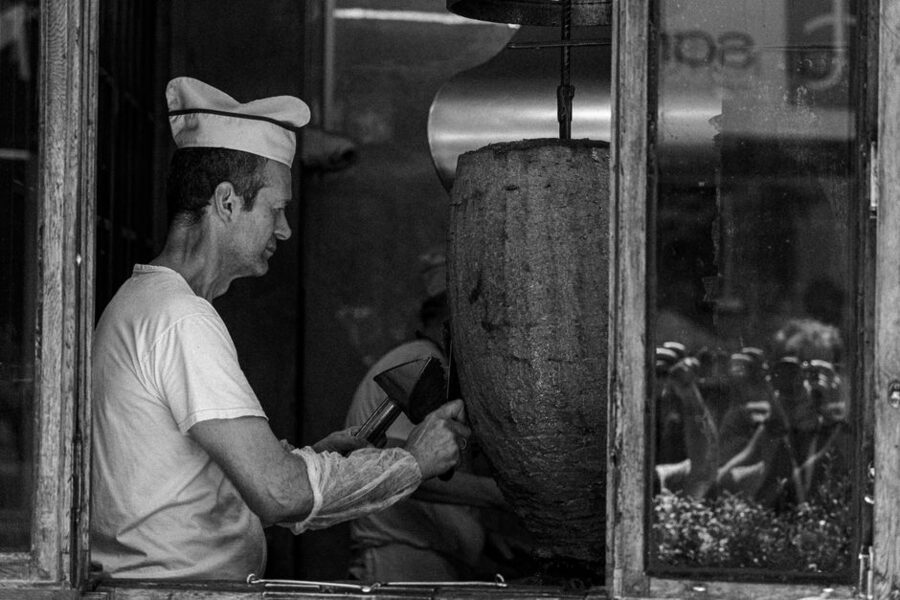
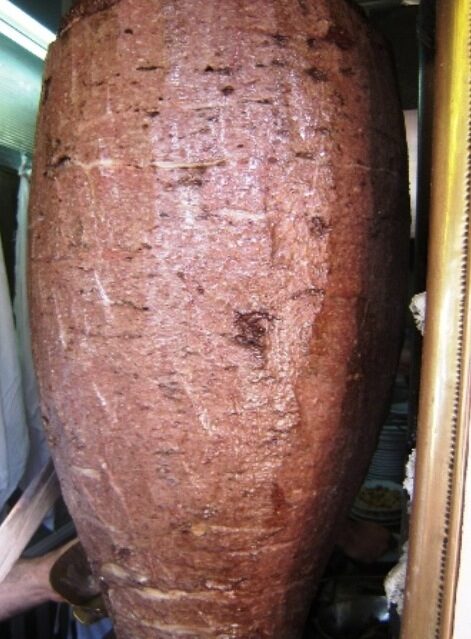
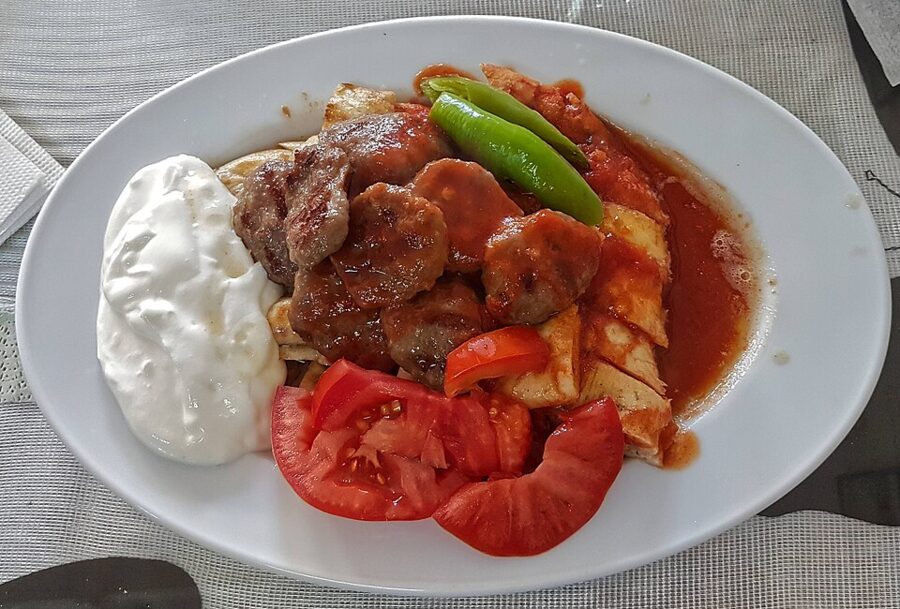
Bursa’s dish is İskender kebap: thin slices of lamb döner laid over cubes of pide bread, covered in tomato sauce, with yogurt on the side and melted butter poured over at the table. The family that sells it says it all began in 1867, in a shop in the Kayhan market, where İskender Efendi, son of Mehmet, turned the lamb from a horizontal spit over charcoal to a vertical one. That claim to inventing döner itself is disputed, but nobody disputes that Bursa invented İskender.
The family’s best-known shop is the small blue one at Atatürk Caddesi 60, beside the Tayyare Cultural Center, called the Mavi Dükkan, “blue shop”. It opens at 12:00, it is tiny, and there is often a queue. A meal there ran to roughly 1,000–1,200 TL a head in late 2026, which makes it a once-only treat on a backpacker budget. Other members of the family have run İskender restaurants under similar names, so expect to meet more than one “original”; the argument is part of the meal.

A half portion, yarım porsiyon, is the budget move: menus in Bursa list half portions at around 70 percent of the price of a full one, and with the bread and butter it is still a full meal. The traditional drink with it is a glass of şıra, fermented grape juice, or ayran.
Pideli köfte and the cheap lunch
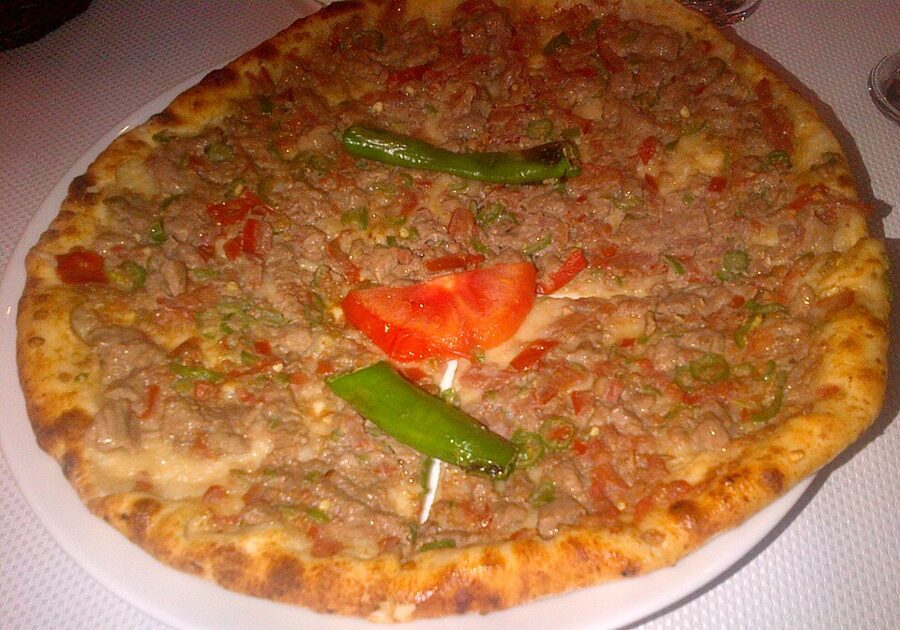
Pideli köfte is İskender’s cheaper cousin, known in Bursa as the poor man’s İskender: small grilled meatballs on butter-soaked pide with tomato sauce and yogurt. The small shops in and around the Kayhan market, south of the covered bazaar, have served it for decades, and a portion costs much less than the famous kebab. In the jewelers’ streets around the Bedesten look for cantık, a round, simit-sized pide topped with minced or cubed meat.


For a sit-down lunch, follow the shopkeepers. The esnaf lokantası, the tradesmen’s canteens in and around the Kapalıçarşı, put out trays of the day’s stews, beans, rice and soup at counter prices, and you point at what you want. Go between 12:00 and 13:30, when the food is fresh, and expect to share a table.
Kestane şekeri
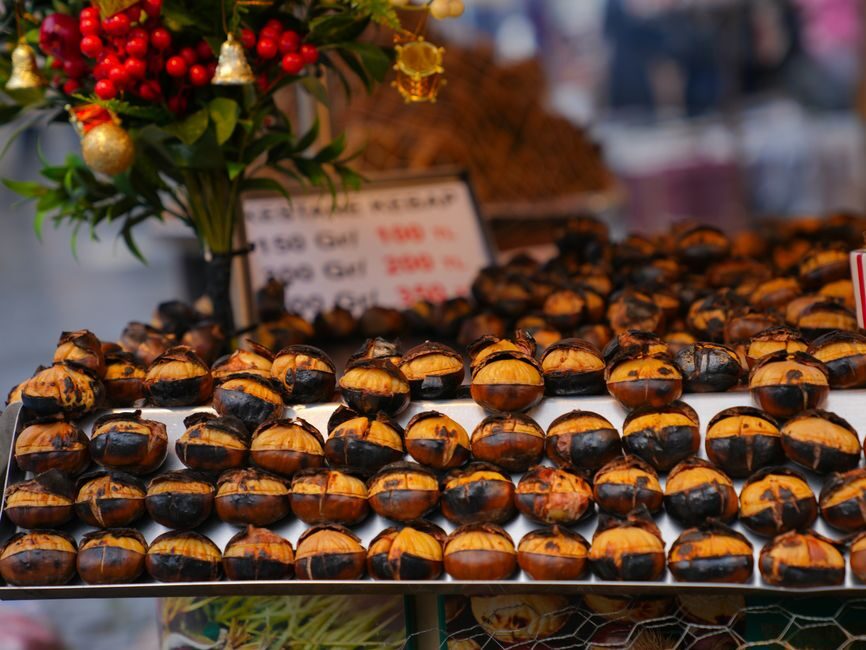
The chestnut forests of Uludağ give Bursa its sweet: kestane şekeri, chestnuts candied slowly in syrup. Kafkas, the best-known maker, has made them in the city since 1930 and sells them in its own shops as well as online. The boxed gift packs are expensive; ask for a small loose quantity instead, or buy the broken pieces, which taste the same. In winter, roast chestnuts from street carts are the cheapest snack in town.
Karagöz shadow puppets
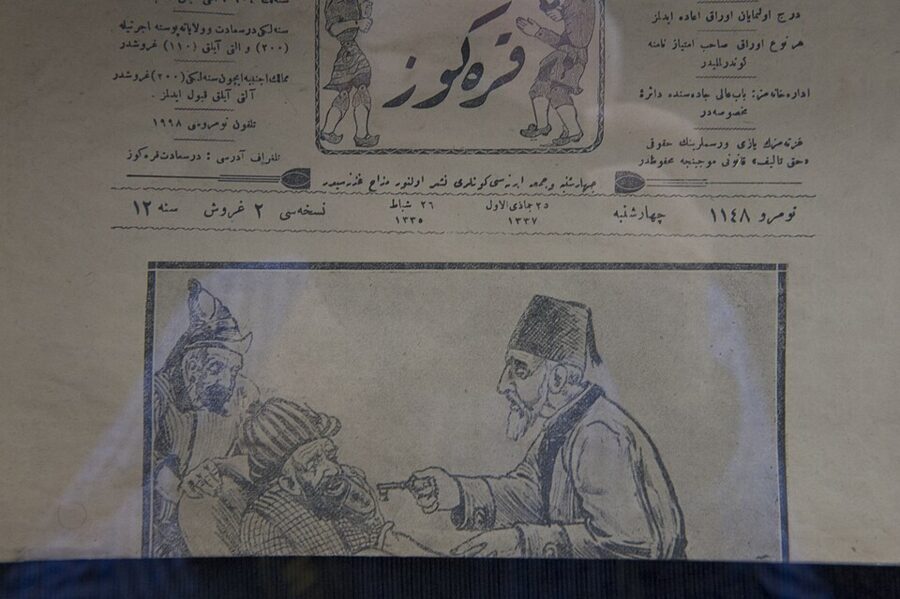
Turkey’s shadow theater was born in Bursa, or so the city’s legend goes. Karagöz and Hacivat, the blunt common man and the pompous know-all who argue through every play, are said to have been two workmen on the building of Orhan’s mosque in the 1330s, whose banter slowed the work so much that they were executed. UNESCO, which added Karagöz to its intangible heritage list in 2009, mentions the story in Bursa’s own listing.
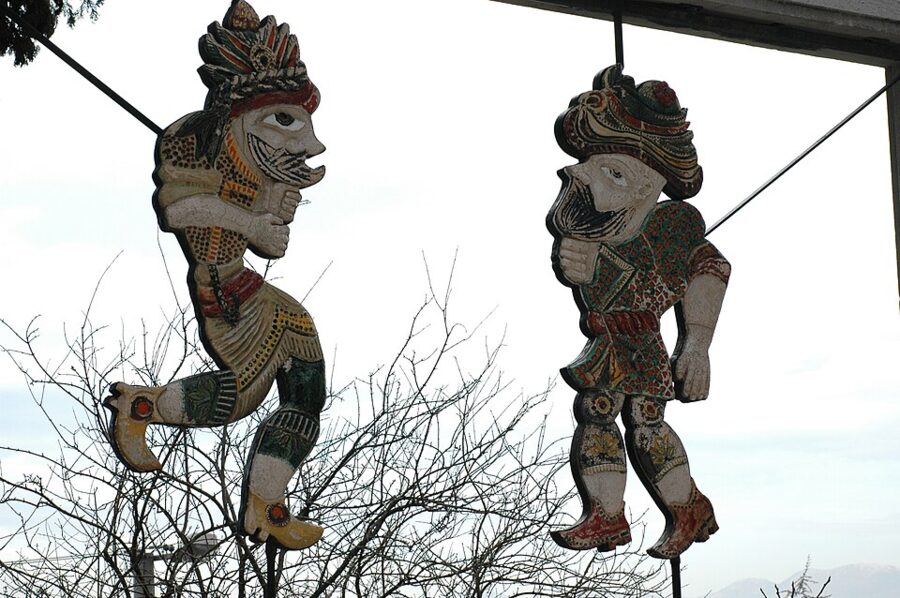

The Karagöz Museum, run by the metropolitan municipality in a former electricity substation at Çekirge Caddesi 159, opened in 2007. It has galleries of shadow figures cut from painted camel and calf hide, including sets by the master Hayali Küçük Ali, puppets from other countries, and a 69-seat hall where puppeteers perform live shows. It is closed on Mondays. Take the T1 tram to Sırameşeler and walk about 600 m south, and ask at the desk or call ahead about live show times, since many performances are booked by school groups.

Getting there from Istanbul
Bursa sits across the Sea of Marmara from Istanbul, and there are two sensible ways over: a fast ferry to the Bursa coast and a city bus inland, or a coach round the gulf by road. The ferry is more pleasant and about the same price, and both fit into the wider network of Turkey’s ferries and buses.
| Route | Operator | Time | One way, 2026 |
|---|---|---|---|
| Kabataş to Mudanya, sea bus | BUDO (Bursa municipality) | about 1.5–2 hours | 720 TL from 2 September 2026 |
| Istanbul to Mudanya or Güzelyalı, sea bus | İDO | about 1.5–2 hours | 770 TL Kabataş–Mudanya on 21 November 2026 |
| Istanbul otogars to Bursa Terminal, coach | several companies | 2.5–3 hours | from about 450–500 TL |
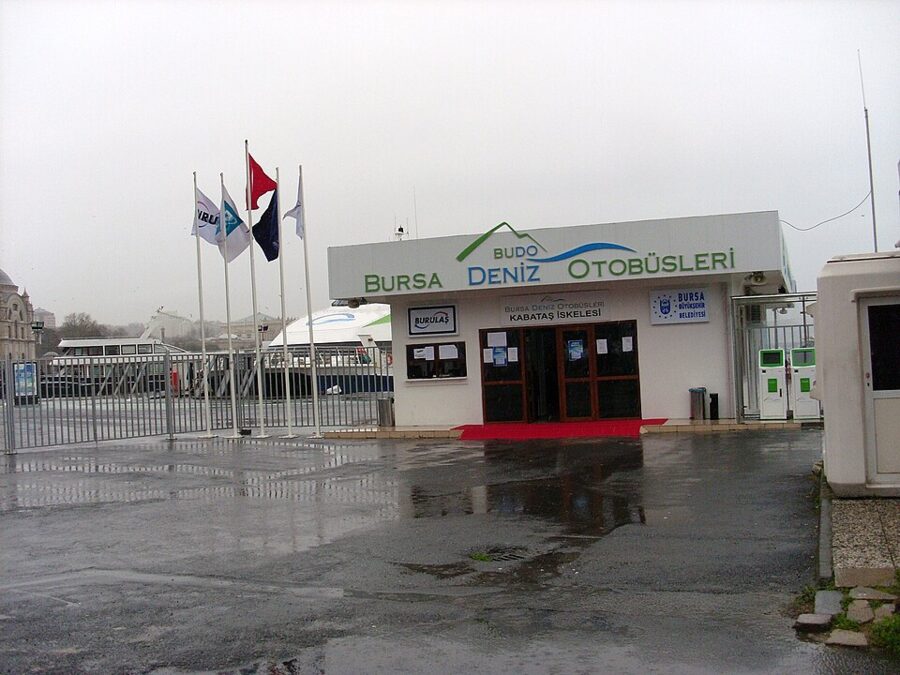

BUDO is the Bursa municipality’s own sea bus line, and since 1 January 2026 all its Istanbul sailings leave from the Kabataş transfer center, at the end of Istanbul’s T1 tram line. The boats are fast catamarans, so the crossing is a closed cabin rather than a deck in the wind. They are also at the mercy of the weather: on 28 September 2026 twelve BUDO sailings were canceled in one day, so do not plan a tight onward connection.
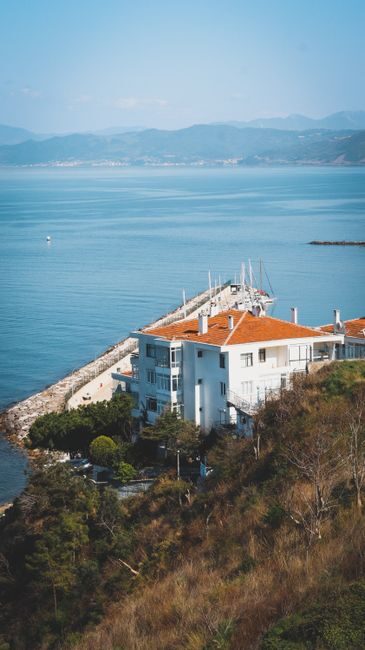
From the pier at Mudanya, city bus F3 runs inland through Bursa to the Teleferik station; the F3 fare was 156.50 TL with a BursaKart in 2026. Mudanya itself, an old port town of timber houses on the water, deserves an hour if you arrive early. İDO’s boats call at Güzelyalı, just along the coast, with city bus stops a few minutes’ walk from the pier.
Coaches arrive at Bursa Terminal, the intercity bus station, which is well north of the center. The T2 tram links it with Kent Meydanı in the middle of the city, 40.75 TL with a BursaKart, which beats a taxi through the traffic on the main road. Leave the coach and look for the tram signs at the terminal exit.
Bursa has no passenger train yet. A high-speed line to the national network has been under construction for years, and as of November 2026 the work was still being inspected on site, so ignore anything that tells you to take the train from Istanbul.
Getting around, the Teleferik and a cheap bed
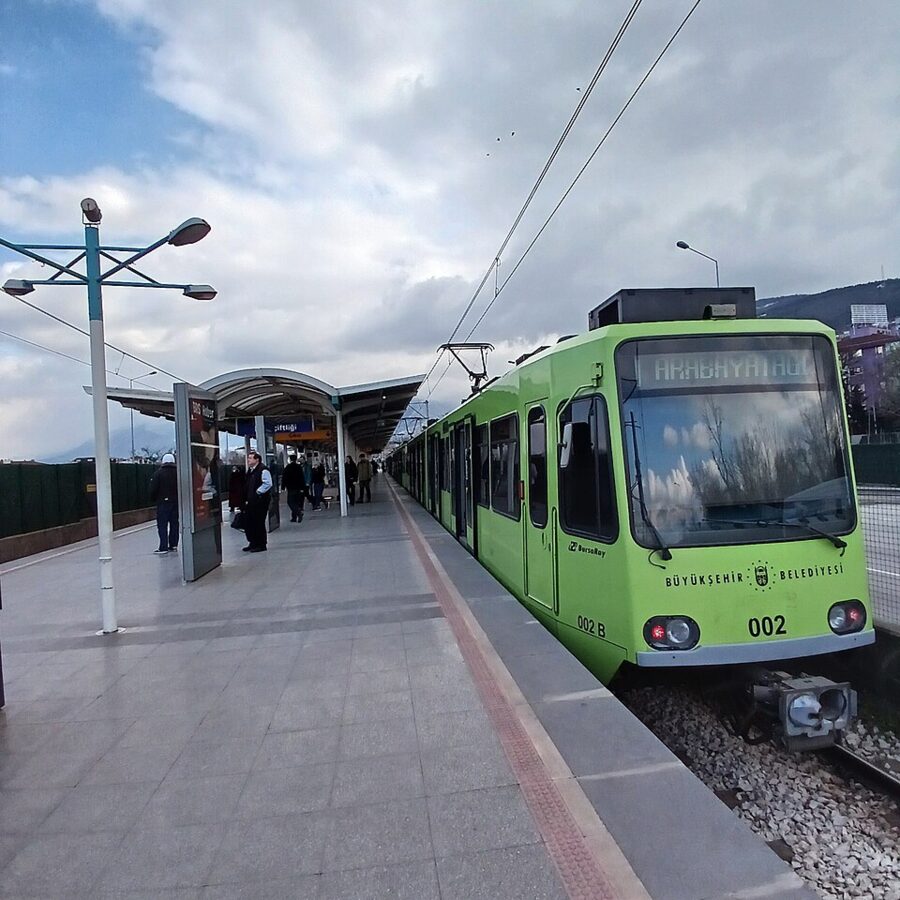
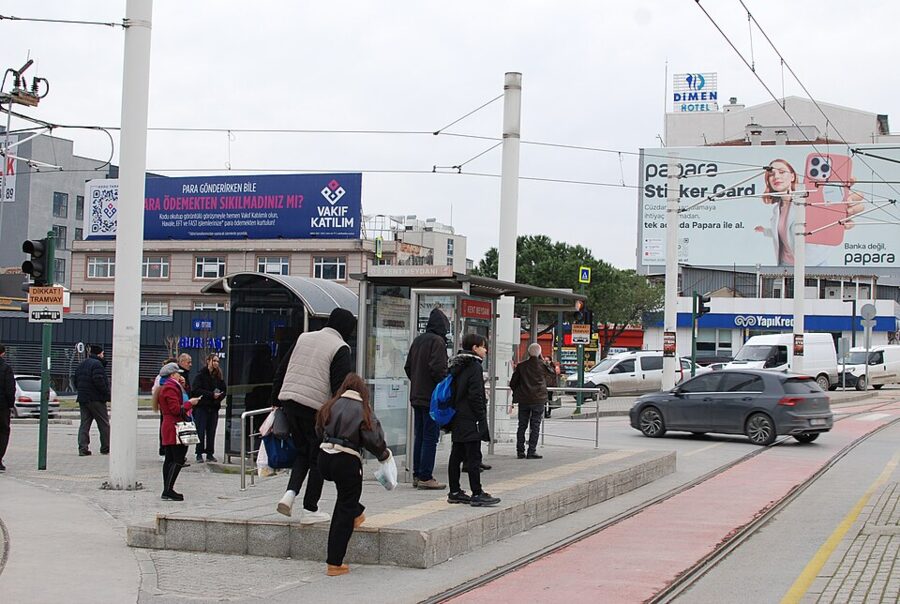
The center is walkable, but the sights are spread over several hills, and you will use buses, the tram and the BursaRay metro. Everything runs on the BursaKart, a rechargeable card sold at kiosks and machines at stations; a blank card cost 190 TL in 2026. You can also tap a contactless bank card on the readers, but Burulaş adds a fee of 1 TL for every 5 TL of fare, which adds up over a few days.
| BursaKart fares, full price, 2026 | TL |
|---|---|
| T1, T2, T3 tram | 40.75 |
| City bus, short line | 47.00 |
| BursaRay metro | 50.00 |
| City bus, long line | 65.75 |
| F3 bus, Mudanya pier to the Teleferik | 156.50 |
| Blank BursaKart | 190.00 |
Transfers between the tram, the metro and the buses are discounted within 90 minutes of your first tap. On the BursaRay, tap your card on the refund validator at the exit after a short ride: 12 TL comes back for a trip of one to five stations. The T1 tram loops round the old center and is the line you will use most.

The Teleferik to Uludağ
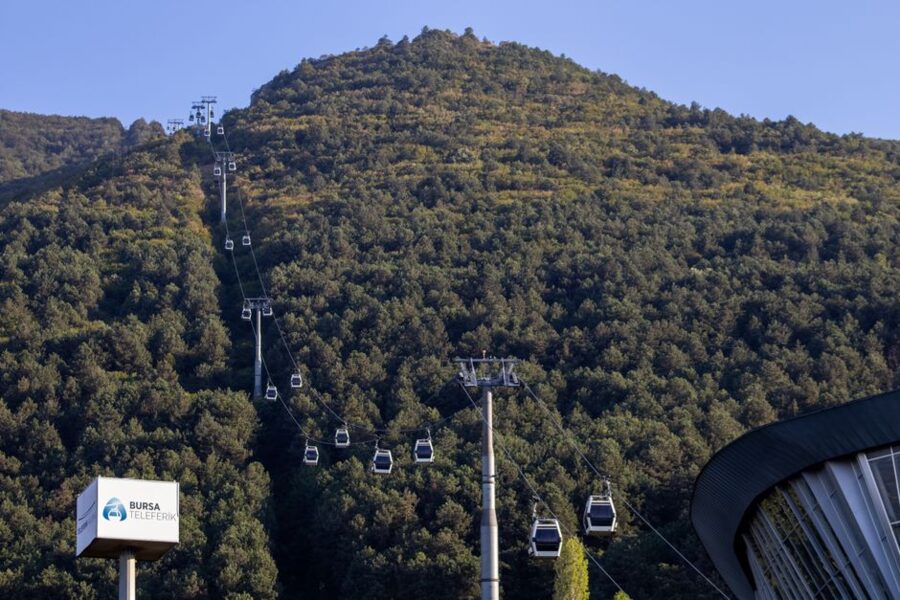
Above the city rises Uludağ, the Mysian Olympus, 2,543 m high, and Turkey’s first passenger cable car, opened in 1963, climbs it from Teferrüç on the eastern edge of Bursa. A return ticket was about 500 TL in 2026. In summer it is a cool escape into the pine forest and the high meadows; in winter it carries skiers up to the hotel zone and the lifts. Wind stops it more often than you would like, so have a plan B for the day.
Where to sleep on a budget
Here is the frank part: Bursa has no backpacker hostel scene, and no dorm bed in the city that I’d send you to. The cheap beds are small business hotels near the center and the thermal hotels in Kükürtlü and Çekirge.
The best value I can point to is the Kara Mustafa thermal hotel, run by the same company as Yeni Kaplıca, on the same site. Its 2026 list gives 2,200 TL for one person and 2,500 TL for two, breakfast and taxes included, and the rooms have their own thermal bath, which means your hot spring is free every evening. It has only 15 rooms, so ask ahead for weekends. Some of Cumalıkızık’s old houses also take guests as small pensions, which is the other way to wake up somewhere memorable.
Two days in Bursa
| When | Day one | Day two |
|---|---|---|
| Morning | Ferry to Mudanya, F3 bus to the center; Ulu Cami before the noon prayer | Yeşil Cami, the Green Tomb and the museum in the college; walk on to Emir Sultan |
| Midday | Koza Han, the hans and the Kapalıçarşı; lunch in a tradesmen’s canteen | Half-portion İskender in the center |
| Afternoon | Tophane: the tombs of Osman and Orhan, the clock tower view; walk to Muradiye | Bus D10 to Cumalıkızık; walk the lanes and buy chestnuts or jam |
| Evening | Bath at Yeni Kaplıca; Karagöz monument; night view of Ulu Cami | Bus or ferry onward |
Bursa works as a stop on the classic loop, and the city’s bus terminal has departures all over western Turkey. Coaches run to Çanakkale for Gallipoli and Troy, south to Denizli for Pamukkale, and overnight to Antalya on the Mediterranean. For later Ottoman architecture, go back to Istanbul and see how the style that began in these mosques ended up in the work of Sinan, at the Süleymaniye.
Whichever way you leave, buy the return BUDO ticket as soon as you know your day, because the Sunday evening boats fill first and the wind cancels some of them. And before you go, climb back up to Tophane once more: the founder’s tomb is open until 18:00 in winter, the view over Ulu Cami’s domes is free, and it is the best place to see how the whole empire started from one hill.